Liberia’s mix of coastal mangroves, inland rivers and upper Guinean forests supports a varied reptile fauna that often goes unnoticed outside the region. Local wetlands and forest edges provide crucial habitat for turtles, snakes and lizards that play important roles in ecosystem health and local culture.
There are 24 Reptiles of Liberia, ranging from the African helmeted turtle to the Western green mamba. For each species you’ll find below Scientific name,IUCN status,Liberia distribution to help you identify conservation priorities and where each species has been recorded — you’ll find below.
How reliable is the IUCN status for reptiles listed from Liberia?
IUCN assessments combine field surveys, range data and expert review, but many West African reptiles are under-surveyed; statuses give a best-available snapshot, yet local studies can reveal recent changes, so treat listings as guidance and check recent literature or local reports for updates.
Where are the best places in Liberia to observe these species safely and ethically?
Target protected areas, riverine systems and mangrove fringes with a knowledgeable local guide, avoid handling wildlife, respect seasonal access rules, and consult recent distribution notes (see the Scientific name,IUCN status,Liberia distribution entries below) to plan responsible sightings.
Reptiles of Liberia
| Common name | Scientific name | IUCN status | Liberia distribution |
|---|---|---|---|
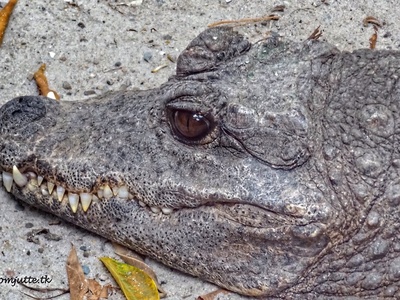
| Dwarf crocodile | Osteolaemus tetraspis | Vulnerable | Forest rivers and swamp forests, widespread inland |
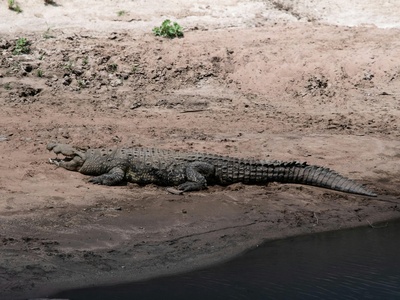
| Nile crocodile | Crocodylus niloticus | Least Concern | Major rivers, lakes and estuaries, scattered populations |
| Leatherback sea turtle | Dermochelys coriacea | Vulnerable | Offshore waters and nesting on sandy beaches along the coast |
| Green sea turtle | Chelonia mydas | Endangered | Coastal waters and nesting beaches, primarily along southern and central coast |
| Hawksbill sea turtle | Eretmochelys imbricata | Critically Endangered | Coastal reefs, lagoons and occasional nesting beaches |
| Olive Ridley sea turtle | Lepidochelys olivacea | Vulnerable | Offshore and occasional mass-nesting beaches on the coast |
| African helmeted turtle | Pelomedusa subrufa | Least Concern | Rivers, ponds and seasonal pools, widespread lowlands |
| West African mud turtle | Pelusios castaneus | Least Concern | Slow rivers, swamps and forest pools, widespread |
| African softshell turtle | Trionyx triunguis | Vulnerable | Large rivers, estuaries and coastal lagoons |
| Nile monitor | Varanus niloticus | Least Concern | Riversides, mangroves and agricultural areas, common near water |
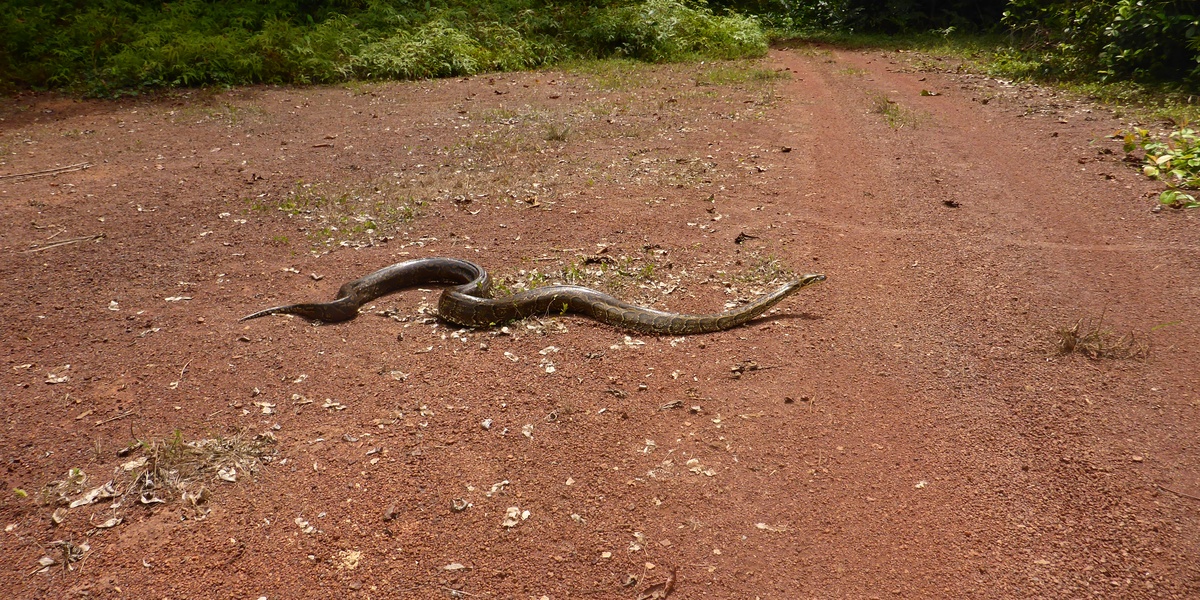
| African rock python | Python sebae | Near Threatened | Forests and savannas near rivers, scattered populations |
| Boomslang | Dispholidus typus | Least Concern | Forest edges and trees, widespread in lowland areas |
| Gaboon viper | Bitis gabonica | Least Concern | Lowland rainforests and dense forest edges, southern/central counties |
| Puff adder | Bitis arietans | Least Concern | Savanna, farmland and disturbed areas, widespread |
| Forest cobra | Naja melanoleuca | Least Concern | Primary and secondary forests, plantations, widespread |
| Black-necked spitting cobra | Naja nigricollis | Least Concern | Savanna and forest edges, inland and upland areas |
| Western green mamba | Dendroaspis viridis | Least Concern | Coastal lowland rainforest and mangrove edges |
| Egg-eating snake | Dasypeltis scabra | Least Concern | Woodland and forest edges, widespread |
| Night adder | Causus maculatus | Least Concern | Forest floor, cleared areas and edges, widespread |
| Common agama | Agama agama | Least Concern | Open areas, towns, rocks and bushland, widespread |
| Tropical house gecko | Hemidactylus mabouia | Least Concern | Buildings, villages and towns, widespread |
| Dwarf day gecko | Lygodactylus picturatus | Least Concern | Forest edges, gardens and secondary growth, widespread |
| Perrotet’s skink | Trachylepis perrotetii | Least Concern | Forest clearings, savanna-forest mosaic, widespread |
| River cooter / basking turtle (African side-neck group general) | Pelusios spp. | Least Concern | Rivers, floodplains and seasonal pools, recorded in lowlands |
Images and Descriptions
Dwarf crocodile
Small, secretive forest crocodile rarely over 1.5 m; prefers shaded streams and swamps. Not dangerous to people but threatened by habitat loss and hunting; an important indicator of intact West African forest wetlands.
Nile crocodile
Large freshwater crocodile reaching several metres; found in rivers, floodplains and mangrove estuaries. Can be dangerous to people near water. Populations are patchy in Liberia due to hunting and habitat change.
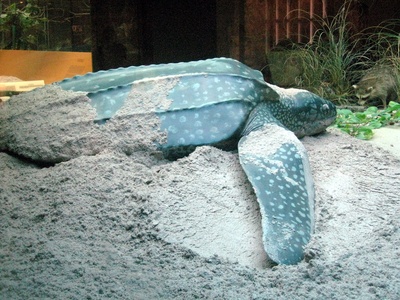
Leatherback sea turtle
World’s largest turtle (up to 2 m); deep-diving species that nests on Liberian beaches. Globally declining from fisheries bycatch and egg poaching; conservation focuses on protecting nesting beaches and reducing bycatch.
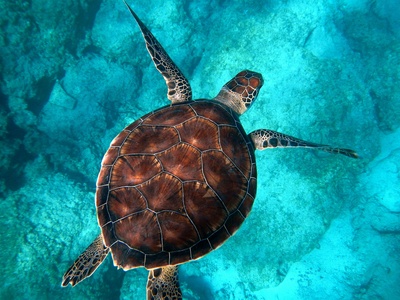
Green sea turtle
Large herbivorous sea turtle that nests on Liberia’s sandy shores and feeds in coastal seagrass. Vulnerable to egg harvest, coastal development and bycatch; conservation targets nesting colonies and coastal habitat protection.
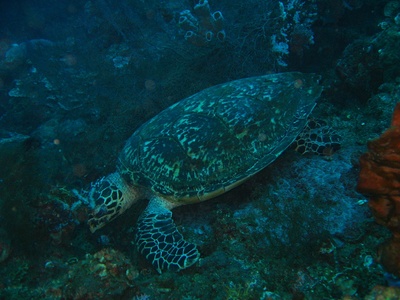
Hawksbill sea turtle
Small, colorful shell trader; feeds on sponges in reefs and sometimes nests on Liberian beaches. Critically endangered from shell trade, bycatch and habitat loss; very rare and high conservation priority.
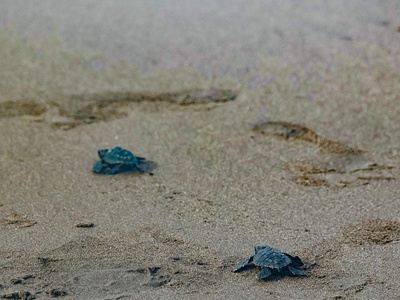
Olive Ridley sea turtle
Small, gregarious sea turtle known for mass arribadas elsewhere; occasionally nests on Liberia’s shores. Vulnerable from fisheries and egg collection; sightings offshore are sporadic but confirmed.
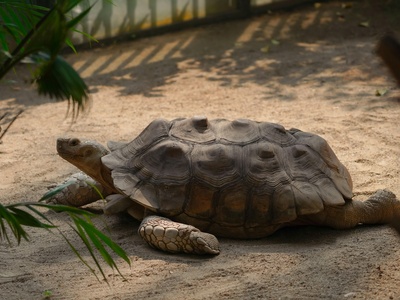
African helmeted turtle
Common freshwater turtle with domed shell; tolerates a variety of habitats including urban ponds. Small to medium-sized and harmless to people. Resilient but dependent on aquatic habitats that can dry or be polluted.
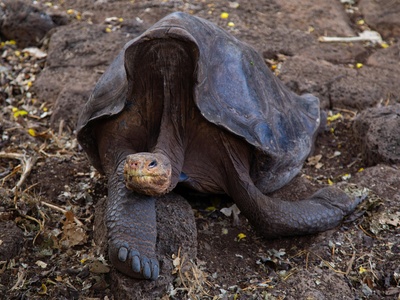
West African mud turtle
Medium freshwater turtle with hinged plastron; lives in calm waters and flooded forest. Secretive but common in suitable wetlands; faces localized threats from wetland destruction.
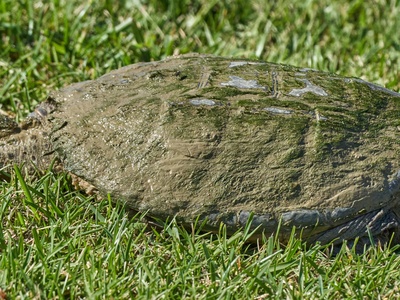
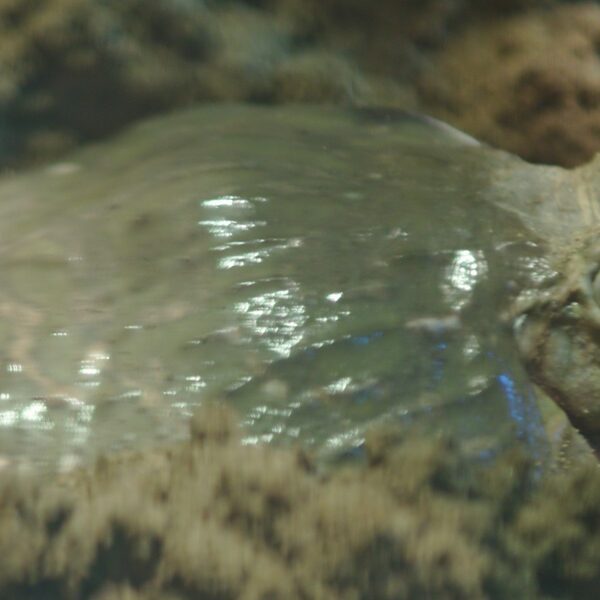
African softshell turtle
Large, flat softshell often found in big rivers and estuaries; can be elusive. Vulnerable from habitat degradation and hunting; occasional records from Liberian waterways require wetland protection.
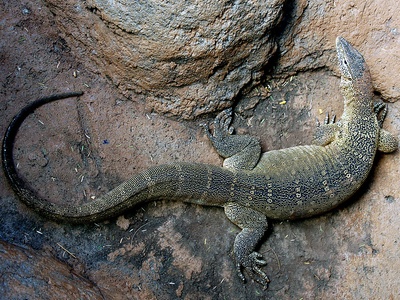
Nile monitor
Large semi-aquatic lizard up to 1.5–2 m; active predator and scavenger often seen near water and farms. Generally harmless if left alone but can bite; adaptable but hunted locally.
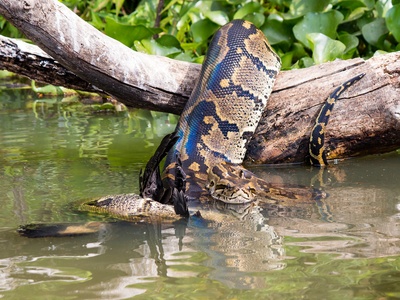
African rock python
Massive constrictor up to several metres; occupies riverine forest and savanna edges. Not commonly seen but can take large prey; persecuted and locally declined, so sightings are noteworthy.
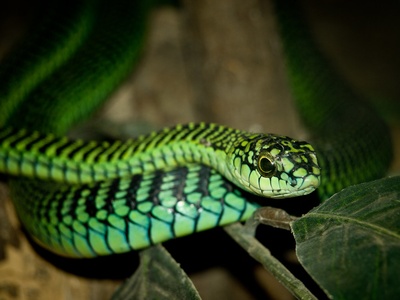
Boomslang
Arboreal, large-eyed rear-fanged snake feeding on birds and eggs. Generally shy but venomous to humans; distinctive sideways-held head and strong climbing habits.
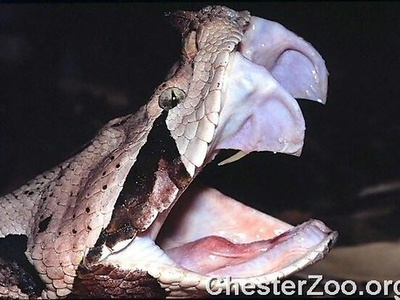
Gaboon viper
Heavy, well-camouflaged viper with longest fangs and spectacular patterning; ambush predator of small mammals. Very venomous but nocturnal and slow-moving; rainforest degradation threatens local populations.
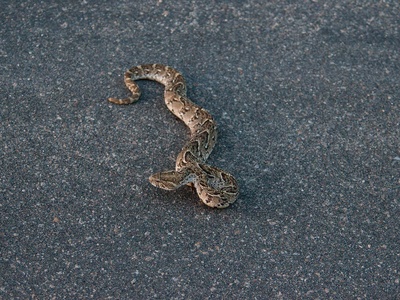
Puff adder
Stocky, well-camouflaged viper common in open habitats and human-modified landscapes. Responsible for many bites due to camouflage and temperament; resilient but affected locally by persecution.
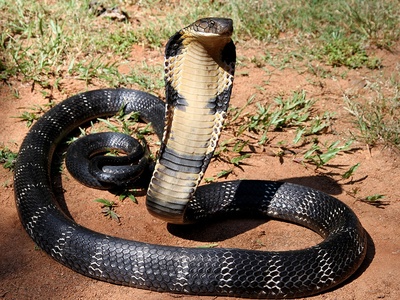
Forest cobra
Large cobra that favors forested habitats and farms; can deliver serious bites. Often dark with pale belly; encounters increase near disturbed forest and agricultural edges.
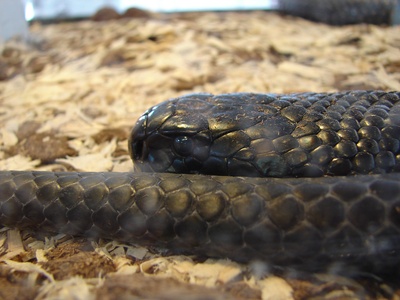
Black-necked spitting cobra
Spitting cobra that can eject venom into eyes; also capable of biting. Common across West Africa in open and edge habitats; protective measures important in rural communities.
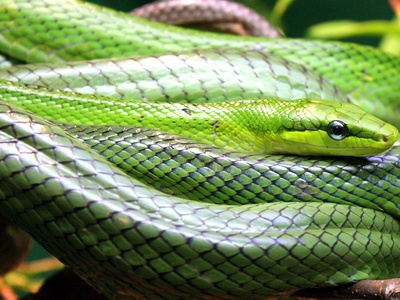
Western green mamba
Slender, highly arboreal and fast-moving snake with potent venom; typically avoids people. Found in dense coastal forests and plantations; very shy but medically significant if bitten.
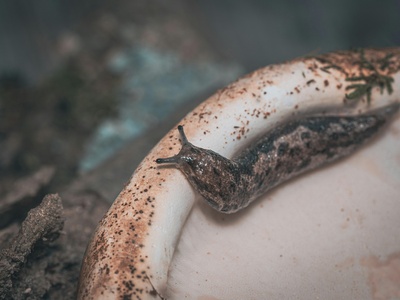
Egg-eating snake
Harmless specialized snake that eats bird eggs using flexible jaws and digestive adaptations. Small to medium-sized and nonvenomous; commonly found near nesting birds and villages.
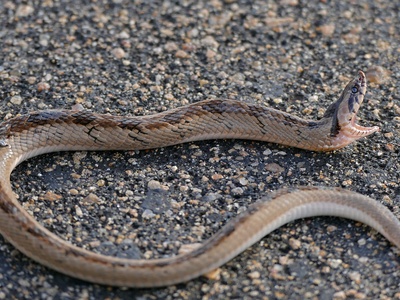
Night adder
Small to medium viper that is mostly nocturnal and feeds on frogs and toads. Relatively mild venom; often encountered on the ground in forested and disturbed habitats.
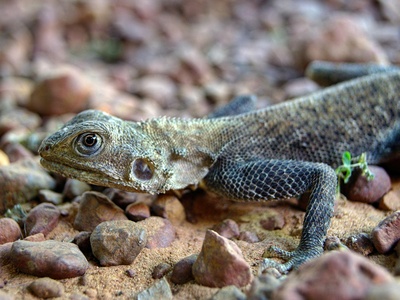
Common agama
Colorful lizard often seen basking on walls and rocks; males display bright colors during breeding. Tolerant of disturbance and common in towns and savanna margins.
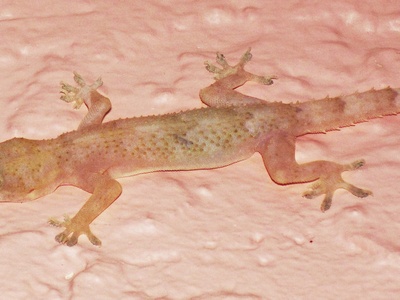
Tropical house gecko
Nocturnal, small gecko that thrives in human settlements, feeding on insects attracted to lights. Harmless and commonly found on walls inside and outside homes across Liberia.
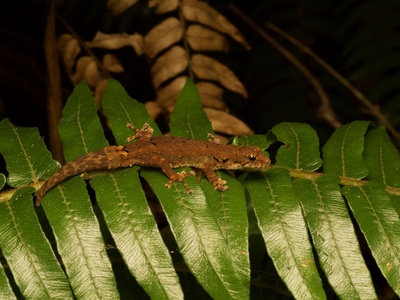
Dwarf day gecko
Tiny diurnal gecko with bright patterns; active on tree trunks and in gardens. Harmless and often overlooked, it indicates healthy edge and secondary forest habitats.

Perrotet’s skink
Smooth, fast-moving skink common in leaf litter and open patches. Small to medium size, insectivorous and tolerant of some habitat disturbance; useful for controlling pests.
River cooter / basking turtle (African side-neck group general)
Several Pelusios side-neck turtles inhabit Liberian waters; medium-sized, basking freshwater species. Generally harmless and tied to wetland health; specific species records vary by river basin.