Some antelope species can sprint at speeds of 50–80 km/h, outpacing many predators for short bursts.
Understanding these traits matters for ecology, conservation, and wildlife observation because the same adaptations that let a Thomson’s gazelle outrun a cheetah also shape migration, habitat use, and how populations respond to human pressures. This guide to the characteristics of a antelope makes a clear claim: antelope success stems from a set of interrelated adaptations, grouped here into physical adaptations, behavioral/ecological traits, and sensory/reproductive strategies. The article uses concrete examples (Thomson’s gazelle, impala, kudu, eland, wildebeest) and authoritative figures such as IUCN and National Geographic where relevant—so what single trait do you think matters most in the field?
Physical adaptations: speed, build, and camouflage

Many antelope are modeled for escape in open country: long legs, light frames, and cryptic coats work together so individuals can detect, avoid, or outrun predators. The next four subsections cover sprinting ability, limb morphology and tendon mechanics, coat coloration for concealment and signaling, and head/defensive anatomy such as horns and hooves.
1. Speed and agility
Many antelope rely on burst speed and agile turns to escape predators; burst speeds commonly fall in the 50–80 km/h range across species and contexts. Thomson’s gazelles are often cited near the upper end of that spectrum during short chases, while comparative studies mention pronghorns in North America as faster over sustained distances (useful for comparative physiology, though pronghorns are not African antelope).
These short-duration sprints—typically 10–30 seconds in documented chases—pair with rapid directional changes that can frustrate pursuit by cheetahs and wild dogs. Speed influences survivorship, predator choice of prey, and even photo opportunities for ecotourists; researchers often quantify chase duration and success rates in predator–prey studies cited by journals and outlets such as National Geographic and BBC Wildlife.
2. Long legs, lightweight frame, and springy tendons
Antelope limb anatomy favors long strides and energy-efficient travel: elongated metatarsals, proportionally long distal limb segments, and elastic tendons store and return energy with each step. Those features increase stride length and reduce metabolic cost during long movements across savannas and grasslands.
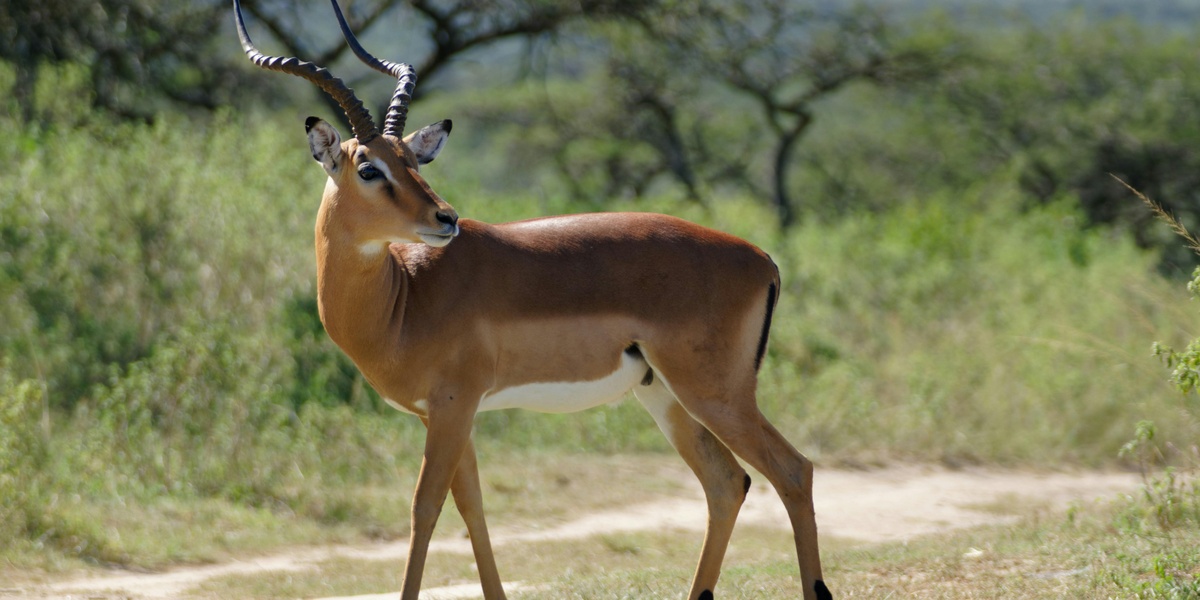
Impala combine speed with agility—able to clear distances of up to about 10 meters in a single bound and reach heights near 3 meters when startled—while heavier species such as the common eland trade peak speed for load-bearing strength and endurance. Tendon elasticity and limb ratios are measurable in locomotion studies and explain how migration and rapid escapes can both be energetically sustainable.
3. Coat coloration and camouflage
Coat patterns—from pale sandy hues to bold flank stripes—help antelope avoid detection by blending with grass, breaking up outlines, or signaling within a herd. Countershading (darker backs, lighter bellies) reduces shadow cues, while disruptive markings can mask movement at a distance.
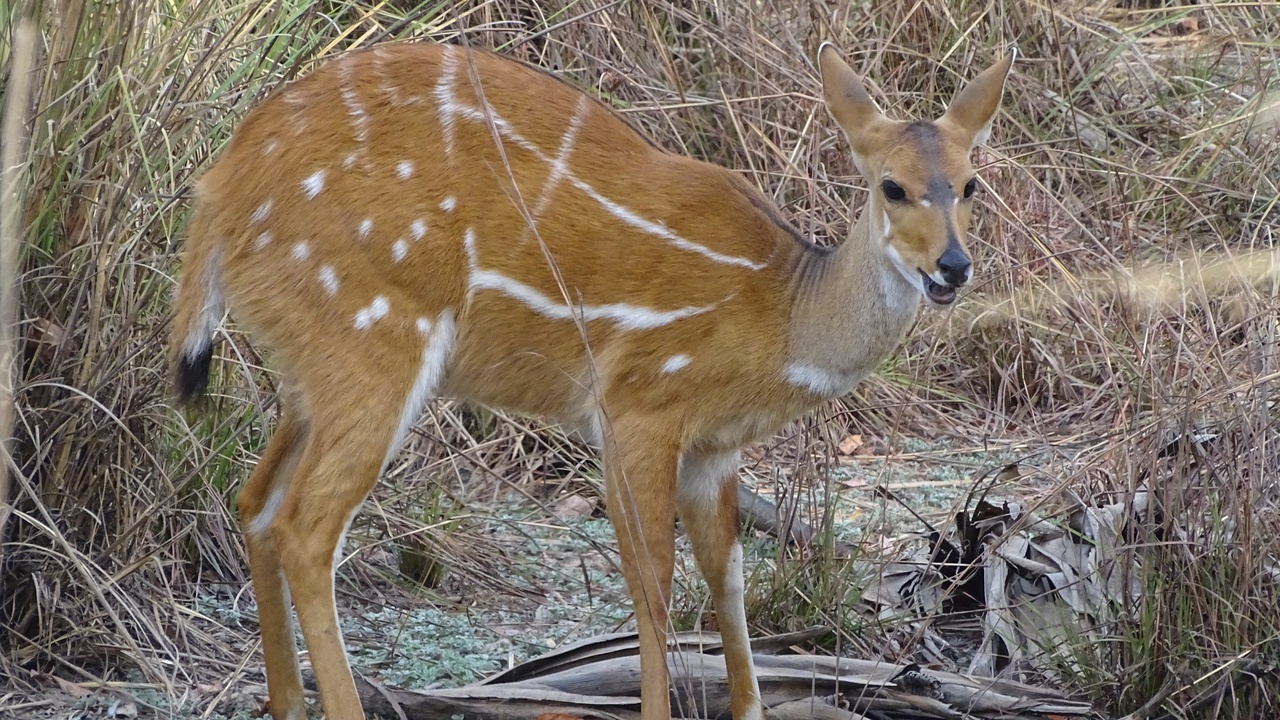
Juveniles of many species are born with cryptic spotting that fades with age; for example, some reedbuck and duiker fawns show spotting that helps conceal them for the first weeks of life. Field guides and ecological studies document these strategies and their effect on predator detection during early life stages.
4. Horns, hooves, and defensive anatomy
Horns and hooves serve both defense and intraspecific competition. Horns are permanent structures—bony cores sheathed in keratin—and their shapes vary widely: the greater kudu’s spiraled horns can reach roughly 120 cm, while impala males carry lyre-shaped horns used in male–male contests.
Hoof morphology also reflects habitat: cloven hooves with tougher rims give traction on rocky ground, whereas broader hooves help disperse weight on soft soils. Horn presence and sexual dimorphism vary by species—some antelope species have horns in both sexes, others only in males—so horn ecology ties directly to mating systems and predator defense.
Behavioral and ecological traits
Behavioral strategies—from herd formation to migration and dietary specialization—determine how antelope interact with predators, plants, and people. This section covers social structure, movement patterns, and feeding strategies, with ecological stats and examples to show how behavior shapes populations and landscapes.
5. Social structure and herding behavior
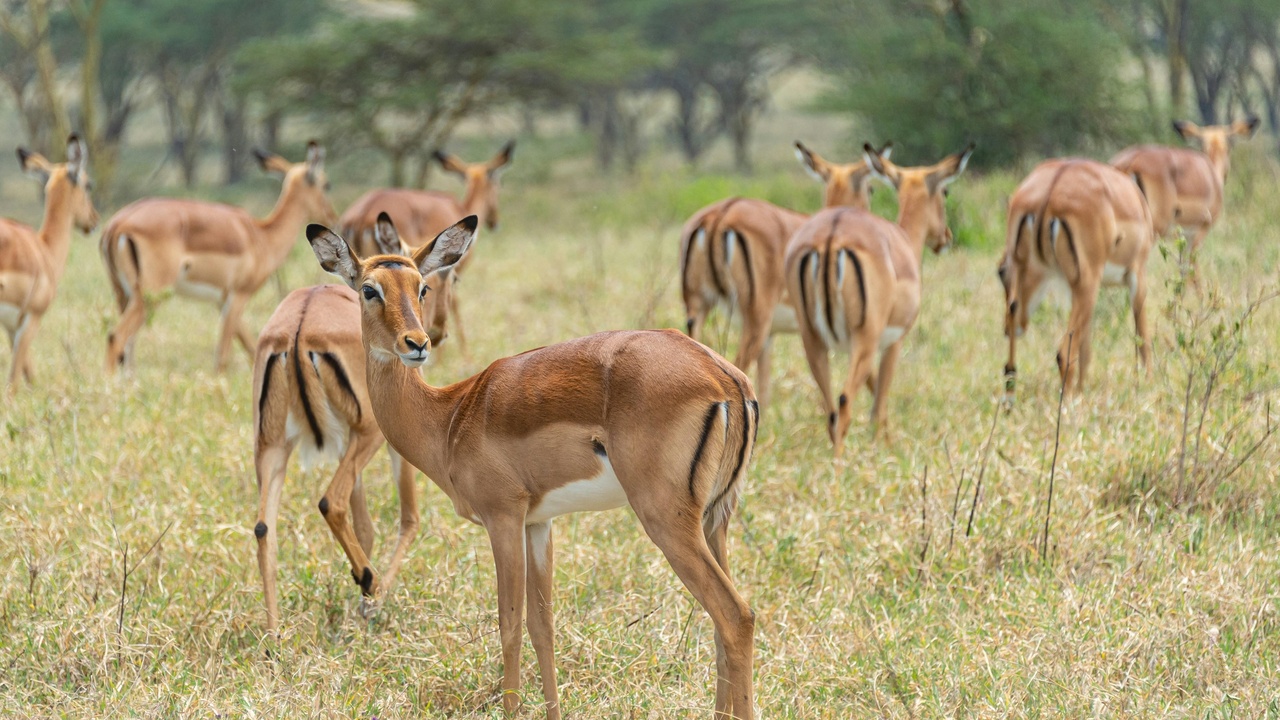
Many antelope form herds to dilute predation risk, increase vigilance, and boost foraging efficiency. Herd sizes vary dramatically: small family groups of 5–20 individuals are common, while migratory aggregations—such as some wildebeest movements—can reach hundreds of thousands in the largest events documented by conservation groups.
Social systems include territorial males defending harems, bachelor groups, and female-led foraging bands. Impala, for example, are seen in herds of roughly 20–100 animals depending on season and locality; herd behavior also affects nutrient flows and predator–prey dynamics at ecosystem scales.
6. Migration, nomadism, and territory use
Movement strategies range from long-distance migrations to localized territoriality or nomadism driven by rainfall and forage. Some migrations span tens to hundreds of kilometers seasonally; the great Serengeti–Masai Mara migrations involve vast numbers of wildebeest and accompanying grazers following rain and new grass.
Resident species show tighter home ranges: territorial impala males defend areas measured in hectares rather than tens of kilometers. Movement affects seed dispersal, grazing pressure, and conflict with livestock, so conservation plans often use movement data from satellite collars and aerial surveys to inform management.
7. Diet, digestive adaptations, and niche partitioning
Antelope exhibit a spectrum of feeding niches: grazers like wildebeest specialize on grasses, browsers such as kudu feed on leaves and shrubs, and mixed feeders like impala switch seasonally. All are ruminants with multi‑chambered stomachs that ferment cellulose through microbial action.
Rumen fermentation and retention times vary with diet and body size, enabling herbivores to extract nutrients from fibrous plants. Niche partitioning reduces competition among sympatric species and shapes habitat mosaics—knowledge that guides habitat restoration and grazing management in areas where livestock interactions occur.
Sensory, reproductive, and survival strategies
Sensory acuity, timed reproduction, and antipredator tactics complete the survival toolkit: eyes, ears, and noses tuned for early detection; seasonal birthing that aligns young with abundant forage; and behavioral displays that reduce predation. The following sections detail each of these traits with quantitative facts where available.
8. Keen vision, hearing, and smell
Antelope have wide‑set eyes that provide expansive peripheral vision—some ungulate studies estimate visual fields on the order of ~300–320 degrees—allowing early detection of predators. Large pinnae give directional hearing, and olfaction plays a strong role in social signaling and territory marking.
These senses combine to make antelope especially wary at dawn and dusk, which is why researchers often pair camera traps and acoustic monitoring with direct observation to study behavior. Sight, sound, and scent cues also structure anti‑predator alerts and coordinated flight responses.
9. Reproductive timing and maternal care
Many antelope breed seasonally so births coincide with peak resources. Gestation lengths vary by species—roughly 5–9 months—with impala gestation commonly cited at about 195 days (≈6.5 months). Most species produce a single offspring per birth, which shapes population growth and recovery potential.
Maternal strategies often include hiding neonates for days to weeks while mothers forage, then rapidly integrating calves into mobile herds once they can keep up. Those life‑history traits influence conservation assessments and are reported in IUCN species profiles and field studies.
10. Anti-predator tactics: alerting, distraction, and display
Antelope employ behaviors that deter or confuse predators: stotting (pronking) in gazelles signals fitness to pursuit predators, alarm snorts alert conspecifics, and coordinated group flight increases escape probability. Stotting has been quantified in field observations as a common response during predator approaches, and alarm vocalizations often precede mass departures.
Distraction and diversion tactics—such as adults drawing attention away from isolated calves—also appear across species. Human disturbance can alter these behaviors, increasing vulnerability, which is why responsible observation and reduced disturbance are recommended by conservation organizations.
Summary
- Most antelope combine burst speeds of about 50–80 km/h with long legs and springy tendons for rapid escape.
- Social systems and movement—herds of 20–100 for impala vs. mass migrations in the hundreds of thousands for wildebeest—shape survival and ecosystem effects.
- Sensory ranges (~300–320° visual fields), seasonal breeding (impala ≈195 days gestation), and single‑offspring litters drive juvenile survival and conservation responses.
- Horns (kudu up to ~120 cm) and hoof design reflect defense and habitat, while camouflage and juvenile spotting reduce detection by predators.
- Support species assessments (see IUCN Red List) and observe antelope responsibly on safaris to help conserve these interconnected adaptations.