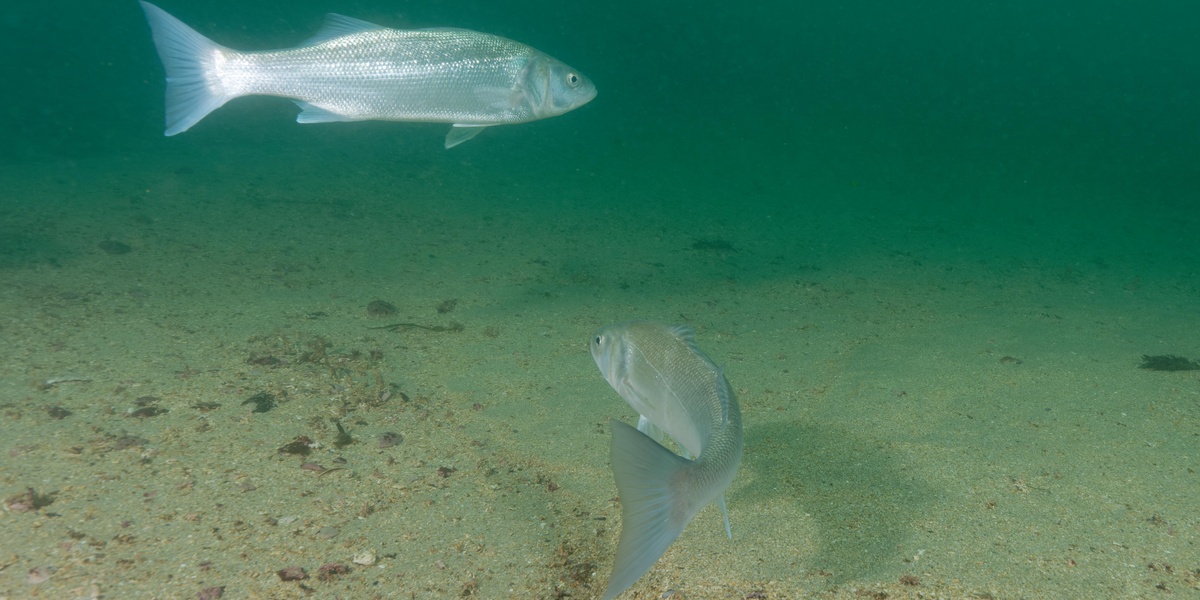
Turkey’s long coastline meets the Aegean, Mediterranean and Black Seas, creating a patchwork of habitats from rocky coves to sandy bays and deep offshore waters. That variety supports a wide range of species important to local fisheries, cuisine and coastal ecology.
There are 63 Fish of Turkey, ranging from Amberjack to White seabream. For each species, the list is organized with Scientific name,Max length (cm),Main habitat & region — you’ll find below.
Which regions of Turkey host the most different fish species?
The Aegean and Mediterranean coasts tend to show the highest species richness because of warmer, clearer waters and diverse habitats (seagrass beds, reefs, and continental shelf). The Black Sea and northern Marmara have different communities adapted to cooler or lower-salinity conditions, so expect variation by region and depth.
How can I use this list to identify or learn about local fish?
Use the Scientific name for precise identification, compare Max length (cm) to the fish you see or catch, and check Main habitat & region to narrow possibilities by where you’re fishing or diving; together those columns make field ID and basic ecological context quick and practical.
Fish of Turkey
| Common name | Scientific name | Max length (cm) | Main habitat & region |
|---|---|---|---|
| European anchovy | Engraulis encrasicolus | 20 cm | Coastal pelagic; Black Sea, Marmara, Aegean, Mediterranean |
| European sardine | Sardina pilchardus | 25 cm | Coastal pelagic; Aegean, Mediterranean, Marmara |
| Atlantic chub mackerel | Scomber colias | 50 cm | Pelagic; Aegean and Mediterranean offshore and coastal waters |
| Atlantic mackerel | Scomber scombrus | 60 cm | Pelagic; northern Aegean, occasional in Turkish waters |
| Bluefish | Pomatomus saltatrix | 120 cm | Coastal pelagic; Aegean, Mediterranean, Black Sea migrants |
| Atlantic bonito | Sarda sarda | 100 cm | Coastal pelagic; Aegean and Mediterranean coasts |
| Bluefin tuna | Thunnus thynnus | 300 cm | Large pelagic; eastern Mediterranean offshore seasonal |
| Bullet tuna | Auxis rochei | 50 cm | Small pelagic; coastal Aegean and Mediterranean |
| Skipjack tuna | Katsuwonus pelamis | 100 cm | Pelagic migrant; eastern Mediterranean occasional |
| Amberjack | Seriola dumerili | 200 cm | Reefs and offshore slopes; Aegean and Mediterranean |
| Common dentex | Dentex dentex | 100 cm | Rocky reefs and seagrass; Aegean and Mediterranean coasts |
| Dusky grouper | Epinephelus marginatus | 100 cm | Rocky reefs and caves; Aegean and Mediterranean coasts |
| Gilt-head bream | Sparus aurata | 70 cm | Seagrass, lagoons and coastal; Aegean, Mediterranean, Marmara |
| European seabass | Dicentrarchus labrax | 100 cm | Coastal, estuaries and lagoons; Black Sea to Mediterranean |
| Red mullet | Mullus barbatus | 30 cm | Demersal sandy bottoms; Aegean and Mediterranean shelf |
| Striped red mullet | Mullus surmuletus | 40 cm | Rocky and sandy bottoms; Aegean and Mediterranean |
| John Dory | Zeus faber | 65 cm | Demersal; muddy and sandy coastal bottoms |
| European hake | Merluccius merluccius | 140 cm | Demersal shelf and slope; Aegean and Mediterranean |
| Turbot | Scophthalmus maximus | 100 cm | Benthic flatfish; coastal sandy and muddy bottoms, Aegean and Black Sea |
| Common sole | Solea solea | 70 cm | Shallow sandy bottoms; Aegean, Mediterranean, Black Sea |
| Monkfish | Lophius piscatorius | 150 cm | Deep demersal; continental shelf and slope, Aegean and Mediterranean |
| Common stingray | Dasyatis pastinaca | 120 cm | Coastal sandy and muddy bottoms; Aegean and Mediterranean |
| Thornback ray | Raja clavata | 120 cm | Coastal sandy and muddy bottoms; Aegean and Mediterranean |
| Smooth-hound (common) | Mustelus mustelus | 150 cm | Coastal demersal; widespread Turkish seas |
| Small-spotted catshark | Scyliorhinus canicula | 100 cm | Rocky and sandy bottoms, continental shelf; widespread |
| Angelshark | Squatina squatina | 200 cm | Benthic sandy and muddy coasts; historically Black Sea and Mediterranean (now rare) |
| Mediterranean moray | Muraena helena | 150 cm | Rocky reefs and crevices; Aegean and Mediterranean coasts |
| Garfish | Belone belone | 120 cm | Surface coastal waters; Aegean, Mediterranean, Black Sea |
| Mediterranean horse mackerel | Trachurus mediterraneus | 60 cm | Coastal pelagic; Black Sea, Marmara, Aegean, Mediterranean |
| Flathead mullet (thicklip mullet) | Chelon labrosus | 80 cm | Estuaries and coasts; widespread Turkish coasts |
| Striped red mullet and red mullet are included — note: duplicate avoided | — | — | — |
| Bogue | Boops boops | 45 cm | Coastal pelagic and seagrass; Aegean and Mediterranean |
| European sprat | Sprattus sprattus | 18 cm | Pelagic; Black Sea and Marmara coastal waters |
| Pontic shad | Alosa immaculata | 60 cm | Anadromous; Black Sea and rivers (spawning runs) |
| European eel | Anguilla anguilla | 140 cm | Rivers, lakes and coastal waters; Black Sea to Mediterranean |
| Wels catfish | Silurus glanis | 400 cm | Large rivers and reservoirs; major inland basins |
| Common carp | Cyprinus carpio | 120 cm | Rivers, lakes and reservoirs; widespread |
| Rainbow trout | Oncorhynchus mykiss | 80 cm | Cold rivers and mountain streams; widely stocked inland waters |
| Brown trout | Salmo trutta | 100 cm | Cold rivers, streams and coastal runs; Black Sea and Anatolian rivers |
| Northern pike | Esox lucius | 150 cm | Freshwater lakes and slow rivers; northern and inland Turkey |
| Pikeperch (Zander) | Sander lucioperca | 100 cm | Rivers and reservoirs; inland basins and Marmara region |
| European perch | Perca fluviatilis | 60 cm | Freshwater lakes and rivers; northern Turkey and Black Sea basins |
| Prussian carp | Carassius gibelio | 45 cm | Lakes and slow rivers; widespread non-native or feral populations |
| Roach | Rutilus rutilus | 50 cm | Rivers and lakes; northern and inland waters |
| Common nase | Chondrostoma nasus | 60 cm | Rivers and streams; Black Sea and many inland basins |
| Round goby | Neogobius melanostomus | 25 cm | Rocky coasts and estuaries; Black Sea and Marmara invasive |
| Sand smelt | Atherina boyeri | 15 cm | Coastal lagoons and estuaries; widespread Turkish coasts |
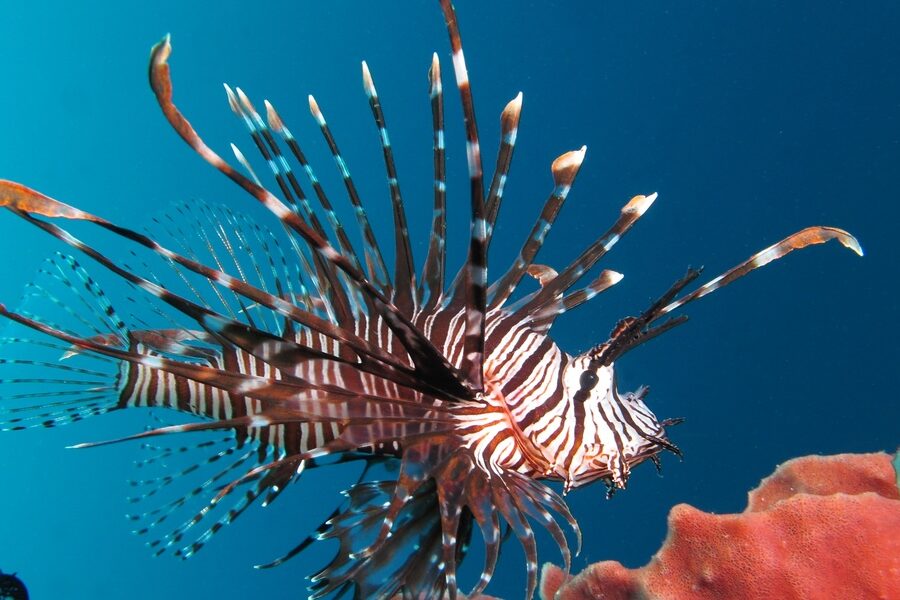
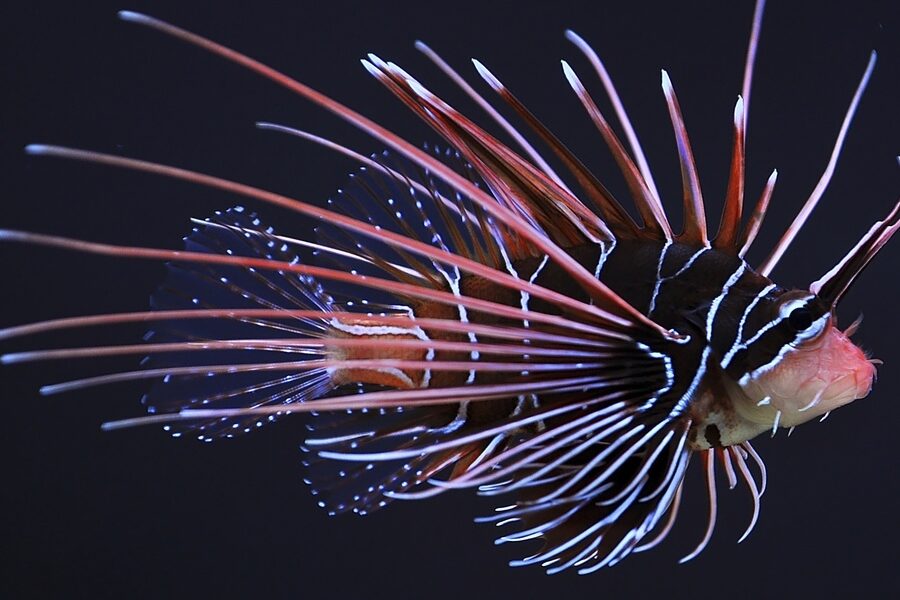
| Lionfish | Pterois miles | 40 cm | Lessepsian reef invader; southeastern Mediterranean coasts of Turkey |
| Marbled spinefoot (rabbitfish) | Siganus rivulatus | 40 cm | Lessepsian herbivore; eastern Mediterranean, Turkish southern coasts |
| Lesser mottled spinefoot | Siganus luridus | 30 cm | Lessepsian rocky reefs; Aegean and southeastern Mediterranean |
| Silver-cheeked toadfish | Lagocephalus sceleratus | 120 cm | Lessepsian toxic puffer; Mediterranean coasts of Turkey |
| Cornetfish | Fistularia commersonii | 200 cm | Reef and open coastal waters; eastern Mediterranean Lessepsian migrant |
| White seabream | Diplodus sargus | 60 cm | Rocky shores and seagrass; Aegean and Mediterranean coasts |
| Painted comber | Serranus scriba | 30 cm | Rocky reefs and seagrass; shallow Aegean and Mediterranean waters |
| Beluga sturgeon | Huso huso | 700 cm | Anadromous; Black Sea and large rivers (historical and rare) |
| Russian sturgeon | Acipenser gueldenstaedtii | 200 cm | Anadromous; Black Sea and rivers, spawning runs |
| Stellate sturgeon | Acipenser stellatus | 250 cm | Anadromous; Black Sea and riverine habitats |
| Grey mullet (flathead mullet) | Mugil cephalus | 100 cm | Estuaries, coastal lagoons and bays; widespread |
| Brown meagre (corvina) | Sciaena umbra | 80 cm | Rocky reefs and seagrass; coastal Aegean and Mediterranean |
| Greater weever | Trachinus draco | 45 cm | Sandy coastal shallows; Aegean and Mediterranean beaches |
| Common goby | Pomatoschistus microps | 12 cm | Shallow coastal and estuarine waters; widespread |
| Axillary seabream (common pandora) | Pagellus erythrinus | 60 cm | Rocky and sandy bottoms; Aegean and Mediterranean coasts |
| Dusky snapper? (note: common names may vary) — excluded to avoid ambiguity | — | — | — |
Images and Descriptions
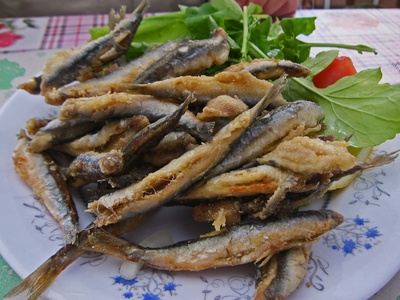
European anchovy
Small schooling forage fish common in Turkish coastal waters. Reaches about 20 cm, found in bays and estuaries; vital to fisheries and cuisine, especially as fresh or preserved anchovy in Black Sea and Aegean kitchens.
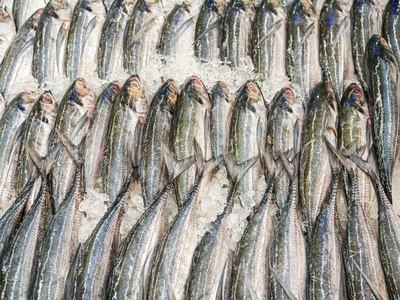
European sardine
Silver schooling fish reaching around 25 cm, abundant along Aegean and Mediterranean coasts. Coastal shoals are fished heavily; prized for fresh, canned and grilled preparations and important ecologically as mid-trophic forage.
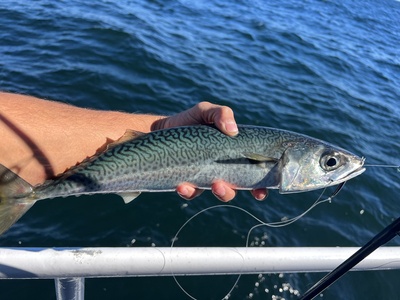
Atlantic chub mackerel
Fast-swimming pelagic mackerel often in coastal shoals. Grows to roughly 50 cm, common in summer months around Turkish coasts, prized by anglers and for commercial fisheries.
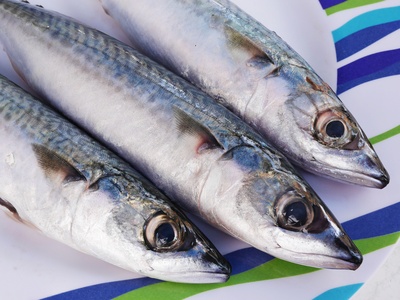
Atlantic mackerel
Temperate pelagic species reaching ~60 cm. Appears seasonally in northern Turkish seas; schooling behavior and striking stripes make it a familiar coastal bait and table fish.
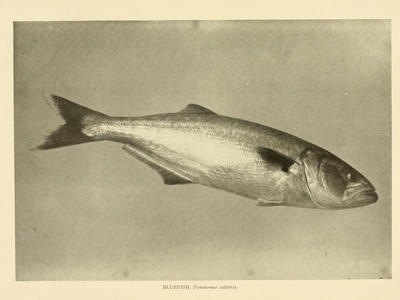
Bluefish
Aggressive predatory fish up to about 120 cm. Seasonal migrant to Turkish coasts, known for fierce runs that thrill anglers and for strong, oily flesh popular smoked or grilled.
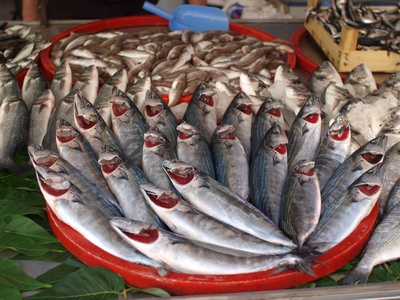
Atlantic bonito
Sporty, fast-swimming tuna relative reaching around 100 cm. Runs close to shore in warm months, highly regarded by anglers and for grilling or making regional cured specialties.
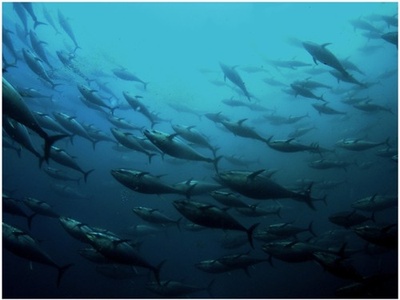
Bluefin tuna
Massive migratory tuna up to 3 m, occurring seasonally in Turkish waters. A highly valued commercial and sport species with conservation and management importance due to overfishing.
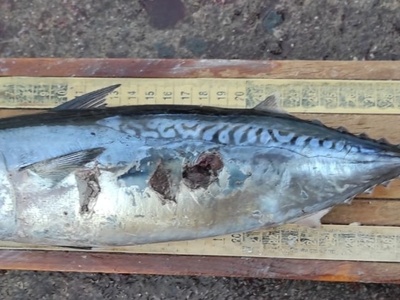
Bullet tuna
Small, fast tuna reaching about 50 cm. Regular in Turkish coastal waters, often in mixed schools and used by artisanal fisheries; notable for rapid swimming and schooling behavior.
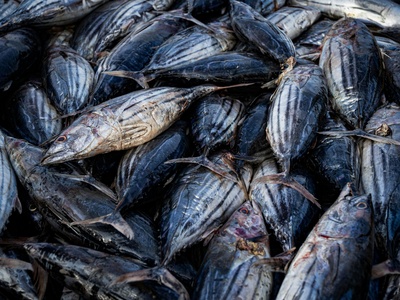
Skipjack tuna
Warm-water tuna reaching about 100 cm. An occasional migrant into eastern Mediterranean waters off southern Turkey; valued in fisheries where present.
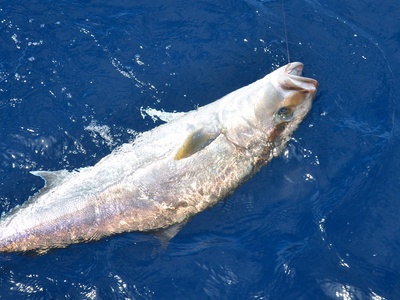
Amberjack
Large predatory jack that can exceed 2 m. Found around rocky reefs, wrecks, and slopes off Turkish coasts; powerful fighter prized by anglers and important for demersal fisheries.
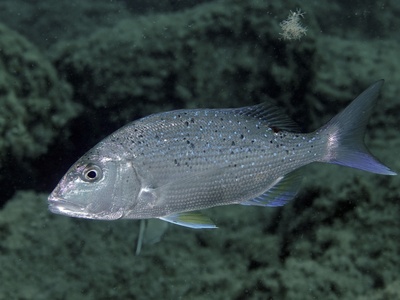
Common dentex
Striking predatory sea bream up to about 1 m. Lives on rocky bottoms and seagrass; carnivorous and sought after for sport fishing and table quality.
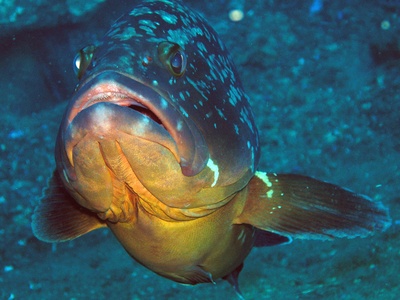
Dusky grouper
Large reef grouper reaching around 1 m, site-attached and long-lived. Found in caves and rocky habitats; conservation interest due to slow growth and vulnerability to overfishing.
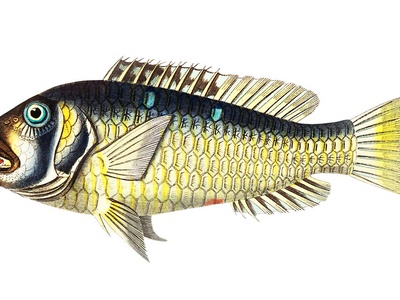
Gilt-head bream
Iconic Mediterranean bream up to 70 cm, common in seagrass beds and lagoons. Important aquaculture and wild-capture species, prized for delicate white flesh.
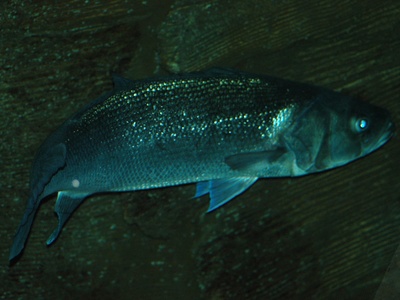
European seabass
Popular sport and commercial fish up to 1 m. Found in estuaries, coastal waters and rivers; migratory between sea and brackish waters and important to fisheries and aquaculture.
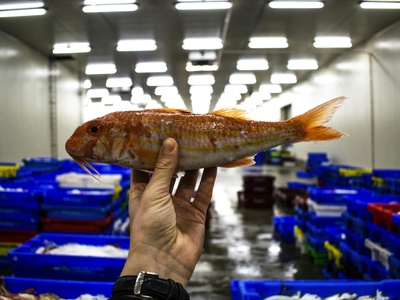
Red mullet
Small, tasty demersal fish around 30 cm. Forages on sandy bottoms for invertebrates; highly prized in local cuisines and commonly seen in markets.
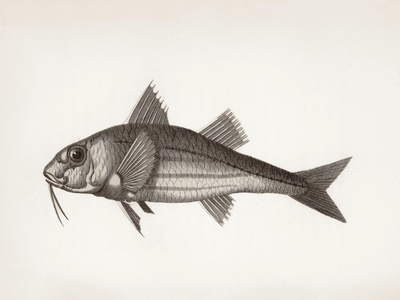
Striped red mullet
Similar to red mullet but often on rocky bottoms, reaching ~40 cm. Known for distinct stripes and excellent flavor, a favorite among seafood lovers.
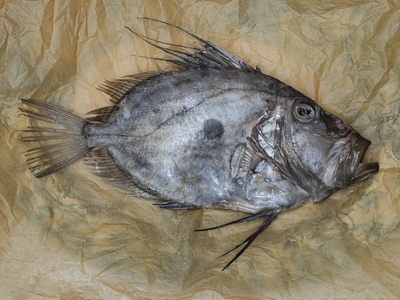
John Dory
Flat-bodied predatory fish up to 65 cm with a distinctive spot. Found close to seabed on continental shelves; notable for its unique shape and delicate flesh.
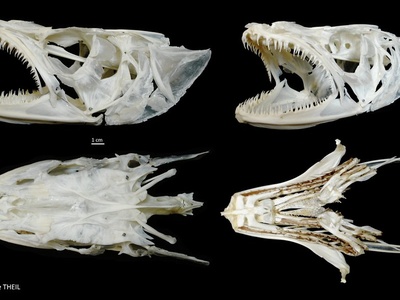
European hake
Important commercial demersal predator reaching about 140 cm. Lives on continental shelf and slope; valued for mild white meat in Turkish and regional cuisines.
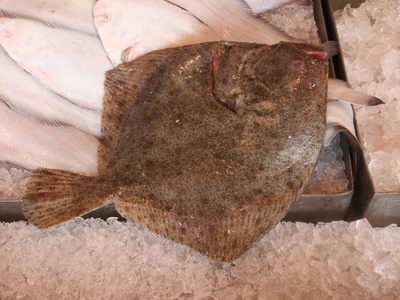
Turbot
Large flatfish up to 1 m with prized firm white flesh. Prefers sandy or muddy substrates in shallow coastal waters, important in fisheries and gastronomy.

Common sole
Flat, bottom-dwelling sole reaching around 70 cm. Lives on soft substrates nearshore; a delicate-flavored fish often sought by chefs and recreational fishers.
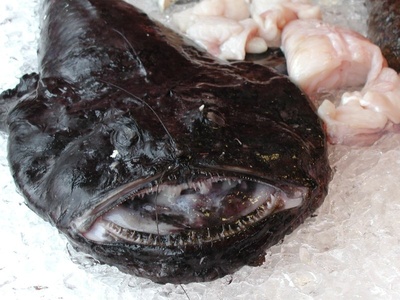
Monkfish
Ambush predator with huge mouth, growing up to 1.5 m. Lives on the seabed of deeper coastal waters; known for boneless tail meat prized in cuisine.
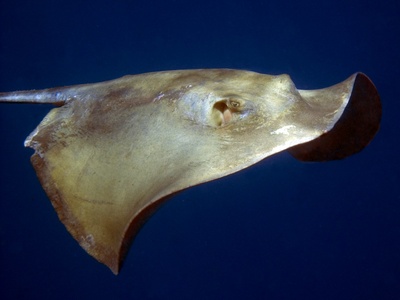
Common stingray
Medium-sized ray reaching about 1.2 m disk width. Found on soft substrates nearshore; occasionally encountered by bathers and fishers, notable for its spine and shy behavior.
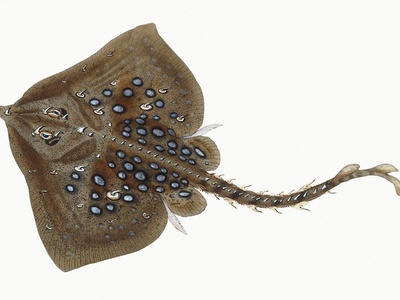
Thornback ray
Flat-bodied ray up to ~1.2 m, favoring sandy or muddy seabeds. Often caught as bycatch and recognizable by its thorny back and diamond-shaped disk.
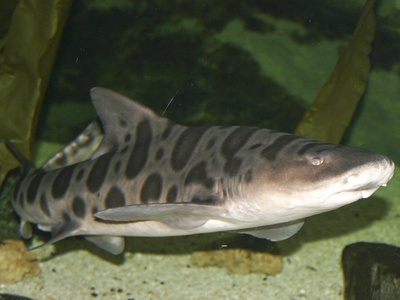
Smooth-hound (common)
Medium shark reaching around 1.5 m, common on shallow continental shelves. Harmless to humans, often taken in coastal fisheries and important ecologically as a mesopredator.
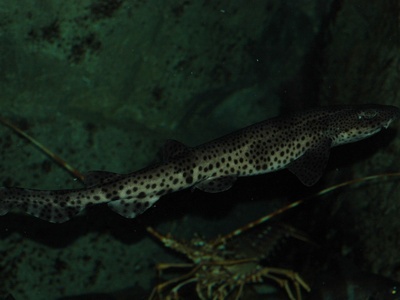
Small-spotted catshark
Small nocturnal shark up to 1 m found over sandy and rocky bottoms. Frequently caught in trawls, interesting for its spotted pattern and role in coastal food webs.
Angelshark
Flattened ambush shark up to 2 m, historically present on Turkish coasts but now very rare. Lives buried on soft bottoms; conservation concern due to declines.
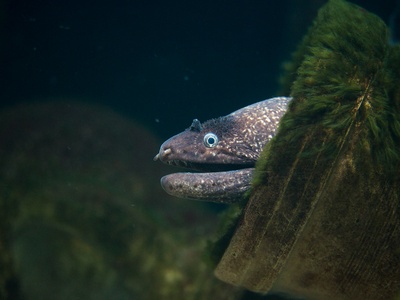
Mediterranean moray
Elongated eel-like predator reaching about 1.5 m, inhabiting rocky caves and crevices. Secretive and nocturnal, admired by divers and sometimes caught by anglers.
Garfish
Slender surface predator up to ~1.2 m with beak-like jaws. Found near surface in coastal waters; known for acrobatic fights and occasional angling captures.
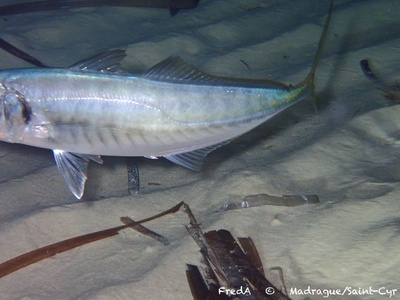
Mediterranean horse mackerel
Schooling jack up to 60 cm, common in coastal waters and an important target for commercial and artisanal fisheries across Turkish seas.
Flathead mullet (thicklip mullet)
Coastal and estuarine mullet reaching ~80 cm. Tolerant of brackish water and common in lagoons and bays; valued locally and ecologically significant in estuaries.
Striped red mullet and red mullet are included — note: duplicate avoided
—
Bogue
Silver, round-bodied bream reaching around 45 cm. Forms coastal schools over seagrass and rocky bottoms; familiar to recreational anglers and common at fish markets.
European sprat
Small schooling pelagic fish up to 18 cm. Abundant in northern Turkish waters, important as forage fish and used in local food traditions.
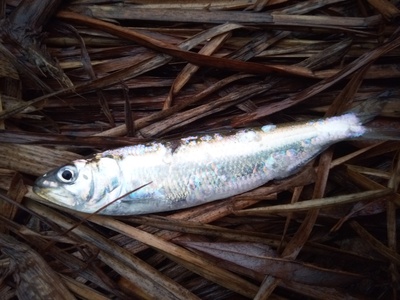
Pontic shad
Anadromous clupeid reaching about 60 cm, migrates from the Black Sea into rivers to spawn. Historically important for coastal fisheries and ecological connectivity.
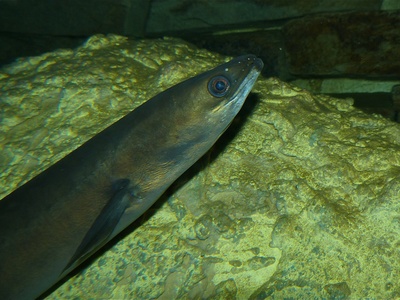
European eel
Catadromous eel up to about 140 cm, migrates from inland waters to the Sargasso Sea. Found in Turkish rivers and estuaries; culturally and ecologically notable but declining.
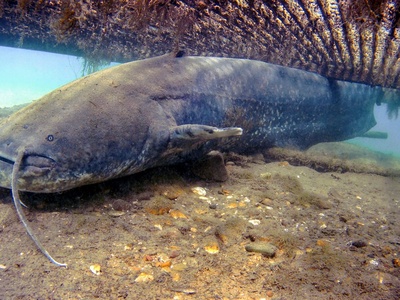
Wels catfish
Giant freshwater catfish reaching up to 4 m in Turkey’s largest rivers and reservoirs. Apex freshwater predator prized by anglers for trophy size.
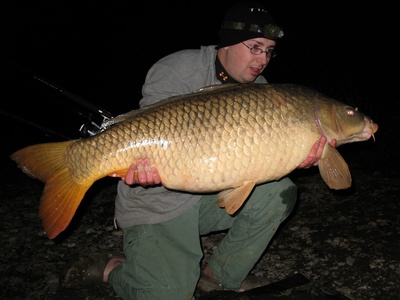
Common carp
Large freshwater omnivore up to about 120 cm, widespread in Turkish inland waters as both feral and cultured fish. Important in aquaculture and freshwater fisheries.
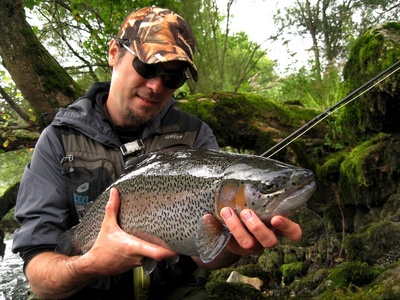
Rainbow trout
Introduced salmonid up to ~80 cm, widely stocked in Turkish rivers and lakes for angling and aquaculture. Popular with anglers and as table fish.
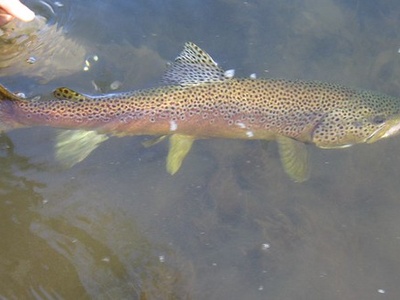
Brown trout
Native trout species inhabiting cool streams and rivers, with sea-run forms reaching the sea. Reaches about 1 m in size; valued by anglers for sport and flavor.
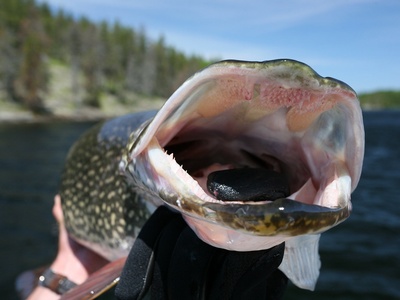
Northern pike
Ambush freshwater predator up to about 150 cm. Found in lakes and lowland rivers, prized by anglers for aggressive strikes and trophy potential.
Pikeperch (Zander)
Predatory freshwater percid up to ~1 m, common in reservoirs and river systems. Valued fisheries species with firm white flesh.
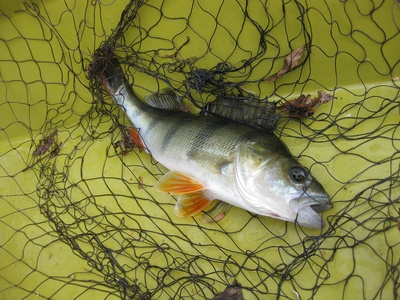
European perch
Colorful perch reaching ~60 cm in Turkey. Widespread in cooler lakes and rivers, popular with recreational anglers and ecologically significant predator.
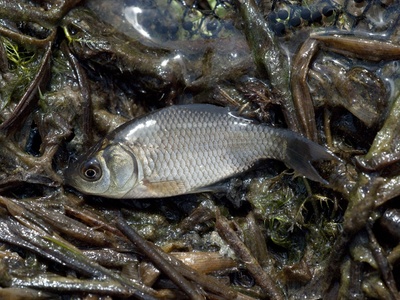
Prussian carp
Resilient cyprinid reaching about 45 cm. Often abundant in stagnant waters and reservoirs; tolerant of varying conditions and can outcompete native species.
Roach
Common cyprinid up to about 50 cm. Ubiquitous in lakes and rivers, a key forage species for predators and familiar to freshwater anglers.
Common nase
Stream-dwelling cyprinid reaching roughly 60 cm. Lives on flowing waters, often seen in shoals; important for riverine biodiversity and local fisheries.
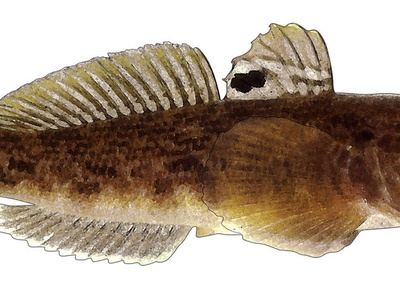
Round goby
Small benthic goby up to 25 cm, invasive in parts of Turkish seas. Thrives in rocky and brackish habitats and can alter local food webs.
Sand smelt
Small schooling fish up to ~15 cm living in shallow lagoons and estuaries. Important forage species and common in coastal shallow-water fisheries.
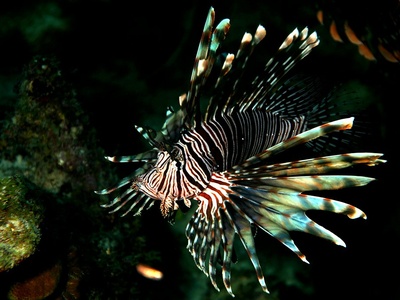
Lionfish
Venomous Indo-Pacific lionfish that has colonized eastern Mediterranean reefs. Reaches ~40 cm, preys on native fish and is a growing conservation concern.
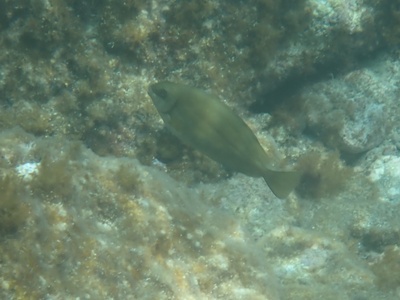
Marbled spinefoot (rabbitfish)
Herbivorous rabbitfish up to ~40 cm originating from the Red Sea. Established on Turkish Mediterranean coasts and notable for grazing on algae and seagrass.
Lesser mottled spinefoot
Slim rabbitfish up to about 30 cm. Lessepsian migrant from the Red Sea, now common on rocky reefs, affecting algal communities through grazing.
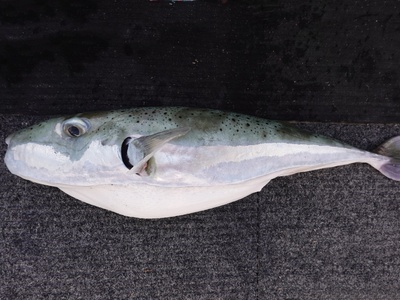
Silver-cheeked toadfish
Poisonous Lessepsian puffer reaching ~120 cm. Strongly invasive and hazardous to humans if consumed; a high-profile species of concern in Turkish waters.
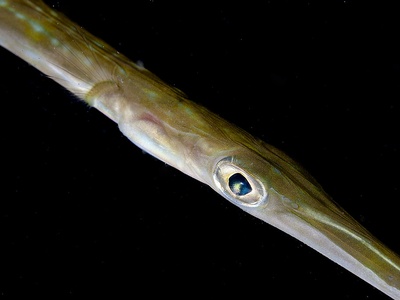
Cornetfish
Long, pipe-like fish reaching up to 2 m. A Lessepsian migrant now present off southern Turkish coasts, known for its slender appearance and stealthy hunting.
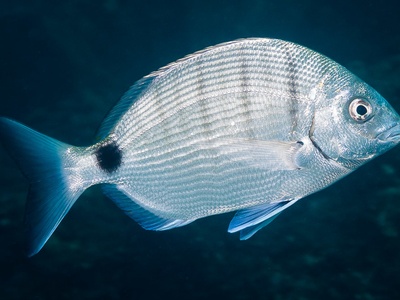
White seabream
Robust seabream up to ~60 cm found on rocky reefs and seagrass. Common around Turkey’s coastlines and popular with anglers and local markets.
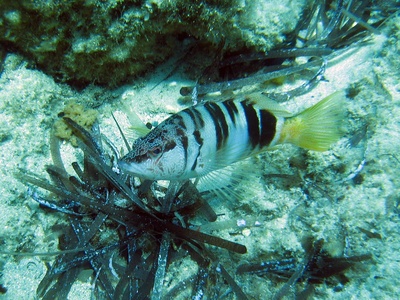
Painted comber
Colorful small serranid up to 30 cm living on shallow rocky habitats. Frequent target for shore anglers and appreciated by divers for its bright markings.
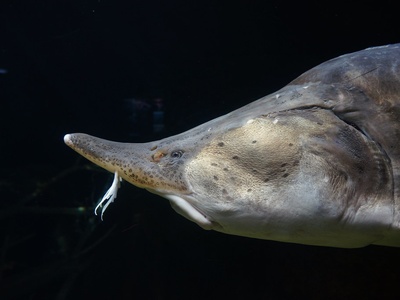
Beluga sturgeon
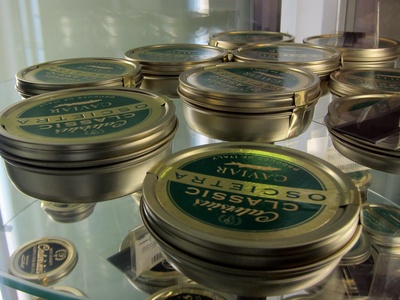
Massive anadromous sturgeon reaching several metres. Historically important for caviar and fisheries in Turkish rivers; now rare and of major conservation concern.
Russian sturgeon
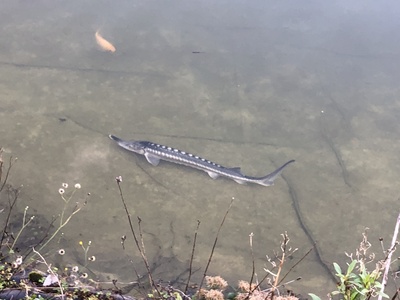
Large sturgeon up to ~200 cm migrating from Black Sea into rivers to spawn. Once abundant, now reduced by dams and fisheries, with conservation programs ongoing.
Stellate sturgeon
Spindle-shaped sturgeon up to ~250 cm found in Black Sea and tributaries. Migratory and valuable historically for caviar, now threatened and monitored in Turkey.
Grey mullet (flathead mullet)
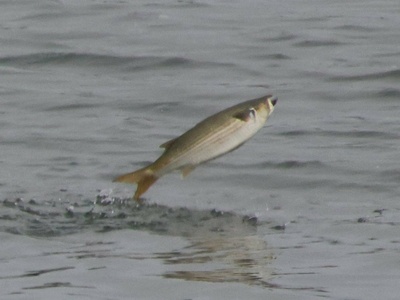
Robust coastal mullet to around 100 cm common in estuaries and coastal lagoons. Economically important and tolerant of varied salinities.
Brown meagre (corvina)
Noisy croaker species up to ~80 cm inhabiting rocky and vegetated coastal zones. Notable for croaking sounds and vulnerability to overfishing in shallow coastal waters.
Greater weever
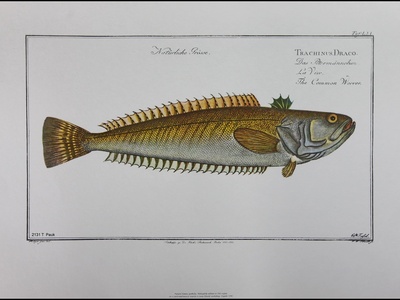
Bottom-dwelling venomous fish up to ~45 cm that buries in sand. Can sting bathers and fishers; commonly encountered in warm shallow coastal waters.
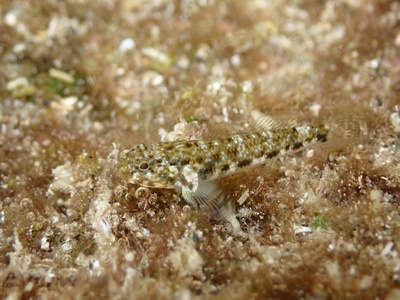
Common goby
Tiny goby around 12 cm living in shallow coastal and estuarine habitats. Important forage species for larger fish and birds, often overlooked but ecologically key.
Axillary seabream (common pandora)
Seabream up to ~60 cm found on mixed bottoms near shore. Valued in local fisheries for good flavor and often seen at fish markets.
Dusky snapper? (note: common names may vary) — excluded to avoid ambiguity
—