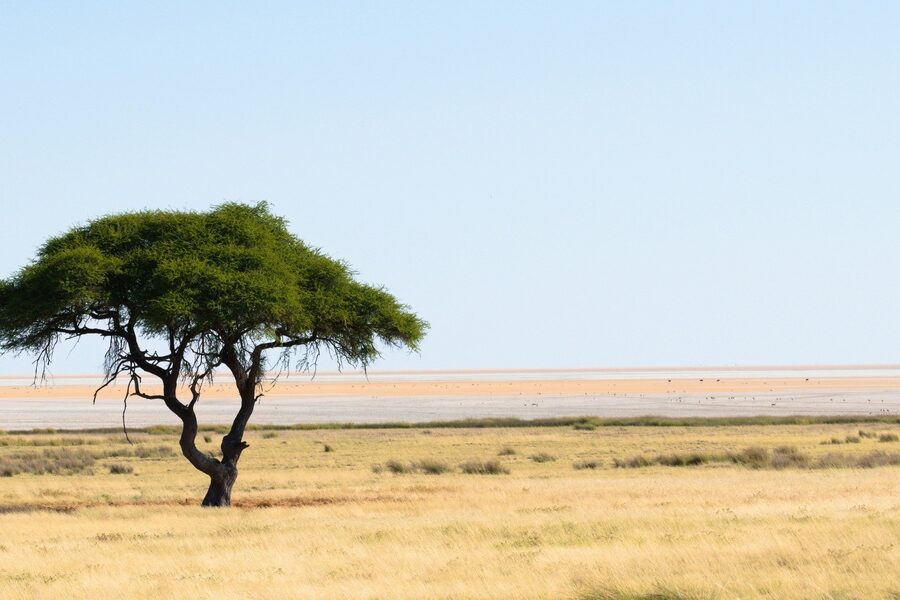
The African savanna is a patchwork of grass, seasonal waterholes and scattered trees that set the rhythm for wildlife and rural life across the continent. Trees here influence shade, forage and local economies, and many species are easy to miss if you only look at the open grass.
There are 37 African Savanna Trees, ranging from African mahogany to Zambezi teak. For each, the data are organized as Scientific name,Range,Height (m); you’ll find below.
How can I tell similar savanna tree species apart in the field?
Look at a few quick features: leaf shape and size, bark texture, seed pods or fruit, and overall silhouette. Note habitat and location (range is often diagnostic), take a photo of leaves and bark, and compare to trusted field guides or the Scientific name column in the list to confirm identification.
Which savanna trees provide the most benefit to wildlife and local communities?
Species that offer fruit, nectar, or pods (and dense shade) are most valuable—animals use them for food and shelter, while people rely on them for timber, medicine and fodder. The list highlights range and Height (m) so you can spot which trees are likely to be accessible and useful near you.
African Savanna Trees
| Name | Scientific name | Range | Height (m) |
|---|---|---|---|
| Umbrella thorn | Vachellia tortilis | Sahel to Southern Africa, widespread in East Africa | 8.0 |
| Sweet thorn | Vachellia karroo | Southern and Eastern Africa | 12.0 |
| Mopane | Colophospermum mopane | Southern Africa (Zambia, Zimbabwe, Botswana, Namibia, S. Africa) | 12.0 |
| Baobab | Adansonia digitata | Widespread across sub‑Saharan savannas | 18.0 |
| Marula | Sclerocarya birrea | Southern & East Africa, Sahel fringe | 12.0 |
| Sausage tree | Kigelia africana | Widespread savannas and riverine woodlands across Africa | 12.0 |
| Fever tree | Vachellia xanthophloea | East Africa, Rift Valley wetlands and floodplains | 12.0 |
| Gum arabic tree | Senegalia senegal | Sahel and Sudanian zones from Senegal to Sudan | 7.0 |
| Winter thorn | Faidherbia albida | Sahel to Southern Africa, East African woodlands | 15.0 |
| Leadwood | Combretum imberbe | Southern African dry savannas and woodlands | 18.0 |
| Silver cluster-leaf | Terminalia sericea | Southern and East Africa, dry savannas | 8.0 |
| Red bushwillow | Combretum apiculatum | Southern and East Africa savannas | 8.0 |
| Kiaat (Bloodwood) | Pterocarpus angolensis | Southern and East African woodlands and savannas | 20.0 |
| Desert date | Balanites aegyptiaca | Sahel, Sudanian and East African dry savannas | 10.0 |
| Shepherd’s tree | Boscia albitrunca | Kalahari, Namibia and southern African savannas | 10.0 |
| Camelthorn | Vachellia erioloba | Southern African arid savannas and Kalahari | 12.0 |
| Velvet bushwillow | Combretum molle | Sub‑Saharan savannas and open woodlands | 10.0 |
| Jackalberry | Diospyros mespiliformis | Widespread riverine and flat savannas in sub‑Saharan Africa | 20.0 |
| Buffalo thorn | Ziziphus mucronata | Southern and Eastern Africa savannas and woodlands | 7.0 |
| Jacket plum | Pappea capensis | Southern and East African savannas and woodlands | 8.0 |
| Boer bean | Schotia brachypetala | Southern and Eastern African savannas and woodlands | 10.0 |
| Coral tree | Erythrina abyssinica | East and Southern African savannas and riverine woodlands | 8.0 |
| Waterberry | Syzygium cordatum | Riparian zones throughout Southern and East African savannas | 12.0 |
| Bird plum | Bridelia micrantha | Widespread savanna and riverine woodlands in sub‑Saharan Africa | 10.0 |
| Ochna | Ochna pulchra | Dry savannas of Southern Africa | 6.0 |
| Sisalwood? Markhamia lutea | Markhamia lutea | East African savannas and woodland margins | 12.0 |
| Zambezi teak | Baikiaea plurijuga | North‑eastern Namibia, Botswana and Zambia woodlands | 15.0 |
| Msasa (miombo) | Brachystegia spiciformis | Miombo woodlands of Zambia, Zimbabwe, Malawi and Mozambique | 20.0 |
| Mnondo | Julbernardia globiflora | Miombo woodlands across central and southern Africa | 20.0 |
| African white karee | Sterculia africana | Sahelian and East African dry savannas | 8.0 |
| Monkey orange | Strychnos spinosa | Widespread in savannas from West to Southern Africa | 8.0 |
| African mahogany | Afzelia quanzensis | Zambezi and southern African woodlands and savannas | 18.0 |
| Sakalako (gorom fruit) | Azanza garckeana | Sahelian to southern African savannas and woodlands | 6.0 |
| Grewia | Grewia bicolor | Savannas across sub‑Saharan Africa | 6.0 |
| Sand plum | Ximenia americana | Open savannas and woodland edges across Africa | 5.0 |
| Resin tree | Commiphora africana | Sahelian and East African dry savannas | 6.0 |
| African rosewood | Pterocarpus erinaceus | West African Sudanian savannas | 15.0 |
Images and Descriptions
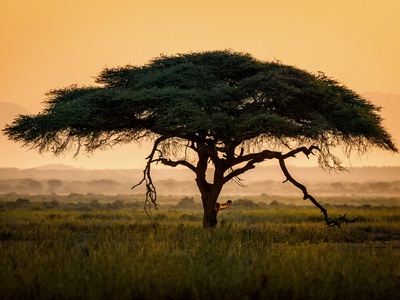
Umbrella thorn
Flat‑topped canopy, small pinnate leaves and paired straight thorns make this legume easy to ID. Fixes nitrogen, offers shade and browse for wildlife, used for fuelwood, charcoal and traditional medicine; tolerant of drought and grazing.
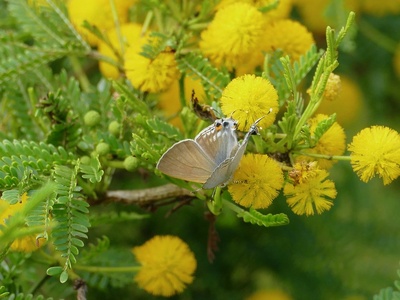
Sweet thorn
Broad-crowned tree with grey bark, pinnate leaves and straight thorns; fragrant creamy-yellow blossoms and pods. Important for livestock browse, apicultural nectar source, medicinal uses and hard timber; colonizes disturbed soils and is common in bushveld and savanna margins.

Mopane
Distinctive butterfly-shaped leaflets and fire-resistant coppicing make mopane dominant in hot lowveld. Provides crucial forage for mopane moth caterpillars, fuelwood and strong timber, supports wildlife, and shapes a characteristic mono-dominant woodland in clay soils.
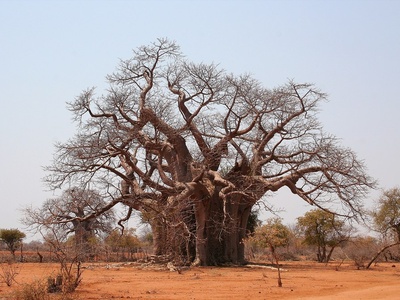
Baobab
Massive trunk, smooth grey bark and seasonal palmate leaves mark the iconic baobab. Stores water in trunk, produces edible fruit rich in vitamin C; cultural significance, pollinated by bats and bees, some populations face pressure from land use and climate change.
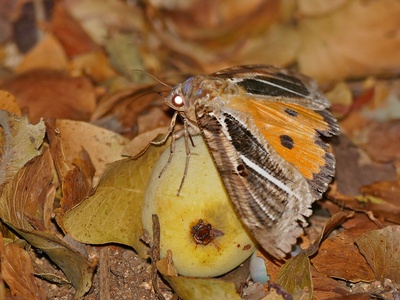
Marula
Rounded tree with pinnate leaves and fragrant cream flowers; produces nutrient-rich fruits eaten by people and elephants. Valued for traditional beer, oil and wildlife forage, resilient to dry conditions and a culturally and economically important savanna species.
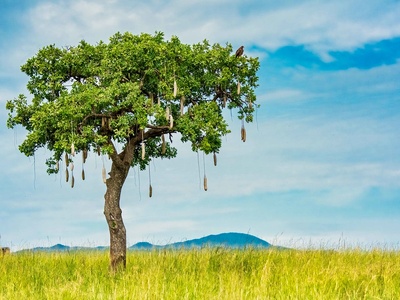
Sausage tree
Notable for its long sausage-like fruits and large bell-shaped flowers. Grows along rivers and open woodlands, attracts pollinators and bats, fruits used in traditional medicine and fermented beverages; ornamental value and shade provider in savanna landscapes.
Fever tree
Bright yellow‑green smooth bark and upright growth identify the fever tree near swampy ground. Forms open stands in wet savannas, provides browse and nesting sites, used locally for timber and traditional remedies; culturally prominent in East African landscapes.
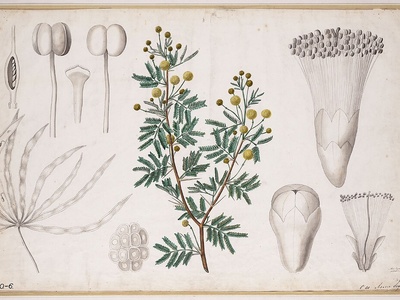
Gum arabic tree
Small, thorny legume with pinnate leaves and sweetly scented flowers, known for exuding gum arabic used in food and industry. Drought-tolerant, fixes nitrogen, important for pastoralists and agroforestry across Sahelian savannas.
Winter thorn
Deciduous in rainy season and leafing during dry months, unique reverse phenology. Deep-rooted, fixes nitrogen and improves soil fertility, used in agroforestry (fertilizer tree), livestock fodder and provides shade and stabilizing presence in dry savannas.
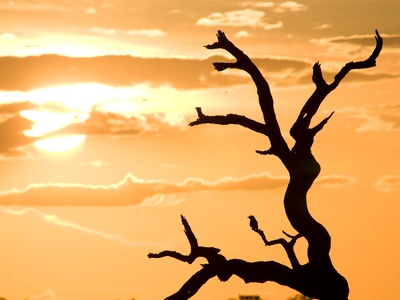
Leadwood
Heavy, dense timber and rough bark distinguish leadwood. Slow‑growing, long‑lived tree of rocky and gravelly soils that provides excellent fire-resistant shade and durable wood for local use; conservation concern where overharvested.
Silver cluster-leaf
Silvery underside to leaves and flat clusters of small fruits make this a recognisable savanna tree. Pioneer species on disturbed ground, provides browse, fuelwood and traditional medicines; tolerates drought and often forms open woodland.
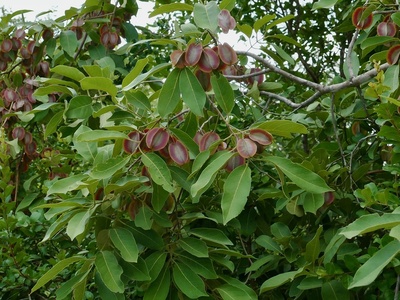
Red bushwillow
Rounded crown, yellow-orange to red autumn hues and four-winged fruits characterise this tree. Common browse plant for browsers, used for fuelwood and poles, thrives on rocky slopes and edge habitats in mixed savanna woodlands.
Kiaat (Bloodwood)
A tall, spreading tree with pinnate leaves and distinctively patterned reddish timber prized for furniture. Produces papery seed pods, supports nectar-feeding insects, culturally valuable but overexploited in parts of its range.
Desert date
Spiny, drought-tolerant tree with oval edible fruits and bitter seeds. Important forage and fodder, source of oil and traditional medicines; tolerates saline and arid soils, central in subsistence economies across dry African savannas.
Shepherd’s tree
Deep-rooted, rough-barked tree with small glossy leaves; often the lone shade tree in Kalahari dunes. Provides critical shade and forage, stores water, used medicinally and historically valued by herders for sheltering stock and people.
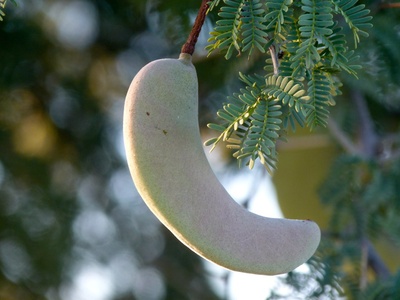
Camelthorn
Gnarled branches, long pods and paired thorns define the camelthorn. Important for browsing, provides nesting for sociable weaver birds, produces durable hardwood used for fencing and fuel; iconic species of arid savanna landscapes.
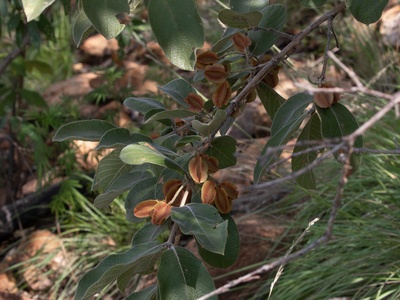
Velvet bushwillow
Soft, velvety leaves and yellow-orange flowers with hairy fruits make this recognizable. Provides browse for browsers, medicinal bark and wood for fuel; common in mixed savannas and on sandy soils.
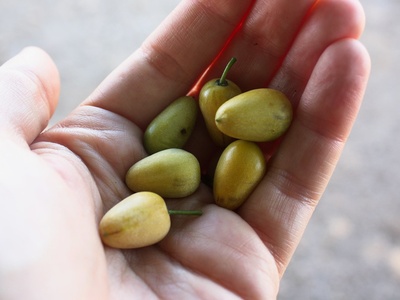
Jackalberry
Dense crown, dark glossy leaves and small edible fruits favored by animals and people. Produces hard, dark timber and provides important shade and fruit resources along rivers and floodplains in savanna landscapes.
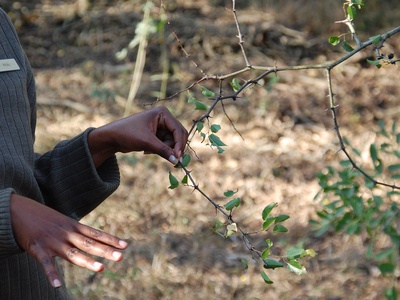
Buffalo thorn
Spiny, multi-stemmed tree with pale bark and oval leaves; bears yellow to red fruits eaten by birds and mammals. Used in traditional medicine, as a boundary marker, and provides dense thorny shelter for wildlife.
Jacket plum
Small to medium tree with glossy leaves and orange edible fruits called jacket plums. Provides forage, firewood and traditional medicines; common in open woodland and savanna margins, attractive to birds and small mammals.
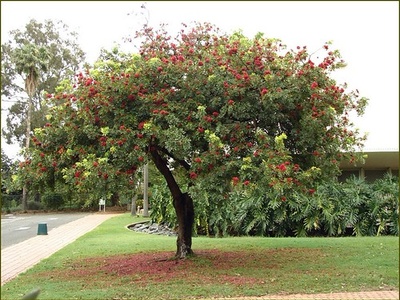
Boer bean
Showy deep-red pea‑like flowers attract nectar-feeding birds and insects. Broad-crowned, nitrogen-fixing legume used for shade, live fencing and traditional medicine; valuable in agroforestry and as a popular shade tree.
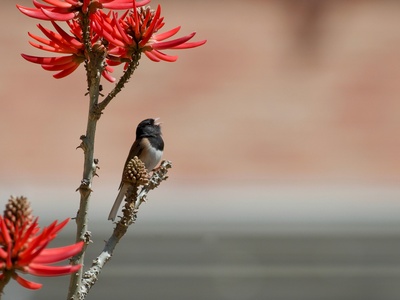
Coral tree
Striking red-orange pea-shaped flowers and thorny branches identify this legume. Fixes nitrogen, offers pollen and nectar for birds, used as living fence, traditional medicine and occasional timber; often found along seasonal rivers.
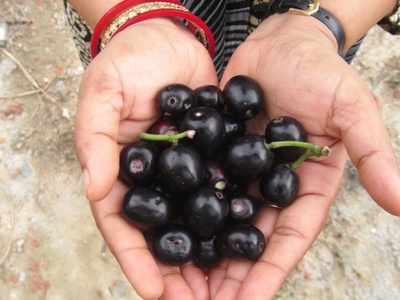
Waterberry
Thick glossy leaves, white fragrant flowers and edible purple berries characterize this riverine tree. Prefers moist ground along streams and floodplains, provides shade, fruit for people and wildlife, and good timber for carving.
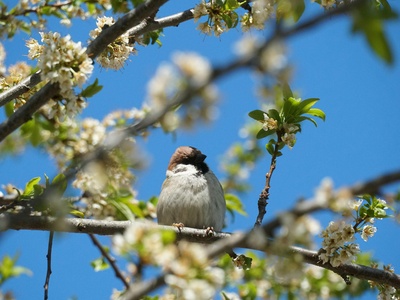
Bird plum
Small to medium tree with glossy leaves and clusters of small fruits. Grows along riverbanks and in mixed savanna, supports birdlife and traditional medicine uses; wood used for poles and crafting.
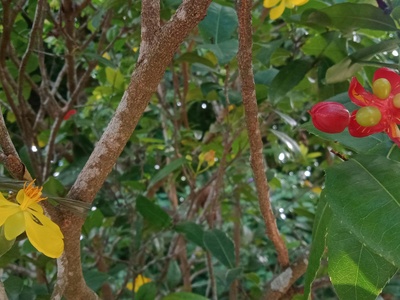
Ochna
Known for smooth, peeling bark and bright yellow flowers followed by showy black fruits with orange sepals. Small attractive tree in rocky savannas, used ornamentally and traditionally for medicines; drought-tolerant and often found on granite outcrops.
Sisalwood? Markhamia lutea
Tall, straight tree with pinnate leaves and clusters of pale yellow trumpet-shaped flowers. Provides ornamental shade, nectar for pollinators and useful timber; common along roadsides and in open savanna, tolerant of seasonal dry spells.
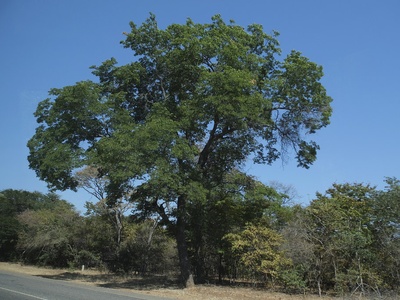
Zambezi teak
Dominant in Kalahari sand savannas with dense hardwood, rough bark and pinnate leaves. Produces durable timber, supports specialized wildlife and forms near-monodominant stands on sandy soils; conservation concern where logged.
Msasa (miombo)
Deciduous canopy tree with compound leaves and spring flowers; defines miombo woodlands. Provides important timber, fuelwood, non‑timber products and habitat for wildlife; regenerates after fire and supports shifting cultivation systems.
Mnondo
Tall, straight tree with pinnate leaves and clusters of cream flowers. A dominant miombo species supplying timber, charcoal and traditional uses; crucial for large-scale savanna woodland ecology and seasonal food resources for herbivores.
African white karee
Smooth, pale bark and palmately compound leaves identify this drought-hardy tree on rocky slopes and dry riverbeds. Produces small pods, used for shade, traditional remedies and occasionally timber; adapted to arid savanna environments.
Monkey orange
Rugged trunk, glossy leaves and large orange edible fruits prized by people and animals. Fruit-bearing tree provides seasonal food, traditional medicine and dense wood for local uses; common in mixed savanna and woodland.
African mahogany
Large hardwood tree with pinnate leaves and pods bearing winged seeds. Timber highly valued for furniture and boatbuilding; overharvesting threatens local populations, while the tree supports big fauna and is culturally important.
Sakalako (gorom fruit)
Small fruit tree producing sweet edible yellow-orange fruits important in local diets. Multi‑stemmed, thornless shrub-like tree used for food, traditional medicine and shade; common in dry savanna gardens and wild stands.
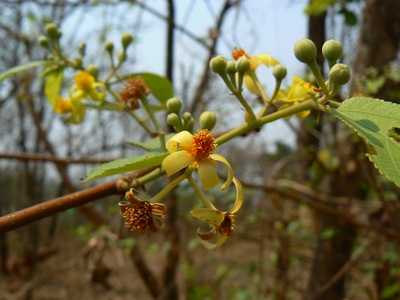
Grewia
Small tree or large shrub with flaky bark and sweet edible fruit. Provides browse for livestock and wildlife, traditional medicinal uses and seasonal fruit for people; often forms thickets in disturbed savanna areas.
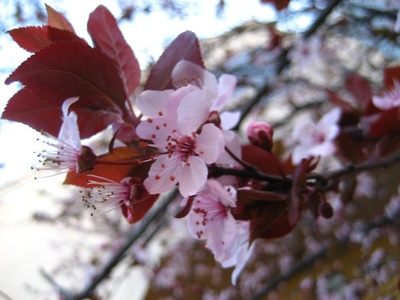
Sand plum
Small tree with simple leaves and reddish edible but tart fruits; often found on sandy soils and disturbed sites. Used for oil extraction, traditional medicine and as a pioneer species in degraded savanna landscapes.
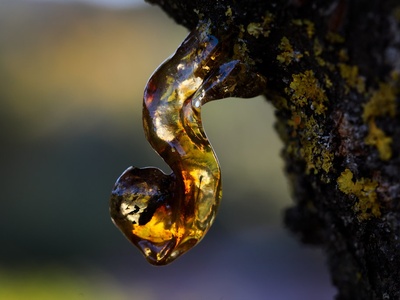
Resin tree
Small thorny tree with papery bark and aromatic resins. Leaves clustered on spines, drought-resistant; provides browse for livestock, frankincense-like resin used medicinally and culturally, common in dry savannas and acacia‑dominant woodlands.
African rosewood
Deciduous legume with pinnate leaves and orange-yellow flowers; prized for fragrant, durable timber used in furniture and musical instruments. Fruit and foliage browsed by animals; overexploited in parts of West Africa with conservation concerns.