From desert pans to montane forests, Africa’s amphibians occupy a surprising range of environments and play key roles in food webs and freshwater health. Many species are tied to specific habitats or seasonal water sources, so regional context matters when looking at diversity and conservation needs.
There are 92 Amphibians of Africa, ranging from Abbott’s River Frog to Yellow-spotted Tree Frog. For each species you’ll find Scientific name,Range,IUCN status in the table you’ll find below.
How are these species distributed across Africa?
Amphibian distributions vary a lot: some species are widespread across multiple countries, while others are endemic to a single river basin or mountain block. Check the Range column to see whether a species is localized (often higher conservation concern) or broadly distributed (usually lower immediate risk).
How up-to-date are the IUCN statuses listed here?
The IUCN status shown reflects the most recent assessments compiled for this list, but conservation statuses can change; for critical decisions or fieldwork, confirm the current listing on the IUCN Red List website or local conservation agencies.
Amphibians of Africa
| Common name | Scientific name | Range | IUCN status |
|---|---|---|---|
| African Bullfrog | Pyxicephalus adspersus | Southern and eastern Africa | Least Concern |
| Goliath Frog | Conraua goliath | Cameroon and Equatorial Guinea | Endangered |
| African Clawed Frog | Xenopus laevis | Southern Africa; widely introduced | Least Concern |
| Hairy Frog | Trichobatrachus robustus | West-central Africa | Least Concern |
| Tomato Frog | Dyscophus antongilii | Northeastern Madagascar | Near Threatened |
| Guttural Toad | Sclerophrys gutturalis | Eastern and southern Africa | Least Concern |
| Common River Frog | Amietia delalandii | Widespread in sub-Saharan Africa | Least Concern |
| Bubbling Kassina | Kassina senegalensis | Widespread in sub-Saharan Africa | Least Concern |
| Painted Reed Frog | Hyperolius marmoratus | Eastern and southern Africa | Least Concern |
| Table Mountain Ghost Frog | Heleophryne rosei | Table Mountain, South Africa | Critically Endangered |
| Golden Mantella | Mantella aurantiaca | East-central Madagascar | Critically Endangered |
| African Common Toad | Amietophrynus regularis | Widespread across sub-Saharan Africa | Least Concern |
| Foam-nest Tree Frog | Chiromantis xerampelina | Eastern and southern Africa | Least Concern |
| Natal Ghost Frog | Hadromophryne natalensis | South Africa, Eswatini, Lesotho | Least Concern |
| Sharp-nosed Reed Frog | Hyperolius nasutus | Widespread in sub-Saharan Africa | Least Concern |
| Mountain Reed Frog | Hyperolius anchietae | Angola, DRC, Malawi, Tanzania, Zambia | Least Concern |
| Taita Hills Warty Frog | Callulina dawida | Taita Hills, Kenya | Endangered |
| Ethiopian Highland Toad | Altiphrynoides malcolmi | Bale Mountains, Ethiopia | Endangered |
| Dwarf Puddle Frog | Phrynobatrachus Mababiensis | Widespread in sub-Saharan Africa | Least concern |
| Paradoxical Frog | Pseudis paradoxa | South America; introduced to Africa | Least Concern |
| Malagasy Rainbow Frog | Scaphiophryne gottlebei | Isalo Massif, Madagascar | Endangered |
| Green Mantella | Mantella viridis | Northern Madagascar | Endangered |
| Cape River Frog | Amietia fuscigula | Southern Africa | Least Concern |
| Angolan Reed Frog | Hyperolius angolensis | Central and southern Africa | Least Concern |
| Spotted Snout-burrower | Hemisus guttatus | South Africa | Near Threatened |
| Bronze Caco | Cacosternum nanum | Southern Africa | Least Concern |
| Malagasy Bullfrog | Dyscophus insularis | Western Madagascar | Least Concern |
| Raucous Toad | Sclerophrys rauca | Cameroon | Endangered |
| Boettger’s Caco | Cacosternum boettgeri | Southern and eastern Africa | Least Concern |
| Madagascar Jumping Frog | Aglyptodactylus madagascariensis | Eastern Madagascar | Least Concern |
| Mascarene Rocket Frog | Ptychadena mascareniensis | Widespread in Africa and Madagascar | Least Concern |
| Common Platanna | Xenopus laevis | Southern Africa | Least Concern |
| Marbled Reed Frog | Hyperolius marmoratus | Eastern and southern Africa | Least Concern |
| Togo Slippery Frog | Conraua derooi | Ghana, Togo | Critically Endangered |
| Argentine Reed Frog | Hyperolius argus | Coastal East Africa | Least Concern |
| Kihansi Spray Toad | Nectophrynoides asperginis | Kihansi Gorge, Tanzania | Extinct in the Wild |
| Long-toed Tree Frog | Leptopelis xenodactylus | South Africa | Endangered |
| African Tree Toad | Nectophryne afra | West and Central Africa | Least Concern |
| Boulenger’s Puddle Frog | Phrynobatrachus boulengeri | Eastern DRC, Uganda, Rwanda, Burundi | Least Concern |
| Mocquard’s Frog | Ptychadena mocquardi | Sahel region of Africa | Least Concern |
| Yellow-spotted Tree Frog | Leptopelis flavomaculatus | Eastern Africa | Least Concern |
| Muller’s Platanna | Xenopus muelleri | Savannas of sub-Saharan Africa | Least Concern |
| Taita African Caecilian | Boulengerula taitana | Taita Hills, Kenya | Endangered |
| Natal Banana Frog | Afrixalus spinifrons | South Africa | Near Threatened |
| Ethiopian Banana Frog | Afrixalus enseticola | Southwestern Ethiopia | Least Concern |
| Brown Banana Frog | Afrixalus dorsalis | West and Central Africa | Least Concern |
| Desert Rain Frog | Breviceps macrops | Namibia, South Africa | Near Threatened |
| Plaintive Rain Frog | Breviceps verrucosus | South Africa, Eswatini | Least Concern |
| Cape Mountain Toadlet | Capensibufo rosei | Western Cape, South Africa | Critically Endangered |
| Mount Nimba Viviparous Toad | Nimbaphrynoides occidentalis | Mount Nimba (Guinea, Côte d’Ivoire) | Critically Endangered |
| Ahl’s Reed Frog | Hyperolius ocellatus | West and Central Africa | Least Concern |
| Banded Rubber Frog | Phrynomantis bifasciatus | Southern and eastern Africa | Least Concern |
| Phofung River Frog | Amietia hymenopus | Lesotho, South Africa | Endangered |
| Anchieta’s Ridged Frog | Ptychadena anchietae | Widespread in sub-Saharan Africa | Least Concern |
| Savanna Ridged Frog | Ptychadena subpunctata | Central and eastern Africa | Least Concern |
| Common Squeaker | Arthroleptis stenodactylus | Widespread in sub-Saharan Africa | Least Concern |
| Forest Tree Frog | Leptopelis notatus | Central Africa | Least Concern |
| Garman’s Toad | Sclerophrys garmani | Eastern and southern Africa | Least Concern |
| African Big-eyed Frog | Leptodactylodon axillaris | Cameroon | Endangered |
| Gaboon Forest Treefrog | Leptopelis aubryi | West and Central Africa | Least Concern |
| Cinnamon-bellied Reed Frog | Hyperolius cinnamomeoventris | Central and western Africa | Least Concern |
| Parker’s Tree Frog | Leptopelis parkeri | Eastern Arc Mountains, Tanzania | Endangered |
| Spiny Reed Frog | Afrixalus fornasini | Eastern and southeastern Africa | Least Concern |
| Tornier’s Tree Frog | Leptopelis tornieri | Tanzania, Kenya, Mozambique | Least Concern |
| White-lipped Frog | Amnirana albolabris | West and Central Africa | Least Concern |
| Waza’s Puddle Frog | Phrynobatrachus wazae | Cameroon | Critically Endangered |
| Victoria’s Clawed Frog | Xenopus victorianus | Lake Victoria basin | Least Concern |
| Abbott’s River Frog | Amietia angolensis | Widespread in central, eastern, and southern Africa | Least Concern |
| Green Burrowing Frog | Scaphiophryne marmorata | Eastern Madagascar | Least Concern |
| Blue-legged Mantella | Mantella expectata | Southwestern Madagascar | Critically Endangered |
| Baron’s Mantella | Mantella baroni | Eastern Madagascar | Least Concern |
| Climbing Mantella | Mantella laevigata | Northeastern Madagascar | Least Concern |
| Elegant Frog | Hylarana galamensis | West and Central Africa | Least Concern |
| Red-legged Kassina | Kassina maculata | Coastal East Africa | Least Concern |
| Gray’s Tree Frog | Chiromantis petersii | Eastern Africa | Least Concern |
| Ornate Frog | Hildebrandtia ornata | Widespread in sub-Saharan Africa | Least Concern |
| African Shovelnose Frog | Hemisus marmoratus | Widespread in sub-Saharan Africa | Least Concern |
| Cape Caco | Cacosternum capense | Western Cape, South Africa | Vulnerable |
| Spotted Reed Frog | Hyperolius substriatus | Tanzania, Malawi, Mozambique | Least Concern |
| Chirinda Toad | Mertensophryne anotis | Zimbabwe, Mozambique | Near Threatened |
| Forest Rain Frog | Breviceps sylvestris | Limpopo Province, South Africa | Near Threatened |
| Western Clawed Frog | Xenopus tropicalis | West Africa | Least Concern |
| Congo Caecilian | Herpele squalostoma | Central Africa | Least Concern |
| Fanged Frog | Odontobatrachus natator | West Africa | Near Threatened |
| Dwarf Clawed Frog | Hymenochirus boettgeri | Central Africa | Least Concern |
| Kivu Reed Frog | Hyperolius kivuensis | Albertine Rift | Least Concern |
| De Witte’s Clawed Frog | Xenopus wittei | Albertine Rift highlands | Least Concern |
| North African Green Frog | Pelophylax saharicus | North Africa | Least Concern |
| Ethiopian Tree Frog | Leptopelis gramineus | Ethiopian Highlands | Least Concern |
| Common Tree Frog | Leptopelis viridis | West Africa | Least Concern |
| Emerald Tree Frog | Leptopelis smaragdinus | Albertine Rift | Near Threatened |
| Galam White-lipped Frog | Amnirana galamensis | Widespread in African savannas | Least Concern |
Images and Descriptions
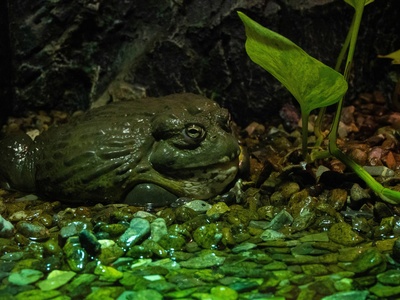
African Bullfrog
One of Africa’s largest frogs, males can reach 25 cm. A voracious predator found in savanna and grassland, it eats insects, other frogs, reptiles, and small mammals. Known for its powerful bite and aggressive territorial defense.
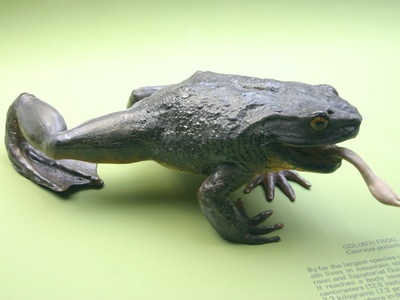
Goliath Frog
The world’s largest frog, reaching up to 32 cm in body length. It lives in fast-flowing, clear rivers within dense rainforests. Its immense size and specific habitat needs make it vulnerable to human pressures and habitat loss.
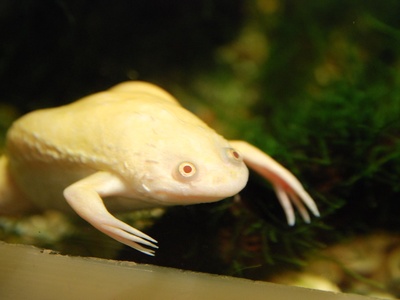
African Clawed Frog
A fully aquatic frog, often used in scientific research. It lacks a tongue and eyelids but has a powerful sense of smell. It is an adaptable scavenger found in ponds and streams, now invasive in many parts of the world.
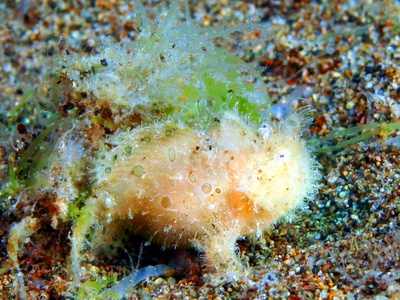
Hairy Frog
Also known as the horror frog. Males have hair-like dermal papillae on their sides during breeding season. Most famously, it can break its own toe bones to produce sharp claws for defense, a unique and gruesome trait among vertebrates.
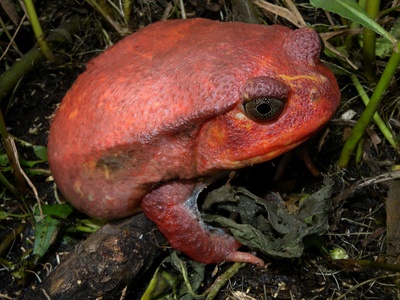
Tomato Frog
A brightly colored, round frog resembling a ripe tomato. When threatened, it inflates its body and secretes a sticky, toxic substance to deter predators. It lives in rainforests, swamps, and even suburban gardens.
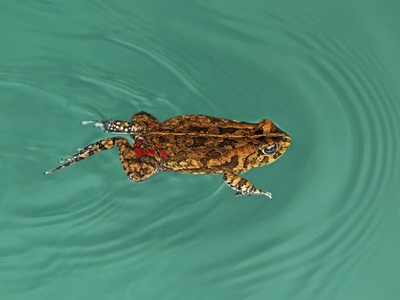
Guttural Toad
A large, warty toad with a distinctive loud, guttural call. Highly adaptable, it thrives in a wide range of habitats from savannas to urban areas. Its parotoid glands behind the eyes secrete a mild poison for defense.
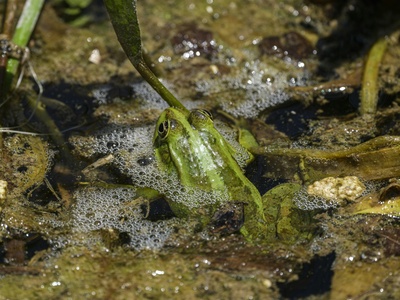
Common River Frog
A medium-sized, streamlined frog found in and around permanent bodies of water. It is an excellent jumper and swimmer, feeding on insects and small invertebrates. Its coloration provides excellent camouflage along riverbanks.
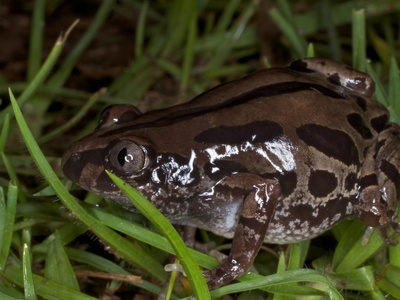
Bubbling Kassina
A small, plump frog known for its distinctive rising, “boip” call, resembling a bubble popping. It spends dry periods burrowed underground, emerging to breed in temporary pools after heavy rains. Often found in savanna and grasslands.
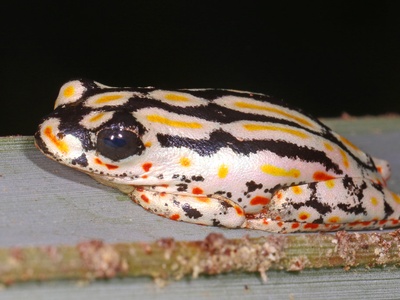
Painted Reed Frog
A small, vibrant tree frog with highly variable color patterns. Found in reed beds and dense vegetation near water. Males call in large choruses at night, creating a tinkling, bell-like sound.
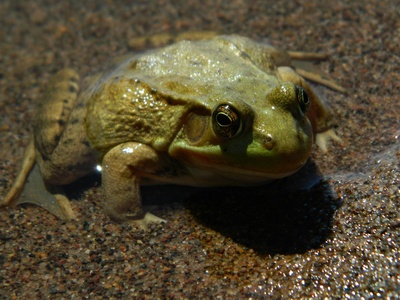
Table Mountain Ghost Frog
A rare frog adapted to life in fast-flowing, forested mountain streams. It has large, webbed feet and flattened body to cling to rocks in strong currents. Its tadpoles have sucker-like mouths to graze on algae.
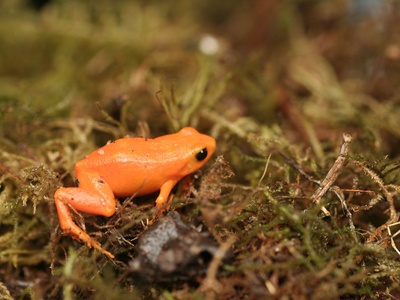
Golden Mantella
A tiny, brilliant orange-yellow frog. Its bright color warns predators of its toxic skin secretions. It lives in humid forest floor leaf litter and is highly threatened by habitat loss and illegal collection for the pet trade.
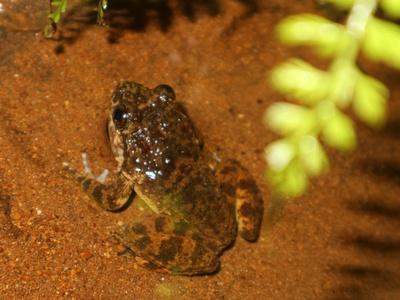
African Common Toad
A medium-to-large toad, common in a variety of habitats, including gardens and agricultural areas. It is nocturnal and feeds on a wide range of invertebrates. Its presence is often a sign of a healthy local ecosystem.
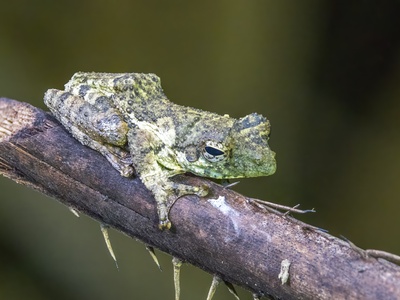
Foam-nest Tree Frog
Known for its unique breeding behavior where multiple males help a female create a large, white foam nest overhanging water. The tadpoles develop inside until they drop into the water below to complete their growth.
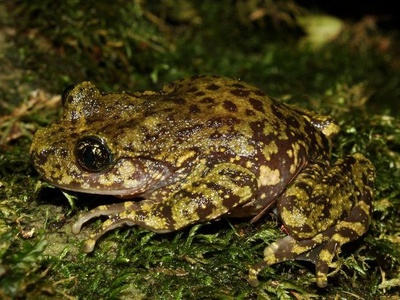
Natal Ghost Frog
A medium-sized frog found in and near cool, fast-flowing streams in forested areas and grasslands. It has a flattened body and webbed feet to navigate strong currents, with tadpoles adapted to cling to rocks.
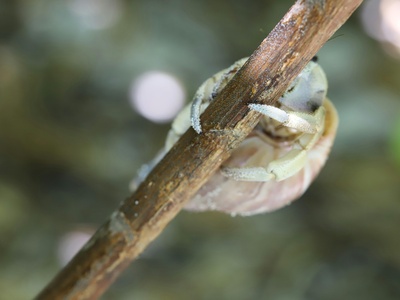
Sharp-nosed Reed Frog
A slender, green reed frog with a distinctively pointed snout. It is an expert climber, often found on reeds and sedges overhanging water. Its color provides excellent camouflage among green vegetation.
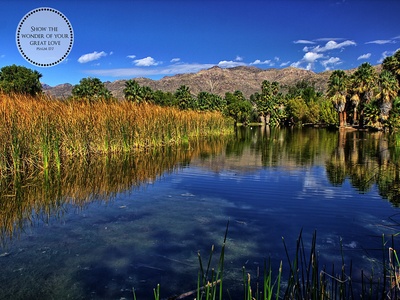
Mountain Reed Frog
A beautiful reed frog with variable patterns, often with stripes or spots. It inhabits high-altitude grasslands and wetlands, breeding in marshes and ponds. Males have a loud, cricket-like call.

Taita Hills Warty Frog
A small, plump frog found only in the montane cloud forests of the Taita Hills. It is a direct developer, meaning its eggs hatch into tiny froglets, bypassing the tadpole stage. It is threatened by severe habitat fragmentation.
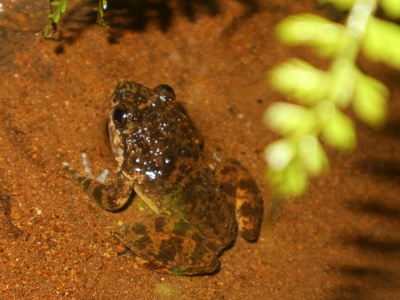
Ethiopian Highland Toad
A toad adapted to high altitudes, living above 3,200 meters. It exhibits unusual reproductive behavior, with females retaining eggs in their bodies until they hatch into fully formed froglets, a form of live-bearing.
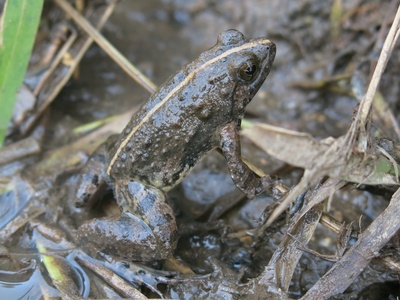
Dwarf Puddle Frog
A tiny ground-dwelling frog, often less than 20 mm long. It inhabits damp areas in savanna and forest, often found near puddles and shallow water where it breeds. Its small size makes it hard to spot.
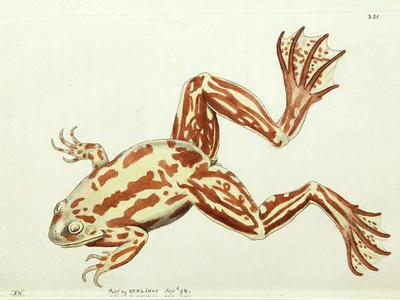
Paradoxical Frog
A unique frog where the tadpole is much larger than the adult, reaching up to 25 cm before shrinking during metamorphosis. While primarily South American, its status as an established African species is debated but included for interest.
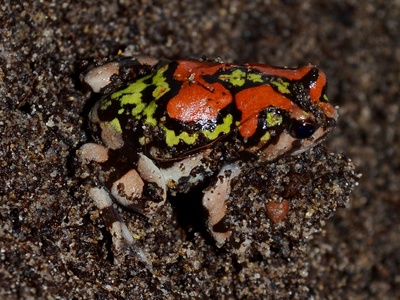
Malagasy Rainbow Frog
A striking, brightly colored burrowing frog. It is an explosive breeder, emerging after heavy rains to mate in temporary rock pools. It can climb near-vertical rock faces using its specialized feet.
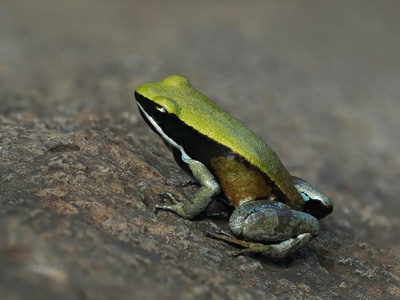
Green Mantella
A small, vibrant green frog with a dark stripe through its eye. It lives on the forest floor, often near streams. Like other mantellas, it is poisonous and its bright coloration serves as a warning to predators.
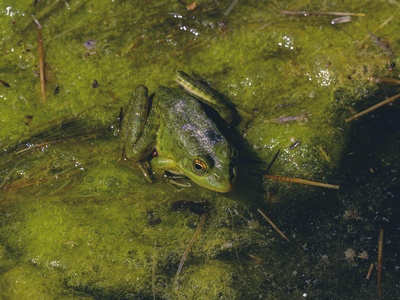
Cape River Frog
A large, aquatic frog with powerful legs and extensive webbing on its feet. It is a strong swimmer, inhabiting rivers, dams, and streams. It plays a key role as both predator and prey in its aquatic ecosystem.
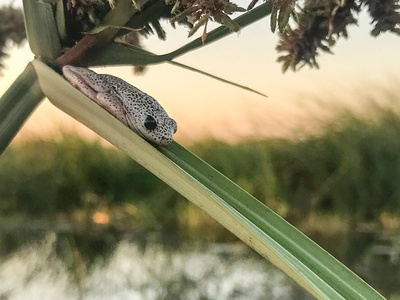
Angolan Reed Frog
A small tree frog with a translucent green body. It’s commonly found on vegetation in swamps and along rivers in savanna habitats. The males’ calls are a common sound in the African night.
Spotted Snout-burrower
A medium-sized, rounded frog with a pointed snout adapted for digging. It spends most of its life underground, emerging to breed in temporary pans. The female guards her eggs in a subterranean chamber.
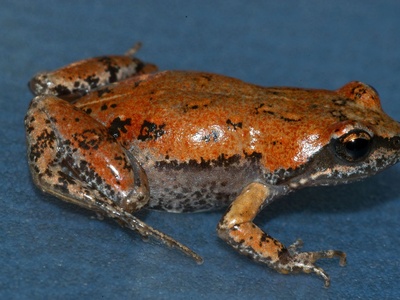
Bronze Caco
A very small, inconspicuous frog often found in damp grasslands and at the edges of wetlands. It has a surprisingly loud, high-pitched call. Its bronze or brown coloration provides excellent camouflage in muddy environments.
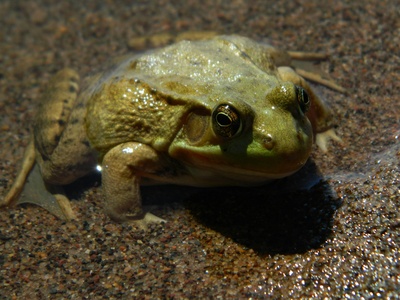
Malagasy Bullfrog
A large, reddish-brown burrowing frog related to the Tomato Frog. It inhabits dry forests and savannas, spending much of the year underground and emerging with the rains to breed in temporary pools.
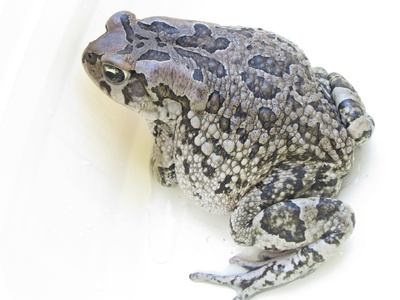
Raucous Toad
A large toad found in montane grasslands and forests. It is named for the extremely loud and harsh call of the males. This species is threatened by habitat degradation from agriculture and human settlement.
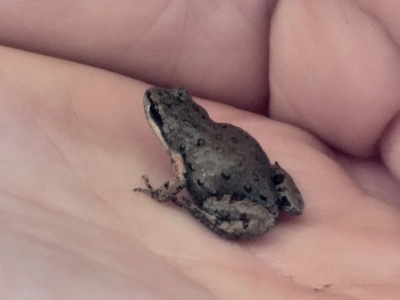
Boettger’s Caco
A tiny, adaptable frog found in a wide variety of habitats from arid savanna to montane grasslands. It is an explosive breeder, taking advantage of temporary pools formed after rain.
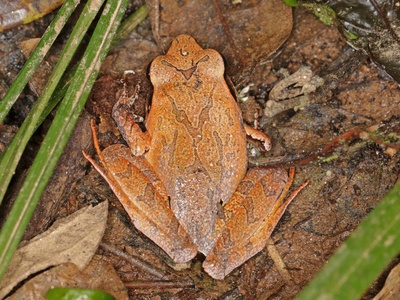
Madagascar Jumping Frog
A medium-sized, robust frog found on the forest floor of eastern rainforests. It is a powerful jumper with a brown, leaf-like camouflage, making it difficult to see among the leaf litter.
Mascarene Rocket Frog
A slender, long-legged frog with prominent dorsal ridges. An excellent jumper, it is found in a wide range of wet habitats, including marshes, rice paddies, and flooded grasslands.
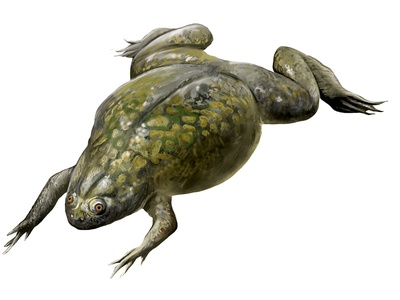
Common Platanna
Also known as the African Clawed Frog, this fully aquatic species is a popular lab animal. It lacks a tongue, using its small front claws to stuff food into its mouth. It’s an adaptable scavenger in still or slow-moving water.
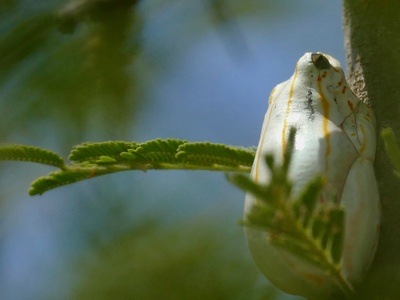
Marbled Reed Frog
Showcasing incredible color variation, this small frog can be spotted, striped, or uniformly colored. It inhabits reed beds and emergent vegetation in and around water bodies, with males calling in large choruses.
Togo Slippery Frog
A large, aquatic frog found only in a few remnant forest streams. It is critically endangered due to severe habitat loss from farming and deforestation. Conservation efforts are crucial for its survival.
Argentine Reed Frog
A sexually dimorphic species where females are orange-red with white spots, and males are typically green or brown. They live in coastal wetlands and marshes, clinging to reeds and grasses over water.
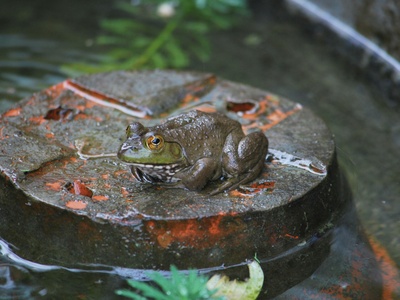
Kihansi Spray Toad
A tiny toad that once lived in the spray zone of waterfalls. The construction of a dam destroyed its habitat, leading to its extinction in the wild. It now survives only in captive breeding programs.
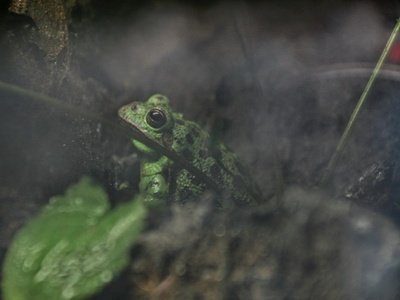
Long-toed Tree Frog
A rare tree frog from high-altitude wetlands in KwaZulu-Natal and the Eastern Cape. It has exceptionally long toes and is threatened by habitat destruction from forestry, agriculture, and drainage of its wetland habitat.
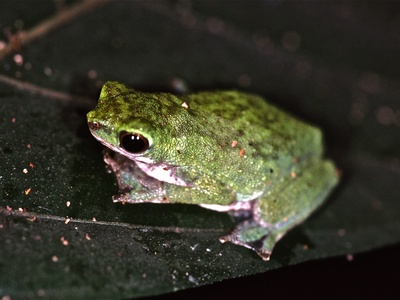
African Tree Toad
A small, arboreal toad with a flattened body, allowing it to hide in crevices. The female carries her fertilized eggs on her back until they hatch, providing a level of parental care.
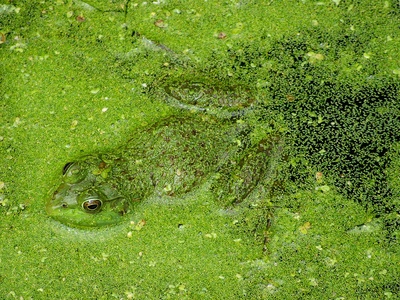
Boulenger’s Puddle Frog
A small frog of the forest floor in montane rainforests. It is often found near small streams and puddles. It plays a role in the forest ecosystem by controlling insect populations.
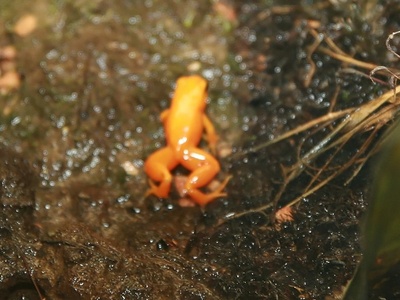
Mocquard’s Frog
A frog adapted to arid and semi-arid environments. It is a fast, explosive breeder, utilizing temporary rain pools to complete its life cycle quickly before the water disappears.
Yellow-spotted Tree Frog
A large, striking tree frog with bright yellow spots on a dark background. It inhabits forests and dense woodlands, where males call from perches in trees. The tadpoles develop in streams or pools.
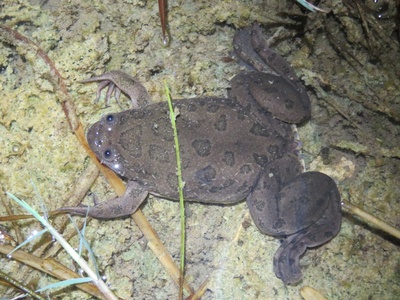
Muller’s Platanna
An aquatic frog similar to its cousin, the African Clawed Frog. It thrives in seasonal pans and pools in savanna regions, able to survive dry periods by burrowing into the mud.
Taita African Caecilian
A legless, worm-like amphibian that lives in soil. The young feed on their mother’s specially developed, nutrient-rich skin, a behavior known as maternal dermatophagy. It’s threatened by habitat loss.
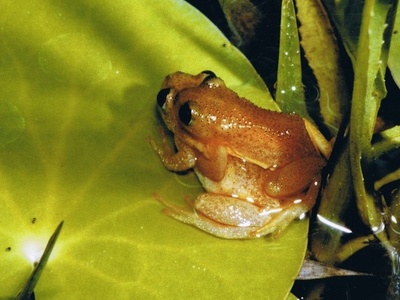
Natal Banana Frog
A tiny frog that lays its eggs in folded leaves overhanging water. The ‘banana’ name comes from its preferred breeding sites on broad-leaved plants like wild bananas. It inhabits coastal and montane forests.
Ethiopian Banana Frog
A small frog found in the highlands of Ethiopia, often associated with enset and banana plants, where it lays its eggs. It is part of the unique biodiversity of the Ethiopian highlands.
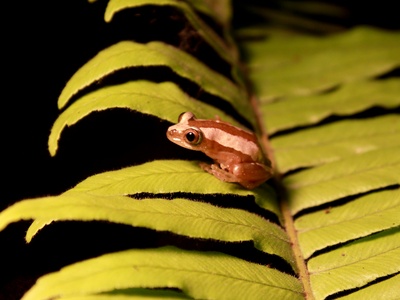
Brown Banana Frog
A small, nocturnal frog that shelters during the day in the leaf axils of plants. It breeds in swamps and marshes, with males calling from emergent vegetation. It is adaptable and widespread.
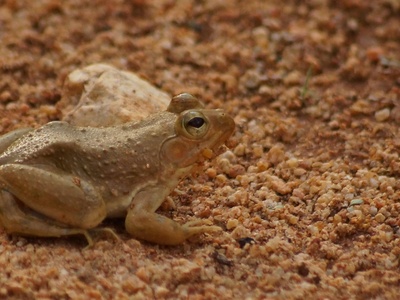
Desert Rain Frog
A small, plump frog with a short snout, adapted to coastal sand dunes. It spends most of its life buried in sand. When threatened, it emits a surprisingly ferocious, high-pitched squeak.
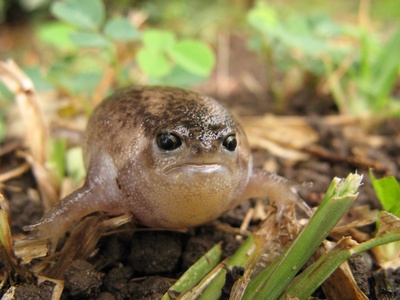
Plaintive Rain Frog
A stout, burrowing frog with a characteristically grumpy-looking face. It lives in grasslands and forests, emerging after rains to feed on ants and termites. Its call is a mournful, drawn-out whistle.
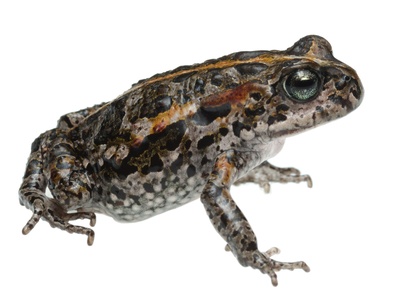
Cape Mountain Toadlet
A tiny toadlet found only in a few mountain peak seepage areas. It is a “silent” species, lacking a vocal sac. It is highly vulnerable to climate change and habitat alteration.
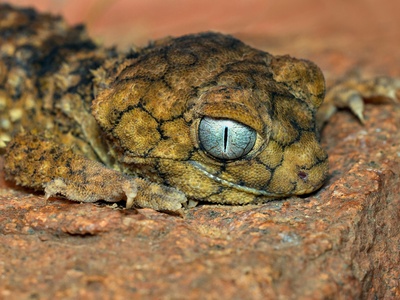
Mount Nimba Viviparous Toad
A unique toad that gives birth to fully formed young, bypassing egg-laying and tadpole stages. It lives in high-altitude grasslands and is severely threatened by iron ore mining.
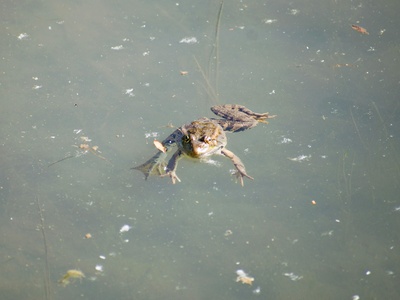
Ahl’s Reed Frog
A beautifully patterned reed frog, often with distinct eye-spots (ocelli) on its back. It lives in forest clearings and farm bush areas, breeding in small bodies of water.
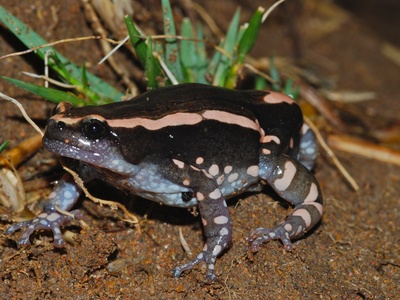
Banded Rubber Frog
A striking black frog with bold red or orange stripes. Its skin secretes a toxic, sticky substance that is irritating to predators. It is a burrowing species found in savanna habitats.
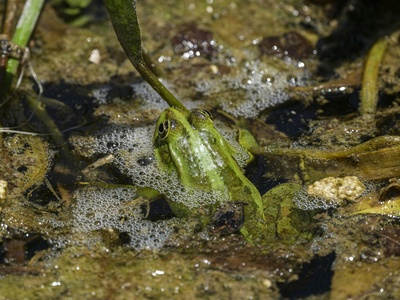
Phofung River Frog
A high-altitude specialist frog found only in the clear, cold streams of the Drakensberg and Maluti Mountains. It is threatened by water abstraction, pollution, and climate change.
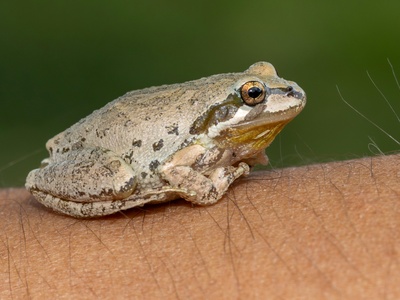
Anchieta’s Ridged Frog
A common, adaptable frog found in savanna and grassland. It is identified by the series of unbroken ridges running down its back. It’s an explosive breeder in temporary water sources.
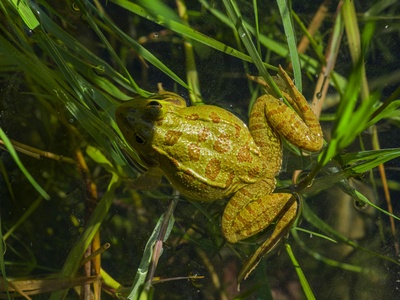
Savanna Ridged Frog
A medium-sized frog of moist savanna and grassland habitats. It is characterized by interrupted skin ridges on its back. It feeds primarily on insects and other small invertebrates.
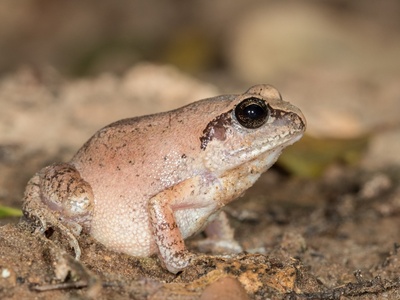
Common Squeaker
A small, terrestrial frog that lives in the leaf litter of forests and savannas. It undergoes direct development, with eggs hatching into tiny froglets. It gets its name from its high-pitched, insect-like call.
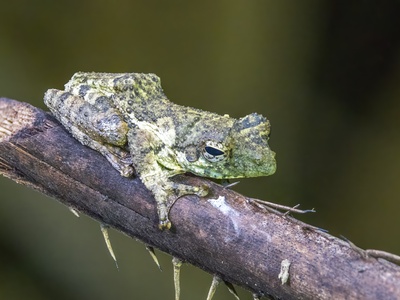
Forest Tree Frog
A large, green tree frog inhabiting the canopy of rainforests. Its coloration provides excellent camouflage. Males call from high in the trees, making them difficult to study.
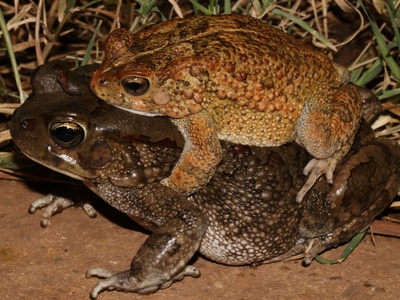
Garman’s Toad
A large, robust toad common in savanna, grassland, and agricultural lands. It is nocturnal and a generalist predator of invertebrates. It can tolerate relatively dry conditions.
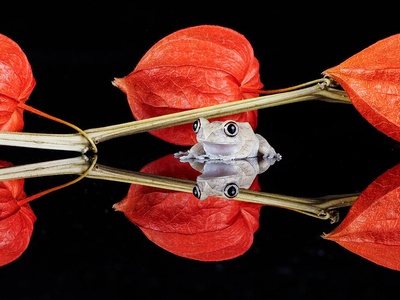
African Big-eyed Frog
A frog with disproportionately large eyes, adapted for a nocturnal lifestyle. It lives in and around streams in montane forests and is threatened by deforestation for agriculture.
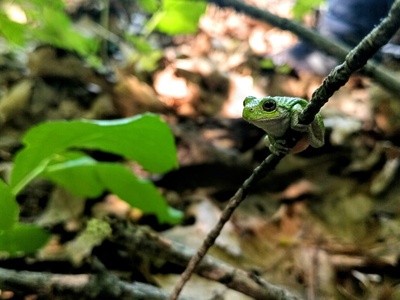
Gaboon Forest Treefrog
A common treefrog in the rainforests of the Congo Basin. It has large toe pads for climbing and typically has a brown or greyish coloration to blend in with tree bark.
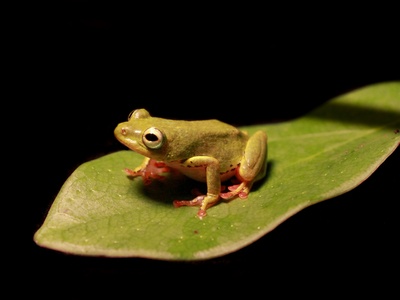
Cinnamon-bellied Reed Frog
Named for its reddish-brown underside, this frog is typically green or brown on top. It is found in a variety of habitats, from rainforests to farm bush, usually near swamps.
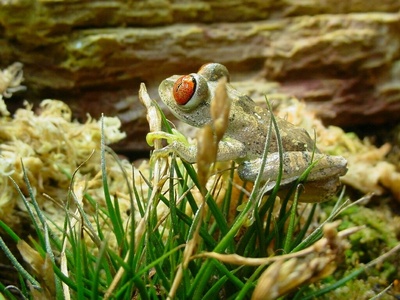
Parker’s Tree Frog
A large tree frog found only in the montane forests of the Uluguru and Udzungwa mountains. It is threatened by ongoing habitat loss and degradation within its very small range.
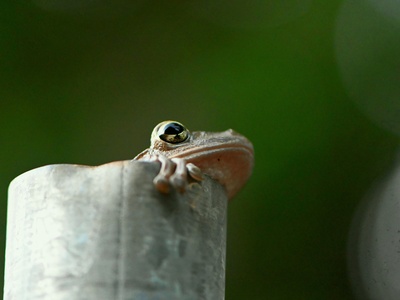
Spiny Reed Frog
Males of this species have small spines on their skin, giving it a rough texture. It folds leaves to create nests for its eggs above water, a common trait in its genus.
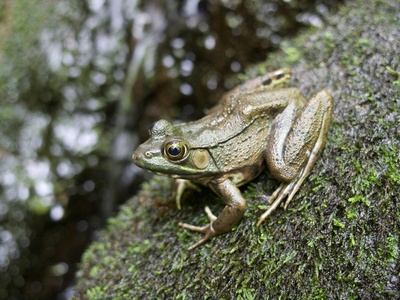
Tornier’s Tree Frog
A forest-dwelling tree frog of the East African coastal forests and Eastern Arc Mountains. It has a distinctive hourglass pattern on its back and is an adept climber.
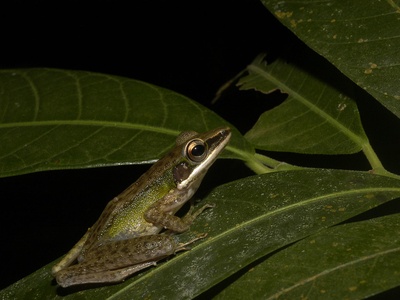
White-lipped Frog
A medium-sized frog named for the prominent white stripe on its upper lip. It is a semi-aquatic species, found along streams and rivers in the rainforest.
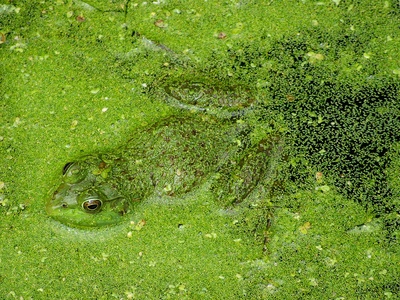
Waza’s Puddle Frog
A small frog known only from the Waza National Park. It lives in temporary ponds in savanna habitat. Its extremely restricted range makes it highly vulnerable to environmental changes.
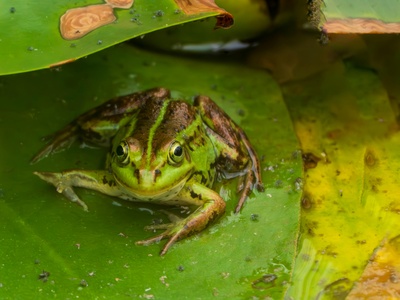
Victoria’s Clawed Frog
A fully aquatic frog found in the swamps, rivers, and lakes around Lake Victoria. Like other clawed frogs, it is a bottom-dweller and scavenger.
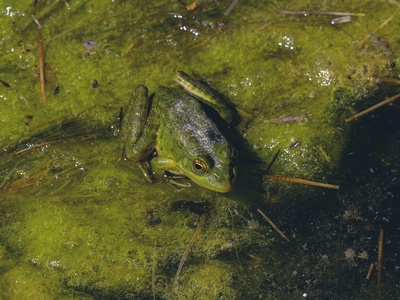
Abbott’s River Frog
A robust frog found in a variety of aquatic habitats, from slow-moving rivers to dams. It is a highly adaptable species, often common where it occurs.
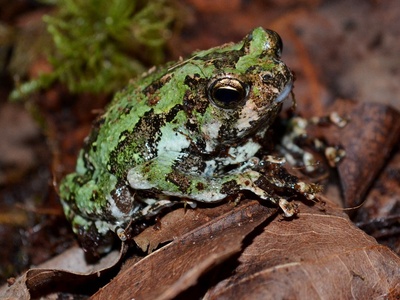
Green Burrowing Frog
A beautifully patterned frog with a round body and short limbs, adapted for burrowing. It spends most of its time underground, emerging to breed in temporary pools after heavy rains.
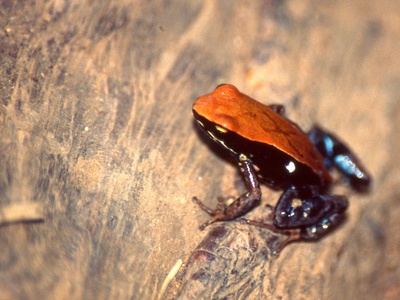
Blue-legged Mantella
A strikingly colored small frog with a yellow-green back, black sides, and bright blue legs. It breeds in temporary streams and is threatened by habitat loss and over-collection.
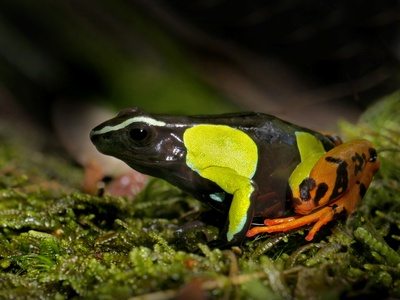
Baron’s Mantella
A common but beautiful mantella with a black head, green or yellow body, and orange legs. It is found in rainforests, often near streams, and is active during the day.
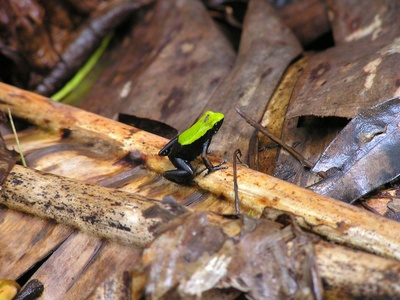
Climbing Mantella
Unique among mantellas, this species is semi-arboreal and often climbs on trees. It also lays its eggs in water-filled tree holes or bamboo stumps, where its carnivorous tadpoles develop.
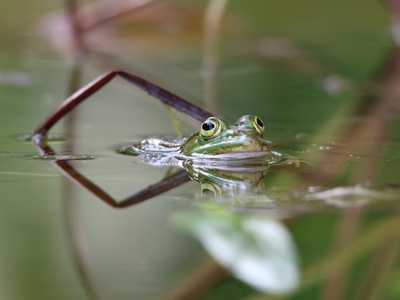
Elegant Frog
A slender, long-legged frog with smooth skin and a pointed snout. It is semi-aquatic, living along the banks of rivers and swamps in savanna and gallery forest.
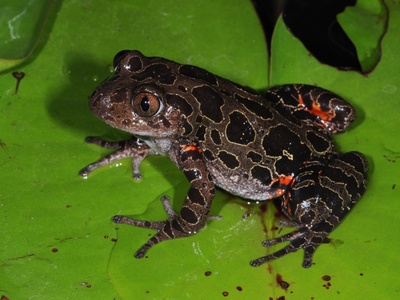
Red-legged Kassina
A medium-sized frog with a mottled pattern and bright red coloration on the inside of its legs, which it flashes to startle predators. It is a burrowing species found in coastal forests and savannas.
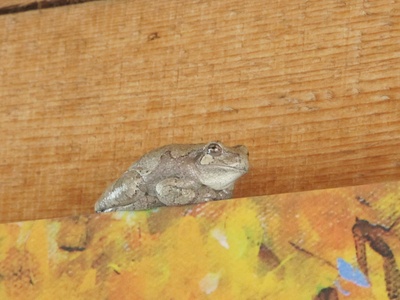
Gray’s Tree Frog
A small, arboreal frog adapted to dry savanna and bushland. It can excrete uric acid and has other adaptations to conserve water, allowing it to survive in arid conditions.
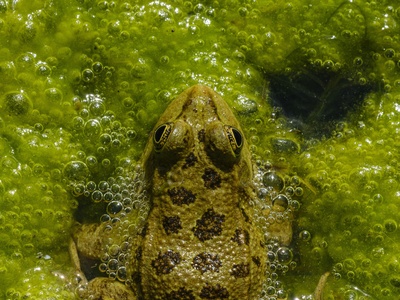
Ornate Frog
A stout-bodied burrowing frog found in savannas. It has a variable, often ornate pattern on its back. It is an explosive breeder, emerging in large numbers after the first heavy rains.
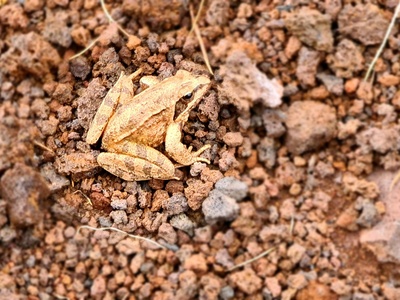
African Shovelnose Frog
A small, round frog with a hard, pointed snout used for burrowing head-first into the soil. The female digs a burrow near water where she lays her eggs and guards them.
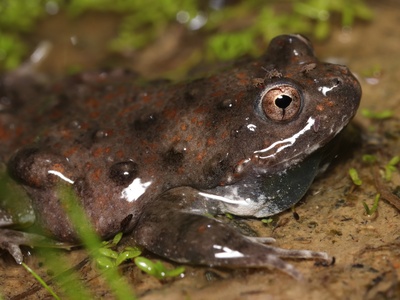
Cape Caco
A small frog endemic to the fynbos biome of the Western Cape. It is threatened by habitat loss due to urban and agricultural expansion, particularly the draining of its wetland breeding sites.
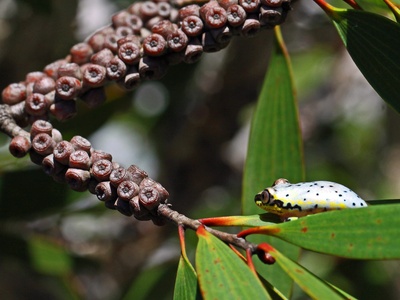
Spotted Reed Frog
A reed frog with a distinctive pattern of small spots or fine lines. It inhabits montane grasslands and forest edges, breeding in swamps and ponds.
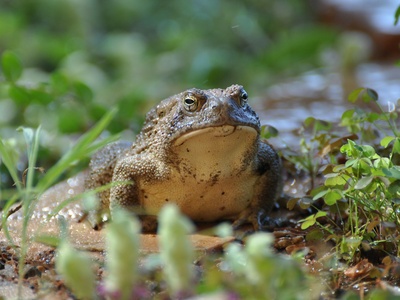
Chirinda Toad
A small, flattened toad living in the leaf litter of montane forests. It lacks external ears. It is a direct developer, with females guarding their eggs until they hatch into froglets.
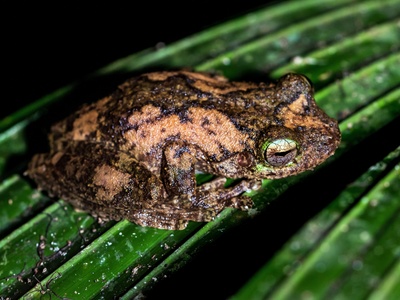
Forest Rain Frog
A burrowing frog found in the mist-belt forests of the Soutpansberg and Blouberg mountains. It is threatened by the degradation and fragmentation of its specialized forest habitat.
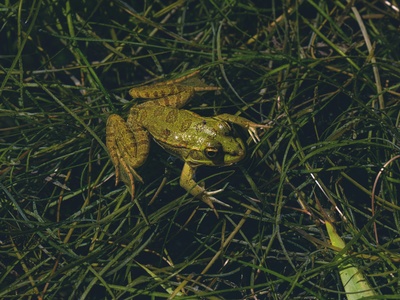
Western Clawed Frog
A smaller relative of Xenopus laevis, this aquatic frog is notable for having its genome sequenced, making it an important model organism for genetics and developmental biology research.
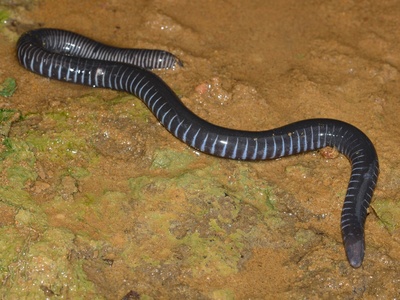
Congo Caecilian
A large, burrowing caecilian found in rainforest soil and rotting logs. Females of this species brood their eggs, and the young may feed on their mother’s skin.
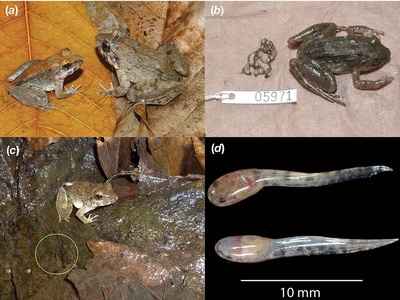
Fanged Frog
A unique frog with tooth-like fangs in its lower jaw. It lives in and around fast-flowing forest streams. The tadpoles have a large abdominal sucker to cling to rocks in the current.
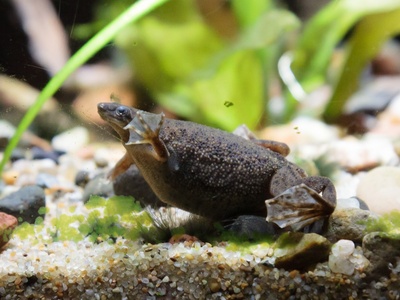
Dwarf Clawed Frog
A tiny, fully aquatic frog popular in the aquarium trade. It has a flattened body and webbed feet but lacks the claws of its larger Xenopus relatives. It inhabits slow-moving forest streams.
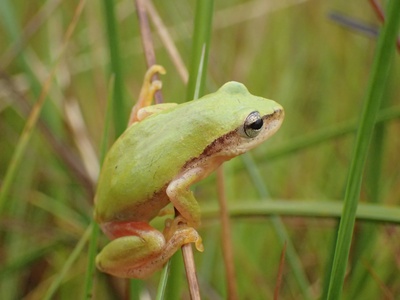
Kivu Reed Frog
A reed frog from the high-altitude wetlands around Lake Kivu. Its coloration is variable, often green or brown. It is part of the rich amphibian diversity of the Albertine Rift.
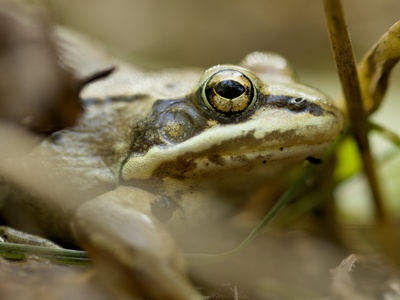
De Witte’s Clawed Frog
An aquatic frog found in high-altitude swamps and streams in the mountains of DRC, Uganda, Rwanda, and Burundi. It is adapted to cooler temperatures than many other clawed frogs.
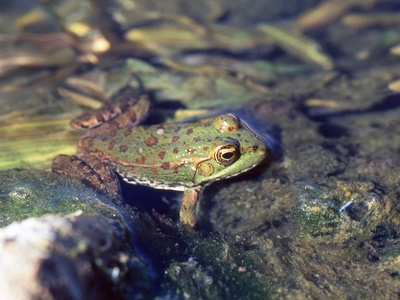
North African Green Frog
A large, typically green water frog found in oases, rivers, and wetlands across the Maghreb. It is closely related to European water frogs and is a key predator in its aquatic habitats.
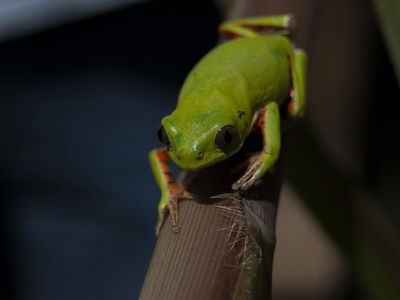
Ethiopian Tree Frog
A common tree frog in the montane forests and grasslands of Ethiopia. It is mostly green, providing excellent camouflage in vegetation. It breeds in streams and pools.
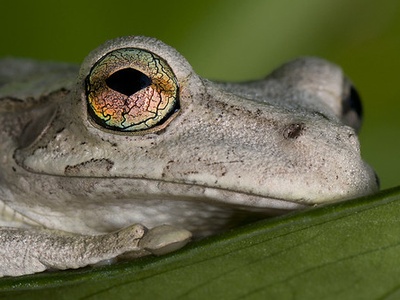
Common Tree Frog
A widespread tree frog of the West African savanna belt. Despite its name, its color is variable, often brown or grey. It breeds in flooded grasslands and temporary pools.
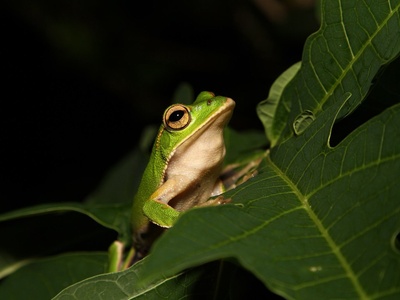
Emerald Tree Frog
A bright green tree frog found in the montane forests of the Albertine Rift. Its specific habitat requirements make it vulnerable to deforestation and climate change.
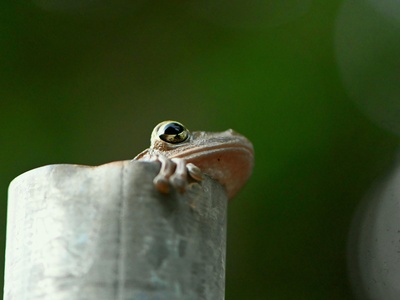
Galam White-lipped Frog
A slender frog with long legs and a distinctive white upper lip. It is found near water in savanna and open woodland, where it hunts for insects at night.