The Arctic Ocean and its bordering seas are a place of extremes, with cold, seasonal light and ice shaping the animals that live there. Species here range from small schooling fish to large marine mammals, each fitting into a tight web of cold-water life.
There are 31 arctic sea creatures, ranging from Arctic cod to White-beaked dolphin; the list presents each entry with Scientific name,Range,Max length (cm), which you’ll find below.
How do these species survive in such cold, icy waters?
Many Arctic species use physiological and behavioral strategies: antifreeze proteins or thick blubber for insulation, slow metabolisms and seasonal feeding cycles, and migrations or use of ice habitats to access food and avoid predators. Knowing a species’ range and max length helps infer its role in the ecosystem.
How reliable are the range and size details listed here?
Range and size figures compile scientific surveys and field guides, but distributions can shift with changing sea ice and warming waters; treat the table as a current snapshot and check primary sources or recent studies for the latest updates.
Arctic Sea Creatures
| Name | Scientific name | Range | Max length (cm) |
|---|---|---|---|
| Bowhead whale | Balaena mysticetus | Beaufort, Baffin Bay, Fram Strait, Barents | 2,000 |
| Beluga | Delphinapterus leucas | Beaufort, Chukchi, Baffin Bay, Barents | 450 |
| Narwhal | Monodon monoceros | Baffin Bay, Greenland Sea, Barents | 550 |
| Greenland shark | Somniosus microcephalus | Greenland Sea, Barents, Chukchi, Beaufort | 640 |
| Walrus | Odobenus rosmarus | Chukchi, Beaufort, Laptev, Kara, Svalbard | 360 |
| Polar bear | Ursus maritimus | Barents, Chukchi, Beaufort, Kara, Svalbard | 250 |
| Ringed seal | Pusa hispida | All Arctic shelf seas | 150 |
| Bearded seal | Erignathus barbatus | Barents, Laptev, Chukchi, Beaufort | 260 |
| Harp seal | Pagophilus groenlandicus | Greenland Sea, Barents | 170 |
| Hooded seal | Cystophora cristata | Greenland Sea, Davis Strait | 240 |
| Common minke whale | Balaenoptera acutorostrata | Barents, Norwegian Sea, Greenland Sea | 1,000 |
| Orca | Orcinus orca | Barents, Norwegian Sea, Greenland Sea, Chukchi | 800 |
| Arctic cod | Boreogadus saida | All Arctic shelf seas | 30 |
| Greenland halibut | Reinhardtius hippoglossoides | Barents, Greenland Sea, Norwegian Sea | 165 |
| Atlantic cod | Gadus morhua | Barents, Norwegian Sea | 150 |
| Capelin | Mallotus villosus | Barents, Norwegian Sea, Greenland Sea | 20 |
| Northern shrimp | Pandalus borealis | Barents, Greenland Sea, Norwegian Sea | 20 |
| Arctic skate | Amblyraja hyperborea | Barents, Greenland Sea, Beaufort | 200 |
| Lion’s mane jellyfish | Cyanea capillata | Barents, Greenland Sea, Norwegian Sea | 200 |
| Themisto amphipod | Themisto libellula | Barents, Kara, Laptev, Greenland Sea | 6 |
| Sea cucumber | Cucumaria frondosa | Barents, Greenland Sea, Norwegian Sea | 30 |
| Sea star | Crossaster papposus | Barents, Norwegian Sea, Greenland Sea | 50 |
| Iceland scallop | Chlamys islandica | Greenland Sea, Barents, Norwegian Sea | 10 |
| Snow crab | Chionoecetes opilio | Chukchi, Beaufort, Barents | 40 |
| Northern wolffish | Anarhichas lupus | Barents, Greenland Sea, Norwegian Sea | 150 |
| Lumpfish | Cyclopterus lumpus | Barents, Greenland Sea, Norwegian Sea | 60 |
| Shorthorn sculpin | Myoxocephalus scorpius | All Arctic shelf seas | 60 |
| White-beaked dolphin | Lagenorhynchus albirostris | Barents, Norwegian Sea, Greenland Sea | 250 |
| Atlantic herring | Clupea harengus | Barents, Norwegian Sea | 45 |
| Sea urchin | Strongylocentrotus droebachiensis | Norwegian Sea, Barents, Greenland Sea | 10 |
| Ribbon seal | Histriophoca fasciata | Bering, Chukchi, Beaufort | 165 |
Images and Descriptions

Bowhead whale
Huge baleen whale feeding on zooplankton in icy Arctic waters; lives among pack ice and fjords, uses massive skull to break ice and has thick blubber. Slow reproduction; historically depleted by whaling but some populations remain vulnerable and recovering.
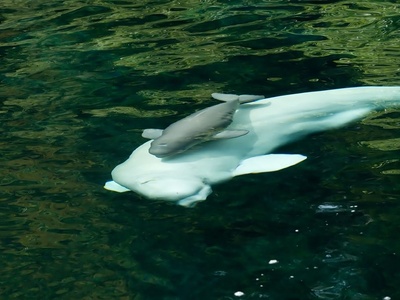
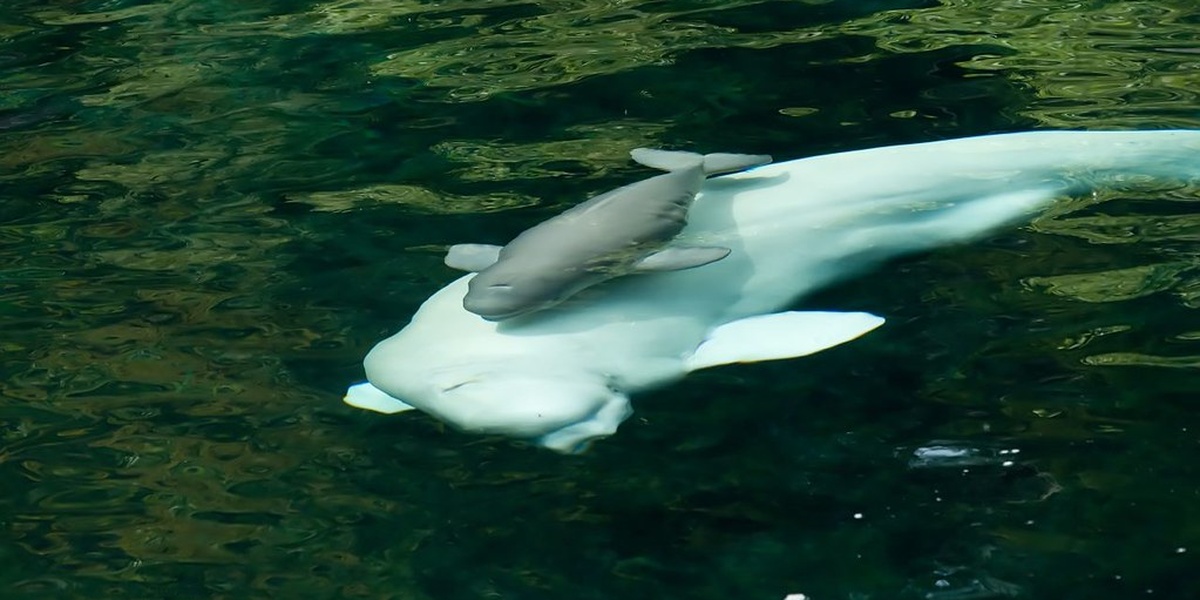
Beluga
Small white toothed whale that eats fish and invertebrates in shallow Arctic shelf seas and estuaries; highly social, vocal and able to navigate under ice. Many populations face habitat change and hunting pressures; some are listed as near threatened or vulnerable.
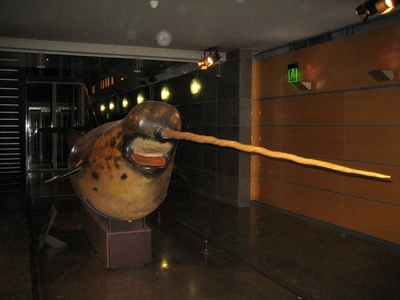
Narwhal
Medium-sized toothed whale feeding on fish and squid beneath pack ice in Baffin Bay and Greenland waters; males sport a long tusk used in sensory and social roles. Sensitive to disturbance; many populations are harvested and could be vulnerable to climate change.
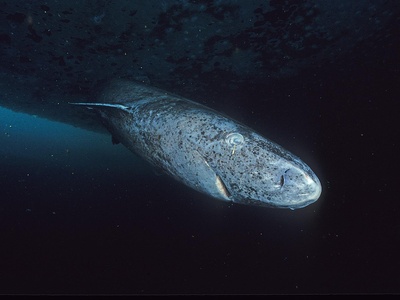
Greenland shark
Massive slow-moving predator that eats fish and marine mammals across deep, cold Arctic seas; tolerates near-freezing water with slow metabolism and long lifespan. Little-known but vulnerable to bycatch and long-lived life history makes recovery from exploitation slow.
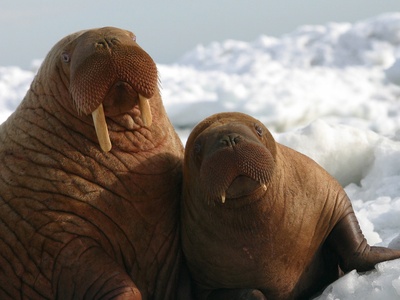
Walrus
Large pinniped feeding mainly on benthic bivalves across Arctic shelves; uses tusks to haul onto ice or shore and whiskers to detect prey. Highly social and dependent on sea ice for resting; climate-driven ice loss threatens some populations.
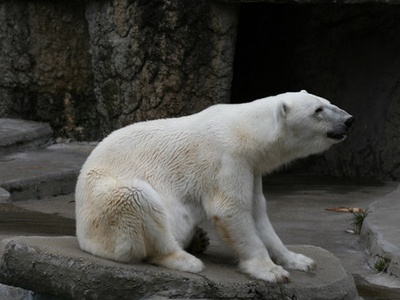
Polar bear
Top Arctic predator that hunts seals from sea ice; excellent swimmer with fat insulation and white camouflage. Lives on frozen seas and coastal areas; populations are vulnerable where sea-ice decline reduces hunting habitat, making climate change the chief threat.
Ringed seal
Small, elusive seal that breeds in snow lairs on sea ice and eats fish and crustaceans; well adapted to ice with agile diving and breathing holes. Vulnerable in regions where shrinking ice and snow cover damages reproduction.
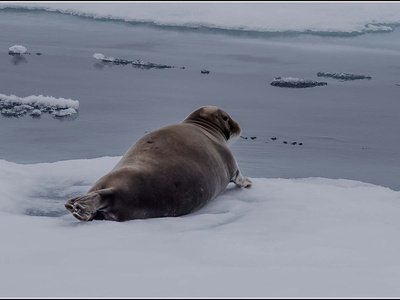
Bearded seal
Large coastal seal grazing on benthic invertebrates using sensitive whiskers to find clams and worms; favors shallow Arctic shelf seas and ice edges. Important prey for polar bears and humans; some populations face habitat pressures from waning sea ice.
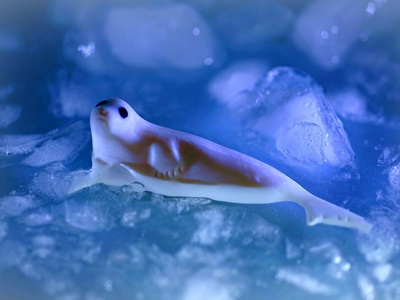
Harp seal
Medium-sized seal that feeds on fish and crustaceans in cold Atlantic and Greenland waters; breeds on pack ice and migrates widely. Populations have rebounded from past hunting but remain sensitive to changes in ice and prey availability.
Hooded seal
Large seal known for male inflatable nasal sacs used in displays; feeds on fish and squid in deep Arctic and sub-Arctic waters. Populations declined from past hunting and remain of conservation concern in some regions.
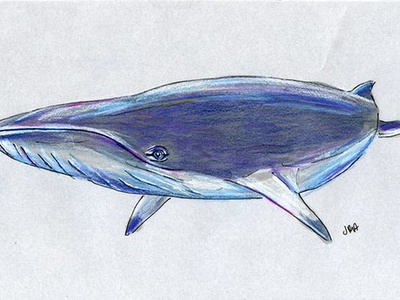
Common minke whale
Small baleen whale that consumes small schooling fish and plankton in productive Arctic shelf seas; fast and migratory, often seen near coasts. Some stocks are stable but face ship strikes, entanglement and changing prey distributions.
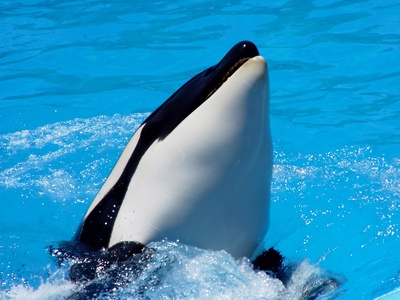
Orca
Powerful, social apex predator that hunts fish, seals and whales across Arctic waters; uses coordinated group tactics and diverse vocalizations. Range is expanding with reduced ice; local impacts on prey and mixed conservation status depending on region.
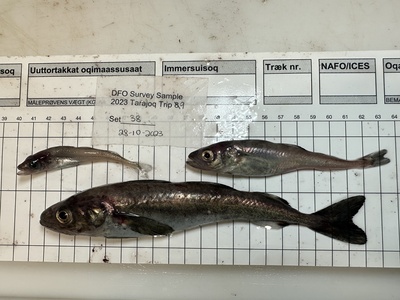
Arctic cod
Key forage fish feeding on zooplankton and small crustaceans across Arctic shelves; tolerates very cold water and lives under ice. Its abundance supports many seals, whales and seabirds; sensitive to warming-driven shifts in ice and prey.
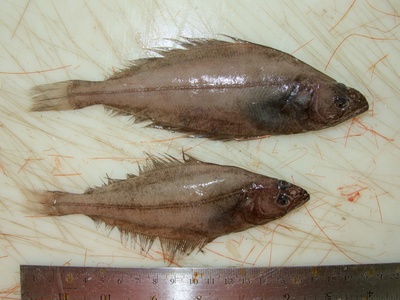
Greenland halibut
Deep-water flatfish inhabiting Arctic and sub-Arctic slopes and basins; eats fish and crustaceans on muddy bottoms. Slow-growing and commercially fished; management varies and some stocks are sensitive to overfishing and environmental change.
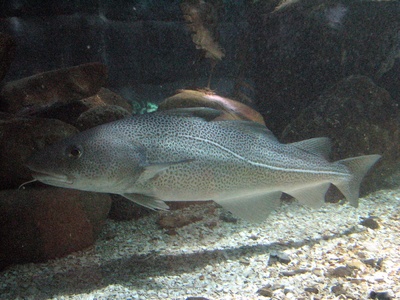
Atlantic cod
Large predatory fish that eats smaller fish and invertebrates on Arctic and sub-Arctic shelves; supports important fisheries in the Barents Sea. Many stocks have fluctuated from overfishing and environmental change; some are rebuilding under management.
Capelin
Small schooling fish that feeds on plankton in Arctic and sub-Arctic shelf seas; forms huge swarms that feed larger fish, seabirds and whales. Spawning runs are ecologically important; climate shifts alter timing and distribution, affecting predators.
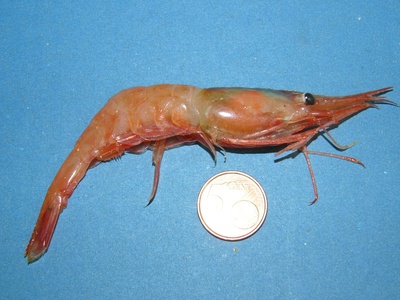
Northern shrimp
Also called cold-water shrimp, it feeds on plankton and detritus across Arctic shelves; important prey for cod and seabirds. Harvested commercially; stocks are sensitive to temperature change and fishing pressure in different regions.
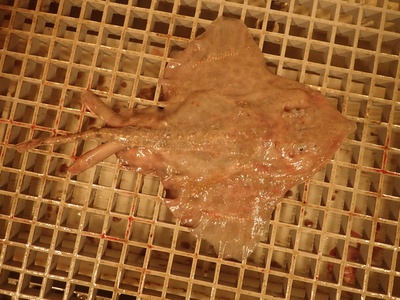
Arctic skate
Bottom-dwelling skate found on Arctic shelves and slopes; feeds on fish and crustaceans and uses flattened body to hug the seafloor. Slow-growing and long-lived; vulnerable to bycatch and deep-water fishing in some areas.
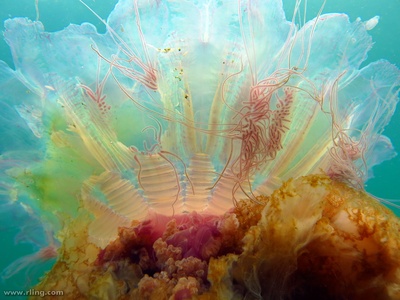
Lion’s mane jellyfish
Large jellyfish common in cold northern seas; drifts in pelagic waters feeding on zooplankton and small fish with long tentacles and stinging cells. Blooms can affect fisheries and are influenced by ocean temperature and currents.
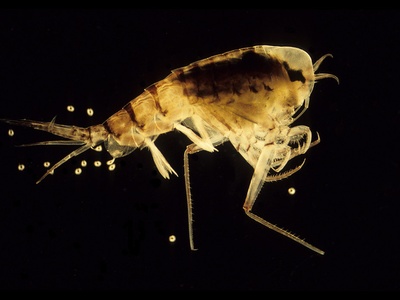
Themisto amphipod
Pelagic crustacean that grazes on zooplankton and small fish larvae in Arctic shelf and slope waters; a vital link in food webs supporting fish and seabirds. Abundance fluctuates with ocean temperature and ice conditions.
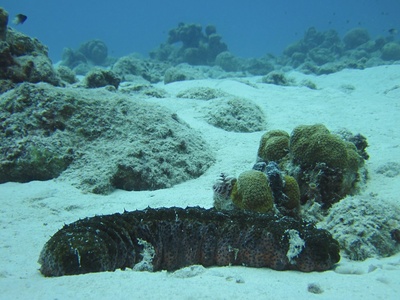
Sea cucumber
Common benthic detritivore on Arctic and sub-Arctic bottoms; feeds on organic particles and re-suspends sediment while filtering food with tentacles. Tolerant of cold depths; harvested locally and sensitive to bottom fishing.
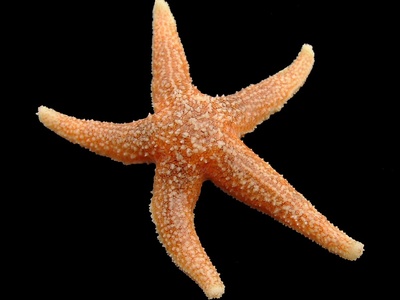
Sea star
Colorful sun star living on rocky Arctic and sub-Arctic bottoms; predatory on bivalves and other invertebrates, using tube feet to pry prey. Important benthic predator; distribution influenced by temperature and ocean currents.
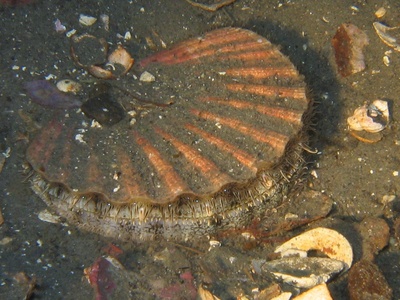
Iceland scallop
Bivalve common on Arctic and cold North Atlantic bottoms; filters plankton and attaches to firm substrates. Long-lived and locally important for fisheries; sensitive to bottom disturbance and changing water conditions.
Snow crab
Cold-water crab found on Arctic and sub-Arctic shelves, especially Bering-influenced areas; scavenges and preys on benthic invertebrates. Supports fisheries but is affected by temperature shifts; invasive expansions into new Arctic areas have ecological impacts.
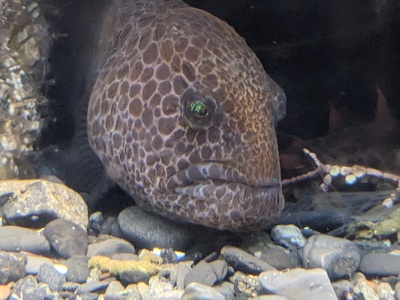
Northern wolffish
Robust bottom-dwelling fish that crushes shells of crabs, sea urchins and molluscs with strong teeth; inhabits rocky Arctic shelves and fjords. Slow-growing and vulnerable to trawling; some populations are of conservation concern.
Lumpfish
Suction-bodied fish that sticks to rocky coastal areas, feeds on crustaceans and small fish; females guard sticky egg masses in cold Arctic waters. Harvested for its roe; some local stocks are monitored for sustainability.
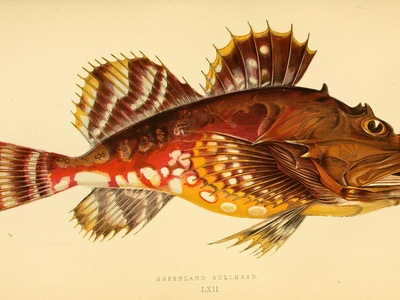
Shorthorn sculpin
Common benthic fish on rocky and muddy Arctic shelves; eats crustaceans, worms and small fish using ambush tactics and camouflage. Important prey for larger fish and birds; tolerant of cold and variable salinity in fjords.
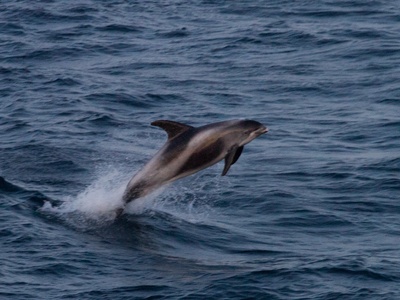
White-beaked dolphin
Coastal dolphin frequenting cold northern Atlantic and Arctic shelf waters; eats fish and squid using echolocation and fast swimming. Increasingly regular in some Arctic regions; populations vary regionally and are monitored for threats like bycatch and habitat change.
Atlantic herring
Schooling planktivore found on Arctic shelf seas; feeds on zooplankton and small fish and forms vast shoals that sustain larger predators. Drives major fisheries in the Barents and Norwegian seas; stocks are sensitive to fishing and changing ocean conditions.
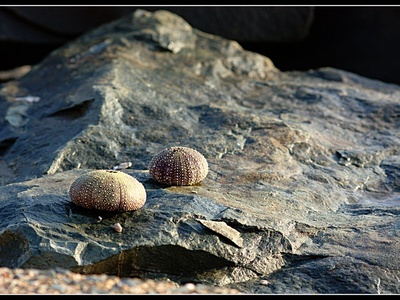
Sea urchin
Benthic grazer on rocky Arctic coasts that eats algae and organic matter; plays a major role structuring kelp and seafloor communities. Cold-adapted and widespread; populations shift with temperature and predation, affecting coastal ecosystem balance.
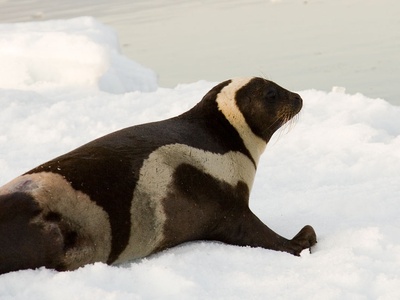
Ribbon seal
Slender, banded seal feeding on fish and squid among pack ice and open waters; excellent swimmer that hauls out on floes. Largely ice-dependent; populations are regionally stable but vulnerable where sea ice retreats.