Most “big green animals” aren’t green the way a leaf is green. They’re green because of scales, skin pigments, algae, lighting, or plain old camouflage doing its job. That’s the fun part of this topic: the phrase sounds simple, but the answer splinters fast.
If you were hoping for a parade of giant emerald beasts, nature is going to be a little rude about it. Truly large animals are rarely vivid green all over. Green is more common in insects, frogs, lizards, and birds than in heavyweight mammals. Still, there are some real standouts — plus a few famous fictional green giants that keep showing up in searches.
TLDR
The biggest real “green animals” are usually reptiles, amphibians, fish, or sea creatures that look green because of camouflage, skin structure, or algae. Large mammals almost never come in natural green. If you want the short version: think iguanas, green anacondas, sea turtles, green sea urchins, and animal oddballs that only look green in the right light.
Real big green animals
Green anaconda
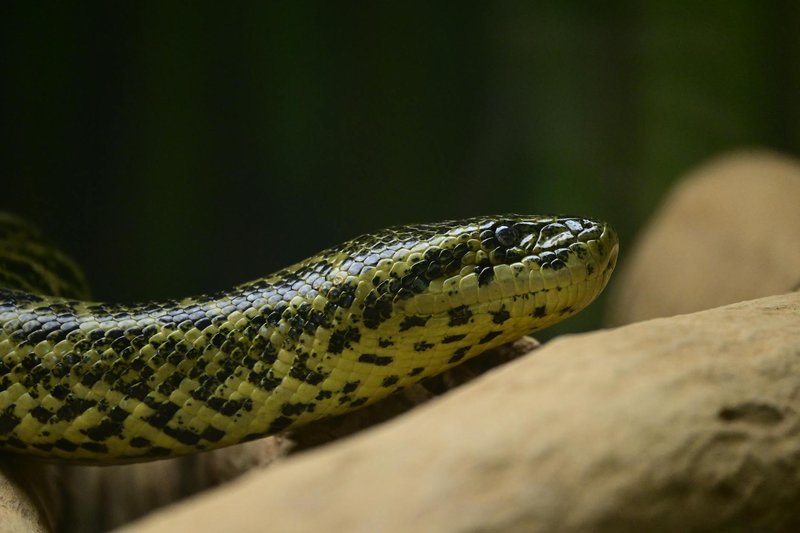
The green anaconda is the heavyweight here. It’s the kind of snake that turns an ordinary riverbank into a bad day. Native to South America, it can reach impressive lengths and massive body weight, especially the females, which are much larger than males. The “green” in the name is earned — its olive-green body with dark blotches helps it disappear in swampy water and muddy marshes.
The trick with anacondas is that they don’t look neon green. They look like wet camouflage. That’s what makes them effective. According to National Geographic, these snakes are semi-aquatic ambush predators built for life in slow water, not sprinting across dry ground.
Green iguana
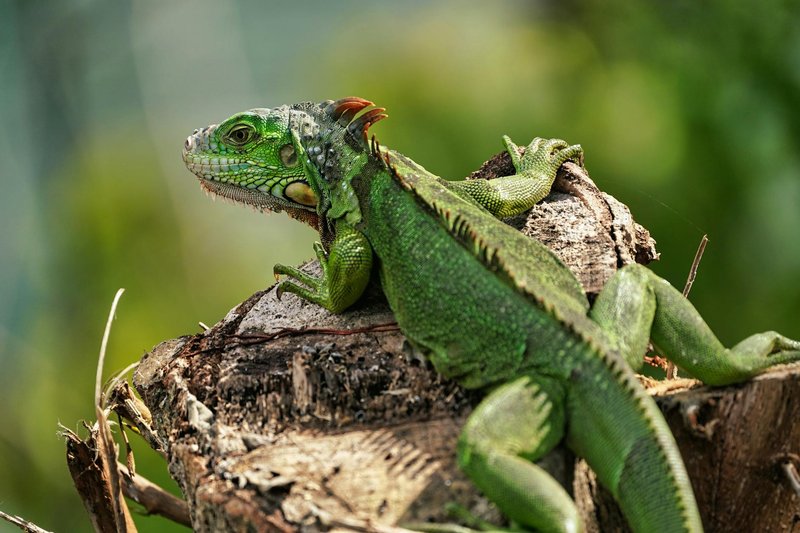
The green iguana is one of the most recognizable large green reptiles in the world. Adults can get long, muscular, and very inconvenient if they show up in the wrong backyard. Their color ranges from bright green to muted gray-green, depending on age, temperature, and mood. Juveniles are often more vivid than older animals.
Green iguanas spend their lives in trees, basking where sunlight hits their scales. Their color works as a kind of leafy disguise. They’re not actually made of leaves, despite what every overconfident backyard photo seems to suggest. The San Diego Zoo Wildlife Alliance has a solid species overview if you want the biological version.
Green sea turtle
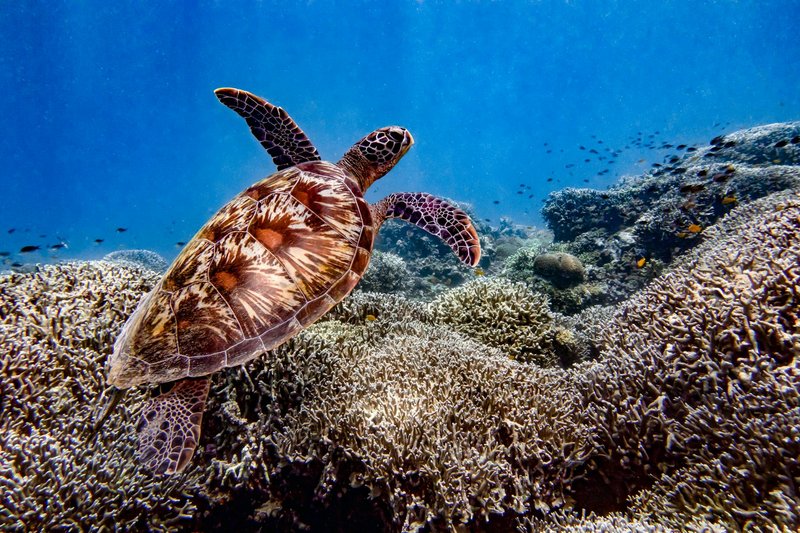
Green sea turtles are not green because their shells are painted that way. Their name comes from the greenish tint of the body fat, which comes from their plant-heavy diet. The shell itself is usually dark, mottled, or brownish.
They’re big, ancient-looking, and easy to recognize because they carry themselves like they’ve seen a few geological eras. Adults can be quite large, and they spend much of their time in tropical and subtropical waters. The NOAA Fisheries page explains why the species is named for its internal coloration rather than its shell.
Asian water monitor
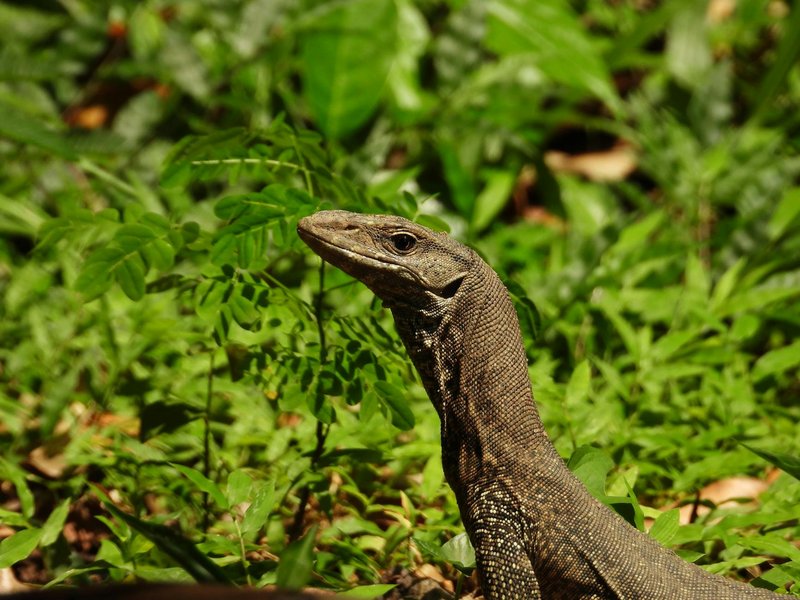
Not all “green” large animals are uniformly green. The Asian water monitor is mostly dark, but in the right light it can show olive, gray-green, or mossy tones across its body. These are big lizards with thick tails, strong limbs, and an attitude that says they would rather not be bothered.
They’re semi-aquatic, often found near rivers, wetlands, and mangroves. Their color helps them blend into muddy banks and shaded water edges. Not as cleanly green as an iguana, but definitely part of the “large animal that can read green on the right day” club.
Green moray eel
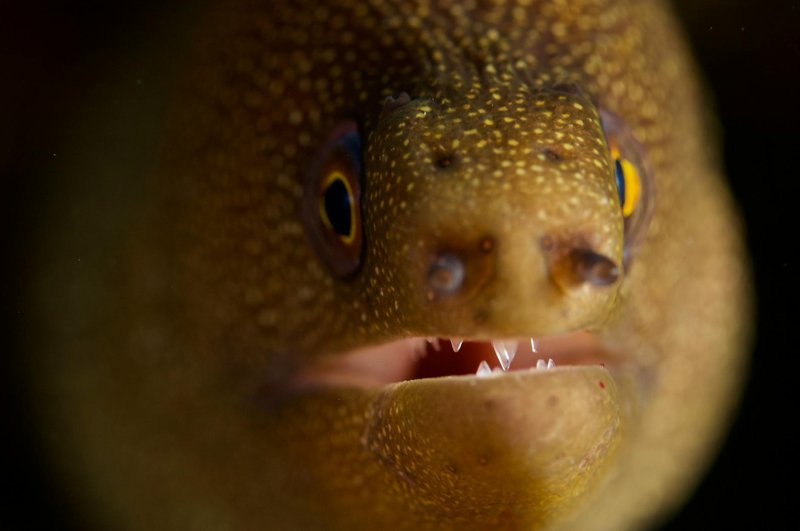
The green moray eel is a classic example of a creature whose name sounds more dramatic than its color story. It’s actually yellowish-brown, but a layer of mucus over dark skin gives it a green appearance underwater. That optical trick is doing a lot of work.
These eels can grow large and intimidating, with a face that looks permanently annoyed. They hide in reef crevices and come out to hunt at night. Ocean light does them favors, which is probably why they keep showing up in “big green animals” searches even though their color is more illusion than paint.
Green tree python
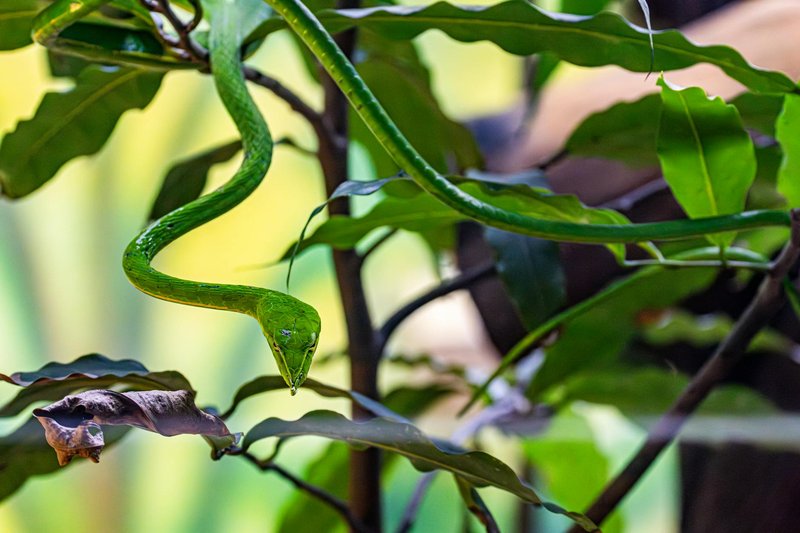
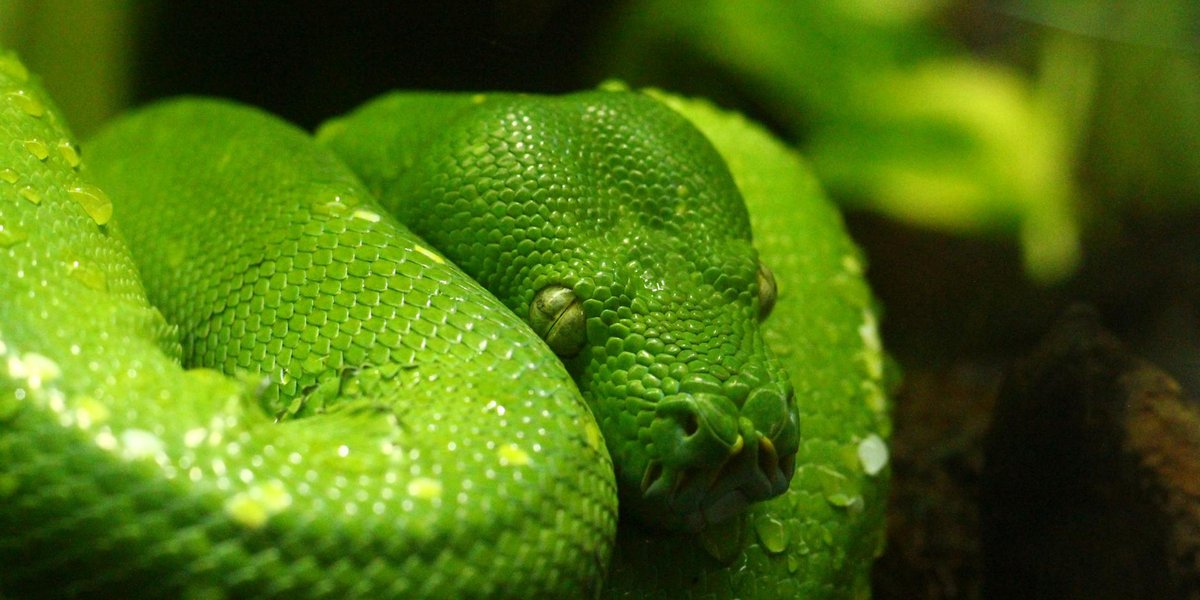
The green tree python is not huge in the way an anaconda is huge, but it can still get long enough to count as a substantial snake, and it is one of the most striking green animals on the planet. Adults are usually bright green, though some individuals are yellow or even blue as juveniles.
It lives in rainforest canopies and spends most of its time coiled across branches like a living vine. The color is pure camouflage. It vanishes into leaves so well that, in photos, it sometimes looks fake. The Australian Museum has a good overview of its life in the treetops.
Why so few big animals are truly green
Green is common in small animals because it works well in dense vegetation. It’s a harder sell for large animals. Bigger bodies need different camouflage strategies, and in many environments, brown, gray, black, or spotted patterns do the job better.
There’s also the biology problem. Mammals don’t usually have green pigmentation in the way plants do. Their fur, skin, or hide tends to rely on melanin-based tones instead. Reptiles and amphibians have more options because of pigment cells called chromatophores, which can create a wider range of visible colors.
That’s why the “big green animals” category tilts so hard toward snakes, lizards, turtles, and ocean creatures. Nature is practical. It uses green where green helps.
Big green animals that only look green
Algae-covered sea turtles
A turtle with algae on its shell can look distinctly green from a distance. That doesn’t mean the animal is naturally green in the same way a tree frog is green. It means the ocean has been using it as real estate.
Mossy or lichen-covered animals
In wet, humid habitats, shells, skin, or even fur can pick up a green cast from algae, moss, or lichen. This is common with slow-moving animals that spend a lot of time in one place. They don’t evolve green coloration so much as they collect it.
Lighting tricks
Underwater, green, blue, and yellow tones shift constantly. A fish or eel can look greener in one photo and browner in another. That’s not cheating. That’s physics being annoying in a very photogenic way.
Famous fictional big green animals
Sometimes the search query isn’t about biology at all. Sometimes it’s about giant green creatures from movies, cartoons, and comics.
The Hulk
Probably the most famous big green “animal” of all time, even though he is very much not an animal. Still, if someone typed this query after thinking of a giant green brute, that’s the reference point.
Shrek
Again, not an animal. Still green. Still large in pop culture terms. Still showing up in image searches like he pays rent there.
Godzilla in some versions
Godzilla is usually more gray than green, but certain art styles, toys, and promotional images push him into green territory. That’s enough for search engines to get confused and pretend this is all one category.
What counts as a big green animal, really?
A strict definition gives you a short list. If “big” means genuinely large and “green” means naturally green-looking, the strongest candidates are reptiles and marine animals: green anacondas, green iguanas, green sea turtles, some monitors, and a few eels and snakes that only read green under specific conditions.
A looser definition opens the door to anything that looks green in the wild, plus fictional giants. That’s why the query is such a mess and such a good one. It’s half nature guide, half costume party.
Final thoughts
Big green animals are rarer than the search phrase suggests, and that’s exactly why they’re interesting. The animals that really fit the bill usually rely on camouflage, habitat, or visual trickery rather than bright, cartoonish color. The green is there for a reason — to hide in leaves, slip through water, or vanish into reef shadows.
So if you were picturing a huge neon beast from the jungle, nature has a quieter answer. A green anaconda lurking in swamp water. An iguana flattened against a branch. A sea turtle with algae on its back. Less fantasy. More weird biology. Much better, honestly.