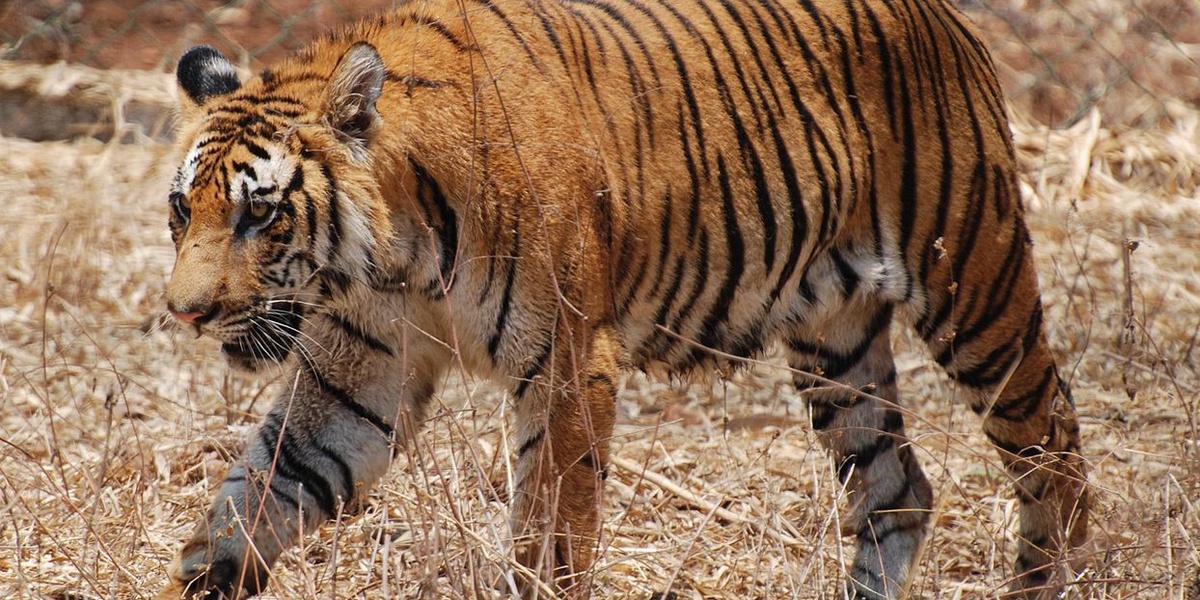
From flamingo-lined lagoons to tiger-haunted grasslands, orange is a striking color that appears across very different ecosystems. Bright hues can signal diet, mating readiness, or a surprising form of camouflage depending on habitat and behavior.
There are 11 big orange animals, ranging from American flamingo to Tiger. For each species the list shows Scientific name, Size (length cm; weight kg), and Range / Habitat — details you’ll find below.
How do animals develop such bright orange coloration?
Most orange tones come from pigments called carotenoids that animals obtain through diet (plants, algae, or prey). In some species, pigments are deposited in feathers or skin; in others, structural features enhance the color. Brightness often links to health, diet quality, or breeding condition.
Are any of these orange species threatened or protected?
Conservation status varies: some species on the list face habitat loss, poaching, or declining prey and are listed by the IUCN, while others are stable or locally protected. Check each species’ IUCN Red List entry and regional protections for the most accurate, up-to-date status.
Big Orange Animals
| Name | Scientific name | Size (length cm; weight kg) | Range / Habitat |
|---|---|---|---|
| Tiger | Panthera tigris | 220-310 cm; 100-220 kg | Asia; forests and grasslands |
| Orangutan | Pongo pygmaeus | 120-150 cm; 40-90 kg | Borneo and Sumatra; tropical rainforest |
| American flamingo | Phoenicopterus ruber | 110-140 cm; 2-4 kg | Americas; shallow saline lagoons and coasts |
| Lion’s mane jellyfish | Cyanea capillata | 50-3,000 cm; 1-50 kg | North Atlantic/Pacific; cold boreal and temperate seas |
| Orange roughy | Hoplostethus atlanticus | 35-75 cm; 5-7 kg | Global temperate slopes; deep continental slopes |
| Sunflower sea star | Pycnopodia helianthoides | 90-120 cm; 10-20 kg | Northeastern Pacific; subtidal rocky reefs |
| Ochre sea star | Pisaster ochraceus | 30-60 cm; 0.5-2 kg | North Pacific coasts; intertidal rocky shores |
| Red kangaroo | Osphranter rufus | 150-190 cm; 55-90 kg | Australia; arid plains and open grassland |
| Golden snub-nosed monkey | Rhinopithecus roxellana | 60-75 cm; 12-18 kg | Central China; mountainous temperate forests |
| Garibaldi | Hypsypops rubicundus | 25-38 cm; 0.5-1 kg | Eastern Pacific; rocky reefs off California |
| Lionfish | Pterois volitans | 20-47 cm; 0.3-1.4 kg | Indo-Pacific reefs; invasive Atlantic/Caribbean reefs |
Images and Descriptions
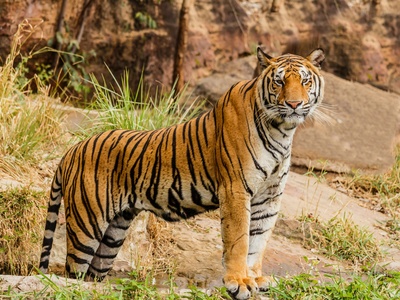
Tiger
A large striped big cat with vivid orange fur and black bands; orange comes from pigments in hair and selective camouflage in grasslands. Found across Asia in forests and grasslands; notable for powerful size and iconic patterned coat used in hunting.
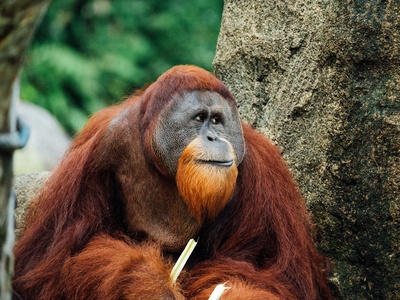
Orangutan
Great apes with long orange hair that helps conceal them among forest canopy; coloration arises from hair pigments and light scattering. Native to Borneo and Sumatra rainforests; notable for intelligence, tool use, and primarily arboreal lifestyle.
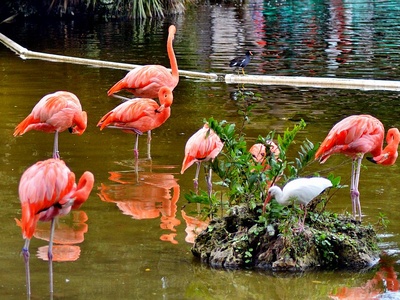
American flamingo
Tall wading bird whose pink-orange color comes from carotenoid pigments in its diet of algae and crustaceans. Found in shallow tropical and subtropical lagoons, salt lakes and coasts of the Americas; notable for filter-feeding and tight flocking displays.

Lion’s mane jellyfish
A huge, usually orange-red jellyfish with a bell and long trailing tentacles; pigmentation and carotenoids create its reddish-orange hues. Lives in cold boreal and temperate seas of the North Atlantic and Pacific; notable for exceptionally long, stinging tentacles.
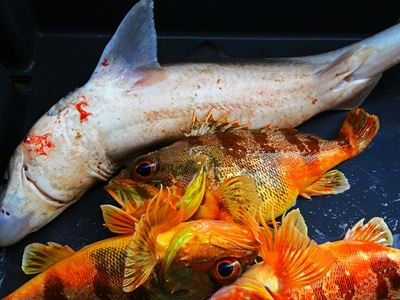
Orange roughy
Deep-sea fish with a distinct orange-red body coloration from carotenoid-like pigments; slow-growing and long-lived. Found on continental slopes in temperate oceans worldwide; notable for extreme longevity, often living several decades to over a century.
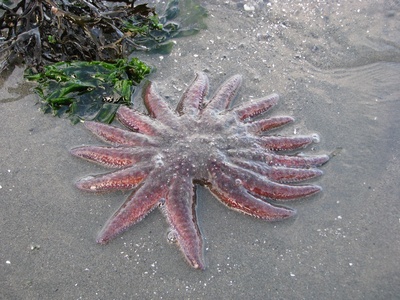
Sunflower sea star
A large, fast-moving sea star often orange in color; pigments and diet influence its hue. Native to northeastern Pacific rocky subtidal zones; notable for many arms and voracious predation on bivalves and other invertebrates.
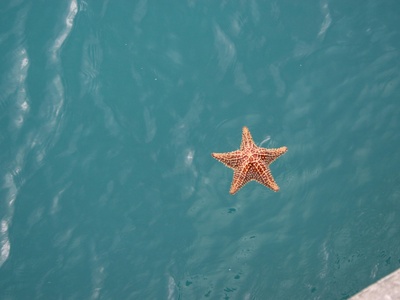
Ochre sea star
A sturdy intertidal starfish commonly orange or brownish; pigments and algal diet produce its ochre color. Found on rocky Pacific Northwest shores; notable for regenerative ability and role as a keystone predator in tidepool ecosystems.
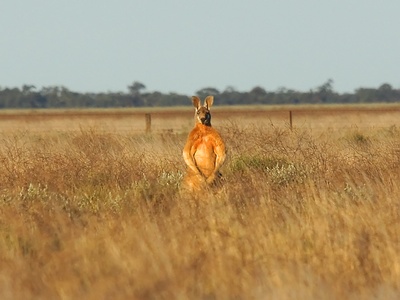
Red kangaroo
The largest marsupial with males often sporting a reddish-orange coat that helps with heat reflection and camouflage. Native to arid and open habitats across Australia; notable for powerful hind legs and hopping locomotion reaching high speeds.

Golden snub-nosed monkey
A primate with striking golden-orange fur, especially around the face and shoulders; pigments and dense coat adapt to cold. Found in mountainous temperate forests of central China; notable for complex social groups and seasonal migrations.
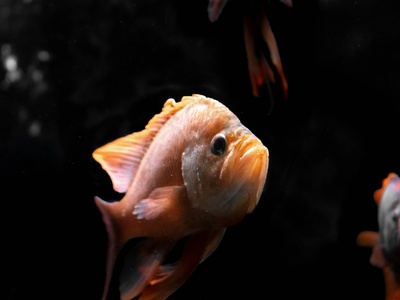
Garibaldi
A medium-sized bright orange damselfish; carotenoid pigments give it vivid color. Found on rocky reefs off the California coast where it defends crevice nests; notable as California’s state marine fish and territorial guardian of eggs.
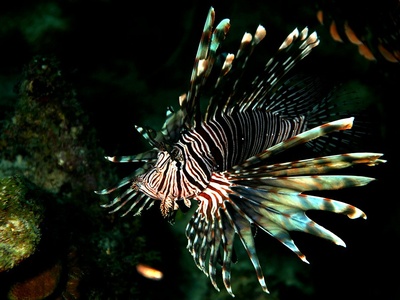
Lionfish
Venomous reef fish with orange-red and white banding; pigments and patterning produce its striking colors. Native to Indo-Pacific reefs but invasive in the Atlantic and Caribbean; notable for expanding populations and heavy predation on reef fishes.