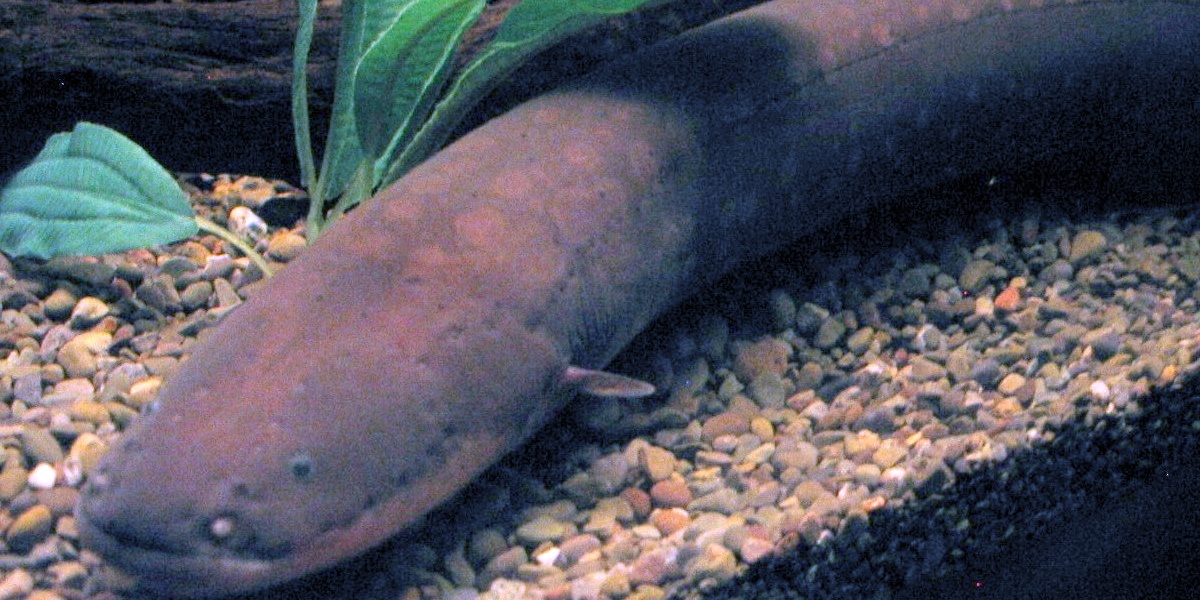
Electrophorus species can generate high-voltage discharges measured as high as 860 volts and reach lengths up to 2.5 meters — enough power and size to astonish 19th‑century naturalists who labeled it a “torpedo fish” and recorded shocking encounters. These traits have kept the animal in the spotlight: evolutionary novelties built into a freshwater predator, and real-world lessons for neuroscience and bioinspired engineering. This piece breaks down 10 distinctive characteristics of the electric eel, grouped into biology, electric abilities, ecology, and human interactions, to give a clear, accurate picture of one of the Amazon’s most remarkable predators.
Biology and Anatomy
Electric eels are not true eels but knifefish (order Gymnotiformes), and their body plan is the anatomical foundation for everything electrical they do. Below are three anatomical traits that explain how they generate and use electricity.
1. Electric organ and physiology
The characteristics of a electric eel center on a massive electric organ that occupies much of the posterior two‑thirds of the body and, in large individuals, represents a majority of the animal’s mass. That organ is a stack of electrocytes — modified muscle/nerve cells — arranged like batteries in series, so voltages add when discharged together.
Historically, voltages of about 600 volts were often cited; targeted measurements in recently described species (post‑2019 taxonomic work) have recorded discharges up to ~860 V in Electrophorus voltai. Because the organ is directly tied to motor control and ion transport, electrocyte physiology attracts neuroscientists and bioengineers studying membrane currents and power density in biological systems.
2. Size, shape, and appearance
Adults have an elongated, cylindrical, knifefish‑like body with no pelvic fins and little to no scales. Maximum recorded lengths reach about 2.5 meters (≈8 ft), though many adults are smaller; large specimens held in museum collections and field surveys often weigh up to around 20 kg.
Coloration tends toward muted browns and grays that help the fish blend into tannin‑stained or silty water. The long, scaleless form and reduced fins make the eel an efficient, sinuous swimmer that can tuck into submerged vegetation or shallow pools.
3. Specialized sensory systems
Electric eels are sensory specialists for murky, low‑visibility waters. They produce weak, regular electric fields for active electrolocation, detecting objects and prey by distortions in that field, and they combine this with lateral‑line sensing and limited vision.
Behavioral experiments have shown eels navigating and finding prey in darkness using electrolocation, and engineers have copied that strategy: underwater robots now use electrolocation‑inspired sensors to map nearby objects where sonar or cameras struggle.
Electric Abilities and Behavior

Electric eels use electricity in at least two functional modes: low‑voltage discharges for sensing and communication, and high‑voltage discharges for hunting and defense. Understanding both explains how the eel interacts with prey, predators, and conspecifics.
4. Low‑voltage electrolocation and communication
Electric eels emit weak, repetitive pulses for active electrolocation and short‑range signaling. Those weak discharges produce local fields that the eel senses; changes in amplitude or timing reveal nearby objects or other fish.
Laboratory recordings show pulse trains with variable timing — often in the tens to low hundreds of pulses per second during active exploration — and patterns that function as social signals during encounters. Designers of underwater sensing systems have borrowed these principles for close‑range navigation where cameras fail.
5. High‑voltage strikes for prey capture and defense
High‑voltage discharges stun or incapacitate prey and deter predators. Classic accounts referenced ~600 V, but species-specific measurements since the 2019 taxonomic revision report peaks around 860 V in Electrophorus voltai.
Behavioral work by Kenneth C. Catania and others documents that eels can deliver volleys of pulses and specialized rapid pairs (so‑called “doublets”) to maximize muscle contractions in prey, sometimes causing fish or small mammals to twitch and become easier to capture. Controlled experiments show fish stunned at short range and mammals experiencing severe muscle effects when struck directly.
6. Mechanics of discharge: pulses, range, and recharge
Discharges are produced by near‑synchronous activation of many electrocytes; individual pulses are brief (on the order of a millisecond) and can be chained into volleys. The strongest effects are close‑range — centimeters to under a meter produce the most reliable incapacitation, while lethal or immobilizing effects fall off rapidly beyond a few meters.
High‑voltage volleys are metabolically expensive, so eels modulate pulse frequency and insert pauses to recharge. Lab studies observe short bursts of activity followed by rest intervals, and field observations show hunting bouts timed to conserve energy while maximizing capture success.
Ecology, Distribution, and Diet
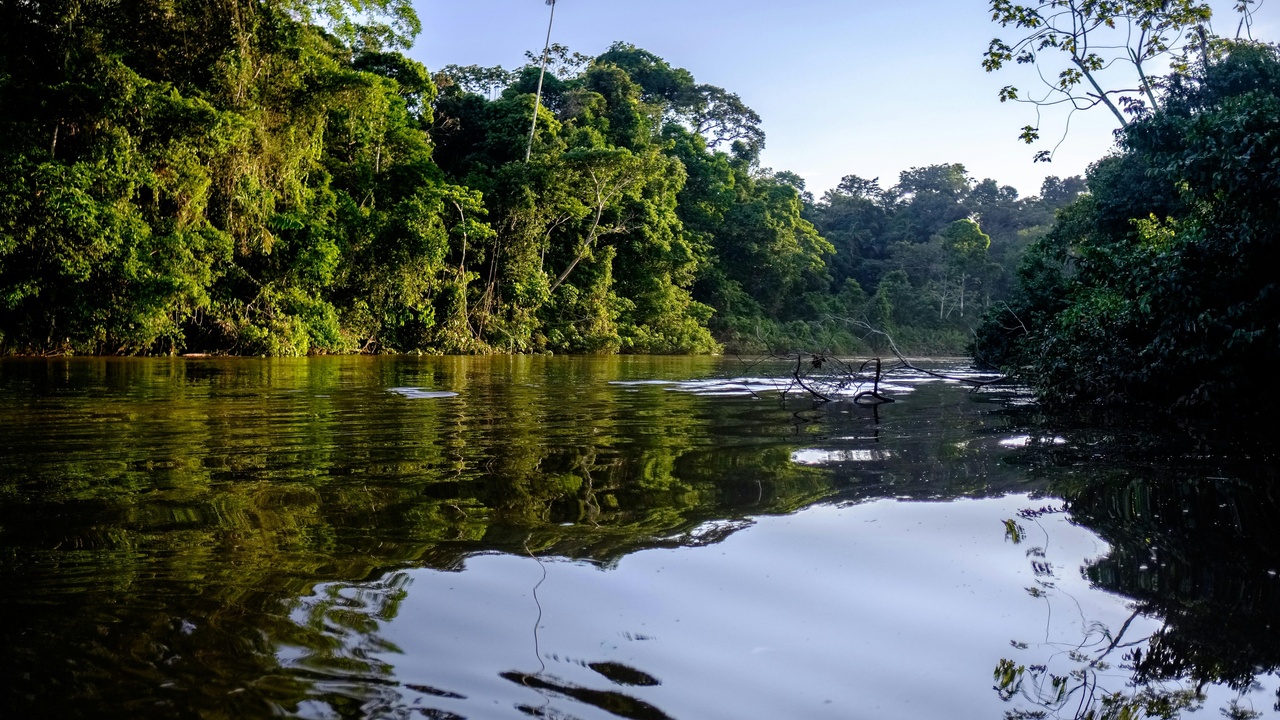
Electric eels are primarily South American, tied to large tropical river systems and the seasonal rhythms of floodplains. Their habitat choices and diet reflect adaptations to slow, oxygen‑poor waters where electrogenic hunting pays off.
7. Distribution and preferred habitats
Range is concentrated in the Amazon and Orinoco river basins across Brazil, Peru, Colombia, Venezuela, Ecuador, and Bolivia. They occupy whitewater and blackwater floodplain systems, slow‑moving channels, oxbow lakes, and tree‑studded varzea and igapó habitats.
Seasonality matters: during the dry season eels often congregate in isolated pools and channels where prey are concentrated, and during floods they disperse to exploit newly inundated forest areas and hunting opportunities.
8. Diet and feeding strategies
Electric eels are largely piscivorous and opportunistic. Stomach‑content studies commonly find fish as the dominant component, and observed prey ranges from a few centimeters up to decimeter‑sized fish. Eels will also take amphibians and, on occasion, small birds or mammals that come to the water’s edge.
Hunting often follows a stun‑and‑consume sequence: the eel locates prey using weak pulses, then uses high‑voltage volleys to immobilize or induce involuntary movement before swallowing. Field reports and some behavioral studies describe coordinated or sequential hunting behaviors when multiple eels concentrate on a prey patch.
Human Interactions, Research, and Conservation
Humans have long been fascinated and occasionally harmed by electric eels, and scientists have used them as living laboratories. The next two characteristics cover the eel’s role in research and the conservation issues it now faces.
9. Role in scientific research and technology
Electric eels are model organisms for bioelectricity and neuromuscular control. Researchers study how electrocytes generate large currents, how the nervous system times volleys, and how electric fields interact with muscle physiology.
Work by neuroscientists such as Kenneth C. Catania has clarified hunting strategies and shock mechanics, while a 2019 taxonomic revision reshaped how scientists think about species‑level differences across Electrophorus. Engineers borrow eel principles for underwater electrolocation sensors and discharge modeling, and biomedical researchers study ion transport and membrane behavior for insights into excitable tissues.
10. Conservation, human encounters, and cultural significance
Conservation concerns center on habitat loss, water pollution, and localized overharvest. Dams and deforestation alter floodplain dynamics, reducing the shallow, oxygen‑poor pools electric eels favor; mining and agricultural runoff degrade water quality in many Amazon and Orinoco tributaries.
Status varies by species and location and is still being reassessed after the 2019 taxonomic split that recognized multiple Electrophorus species. Indigenous knowledge, historical anecdotes of “shocking” fish, and local fisheries all reflect the eel’s cultural presence. Practical actions that help include supporting floodplain conservation, monitoring populations with community science, and integrating local expertise into management plans.
Summary
- Electric eels combine a massive electric organ (occupying much of the body) with discharges measured up to ~860 V and maximum lengths near 2.5 m.
- They use low‑voltage pulses for electrolocation and communication and high‑voltage volleys to stun prey, with pulse durations on the order of milliseconds and strongest effects at close range.
- Distribution is centered on Amazon and Orinoco floodplain habitats; diet is largely piscivorous but opportunistic, with hunting adapted to seasonal pools and murky water.
- Electric eels have been central to studies of bioelectricity (notably in work by Kenneth C. Catania) and inspired underwater sensors and neuromuscular research; a 2019 taxonomic revision clarified species boundaries.
- Despite scientific value, they face habitat threats; supporting floodplain protection, pollution control, and community monitoring will help safeguard these remarkable fishes.