In 1667 the English naturalist Robert Boyle described a mysterious “cold light” emitted by insects — one of the earliest recorded scientific mentions of bioluminescence.
Fireflies still capture both scientific and public attention because their nightly glows combine chemistry, behavior, and ecology in an easy-to-see spectacle. People admire them for beauty and memory-making, while researchers study them for insights into enzyme chemistry, signaling systems, and conservation biology.
This piece walks through ten key characteristics of a firefly that explain how they glow, how they live, and why they matter. The rundown is organized into three categories — Biology & Physiology, Behavior & Ecology, and Human Uses, Research & Conservation — and draws on lab work, field observations, and cultural examples. There are roughly 2,000 firefly species worldwide, so the patterns below describe broad traits while noting important exceptions.
Biology & Physiology
The next four characteristics focus on how fireflies produce light, what colors they make, their life cycle, and the specialized body parts behind the glow. Understanding the chemistry of light production and the anatomy of the lantern helps explain why flash patterns are so reliable for communication.
Biochemists and field researchers (notably Dr. Sara Lewis at Tufts) have combined lab assays and nighttime observations to link enzymes and behavior. One striking point: the luciferin-luciferase reaction converts most energy into light rather than heat, making it far more efficient than an incandescent bulb.
Below are four core physiological traits — the chemical engine of bioluminescence, typical glow colors, developmental stages, and the lantern’s anatomy — each illustrated with species-level examples and practical notes.
1. Bioluminescence: A chemical light with high efficiency
Fireflies produce light via a chemical reaction that needs luciferin, the enzyme luciferase, ATP, and oxygen. In plain terms: luciferin + luciferase + ATP + O2 → light.
That reaction funnels most of the released energy into visible photons, with very little thermal loss, so the glow is literally cold light. Biochemistry studies and lab work (including reporter-gene assays) document this efficiency and explain why researchers find the system attractive for engineering.
Because it produces light without much heat, the luciferin system is used in molecular biology — luciferase reporter genes power sensitive assays — and inspires attempts to design low-heat lighting and optical sensors.
2. Color and wavelength: mostly yellow-green glows
Most fireflies emit yellow-green light, typically in the 510–620 nm wavelength range. That band is highly visible at dusk, which helps mating signals stand out against twilight.
Small changes in the luciferin environment and the luciferase enzyme shift color, so some species produce amber or nearly red flashes. The common eastern firefly, Photinus pyralis, is a classic yellow-green example; certain Southeast Asian species give warmer orange-red flashes.
3. Life cycle: larval predators, pupation, and short-lived adults
Fireflies pass through four stages: egg → larva → pupa → adult. Larvae are often active predators, feeding on snails, slugs, and earthworms, and they can spend one to two years developing before pupation.
Adults usually live only long enough to mate — frequently two to three weeks during the local mating season — and some adult forms do not feed at all. Lifespan and timing vary with species and climate, so regional studies provide the best estimates for local populations.
4. Specialized lanterns and morphology
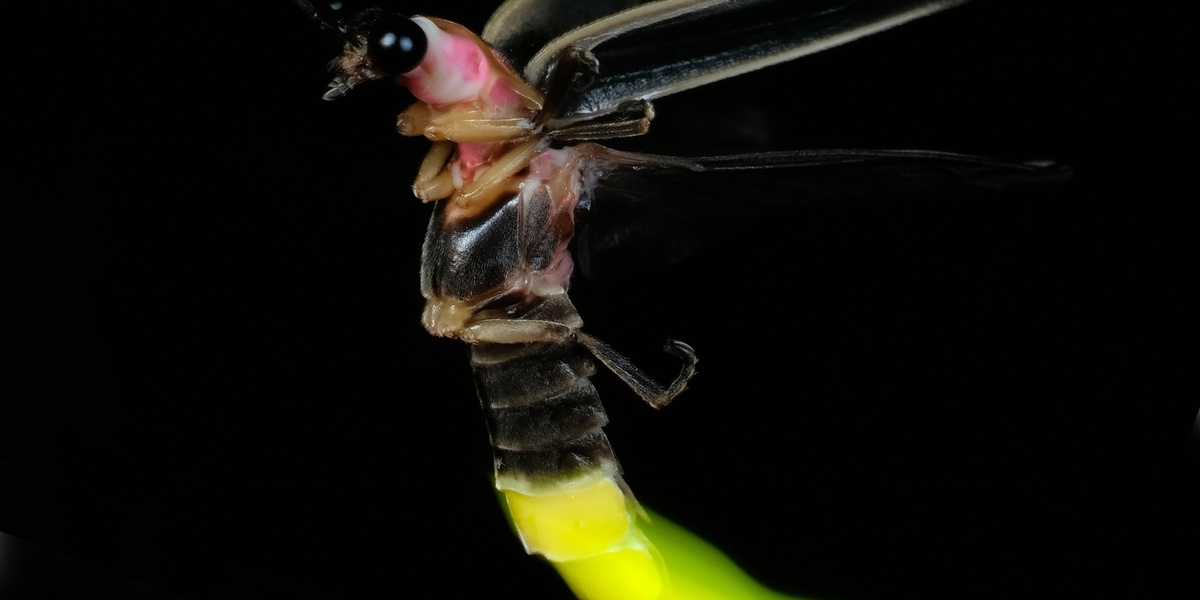
Light is produced in specialized lantern organs on the abdomen made of modified cells that host the luciferin reaction. Beneath the cuticle there are reflective layers that amplify brightness and neural circuits that control flash timing.
Sexual dimorphism is common: some females are wingless or show different lantern patterns (the so-called glow-worm forms), and size and wing shape influence flight behavior and how visible a flash is to a mate.
Behavior & Ecology
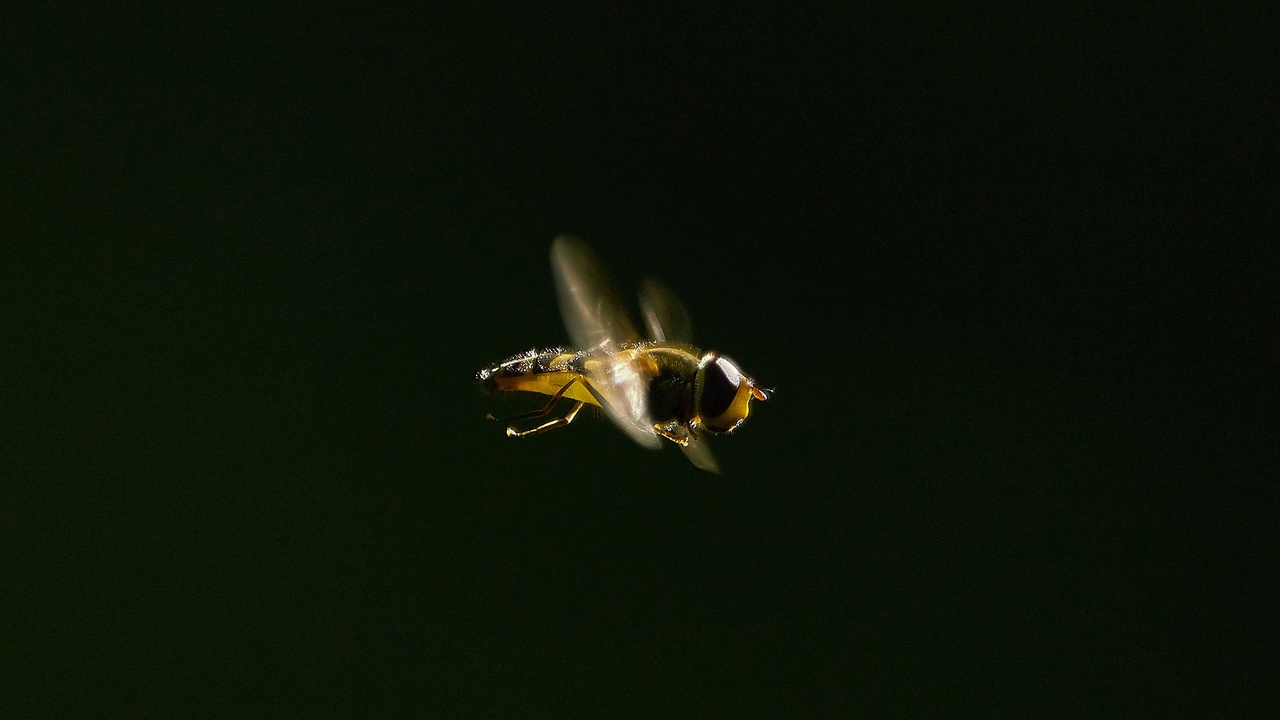
Flash behavior links directly to habitat and life history. Light signals serve mate attraction and species recognition, and in some cases deception; larvae play an important predatory role in soil and leaf-litter communities.
Fireflies typically prefer moist, semi-open habitats like wetlands, forest edges, and undisturbed lawns where leaf litter and ground cover support larval prey. Because they rely on visual signals, artificial light and habitat fragmentation are major pressures on local populations.
Understanding flash patterns, daily timing, and habitat needs helps explain why some populations thrive while others decline when human activity changes nighttime environments.
5. Mating signals: patterned flashes for species recognition
Many fireflies use species-specific flash patterns to find mates. Males usually fly and emit a searching sequence, and perched females answer with a timed response from vegetation.
Flash durations commonly range from about 0.1 to 2 seconds, and the interval between flashes differs by species. Field researchers (Sara Lewis, Tufts) note that flash complexity reflects sexual selection: more precise timing can improve mate recognition in mixed-species communities.
Synchronous flashing — where many males flash together in near-unison — occurs in some populations, such as certain Photinus clusters in the Great Smoky Mountains and Pteroptyx groups in Southeast Asia.
6. Predation, deception, and chemical defenses
Fireflies face predators but many are chemically defended. They sequester or produce steroidal toxins called lucibufagins that make them bitter or toxic to birds and other predators.
Some predatory females — notably Photuris species — mimic the flash patterns of other fireflies to lure males and then eat them, a striking example of behavioral deception shaping signal evolution and interspecific interactions.
These predator-prey dynamics help explain why bright, reliable flashes persist despite obvious risks: chemical defenses reduce the payoff to would-be predators, while deceptive tactics continue to evolve among hunters.
7. Habitat needs and global distribution
Fireflies occur on every continent except Antarctica, with approximately 2,000 described species ranging from temperate meadows to tropical mangroves. Regional hotspots include Southeast Asia and eastern North America.
They favor moist, dark habitats with leaf litter, tall grass, or marsh edges that support larval prey and provide low-light corridors for mating displays. Urbanization, pesticide use, and light pollution fragment those habitats and reduce mating success.
Conservation-minded land management — preserving wetland buffers, reducing nighttime lighting near habitat, and avoiding heavy pesticide use — helps maintain local populations and the nighttime spectacles they create.
Human Uses, Research & Conservation

Fireflies matter to people in three overlapping ways: their molecules power laboratory tools, their populations are under threat, and they inspire cultural events and ecotourism. Each angle drives different kinds of attention and action.
Luciferase assays are staples of biomedical research and drug discovery, conservationists use citizen science to monitor trends, and communities organize viewing nights that bring educational and economic benefits — provided those events follow strict light-management rules.
The next three points cover laboratory and tech uses, major threats and conservation actions, and the cultural/ecotourism value that often motivates local protection efforts.
8. Scientific tools and bio-inspired technology
Firefly biochemistry has practical applications. Luciferase reporter enzymes are a standard tool in molecular biology labs worldwide for measuring gene expression and screening drug candidates.
Because the luciferin system produces bright, low-background light, assays using luciferase are extremely sensitive and cost-effective for many diagnostics and research workflows.
Beyond assays, engineers and physicists study bioluminescence for ideas about low-heat illumination and optical sensors, with academic groups testing bio-inspired LEDs and imaging tools.
9. Conservation status and major threats
Many firefly populations are declining for clear reasons: habitat loss from development, pesticide exposure, and increasing artificial light at night. Researchers and conservation groups have documented regional declines, especially near urban centers.
Light pollution disrupts mating by masking or altering flash signals, reducing mate finding and breeding success. Practical mitigation measures include dark-sky lighting, timed or motion-controlled fixtures, and maintaining dark corridors along wetland or forest edges.
Citizen science programs and local surveys help track trends and guide policy; communities that adopt dark-sky practices and protect breeding habitat often see better long-term outcomes for their local glowing beetles.
10. Cultural importance and ecotourism
Fireflies have rich cultural resonance: they appear in poetry, folklore, and festival calendars. Famous synchronous displays draw visitors to select sites in Japan and Malaysia, and guided viewing nights occur in many U.S. parks.
Ecotourism generates education and income for local communities, but it can harm populations if organizers allow bright lights or large crowds. Responsible viewing — limited group sizes, no flash photography, and strict lighting rules — reduces disturbance.
When planned carefully, firefly festivals and tours can fund conservation and foster public support for dark-habitat protection, turning wonder into practical stewardship.
Summary
- Fireflies generate cool, efficient light through a luciferin-luciferase reaction rather than heat.
- Flash patterns, lantern anatomy, and larval ecology shape mating success and ecosystem roles.
- Human activities — especially light pollution and habitat loss — are driving declines in many regions.
- Firefly molecules power laboratory assays, and their displays support ecotourism when viewing is managed responsibly.
- Reduce yard lighting, support wetland and dark-corridor protection, and consider joining local firefly counts to help conserve these bioluminescent insects.