Laboratory mice have been central to genetics and medicine since the early 1900s, helping unlock principles from Mendelian inheritance to modern immunology. Over that century-plus, Mus musculus has shaped both basic science and practical pest management.
Understanding what makes mice distinctive matters for everyday life: it helps homeowners prevent infestations, guides humane lab housing, and informs public-health responses when rodents spread disease. A typical wild mouse lives about 1–2 years, while lab strains may live several years longer.
This article presents ten clear, scientifically grounded characteristics of a mouse that explain anatomy, behavior, sensory strengths, reproduction, and ecological roles.
The traits are grouped into three categories: physical features you can see and measure, behavioral patterns relevant to control and welfare, and sensory/reproductive/ecological characteristics that explain why mice matter in nature and research.
Physical characteristics
These are the visible, measurable traits scientists and the public most often notice: body size and shape, fur, limbs and tail, plus the distinctive teeth rodents use to gnaw and shape their environment.
1. Size and body proportions
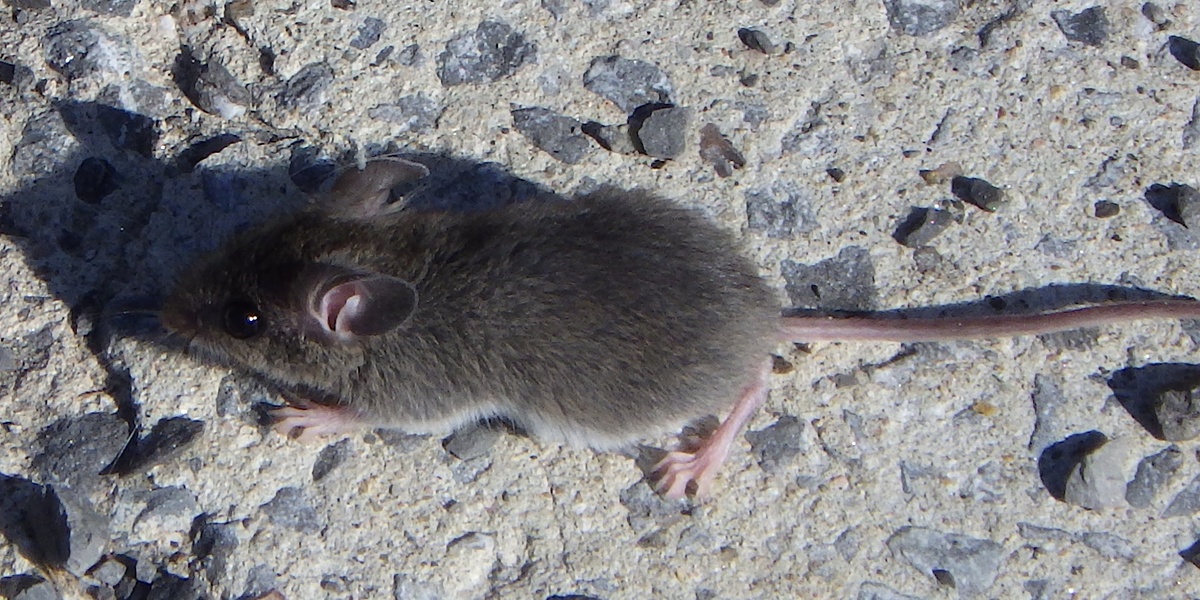
Adult house mice (Mus musculus) are small and compact, typically around 7.5–10 cm in body length with a mass of about 18–30 g (roughly the size and weight of a credit card-length object and a AA battery pack). Their small size lets them enter tight crevices—gaps as small as a dime’s width in some cases—affecting how they access food and shelter.
Size matters for predator risk and control measures: smaller mice evade many traps designed for larger rodents, and their body proportions let them nest in wall voids and attics where larger pests cannot reach (see Smithsonian or Animal Diversity Web for measurements).
2. Fur, coloration, and camouflage
Mouse fur is adaptive: wild commensal mice typically display gray-brown coats that blend into buildings and fields, while lab strains include albino and many color morphs used in research. Fur provides insulation and concealment against predators and varying climates.
Coloration varies by habitat—urban mice often have darker, grayer pelage while some island or field populations evolve lighter tones. Lab strains (albino or agouti variants) show how selective breeding alters appearance (see USDA and university extension resources for examples).
3. Limbs, feet, and tail (mobility and climbing)
Mice have slender limbs, dexterous front paws, and a long tail roughly equal to the body length that aids balance during climbing and jumping. The tail often measures close to 80–100% of the head-plus-body length, helping stabilize rapid turns and climbs.
These adaptations let mice jump, climb vertical surfaces, and squeeze through small openings—explaining how they reach attics, food stores, and kitchen cupboards. Everyday observation: mice readily use gaps under doors, vents, and pipes to access homes.
4. Teeth and gnawing adaptations
Rodents are defined by a pair of ever-growing incisors in both upper and lower jaws; mouse incisors grow continuously and remain sharp through constant gnawing. Enamel is thicker on the front surface, producing a chisel-like, self-sharpening edge.
Gnawing has practical consequences: mice chew packaging, wiring (a fire risk noted by safety authorities), and structural materials, and control methods must account for this behavior—bait stations and traps are designed so mice can gnaw and access bait (see general safety guidance from fire-safety and agricultural extension services).
Behavioral characteristics
Behavior explains when and where mice cause trouble and how they should be housed in labs. Activity patterns, social signaling, and foraging choices determine detection, trapping success, and ecological impacts.
5. Nocturnal and crepuscular activity
Mice are primarily active at night and during dawn and dusk, with most foraging and movement occurring in low light. Field studies report a large majority of surface activity after dark, making nighttime monitoring critical for detection.
For homeowners this explains why you hear rustling at night; for practitioners it guides timing for trapping and survey work. Traps baited and checked at dusk or dawn match peak mouse activity windows and improve capture rates.
6. Social structure and communication
Mice live in social groups with dominance hierarchies, territorial scent marking, grooming interactions, and rich vocal communication. They use chemical signals (urine pheromones) to mark territories and reproductive status.
They also produce ultrasonic vocalizations—frequencies reported broadly from about 30–110 kHz in various studies—which serve for pup-mother contact and adult social interactions (see journals like PLOS One or Journal of Mammalogy for specific studies).
These behaviors matter in labs—group housing requires attention to hierarchy and enrichment—and in the wild, where scent and sound shape mate choice and territorial disputes.
7. Foraging, diet, and hoarding
Mice are opportunistic omnivores: they eat seeds, grains, fruits, insect matter, and human foods like pet food and scraps. They frequently cache or scatter-hoard food in nests or nearby caches to buffer against scarcity.
Diet shifts seasonally—more seeds in fall, more invertebrates in spring—affecting agricultural losses and natural seed predation. For pest managers, removing attractants (pet food, accessible grains) reduces infestations; ecologists note mice can influence plant recruitment through seed consumption and dispersal.
Sensory, reproductive, and ecological characteristics
Mice combine acute smell and hearing with rapid reproduction and key ecological roles—as prey, seed predators, disease carriers, and indispensable lab models.
8. Acute smell and hearing; limited vision
Mice rely heavily on olfaction and audition rather than vision. Their hearing is tuned to ultrasonic ranges reported in literature from roughly 30 up to around 110 kHz depending on the study, which supports social calls and predator detection.
Olfactory sensitivity guides foraging, mating, and nest recognition—scent-baited traps exploit this. Vision is adapted for motion detection in low light but offers poor color discrimination and limited long-distance acuity, so visual deterrents alone are often ineffective.
For applied work, that means scent-based lures work well and ultrasonic devices claim to exploit hearing but often fail in field tests—check sensory physiology sources such as Journal of Comparative Physiology for methods and ranges.
9. Fast reproduction and life history
Mice reproduce quickly: gestation is short—about 19–21 days—and typical litters are 5–8 pups, though strain and environment change that range. Young often reach sexual maturity at about 6–8 weeks and can produce multiple litters each year.
Those figures explain rapid population growth and why a small breach can become a large infestation in a few months. The same fast generation time is why Mus musculus became a mainstay of genetic research: multiple generations per year speed breeding and experimental work (university extension services document generation times).
10. Ecological role and interactions with people
Mice are both ecologically important and often in conflict with humans. Many characteristics of a mouse—acute scent and hearing, small size, and rapid reproduction—make them prolific prey for owls, foxes, and snakes and influential seed predators in ecosystems.
In human settings they can contaminate food, damage structures, and carry ectoparasites or pathogens; public-health guidance from agencies like the CDC advises rodent-proofing and safe cleanup. On the positive side, Mus musculus has served as a core biomedical model for over a century in NIH-funded labs worldwide.
Practically, that mix of roles means integrated pest management, humane lab practices, and careful public-health monitoring are all necessary responses to mouse ecology and human interactions.
Summary
- Small, agile bodies and ever-growing incisors let mice access tight spaces and gnaw materials—useful to know for prevention and pest control.
- Fur coloration and a long tail support camouflage and balance, while dextrous paws enable handling of food and nesting materials.
- Behaviorally they are mostly nocturnal, socially communicative (including ultrasonic calls), and opportunistic feeders that hoard food—so remove attractants and time traps to night activity.
- Sensory strengths (smell and hearing) plus very fast reproduction (gestation ~19–21 days, litters of ~5–8 pups) explain rapid population growth and their value as research animals.
- Because mice are both key prey species and frequent human commensals, practical steps—seal gaps, store food properly, follow CDC cleanup tips, and support humane research—turn insight into action.