Some tuna species travel thousands of kilometers and can swim at sustained high speeds that let them cross entire oceans in search of food and spawning grounds. They also generate enormous economic value—the most prized bluefin have fetched more than $3 million at Tokyo auctions—so their biology matters for ecology and for how people make a living.
Tuna combine sleek anatomy, high-performance physiology, and wide-ranging behavior to become one of the ocean’s most successful—and economically important—predators. This piece lists 10 defining characteristics of a tuna that explain their biology and human significance, organized into three groups: Anatomy & Physiology; Behavior & Ecology; and Human, Economic & Conservation Significance.
Anatomy & Physiology

Tuna bodies, muscles, and internal plumbing are tuned for long-distance cruising and repeated high-speed bursts. Below are four key physical and physiological traits that let tuna chase schooling prey, penetrate cold productive waters, and sustain long migrations.
1. Streamlined, hydrodynamic body and lunate tail
Tuna have a fusiform (torpedo-shaped) body and a stiff, lunate (crescent) caudal fin that minimize drag and maximize propulsive efficiency. Small finlets and a keeled tail base reduce turbulent wake and help transfer muscle power into steady thrust.
Hydrodynamic design supports both sustained cruising and rapid chases: published tag and tracking work report sustained transits and repeated bursts for prey capture (see NOAA tagging summaries). Compared with more flexible-tailed pelagics like some mackerel, the lunate tail trades maneuverability for high-speed efficiency, letting tuna cross ocean basins and pursue fast, schooling fish.
2. Regional endothermy (partial warm-bloodedness)
Many tuna—especially bluefin—use counter-current heat exchangers called the rete mirabile to retain metabolic heat in swimming muscles and viscera. That regional endothermy keeps key tissues substantially warmer than ambient water.
Studies and fact sheets (e.g., NOAA) report muscle and visceral temperatures commonly 8–15°C above surrounding seawater in large bluefin, which boosts muscle power and neural speed in cool, productive feeding zones. The result: tuna can forage across a broader thermal range than most strictly cold-blooded fishes.
3. Power-generating red muscle and high aerobic capacity
Tuna have a high proportion of red (aerobic) muscle and abundant myoglobin, which store and transport oxygen within muscle fibers. That physiology supports prolonged, energy-intensive swimming rather than short, anaerobic sprints.
Compared with white-muscle–dominated sprinters, tuna sustain long chases and migrations because their muscles use oxygen efficiently; warmer red muscle (via regional endothermy) contracts faster and more powerfully, linking anatomy to performance documented in fish physiology literature.
4. Acute sensory systems—vision, lateral line, and gill efficiency
Tuna rely on large eyes for low-light vision, a sensitive lateral line to detect nearby movement, and highly efficient gills and circulation to meet steep oxygen demands. These systems let tuna hunt vertically migrating prey and maintain activity at dawn and dusk.
Field observations note crepuscular feeding when prey move toward the surface, and physiological studies show gill surface and blood-oxygen transport tuned to high metabolic rates. Together these adaptations let tuna locate and capture fast, schooling prey across a range of light and depth conditions.
Behavior & Ecology
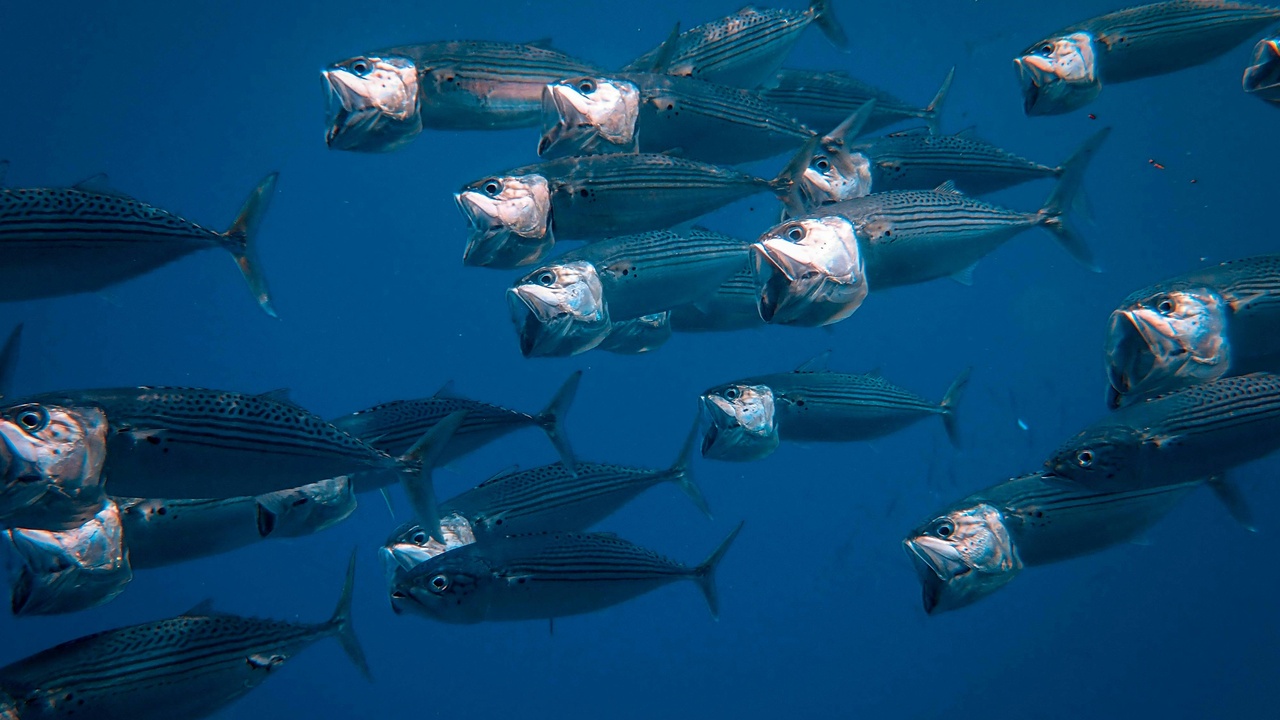
Tuna behaviors—seasonal migrations, foraging tactics, and social patterns—shape marine food webs and link distant ocean regions. Below are three behavioral characteristics that explain where tuna occur and how they interact with prey, competitors, and fisheries.
5. Long-distance, often transoceanic migrations
Many tuna undertake migrations of hundreds to thousands of kilometers; satellite tagging has documented movements commonly in the 1,000–5,000+ km range and, in some cases, transoceanic crossings. These migrations connect distinct spawning and feeding grounds.
For example, Atlantic bluefin populations have been tracked between Gulf of Mexico or Mediterranean spawning areas and northern feeding grounds in the North Atlantic. Temperature, prey availability, and reproductive cycles drive these movements, which tagging programs (ICCAT, NOAA) have mapped to inform management.
6. High-energy, opportunistic predator with varied diet
Tuna are active, pursuit predators that feed on squid, schooling fish (mackerel, herring, anchovy), and sometimes crustaceans. Diet composition shifts with region, season, and life stage, so local prey booms can quickly change tuna distribution.
Stomach-content and stable-isotope studies show adult bluefin and yellowfin feeding at high trophic levels in productive waters, while juveniles rely more on small schooling fishes. Those predator–prey links affect fishery interactions and bycatch dynamics in different gear types.
7. Schooling in juveniles and variable social behavior in adults
Juvenile tuna often form dense schools that reduce predation risk and improve foraging efficiency, whereas adults may be more solitary or form loose aggregations depending on species and season. Schooling also concentrates biomass, attracting predators and fishers alike.
Purse seine fisheries target large schools of skipjack or juvenile yellowfin, and observer notes confirm that school structure strongly influences catch rates. Managers use knowledge of schooling behavior when setting spatial or temporal controls to reduce juvenile mortality.
Human, Economic & Conservation Significance
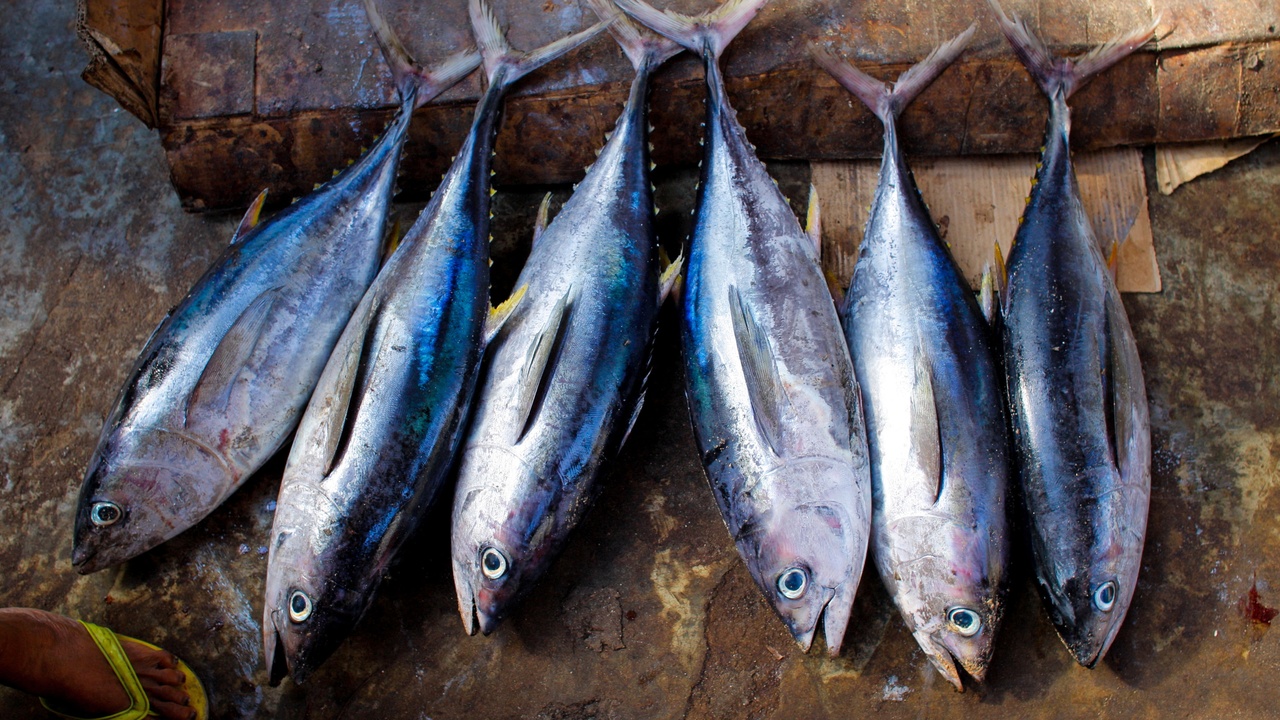
Tuna traits—fast swimming, large migrations, and high market value—create both opportunity and risk. Fisheries supply global markets but also put pressure on stocks, prompting international management, certification programs, and consumer choices that can shape the future of tuna populations.
8. Major commercial value and a cornerstone of global fisheries
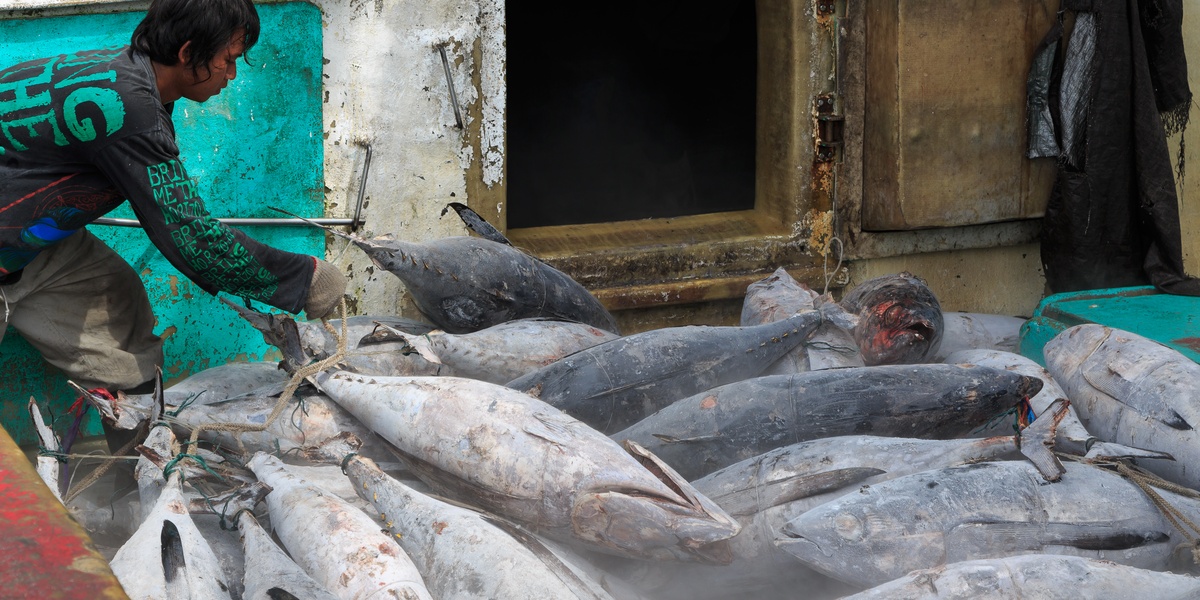
Tuna are a multi-million-ton industry and a high-value commodity. Global catches of tuna and tuna-like species are reported in the low millions of tonnes annually (FAO), with value concentrated in fresh, sashimi-grade fish as well as a large canned-tuna market.
Supply chains move fish from distant fleets through cold storage and processing to urban markets; companies such as Thai Union and other global processors dominate canned supply, while high-end auctions in Tokyo (Toyosu) illustrate the premium paid for top-quality bluefin (single-fish sales have exceeded $3 million).
9. Conservation challenges: overfishing, stock decline, and management
Several tuna stocks have faced heavy fishing pressure and varying degrees of depletion; vulnerability depends on species, life history, and the fleet operating in each region. Overfishing, longline and purse seine effort, and illegal, unreported, and unregulated (IUU) fishing complicate recovery.
Regional fisheries management organizations (ICCAT, WCPFC) set quotas and rebuilding plans, and conservation groups and assessments (IUCN) track status by species. Some stocks have shown signs of recovery under strict measures, but sustained monitoring and enforcement remain essential.
10. Cultural and culinary importance across world cuisines
Tuna occupies a central place in cuisines worldwide—from high-end bluefin sashimi in Japan to canned tuna as a pantry staple. Consumption patterns influence fishing pressure: demand for premium cuts affects targeted fishing, while mass-market cans drive volume fisheries.
Consumers can help by choosing certified products (e.g., MSC) or following regional best-choice guides. Chefs and markets that prefer responsibly sourced tuna can shift incentives toward sustainable practices and better management.
Summary
These 10 characteristics of a tuna—spanning body design, physiology, behavior, and market value—explain why tuna are powerful swimmers, wide-ranging predators, and central to global fisheries. Understanding those traits helps scientists manage stocks and helps consumers make informed choices.
- Tuna anatomy (streamlined shape, lunate tail, high red-muscle proportion) enables sustained speed and long migrations.
- Regional endothermy (rete mirabile) and efficient oxygen transport let some tuna forage in cooler, productive waters.
- Large-scale migrations and opportunistic diets link distant ecosystems and make international management necessary (tagging and ICCAT/NOAA data are key).
- High economic value and cultural demand have driven both heavy fishing pressure and the rise of certifications and quotas to protect stocks.
- Action: favor certified or well-managed tuna sources (MSC, regional best-choice guides) and watch stock assessments from FAO, NOAA, and IUCN to support sustainable seafood choices.