Tropical regions are home to roughly half of the world’s bird species despite covering less than a third of Earth’s land area, a concentration that captivated 19th-century naturalists like John Gould and still draws birders and scientists today.
These traits of birds found in the tropics reflect long, often surprising evolutionary stories: bright colors and dramatic feathers shaped by sexual selection, tight ecological relationships with fruiting trees and flowers, and behavioral strategies that let many species coexist in hyperdiverse forests. Tropical birds are also vital pollinators, seed dispersers and cultural icons, and they serve as early indicators of ecosystem change.
Tropical birds share a suite of distinctive characteristics—from dazzling plumage and specialized diets to unique behaviors and thermal adaptations—that reflect their evolution in warm, diverse ecosystems. Below are ten defining traits grouped into four categories: Appearance & Plumage, Behavior & Ecology, Diet & Physiology, and Conservation & Human Interactions.
Appearance & Plumage

1. Vibrant, varied plumage used for signaling
Many tropical species wear bright colors that function primarily in courtship and territory defense rather than camouflage. Structural colors—produced by microscopic feather architectures—create iridescence in hummingbird gorgets and quetzal sheens, while pigment-based reds and yellows appear in macaws and tanagers. A sizable proportion of tropical passerines show sexual dimorphism, with some family-level surveys reporting dichromatism in roughly 40–60% of species examined.
Those showy displays fuel ecotourism: sightings of scarlet macaws and resplendent quetzals draw photographers and guided trips that supply income to local communities and conservation programs. Male hummingbirds, for example, flash iridescent gorgets in courtship displays that birdwatchers travel long distances to see.
2. Feather specializations — elongated tails, crests, and racket plumes
Tropical birds often evolve exaggerated feather structures used in courtship or signaling: elongated tail streamers, ornate crests and unusual plumes. The male resplendent quetzal’s tail streamers can reach roughly 2–3 times its body length (approaching about 1 m in total tail length), and birds-of-paradise perform complex displays that feature specially modified flank and head feathers.
Those traits carry trade-offs: long feathers can hinder escape from predators and increase energetic costs, which matters for captive-breeding programs and for zoos that prioritize space and breeding enclosures. Conservation planners take such life-history details into account when designing ex‑situ recovery efforts.
3. Camouflage and subtle patterns for understory life
Not all tropical birds are gaudy; many understory specialists rely on cryptic coloration to blend with dappled light and leaf litter. Antbirds, tinamous and numerous ground- and understory-insectivores exhibit disruptive patterns and muted browns that reduce predator detection.
Camouflage matters for nesting success: studies of understory nesters show higher concealment correlates with lower predation rates, and female plumage in many species is duller than males’ to improve nest crypticity. Maintaining understory complexity in restoration projects therefore directly supports these cryptic species.
Behavior & Ecology
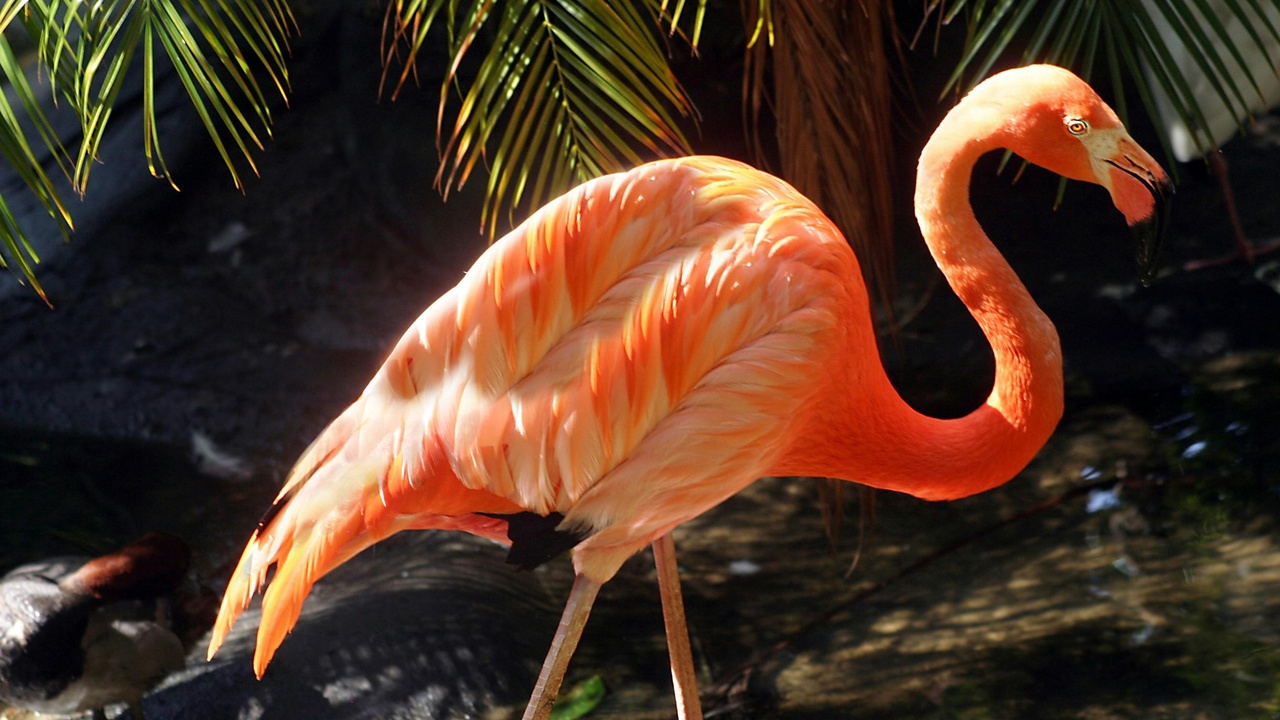
4. Frequent participation in mixed-species feeding flocks
Many tropical species join mixed-species flocks to increase foraging efficiency and reduce predation risk. In Amazonian lowland forests such flocks commonly include a dozen to several dozen species; observers have recorded assemblages of 10–30 species moving together through the understory.
Flock membership is often organized around a few nuclear species (for example, certain antwrens or woodcreepers) whose alarm calls and movement patterns benefit followers. Habitat fragmentation and disturbance can disrupt these social networks, reducing feeding efficiency and making hotspots less predictable for birdwatchers.
5. Elaborate courtship behaviors and complex breeding systems
Complex displays are a hallmark of many tropical clades. Manakins perform cooperative, highly choreographed lek displays where males coordinate snaps and jumps to attract females, while birds-of-paradise execute acrobatic dances and feather-spread routines that can last minutes to hours depending on the species.
Researchers have documented multi-year fidelity to lek sites in some species, and detailed behavioral studies (dating back to classic fieldwork in the late 20th century) reveal ritualized sequences that are species-specific. These behaviors make certain species sensitive to disturbance around display arenas, a key consideration in conservation and captive-breeding planning.
6. Local and altitudinal movements rather than long migrations
Rather than undertaking continent-spanning migrations, many tropical birds perform local or elevational movements tied to fruiting, flowering or breeding. Andean tanagers and some hummingbirds shift elevational ranges seasonally, moving several hundred to over a thousand meters upslope or downslope (commonly 500–1,500 m) as resources change.
Because these movements are finely tuned to local phenology, habitat loss and climate-driven shifts in flowering and fruiting times can disrupt resource tracking and necessitate conservation of elevational corridors.
Diet & Physiology
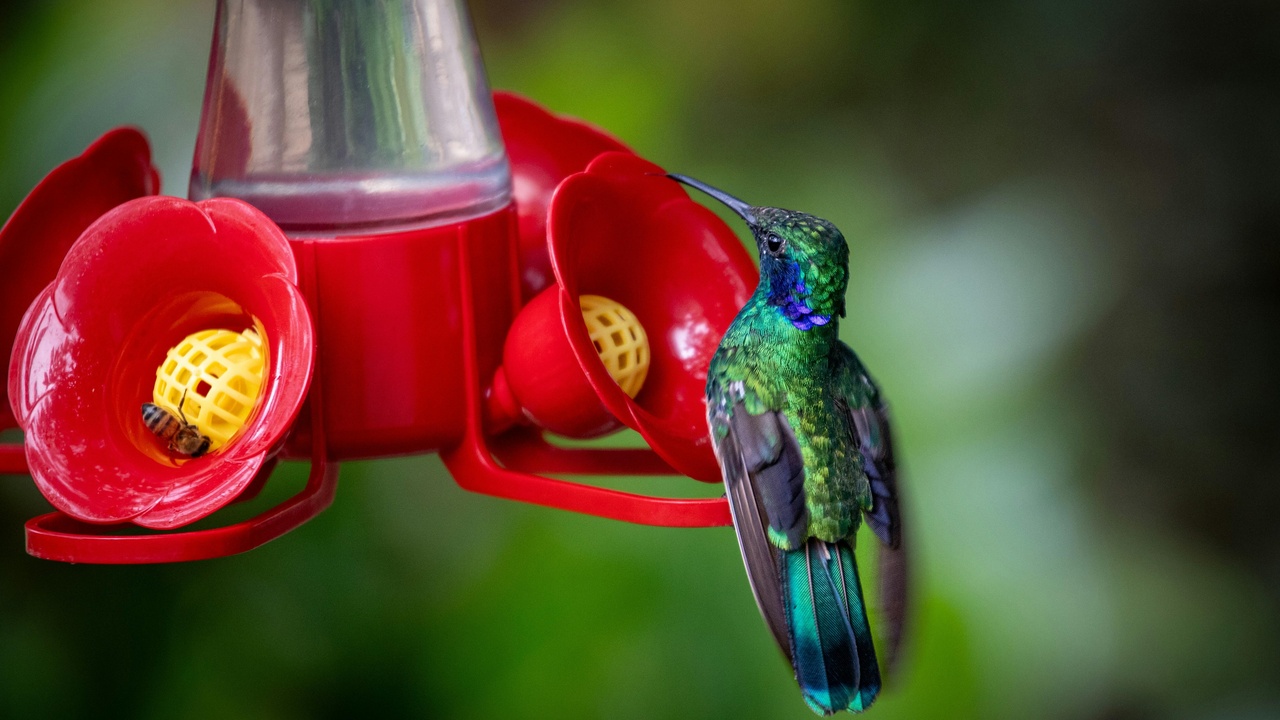
7. Specialized feeding strategies — nectar, fruit, and traplining
Tropical birds exploit a vast array of food resources and often show extreme specializations. Hummingbirds have high metabolic rates—hovering heart rates can exceed 1,000 beats per minute in small species—and tongues adapted for capillary nectar uptake. Large-billed frugivores like toucans and hornbills swallow and disperse big seeds that few other species can move.
Some species practice traplining—regularly revisiting a circuit of flowering plants—providing predictable pollination services for many tropical plants. Ecologically, frugivores are primary seed dispersers; estimates suggest birds play a key role in dispersing seeds for a large fraction of tropical tree species, underpinning forest regeneration and agroforestry systems.
8. Physiological adaptations to heat and humidity
Tropical birds use a mix of behavioral and physiological tricks to manage heat and moisture. Evaporative cooling through panting and gular flutter is common, and bare parts such as bills can act as adjustable radiators. Tattersall and colleagues (2009) showed that the toco toucan’s bill can dissipate a substantial portion of heat—estimates suggest bills can account for as much as ~40–60% of heat loss under certain conditions.
Those adaptations have limits: rising temperatures and altered humidity patterns could push some species beyond tolerable thresholds, especially larger, less mobile specialists that depend on cool forest microclimates.
Conservation & Human Interactions

9. High sensitivity to habitat loss and fragmentation
Many tropical specialists require intact forest structure, and fragmentation hits understory insectivores and ant-following species particularly hard. According to IUCN and BirdLife International assessments, roughly 13% of bird species are currently listed as threatened, with tropical habitat loss as a leading driver for many of those declines.
Conservation strategies that help include protected corridors, community reserves and targeted restoration that preserves understory complexity. Ant-following antbirds, for instance, decline rapidly in small forest fragments because their foraging networks and army-ant availability are disrupted.
10. Cultural value and economic role in ecotourism
Charismatic species are powerful economic and cultural assets. Countries with well-developed wildlife tourism, like Costa Rica, draw millions of visitors annually for rainforest experiences; pre‑pandemic international arrivals exceeded one million per year, and birdwatching contributes substantially to local guide income and protected-area financing.
Protecting species such as the resplendent quetzal or toucan often aligns conservation and community livelihoods. At the same time, illegal feather trade and unsustainable harvesting remain issues in parts of the tropics, so community-based stewardship and legal protections are essential.
Summary
- Tropical birds combine vivid visual signals and specialized feather structures with many cryptic understory forms, from scarlet macaws and resplendent quetzals to cryptic antbirds.
- Their behaviors—mixed-species flocks, leks and local elevational movements—reflect adaptations to highly diverse, resource‑patchy habitats and support key ecosystem services like pollination and seed dispersal.
- Physiological traits such as high hummingbird metabolism and bill-mediated heat exchange in toucans enable life in hot, humid environments but leave some species vulnerable to warming and habitat change.
- Specialist species are disproportionately threatened by fragmentation, yet birds also provide strong economic and cultural incentives for conservation through ecotourism and community stewardship (noted by IUCN and BirdLife International assessments).
- Support habitat protection, elevational corridors and citizen science monitoring to help the diverse characteristics of tropical birds persist for people and ecosystems alike.