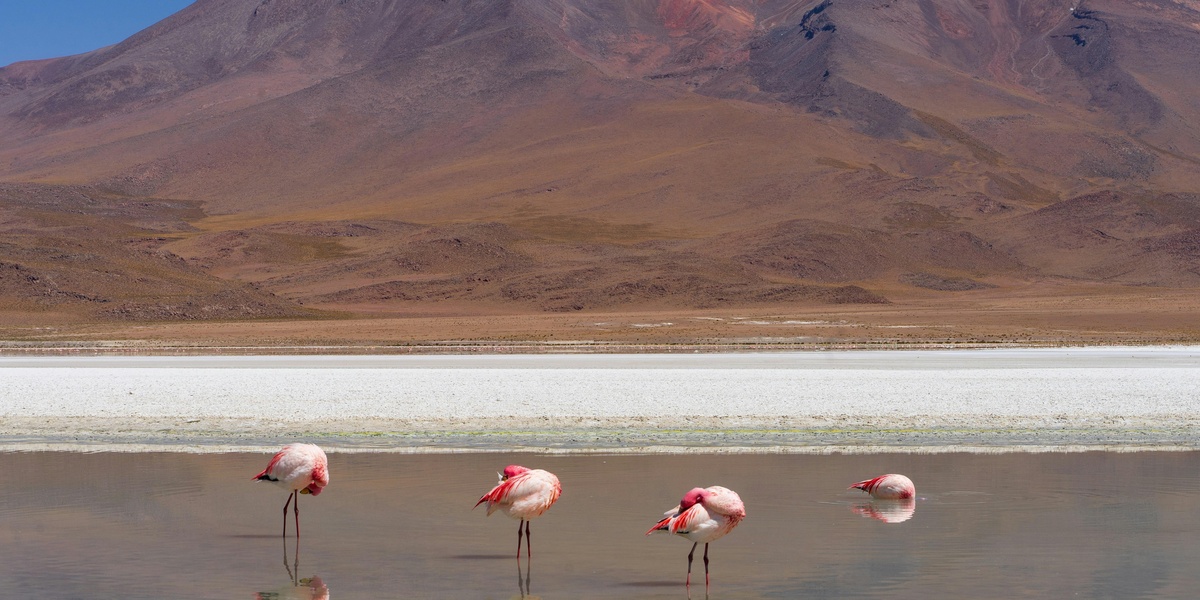
Bolivia is one of the world’s 17 megadiverse countries — a short list of nations that together hold a huge share of Earth’s species. Its wildlife reflects an extraordinary range of habitats: cold, wind-scoured Altiplano and high Andes; humid Yungas cloud forests and lowland Amazon; seasonal wetlands, the vast Salar de Uyuni salt flats, and Chaco savannas. The fauna of Bolivia plays vital ecological roles, supports local livelihoods (from vicuña fiber to wildlife-focused tourism), and carries deep cultural meaning for many Indigenous and rural communities. Below are 12 standout species organized by habitat to show both the spectacle and the conservation challenges across Bolivia’s landscapes.
Andes and Altiplano Species
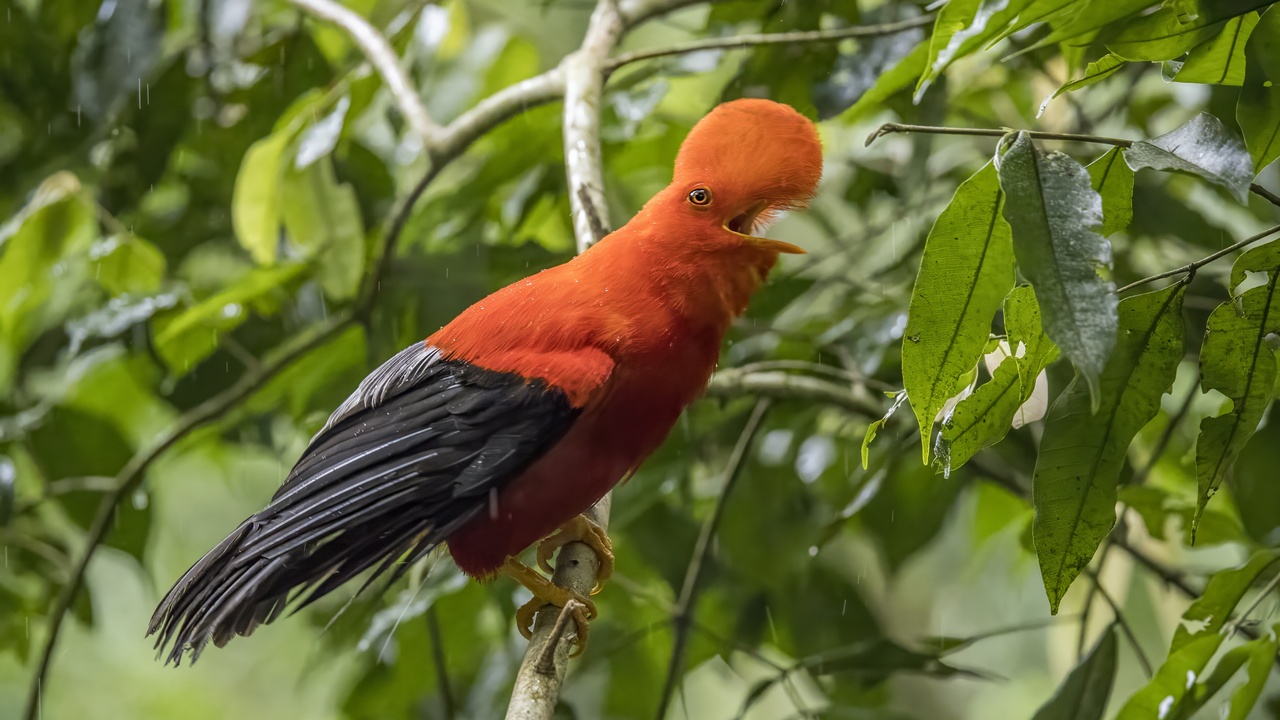
High-elevation areas like the Altiplano and upper Andean slopes are cold, oxygen-poor, and exposed to strong UV; plants and animals here have evolved compact bodies, dense fur or feathers, and efficient oxygen use. These ecosystems are also culturally entwined with local livelihoods — camelids supply fiber and nutrition, and species such as the condor appear in Andean cosmology. Many highland species face threats from grazing pressure, mining, and climate-driven habitat shifts, though protected areas from Sajama to communal reserves help buffer those risks.
1. Andean condor (Vultur gryphus)
The Andean condor is a continent-defining bird and an enduring cultural symbol across the high Andes. Adults can reach a wingspan of about 3.0–3.3 meters, making them among the largest flying birds by wingspan, and they range across Bolivian highlands where thermals allow long-distance soaring.
As a scavenger, condors recycle nutrients by consuming carrion, and their image figures in Andean myth as a messenger of the upper world. They attract wildlife watchers to highland lookouts near La Paz, Sajama National Park, and other cliff-lined valleys. The species is listed as Near Threatened by BirdLife International and the IUCN, with threats from poisoning and habitat disturbance; local monitoring and captive-rehabilitation programs are among the conservation responses (BirdLife International).
2. Andean spectacled bear (Tremarctos ornatus)
South America’s only surviving bear, the spectacled bear inhabits montane cloud forests and Polylepis woodlands in Bolivia and is notable for the pale facial markings that give it its name. It feeds mainly on fruits, bromeliads, and other plant material, though it will occasionally take eggs or small animals.
The bear is an important seed disperser and helps maintain forest regeneration. Listed as Vulnerable on the IUCN Red List, it faces habitat loss and human–wildlife conflict; community-based programs in Amboró and Carrasco national parks focus on reducing livestock loss and promoting coexistence (IUCN).
3. Vicuña (Vicugna vicugna)
Vicuñas are wild camelids prized for some of the world’s finest natural fibers; their down yields ultra-soft yarns that command high prices on international markets. Herds are typically small to medium-sized, governed by territorial males, and traditional communal round-ups (chaku) allow regulated shearing.
After severe declines in the 20th century, vicuñas recovered through international protection (CITES listings) and local management; regulated fiber sales now provide income to highland communities and create incentives to conserve puna habitat. Bolivia’s community-run programs are often cited as model examples of linking sustainable use to species recovery (CITES).
Amazon and Lowland Rainforest Giants
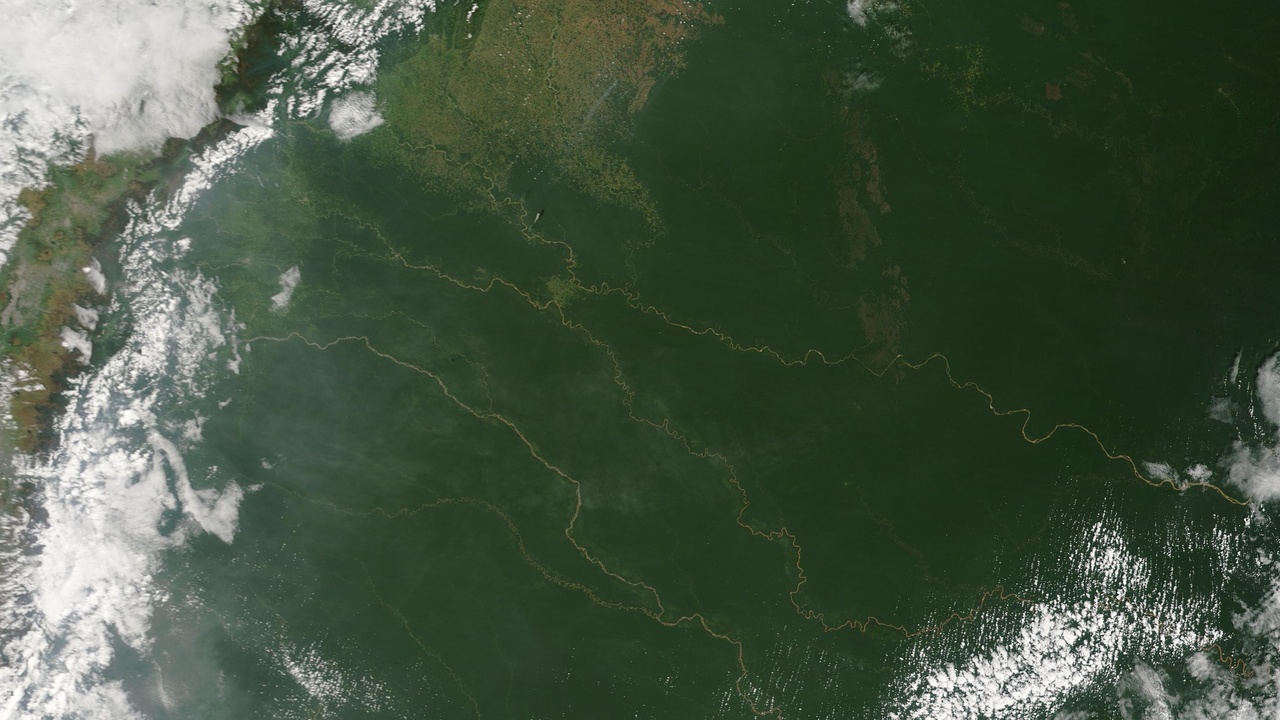
The Bolivian Amazon — including biodiversity hotspots like Madidi National Park (established 1995, one of the most species-rich protected areas in the world) and Noel Kempff Mercado — supports large terrestrial predators and impressive aquatic megafauna. These animals depend on intact forest and river networks; mining, deforestation, and river pollution are the major conservation pressures. Conserving large habitats and corridors is critical for maintaining healthy populations.
4. Jaguar (Panthera onca)
As the Amazon’s top terrestrial predator, the jaguar helps regulate prey populations and maintain ecosystem balance. Adult jaguars in the region vary in size but commonly weigh between 56 and 96 kg, with some individuals heavier.
In Bolivia, jaguars face habitat fragmentation and conflict with ranching. Camera-trap monitoring in Madidi and corridor initiatives led by conservation groups like Panthera provide crucial data and help connect protected areas. The species is listed as Near Threatened by the IUCN, underscoring the need for landscape-scale protections (Panthera).
5. Giant river otter (Pteronura brasiliensis)
The giant river otter is a social, vocal hunter that can exceed 1.8 meters in length and lives in family groups. Because they require healthy fish populations and clean, connected waterways, their presence is a good indicator of freshwater ecosystem integrity.
Threats include habitat disturbance, pollution, and overfishing; populations have been severely reduced in parts of their range and remain a conservation priority. Local monitoring projects and protected river corridors in northwestern Bolivia aim to safeguard remaining groups and the river systems they depend on (IUCN).
6. Amazon pink river dolphin (Inia geoffrensis)
The pink river dolphin, often called the boto, is an iconic freshwater cetacean of Amazonian tributaries that can reach over two meters in length. Its pinkish hue becomes more pronounced in males and with age, and the species features prominently in local folklore and riverine cultures.
Threats include bycatch in fishing gear and declining water quality. River-based lodges and guided boat trips in parts of the Bolivian Amazon offer opportunities to see dolphins while promoting responsible wildlife tourism; scientific assessments by specialist groups and the IUCN provide regional conservation guidance (IUCN).
Wetlands, Salt Flats, and Grassland Specialists
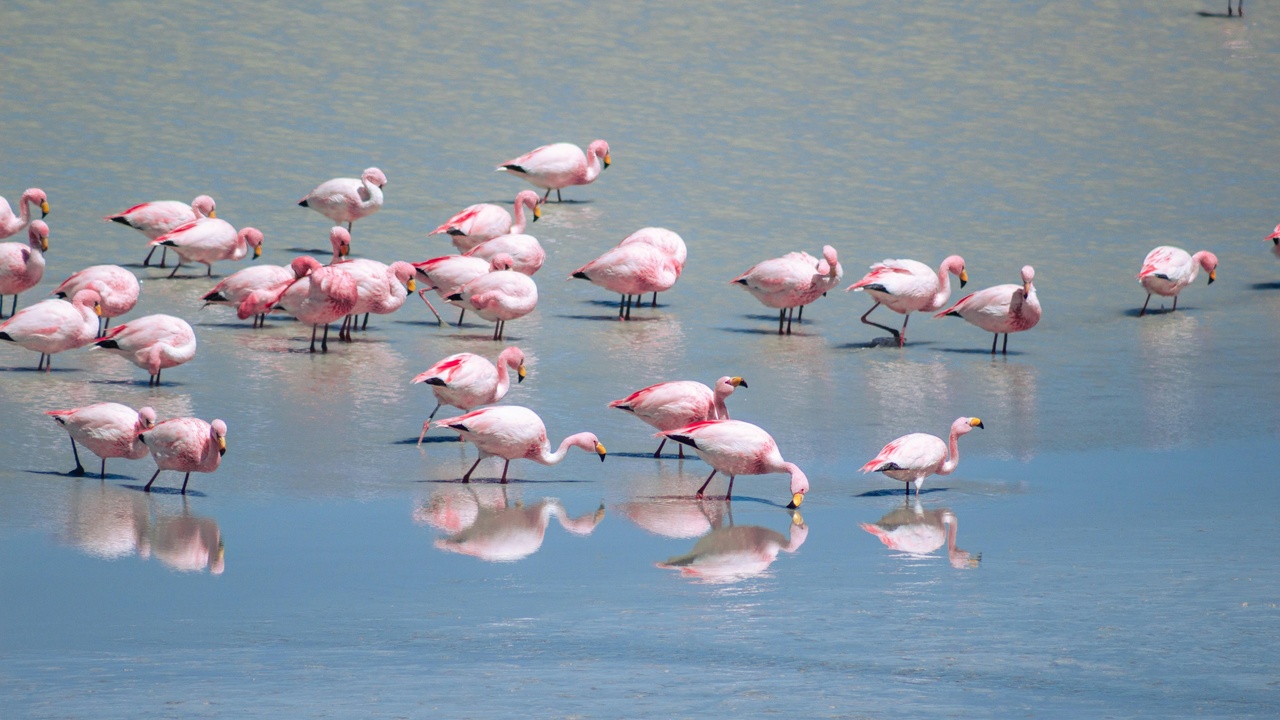
Bolivia’s saline and wetland habitats — from the Salar de Uyuni and adjacent high-altitude lagoons to Pantanal-influenced lowlands — host uniquely adapted species. Bolivia supports three flamingo species on its highland lakes, and those pink colonies are a major tourism draw. Water extraction, mining, and grazing pressure threaten these fragile systems.
7. Andean (James’s) flamingo and other highland flamingos
High-altitude salt lakes create the conditions for spectacular flamingo rookeries; Bolivia hosts about three flamingo species that concentrate at saline lagoons for feeding and breeding. The birds’ pink coloration comes from carotenoid-rich diets of algae and brine shrimp found in these alkaline waters.
Major breeding sites can number in the thousands of birds during good seasons, and photographers flock to places near the Salar de Uyuni and Eduardo Avaroa Andean Fauna National Reserve to see the colonies. Conservation groups including Wetlands International monitor populations because water diversion and mining can rapidly reduce suitable habitat (Wetlands International).
8. South American tapir (Tapirus terrestris)
The lowland tapir is a bulky browser that can weigh 150–300 kg and plays a major role dispersing large seeds across flooded forests and grasslands. As a nocturnal and crepuscular species, it often goes undetected despite being common in suitable habitats.
Listed as Vulnerable by the IUCN, tapirs face hunting and habitat fragmentation; camera-trap studies in Madidi and other Amazonian reserves document their presence and help target anti-poaching efforts. Protecting riparian corridors is essential to maintain their seed-dispersal functions.
9. Maned wolf (Chrysocyon brachyurus)
The maned wolf, with its long legs and reddish coat, is native to the Bolivian Chaco and savanna regions and stands about 60–90 cm at the shoulder. Its diet is omnivorous and includes small mammals and fruit; seeds of the “wolf apple” (Solanum) are famously dispersed by it.
Often listed as Near Threatened, maned wolves are vulnerable to agricultural conversion and fragmentation. Sightings are most likely in protected or lightly grazed Chaco remnants, and studies linking them to plant seed dispersal have highlighted their ecological value for grassland regeneration (IUCN).
Small Wonders: Amphibians, Reptiles and Invertebrates
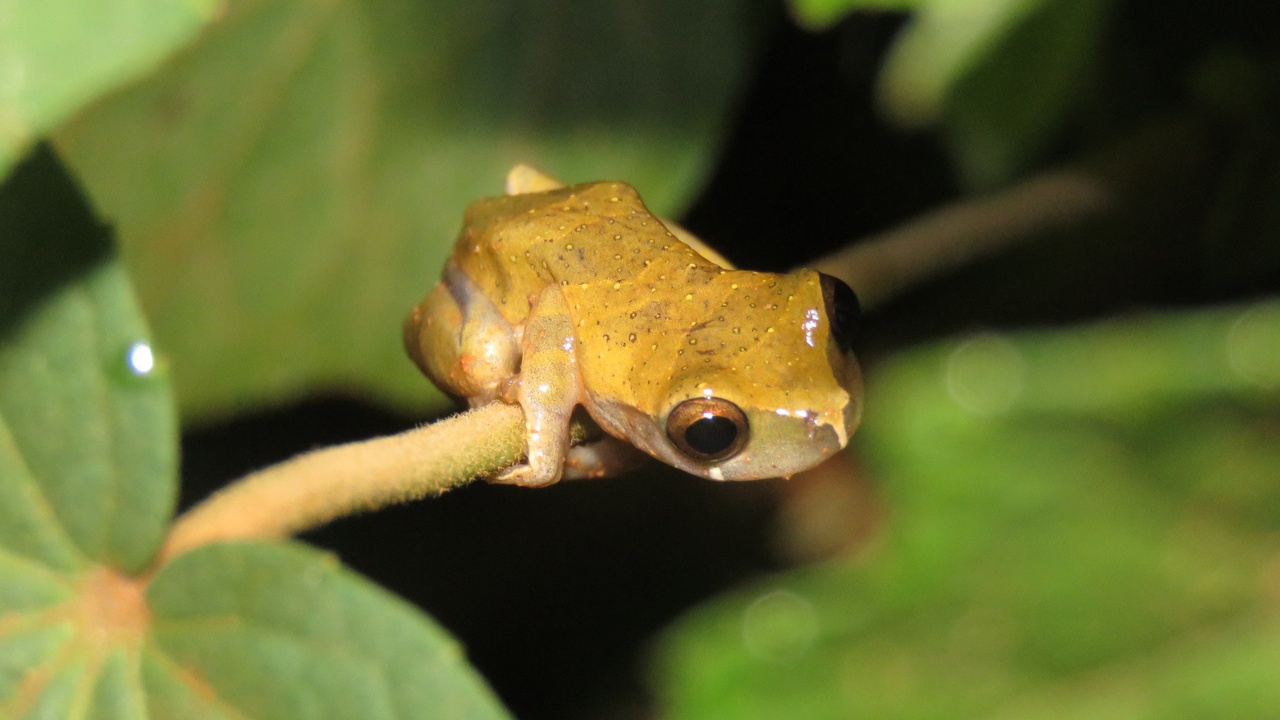
Beyond the large mammals are thousands of amphibians, reptiles, and insects that account for much of Bolivia’s biodiversity. These groups provide pollination, pest control, nutrient cycling and act as early-warning indicators for ecosystem change — especially amphibians, which are facing a global crisis from chytrid fungus and habitat loss.
10. Poison dart frogs (family Dendrobatidae)
Brightly colored poison dart frogs occur in the Yungas and Amazon foothills, where aposematic coloration advertises alkaloid-based chemical defenses derived from diet. Several species have very restricted ranges and high endemism, making them vulnerable to habitat loss and collection pressure.
Their skin alkaloids have informed biomedical research into painkillers and neuroactive compounds, and scientific reviews highlight the pharmacological interest in dendrobatid toxins (PubMed). Responsible guided visits to cloud forests provide opportunities to observe these frogs while supporting habitat protection.
11. Green anaconda (Eunectes murinus)
Green anacondas are among the heaviest snakes in the world and occupy Bolivian rivers, seasonally flooded forests, and marshes. Adults can reach lengths over 4–5 meters, with very large individuals weighing well over 100 kg in exceptional cases, though typical sizes vary regionally.
As ambush predators, they influence populations of aquatic and semi-aquatic prey; local perceptions range from fear to cultural fascination. Threats include habitat alteration and persecution, and natural-history studies and eco-tour operators in Amazonian wetlands document encounters and promote safe, respectful observation.
12. Morpho and other striking butterflies
Large iridescent morpho butterflies and a rich assemblage of Lepidoptera brighten forest edges and riverbanks across Bolivia. Their shimmering blue wings come from microscopic scale structures that refract light rather than from pigment, making them popular with photographers and naturalists.
Butterflies serve as pollinators and are useful indicators of forest health, yet many insect groups remain under-sampled; museum collections and entomological surveys continue to reveal new records for Bolivia. Butterfly-focused eco-tours and guided walks are a low-impact way to enjoy these insects while supporting local guides and research.
Summary
- Bolivia’s mix of high Andes, cloud forests, lowland Amazon, wetlands and salt flats produces remarkable biodiversity and a wide range of specialist species.
- Both charismatic megafauna (Andean condor, jaguar, pink river dolphin) and small, range-restricted species (poison dart frogs, morpho butterflies) are ecologically and culturally important.
- Conservation wins (vicuña recovery, community-managed areas) show progress, but threats from mining, deforestation, water extraction and climate change remain urgent.
- Support reputable conservation groups, practice responsible wildlife tourism in places such as Madidi, Sajama and Eduardo Avaroa, and consult IUCN and BirdLife reports for up-to-date species information.