More than 80% of Australia’s flowering plants are found nowhere else on Earth — a level of endemism that rivals island hotspots. Early botanical exploration by figures such as Joseph Banks in the late 18th century began the scientific record, but much of Australia’s plant diversity remained little known until later surveys and modern research. Understanding the flora of australia matters because these species structure ecosystems, supply foods and medicines, and have become prized in gardens and global markets.
This piece highlights 15 distinctive plants that tell a story of deep evolutionary history, extreme adaptation to fire and drought, cultural importance to Indigenous peoples, and rising economic and horticultural value. The examples are grouped into four themes: ancient lineages and living fossils; fire- and drought-adapted survivors; culturally and economically significant species; and iconic flowers that travel well as cut-flowers and garden plants.
Each entry notes conservation status, a few concrete numbers or dates, and real-world uses or programs (from the Royal Botanic Gardens to CSIRO projects). Read on for short portraits and practical links to authoritative sources.
Ancient lineages and living fossils
Some Australian species represent very old branches of the tree of life and act as living windows into prehistoric plant communities. These taxa often have tiny wild populations and high conservation value, so protected reserves and botanical gardens play an outsized role in ensuring their survival (see Royal Botanic Gardens and CSIRO research programs).
Rediscoveries, ex-situ propagation, seed-banking and carefully managed visitor programs help fund conservation while limiting pressure on wild stands. These plants also teach researchers about ancient climates and biogeography, especially links back to Gondwana.
Below are four emblematic examples that combine scientific interest with active conservation work and public fascination.
1. Wollemi Pine (Wollemia nobilis)
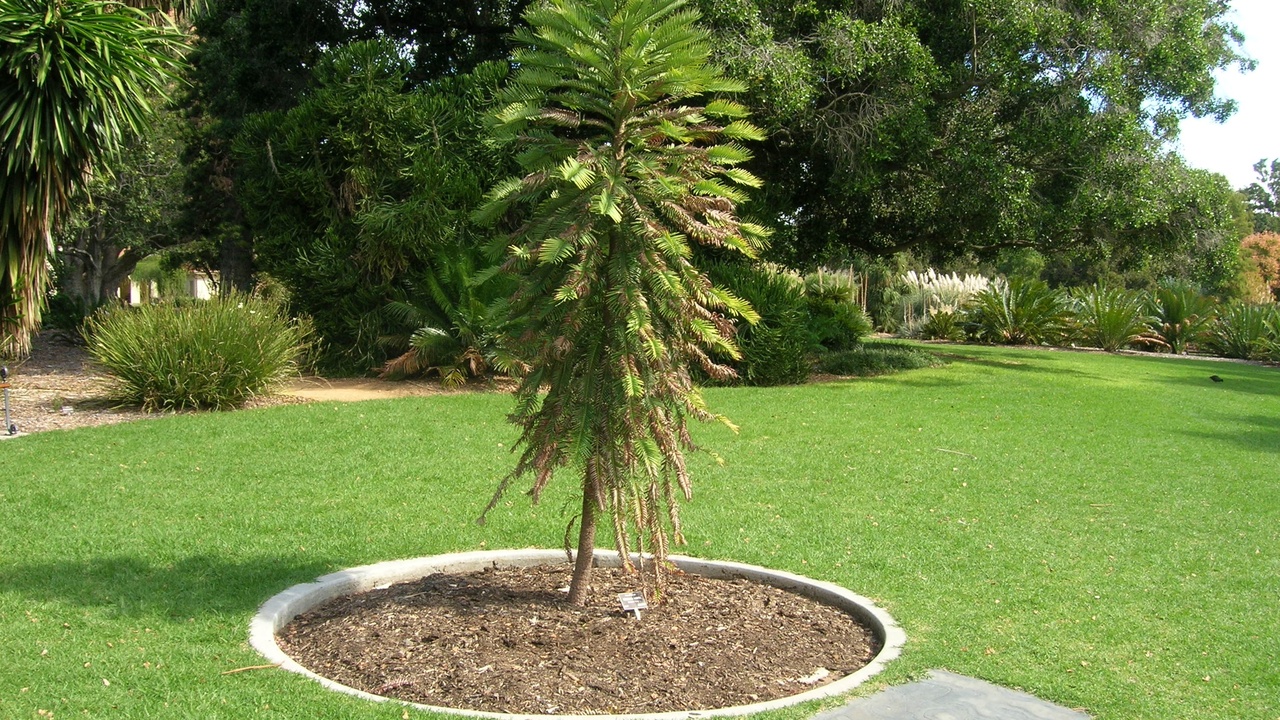
The Wollemi Pine is a true “living fossil,” rediscovered in 1994 in a remote New South Wales canyon after being known only from the fossil record. Initial reports described fewer than 100 mature trees in the wild, triggering immediate protection and intensive study (see Royal Botanic Gardens conservation notes).
Because of its rarity, ex-situ propagation programs were launched and certified saplings are grown under license by specialist nurseries to fund conservation and reduce pressure on wild plants. Public displays of Wollemi Pines at botanical gardens have generated donations and research support.
2. Australian Cycads (Macrozamia spp.)
Cycads are ancient seed plants that predate the dinosaurs, with origins going back roughly 280 million years according to paleobotany studies. Australian genera such as Macrozamia (for example, Macrozamia riedlei) persist in fragmented habitats and are subjects of conservation concern for several species.
Indigenous Australians developed careful seed detoxification techniques to make cycad seeds edible, a complex cultural knowledge passed over generations. Today cycads feature in education about plant evolution and in small-scale restoration programs aimed at protecting remaining populations.
3. Queensland Kauri (Agathis robusta)
Queensland kauri belongs to an ancient conifer group with a Gondwanan distribution and grows naturally in parts of northeastern Queensland and eastern Australia. Mature trees commonly reach heights of 30–50 m in favorable stands, and notable specimens occur in protected national parks.
Historically valued for timber in the 19th century, many remaining kauri stands are now conserved within reserves to protect genetic diversity and ecological function. These protected areas help maintain habitat connectivity and provide material for long-term botanical study.
4. Soft Tree Fern (Dicksonia antarctica)
Tree ferns like Dicksonia antarctica are survivors from humid, prehistoric forests and occur across Tasmania and cooler parts of southeastern Australia. They grow slowly but can form large trunks; cultivated specimens are commonly sold to gardeners and used in restoration plantings.
Typical growth rates vary by site, often a few centimetres of trunk height per year, and the species is widespread in temperate rainforest reserves in Victoria and Tasmania. Nurseries propagate Dicksonia for garden use, helping reduce wild-collection pressure.
Fire- and drought-adapted survivors
Australia’s frequent fire regimes and highly variable rainfall have shaped an astonishing array of plant adaptations. Fire acts as a regular ecological process in many regions, and native species display strategies such as seed-release after fire (serotiny), lignotubers, epicormic resprouting and deep-root systems.
Understanding these traits helps land managers, restoration practitioners and Indigenous rangers design effective burn regimes and recovery plans. Research from universities and agencies like CSIRO shows that matching management to species’ life histories improves resilience under climate change.
Below are four plants that illustrate the variety of fire- and drought-related strategies across Australia’s landscapes.
5. Grass Tree (Xanthorrhoea spp.)
Grass trees are iconic, slow-growing plants with thick woody trunks topped by a tufted crown and long flowering spike. Trunk growth is very slow, commonly around 1–2 cm per year, and flowering is often stimulated by fire or prolonged drought.
Indigenous peoples used grass-tree resin as an adhesive and the flowering spikes as implements and in ceremony. Today the plants are valued in horticulture and habitat restoration, though their slow growth makes wild-harvest unsustainable without strict controls.
6. Eucalypts and epicormic regeneration (Eucalyptus spp.)
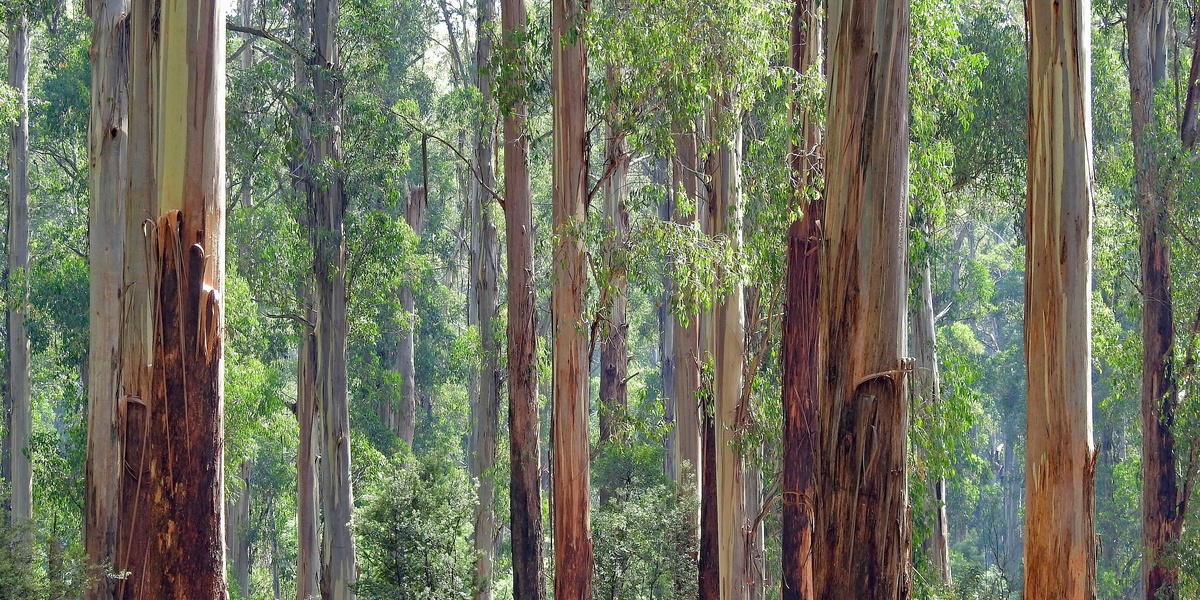
Many eucalypts resprout vigorously from epicormic buds beneath the bark after fire, allowing rapid canopy recovery. Some species are among the world’s tallest flowering plants; for instance, Eucalyptus regnans can reach roughly 90–100 m in ideal old-growth stands.
Epicormic regrowth influences post-fire carbon dynamics and timber recovery times; Victorian forest studies document multi-year canopy recovery trajectories after major burns. These species are central to both conservation and regional forestry economies.
7. Banksia (Banksia spp.) and serotiny
Many Banksia species store seeds in woody cones that remain closed for years and open after the heat of a fire — a strategy known as serotiny. Some cones can persist on the plant for several years before being triggered to release seed by a burn.
Banksias are keystone nectar sources for honeyeaters and small mammals, and they are widely used in restoration plantings to re-establish pollination networks after disturbance. Their predictable post-fire recruitment is a vital consideration for habitat recovery plans.
8. Spinifex (Triodia spp.) — hummock grasses of the arid interior
Triodia grasses (commonly called spinifex) form dense hummocks that dominate millions of hectares across arid Australia, stabilising dunes, creating microhabitats and shaping fire behaviour. Large tracts of the interior are covered by spinifex-dominated vegetation communities.
Spinifex has long been used in Indigenous technologies for weaving and adhesives, and its structure affects fuel loads and fire spread in desert systems. Restoration projects use spinifex seeds and plugs to reclaim disturbed arid lands.
Culturally and economically significant species
Native plants have long been central to Indigenous cultures and are increasingly important to the national economy and export markets. Efforts to domesticate and sustainably harvest native foods and botanicals — from macadamias to the Kakadu plum — are expanding, often through partnerships that include Indigenous enterprises.
Sustainable sourcing and value-adding are critical as demand grows; industry groups and research organisations (for example, the Australian Macadamias Industry and CSIRO studies) provide guidelines and statistics for producers and consumers.
Here are four species that blend cultural significance with commercial or ecological value.
9. Golden Wattle (Acacia pycnantha)
Golden Wattle is Australia’s national floral emblem and belongs to a very large genus with hundreds of Australian species. Wattle Day celebrations and civic symbolism underscore its cultural role, and some records note its emblem status formally recognized in the 20th century.
Acacias fix atmospheric nitrogen, improving soils and making them useful in revegetation and land-repair projects. They’re commonly planted in landscapes and used in regional restoration programs to jump-start nutrient cycling.
10. Macadamia (Macadamia integrifolia and M. tetraphylla)
Macadamia nuts are native to subtropical eastern Australia and now form a globally traded crop. Modern production figures vary year to year; for current statistics see the Australian Macadamias Industry or FAO datasets for up-to-date export and tonnage numbers.
Commercial orchards primarily originated in Queensland, with breeding and selection programs dating back to the late 19th and early 20th centuries. Today macadamias support regional economies and a growing array of value-added products.
11. Kakadu Plum (Terminalia ferdinandiana)
Kakadu plum has gained attention as a “superfruit” due to extremely high vitamin C concentrations; peer-reviewed analyses report vitamin C values far exceeding those of oranges (specific mg/100g figures are published in nutritional studies and government reports).
Commercial development has involved Indigenous-led harvesting enterprises and food companies working together to ensure quality and benefit sharing, while researchers study sustainable harvest levels and product standardisation to protect wild populations.
12. Grevillea (Grevillea spp.) — native shrubs for gardens
Grevilleas are widely used in Australian gardens and the international plant trade for their abundant nectar and bird-attracting flowers. Cultivars developed by nurseries offer variation in habit and hardiness for urban plantings.
Popular cultivars include ‘Robyn Gordon’ among many others developed for garden performance; breeding programs continue to produce versions suited to smaller yards, coastal sites and pollinator-friendly plantings.
Iconic flowers and horticultural exports
Australia’s showy native flowers have strong international appeal in floriculture and horticulture, and several species serve as state or national emblems. Breeders balance striking form with improved vase life, stem length and disease resistance so these plants perform in global markets.
Exported cut-flowers, garden cultivars and conservation-driven propagation programs all play a role in maintaining wild populations and raising public interest in native species. Below are three floricultural standouts with cultural resonance.
13. Waratah (Telopea speciosissima)
The Waratah, with its large red flower-heads, is native to New South Wales and serves as a state emblem. Active breeding programs have produced compact forms and colour variants to suit garden settings and the cut-flower trade.
Waratahs feature in native-garden displays and cultural events, and conservation efforts focus on protecting remnant populations where habitat loss has reduced historical ranges.
14. Kangaroo Paw (Anigozanthos spp.)
Kangaroo Paw species have unusual tubular flowers prized by florists; several cultivars are exported and grown in Mediterranean-climate regions worldwide. Breeding targets include longer stems and improved vase life, with research helping extend post-harvest longevity for markets.
The genus is also popular in home gardens for its bold colours and ability to attract nectar-feeding birds, and commercial propagation has reduced pressure on wild populations.
15. Sturt’s Desert Pea (Swainsona formosa)
Sturt’s Desert Pea is an iconic red-flowered species of the arid interior and a symbol of outback Australia. It is listed as threatened in parts of its range where land clearing and grazing have reduced populations.
Propagation success in cultivation and seed-banking programs supports conservation education and helps maintain genetic material for reintroduction projects in reserves and botanical collections.
Summary
Key takeaways: Australia hosts an extraordinary array of endemic plant life — from living fossils to fire-hardened survivors — and many species are central to culture, commerce and restoration work.
- Extreme endemism (over 80% of flowering plants unique to the land) makes conservation a global priority.
- Fire-adapted traits (serotiny, epicormic resprouting, lignotubers) are essential for effective land and fire management.
- Native species underpin cultural practices and growing industries — support Indigenous-led enterprises and sustainable sourcing.
- Visit botanical gardens, consult authoritative sources like Royal Botanic Gardens and CSIRO, and choose sustainably produced native-plant products.