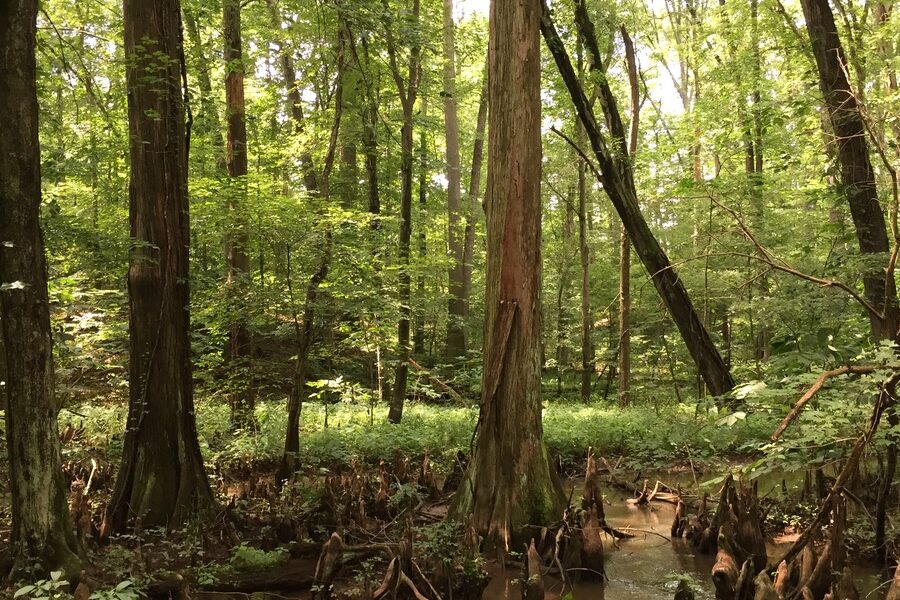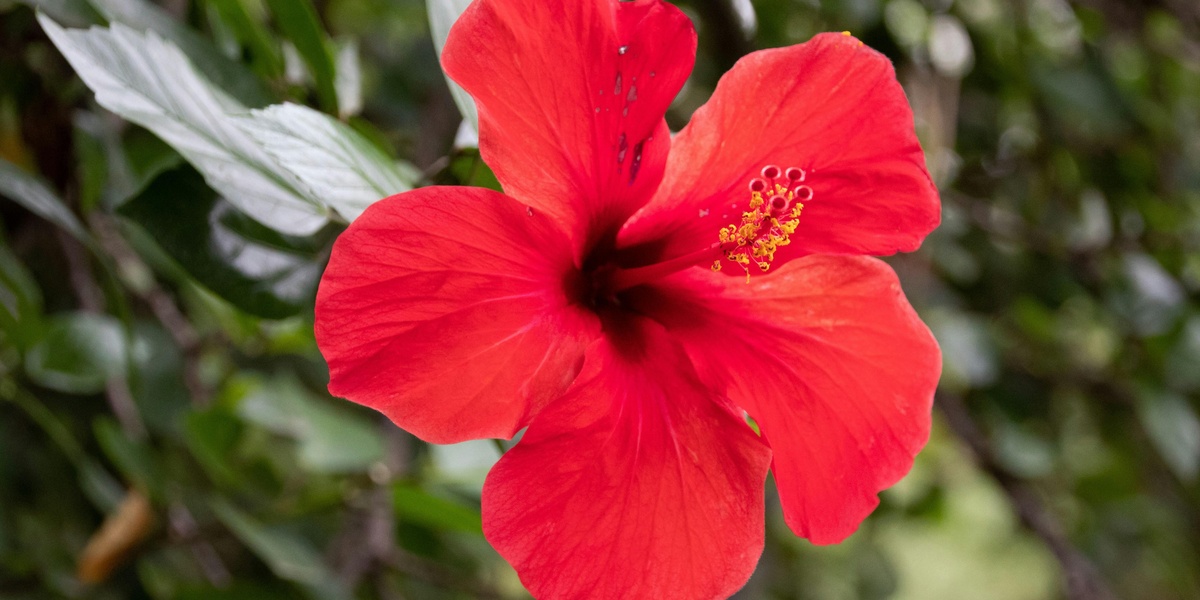
Malaysia’s varied landscapes—from coastal mangroves and lowland rainforests to highland slopes and urban parks—support a broad palette of flowering plants. Seasonal rains and warm temperatures mean blooms appear throughout the year, visible in gardens, roadside verges and protected reserves alike.
There are 36 Flowers of Malaysia, ranging from Allamanda to Ylang-ylang. For each entry I list the Scientific name, Size (cm), and Habitat & distribution so you can compare identification features, typical dimensions and where each species is most likely found—you’ll find below.
How can I use the table to identify a flower I found in Malaysia?
Start by noting the flower’s size and growth habit, then match those traits to the Size (cm) and Habitat & distribution columns; the Scientific name lets you confirm identification through images or field guides. If possible, photograph the petals, leaves and overall plant, and check whether the listed habitat matches where you found it.
Which of these flowers are easiest to grow in a Malaysian home garden?
Choose species with broad Habitat & distribution entries and modest Size (cm)—those adapted to disturbed or cultivated areas usually tolerate garden conditions. The table highlights such preferences so you can pick plants suited to your local microclimate and space.
Flowers of Malaysia
| Name | Scientific name | Size (cm) | Habitat & distribution |
|---|---|---|---|
| Hibiscus | Hibiscus rosa-sinensis | 12 cm | Urban gardens, nationwide; naturalized/cultivated |
| Torch ginger | Etlingera elatior | 15 cm | Wet lowland gardens, markets; native/naturalized |
| Rafflesia (Cantley’s) | Rafflesia cantleyi | 50 cm | Lowland forest floor, Peninsular Malaysia; native |
| Rafflesia (Keith’s) | Rafflesia keithii | 60 cm | Rainforests, Sabah; endemic |
| Rafflesia (Price’s) | Rafflesia pricei | 35 cm | Montane forest, Mount Kinabalu (Sabah); endemic |
| Pitcher plant (N. rafflesiana) | Nepenthes rafflesiana | 20 cm | Lowland peat swamps, Borneo and peninsula; native |
| Pitcher plant (N. mirabilis) | Nepenthes mirabilis | 10 cm | Coastal heath and lowlands; widespread native/naturalized |
| Pitcher plant (N. ampullaria) | Nepenthes ampullaria | 8 cm | Forest floor, Borneo and peninsula; native |
| Pigeon orchid | Dendrobium crumenatum | 5 cm | Lowland forests, urban trees; native/naturalized |
| Tiger orchid | Grammatophyllum speciosum | 60 cm | Lowland forests, Sabah & peninsula; native |
| Melastome | Melastoma malabathricum | 4 cm | Open areas, roadside, nationwide; native |
| Ixora | Ixora coccinea | 3 cm | Gardens, hedges nationwide; naturalized/cultivated |
| Frangipani | Plumeria rubra | 7 cm | Gardens, temples nationwide; naturalized/cultivated |
| Bougainvillea | Bougainvillea glabra | 4 cm | Urban gardens, nationwide; naturalized/cultivated |
| Lobster-claw | Heliconia rostrata | 25 cm | Garden beds, lowland forests; naturalized/cultivated |
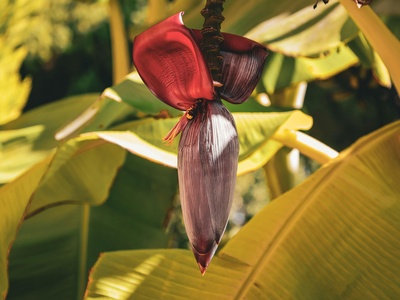
| Banana flower | Musa acuminata | 30 cm | Plantations, gardens, disturbed ground; cultivated/naturalized |
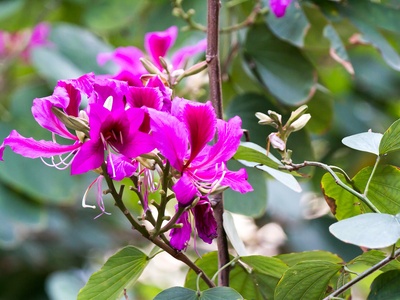
| Orchid tree | Bauhinia purpurea | 8 cm | Roadside trees, gardens; naturalized/cultivated |
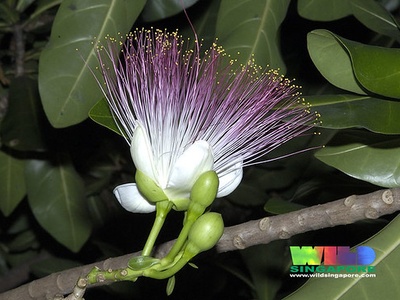
| Putat | Barringtonia asiatica | 8 cm | Coasts, mangroves; native |
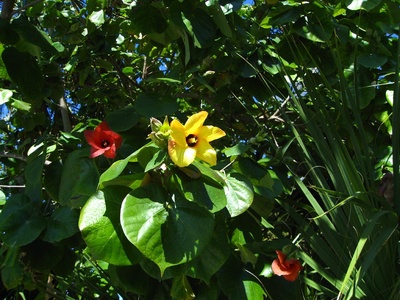
| Sea hibiscus | Hibiscus tiliaceus | 9 cm | Coastal shores, mangroves; native |
| Ylang-ylang | Cananga odorata | 4 cm | Lowland gardens, plantations; native/cultivated |
| Champaca | Magnolia champaca | 6 cm | Lowland forests, gardens; native/cultivated |
| Coral tree | Erythrina variegata | 10 cm | Roadsides, coastal lowlands; naturalized/cultivated |
| Golden shower | Cassia fistula | 6 cm | Parks, avenues; naturalized/cultivated |
| Allamanda | Allamanda cathartica | 8 cm | Gardens, hedges; naturalized/cultivated |
| Bengal clockvine | Thunbergia grandiflora | 8 cm | Gardens, roadside; naturalized/cultivated |
| Fringed hibiscus | Hibiscus schizopetalus | 12 cm | Gardens, parks; naturalized/cultivated |
| Bird-of-paradise | Strelitzia reginae | 18 cm | Botanical gardens, cultivated; naturalized/cultivated |
| Rose apple | Syzygium jambos | 4 cm | Home gardens, secondary forests; naturalized/cultivated |
| Queen’s crape myrtle | Lagerstroemia speciosa | 6 cm | Roadside, parks; native/cultivated |
| Pitcher plant (N. lowii) | Nepenthes lowii | 18 cm | Highland forests, Mount Kinabalu; endemic |
| Kapok | Ceiba pentandra | 10 cm | Urban avenues, cultivated; naturalized/cultivated |
| Ground orchid | Spathoglottis plicata | 4 cm | Gardens, grassy areas; naturalized/cultivated |
| Desert rose | Adenium obesum | 6 cm | Gardens, pots; cultivated/naturalized |
| Portia tree | Thespesia populnea | 6 cm | Coastal, riverbanks; native |
| Coral vine | Antigonon leptopus | 2 cm | Gardens, disturbed sites; naturalized/cultivated |
| Bleeding heart vine | Clerodendrum thomsoniae | 4 cm | Gardens, shaded areas; naturalized/cultivated |
Images and Descriptions
Hibiscus
A common showy shrub with large 8–15 cm trumpet blooms in many colours. Blooms year-round in gardens and parks across Malaysia; national flower ‘Bunga Raya’. Easily recognised by five broad petals and a prominent central column of stamens used in cultural symbolism.
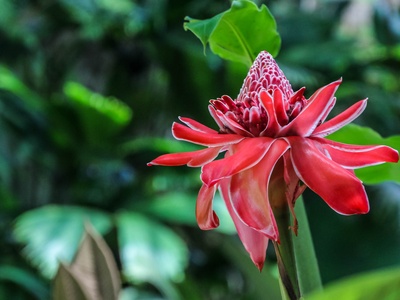
Torch ginger
Tall clumping ginger with 10–15 cm rose-red to pink inflorescences atop sturdy stalks. Flowers widely sold and used in Malay cooking like laksa; popular in gardens and markets, blooming year-round in wet lowlands and easy to spot along roadsides.

Rafflesia (Cantley’s)
A parasitic giant flower 30–80 cm across with reddish, spotted lobes and a strong carrion odour when open. Blooms briefly on the forest floor in Peninsular Malaysia; a rare sight in protected reserves and popular with eco-tourists when flowering occurs.
Rafflesia (Keith’s)
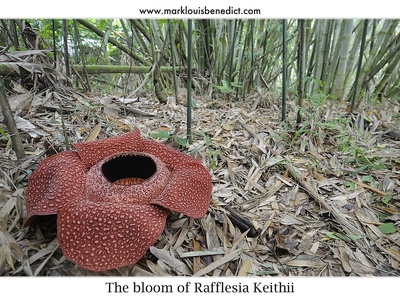
Borneo endemic producing orange-red spotted blooms up to 60 cm across. Emits a foul scent to attract pollinators; flowers last days and appear unpredictably on the forest floor. Best seen in Sabah reserves and guided trails where sightings are monitored for conservation.
Rafflesia (Price’s)
Smaller mountain Rafflesia from Mount Kinabalu with 25–40 cm mottled flowers. Blooms at specific altitudes and short windows; highly sought by hikers and botanists. Viewing is regulated by park authorities to protect the parasite and its host vines.
Pitcher plant (N. rafflesiana)
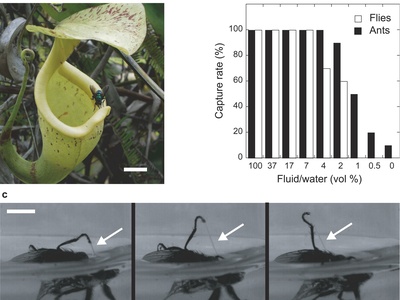
Large lowland pitcher plant with tubular traps 10–30 cm long, often red-speckled. True flowers are small and inconspicuous, but pitchers are diagnostic and indicate healthy plants. Found in peat swamps and open lowland sites in Borneo and parts of Peninsular Malaysia.
Pitcher plant (N. mirabilis)
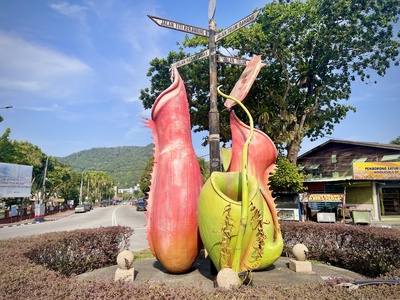
A widespread pitcher plant with small variable pitchers 5–15 cm, often green or patterned. Flowers are not showy; pitchers are key identification. Common in disturbed peatlands, coastal lowlands and open ground across Malaysia and often encountered on nature walks.
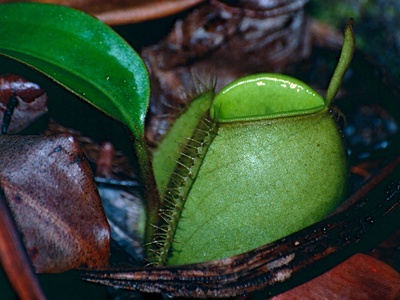
Pitcher plant (N. ampullaria)
Ground-pitcher species with 3–8 cm bulbous traps, usually green. Produces modest flowers, yet clusters of pitchers are distinctive on shaded forest floors and peat swamps. Widespread in Malaysian lowland rainforests and swampy habitats.
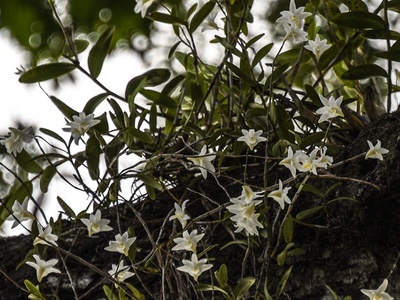
Pigeon orchid
Pigeon orchid with fragrant 3–6 cm white blossoms that often open synchronously after heavy rain and last a day. A common epiphyte on roadside trees, parks and secondary forests throughout Malaysia; blooms in flushes and smells sweet.
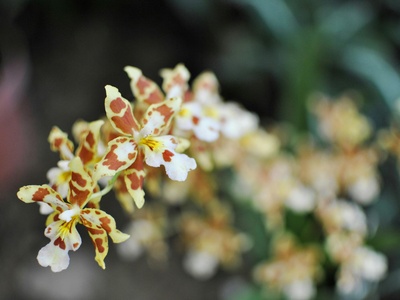
Tiger orchid
The largest orchid species forming massive clumps with numerous 4–6 cm green-yellow blooms. Plants can weigh hundreds of kilograms and produce spectacular displays in botanical gardens or on forest trees; flowering is infrequent but impressive when it occurs.
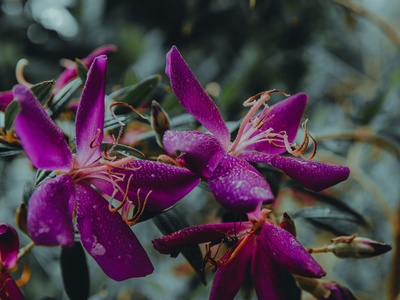
Melastome
Shrubby melastome with 3–5 cm pink to purple cup-shaped flowers that darken with age. Common in disturbed ground, roadside cuttings and heathlands across Malaysia; frequented by butterflies and often blooms prolifically after rains.
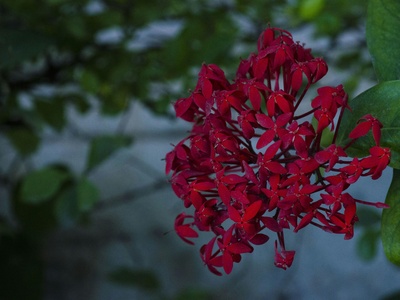
Ixora
Compact shrubs producing dense heads of small 2–3 cm tubular flowers in red, orange or pink. Flowers nearly year-round in tropical gardens and hedges; a staple ornamental that forms vivid, easy-to-identify clusters.
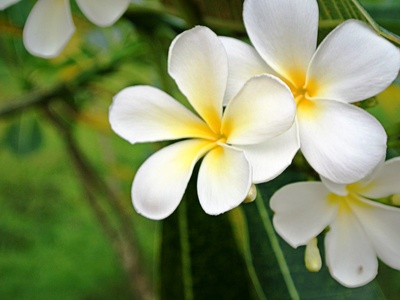
Frangipani
Fragrant frangipani with 5–9 cm waxy, pinwheel-shaped flowers in white, yellow and pink. Planted widely around homes and temples; blooms mainly in warm months, petals used in traditional offerings and flower garlands.
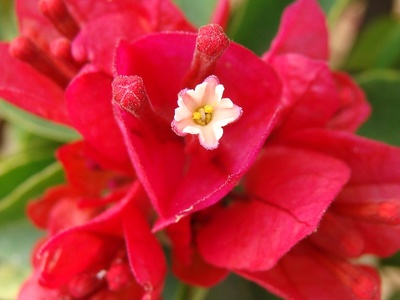
Bougainvillea
Vigorous vine whose colourful papery bracts surround tiny white true flowers. Bracts create bold magenta, purple or white displays and plants flower profusely on walls, fences and public spaces across Malaysia, often year-round in sunny sites.
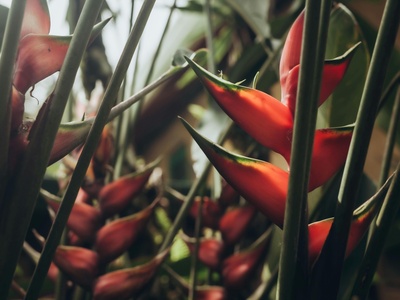
Lobster-claw
Hanging lobster-claw inflorescences 20–30 cm of red and yellow bracts. Planted in parks and garden beds, these tropical flowers attract sunbirds and add striking vertical colour in lowland landscapes.
Banana flower
Banana inflorescence a large pendulous bud 20–40 cm with purple bracts revealing rows of tubular flowers and later fruit. Found in plantations and home gardens; blooms indicate future bunches of bananas.
Orchid tree
Orchid tree with 6–10 cm butterfly-like pink-purple flowers in loose sprays. Often planted as roadside or garden tree; blooms seasonally and are identifiable by distinctive bilobed leaves.
Putat
Coastal tree with large fragrant white bottlebrush flowers 6–10 cm, often opening at night and attracting bats and moths. Found on beaches and mangrove edges; seeds disperse by water.
Sea hibiscus
Sea hibiscus with 7–10 cm yellow flowers that age to orange. Common along Malaysia’s shores and river mouths; tolerant of saline conditions and used for coastal planting and traditional uses.
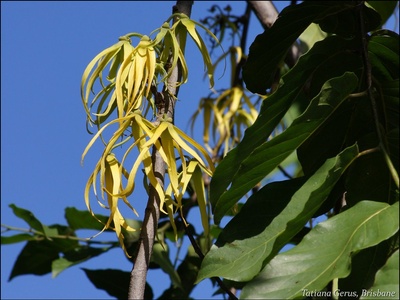
Ylang-ylang
Ylang-ylang has strongly perfumed, greenish-yellow star-shaped flowers 3–5 cm. Cultivated for essential oil production and planted in gardens; scent strongest at night and used widely in perfumery.
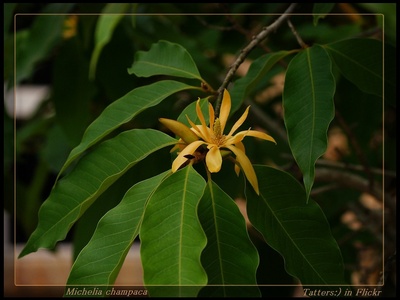
Champaca
Fragrant bright yellow-orange flowers 4–7 cm, very aromatic and used in religious offerings and perfumery. Found in home gardens and forest edges; scent notable at dawn and dusk.
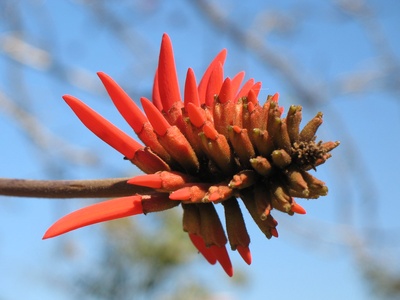
Coral tree
Coral tree with clusters of red pea-like flowers forming 5–10 cm showy sprays on bare branches. Planted as shade tree and roadside ornamental; attracts birds and insects when in bloom.
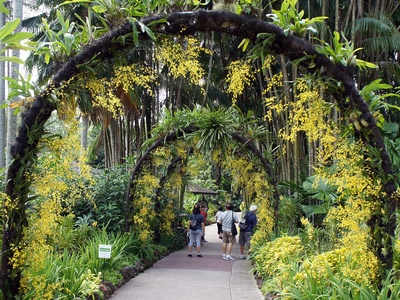
Golden shower
Golden Shower tree with long pendulous clusters often up to 60 cm bearing many 4–7 cm yellow flowers. Mass flowering is eye-catching in the drier season; widely planted as an ornamental.
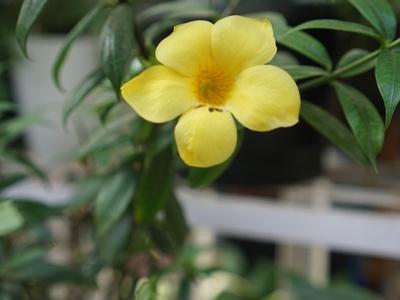
Allamanda
Shrub with large trumpet-shaped golden-yellow flowers 6–10 cm. Blooms profusely in gardens and hedges, attracting butterflies and providing bold colour in tropical landscapes.
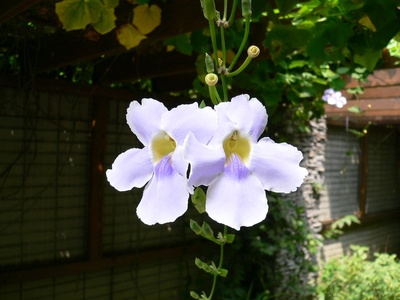
Bengal clockvine
Climbing vine with 6–8 cm sky-blue funnel flowers in generous displays. Common on trellises and fences in town gardens; blooms mainly in warm seasons and provides airy shade.
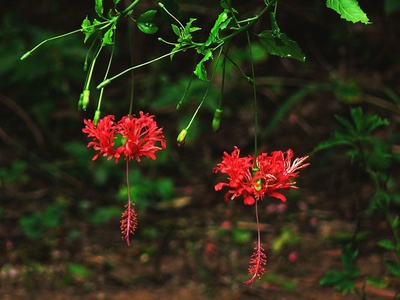
Fringed hibiscus
Fringed hibiscus with pendulous 10–15 cm deeply divided petals and long dangling stamens. Dramatic in tropical gardens; blooms year-round where warm and humid, and is easily recognised by its lace-like petals.
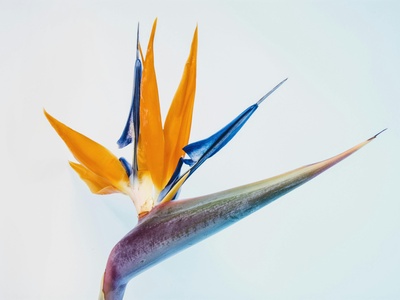
Bird-of-paradise
Bird-of-paradise with 15–20 cm structural orange-and-blue flowers resembling a bird’s head. Cultivated in parks and gardens; blooms reliably under care and is a popular ornamental showpiece.
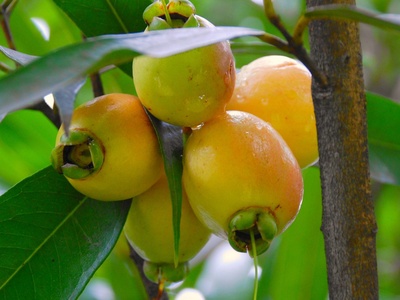
Rose apple
Rose apple with clusters of small 3–5 cm fragrant white flowers among glossy leaves, later followed by apple-like fruit. Widely planted around homes and farms; flowers attract bees and are easy to spot.
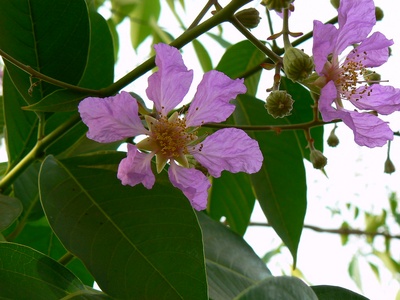
Queen’s crape myrtle
Queen’s crape myrtle with large panicles of crinkled 4–8 cm pink-purple flowers in dry season. Commonly planted along streets and parks, offers bold colour displays and attracts pollinators.
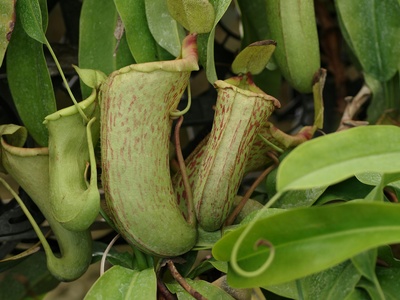
Pitcher plant (N. lowii)
Highland pitcher with tall, lantern-like pitchers 15–20 cm and a uniquely shaped peristome. Actual flowers are small; pitcher morphology makes it a sought-after species on Mount Kinabalu and other Sabah highlands.
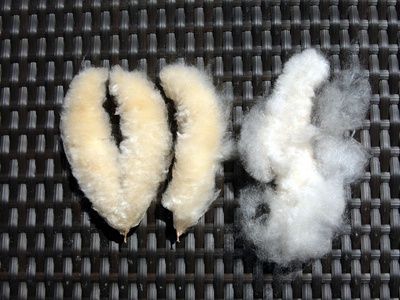
Kapok
Kapok tree with large 8–12 cm white-pink flowers appearing before leaf flush. Planted as an avenue and park tree; produces fluffy seed pods once flowers are pollinated and is noticeable when mass flowering occurs.
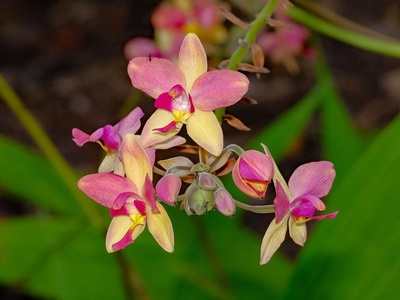
Ground orchid
Terrestrial ground orchid producing 2–4 cm purple or pink flowers on short spikes. Common in garden beds and grassy clearings, blooming in flushes and popular for easy cultivation.
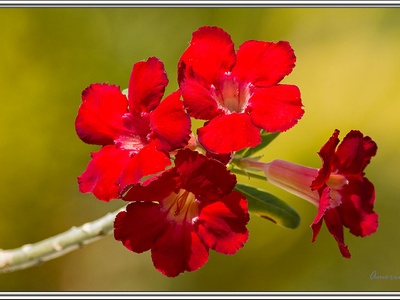
Desert rose
Desert rose with 4–7 cm trumpet flowers in pinks and reds, thick succulent stem and attractive bonsai form. Popular potted plant in Malaysia’s gardens, flowering mainly in sunny, drier periods.
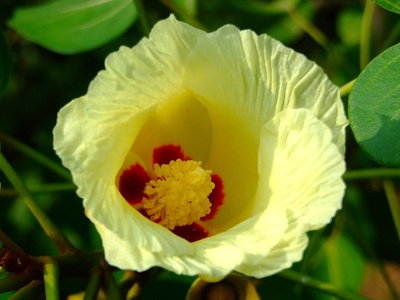
Portia tree
Portia tree with hibiscus-like yellow flowers 4–6 cm that later fade orange. Common along coasts and riverbanks; tolerant of salt spray and often used in traditional coastal plantings.
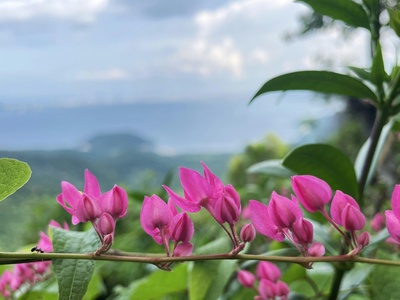
Coral vine
Coral vine that bears masses of tiny 1–2 cm pink tassel flowers along twining stems. Flowers profusely in sunny spots and is common on fences and trellises, attracting pollinators.
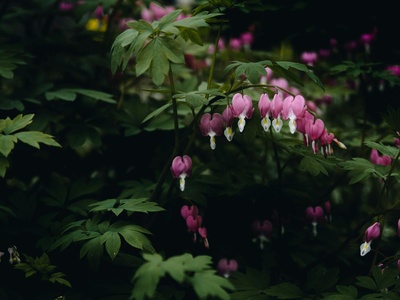
Bleeding heart vine
Bleeding heart vine with pendulous red-and-white tubular flowers 3–5 cm enclosed in papery calyces. Popular ornamental climber in shaded gardens and verandas; blooms intermittently throughout the year.