The Marshall Islands’ low coral atolls and tropical shorelines support a surprising variety of flowering plants adapted to salt spray, sandy soils, and local cultivation. From coastal scrubs to village gardens, the islands’ plants tell a story of island life, traditional uses, and the occasional introduced ornamental that has become commonplace.
There are 30 Flowers of the Marshall Islands, ranging from Barringtonia to Ylang‑ylang. For each entry you’ll find below the Scientific name,Where found,Height (cm) so you can scan native status, habitat, and typical size at a glance — you’ll find below.
Which of these flowers are endemic to the Marshall Islands?
Only a small number are strictly endemic; most species are widespread across Micronesia or were introduced by people and wind. Check the “Where found” column for specific island records and notes on native versus introduced status to identify true endemics.
How can I use the list to identify plants in the field?
Use the Scientific name for precise reference, compare the listed Height (cm) to the plant you see, and cross-check habitat in the “Where found” column; photos or a local field guide paired with the table below will help confirm identifications.
Flowers of the Marshall Islands
| Name | Scientific name | Where found | Height (cm) |
|---|---|---|---|
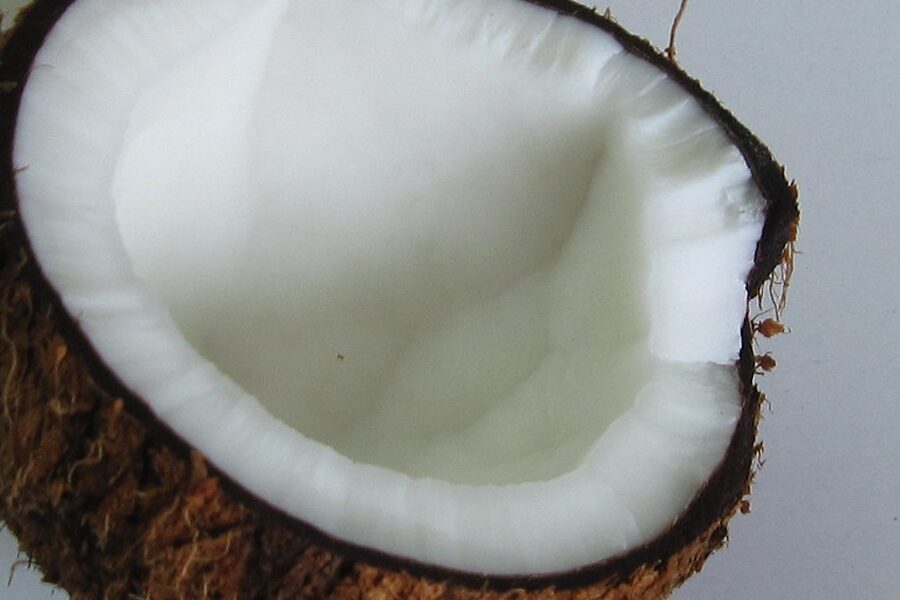
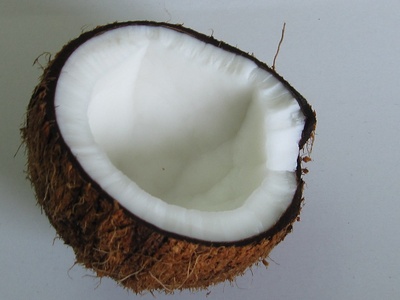
| Coconut | Cocos nucifera | coastal strands, villages on most atolls | 1,500 |
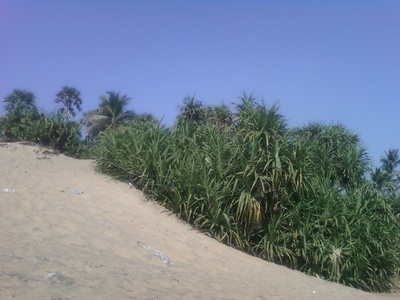
| Pandanus | Pandanus tectorius | coastal dunes and lagoon margins on most atolls | 1,000 |
| Milo | Thespesia populnea | coastal, yards and village groves across islands | 800 |
| Beach hibiscus | Hibiscus tiliaceus | coastlines and backshore vegetation across islands | 400 |
| Garden hibiscus | Hibiscus rosa-sinensis | cultivated gardens and hedges | 200 |
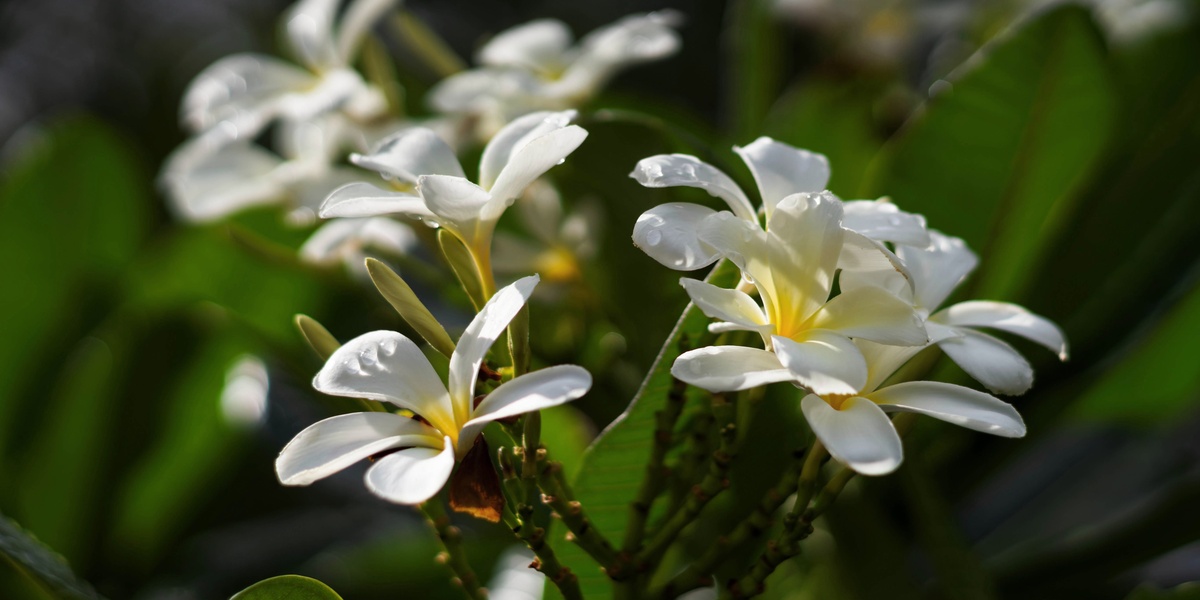
| Frangipani | Plumeria rubra | gardens, yards, cemeteries throughout inhabited atolls | 300 |
| Bougainvillea | Bougainvillea glabra | garden climber on fences and village trellises | 300 |
| Naupaka | Scaevola taccada | upper beach strand on most atolls | 150 |
| Beach morning‑glory | Ipomoea pes-caprae | sand dunes and foredunes on beaches | 10 |
| Beach gardenia | Guettarda speciosa | coastal strand and sandy pockets on many atolls | 600 |
| Beach cordia | Cordia subcordata | coastal fringe and small groves on atolls | 500 |
| Tamanu | Calophyllum inophyllum | coastal tree in villages and planted groves | 800 |
| Tropical almond | Terminalia catappa | shoreline and village shade tree, common | 1,000 |
| Breadfruit | Artocarpus altilis | homegardens and small plantations on larger atolls | 1,200 |
| Gardenia (Tahitian) | Gardenia taitensis | cultivated for perfume in yards and leis | 150 |
| Ylang‑ylang | Cananga odorata | planted in gardens for perfume and oil | 1,200 |
| Red ginger | Alpinia purpurata | gardens and shaded sites near homes | 150 |
| Heliconia | Heliconia spp. | ornamental gardens and shaded yards | 200 |
| Ixora | Ixora coccinea | garden hedges and village plantings | 100 |
| Lantana | Lantana camara | disturbed sites and roadsides, invasive shrub | 150 |
| Leucaena | Leucaena leucocephala | secondary growth, villages, widespread introduced tree | 800 |
| Siam weed | Chromolaena odorata | disturbed ground and forest edges, invasive | 200 |
| Mile‑a‑minute vine | Mikania micrantha | climbing weed in gardens and waste areas | 50 |
| Casuarina | Casuarina equisetifolia | windbreaks and coastal shelterbelts on many atolls | 1,800 |
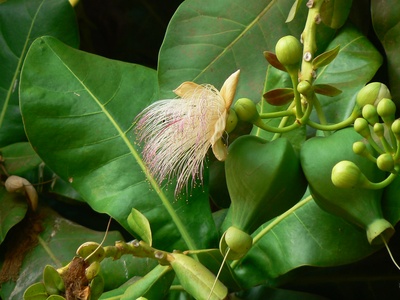
| Barringtonia | Barringtonia asiatica | coastal fringe and sandy pockets on larger atolls | 600 |
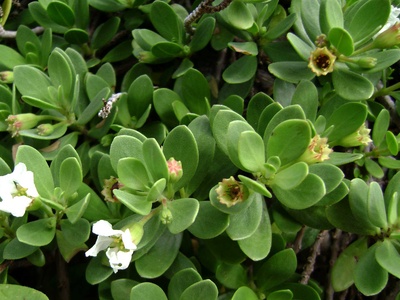
| Pemphis | Pemphis acidula | rocky and coral shorelines exposed to waves | 200 |
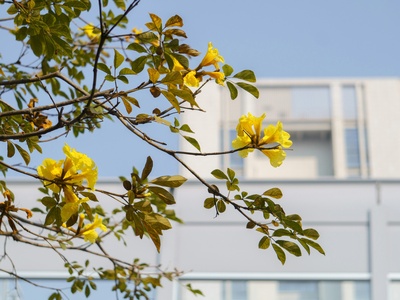
| Golden shower | Cassia fistula | gardens and roadside plantings in villages | 800 |
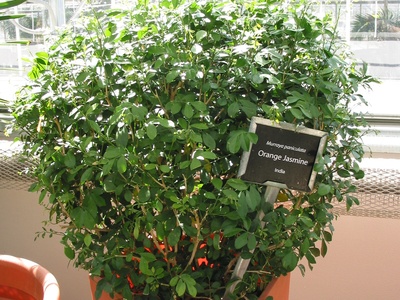
| Orange jasmine | Murraya paniculata | home gardens and hedges, fragrant flowers | 200 |
| Pisonia | Pisonia grandis | bird‑roost islets and inner lagoon motus | 1,500 |
| Purslane | Portulaca oleracea | disturbed ground, gardens and compacted soils | 5 |
Images and Descriptions
Coconut
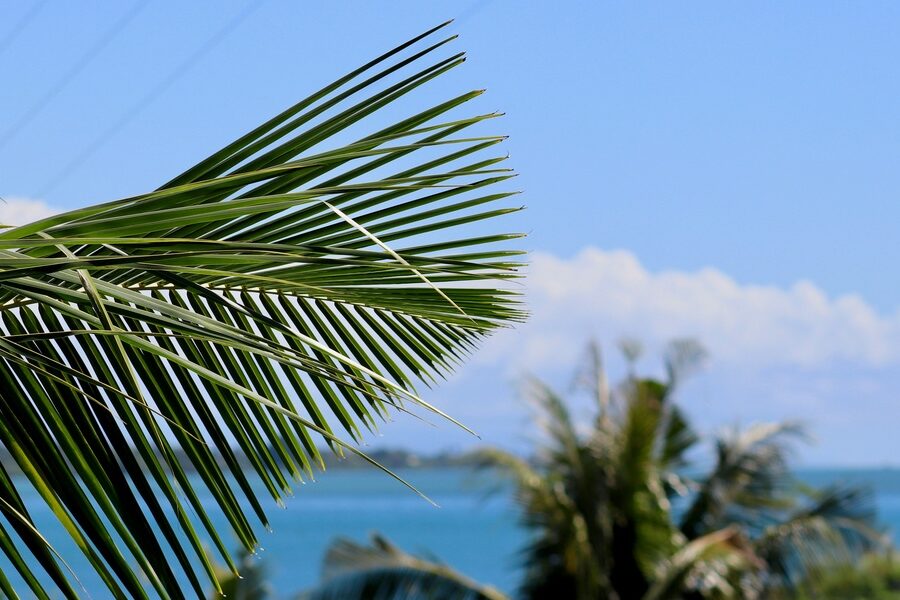
Iconic palm with tall trunk and hanging clusters of green/yellow coconuts; tiny inconspicuous flowers on spikes. Look for it along beaches and home groves—central to Marshallese diet, boat-building, and traditional crafts.
Pandanus
Stiff screw‑pine with prop roots and pineapple‑like fruit clusters; small flowers inside dense heads. Leaves used for weaving mats and thatch; common on reef islands and easy to ID by its stilt roots and spiny leaves.

Milo
Small coastal tree with glossy leaves and yellow, hibiscus‑like blooms that turn orange. Durable wood used for carving and canoe parts; often planted near villages for shade and wind protection.
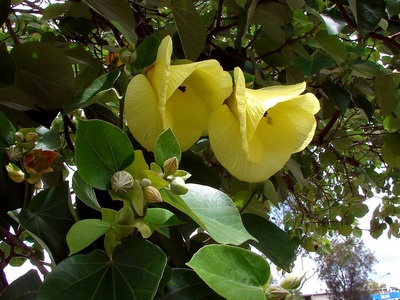
Beach hibiscus
Shrubby tree with large heart‑shaped leaves and yellow to orange hibiscus flowers. Common coastal marker plant; fibers and bark used traditionally for cordage and wraps.
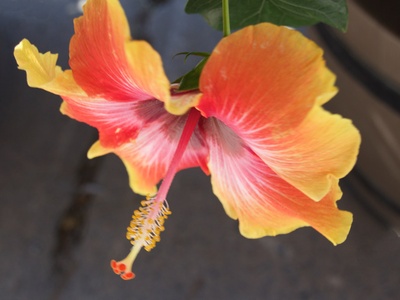
Garden hibiscus
Showy single or double large blooms in many colors, glossy leaves and upright shrub habit. Widely planted in yards; easy ID from big 5‑petaled flowers and used for leis and ornament.
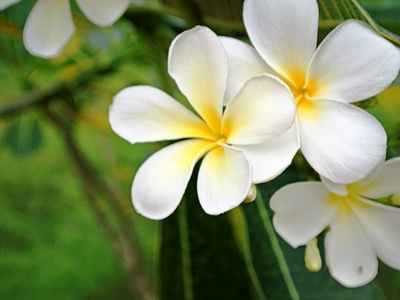
Frangipani
Deciduous small tree with fragrant white, yellow or pink tubular flowers. Popular as a lei and ceremonial flower; branches often pruned, blooms very fragrant at dusk and morning.
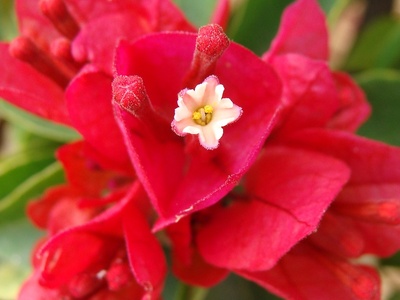
Bougainvillea
Vibrant magenta “bracts” surround tiny white flowers; thorny vine that creeps over walls and arbors. Drought‑tolerant ornamental common in yards and roadside plantings.
Naupaka
Low sprawling shrub with thick glossy leaves and distinctive half‑flowers (fan‑shaped white blooms). A reliable coastal stabilizer and easy to spot along sandy shorelines.
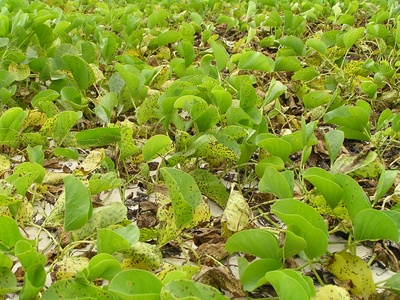
Beach morning‑glory
Creeping vine with fleshy leaves and pink to purple trumpet flowers. Anchors dunes and tolerates salt spray; look for wide, two‑lobed leaves and morning‑opening blooms.
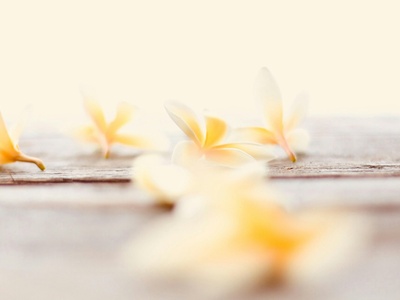
Beach gardenia
Small tree with fragrant, white tubular flowers and glossy leaves. Strong sea scent often used in traditional bouquets; typically found behind the foredune in sheltered spots.
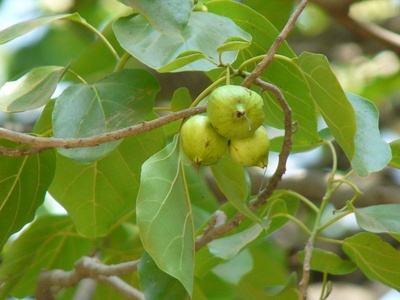
Beach cordia
Tree with large glossy leaves and showy orange to red tubular flowers. Often planted near villages for shade; wood used in carving and flowers used in local garlands.
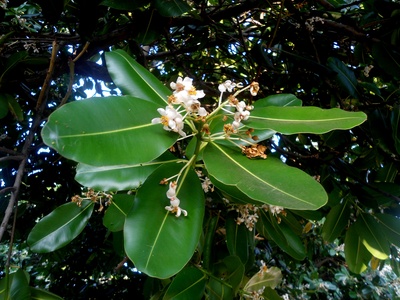
Tamanu
Evergreen tree with glossy leaves and fragrant white flowers; produces oily seed used traditionally for skin care (tamanu oil). Grows well on reef soils and used as windbreak.
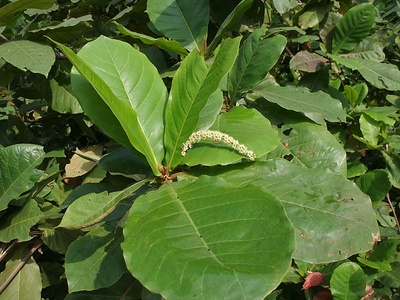
Tropical almond
Large spreading tree with horizontal branches and white spike flowers; leaves turn red before falling. Nuts edible and the tree is a familiar shade and landmark species in villages.
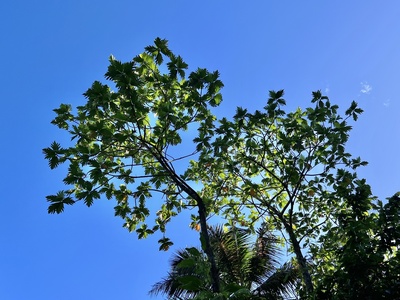
Breadfruit
Large tree with lobed leaves and inconspicuous flowers that produce starchy fruits. Central traditional food crop; identify by big serrated leaves and round bumpy breadfruit.
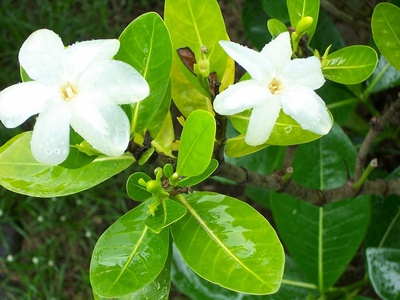
Gardenia (Tahitian)
Small shrub with intensely fragrant waxy white flowers used in leis. Blooms spherical and creamy; easily spotted near homes and cultural sites for their perfume and ceremonial use.
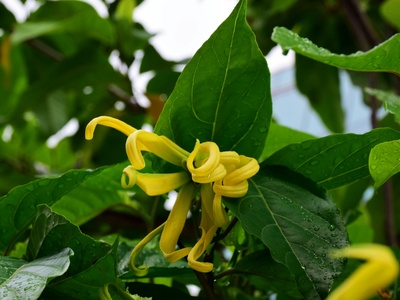
Ylang‑ylang
Tall fragrant tree with drooping greenish‑yellow flowers used for perfume and essential oil. Blossoms strongly scented; cultivated near homes and plantations for aromatic flowers.
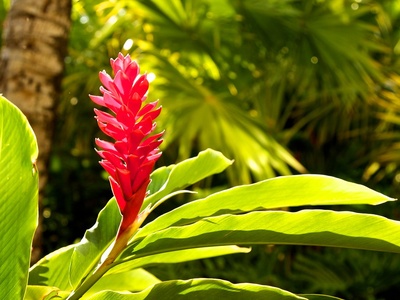
Red ginger
Showy red bracts form cone‑like inflorescences with small true flowers inside. Tropical ornamental common in moist shaded yard corners; easy ID by bright vertical flower spikes.
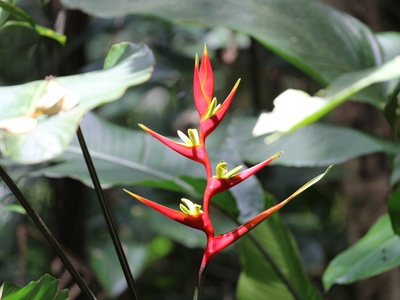
Heliconia
Bold tropical leaves with hanging or upright colorful bracts (red, orange, yellow). Planted as dramatic ornamentals near homes; bracts are long‑lasting and attract birds and insects.
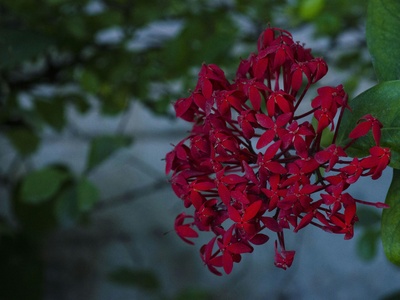
Ixora
Dense shrub with clusters of small tubular red, orange or pink flowers. Popular as a trimmed hedge; blooms in big rounded clusters and is a familiar village ornamental.
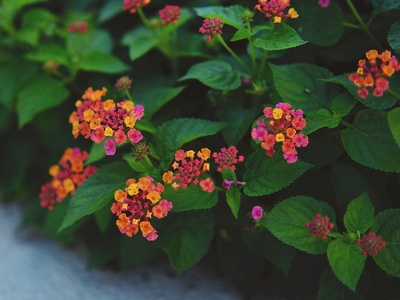
Lantana
Scrubby plant with multicolored clustered flower heads (yellow/orange/pink). Tolerant of poor soils and spreads easily; considered invasive in many Pacific islands.
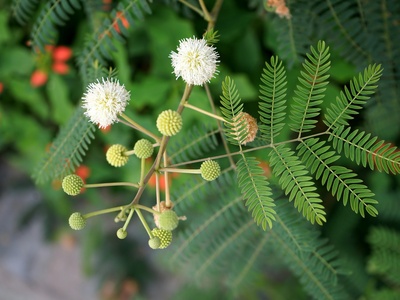
Leucaena
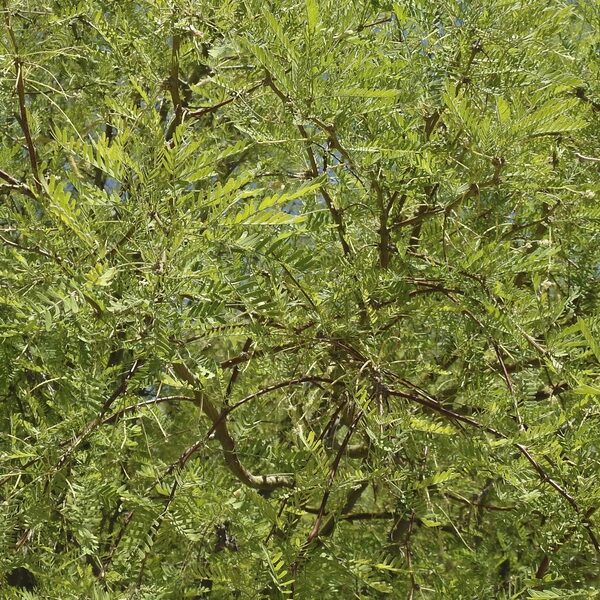
Fast‑growing leguminous tree with small white flower clusters. Used for shade, fodder and soil improvement but invasive in some areas; pinnate leaves and pea‑like blossoms are diagnostic.
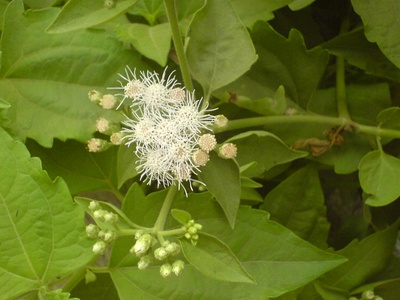
Siam weed
Upright shrub with clusters of small lavender‑white flowers. Spreads rapidly on disturbed ground, smothering native vegetation; identify by aromatic crushed leaves and fluffy flower heads.
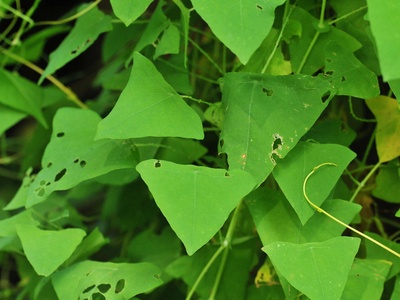
Mile‑a‑minute vine
Fast‑growing vine with white tufted flowers that forms dense mats over plants. Aggressive climber that shades out natives; leaves are thin and opposite, flowers small and fluffy.
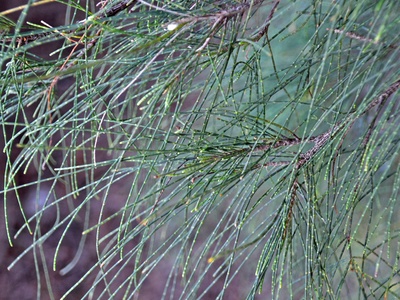
Casuarina
Pine‑like appearance though flowering; male and female flowers are small catkins. Widely planted for wind protection; tall, needle‑like branchlets and sandy‑soil tolerance make it conspicuous.
Barringtonia
Mangrove‑edge tree with large showy white brush‑like nocturnal flowers; fruits are round and buoyant. Common near the shore; flowers are fragrant and attract bats at night.
Pemphis
Low, gnarly shrub with small white flowers and dense woody stems. Tough coastal species forming wind‑shaped thickets on wave‑washed shorelines—used in some places for small tool wood.
Golden shower
Medium tree with pendulous clusters of bright yellow pea‑flowers in season. Planted as an ornamental and shade tree; long bean‑like pods follow blooms.
Orange jasmine
Glossy shrub with clusters of small fragrant white flowers and red berries. Common in village hedges; used for scent and ornamental screening.
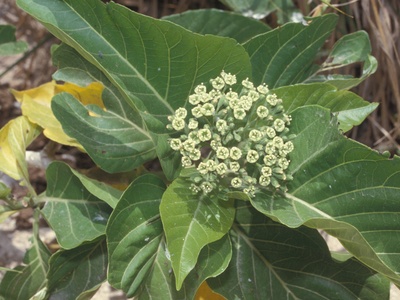
Pisonia
Large coastal tree often on seabird islets, with clusters of tiny white flowers. Sticky seeds trap debris and birds; important in seabird roost ecology and island soil formation.
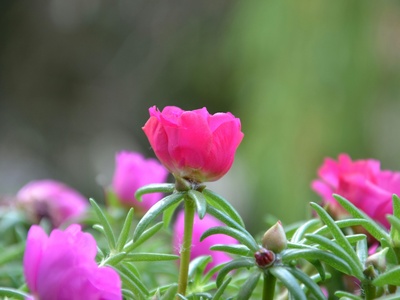
Purslane
Low succulent groundcover with yellow or pink flowers that open in sun. Edible leaves used as a vegetable; common, salt‑tolerant weed on paths and yard edges.