The Solomon Islands host a rich tapestry of tropical flora across rainforests, coastal fringes, and upland slopes. Islanders and visitors alike encounter a mix of wild species and plants shaped by centuries of cultivation and trade.
There are 25 Flowers of the Solomon Islands, ranging from the African tulip tree to the Tropical almond, illustrating both native blooms and widely planted introductions. Each entry is organized with Scientific name,Height (cm),Habitat & distribution so you can compare identity, size, and where each species grows — you’ll find these details below.
Are the flowers on this list native to the Solomon Islands or introduced?
The list includes both native species and introduced plants; some, like the African tulip tree and Tropical almond, are widespread introductions, while others are endemic or naturally occurring in island habitats. Use the Habitat & distribution column to check whether a species is native, and consult local guides or herbarium records for confirmation.
When is the best time to see these flowers in bloom?
Flowering times vary by species and elevation, but many tropical plants in the Solomons bloom year-round with peaks during the wet season (roughly November–April). Check the Habitat & distribution and Height (cm) columns below to plan visits by coastal versus montane locations.
Flowers of the Solomon Islands
| Name | Scientific name | Height (cm) | Habitat & distribution |
|---|---|---|---|
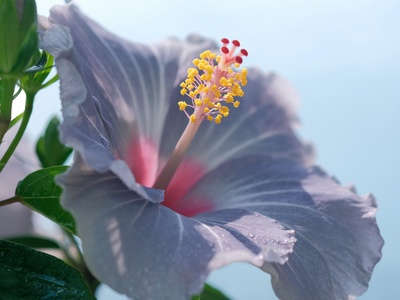
| Beach hibiscus | Hibiscus tiliaceus | 300-1,000 | Coastal, widespread in Solomons |
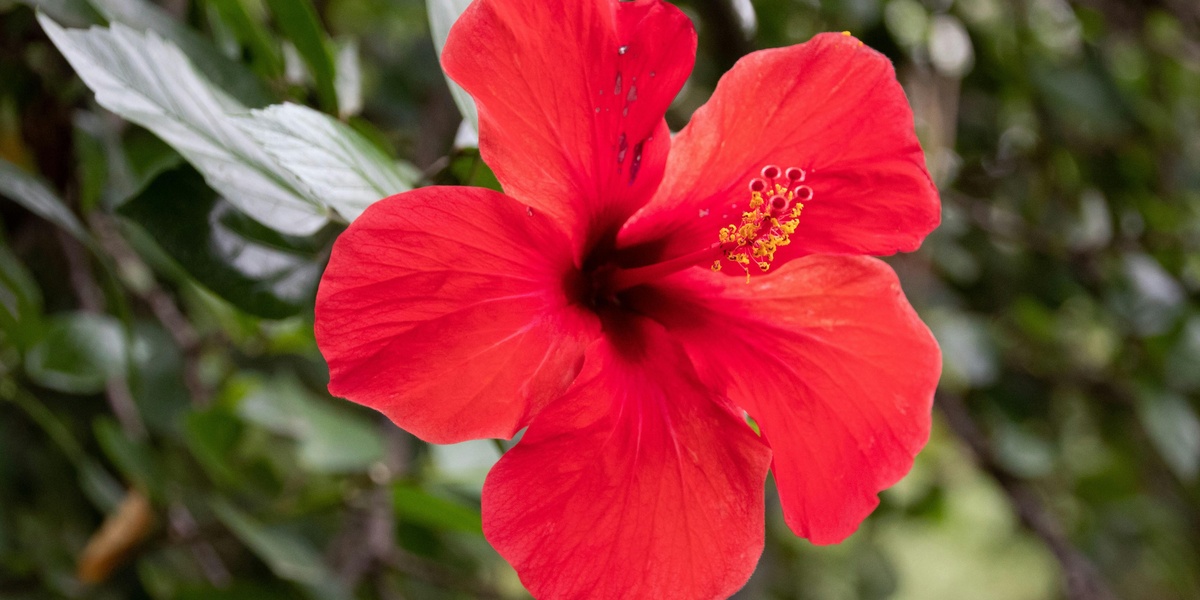
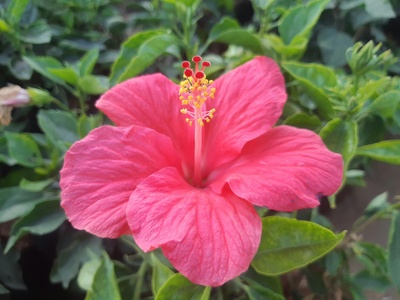
| Garden hibiscus | Hibiscus rosa-sinensis | 100-300 | Cultivated in villages and gardens |
| Portia tree | Thespesia populnea | 300-700 | Coastal, common on islands |
| Beach naupaka | Scaevola taccada | 50-200 | Coastal strand, widespread |
| Sea pong-pong/Box fruit | Barringtonia asiatica | 300-2,000 | Coastal mangroves and beaches |
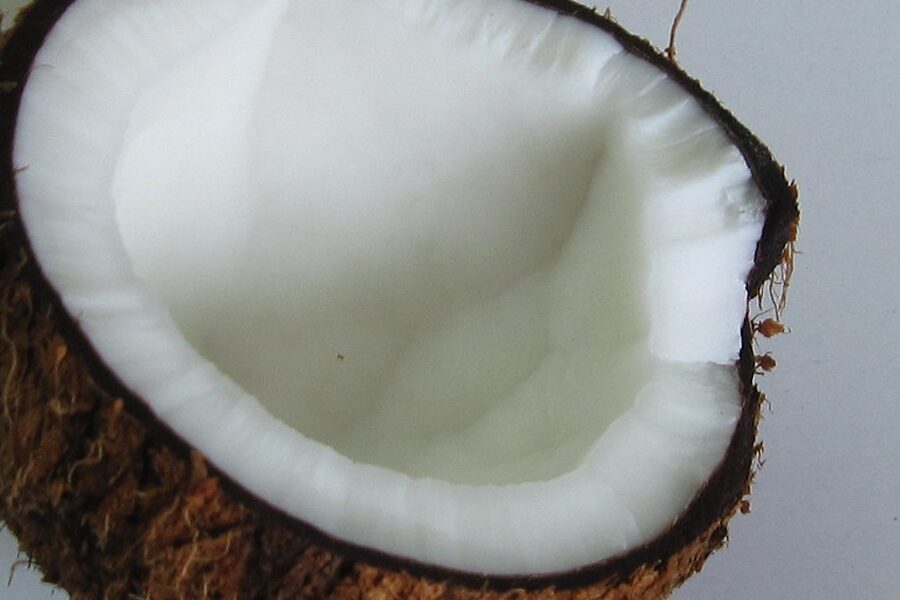
| Coconut | Cocos nucifera | 1,000-3,000 | Beaches, plantations, everywhere |
| Frangipani | Plumeria rubra | 200-600 | Villages, gardens, cultivated widely |
| Tahitian gardenia | Gardenia taitensis | 100-300 | Cultivated and coastal gardens |
| Bougainvillea | Bougainvillea glabra | 100-600 | Gardens, roadsides, cultivated |
| Ixora | Ixora coccinea | 50-200 | Gardens, disturbed sites, villages |
| Lantana | Lantana camara | 50-200 | Disturbed sites, roadsides, widespread |
| Flamboyant tree | Delonix regia | 500-1,500 | Open urban sites, gardens |
| Coral tree | Erythrina variegata | 500-1,500 | Coastal villages, cultivated |
| African tulip tree | Spathodea campanulata | 500-1,500 | Gardens, secondary forest edges, cultivated |
| Golden shower | Cassia fistula | 500-1,000 | Gardens, village plantings |
| Allamanda | Allamanda cathartica | 100-300 | Gardens, cultivated tropical ornament |
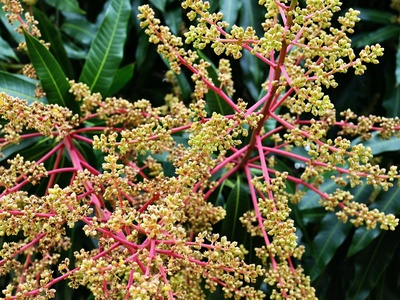
| Mango blossom | Mangifera indica | 500-2,000 | Home gardens, plantations, widespread |
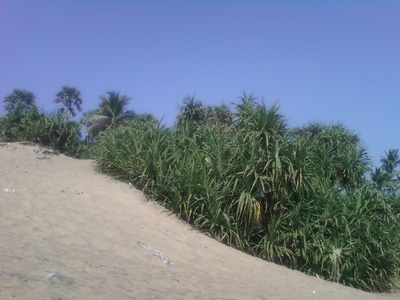
| Screwpine | Pandanus tectorius | 300-1,000 | Coastal, planted near villages and reefs |
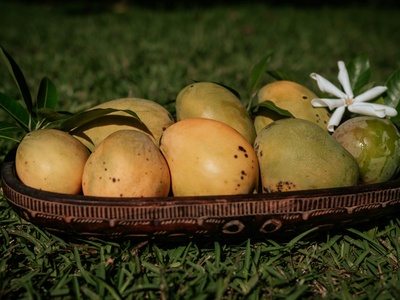
| Sea mango | Cerbera manghas | 300-800 | Coastal, lagoon edges |
| Malay apple | Syzygium malaccense | 300-1,000 | Home gardens, village orchards |
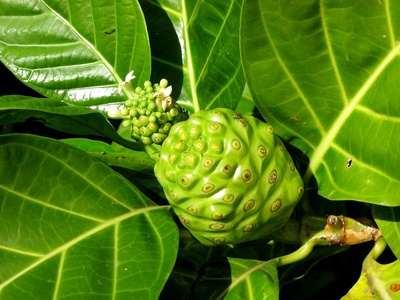
| Noni | Morinda citrifolia | 200-600 | Coastal, disturbed sites, common |
| Tropical almond | Terminalia catappa | 500-2,000 | Coastal, urban shade tree |
| Seaside clerodendrum | Clerodendrum inerme | 50-200 | Coastal strand and beaches |
| Canna lily | Canna indica | 50-150 | Gardens, disturbed moist spots |
| Melastome | Melastoma malabathricum | 50-200 | Forest edges, disturbed clearings |
Images and Descriptions
Beach hibiscus
Large heart-shaped leaves and yellow-to-orange hibiscus-like flowers; common on beaches and tidal margins. ID by broad leaves and five-petaled blooms. Used for shade, cordage, canoe planking and traditional crafts; very salt tolerant and unmistakable along shorelines.
Garden hibiscus
Big showy single or double flowers in many colors; a staple ornamental in gardens. ID by glossy leaves and conspicuous five-petaled blooms. Widely planted for hedges, leis and cultural decoration across the Solomons.
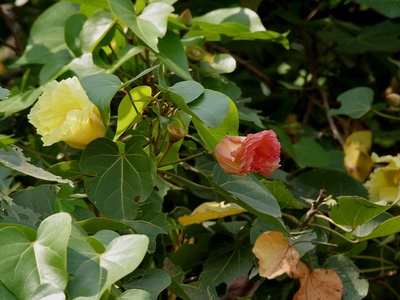
Portia tree
Small coastal tree with yellow hibiscus-like flowers and a dark eye. ID by cordate leaves, yellow petals and brown fibrous fruit. Traditionally used for carving, medicine and shade; often found on village foreshore plantings.

Beach naupaka
Low shrub with distinctive white half-flowers (fan-shaped) and fleshy leaves. ID by split-looking corolla and salt-tolerant habit. Commonly forms coastal hedges; flowers signal shorelines and are used in garlands.
Sea pong-pong/Box fruit
Large tree with dramatic white, brush-like nocturnal flowers and long dangling stamens. ID by fragrant night-blooming flowers and large woody fruits. Flowers attract bats; tree marks lagoon and reef edges.
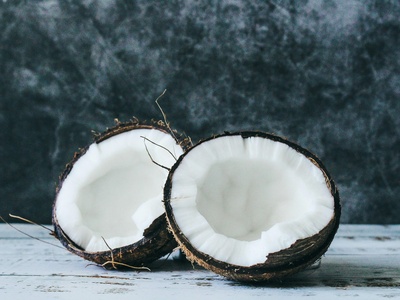
Coconut
Iconic palm with large pinnate leaves and upright inflorescences of small yellowish flowers. ID by tall trunk, coconuts and palm crown. Vital for food, timber, craft materials and culture across Solomon Islands.
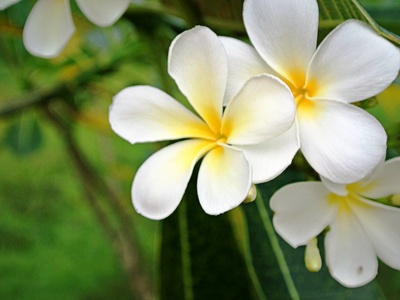
Frangipani
Small deciduous tree with fragrant, waxy five-petaled flowers in whites, pinks and reds. ID by clustered blooms and thick succulent branches. Commonly used for leis, perfumery and ceremonial adornment.
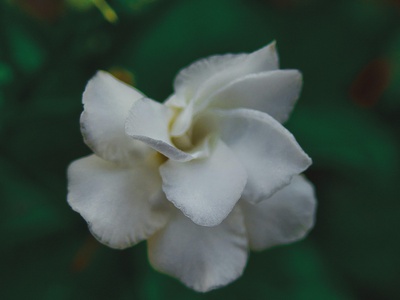
Tahitian gardenia
Fragrant white, waxy flowers with glossy evergreen leaves. ID by intense perfume and creamy petals. Valued for leis, perfume and traditional ceremonies; cultivated near homes and in plantations.
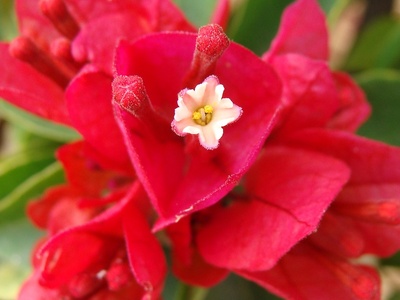
Bougainvillea
Vigorous thorny vine with colorful bracts (magenta, purple, white). ID by papery bracts surrounding small tubular flowers. Used as hedging and ornament; thrives in sunny, well-drained sites across the islands.
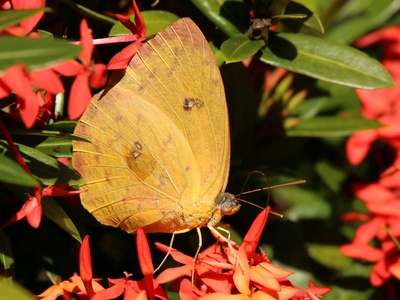
Ixora
Dense shrub with rounded clusters of small tubular flowers in red, orange or yellow. ID by glossy leaves and star-like clusters. Common ornamental used for hedges, cultural decoration and pollinator gardens.
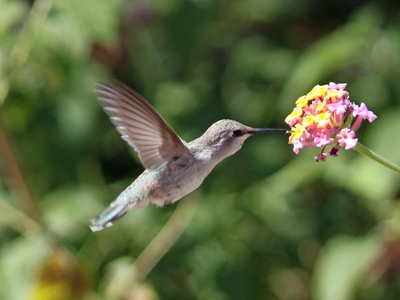
Lantana
Scrubby shrub with tight umbels of multi-colored tiny flowers. ID by aromatic leaves and changing flower colors. Naturalized invasive in many areas but widely noticed for its bright, long-lasting blooms.
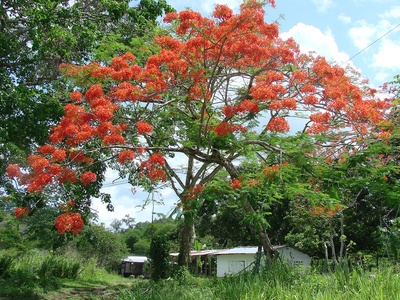
Flamboyant tree
Large spreading tree with fern-like leaves and flamboyant orange-red flowers in summer. ID by wide umbrella crown and striking floral display. Planted for shade and spectacle in townships and village greens.
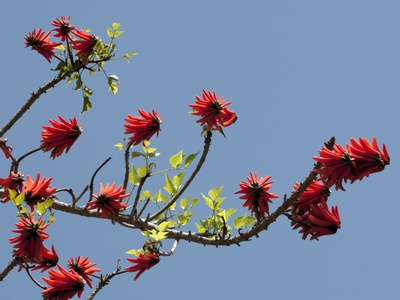
Coral tree
Deciduous tree with bright red pea-like flowers in dense clusters. ID by trifoliate leaves and showy red inflorescences. Used as shade, living fence and traditional medicine in coastal communities.
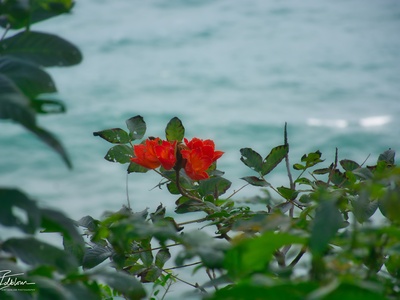
African tulip tree
Bold orange to red urn-shaped flowers in large clusters. ID by tall stature and profuse terminal flower clusters. Often planted ornamentally; can naturalize and form stands in disturbed areas.
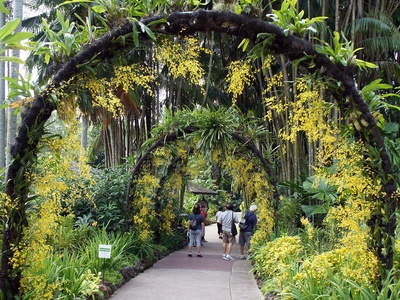
Golden shower
Showy pendulous racemes of bright yellow flowers in dry season. ID by long bean-like pods and cascading yellow blooms. Valued for ornamental beauty and seasonal displays in public spaces.
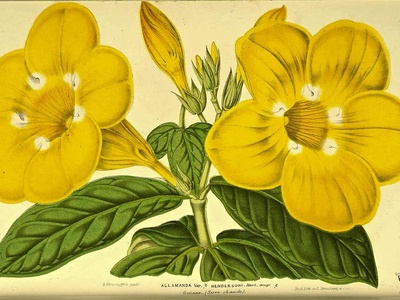
Allamanda
Vigorous vine or shrub with large glossy yellow trumpet flowers. ID by luxuriant foliage and bright yellow blooms. Used in trellises and hedges, noted for fast growth and tropical aesthetics.
Mango blossom
Dense panicles of small fragrant cream-yellow flowers in spring. ID by tree habit and later edible fruit. Flowers attract bees; mango is both food crop and garden specimen across the Solomons.
Screwpine
Stout branching screwpine with inconspicuous flowers hidden in dense bracts and large pineapple-like fruit. ID by prop-roots and spiralled leaves. Leaves used for weaving; tree marks shorelines and settlements.
Sea mango
Small coastal tree with white fragrant star-shaped flowers and glossy leaves. ID by bell-shaped blooms with pink throat; seeds toxic. Planted and natural on reef islands; used in traditional rites and markers.
Malay apple
Evergreen tree with clusters of small white flowers followed by red edible fruits. ID by glossy leaves and apple-like fruit. Cultivated for fruit, shade and cultural uses in the Solomons.
Noni
Small tree with clusters of tubular white flowers forming pungent fruits. ID by large glossy leaves and knobbly fruit. Important traditional medicinal plant and staple of village agroforestry.
Tropical almond
Large spreading tree with tiered branches and small cream flowers; leaves turn reddish. ID by horizontal branching and edible almond-like seed. Common shade and ornamental tree along coasts and roads.
Seaside clerodendrum
Salt-tolerant shrub with white tubular flowers and showy calyx. ID by glossy leaves and clusters of fragrant white blooms. Used in coastal planting for hedging and erosion control.
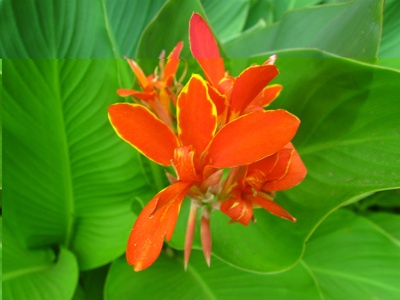
Canna lily
Bold tropical perennial with large leaves and upright red, orange or yellow flowers. ID by banana-like foliage and torch-like blooms. Common cottage-garden plant and border ornamental in villages.
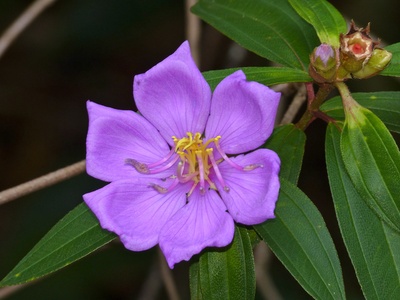
Melastome
Shrubby plant with bright purple to pink star-shaped flowers and hairy leaves. ID by conspicuous venation on leaves and purple blooms. Grows in open disturbed forest and along tracks, often noted for showy flowers.