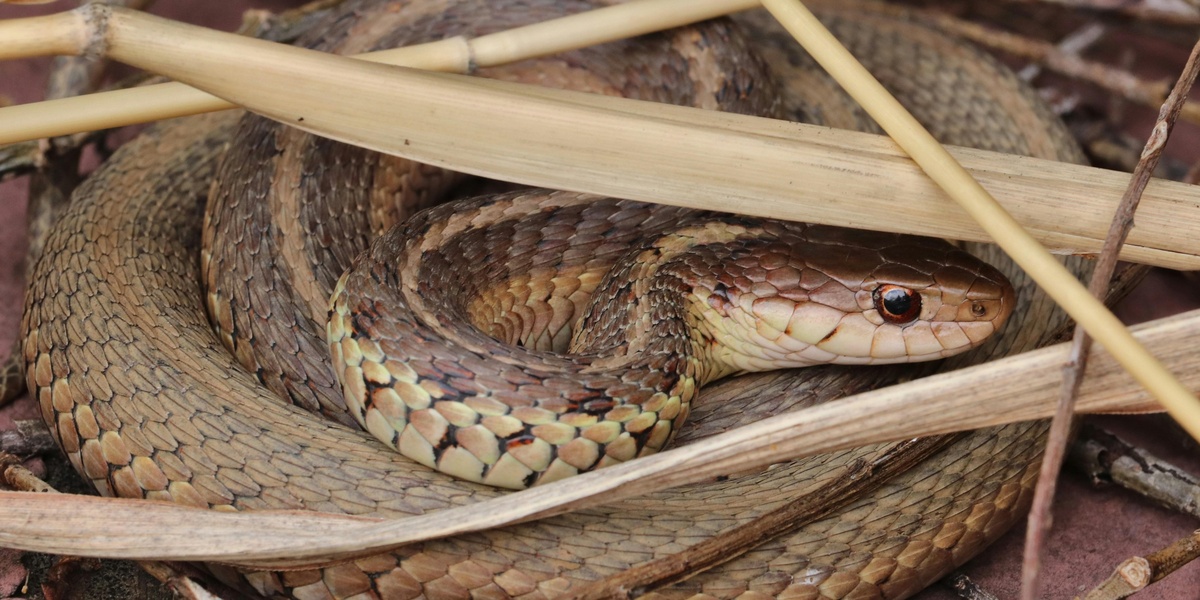
Have you ever seen a slender, stripe-backed snake in your yard and wondered whether it was a harmless garter snake or something else gardeners call a ‘garden snake’?
Imagine spotting that snake between your tomato plants on a sunny morning: you freeze, you squint, and you try to decide whether to move it, leave it, or call someone. The term “garden snake” is a loose, regional label that can mean different species—North American Thamnophis (common garter) in some places and European grass or “garden” snake (Natrix natrix) in others—so scientific names help avoid confusion.
This article clears up that confusion by showing five observable differences—size & shape; scale patterns & coloration; diet & hunting; activity & defense; and habitat & gardener interactions—so you can identify the snake quickly and make safe, practical choices in your garden. Garter snakes commonly reach 18–26 in (45–66 cm), while some grass‑type garden snakes often reach 24–36 in (60–90 cm). Read on to learn how to tell them apart, whether to relocate, leave them alone, or even encourage them as helpful pest controllers.
Physical differences: appearance and size

1. Size and body shape
Size and silhouette are often the fastest field cues. Adult Thamnophis sirtalis (common garter) usually measure about 18–26 inches (45–66 cm), while many grass- or garden-type snakes like Natrix natrix typically average larger, around 24–36 inches (60–90 cm).
Garter snakes tend to be more slender with a narrow head that blends into the neck, whereas some garden/grass snakes can look more robust with a slightly broader head and a clearer neck outline. Regional variation occurs, and juveniles are much smaller—adults often reach typical lengths by year 2–3.
To estimate size safely, compare the snake to fixed garden features: a coiled hose loop is roughly 18–24 inches, a standard rake handle is about 48 inches, and that can help you judge whether you’re looking at a smaller common garter or a larger grass-type snake.
2. Scale patterns and coloration
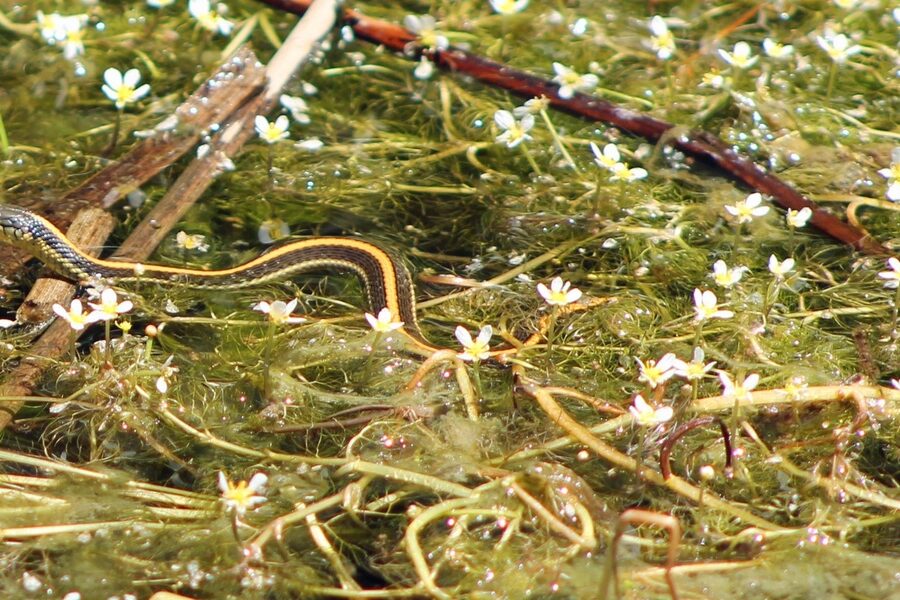
Patterning is one of the most reliable visual cues once you can get a clear view from a safe distance. Many Thamnophis subspecies show three longitudinal stripes—one down the back and one along each side—on a darker ground color; stripe colors vary from yellow to green or orange on backgrounds that may be olive, brown, or black.
By contrast, garden/grass-type snakes (for example, Natrix natrix) often show dorsal blotches or a largely olive/green body with a distinctive pale collar or nape patch behind the head. Juveniles sometimes have bolder patterns that fade with age, and season can influence brightness.
Practical ID tip: photograph the dorsal pattern (do not handle the snake). If you see three clear light stripes running lengthwise, you’re likely looking at a garter; if you see alternating blotches and a pale nape collar, think grass/garden-type snake.
Behavior and ecology: what they eat and how they act
3. Diet and hunting strategies
When comparing garter snakes vs garden snakes, diet is a strong differentiator. Garter snakes are opportunistic foragers that commonly eat earthworms, slugs, amphibians, small fish, insects, and sometimes small rodents; in wetland-edge garter populations, tadpoles can make up over half the spring diet.
Garden/grass-type snakes such as Natrix natrix often specialize more on amphibians and fish and are more strongly tied to pond margins and streams. Hunting style varies: garters actively forage through leaf litter and compost piles, while many grass snakes patrol shallow water edges and ambush prey.
Biological note: Thamnophis species possess mildly toxic saliva that helps subdue small prey but is not considered medically significant to humans; bites are uncommon and usually cause only minor local irritation in most people.
4. Activity patterns and defensive behavior
Activity timing helps predict encounters. Many garter snakes are diurnal to crepuscular—active in the morning and late afternoon—especially in cooler regions. Grass/garden snakes are often seen during daylight at pond margins but can also be crepuscular in warmer months.
Defensive responses differ: garters commonly try to flee quickly, may flatten their bodies or release a foul musk, and rarely bite people. Some garden/grass snakes (Natrix) are famous for feigning death when handled, sometimes rolling onto their backs with the mouth open.
Reproduction and encounter rates relate to behavior: garter snakes often give live birth to large broods (commonly 10–40 young depending on species and female size), while many grass snakes lay eggs—Natrix clutches are often 10–30 eggs—so you might notice aggregations in spring/summer around basking or nesting sites.
Habitat and human interactions: where they live and how they help (or bother) gardeners
5. Habitat preference and relationship with gardeners
Where you find a snake is a major clue. Garter snakes do well in suburban gardens, grassy margins, compost heaps, and moist edges because those spots provide earthworms, slugs, and amphibians. They tolerate human-altered yards and often shelter under boards, rock piles, and dense mulch.
Garden/grass-type snakes are more water-oriented and commonly occur at pond margins, marshes, and slow streams where frogs and fish are abundant. That water association explains why you’ll often see Natrix basking near a pond rather than deep in a dry vegetable patch.
Both groups provide ecosystem services: they eat pests such as slugs and small rodents and can help control amphibian overpopulation in some microhabitats. Reproduction differs: many Thamnophis are viviparous with broods of roughly 10–40 live young, while many grass snakes lay clutches of about 10–30 eggs.
Practical gardener advice: to encourage beneficial snakes, keep a small water feature, leave some undisturbed refuges (rock piles, log sections), and avoid broad-spectrum pesticides. To discourage snakes humanely, remove debris and seal gaps under sheds; contact local wildlife authorities if you’re unsure, especially where local protections apply.
Summary
- Stripe versus blotch/collar patterns are the quickest visual clue; three longitudinal stripes usually indicate a garter.
- Size and shape help confirm ID—garters average 18–26 in (45–66 cm); some grass/garden snakes average 24–36 in (60–90 cm).
- Diet and habitat differ: garters are generalist foragers (earthworms, slugs, tadpoles); grass/garden snakes favor amphibians and fish at pond edges.
- Behavioral signs—musk and rapid flight in Thamnophis versus feigning death in Natrix—offer strong identification tips.
- Both can benefit gardens by controlling pests; use safe coexistence strategies and photograph unknown snakes for ID or contact local herpetology groups if needed.