Table of Contents
- The short answer
- What’s actually on the menu
- Fruit season changes everything
- The insect side dish
- Highland vs. lowland: two different diets, one species
- Why they barely drink water
- How Grauer’s gorillas compare to other gorillas
- Diet and the conservation problem
- Final thoughts
The short answer
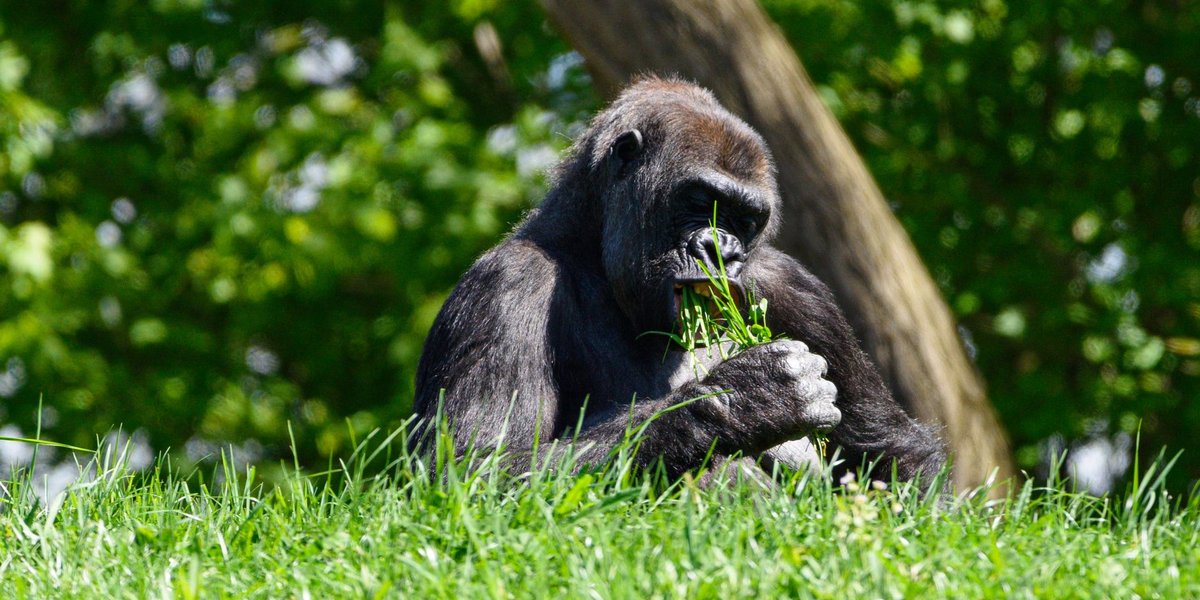
Grauer’s gorillas — also called eastern lowland gorillas — are almost entirely herbivorous, working through roughly 100 different plant species across their range in the Democratic Republic of the Congo. An adult male can eat up to 18 kg (about 40 lbs) of vegetation in a single day, which is a lot of chewing for an animal that spends most of its waking hours doing exactly that.
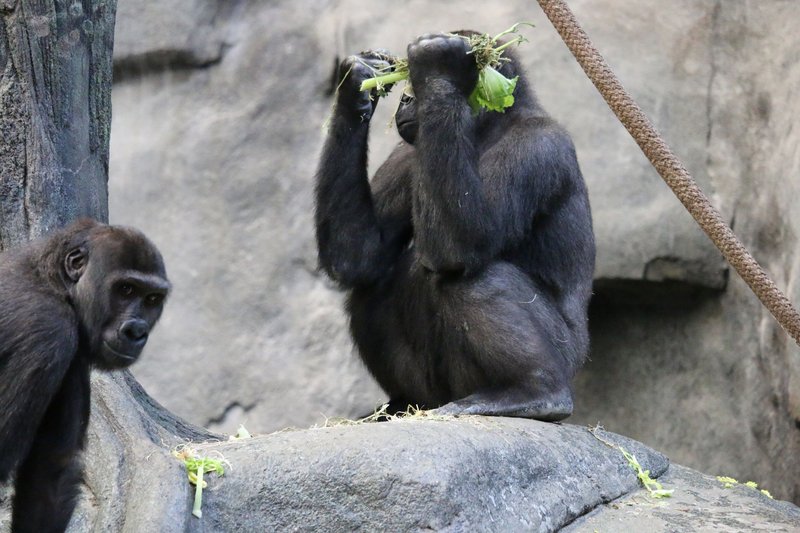
The bulk of the diet is leaves, stems, pith, and bark — the unglamorous, fiber-heavy stuff that’s available year-round in the Congo Basin’s forests. Fruit and insects round things out, but they’re supplements, not staples, and how much of each a gorilla gets depends heavily on where in Kahuzi-Biega National Park it happens to live.
What’s actually on the menu
Researchers working in Kahuzi-Biega — the park most closely tied to Grauer’s gorilla feeding studies — have catalogued close to 100 plant species in the diet, but a handful of categories do most of the work:
- Leaves and shoots — the daily bread. Available constantly, low in sugar, high in fiber.
- Pith — the soft interior tissue of stems, especially from herbaceous plants like Marantochloa and wild celery relatives. Gorillas strip the tough outer layer and eat the core.
- Bark — chewed off trees and vines, particularly when other food is thin.
- Roots — dug up opportunistically, more common in the lowland forests where soil is easier to work.
- Bamboo shoots — a seasonal treat where bamboo grows, similar to what mountain gorillas rely on more heavily further east.
- Fruit — the smallest category by volume most of the year, but the most calorie-dense.
That list reads similarly to other gorilla subspecies, but the proportions are what set Grauer’s gorillas apart, and those proportions shift depending on the season and the elevation a given group calls home.
Fruit season changes everything
Fruit availability in the Congo Basin isn’t steady — it peaks roughly from September through December, and Grauer’s gorillas track it closely. During peak fruiting months, groups will travel further and range wider specifically to hit fruiting trees, something they don’t bother doing during the leaner months when fruit is scarce.
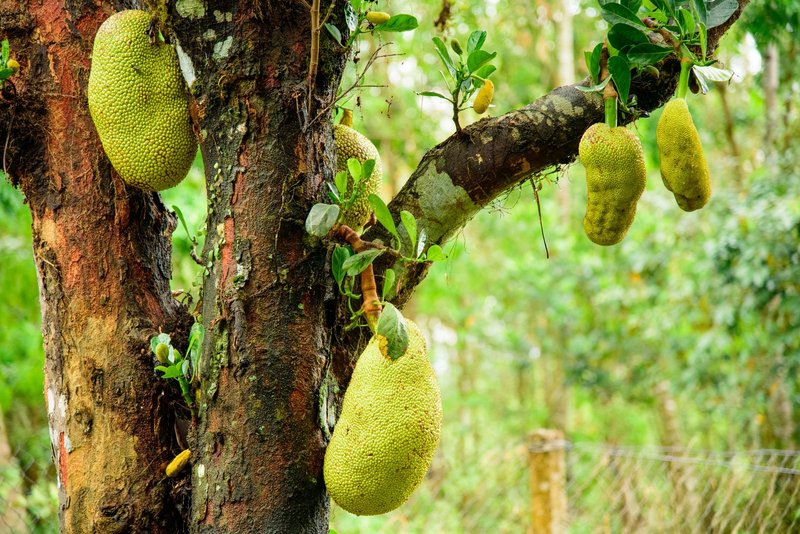
Outside that window, the gorillas fall back on the leaf-and-pith baseline that’s reliably available no matter the season. This flexibility is part of why Grauer’s gorillas can survive in forest that would starve a more fruit-dependent species — chimpanzees in the same forests, for comparison, struggle far more during lean months because fruit makes up a much larger share of their diet year-round.
The insect side dish
Grauer’s gorillas eat insects, but not in the way people picture when they hear “primate diet includes insects.” It’s not active hunting — it’s incidental protein, picked up along the way. Ants and termites are the most common, usually pulled from rotting wood or disturbed soil while a gorilla is already digging around for roots or pith.
Earthworms and, occasionally, small lizards show up too, though far less often. None of this adds up to a meaningful protein source the way it might for, say, a chimpanzee raiding a termite mound with a tool. For gorillas, insects are more like the crunchy garnish on a meal that’s otherwise almost entirely plant matter.
Highland vs. lowland: two different diets, one species
This is the part most species profiles skip past, and it’s genuinely interesting: Grauer’s gorillas living in the highland sector of Kahuzi-Biega (the bamboo-forest zone around Mount Kahuzi and Mount Biega) eat noticeably differently than the ones in the lowland sector further from the peaks.
Highland groups lean harder on bamboo shoots and herbaceous vegetation — a diet that looks closer to what mountain gorillas eat, since the habitat itself is similar high-altitude bamboo and Afromontane forest. Lowland groups, by contrast, have access to a much wider variety of fruiting tree species and richer soil for root-digging, so their diet skews more toward fruit and root matter when it’s in season.
The practical upshot: two Grauer’s gorilla groups living in the same national park, separated by elevation, can be eating fundamentally different meals on any given day. It’s a reminder that “diet of a species” is really shorthand for “diet of whichever population you happened to study.”
Why they barely drink water
Gorillas — Grauer’s included — get the overwhelming majority of their hydration from the food itself. Leaves, pith, and fruit are all high in water content, and a diet built around 18 kg of that material a day comes with a built-in water supply. Standing water sources are scarce and scattered through much of their range, so evolution solved the problem by making the gorillas mostly independent of them.
Direct drinking does happen — usually after rain, from puddles or leaf-collected water — but it’s the exception, not a daily habit. If you’re picturing a gorilla trekking to a river every morning, that’s not the reality; the river, functionally, is already in the salad.
How Grauer’s gorillas compare to other gorillas
| Feature | Grauer’s gorilla (eastern lowland) | Mountain gorilla | Western lowland gorilla |
|---|---|---|---|
| Primary food | Leaves, pith, stems | Leaves, bamboo shoots, herbs | Fruit, leaves, seeds |
| Fruit as % of diet | Moderate, seasonal | Low — bamboo-heavy | High — fruit-dominant |
| Daily food intake | Up to 18 kg | Roughly 18–30 kg of bulky vegetation | Somewhat less bulk, higher fruit ratio |
| Insects eaten | Occasional (ants, termites) | Rare | More frequent, includes termite fishing |
| Habitat driver | Mixed lowland/highland forest | High-altitude bamboo forest | Dense lowland rainforest |
The pattern across all three: gorillas eat what their specific forest offers, and fruit availability is the biggest lever. Western lowland gorillas, living in forests with far more fruiting tree diversity, end up the most fruit-dependent of the three. Mountain gorillas, stuck at altitude with limited fruit trees, lean almost entirely on foliage and bamboo. Grauer’s gorillas sit in the middle — which tracks, since their range itself spans both lowland and highland habitat.
Diet and the conservation problem
Diet isn’t just a biology footnote for Grauer’s gorillas — it connects directly to why the subspecies is critically endangered. Habitat loss from logging, mining, and agricultural expansion in the DRC shrinks the pool of the roughly 100 plant species these gorillas rely on, and a species that depends on that much dietary variety doesn’t adapt well to having its options cut in half.
It also feeds a more direct conflict: as forest shrinks, gorilla groups increasingly range closer to farmland, and crop-raiding becomes a flashpoint between conservation goals and the livelihoods of people living near Kahuzi-Biega. The IUCN lists Grauer’s gorillas as Critically Endangered, with population declines tied directly to this kind of habitat pressure. Understanding what they eat isn’t trivia — it’s the baseline data conservationists in the region use to figure out how much intact forest a viable population actually needs.
Final thoughts
Grauer’s gorillas eat like an animal built to survive on abundance rather than chase scarcity: a huge, flexible menu of leaves, pith, bark, and roots that’s available no matter the season, topped off with fruit when the forest offers it and the occasional termite for good measure. The highland-lowland split within Kahuzi-Biega is the detail worth remembering — it’s a reminder that a “species diet” is really a patchwork of local adaptations, and for a subspecies this endangered, protecting that patchwork of forest is the whole ballgame.