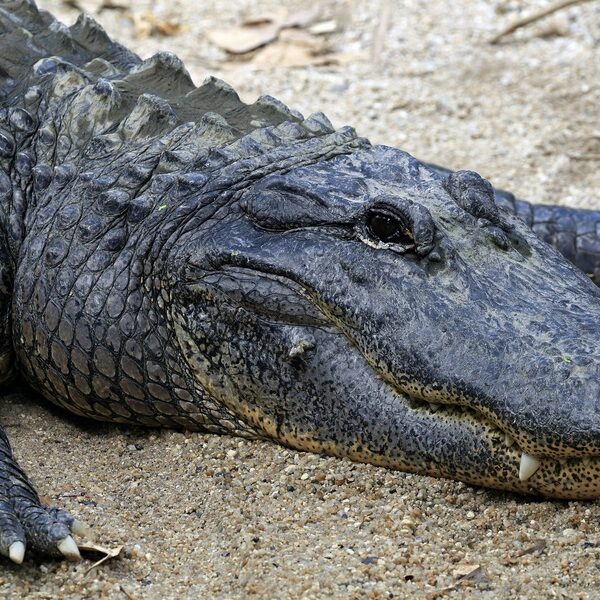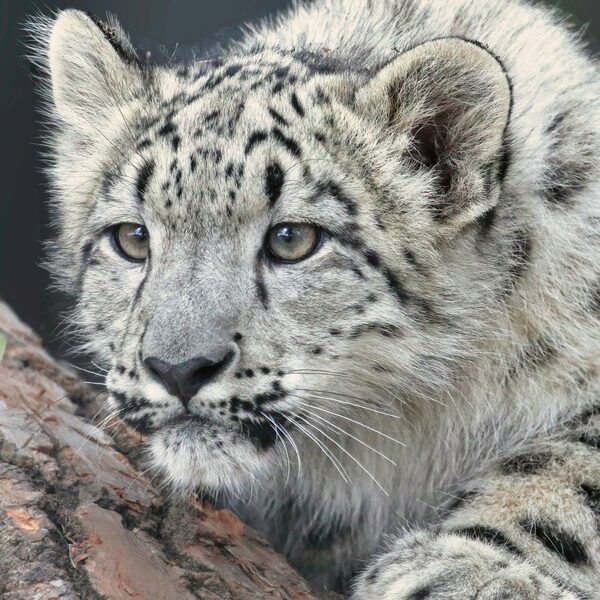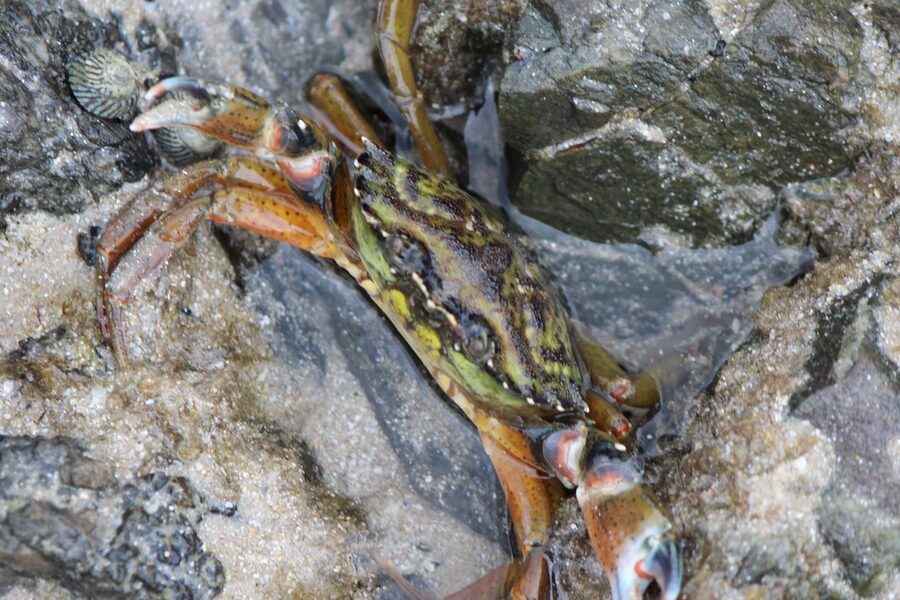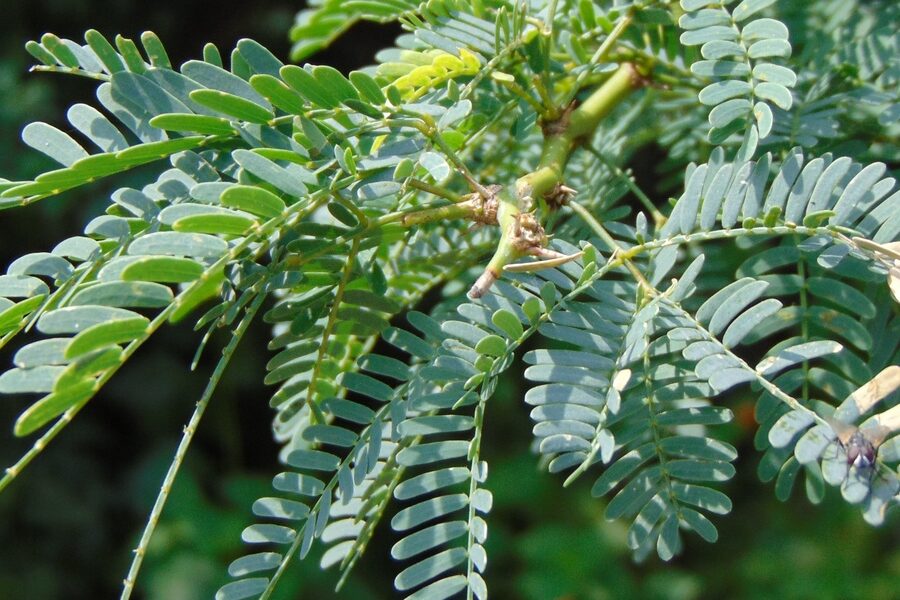
Atlanta’s mix of neighborhoods, parks and waterways creates many entry points for nonnative plants and animals. Some arrive accidentally on landscaping materials or in cargo, others spread from nearby ponds and stormwater systems, and together they can change habitat, crowd out native species, or create nuisance problems for residents.
There are 28 Invasive Species in Atlanta, ranging from Asian tiger mosquito to Water hyacinth. For each species, entries are organized as Scientific name,Type,Distribution & abundance so you can see what each organism is, how it’s classified, and where it’s found — you’ll find below.
How should I report a suspected invasive species I find in Atlanta?
If you spot something unusual, document it with photos (including close-ups and habitat shots), note the location, and submit the report to Georgia DNR or upload it to iNaturalist with the “Georgia” project tag; local extension offices and city environmental departments also accept reports and can advise on next steps.
What immediate steps can residents take to reduce spread around their property?
Simple actions help: remove standing water to cut mosquito breeding, avoid planting known invasive ornamentals, clean gear and mulch between sites, and contact a local extension agent before attempting large removals so disposal and control follow best practices.
Invasive Species in Atlanta
| Name | Scientific name | Type | Distribution & abundance |
|---|---|---|---|
| Kudzu | Pueraria montana var. lobata | Plant | Fulton, DeKalb, roadsides; very common |
| Chinese privet | Ligustrum sinense | Plant | Urban edges, BeltLine, Decatur; very common |
| Japanese honeysuckle | Lonicera japonica | Plant | Woodland edges, yards, BeltLine; common |
| English ivy | Hedera helix | Plant | Buckhead trees, yards, parks; common |
| Japanese stiltgrass | Microstegium vimineum | Plant | Forest floors, greenways, Piedmont Park; common |
| Chinese tallow | Triadica sebifera | Plant | Vacant lots, stream banks, metro fringe; common |
| Tree-of-heaven | Ailanthus altissima | Plant | Roadsides, sidewalks, urban lots; common |
| Callery (Bradford) pear | Pyrus calleryana | Plant | Streetscapes, suburbs; common |
| Autumn olive | Elaeagnus umbellata | Plant | Trailsides, edges, northern suburbs; locally common |
| Oriental bittersweet | Celastrus orbiculatus | Plant | Woodland edges, powerlines, parks; common |
| Porcelain berry | Ampelopsis brevipedunculata | Plant | Urban lots, river corridors; common |
| Multiflora rose | Rosa multiflora | Plant | Fields, edges, rail corridors; common |
| Burning bush | Euonymus alatus | Plant | Yards, vacant lots, suburbs; common |
| Garlic mustard | Alliaria petiolata | Plant | Shady yards, trails, Piedmont Park edges; scattered but established |
| Japanese knotweed | Reynoutria japonica | Plant | Stream banks, disturbed lots; localized but persistent |
| Hydrilla | Hydrilla verticillata | Aquatic plant | Lake Lanier, reservoirs, Chattahoochee; common in many water bodies |
| Eurasian watermilfoil | Myriophyllum spicatum | Aquatic plant | Reservoirs, ponds near Atlanta; present |
| Water hyacinth | Eichhornia crassipes | Aquatic plant | Slow-moving Chattahoochee arms, ponds; intermittent outbreaks |
| Common carp | Cyprinus carpio | Fish | Urban lakes, reservoirs; common |
| Asian tiger mosquito | Aedes albopictus | Insect | Citywide, residential areas; very common |
| Imported fire ant | Solenopsis invicta | Insect | Lawns, parks, construction sites; very common |
| Emerald ash borer | Agrilus planipennis | Insect | Urban ash trees across metro; established |
| Norway rat | Rattus norvegicus | Mammal | Downtown, alleys, sewers; very common |
| House mouse | Mus musculus | Mammal | Homes, businesses citywide; very common |
| Feral hog | Sus scrofa | Mammal | Perimeter counties, greenbelts; locally common in outskirts |
| European starling | Sturnus vulgaris | Bird | Downtown, parks, rooftops; very common |
| House sparrow | Passer domesticus | Bird | Urban neighborhoods, businesses; very common |
| Common reed (Phragmites) (non-native lineage) | Phragmites australis (introduced lineage) | Plant | Wetlands, marsh edges, some reservoirs; patchy but expanding |
Images and Descriptions
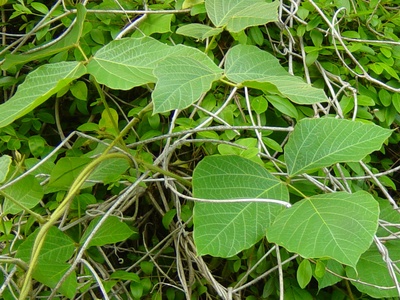
Kudzu
Vine with trifoliate leaves and purple pea-flowers that smothers trees and structures. Causes erosion control problems and biodiversity loss. Pull small plants, cut/vine-wrap stems, or herbicide for large stands; report new patches to local extension or parks.
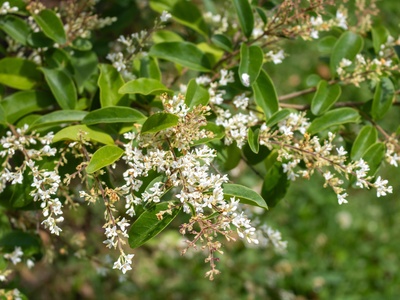
Chinese privet
Multi-stem shrub with small white flowers and black fruit; forms dense thickets shading native plants. Remove seedlings by hand, cut larger plants and apply systemic herbicide to stumps; report on iNaturalist/GA plant groups for mapping.
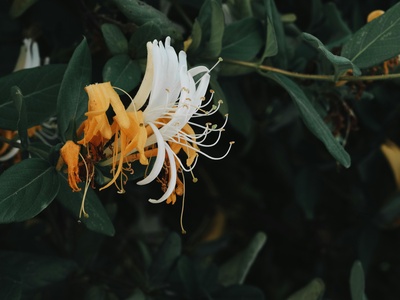
Japanese honeysuckle
Twining vine with opposite leaves and fragrant tubular flowers; climbs and strangles natives. Pull small patches, regularly cut and herbicide-treat crowns for control; report persistent infestations to local land managers.
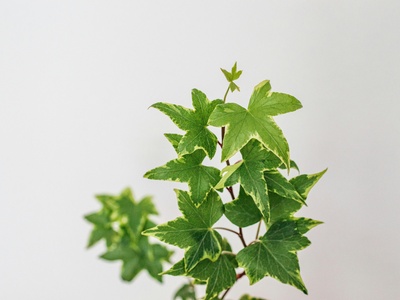
English ivy
Evergreen vine with lobed leaves; climbs trunks and can girdle trees, promoting rot. Pull vines at base, remove aerial stems, dispose of removed roots; avoid composting; report large infestations in parks to park authorities.
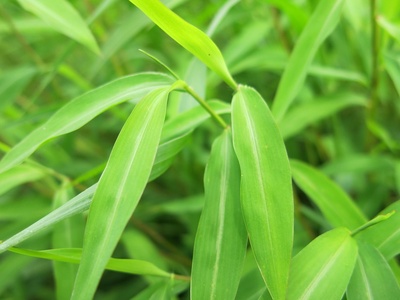
Japanese stiltgrass
Shallow annual grass with silvery midrib; forms dense carpets that crowd seedlings. Hand-pull or mow before seed set, use prescribed burn or targeted herbicide in larger patches; report to county extension for mapping.
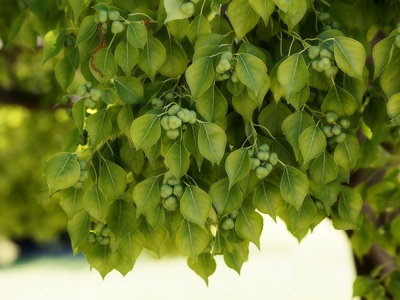
Chinese tallow
Small tree with heart-shaped leaves turning bright fall colors; prolific seed producer creating monotypic stands. Cut-and-treat stumps with herbicide or dig small saplings; report expanding patches to conservation groups.

Tree-of-heaven
Fast-growing tree with pinnate leaves and malodorous sap; aggressively sprouts from roots and seeds, displacing natives. Cut and immediately treat stumps with systemic herbicide; report seedling outbreaks to local parks.
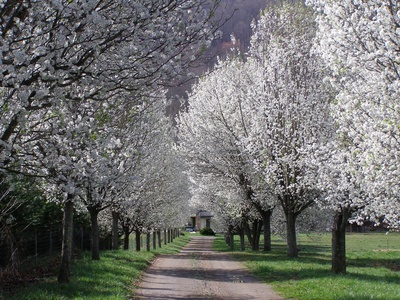
Callery (Bradford) pear
Showy spring flowers and thorny branches; cultivars escape and crossbreed creating invasive populations. Remove and replace with native trees; cut stump-cutting plus herbicide prevents resprouts; report wild seedlings to city tree programs.
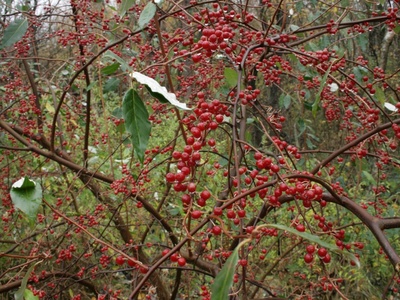
Autumn olive
Shrub with silvery underside leaves and red fruits eaten by birds spreading seeds; displaces natives. Pull seedlings or dig roots when small; cut-and-treat larger shrubs; report stands to extension services.
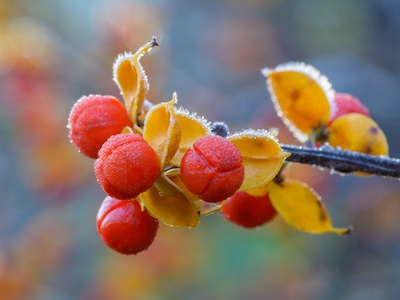
Oriental bittersweet
Woody vine with round berries that girdles and topples trees. Cut vines and apply herbicide to root crowns; repeatedly remove sprouts and report to land managers.
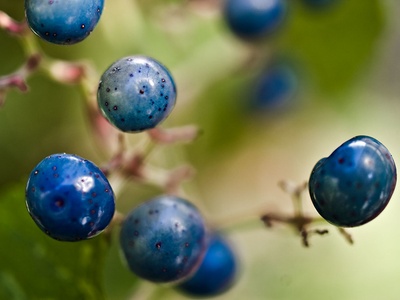
Porcelain berry
Vining grape-like plant producing blue berries; smothers shrubs and trees. Hand-pull small vines; sever and treat large vines with herbicide; document sightings for local invasive plant maps.
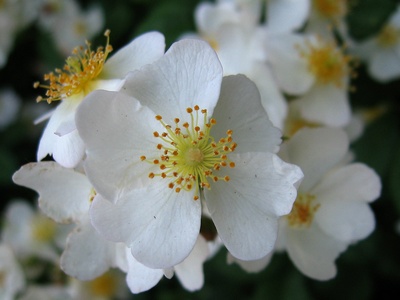
Multiflora rose
Thorny shrub forming impenetrable thickets with white clusters of flowers. Cut and treat stumps, repeated mowing, or systemic herbicide; report large infestations to land managers.
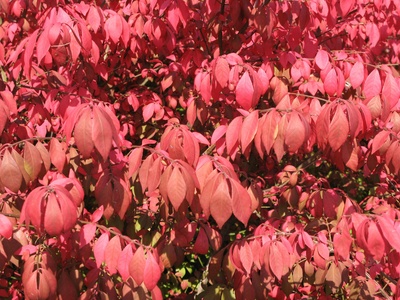
Burning bush
Small shrub with corky bark and bright red fall color; spreads along edges via birds. Pull young plants, dig roots or cut-and-treat older bushes; avoid planting and report escapees to extension.
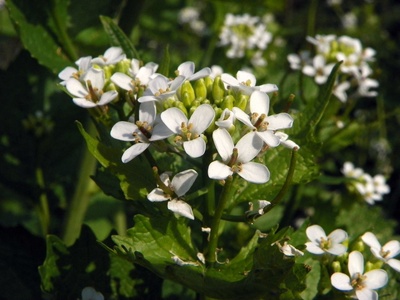
Garlic mustard
Biennial herb with scalloped leaves and white flowers; outcompetes forest seedlings. Hand-pull before seeding and bag plants; repeated control required; report persistent patches to park stewards.
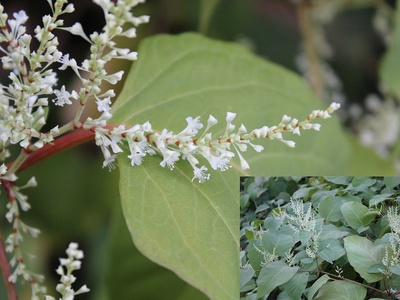
Japanese knotweed
Bamboo-like hollow stems with large leaves forming dense stands that undermine banks. Mechanical removal often fails; dig roots thoroughly and use targeted herbicide; report populations to waterway managers.
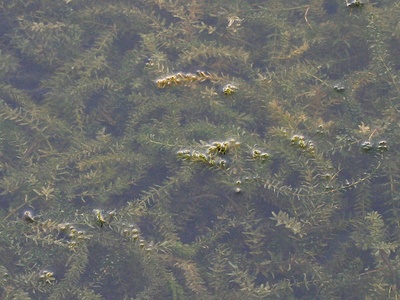
Hydrilla
Dense submerged whorled leaves choking boat lanes and native plants. Report sightings to GA DNR; clean, drain, dry boats; professional herbicide or mechanical removal by authorities is usually required.
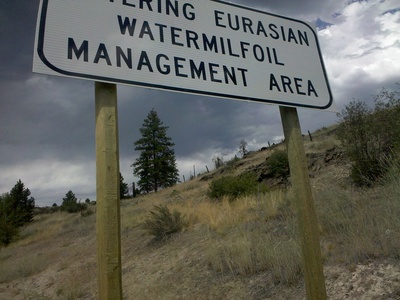
Eurasian watermilfoil
Feathery submerged plant forming mats that hinder recreation and displace natives. Report to GA DNR, avoid moving plant fragments, clean boats, and follow local lake management control plans.
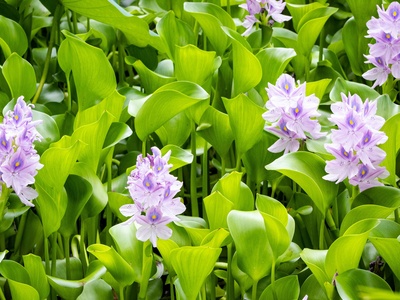
Water hyacinth
Free-floating plant with glossy leaves and purple flowers forming dense mats that reduce oxygen. Scoop small patches, report to authorities, and follow local removal programs; never release aquarium plants.
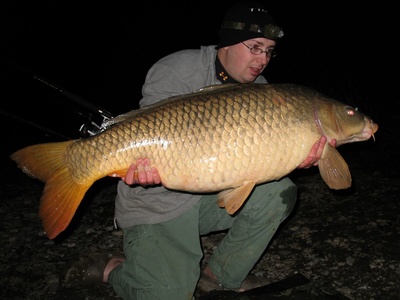
Common carp
Large, bottom-feeding fish that uproots vegetation and clouds water. Discourage stocking, report illegal introductions, and support lake managers using netting or targeted removal programs.
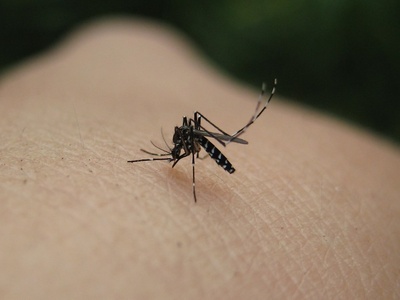
Asian tiger mosquito
Small black-and-white mosquito active day and night; aggressive biter and disease vector. Eliminate standing water, use repellents, report unusual disease activity to public health; local mosquito control handles population control.
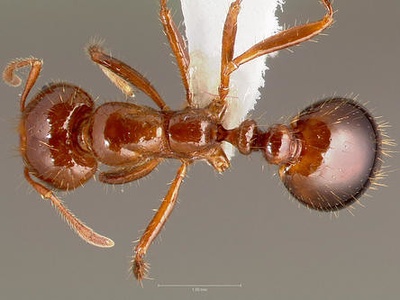
Imported fire ant
Aggressive red ants forming mounds that sting people and wildlife; displace native ants. Bait treatments, mound drenching with labeled insecticide, and report major infestations to extension services.
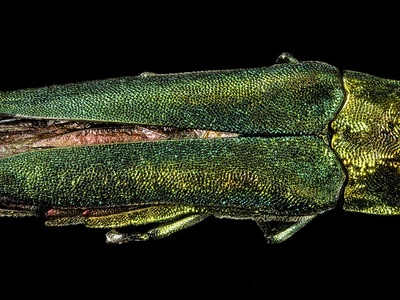
Emerald ash borer
Metallic green beetle that kills ash trees; D-shaped exit holes and canopy thinning are signs. Report suspect ash mortality to GA Forestry Commission; local municipalities may implement removals and quarantines.
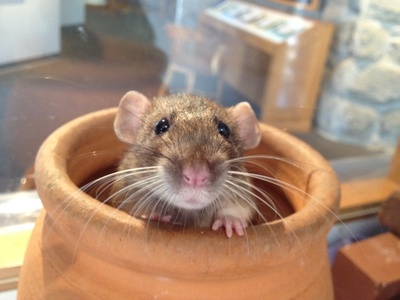
Norway rat
Large gray rat with blunt nose causing property damage, contamination, and disease risk. Reduce food/water access, seal entry points, use traps/baits safely; report severe infestations to health department or pest control.
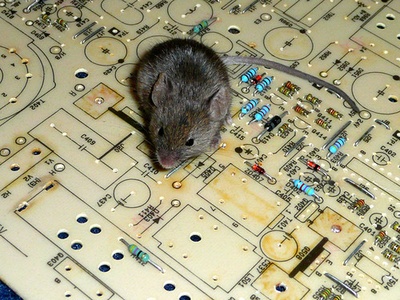
House mouse
Small, nocturnal rodent causing food contamination and damage. Seal gaps, remove food sources, set traps, and call pest professionals for heavy infestations; report public-health concerns.
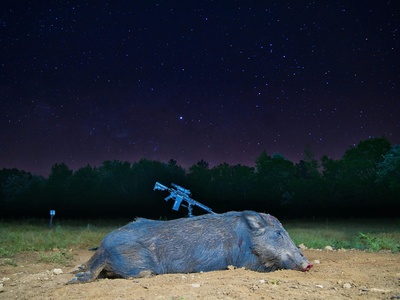
Feral hog
Rooting omnivore that damages landscapes, spreads disease, and competes with wildlife. Do not approach; report sightings to county wildlife or extension; professional removal/trapping programs required.
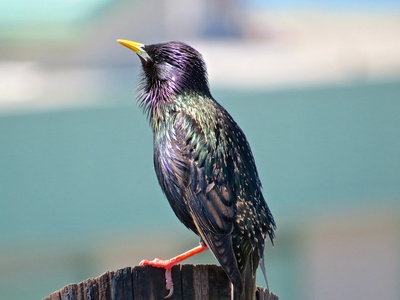
European starling
Glossy black bird in tight flocks causing crop damage, displacing native cavity nesters. Exclusion at roost sites, nestbox management, and report roost problems to local wildlife authorities for mitigation.
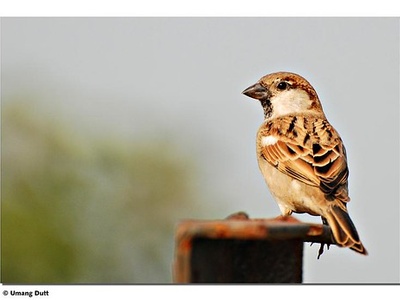
House sparrow
Small, blunt-billed bird associated with people; competes with native songbirds and nesting sites. Remove food sources, exclude nest sites, and report severe colony issues to local wildlife control.
Common reed (Phragmites) (non-native lineage)
Tall perennial grass forming dense stands that displace native wetland plants and alter hydrology. Cut before seeding and follow herbicide/monitoring plans by wetland managers; report infestations to conservation agencies.