From sunlit canopy to underbrush and suburban edges, orange-toned snakes show up in a surprising variety of habitats and can tell you a lot about local ecology and food webs. Seeing an orange snake might mean anything from a harmless burrower to a species that prefers warm, humid forests.
There are 13 orange snakes, ranging from the Amazon Tree Boa to the Texas Blind Snake. For each species, entries are organized as Scientific name,Range,Venom (risk) — you’ll find below.
Are any of these orange snakes dangerous to people?
A few species with orange coloration belong to venomous groups, but risk varies: some deliver medically significant bites while others are rear-fanged or essentially harmless. Check the Venom (risk) column in the list for quick guidance, and treat unfamiliar snakes with caution and distance.
How can I tell similarly colored orange snakes apart in the field?
Look beyond color: note size, scale patterns, head shape, habitat, and behavior, and compare those to the Scientific name and Range info in the table below; photos and local field guides are the fastest way to confirm identity.
Orange Snakes
| Name | Scientific name | Range | Venom (risk) |
|---|---|---|---|
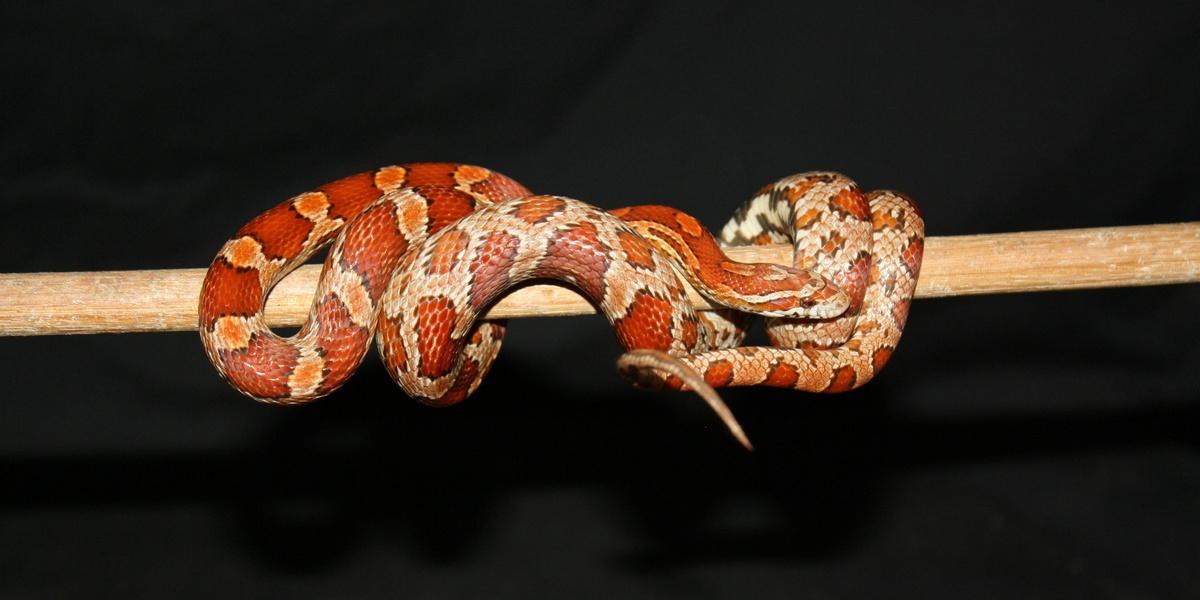
| Corn Snake | Pantherophis guttatus | Southeastern United States | No (low) — nonvenomous constrictor |
| Scarlet Kingsnake | Lampropeltis elapsoides | Southeastern United States | No (low) — nonvenomous |
| Milk Snake | Lampropeltis triangulum | North and Central America (varied) | No (low) — nonvenomous |
| Brazilian Rainbow Boa | Epicrates cenchria | Amazon Basin, northern South America | No (low) — nonvenomous constrictor |
| Amazon Tree Boa | Corallus hortulanus | Amazon Basin, South America | No (low) — nonvenomous constrictor |
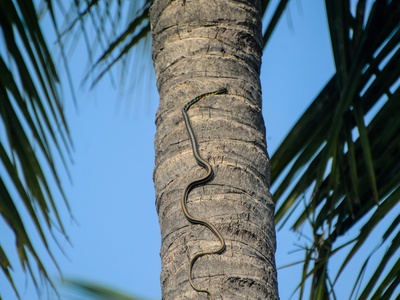
| Paradise Tree Snake | Chrysopelea paradisi | Southeast Asia and the Philippines | Yes (low) — rear-fanged, mild venom to humans |
| Golden Tree Snake | Chrysopelea ornata | South and Southeast Asia | Yes (low) — rear-fanged, mild venom to humans |
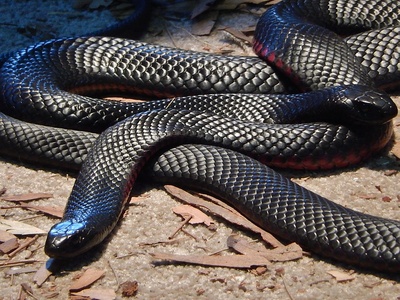
| Red-bellied Black Snake | Pseudechis porphyriacus | Eastern Australia | Yes (medium) — medically significant bite possible |
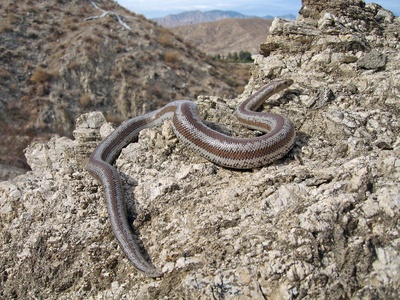
| Rosy Boa | Lichanura trivirgata | Southwestern United States, Baja California | No (low) — nonvenomous |
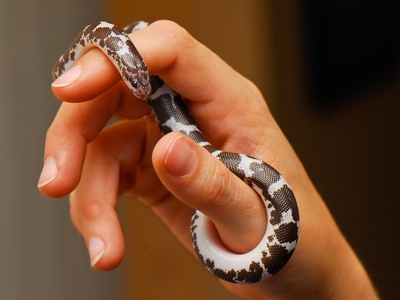
| Kenyan Sand Boa | Eryx colubrinus | East Africa (Kenya, Tanzania, nearby) | No (low) — nonvenomous |
| Texas Blind Snake | Rena humilis | Southwestern United States to Mexico | No (low) — nonvenomous |
| Scarlet Snake | Cemophora coccinea | Southeastern United States | No (low) — nonvenomous |
| Eastern Coral Snake | Micrurus fulvius | Southeastern United States and nearby islands | Yes (high) — neurotoxic, potentially life-threatening |
Images and Descriptions
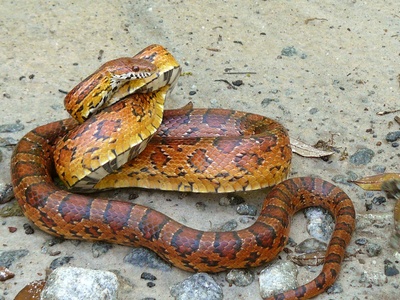
Corn Snake
Classic orange to reddish background with dark, saddle-shaped blotches edged in black; lives in fields, woodlands and farms and often near barns; docile constrictor that eats rodents and is commonly mistaken for venomous species by novices.
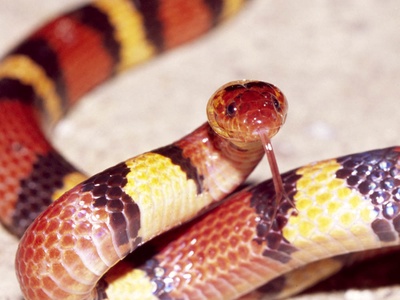
Scarlet Kingsnake
Bright red-orange bands separated by black and yellow rings; secretive in pine woods and leaf litter; a small kingsnake that mimics coral snake banding, eats other snakes, and is harmless to people.
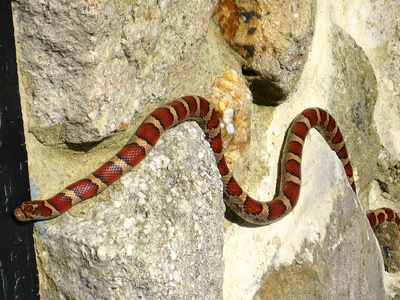
Milk Snake
A variable species with subspecies showing red-to-orange bands or blotches; found in fields, rocky edges and woodlands; nonvenomous constrictor that often mimics venomous species—band pattern and head shape help ID.

Brazilian Rainbow Boa
Deep orange to reddish body with round dark spots and a strong iridescent sheen; nocturnal rainforest boa that climbs and hides near rivers; striking glossy orange coloration and heavy-bodied appearance distinguish it.
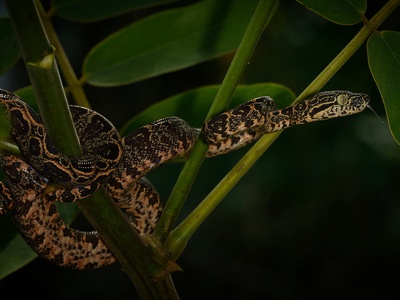
Amazon Tree Boa
Highly variable species with natural orange, red and yellow phases and dark markings; an arboreal, nocturnal ambush predator found in swamp and forest canopy; prehensile body and heat-sensing pits help identification.
Paradise Tree Snake
Small, arboreal “flying” snake often showing orange, red and black patterning; actively climbs trees and walls and can glide between branches; venom is mild for humans but effective on small prey.

Golden Tree Snake
Slender, arboreal snake with striking orange, black and greenish patterning; known to glide short distances, it hunts frogs and lizards in trees and shrubs; mild venom but generally not dangerous to people.
Red-bellied Black Snake
Glossy dark dorsal scales with a vivid red-to-orange belly and throat; common near water in forests and urban fringes; venom can cause severe symptoms so bites need medical attention though fatalities are rare with treatment.
Rosy Boa
Stout, slow-moving boa often showing pinkish-orange or brown stripes against a lighter background; favors rocky deserts and arid slopes, shelters in crevices, and is a small, docile constrictor popular for its natural rosy-orange tones.
Kenyan Sand Boa
Fossorial sand-dweller with natural orange to tan base color and darker saddles; rarely seen above ground, it burrows in sandy soils and ambushes small mammals and lizards; compact, blunt-headed body suited to digging.
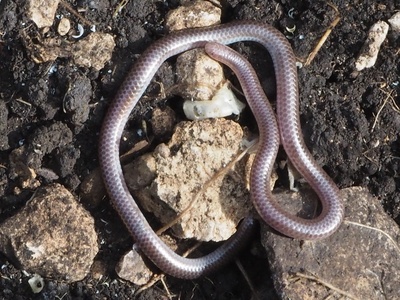
Texas Blind Snake
Tiny, worm-like fossorial snake with translucent pinkish-orange scales; lives underground in loose soil and leaf litter, feeds on ants and termites; easily mistaken for an earthworm but is a harmless, true snake.
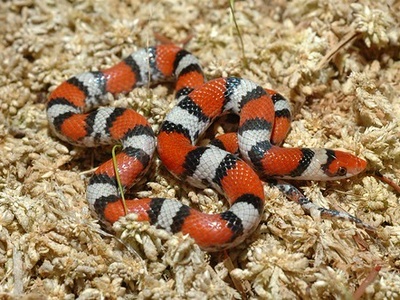
Scarlet Snake
Smooth, glossy scales with red-orange blotches on a gray background and a pale belly; secretive burrower preferring sandy soils and pinewoods; nonvenomous ophiophagous species that feeds on eggs and small reptiles.
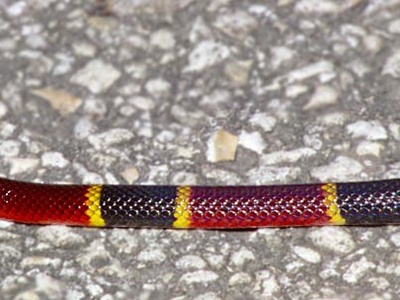
Eastern Coral Snake
Distinctive rings of red (often red-orange), yellow and black encircling the body; secretive in forests, dunes and hammocks; highly venomous elapid—avoid handling and seek immediate medical care for bites.