
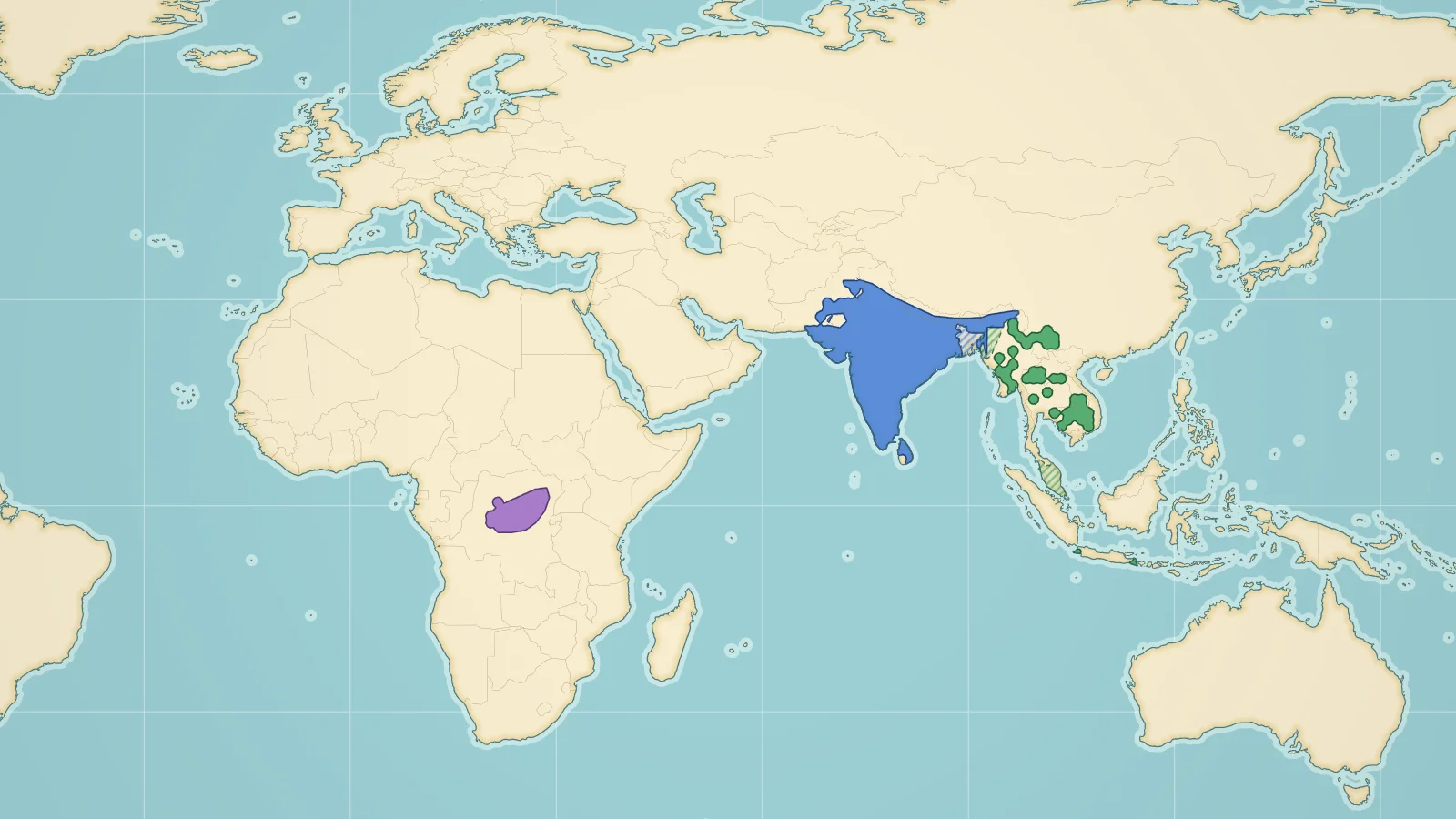
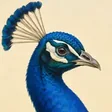

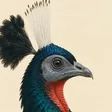
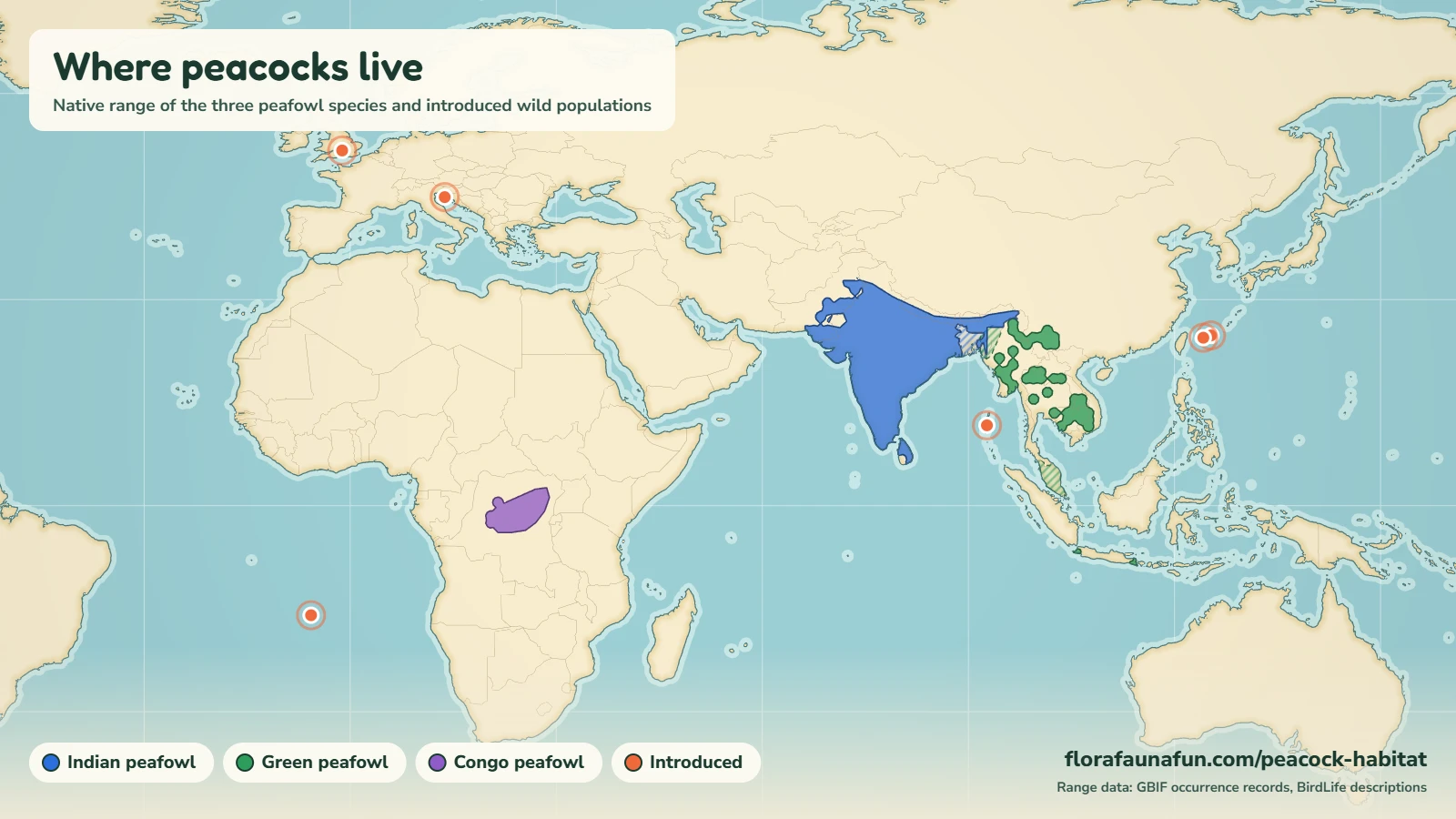
Wild peacocks live in two parts of the world: South and Southeast Asia, and one block of rainforest in central Africa. "Peacock" is the name for the male; the birds are peafowl, and there are three species. Each lives in a different habitat. The map above shows all three native ranges, plus the places where escaped birds now live wild.
Peacock habitat at a glance
| Species | Native to | Habitat | Status |
|---|---|---|---|
| Indian peafowl | India, Sri Lanka, Pakistan, Nepal, Bhutan | Dry deciduous forest, scrub near water, farmland | Least Concern |
| Green peafowl | Myanmar, Thailand, Laos, Cambodia, Vietnam, southern China, Java | Dry forest near rivers, evergreen forest, bamboo and grassland | Endangered |
| Congo peafowl | Democratic Republic of the Congo | Lowland rainforest | Near Threatened |
Indian peafowl: forest edges, farms and villages
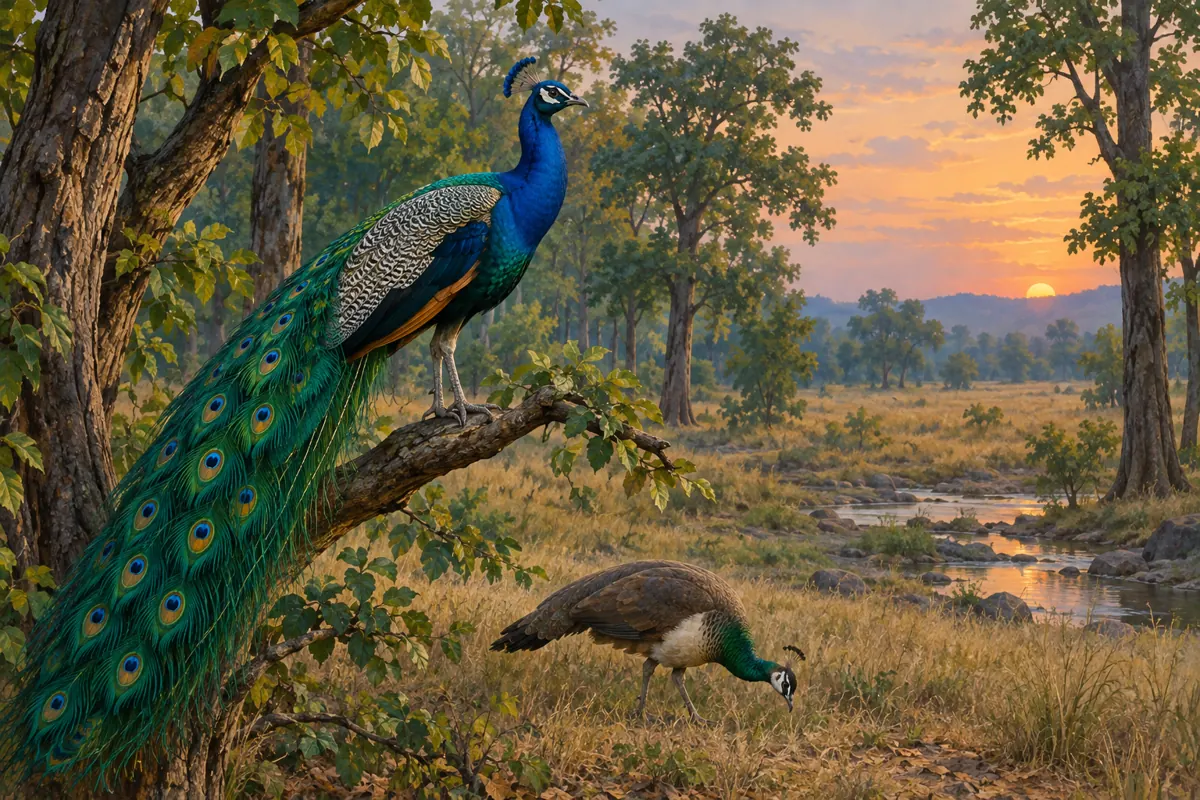
The Indian peafowl (Pavo cristatus) is the blue peacock most people picture, and it is India's national bird. Its range runs from the Himalayan foothills to the southern tip of India and across the dry lowlands of Sri Lanka, with smaller populations in Pakistan, Nepal and Bhutan. It lives up to about 1,800 m.
Its ideal habitat is dry deciduous forest broken up by open ground and water. Peafowl feed on the ground in the morning and evening, shelter in thickets in the heat of the day and roost high in tall trees at night, so a good territory needs all three. They also do well on farmland and around villages, where they are rarely hunted. More than 100,000 birds live in the wild, and the species is not threatened.
Green peafowl: rivers of Southeast Asia
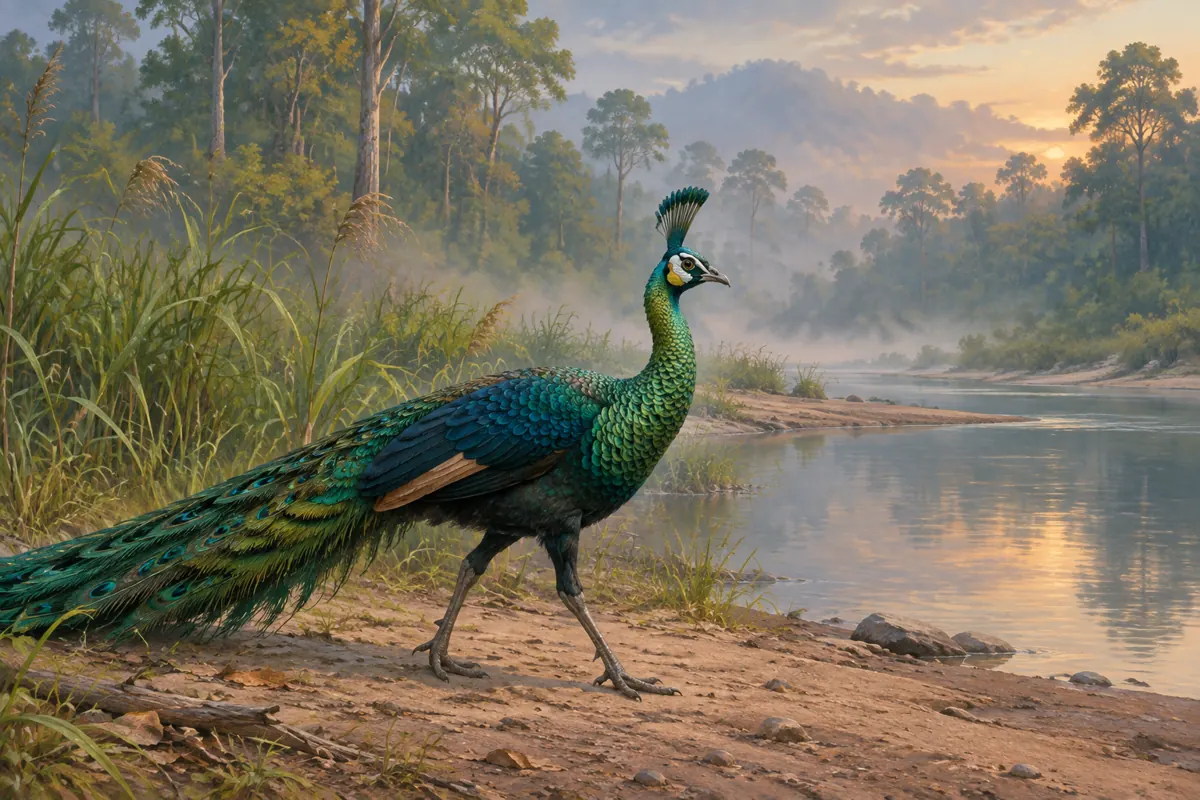
The green peafowl (Pavo muticus) once ranged from north-east India to Java. It now survives in scattered pockets in Myanmar, Thailand, Laos, Cambodia, Vietnam, Yunnan in southern China and Java. It has disappeared from Malaysia, Bangladesh and north-east India, and it is listed as Endangered.
Green peafowl favor dry deciduous forest close to rivers, along with tropical evergreen forest, grassland and bamboo. They avoid people, so they need large stretches of quiet forest. That is why most of the remaining birds live in protected areas such as Keo Seima in Cambodia, which held about 745 birds in 2020, and Yok Don and Cat Tien in Vietnam. A male can reach 3 m from beak to tail tip, most of it train.
Congo peafowl: Africa's rainforest peacock
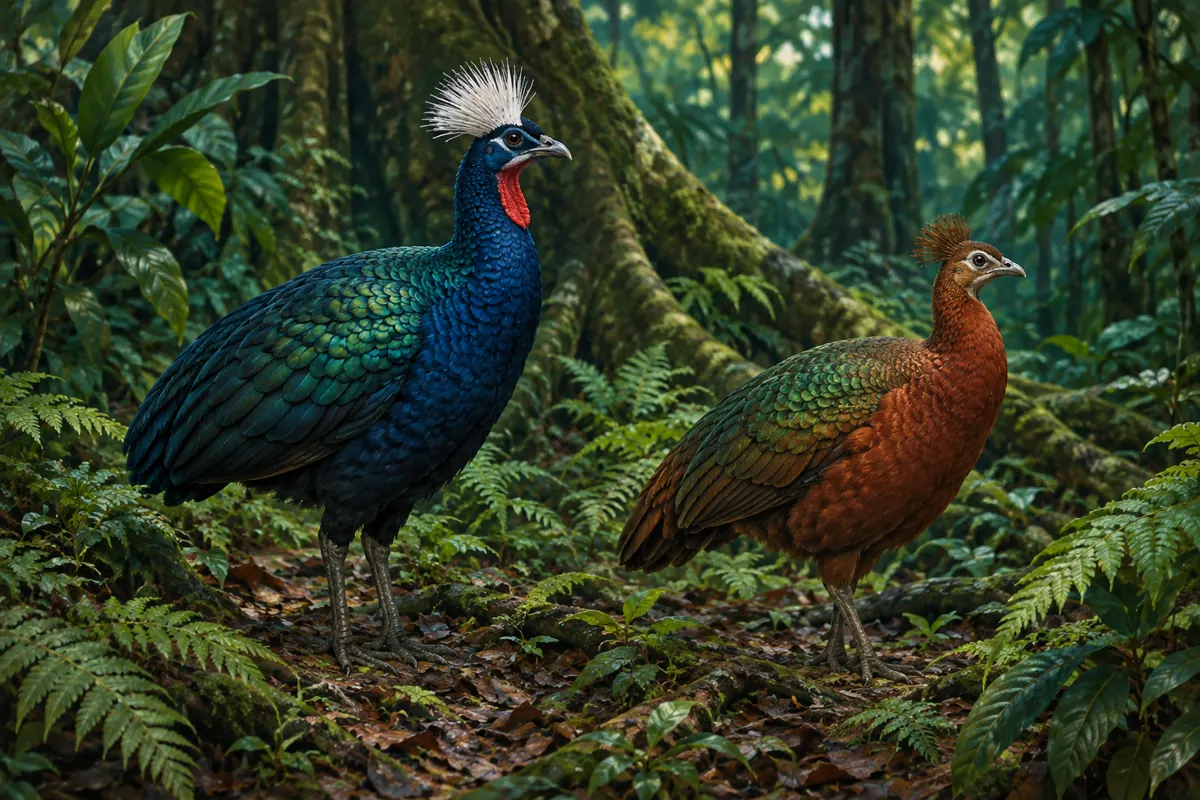
The Congo peafowl (Afropavo congensis) is the only peafowl native to Africa, and it lives in one country: the Democratic Republic of the Congo. Its habitat is lowland rainforest in the central Congo Basin, including Salonga and Maiko national parks, where it uses old forest, regrowing forest near streams and low ridges between rivers.
It looks nothing like its Asian relatives. The male is compact and dark blue-green, with a short tail and no train. Scientists only identified it in 1936, when the American ornithologist James Chapin matched a mystery feather to two mounted birds in a Belgian museum. Between 2,500 and 9,000 adults remain, and it is listed as Near Threatened.
Where peacocks live outside their native range
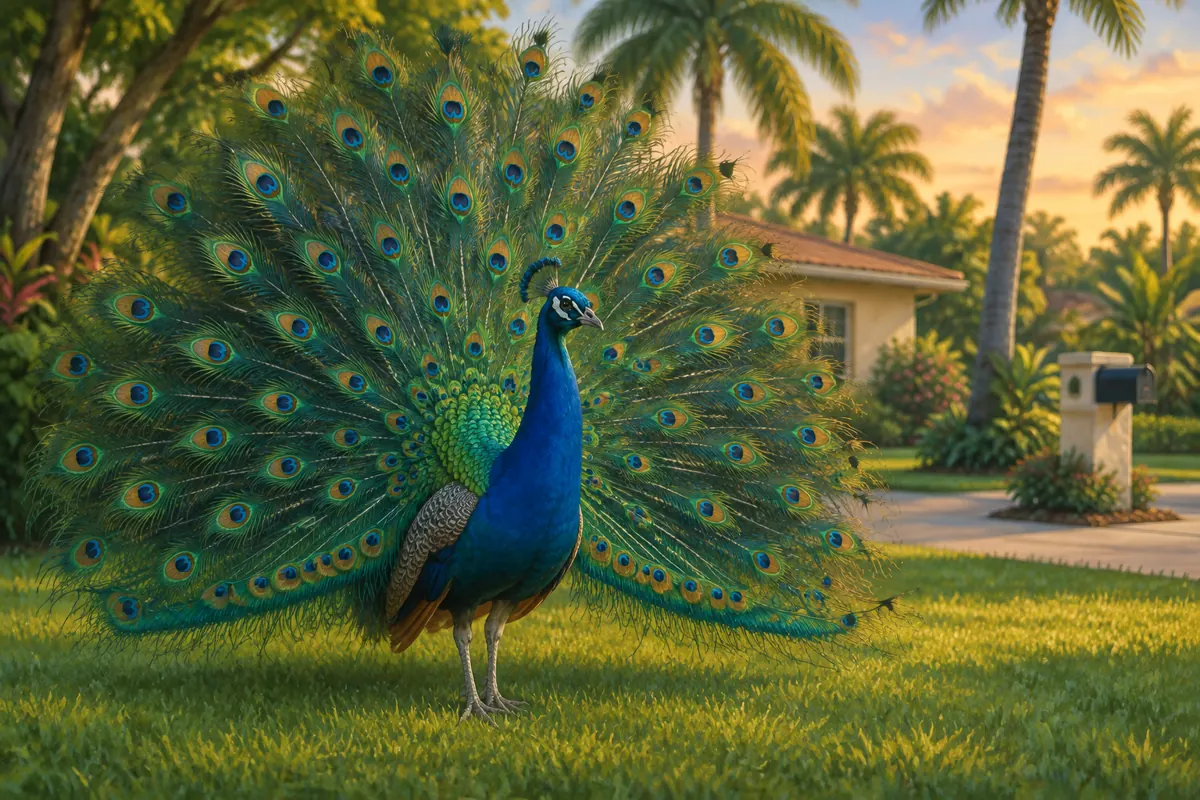
People have kept Indian peafowl as ornamental birds for thousands of years, and escaped birds have founded wild flocks far from Asia. These birds are introduced, not native. The best known populations are:
- Hawaii: peafowl reached Kauai in 1860, the first introduction in what is now the United States, and now live on Oahu, Maui and Hawaii Island too.
- California: the Arcadia and Palos Verdes flocks near Los Angeles trace back to birds imported from India in 1879.
- Florida and Texas: neighborhood flocks live in Coconut Grove in Miami and in Houston's Heathwood area, which grew from a restaurant's birds in the late 1950s.
- Australia and New Zealand: on Rottnest and Kangaroo islands in Australia, and in parts of New Zealand's North Island, where peafowl have lived since the 1840s.
- Elsewhere: Abaco in the Bahamas, Robben Island in South Africa, the Brijuni Islands in Croatia and Japan's Miyako and Ishigaki islands, where feral peafowl prey on native reptiles and butterflies.
Frequently asked questions
Where are peacocks native to?
Peacocks are native to South Asia, Southeast Asia and central Africa. The Indian peafowl comes from India, Sri Lanka, Pakistan, Nepal and Bhutan. The green peafowl comes from Myanmar, Thailand, Laos, Cambodia, Vietnam, southern China and Java. The Congo peafowl comes from the Democratic Republic of the Congo.
Are peacocks native to North America?
No. Peacocks are not native to North America or anywhere in the Americas. The wild peacocks in Florida, California, Texas and Hawaii descend from Indian peafowl that people brought over and released or that escaped.
Where do peacocks live in the wild?
Wild peacocks live in forests close to water. Indian peafowl live in dry forest, scrub and farmland in South Asia, green peafowl in river forests of Southeast Asia and Congo peafowl in the rainforest of the Congo Basin.
Do peacocks live in the rainforest?
Only one species does. The Congo peafowl lives in lowland rainforest and the green peafowl uses some tropical evergreen forest, but the common Indian peafowl prefers drier, more open forest.
What continent are peacocks from?
Asia and Africa. Two species, the Indian and green peafowl, are Asian. The Congo peafowl is African.
Can peacocks live in cold climates?
Indian peafowl tolerate cold well if they have shelter and a high roost. Their native range reaches the Himalayan foothills, and a free-roaming flock has lived in the English village of Nuneham Courtenay for about 150 years.
Are peacocks endangered?
It depends on the species. The Indian peafowl is Least Concern, the green peafowl is Endangered and the Congo peafowl is Near Threatened.