Costa Rica packs a huge variety of ecosystems — rainforests, cloud forests, mangroves and dry forests — so its plant life is both rich and varied. Whether you’re planning a visit, studying tropical botany, or just curious, a concise list makes it easier to spot and compare common species across habitats.
There are 30 Plants of Costa Rica, ranging from Achiote to White mangrove. For each species the table shows Scientific name,Height (m),Habitat & where found; you’ll find below.
How can I use this list to identify plants in the field?
Use the Scientific name and typical Height (m) to narrow possibilities, then match the Habitat & where found to the ecosystem you’re in. Take photos of leaves, flowers and fruits, note size and location, and cross-check with this list or a regional field guide or ID app for confirmation.
Are any of these species legally protected or ecologically sensitive?
Some entries are widespread and common, while others (especially specialized cloud-forest or mangrove species) may be protected or locally vulnerable; check local regulations and conservation listings before collecting or disturbing plants.
Plants of Costa Rica
| Common name | Scientific name | Height (m) | Habitat & where found |
|---|---|---|---|
| Guanacaste | Enterolobium cyclocarpum | 25-35 | Dry forests; Pacific Nicoya and Guanacaste provinces |
| Ceiba | Ceiba pentandra | 40-60 | Lowland wet forests; Caribbean and Pacific regions |
| Balsa | Ochroma pyramidale | 15-30 | Secondary growth, forest gaps; lowland Caribbean and Pacific |
| Guaria morada | Guarianthe skinneri | 0.20-1 | Epiphytic on trunks and branches; lowlands to 1,500 m, widespread |
| Guarumo | Cecropia peltata | 10-20 | Disturbed sites, secondary forests; widespread lowland regions |
| Strangler fig | Ficus aurea | 10-30 | Lowland wet forests; riverbanks and riparian zones |
| Red mangrove | Rhizophora mangle | 3-20 | Mangrove swamps; Pacific and Caribbean coasts |
| Black mangrove | Avicennia germinans | 3-10 | Upper mangrove zones; Pacific and Caribbean coasts |
| White mangrove | Laguncularia racemosa | 3-10 | Mangrove edges and coastal lagoons; both coasts |
| Coconut palm | Cocos nucifera | 10-30 | Beaches and coastal strands; Pacific and Caribbean shores |
| Royal palm | Roystonea regia | 20-30 | Lowland wet forests and coastal plains; both coasts |
| Gumbo-limbo | Bursera simaruba | 10-25 | Dry and moist forests; widespread lowland regions |
| Cashew | Anacardium occidentale | 8-12 | Dry forests and disturbed sites; Pacific lowlands and coasts |
| Guava | Psidium guajava | 3-8 | Disturbed sites, farms, lowland forests; widespread |
| Nance | Byrsonima crassifolia | 3-8 | Dry forests and scrub; Pacific lowlands and northwestern regions |
| Monstera | Monstera deliciosa | 0.50-10 | Humid forests and forest edges; lowlands to premontane elevations |
| Guadua bamboo | Guadua angustifolia | 10-20 | Riparian forests and slopes; Pacific lowlands and foothills |
| Achiote | Bixa orellana | 3-7 | Disturbed areas and forest edges; lowlands and foothills widespread |
| Spiral ginger | Costus barbatus | 1-2 | Humid forests, understory and edges; Caribbean and Pacific slopes |
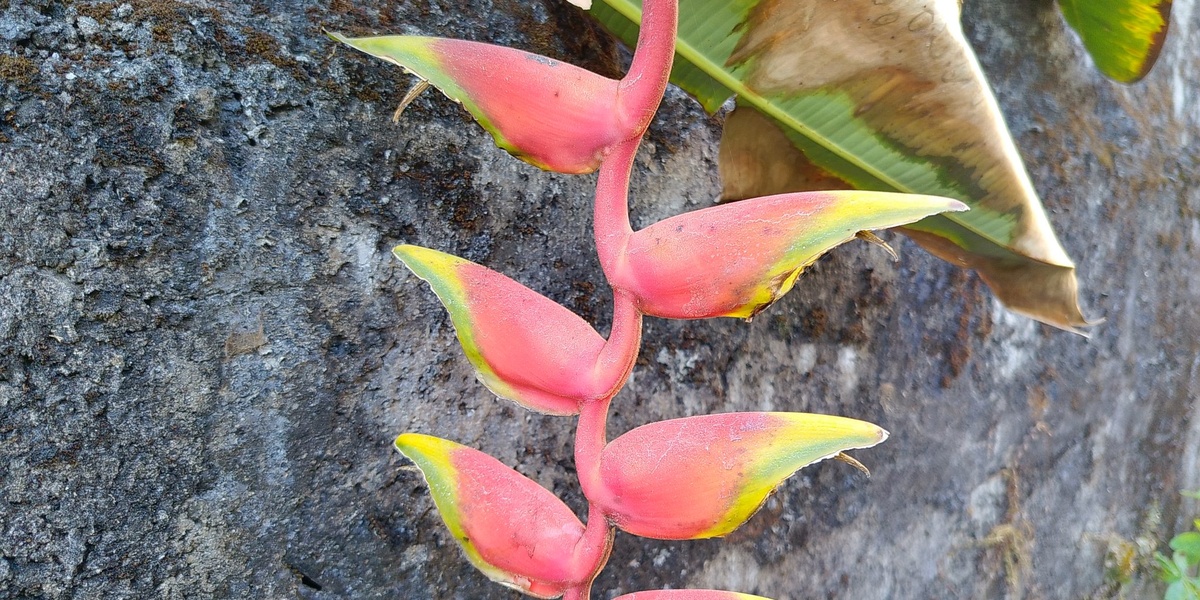
| Hanging heliconia | Heliconia rostrata | 1-2.50 | Humid forests, understory and roadside clearings; both slopes |
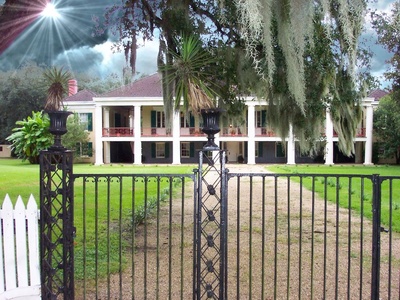
| Spanish moss | Tillandsia usneoides | 0.10-3 | Epiphytic on branches; humid lowlands and coastal trees |
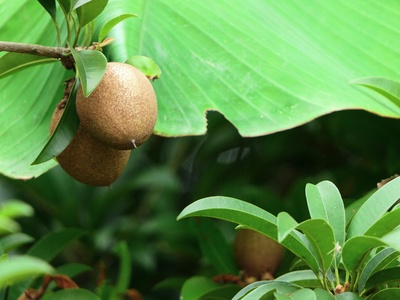
| Sapodilla | Manilkara zapota | 10-20 | Lowland forests and disturbed sites; coastal and interior lowlands |
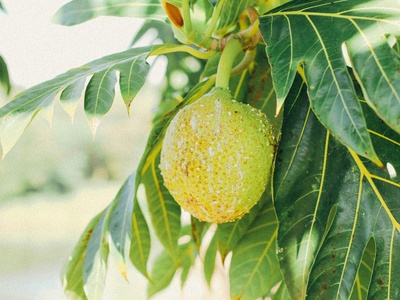
| Breadfruit | Artocarpus altilis | 10-20 | Coastal lowlands and disturbed groves; Caribbean coast especially |
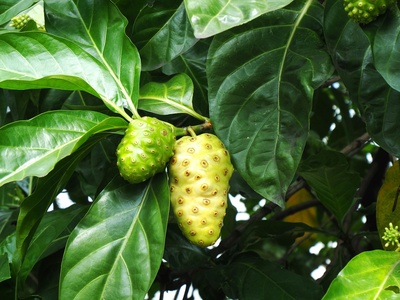
| Noni | Morinda citrifolia | 2-6 | Coastal thickets and disturbed sites; Pacific and Caribbean lowlands |
| Coral tree | Erythrina poeppigiana | 10-20 | Pastures, roadsides and forest edges; Pacific lowlands and central regions |
| Avocado | Persea americana | 5-20 | Plantations, gardens and moist forests; widespread lowlands and foothills |
| Mango | Mangifera indica | 10-20 | Cultivated and naturalized in towns and lowlands; widespread |
| Pink trumpet tree | Handroanthus impetiginosus | 8-25 | Dry and moist lowland forests, urban plantings; widespread |
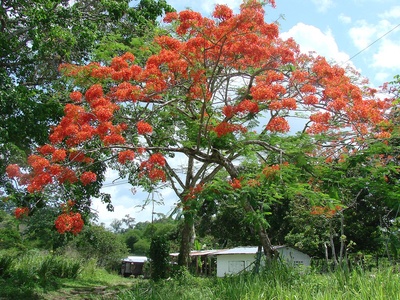
| Flamboyant | Delonix regia | 8-12 | Urban areas, dry lowlands and coastal towns; naturalized |
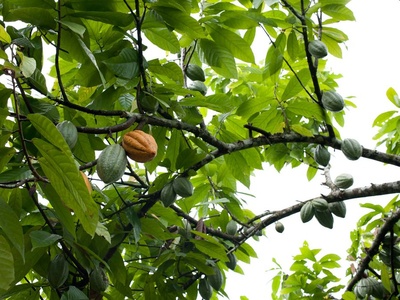
| Cacao | Theobroma cacao | 4-8 | Humid lowland forests and agroforests; Caribbean and Pacific regions |
Images and Descriptions
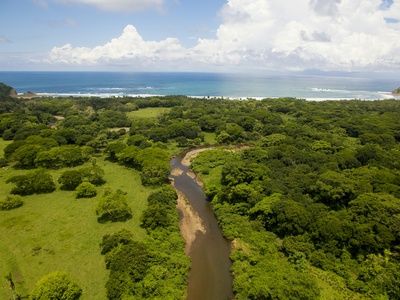
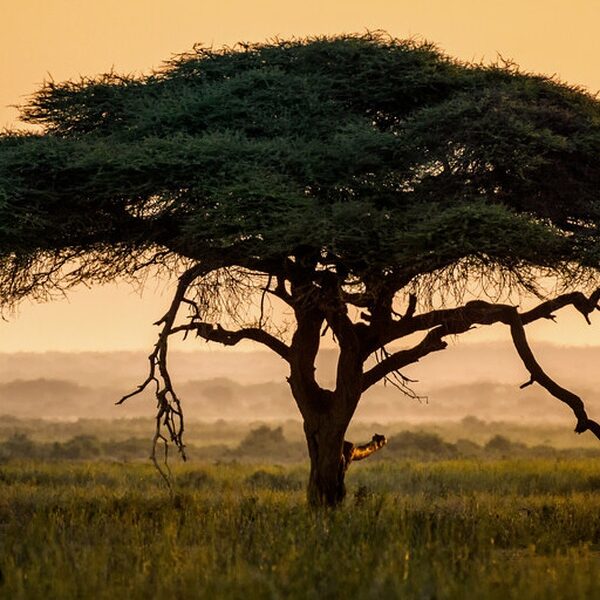
Guanacaste
Iconic large canopy tree with a wide, umbrella crown and distinctive ear-shaped pods. Common in Costa Rica’s dry Pacific lowlands, it provides shade, fodder, and cultural importance; look for it along pastures, roads and seasonal riverbeds.
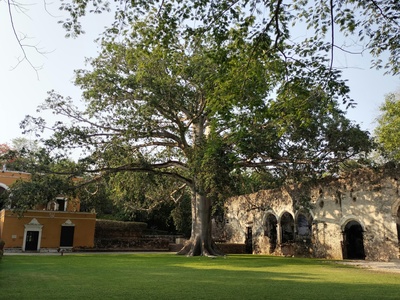
Ceiba
Massive emergent tree recognizable by swollen trunk and buttresses, with pale pink flowers and volleyball-sized pods. Found in humid lowland forests across Costa Rica; important culturally and ecologically as a bat and bird resource and a towering forest landmark.

Balsa
Fast-growing pioneer tree with soft, light wood and large heart-shaped leaves. Appears in disturbed areas and forest edges throughout Costa Rica’s lowlands, used traditionally for lightweight timber and model-making; look for tall, pale trunks with sprawling crowns.
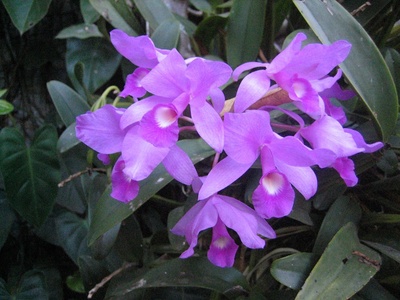
Guaria morada
Costa Rica’s national orchid with vibrant purple flowers on slender stems. Found as an epiphyte on trees from lowlands to premontane elevations; prized culturally, often seen flowering on roadside trees and in secondary forests during the dry season.
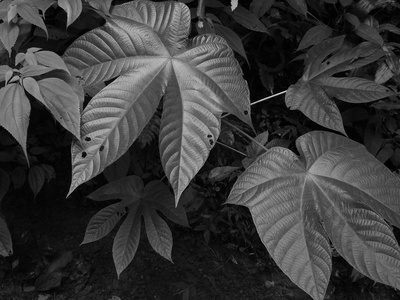
Guarumo
Fast-growing pioneer tree with palmate leaves and hollow stems often housing ant colonies. Common in clearings and disturbed habitats across Costa Rica; its soft wood and distinctive umbrella-like leaves make it easy to spot along roadsides and forest edges.
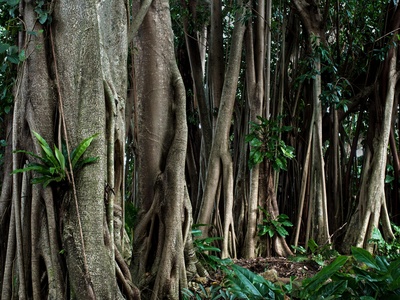
Strangler fig
Large fig often beginning life as an epiphyte that envelopes host trees to become a massive strangler. Produces figs eaten by birds and mammals; found in riparian and lowland wet forests, visible by aerial roots and dense crown.
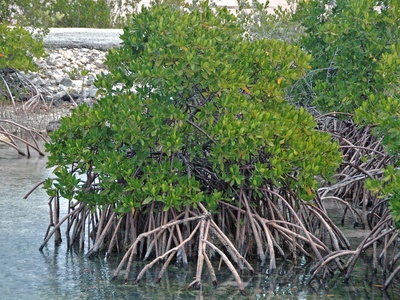
Red mangrove
Iconic coastal tree with stilt-like prop roots and tough salt-tolerant leaves. Dominates mangrove fringes in estuaries and tidal channels around Costa Rica; roots stabilize mudflats and provide nursery habitat for fish and crustaceans.
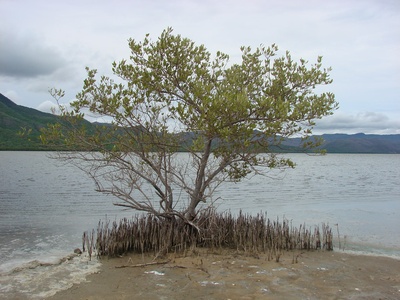
Black mangrove
Small to medium mangrove recognized by black bark and pencil-like pneumatophores. Occupies higher elevation mangrove zones and saline flats in Costa Rica; its aerial roots and salt glands adapt it to tidal flooding and harsh coastal conditions.
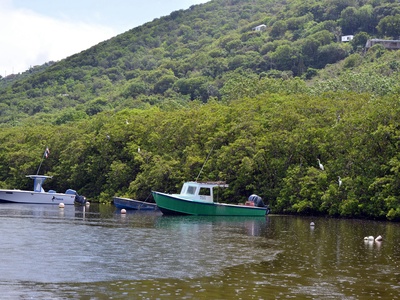
White mangrove
Shrub or small tree on mangrove fringes with rounded leaves and clustered flowers. Common in transitional mangrove zones and coastal lagoons across Costa Rica; often found between red and black mangrove stands and tolerates brackish water.
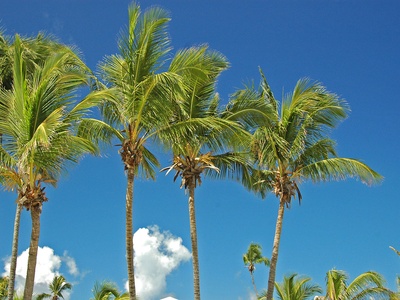
Coconut palm
Tall, iconic palm with fibrous coconuts and long feathery fronds lining beaches. Widely naturalized along Costa Rica’s coastlines; provides food, drink and materials, and is easy to spot on sandy shores and near coastal villages.
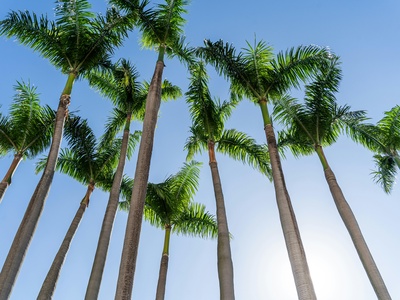
Royal palm
Majestic, smooth-trunked palm with a large crownshaft and feathery fronds. Scattered in wetter lowland areas of Costa Rica, especially near rivers and coastal plains; used ornamentally and as a recognizable element of tropical landscapes.
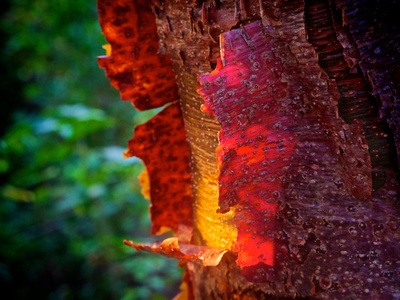
Gumbo-limbo
Common roadside and secondary forest tree with peeling, coppery bark and pale trunk. Tolerant of poor soils and disturbance, it’s often among the first trees in regenerating areas and valued for shade and traditional uses.
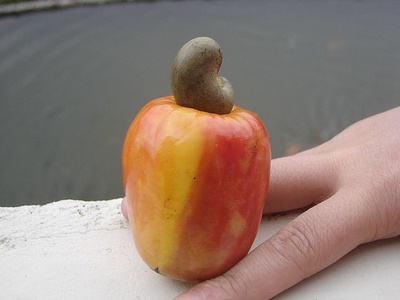
Cashew
Small tree producing cashew fruits with a kidney-shaped nut and sweet apple-like pedicel. Found in dry Pacific regions and disturbed sites across Costa Rica; fruits are eaten locally and the nut is commercially important.
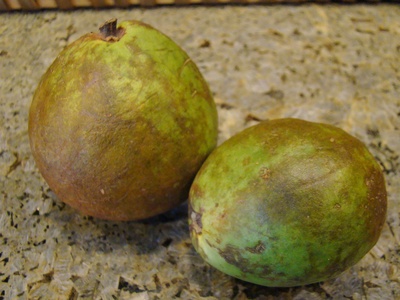
Guava
Common small tree with aromatic leaves and yellow to pink guava fruits. Naturalized and prolific in disturbed areas and backyards throughout Costa Rica; easy to identify by its fragrant fruit and flaky bark.
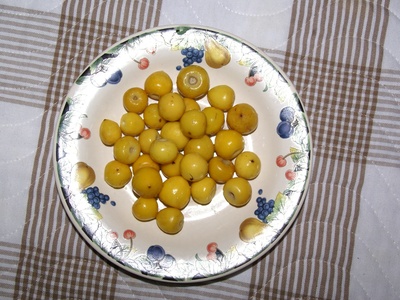
Nance
Small tree or large shrub bearing yellow, tangy nance fruits used in sweets and drinks. Found in seasonally dry forests and scrub in Pacific lowlands; distinctive by rough bark and clusters of small yellow flowers and fruits.
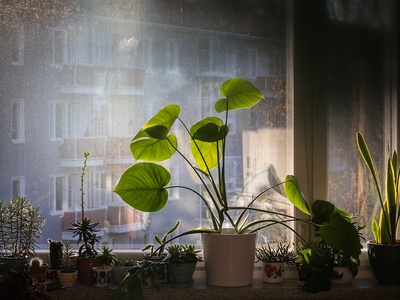
Monstera
Large-leaved climbing aroid with characteristic fenestrated leaves that age develop holes. Common in humid forests and edges across Costa Rica; vines climb trees, producing edible fruit when ripe and adding dramatic understory presence.
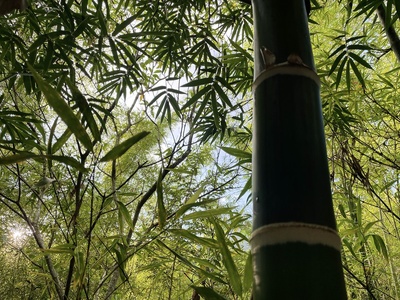
Guadua bamboo
Massive clumping bamboo forming dense stands along rivers and slopes. Important for erosion control and local construction, Guadua creates tall, hollow stems and thickets common in Costa Rica’s Pacific lowland and foothill zones.
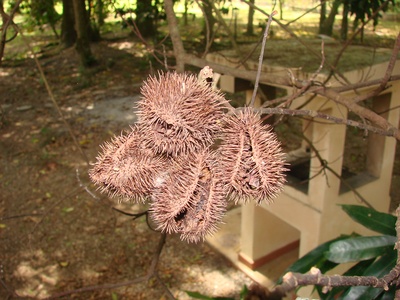
Achiote
Shrub or small tree with spiky seed capsules containing red-orange annatto pigment used for dyeing and food coloring. Common in disturbed places and secondary growth across Costa Rica, with showy pink flowers and fuzzy seeds.
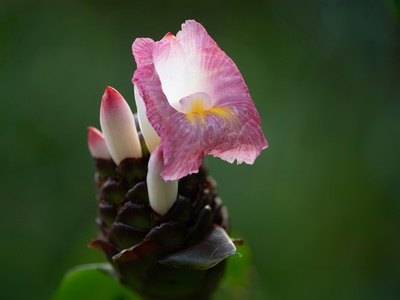
Spiral ginger
Bold herb with spiraling stems and striking red inflorescences that attract hummingbirds. Grows in shaded understories and forest edges throughout Costa Rica’s humid regions; stems form clumps and the flowers are long-lived.
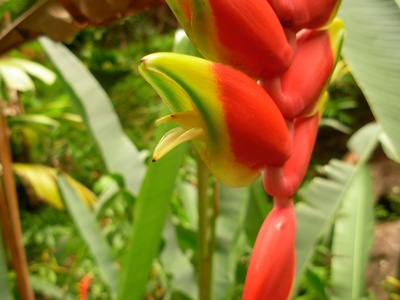
Hanging heliconia
Showy pendent inflorescences of red and yellow bracts hang like lobster claws, highly attractive to hummingbirds. Found in humid forests and disturbed edges across Costa Rica; look for tall stalks under the canopy with layered hanging flowers.
Spanish moss
Gray-green, hairlike epiphyte draping from tree branches in humid lowlands and coastal trees. Not a parasite but absorbs moisture from air; common on roadside trees and in mangrove and lowland forest canopies in Costa Rica.
Sapodilla
Evergreen fruit tree with rough bark and sweet brown fruits eaten fresh. Naturalized and cultivated across Costa Rica’s lowlands, often persisting in secondary forests and hedgerows; wood is dense and historically valued.
Breadfruit
Large-statured tree producing starchy, round breadfruit used as staple food. Common in Caribbean coastal gardens and wildized groves in Costa Rica; large lobed leaves and big fruits hanging from branches are unmistakable.
Noni
Tough shrub or small tree with bumpy white fruits famously pungent and used in traditional medicine. Thrives in coastal thickets and disturbed ground across Costa Rica; leaves are glossy and opposite, with clusters of small flowers.
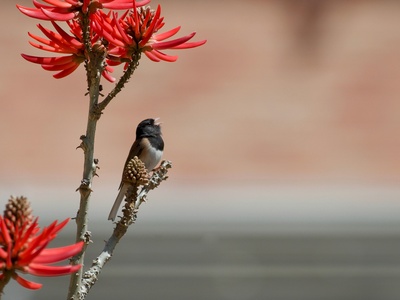
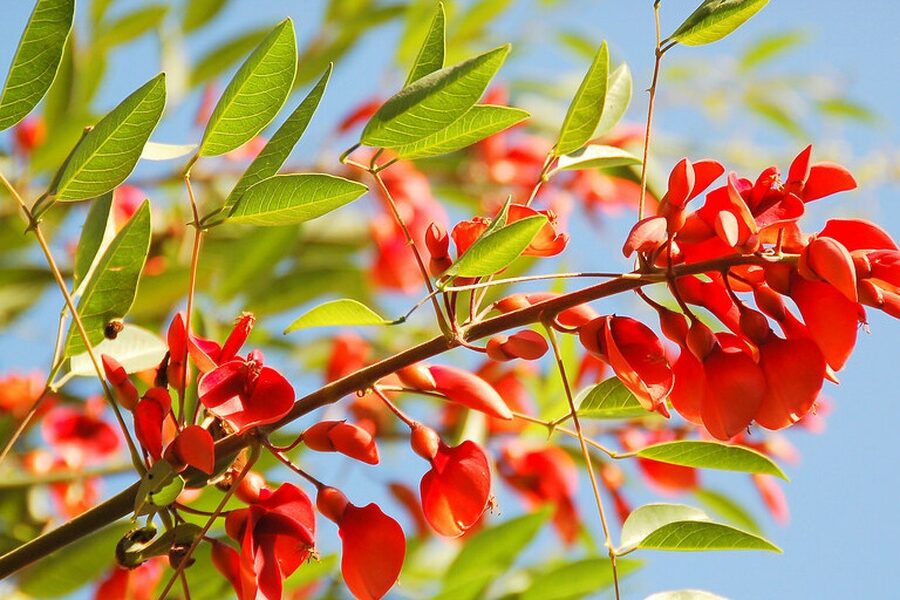
Coral tree
Fast-growing nitrogen-fixing tree with showy coral-red flowers that attract hummingbirds. Widely planted and naturalized along pastures and roadsides in Costa Rica; distinctive thorny branches and bright blossom clusters make it conspicuous when flowering.
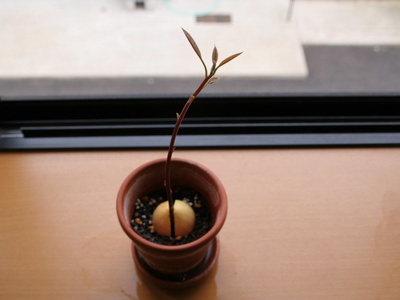
Avocado
Evergreen tree producing nutrient-rich avocado fruits used locally and commercially. Found in plantations, orchards and sometimes naturalized in moist forests and gardens throughout Costa Rica, recognizable by glossy leaves and large green fruits.
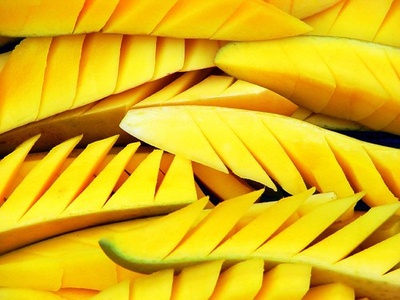
Mango
Broad-canopied fruit tree with sweet juicy mangoes popular across Costa Rica. While cultivated, mango trees commonly naturalize and are found in towns, farms and forest edges; identifiable by fragrant flowers and dense fruiting branches.
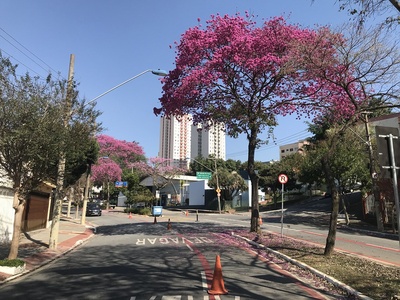
Pink trumpet tree
Deciduous tree bursting with pink trumpet-shaped flowers during the dry season, making striking displays in parks and roadsides. Common in dry to moist lowland forests and urban plantings across Costa Rica; used ornamentally and appreciated by pollinators.
Flamboyant
Deciduous ornamental tree with fern-like leaves and flamboyant orange-red flowers that cover the crown in the dry season. Widely planted and often self-seeds in Costa Rica’s warm lowlands and coastal towns.
Cacao
Small understory tree producing pods containing cacao beans used for chocolate. Grows in humid lowland forests and cultivated agroforests across Costa Rica; pods ripen on trunk and branches and have distinctive ridged appearance.