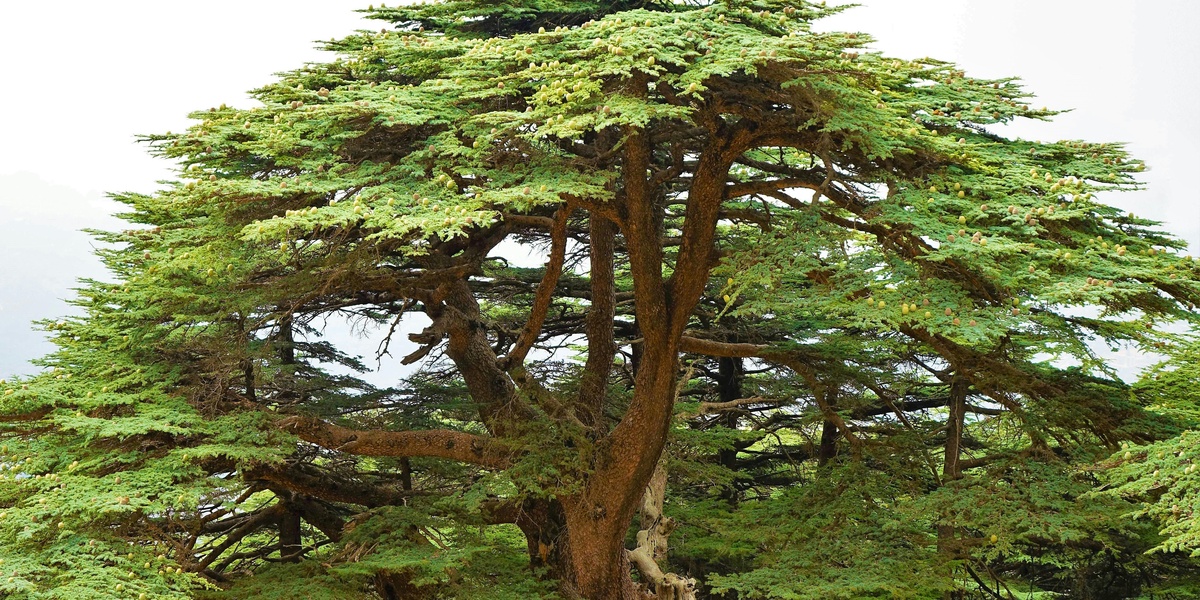
Lebanon’s mix of coast, hills and high mountains creates many microclimates where Mediterranean and montane plants grow side by side. From rocky slopes to river valleys, seasonal rains and elevation changes shape a diverse local flora.
There are 43 Plants of Lebanon, ranging from Bay laurel to Winter crocus. For each entry you’ll find below the Scientific name, Typical height (m), Habitat / region.
Are all 43 species native to Lebanon?
Not necessarily — the list can include native, endemic and naturalized species. Use the Scientific name and Habitat / region columns to check distribution; local floras, herbarium records or conservation lists will confirm whether a species is native or introduced.
How can I use the Typical height and Habitat / region columns when planning a garden?
Match Typical height (m) to available space and layering (groundcover, shrub, tree), and use Habitat / region to choose plants with similar soil, sun and moisture needs to your site; for protected or rare species seek local advice before planting.
Plants of Lebanon
| Name | Scientific name | Typical height (m) | Habitat / region |
|---|---|---|---|
| Cedar | Cedrus libani | 25 | Lebanon Mountains, high-altitude forests |
| Cilician fir | Abies cilicola (Abies cilicica) | 20 | High mountains, cool moist sites |
| Turkish pine | Pinus brutia | 20 | Coast to lower mountains, dry slopes |
| Stone pine | Pinus pinea | 18 | Coast and low hills, planted stands |
| Juniper | Juniperus excelsa | 8 | High rocky ridges and mountain plateaus |
| Mediterranean cypress | Cupressus sempervirens | 15 | Coast, valleys, planted groves |
| Palestine oak | Quercus calliprinos | 8 | Coastal hills, lower mountains, maquis |
| Kermes oak | Quercus coccifera | 3 | Rocky hills, maquis, coastal slopes |
| Strawberry tree | Arbutus andrachne | 8 | Woodland edges, maquis, Mount Lebanon |
| Mastic | Pistacia lentiscus | 4 | Coastal maquis, rocky slopes |
| Terebinth | Pistacia palaestina | 10 | Valleys, lower mountains, garrigue |
| Carob | Ceratonia siliqua | 8 | Coastal hills, dry valleys |
| Wild olive | Olea europaea (wild) | 7 | Coastal and mountain terraces, old groves |
| Fig | Ficus carica | 6 | Valleys, hedgerows, cultivated escapes |
| Bay laurel | Laurus nobilis | 6 | Woodland, maquis, shady slopes |
| Myrtle | Myrtus communis | 3 | Coastal maquis, damp valleys |
| Oleander | Nerium oleander | 4 | Riverbanks, wetlands, coastal plains |
| Blackthorns/Sbuckthorn | Rhamnus lycioides | 2 | Rocky slopes, maquis, coastal scrub |
| Jujube/azarole | Crataegus azarolus | 4 | Woodland margins, terraces |
| Sicilian sumac | Rhus coriaria | 3 | Dry slopes, terraces, low hills |
| Syrian oregano (Za’atar) | Origanum syriacum | 0.3 | Rocky hills, maquis, widespread |
| Greek/three-lobed sage | Salvia fruticosa | 0.6 | Maquis, gullies, lower slopes |
| Thyme | Thymus vulgaris | 0.2 | Rocky ground, maquis, coastal slopes |
| Wild mint | Mentha longifolia | 0.5 | Streamsides, irrigated fields, valleys |
| Fennel | Foeniculum vulgare | 1.5 | Roadsides, fields, coastal plains |
| Syrian rue | Peganum harmala | 0.6 | Dry fields, rocky steppe, lowlands |
| Tumble thistle | Gundelia tournefortii | 0.6 | Rocky slopes, cultivated fields, terraces |
| Palestinian arum | Arum palaestinum | 0.3 | Stone walls, terraces, shaded gullies |
| Wild cyclamen | Cyclamen persicum | 0.1 | Oak and pine woodlands, maquis |
| Poppy anemone | Anemone coronaria | 0.2 | Cultivated fields, meadows, coastal plains |
| Winter crocus | Crocus hyemalis | 0.1 | Rocky slopes, open maquis, low mountains |
| Prickly pear | Opuntia ficus-indica | 2 | Coastal, disturbed ground, terraces |
| Red gum eucalyptus | Eucalyptus camaldulensis | 20 | Rivers, plains, planted stands |
| Corn poppy | Papaver rhoeas | 0.5 | Fields, disturbed ground, coastal plains |
| Chamomile | Matricaria chamomilla | 0.4 | Fields, disturbed soils, roadsides |
| Rue | Ruta chalepensis | 0.5 | Rocky slopes, terraces, old walls |
| Wild leek | Allium ampeloprasum | 0.4 | Fields, scrub, rocky slopes |
| Madonna lily | Lilium candidum | 1 | Shady rocky sites, old gardens |
| Saltbush | Atriplex halimus | 1.5 | Coastal cliffs, saline soils, plains |
| Sage-leaved rockrose | Cistus salviifolius | 1 | Maquis, dry slopes, coastal hills |
| Wild grape | Vitis vinifera (wild) | 3 | Valleys, terraces, hedgerows |
| Tamarisk | Tamarix spp. | 5 | Salt marshes, riverbanks, coastal flats |
| Borage | Borago officinalis | 0.5 | Fields, disturbed ground, coastal plains |
Images and Descriptions
Cedar
Iconic national tree with layered crown and needle clusters; can reach large sizes in cool mountain sites. Historically prized for timber and cultural symbolism; many forests are protected due to past overexploitation and ongoing conservation efforts.

Cilician fir
Tall conifer of Lebanon’s upper slopes with soft needles and conical shape. Forms mixed stands with cedars, vulnerable from logging and grazing; important for mountain biodiversity and local watershed protection.
Turkish pine
Adaptable pine with dark bark and long needles, common on dry rocky slopes and coastal hills. Fast-growing and often used for reforestation; tolerates drought and fires characteristic of Mediterranean landscapes.
Stone pine
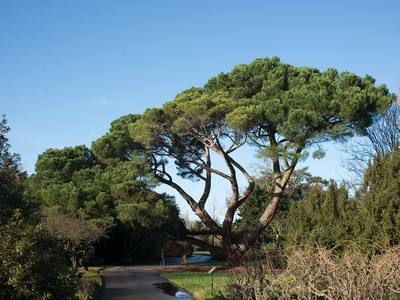
Recognizable by umbrella crown and edible pine nuts. Often planted near coasts and in old orchards; valued for nuts and ornamental presence though many stands are cultivated or naturalized.
Juniper
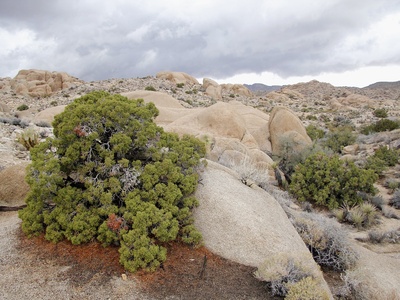
Stiff, wind-sculpted juniper on exposed limestone slopes; provides shelter for wildlife. Slow-growing and locally restricted, some populations are of conservation interest for mountain ecosystems.
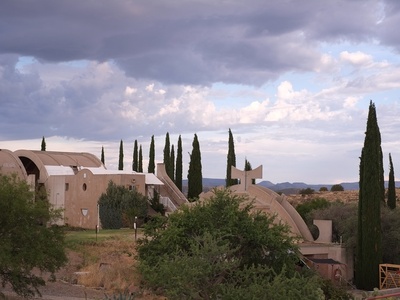
Mediterranean cypress
Tall narrow evergreen often seen in cemeteries and shelterbelts; tolerant of dry soils. Widely planted for windbreaks and landscape use, sometimes naturalized in drier habitats.
Palestine oak
Evergreen oak forming dense maquis; leathery leaves and gnarled habit. Important for Mediterranean scrub ecosystems and traditional charcoal/local fuel; seedlings limited by grazing.
Kermes oak
Low evergreen shrub-like oak dominating dry scrublands. Resilient to grazing and fire, historically used for dye (kermes) and livestock browse.
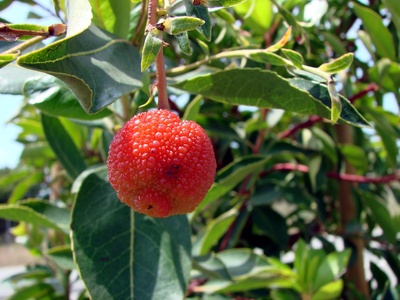
Strawberry tree
Evergreen tree with peeling bark and red berries attractive to birds. Notable for ornamental bark and edible-but-bitter fruit traditionally used in local diets or fermented drinks.
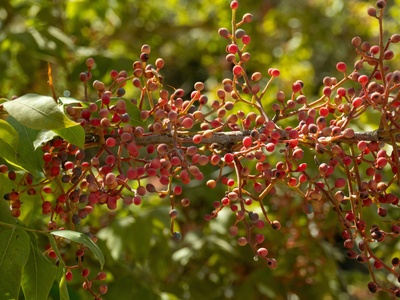
Mastic
Evergreen aromatic shrub used for resin and culinary flavoring. Forms dense thickets in maquis; leaves and resin have traditional uses in medicine and cuisine.
Terebinth
Deciduous tree with pinnate leaves producing resinous sap. Historically used for oil and wood; common in mixed woodlands and valley wood margins.
Carob
Broad evergreen with hard pods used as animal fodder and sweetener substitute. Drought-tolerant tree long cultivated and naturalized, characteristic of Mediterranean agroforestry.
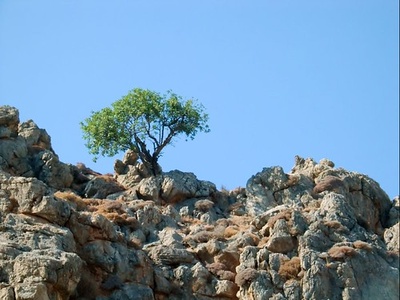
Wild olive
Smaller, shrubby wild form of cultivated olive; hardy on rocky slopes. Economically and culturally vital; wild populations provide genetic diversity for cultivated olives.
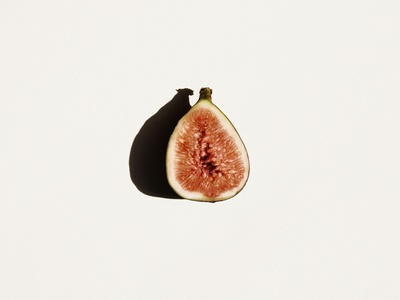
Fig
Deciduous tree with distinctive lobed leaves and sweet figs. Widely cultivated with many feral stands; provides fruit for people and wildlife, often naturalized in disturbed sites.
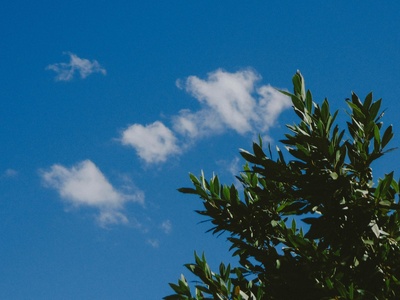
Bay laurel
Aromatic evergreen used as culinary bay leaf. Grows in sheltered woodland and garrigue; culturally significant and easy to identify by glossy leaves and clusters of small flowers.
Myrtle
Aromatic evergreen shrub with glossy leaves and white flowers. Traditionally used in perfumery and rites; forms dense understory in maquis and provides nectar for insects.
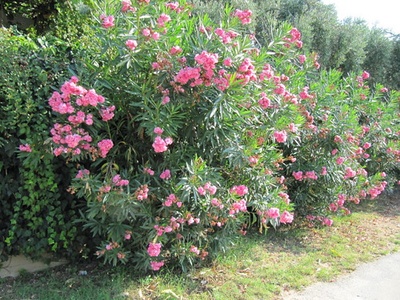
Oleander
Showy evergreen shrub with clusters of pink/white flowers along waterways. Widely naturalized in riparian zones; toxic but commonly used for ornamental hedges and stabilizing banks.
Blackthorns/Sbuckthorn
Spiny shrub with small leaves and dark berries eaten by birds. Forms dense scrub and helps stabilize soils; historically used in hedges and occasional dye sources.
Jujube/azarole
Small deciduous tree with edible apple-like fruits (azarole) eaten fresh or made into preserves. Common in old orchards and mixed woodlands; attractive spring blossoms.
Sicilian sumac
Shrubby tree producing tart red berry clusters used as a spice (sumac) in Levantine cuisine. Valued locally for flavoring and tanning; thrives on disturbed, rocky soils.
Syrian oregano (Za’atar)
Aromatic perennial herb central to Levantine cuisine (za’atar). Small bushy plant with fragrant leaves; cultural and culinary importance drives wild harvesting and cultivation.
Greek/three-lobed sage
Woody perennial with aromatic leaves used as medicinal and culinary tea. Common in scrub and rocky sites, valued in traditional remedies and local cuisine.
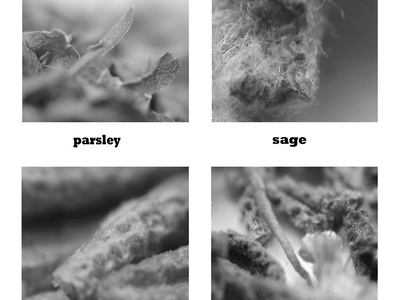
Thyme
Low aromatic herb used widely in cooking and folk medicine. Forms mats on dry rocky soils and is a key flavour in Mediterranean cuisine.
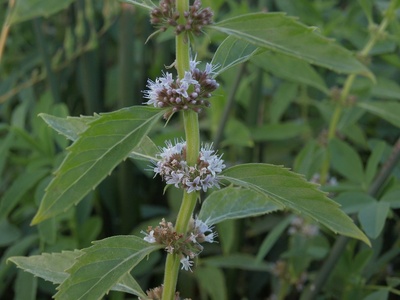
Wild mint
Aromatic perennial with lilac flowers, common near moist soils. Used for tea and culinary flavors; spreads by runners and seeds in damp habitats.
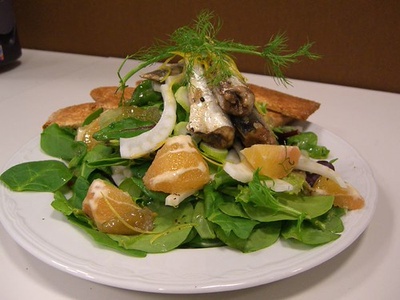
Fennel
Tall aromatic umbellifer with feathery foliage and yellow flower heads. Widely used as herb and medicine; common roadside and disturbed habitat plant.
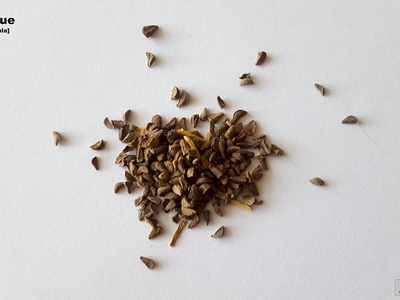
Syrian rue
Shrubby herb known for red seedpods used in traditional dye and ritual practices. Tolerates arid soils; alkaloids give it medicinal and psychoactive history.
Tumble thistle
Spiny rosette plant with edible young shoots traditionally foraged as a vegetable. Distinctive globular flower heads; culturally significant wild edible in Levantine cuisine.
Palestinian arum
Low perennial with arrow-shaped leaves and hooded spadix; tubers traditionally cooked as vegetable after detoxifying. Notable traditional food and medicinal uses in rural communities.
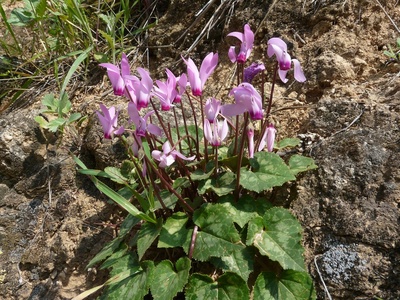
Wild cyclamen
Winter-flowering tuberous plant with mottled leaves and pink flowers. Native cyclamen admired for showy blooms in early spring; often found on shaded slopes.
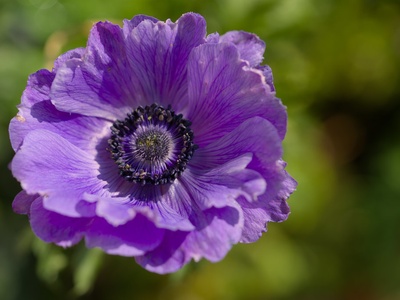
Poppy anemone
Vivid red, blue or white flowers carpeting fields in spring. Popular wildflower and emblematic of Levantine spring; many wild populations have been collected for ornamental use.
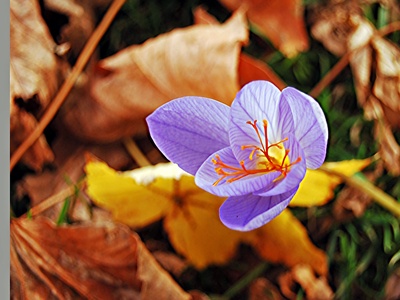
Winter crocus
Small autumn-winter crocus with pale to purple flowers emerging in cooler months. Adds early-season color and is adapted to Mediterranean winter rains.
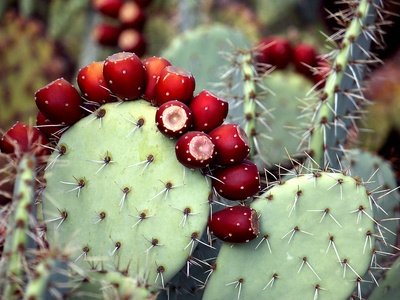
Prickly pear
Spiny cactus introduced from the Americas long ago and now naturalized. Produces edible fruits and pads eaten locally; common on abandoned terraces and dry slopes.
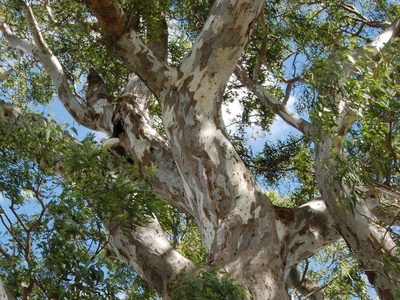
Red gum eucalyptus
Fast-growing Australian tree widely planted for shade and timber; escapes and naturalized along waterways. Important for human use but can alter native habitats.
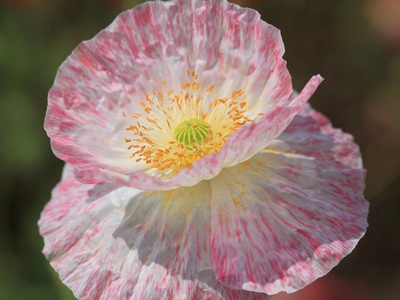
Corn poppy
Bright red annual that carpets fields in spring. Common roadside and arable weed with cultural resonance; seeds persist in soil seedbanks.
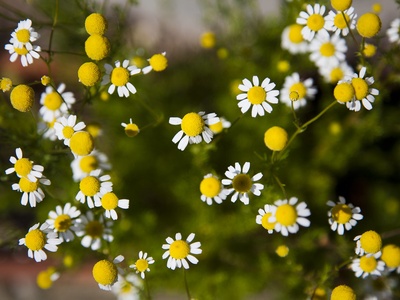
Chamomile
Aromatic annual herb used for soothing teas and remedies. Small daisy-like flowers harvested for herbal infusions; common in disturbed, sunny spots.
Rue
Aromatic shrubby herb used traditionally as a condiment and in folk medicine. Bitter leaves and distinctive scent; often grows near villages and old terraces.
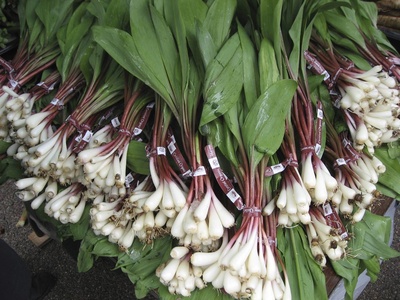
Wild leek
Perennial wild allium with hollow leaves and umbrella flower heads. Edible bulb and leaves used traditionally; commonly found in disturbed and open habitats.
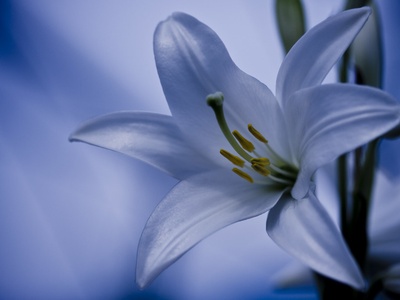
Madonna lily
Tall fragrant white lily historically revered and cultivated; populations occur in the wild near old settlements. Notable ornamental and cultural plant facing local declines.
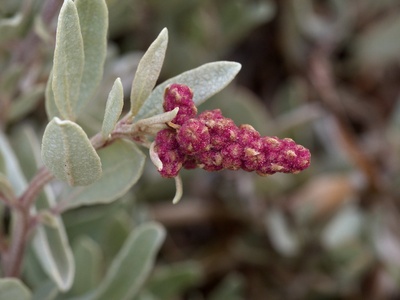
Saltbush
Shrubby halophyte tolerating salty soils; used traditionally as fodder and erosion control. Common on coastal and saline inland sites, important for stabilizing degraded land.
Sage-leaved rockrose
Evergreen shrub with papery white flowers and resinous leaves. Fire-adapted and common in early succession after disturbance; aromatic and ornamental.
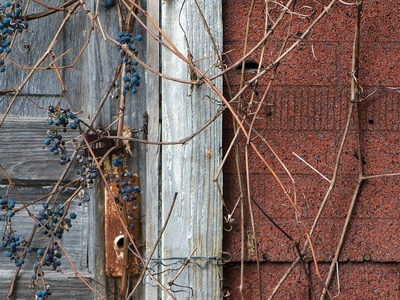
Wild grape
Wild form of cultivated grapevine climbing in hedges and ruins. Provides fruit for wildlife and occasional small-scale local winemaking; genetic reservoir for cultivated varieties.
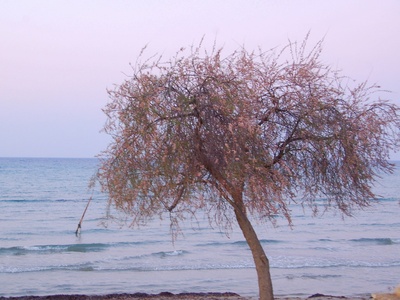
Tamarisk
Feathery, salt-tolerant shrubs or small trees colonizing saline soils and river margins. Often invasive in altered waterways but important for stabilizing some shorelines.
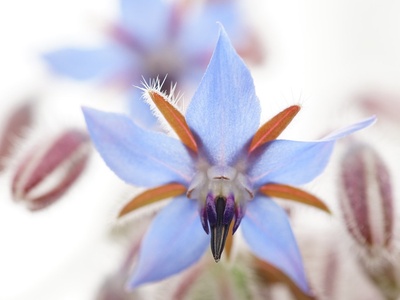
Borage
Annual with coarse hairy leaves and blue star-shaped flowers. Traditionally used in salads and herbal medicine; readily self-seeds in open disturbed sites.