Have you ever mistaken a stick insect for a praying mantis — or vice versa — while watching a garden come to life?
Early naturalists often sorted insects by obvious traits—legs, wings, body shape—and that habit still helps when you spot a cryptic bug on a stem. The distinction matters for gardeners deciding whether an insect is a helpful predator, hobbyists choosing the right pet, and anyone trying to understand local food webs.
Though both look like expert camouflage artists, praying mantises and stick insects differ in anatomy, behavior, ecology, reproduction, and interactions with people — differences that matter for gardeners, hobbyists, and curious naturalists. This guide lists five clear, evidence-backed differences and groups them into anatomy, behavior, and ecology/reproduction/interaction to make identification practical in the field.
Anatomy and appearance
1. Raptorial forelegs and head mobility
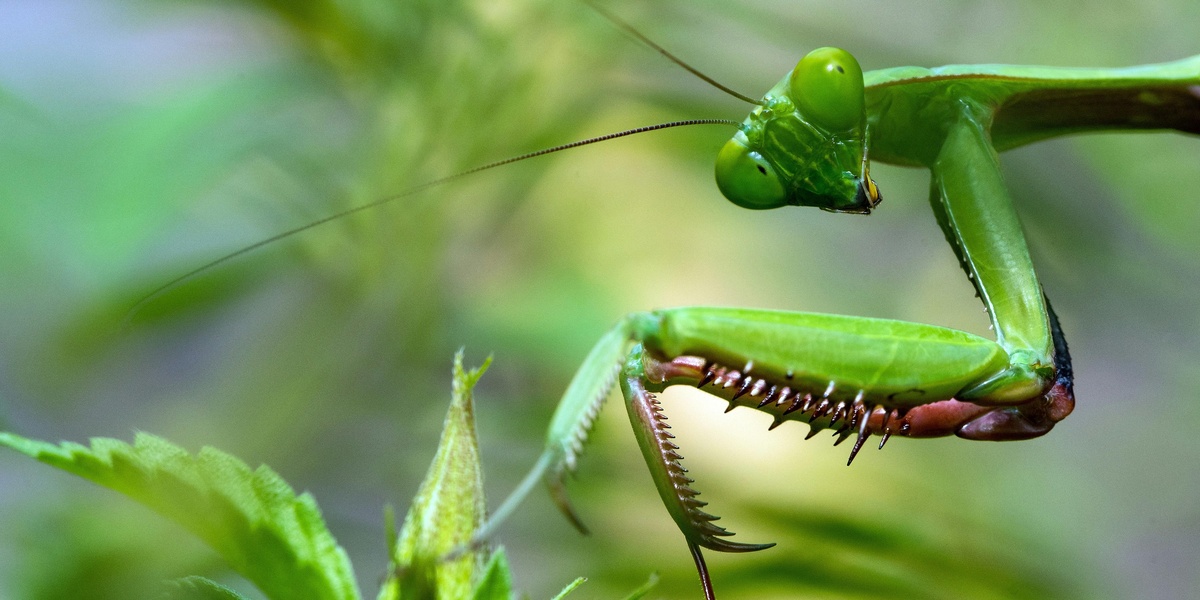
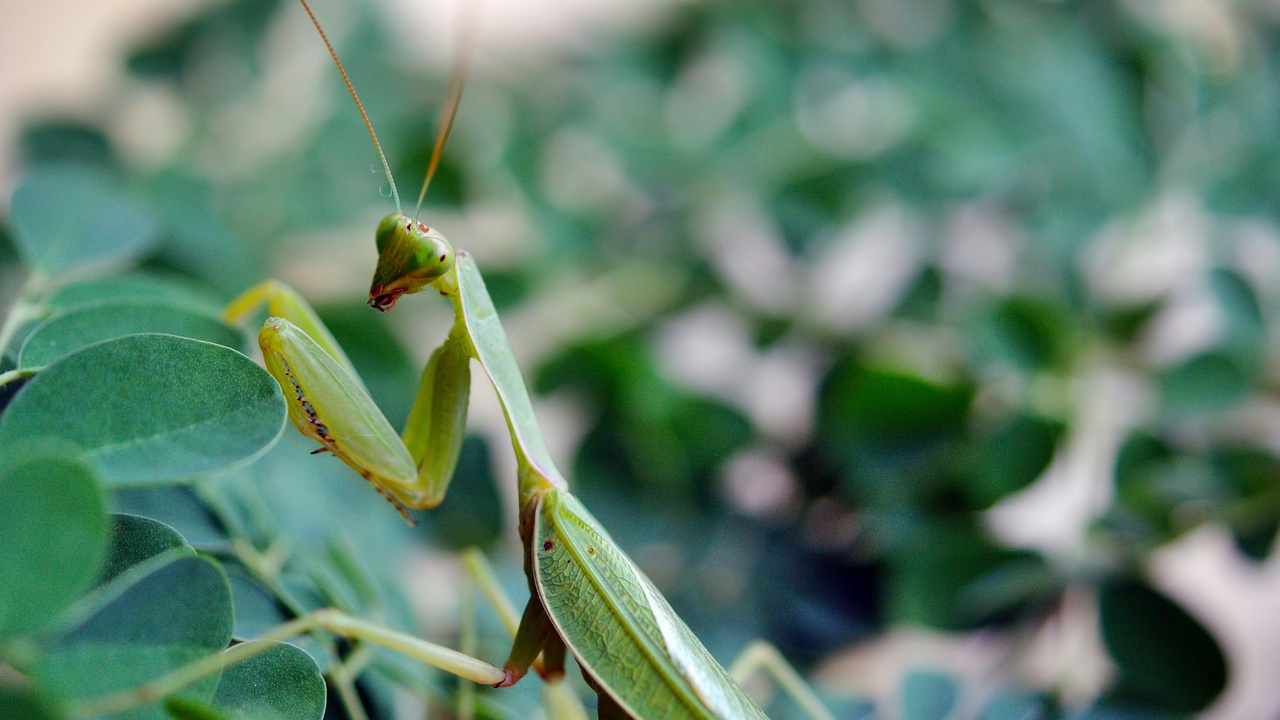
Praying mantises are built to catch prey: they have enlarged, spined forelegs that fold like a pocketknife to seize insects, and a distinct, triangular head that can swivel to scan its surroundings. Mantodea includes roughly 2,400 described species, many of which show that classic “praying” posture.
Mantid forelegs bear rows of spines and a folding joint that lock an insect in place while the mantis eats. The mantis head is highly mobile—able to rotate nearly 180 degrees—which is unique among many predatory insects and helps it track flying or crawling prey (see museum and entomology references such as the Natural History Museum).
By contrast, stick insects lack grasping front legs and the swiveling head; they are elongate and limb-like. Spotting raptorial forelegs and head rotation (Tenodera sinensis and Mantis religiosa are good examples in photos) is the quickest field clue that you’ve found a mantid rather than a phasmid such as Carausius morosus.
2. Body shape, wings, and camouflage strategy
Phasmids (stick and leaf insects) are specialists in disguise: many of the roughly 3,000 described species have elongate, laterally flattened or cylindrical bodies that convincingly mimic twigs, bark, or leaves.
Adult mantises often have a more robust, segmented thorax (a long prothorax is typical) and many species develop fully formed wings for flight or display. Stick insects may have reduced or no wings, and when they do, wings are often hidden and used less for aerial escape.
Camouflage strategies also differ: some phasmids, like Extatosoma tiaratum (the spiny leaf insect), mimic leaves with lobed bodies and coloration, while mantids rely more on posture and occasional wing-based deimatic (startle) displays to deter predators.
Behavior and diet
3. Predatory mantises versus herbivorous stick insects
Praying mantises are primarily ambush predators that eat other animals; stick insects are herbivores that feed on leaves. That contrast determines most of their ecological roles in a garden.
Mantises target a wide range of live prey—flies, moths, bees, and sometimes larger items like small frogs or lizards in big species—and are often seen perched on flowers or shrubs waiting for visiting insects. Field and lab observations commonly record mantids catching pollinators at flowers, which is why gardeners sometimes find them near blooms.
Phasmids eat foliage—brambles, eucalyptus, or whatever host plant a species prefers—and when abundant they can cause noticeable defoliation. Carausius morosus, a common classroom pet, feeds on bramble or rose leaves and illustrates the plain plant-eating habits that contrast with predatory mantids.
4. Movement, posture, and defensive behaviors
Mantises use sit-and-wait tactics combined with sudden, rapid strikes; their foreleg strike and bite can be very fast, measured in fractions of a second in laboratory studies. The iconic “praying” posture really is an ambush stance—motionless, then explosive.
Stick insects rely on rock-and-sway motion, tonic immobility (freezing), and cryptic posture to avoid detection. Many phasmids can autotomize (drop) a leg to escape a predator and then regenerate that limb across subsequent molts—an important survival feature in captive care and the wild.
Defensive displays differ: mantids may spread patterned wings or rear up to startle attackers, whereas phasmids often use spines, cryptic shapes, or chemical sprays (in a few species) to discourage predators. For handlers, that means mantids may strike but rarely bite humans, and phasmids tolerate gentle handling if supported and returned to cover quickly.
Ecology, reproduction, and human interactions
5. Reproduction, lifecycle, and human uses
When gardeners consider praying mantis vs stick insects, reproductive strategies are a major divide: mantises lay eggs in a foamy, hardened case called an ootheca, while many phasmids deposit individual eggs or clusters and several species reproduce without males.
Mantid oothecae typically contain from a few dozen up to a couple hundred eggs depending on species; for example, larger mantids can pack tens to over a hundred eggs into a single ootheca. Mantises are often annual in temperate regions, with adults living commonly six to twelve months and a single generation per year.
Stick insects vary widely: many lay hard, seed-like eggs at intervals, and a notable number—Carausius morosus in the pet trade and several Timema species studied by evolutionary biologists—are capable of parthenogenesis (female-only reproduction). Phasmids often pass through multiple molts and many live one to two years or longer in captivity, which affects care and breeding schedules.
Human interactions reflect those life histories. Mantids are marketed and sometimes released as garden biological-control agents because they eat pests, though releases can be indiscriminate. Phasmids are extremely popular in classrooms and the pet trade because they’re easy to keep, many breed readily in captivity, and species like Carausius morosus provide clear lessons in molting and parthenogenesis.
Summary
- Anatomy: look for spined, grasping forelegs and a 180°-capable triangular head to identify a mantis; elongate, twig- or leaf-like bodies point to phasmids.
- Behavior: mantises are ambush predators that take live prey; stick insects are herbivores that rely on stillness and mimicry.
- Reproduction and lifespan: mantids lay oothecae and are often single-season adults (months), while many phasmids lay dispersed eggs, some reproduce parthenogenetically, and many live across multiple molts and years.
- Practical tip: compare photos of Tenodera sinensis and Carausius morosus or check local specimens to practice ID, and consult reputable sources or local natural-history collections before buying or moving insects.