From coastal reefs to inland woodlands, snakes with unusual hues show up in field notes and photos more often than people expect. Lighting, scale structure and habitat influence how colors read in the field, so purple tones can look different depending on where you spot them.
There are 9 purple snakes, ranging from the Blue Malayan coral snake to the Yellow-bellied sea snake, showing both marine and terrestrial examples. For each species, the Scientific name, Range and Purple cause are listed — you’ll find below.
Are purple snakes more venomous than other snakes?
Color alone doesn’t determine venom; some purple-toned snakes are harmless while others are venomous, so always treat unfamiliar snakes with caution and check the listed Scientific name and Range to learn species-specific risks.
What causes a snake to appear purple in the wild?
Purple coloration can come from pigments, microscopic scale structure that refracts light, or environmental factors like wetness and angle of sunlight; the Purple cause column below explains which applies to each species.
Purple Snakes
| Name | Scientific name | Range | Purple cause |
|---|---|---|---|
| Brazilian rainbow boa | Epicrates cenchria | Central and South American rainforests and savannas | Thin-film structural iridescence |
| Sunbeam snake | Xenopeltis unicolor | Southeast Asian moist forests and agricultural edges | Strong structural iridescence |
| Eastern Indigo Snake | Drymarchon couperi | Southeastern United States pinewoods, hammocks and scrub | Melanin with glossy iridescent sheen |
| Olive sea snake | Aipysurus laevis | Coral reefs and shallow coastal waters across the Indo-Pacific | Scale iridescence (structural) |
| Yellow-bellied sea snake | Pelamis platura | Tropical open oceans worldwide | Metallic iridescence on dark dorsum |
| Paradise tree snake | Chrysopelea paradisi | Southeast Asian forests and gardens, arboreal | Rainbow iridescence from scale microstructure |
| Blue Malayan coral snake | Calliophis bivirgata | Southeast Asian lowland forests | Iridescent scales plus blue pigmentation |
| Lavender Corn Snake (morph) | Pantherophis guttatus (Lavender morph) | Captive-bred, North American hobbyists worldwide | Genetic amelanism/hypomelanism producing lavender coloration |
| Lavender Albino Ball Python (morph) | Python regius (Lavender Albino) | Captive-bred, global pet trade | Recessive morph reducing dark pigment, pastel lavender color |
Images and Descriptions
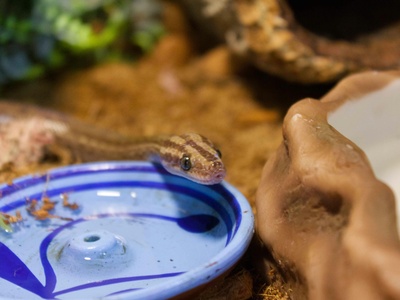
Brazilian rainbow boa
A glossy, medium-sized constrictor from Central and South American rainforests and savannas. Nonvenomous and popular in captivity, it shows vivid iridescent scales that flash purple and rainbow colors in sunlight. Nocturnal, patterned with reddish-brown saddles.
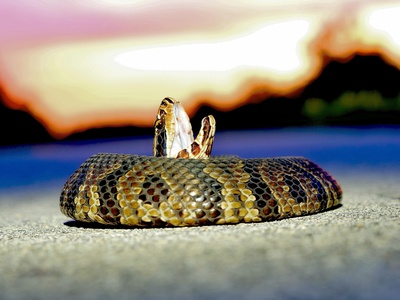
Sunbeam snake
A burrowing, glossy snake from Southeast Asia prized for spectacular iridescence. Nonvenomous and secretive, its smooth scales diffract light into purples, blues and greens. Often found under logs and in moist soils; occasionally kept by enthusiasts.
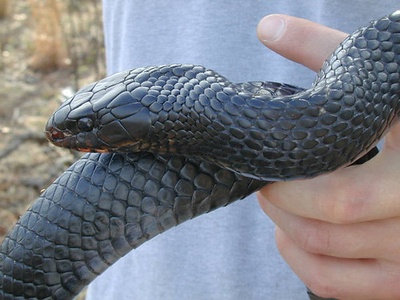
Eastern Indigo Snake
The largest native US snake, found in southeastern pinewoods and coastal hammocks. Nonvenomous and federally protected, its jet-black scales often reflect blue to purple in sunlight. Diurnal and powerful, preys on other snakes and small vertebrates.
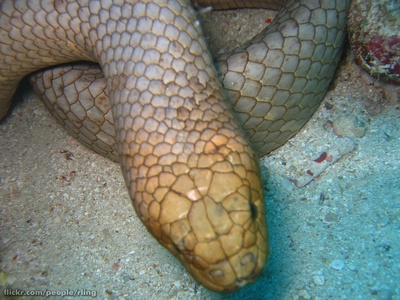
Olive sea snake
A reef-associated sea snake of the Indo-Pacific, noted for highly iridescent scales that can glow purple and blue. Highly venomous and marine, it usually avoids humans but carries potent venom—best admired from a distance around reefs.
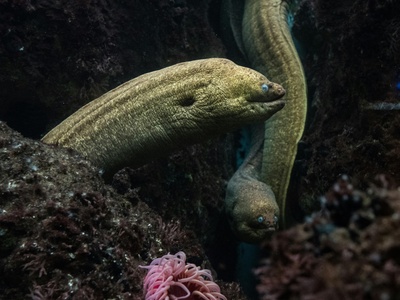
Yellow-bellied sea snake
A pelagic, ocean-going sea snake that spends much of its life in open water. Dark, glossy dorsum can show purplish metallic sheen in sunlight. Highly venomous but generally not aggressive; encounters happen mostly at sea.
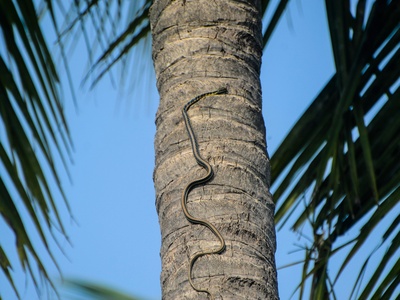
Paradise tree snake
A small, arboreal “flying” snake renowned for dramatic iridescent scales that flash purple, green and blue. Rear-fanged with mild venom to subdue prey; not usually dangerous to people. Highly visual and popular in photos.
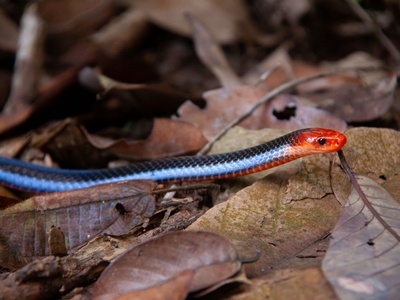
Blue Malayan coral snake
A striking, slender coral snake with glossy blue to purplish dorsal scales and bright red head and tail. Found in Southeast Asian forests; small but highly venomous neurotoxic bite—handle with extreme caution.

Lavender Corn Snake (morph)
A popular captive-bred corn snake morph that replaces dark pigments with soft lavender and purple tones. Nonvenomous and docile, it’s prized for pastel color and ease of care. Doesn’t occur naturally in wild populations.
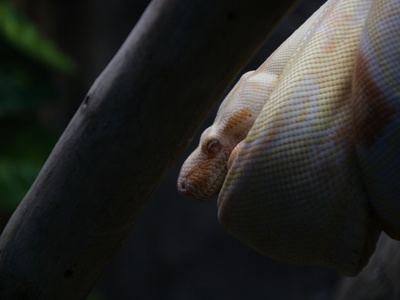
Lavender Albino Ball Python (morph)
A widely produced ball python morph featuring muted melanin and a lavender-pink ground color that can read purple. Nonvenomous, calm, and very popular with breeders for contrast and pastel aesthetics in collections.