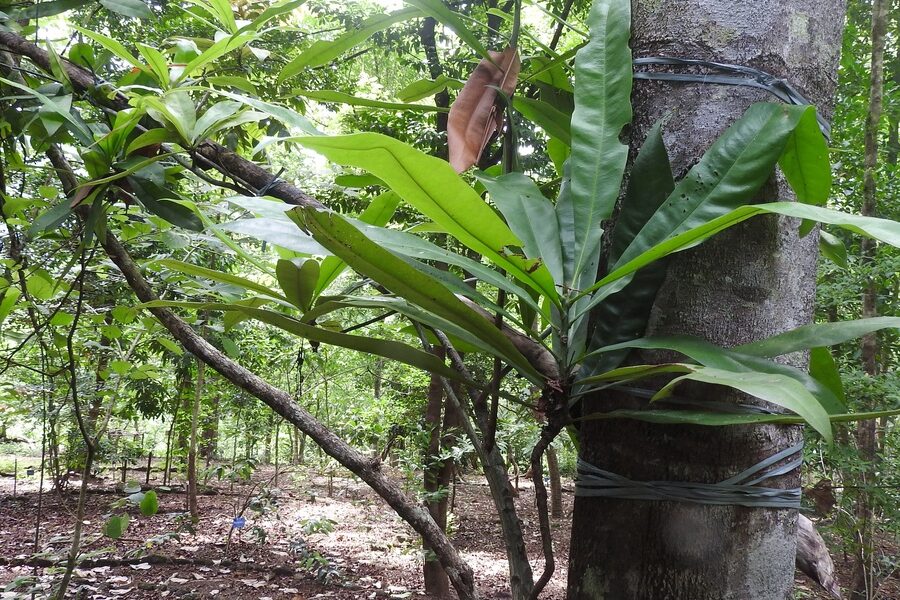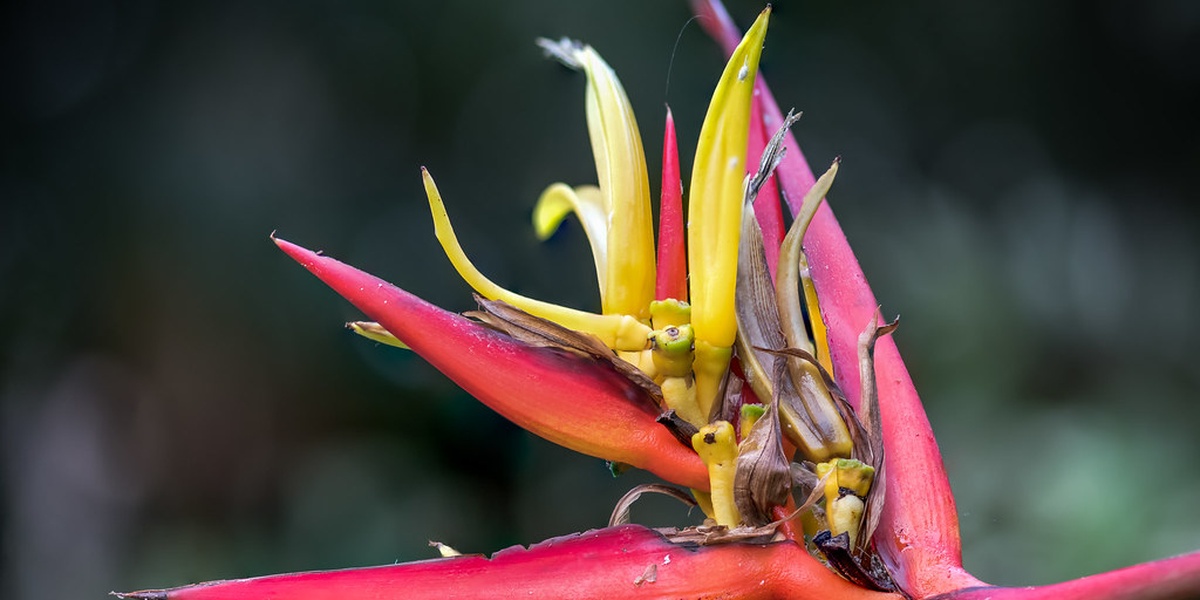
Under the rainforest canopy, light filters in thin beams and the air stays humid year-round, creating a calm, shaded world where many plants specialize in low-light survival. Walking a trail, you notice layers of foliage: tall trees, a dense understory, and a ground layer filled with unique forms and textures.
There are 20 rainforest understory plants, ranging from Bird’s nest fern to Urn bromeliad. Data is organized with the columns Scientific name,Native range,Size (height cm),Light/water notes; you’ll find below.
How much light and water do these understory plants need?
Most understory species prefer bright, indirect light or deep shade and consistent humidity rather than strong sun. Water needs vary by species—many like evenly moist but well-drained soil; others tolerate brief dry periods—so check the Light/water notes column for species-specific guidance.
Can I grow these species outside their native range?
Yes, with the right microclimate: mimic humidity and filtered light (greenhouses, terrariums, or shaded gardens), use suitable potting mixes, and protect cold-sensitive plants listed in the Native range column. Start with adaptable species and consult the Size (height cm) and Light/water notes for placement.
Rainforest Understory Plants
| Common name | Scientific name | Native range | Size (height cm) | Light/water notes |
|---|---|---|---|---|
| Lobster-claw heliconia | Heliconia rostrata | Neotropics (Central & South America) | 180 | Shade to part sun; consistently moist, rich soil. |
| Spiral ginger | Costus spicatus | Neotropics & Caribbean | 150 | Bright shade; keep soil consistently moist. |
| Red ginger | Alpinia purpurata | Malesia & Pacific islands | 200 | Light shade; high humidity and regular moisture. |
| Parlor palm | Chamaedorea elegans | Central America | 150 | Low light tolerant; moderate, even moisture. |
| Calathea orbifolia | Goeppertia orbifolia | Bolivia (Amazonian rainforest) | 75 | Low light; high humidity, keep evenly moist. |
| Prayer plant | Maranta leuconeura | Brazilian rainforests | 25 | Deep shade; likes consistent moisture, humidity. |
| Spotted begonia | Begonia maculata | Atlantic Forest, Brazil | 60 | Low light; moderate moisture; avoid waterlogging. |
| Flamingo flower | Anthurium andraeanum | Colombia & Ecuador rainforests | 40 | Low to medium light; high humidity, moist soil. |
| Bird’s nest fern | Asplenium nidus | Tropical Asia, Pacific | 90 | Shade; high humidity; keep evenly moist. |
| Sword fern | Nephrolepis exaltata | Neotropics (tropical Americas) | 80 | Shade to dappled light; likes moist soil. |
| Urn bromeliad | Guzmania lingulata | Neotropics (Central & South America) | 40 | Low to medium light; keep cup filled, humid. |
| Hot lips | Psychotria elata | Central & northern South America | 200 | Deep shade; consistently moist, humus-rich soil. |
| Hoja santa | Piper auritum | Mexico to Central America | 200 | Shade to part shade; moist, fertile soil. |
| Chinese evergreen | Aglaonema modestum | Southeast Asian rainforests | 70 | Low light tolerant; moderate moisture, warm humidity. |
| Shoebutton ardisia | Ardisia elliptica | Southeast Asia rainforests | 150 | Deep shade; moist, well-drained humus. |
| Ruffled fan palm | Licuala grandis | Solomon Islands & Pacific rainforests | 180 | Shade; high humidity, regular watering. |
| Caladium | Caladium bicolor | Amazonian rainforests (South America) | 45 | Deep shade; very moist, humus-rich soil. |
| Mistletoe cactus | Rhipsalis baccifera | Neotropics (pantropical presence) | 60 | Shade; high humidity, consistently moist but well-drained. |
| Dumb cane | Dieffenbachia seguine | Tropical Americas | 150 | Low light; keep soil moist, warm humidity. |
| Triostar prayer plant | Stromanthe sanguinea | Brazilian rainforests | 60 | Low light; high humidity, evenly moist soil. |
Images and Descriptions
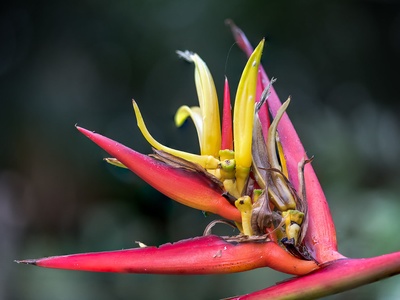
Lobster-claw heliconia
Tropical perennial with showy hanging red-yellow bracts and small flowers. Common on shaded forest edges, it forms clumps from rhizomes and attracts hummingbirds. Easy to ID by pendulous lobster-claw inflorescences and large paddle-shaped leaves.
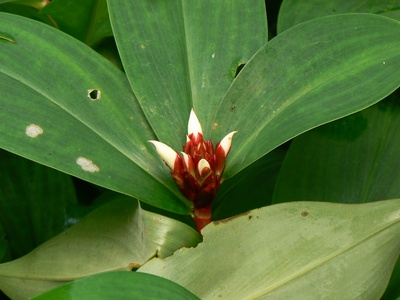
Spiral ginger
Herbaceous spiral-stem ginger with large leaves and red cone-like flower spikes. Grows in shaded, humid understory spreading from rhizomes. Notable for spiral leaf arrangement and blooms that attract pollinators like bees and hummingbirds.
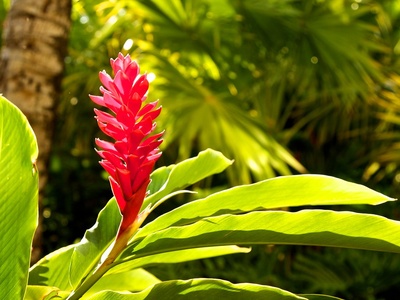
Red ginger
Tall, elegant ginger with bright red bracts and tropical foliage. Often found in shaded, moist forest understory and edges. Clumping from rhizomes, it’s identifiable by upright inflorescences and large pointed leaves that persist in humid conditions.
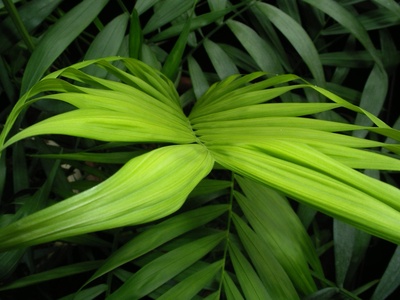
Parlor palm
Small, clumping palm common in dark understory of Central American rainforests. Slender canes and pinnate fronds form graceful tufts. Slow-growing and shade-adapted, it indicates true rainforest understory conditions and tolerates low light well.

Calathea orbifolia
Large-leaved rosette with round, striped foliage native to Bolivian rainforest understory. Leaves fold slightly at night. Prefers steady humidity and shaded conditions in leaf-litter-rich soil; prized for dramatic, bold leaf patterning.
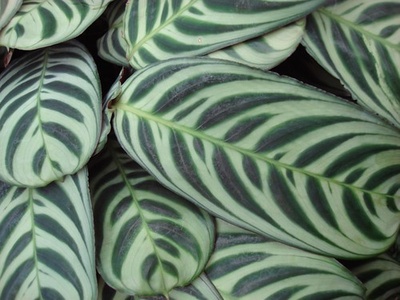
Prayer plant
Low, spreading perennial with oval patterned leaves that fold at night. Native to the rainforest floor, it grows in moist, shaded spots and is notable for rhythmic leaf movements and distinctive markings useful for easy field identification.
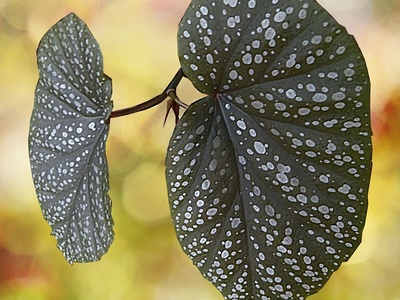
Spotted begonia
Shrubby rhizomatous begonia with glossy, wing-shaped leaves and silver spots. Grows on shaded, humid forest floors of Brazil’s Atlantic rainforest. Produces pendant flower clusters and is valued for ornamental foliage in deep shade.
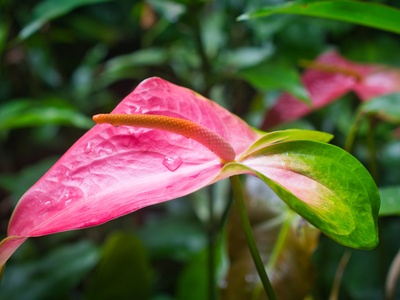
Flamingo flower
Epiphytic or terrestrial aroid of Andean foothill understories with glossy heart-shaped leaves and colorful spathes. Often found on logs or trunks in shaded, humid microsites. Ornamental spathes are showy and attract pollinators.
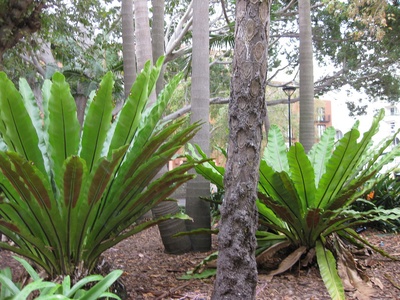
Bird’s nest fern
Large, simple-frond fern forming a central “nest” that collects debris and water. Common on trunks and rocks in rainforest understories, notable for bold arching fronds and its role as a microhabitat for invertebrates and seedlings.
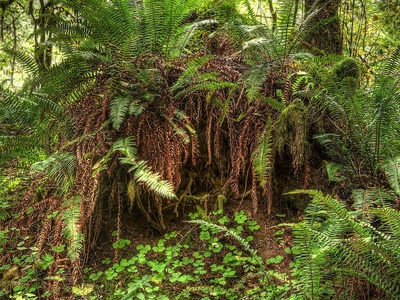
Sword fern
Clumping fern of tropical American understories with arching, sword-like fronds. Forms large colonies on shady forest floors and along streams. Tolerant of varied moisture but prefers consistent humidity and humid leaf litter.
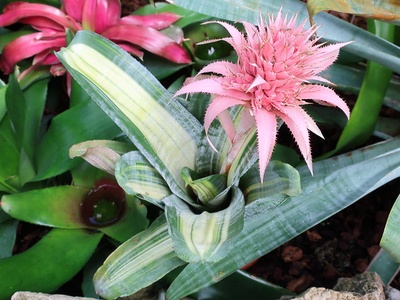
Urn bromeliad
Epiphytic or terrestrial bromeliad with a rosette that holds water in a central cup and bright floral bracts. Found in shaded Neotropical understories; attracts pollinators and creates tiny aquatic microhabitats for invertebrates.
Hot lips
Small understory shrub with distinctive paired red bracts that resemble lips, found along forest trails. Grows in deep shade and moist soils; easily recognized and notable for bracts that draw pollinators and photographers alike.
Hoja santa
Aromatic understory shrub with large heart-shaped leaves used locally in cooking. Forms clumps in moist, shaded rainforest understory and prefers rich soils. Notable for strong anise-like scent and large foliage used as wrappers or flavoring.
Chinese evergreen
Tough, clumping understory perennial with broad patterned leaves. Found on the shaded forest floor, it tolerates low light and humidity fluctuations. Common in the understory and popular as a hardy shade-loving plant.
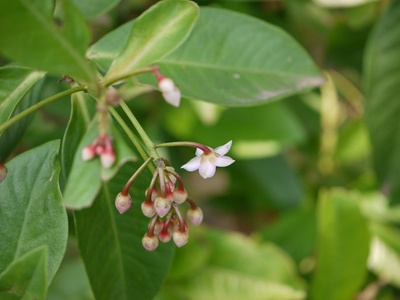
Shoebutton ardisia
Evergreen understory shrub with glossy leaves, clusters of pink flowers and red berries. Grows in deep shade and moist soils, often forming dense understory stands. Berries are attractive to forest birds.
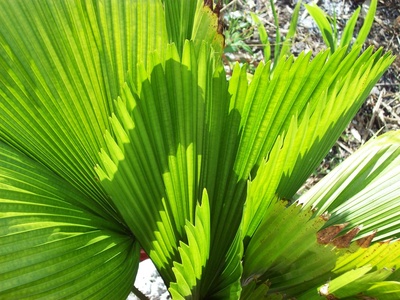
Ruffled fan palm
Small, single-stemmed palm with large circular, pleated fan leaves. Grows in shaded, humid understory with slow vertical growth. Distinctive round fronds make it easy to spot among lower forest foliage.
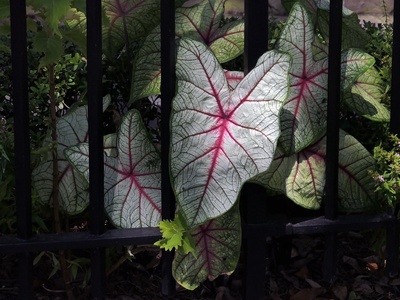
Caladium
Tropical rhizomatous herb with colorful, arrow-shaped leaves found in shaded Amazonian understory. Forms low clumps in leaf litter-rich soil and is notable for dramatic foliage patterns adapted to dim forest light.
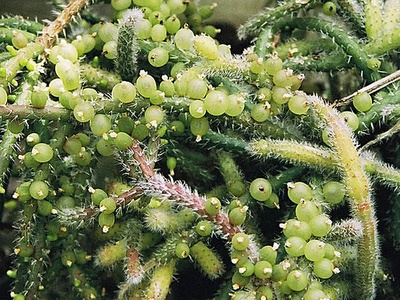
Mistletoe cactus
Epiphytic trailing cactus common on branches and in tree cavities of wet rainforest understories. Produces slender, pendent stems with small flowers and berries; adapted to shaded, humid microhabitats away from direct sun.
Dumb cane
Shade-loving aroid with large patterned leaves and thick stems, common on moist, humus-rich forest floors. Sap is irritating; notable for bold foliage and strong tolerance of deep understory shade.
Triostar prayer plant
Low clumping plant with striking purple undersides and variegated upper leaf surfaces, native to Brazilian understory. Prefers dim, humid conditions and rich soil. Leaves fold slightly at night and present vibrant colors in shade.