Moldova doesn’t get talked about much for its trees, which is a shame. The country sits in a sweet spot for temperate deciduous forest: enough rain for real woodlands, enough seasonal swing to make the leaves show off, and enough farmland pressure that the remaining forest patches feel especially valuable.
If you’re looking for the trees of Moldova, the short version is this: expect oak, hornbeam, ash, maple, linden, poplar, willow, and plenty of planted trees around towns and roads. The native forest story is mostly a broadleaf one, with riparian species hugging rivers and older woodland trees surviving in protected areas and hilly landscapes.
Table of contents
- TL;DR
- What kind of tree country is Moldova?
- Native trees of Moldova
- Trees along rivers and wetlands
- Common planted and urban trees
- Where Moldova’s forests still matter
- Trees in Moldovan culture and daily life
- Quick identification guide
TL;DR
The most important trees of Moldova are temperate broadleaf species, especially oaks and hornbeams in drier uplands, plus poplars, willows, and alders near water. Moldova’s forests are smaller than they once were, so a lot of what you see today is a mix of native woodland remnants, shelterbelts, orchards, and ornamentals planted in villages and cities.
If you want a mental picture: think rolling hills, river valleys, and stands of mixed deciduous trees that turn gold, brown, and rust in autumn rather than evergreen pine forests.
What kind of tree country is Moldova?
Moldova’s climate is continental enough to give trees a proper winter, but not so harsh that broadleaf species can’t dominate. That matters. It’s why the country’s native woodland leans toward deciduous trees that drop their leaves and wait out the cold instead of trying to tough it out year-round.
The Moldovan forest cover is relatively modest compared with heavily forested parts of Europe, and the woods that remain are often fragmented by agriculture. The result is a landscape where trees show up in pockets: on hillsides, along rivers, in protected areas, around vineyards, and in rows planted to break wind and stabilize soil.
A lot of the forest history here is tied to land use. Moldova has long been an agricultural country, so trees were cleared, managed, replanted, and used heavily. That’s why some of the most common trees today are not just “forest trees,” but also field-edge species, roadside plantings, and old estate trees that survived because someone found them useful or beautiful.
Native trees of Moldova
The native trees of Moldova are mostly familiar Central and Eastern European broadleaf species. Nothing here is weird for the sake of being weird. That’s actually useful if you’re trying to identify them, because many of the dominant species have strong seasonal cues and distinct bark, leaf, or fruit traits.
| Species | Common name | Typical habitat | Quick ID clue |
|---|---|---|---|
| Quercus robur | English oak / pedunculate oak | Uplands, mixed forests | Lobed leaves, acorns on long stalks |
| Quercus petraea | Sessile oak | Drier wooded slopes | Similar to English oak, but acorns sit almost directly on the twig |
| Carpinus betulus | European hornbeam | Mixed deciduous forest | Fluted trunk, serrated leaves, smooth gray bark |
| Fraxinus excelsior | European ash | Fertile woodland, river valleys | Opposite leaflets, tall open crown |
| Acer campestre | Field maple | Hedges, woodland edges | Small lobed leaves, corky twigs on older stems |
| Tilia cordata | Small-leaved lime | Mixed woods, slopes | Heart-shaped leaves, fragrant flowers |
| Ulmus minor | Field elm | Forest edges, floodplains | Uneven leaf base, rough bark, broad crown |
| Populus alba | White poplar | Rivers, floodplains | Pale leaf underside, white trunk on mature trees |
| Salix alba | White willow | Wet ground, riverbanks | Narrow leaves, flexible branches, fast growth |
| Alnus glutinosa | Black alder | Wet soils, stream edges | Roundish leaves, small cone-like fruiting structures |
Oaks: the backbone species
If Moldova had a headline tree, it would be oak. The country’s oak woods are part of the wider Eastern European deciduous forest belt, and they anchor a lot of the older, more ecologically complex habitats. English oak and sessile oak are the species you’re most likely to encounter in natural or semi-natural stands.
Oaks matter because they build habitat, not just canopy. Their acorns feed birds and mammals, their bark supports insects and lichens, and older trunks become a whole little ecosystem. A mature oak is basically a neighborhood.
Hornbeam: the quiet workhorse
European hornbeam doesn’t get the fame oak does, but it shows up all over mixed forests. It’s dense, shade-tolerant, and happy to grow under or beside bigger trees. In Moldova, hornbeam often appears in the same stands as oak, maple, and linden, especially where soils are decent and the forest has had time to settle in.
If you’ve ever brushed past a smooth gray trunk with muscle-like fluting up and down the bark, you’ve probably met hornbeam.
Ash, maple, and linden: the supporting cast
These species fill out Moldova’s deciduous woodland structure. Ash likes richer soils and moisture. Field maple handles edges and disturbed spots. Small-leaved lime adds a softer, more fragrant layer to the forest, especially when it flowers and the air gets that sweet, almost herbal smell.
The mix matters. A forest with several canopy species is usually healthier and more resilient than a near-monoculture. Moldova’s mixed broadleaf stands reflect that, even where they’ve been reduced in size.
Trees along rivers and wetlands
The river valleys are where the trees in Moldova change character. Dry upland oak woods give way to water-loving species that can handle flood pulses, soggy soils, and shifting banks.
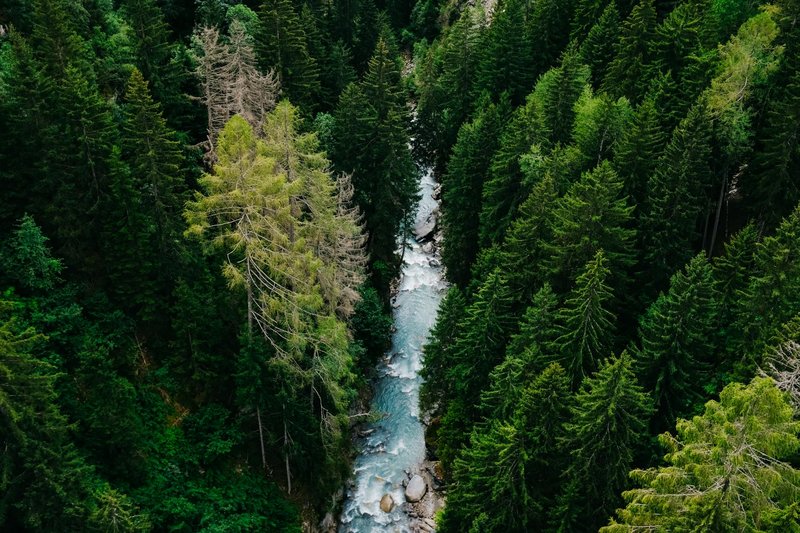
The most common names in these places are poplar, willow, and alder. These trees are built for quick growth and flexible lives. They don’t just survive wet conditions; they exploit them.
Poplars
Poplars are the fast growers of the bunch. They’re often planted, but they also occur naturally near water. Their tall, upright shape and shimmering leaves make them easy to spot from a distance. White poplar is especially noticeable because of the pale underside of its leaves and the gray-white look of older trunks.
Willows
Willows belong to river edges the way reeds belong to marshes. White willow is one of the classic riparian species in Moldova. Its long, narrow leaves and drooping branches are adapted to wet ground and periodic flooding. If a tree looks like it could survive being half-submerged and still keep going, it’s probably a willow.
Alder
Black alder is another important wetland tree. It does well in saturated soils and helps stabilize banks. Its small cone-like fruits are a nice giveaway in winter, when the leaves are gone and the tree is still obviously doing something productive.
Common planted and urban trees
Not every tree you see in Moldova is part of the original woodland story. Towns, villages, parks, and roadsides have their own arboreal cast, and some species are planted so often they feel native even when they’re not.
You’ll commonly see:
- Acacia / black locust (Robinia pseudoacacia) — widely planted, especially in windbreaks and degraded areas
- Horse chestnut (Aesculus hippocastanum) — a classic park and avenue tree
- Norway maple (Acer platanoides) — street tree and shade tree
- Silver linden and other lindens (Tilia spp.) — popular for shade and flowers
- Ornamental conifers — used in yards and public spaces, though they’re not the backbone of native forests
Black locust is a big one. It’s not native to Moldova, but it’s common because it grows fast, tolerates poor soils, and fixes nitrogen. That makes it useful and ecologically complicated, which is often how invasive or introduced trees earn their reputation. Very helpful. Also occasionally rude.
Where Moldova’s forests still matter
Moldova’s remaining forests are small compared with the country’s agricultural lands, but they punch above their weight ecologically. They provide habitat for birds, insects, and mammals, reduce erosion on slopes, and help regulate water in landscapes that can dry out quickly in summer. For a broader look at Moldova’s wildlife, see Animals of Moldova: The Complete List.
Protected areas and wooded valleys are especially important because they preserve older stands of native trees. Those patches are where you’re more likely to see a real mix of species instead of a simplified plantation. For a broader regional view of forest types, the European Environment Agency has useful context on how temperate forests function across the continent.
Moldova’s forests also matter because of the country’s erosion risk. Trees on hillsides are not decorative. They’re soil insurance. Cut them back too hard and the ground starts telling you about it through runoff, gullies, and thinner topsoil.
Trees in Moldovan culture and daily life
Trees in Moldova are not just ecological objects. They’re part of the lived-in landscape.
Village yards often have shade trees planted near houses for summer relief. Shelterbelts line fields. Orchard trees shape the agricultural calendar. Even in places where native woodland has shrunk, trees still organize daily life through shade, fruit, wind protection, and the simple fact that people like to sit under them.
Linden trees deserve a special mention. Across much of Eastern Europe, linden has cultural weight because it’s useful, fragrant, and long-lived. Its flowers attract bees, its wood is workable, and its shade is generous without being too dense. That combination tends to make people fond of it for good reason.
Moldova’s relationship with trees is also practical in a way that’s easy to miss. Firewood, fruit production, windbreaks, and small-scale planting all shape what grows where. So if you’re studying the flora of Moldova, you can’t just look at forests. You have to look at kitchens, roadsides, orchards, and old village lanes too.
Quick identification guide
If you’re trying to identify Moldovan woodland trees on sight, here’s the no-nonsense version:
- Oak: lobed leaves, acorns, sturdy trunk, slow and solid-looking
- Hornbeam: smooth gray bark, fluted trunk, toothed leaves
- Ash: opposite leaflets, airy crown, often tall and straight
- Maple: lobed leaves, paired winged seeds
- Linden: heart-shaped leaves, fragrant summer flowers
- Willow: narrow leaves, drooping branches, water nearby
- Poplar: tall and fast-growing, leaves flutter in the wind
- Alder: wet ground, roundish leaves, small woody fruiting cones
Season matters. In spring, leaves and flowers help. In summer, canopy shape and bark do the work. In autumn, color gets loud. In winter, you’re basically down to silhouette, bark, buds, and general tree confidence.
Trees of Moldova are a mixed broadleaf story
The trees of Moldova tell a clear story: this is a temperate broadleaf landscape shaped by rivers, hills, farming, and centuries of land use. Oaks and hornbeams anchor the native woods. Willows, poplars, and alders mark the wetter ground. Planted species fill the spaces in between, especially near settlements and roads.
If you’re looking for a single image to hold onto, make it this: a Moldovan hillside in late autumn, with oaks still holding a few rust-colored leaves, hornbeams going pale, and a river valley below lined with willow and poplar. Not a rainforest. Not a pine wall. Something quieter, older, and very much worth noticing.