Tropical rainforests are layered, ever-changing environments where food availability shifts with fruiting, insect pulses, and seasonal floods. Animals that can eat both plants and animals take advantage of that variability, moving between canopy, understory, and forest floor to find what’s available.
There are 37 tropical rainforest omnivores, ranging from the Asian palm civet to the White-faced capuchin. Each entry is organized as Scientific name,Diet,Range so you can quickly scan feeding habits and geographic distribution — you’ll find below.
How do omnivores influence rainforest food webs?
Omnivores connect different trophic levels: they disperse seeds, control insect outbreaks, and prey on small vertebrates, which helps balance populations. Their dietary flexibility also buffers ecosystems against short-term food shortages, so spotting omnivores can indicate how energy moves through a particular rainforest.
How can I tell if a rainforest species is truly omnivorous?
Look for varied foraging behavior (fruit, insects, small animals), mixed-diet signs like teeth suited for both cutting and grinding, and observations across seasons. Field guides, local studies, and the Scientific name,Diet,Range columns below are useful for confirming whether a species regularly eats both plant and animal matter.
Tropical Rainforest Omnivores
| Common name | Scientific name | Diet | Range |
|---|---|---|---|
| Tufted capuchin | Sapajus apella | Fruits, insects, small vertebrates, seeds | Amazon Basin; Central & South America |
| White-faced capuchin | Cebus capucinus | Fruits, insects, eggs, small vertebrates | Central America; northwestern South America |
| Squirrel monkey | Saimiri sciureus | Fruit, insects, small vertebrates, nectar | Amazon Basin; Guianas; northern South America |
| Common marmoset | Callithrix jacchus | Gum/exudates, insects, fruit, small vertebrates | Atlantic Forests of Brazil; humid woodlands |
| Golden lion tamarin | Leontopithecus rosalia | Fruits, insects, small vertebrates | Atlantic Forest, Brazil |
| Chimpanzee | Pan troglodytes | Fruit, leaves, insects, mammal meat | West and Central African rainforests |
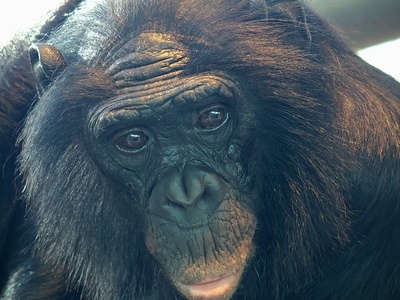
| Bonobo | Pan paniscus | Fruit, leaves, insects, small mammals | Congo Basin rainforests |
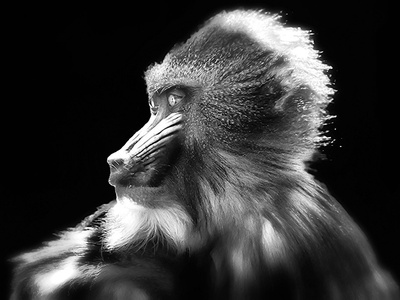
| Mandrill | Mandrillus sphinx | Fruits, roots, insects, small vertebrates | West-Central African rainforests |
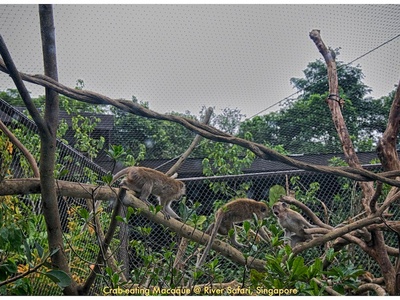
| Crab-eating macaque | Macaca fascicularis | Fruits, crabs, insects, small vertebrates | Southeast Asian rainforests, mangroves |
| Common chimpanzee (duplicate removed) | Pan troglodytes | Fruit, leaves, insects, mammal meat | West and Central African rainforests |
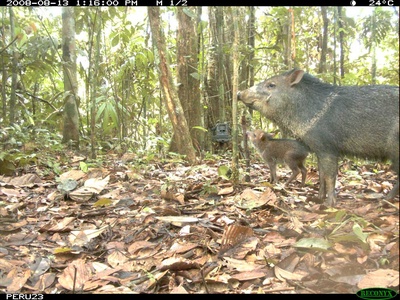
| Collared peccary | Pecari tajacu | Roots, fruits, seeds, insects, small vertebrates | Neotropical rainforests from Mexico to South America |
| Tayra | Eira barbara | Fruits, small mammals, birds, insects | Neotropical rainforests from Mexico to Argentina |
| Crab-eating raccoon | Procyon cancrivorus | Crabs, fruits, eggs, small vertebrates | Amazon Basin and other South American rainforests |
| Common opossum | Didelphis marsupialis | Fruits, insects, carrion, small vertebrates | Neotropical rainforests across Central & South America |
| Binturong | Arctictis binturong | Fruits, small vertebrates, eggs, leaves | Southeast Asian rainforests |
| Asian palm civet | Paradoxurus hermaphroditus | Fruit, insects, small vertebrates | South and Southeast Asian rainforests |
| Malayan sun bear | Helarctos malayanus | Honey, insects, fruit, small vertebrates | Southeast Asian lowland rainforests |
| Coati | Nasua nasua | Fruits, insects, eggs, small vertebrates | Neotropical rainforests from Mexico to Argentina |
| Chimpanzee (duplicate removed) | Pan troglodytes | Fruit, leaves, insects, mammal meat | West and Central African rainforests |
| Crab-eating fox (Cerdocyon thous) | Cerdocyon thous | Fruits, small vertebrates, insects | Amazon and surrounding Neotropical rainforests |
| Keel-billed toucan | Ramphastos sulfuratus | Fruit, insects, eggs, small vertebrates | Central American rainforests; edges |
| Rhinoceros hornbill | Buceros rhinoceros | Fruit, insects, small vertebrates | Southeast Asian lowland rainforests |
| Great hornbill | Buceros bicornis | Fruit, insects, small vertebrates | Indian and Southeast Asian rainforests |
| Eclectus parrot | Eclectus roratus | Fruit, seeds, flowers, occasional insects | Australasian tropical rainforests, New Guinea, Solomon Is. |
| Blue-gray tanager | Thraupis episcopus | Fruit, nectar, insects, seeds | Neotropical lowland rainforest and edges |
| Oropendola | Psarocolius decumanus | Fruit, insects, nectar, small vertebrates | Amazon Basin rainforests |
| Great tinamou | Tinamus major | Fruits, seeds, insects, small invertebrates | Amazon Basin and Central American rainforests |
| Basilisk lizard | Basiliscus basiliscus | Insects, small vertebrates, fruit | Central American rainforests near streams |
| Green basilisk (duplicate removed) | Basiliscus plumifrons | Insects, small vertebrates, fruit | Duplicate entry removed to avoid redundancy |
| Tambaqui | Colossoma macropomum | Fruit, seeds, invertebrates, detritus | Amazon Basin rivers and flooded forests |
| Pacu | Piaractus brachypomus | Fruit, seeds, invertebrates | Amazon and Orinoco floodplain systems |
| Common pleco | Hypostomus plecostomus | Algae, detritus, small invertebrates | Amazon Basin rivers and flooded forests |
| Brown capuchin (alternate name removed) | Sapajus apella | Fruits, insects, small vertebrates, seeds | Entry merged with Tufted capuchin to avoid duplication |
| Common woolly monkey | Lagothrix lagotricha | Fruit, leaves, insects, eggs | Western Amazon rainforest |
| Grey-cheeked mangabey | Lophocebus albigena | Fruit, seeds, insects, small vertebrates | Central African rainforests |
| Common woolly monkey (duplicate removed) | Lagothrix lagotricha | Fruit, leaves, insects, eggs | Duplicate removed to prevent repetition |
| Black agouti (excluded) | Dasyprocta fuliginosa | Primarily seeds and fruit | Excluded: primarily herbivorous, not regular omnivore |
Images and Descriptions
Tufted capuchin
A clever medium-sized monkey (~3–4 kg) that forages in canopy and forest edge, eating fruit, insects and small animals. Important seed disperser and opportunistic predator, notable for tool use and problem-solving in wild populations.
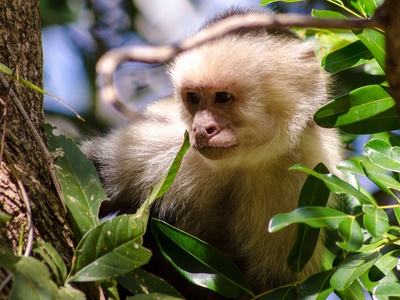
White-faced capuchin
A social, adaptable monkey (~2–4 kg) living in lowland rainforest and secondary growth. Eats fruits, insects and small vertebrates, helping disperse seeds and control insects; famous for bold intelligence and frequent interactions with other species.
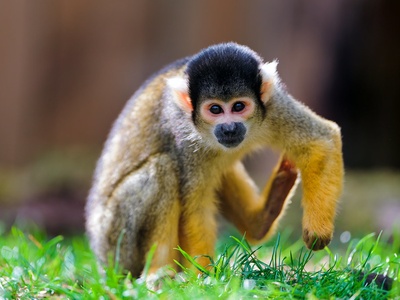
Squirrel monkey
A small, agile primate (~0.7–1.1 kg) of the mid-canopy, feeding on ripe fruit, insects and occasional vertebrates. Key insect predator and seed disperser, noted for large noisy troops and rapid foraging movements.
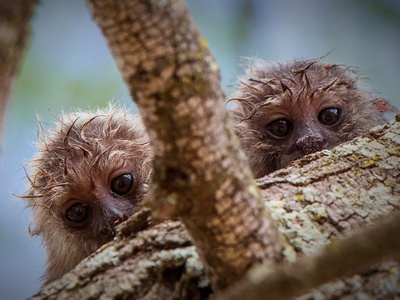
Common marmoset
A tiny primate (~0.3–0.5 kg) that specializes on tree sap and gum but also eats insects, fruit and small prey. Lives in family groups, important for insect control, and notable for claw-like nails used to cling to trunks.
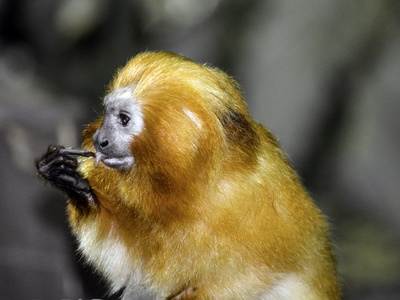
Golden lion tamarin
A striking small monkey (~0.6–0.9 kg) inhabiting lowland rainforest fragments; eats fruit, insects and small vertebrates. Serves as seed disperser and pest controller; conservation icon due to successful reintroduction efforts.
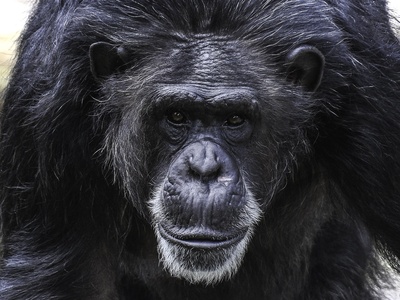
Chimpanzee
Large ape (~30–70 kg) occupying canopy and forest understory, eating fruit, insects and hunting small to medium mammals. Keystone omnivore shaping prey populations and seed dispersal; noted for complex cultures and tool-assisted hunting.
Bonobo
A medium-large ape (~30–45 kg) favoring fruit and animal prey, living in matriarchal societies. Plays major roles in seed dispersal and predation; notable for peaceful social interactions and sophisticated social behavior.
Mandrill
A large colorful primate (~15–35 kg) of forest floor and understory that eats fruit, invertebrates and small vertebrates. Important seed disperser and ground forager; remarkable for sexually dimorphic coloration and large social groups.
Crab-eating macaque
Medium macaque (~4–8 kg) that forages in trees and along waterways, eating fruit, crustaceans, insects and small prey. Flexible omnivore, notable for tolerance of humans and varied habitats across islands and mainlands.

Common chimpanzee (duplicate removed)
Duplicate entry removed to maintain species uniqueness.
Collared peccary
A sturdy pig-like mammal (~20–35 kg) of understory and forest edge that roots for fruit, roots and small animals. Influences seed predation and soil turnover; travels in herds and shapes plant community dynamics.
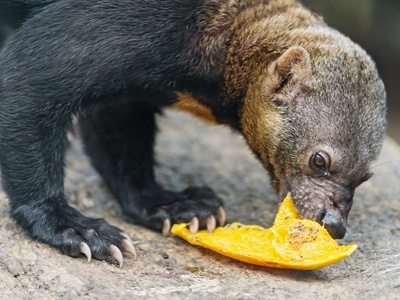
Tayra
A sleek mustelid (~2–4 kg) that hunts in canopy and understory while also eating ripe fruit. Omnivorous generalist and agile climber, notable for bold curiosity and opportunistic diet across forest habitats.
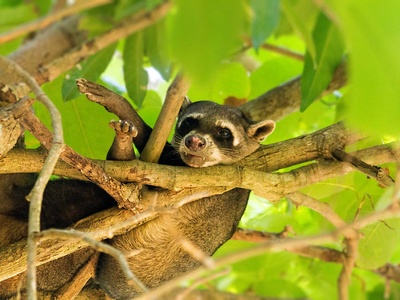
Crab-eating raccoon
A medium omnivorous mammal (~5–9 kg) associated with rivers and flooded forests; eats crustaceans, fruits and small animals. Ecologically important omnivore and scavenger, adaptable to riparian rainforest habitats.
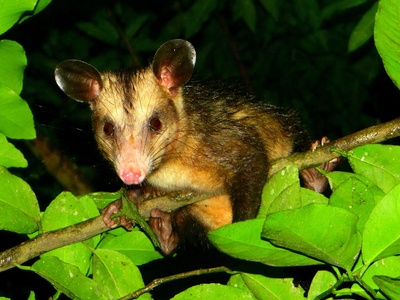
Common opossum
A medium-sized marsupial (~1–4 kg) that forages on forest floor and understory for fruit, insects and carrion. Flexible omnivore that aids seed dispersal and scavenging; known for thanatosis (playing dead) as defense.
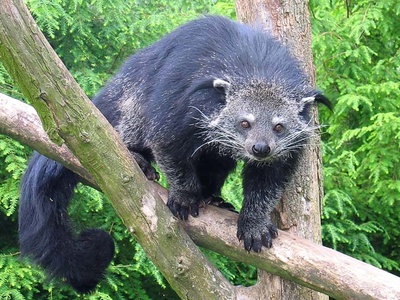
Binturong
A large arboreal carnivore-leaning omnivore (~9–20 kg) that eats fruit, small animals and eggs in canopy. Important seed disperser for strangler figs, notable for strong scent like popcorn and nocturnal habits.
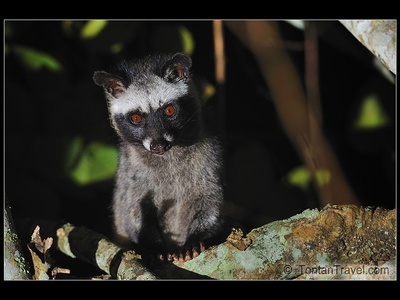
Asian palm civet
A small nocturnal carnivore-leaning omnivore (~1–3 kg) that eats fruit, insects and small prey in canopy and gardens. Important seed disperser (including for coffee cherries), notable for wide habitat tolerance.
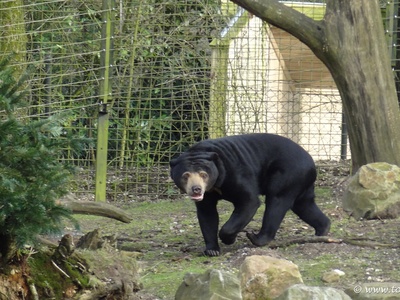
Malayan sun bear
The smallest bear (~25–65 kg) of tropical forest that feeds on insects, honey, fruit and occasional vertebrates. Omnivorous forest engineer, notable for powerful forelimbs used to extract insects and large home ranges.
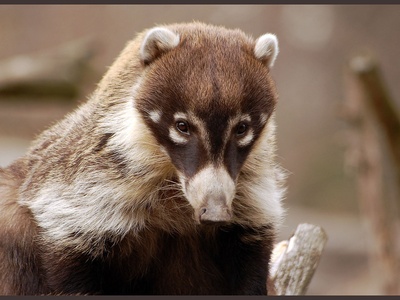
Coati
A social procyonid (~3–8 kg) foraging on forest floor and lower canopy, eating fruits, invertebrates and small animals. Influences seed dispersal and invertebrate populations; recognizable by long tail and curious behavior.
Chimpanzee (duplicate removed)
Duplicate entry removed.
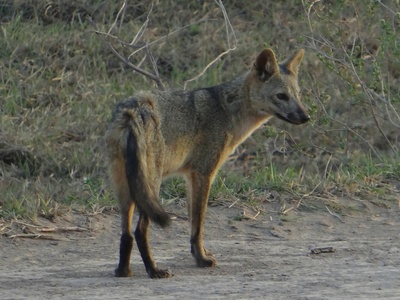
Crab-eating fox (Cerdocyon thous)
A small canid (~5–8 kg) occupying forest edges and mosaic habitats, eating fruits, invertebrates and small prey. Opportunistic omnivore and seed disperser, often found in disturbed rainforest landscapes.
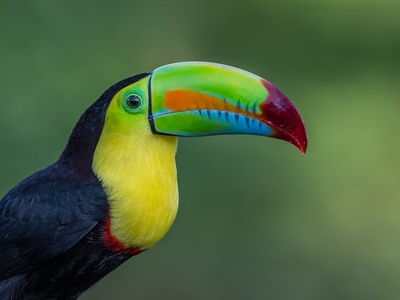
Keel-billed toucan
A large colorful frugivorous-omnivorous bird (~400–600 g) that feeds on fruit and occasionally insects, eggs or small vertebrates in canopy. Important long-distance seed disperser, notable for oversized colorful bill used for feeding and thermoregulation.
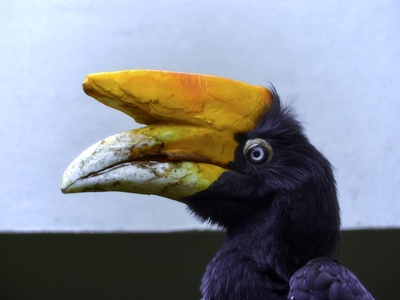
Rhinoceros hornbill
A large forest canopy bird (~1–2.7 kg) that eats fruit and captures insects, reptiles and small mammals. Keystone seed disperser and cavity nester, notable for casque and cultural significance in many forest peoples.
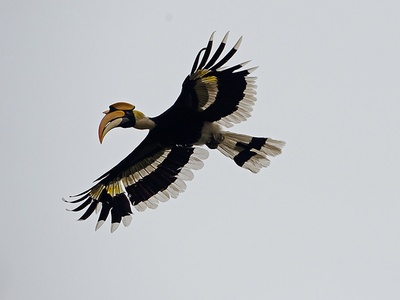
Great hornbill
A very large hornbill (~2–4 kg) feeding on fruit and opportunistically on animals. Major seed disperser for large-seeded trees, notable for striking casque and unique breeding biology where females are sealed in cavities.
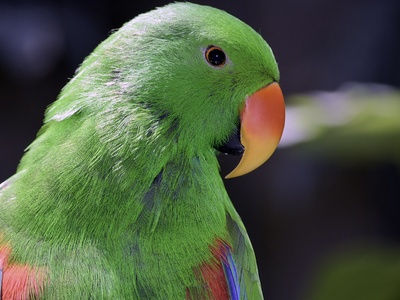
Eclectus parrot
A medium parrot (~0.4–0.9 kg) that eats fruit, flowers and some invertebrates in canopy. Important pollinator and seed disperser, notable for extreme sexual dimorphism in plumage colors between males and females.
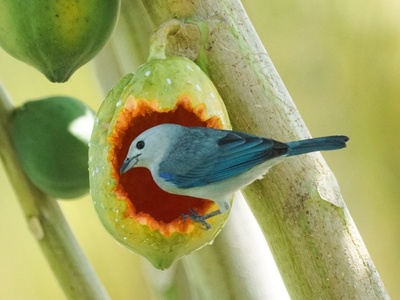
Blue-gray tanager
A small colorful songbird (~30–45 g) that gleans fruit and insects in canopy and edges. Omnivorous and adaptable, helping control insects while dispersing small seeds; common and conspicuous in forest clearings.
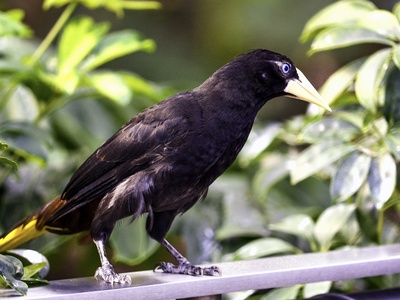
Oropendola
A large colonial passerine (~200–300 g) that feeds on fruit, insects and nectar in canopy. Constructs pendulous nests and influences seed dispersal; notable for loud gregarious calls and colony nesting.
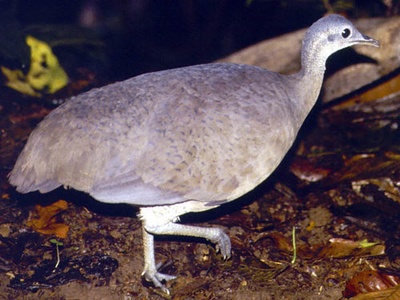
Great tinamou
A secretive ground-dwelling bird (~700–1,200 g) that eats fallen fruits, seeds and invertebrates on forest floor. Omnivorous forager that aids seed dispersal and nutrient cycling; notable for cryptic behavior and booming calls.
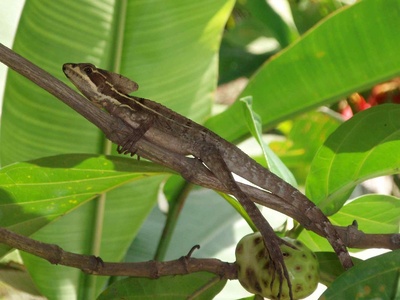
Basilisk lizard
A medium lizard (~0.5–1 kg total length) known as the “Jesus lizard” for running on water; omnivorous diet includes insects, small vertebrates and fruit. Occupies streamside vegetation and is agile both on land and water.
Green basilisk (duplicate removed)
Duplicate entry removed to maintain unique species list.
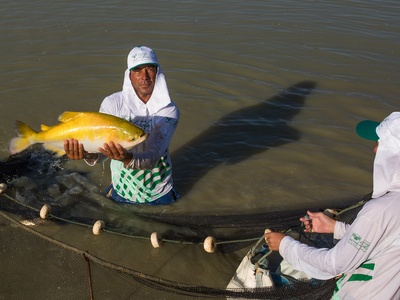
Tambaqui
A large floodplain fish (~10–30 kg) that eats fallen fruit, seeds and invertebrates in flooded rainforest forests. Key seed disperser for overbank fruiting trees, notable for seasonal migrations tied to flood pulses.
Pacu
A heavy-bodied freshwater fish (~5–15 kg) feeding on fruits, nuts and animal matter. Important seed predator and disperser in flooded forests, often harvested by local fisheries and known for strong jaws.
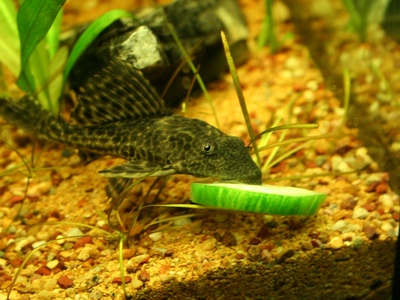
Common pleco
A widespread armored catfish (~0.5–5 kg) that grazes algae, detritus and small invertebrates on submerged surfaces. Omnivorous benthic forager that recycles nutrients, notable for suction mouth and usefulness in aquarium trade.
Brown capuchin (alternate name removed)
Merged duplicate to ensure single authoritative entry per species.
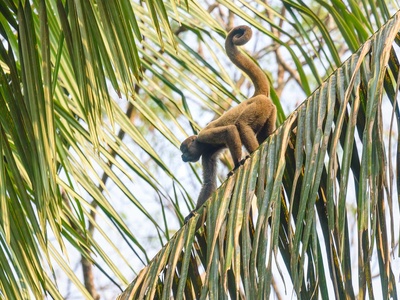
Common woolly monkey
A large arboreal primate (~7–10 kg) feeding primarily on ripe fruit but regularly consuming leaves, insects and eggs. Important frugivore and seed disperser, notable for thick fur and frugivorous role in canopy dynamics.
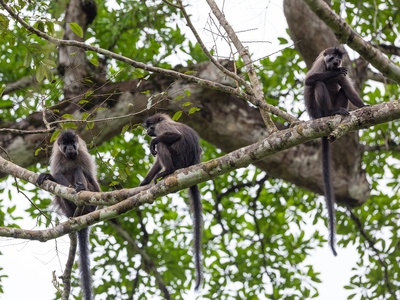
Grey-cheeked mangabey
A medium monkey (~6–9 kg) foraging in canopy for fruit, seeds and animal prey. Omnivorous and social, affecting seed distribution and insect populations; notable for cheek pads and loud calls.
Common woolly monkey (duplicate removed)
Duplicate entry removed.
Black agouti (excluded)
Excluded because diet is primarily herbivorous; does not meet omnivore inclusion criteria.