Shallow ponds, slow streams and marsh margins hide a surprising variety of life; if you crouch by the water’s edge you’ll see ripples, quick dives and beetles skating on the surface. These different microhabitats shape body size, shape and behavior among aquatic beetles so spotting patterns gets rewarding fast.
There are 19 water beetles, ranging from Acilius sulcatus to Whirligig beetles. For each species the list below is organized with the columns Scientific name,Size (mm),Habitat & range — you’ll find that below.
How can I tell Acilius sulcatus apart from other water beetles?
Look for a relatively robust, streamlined diving beetle that swims powerfully with flattened, fringed hind legs; Acilius often appears dark and glossy with subtle grooves on the elytra and prefers open water near vegetation. For exact identification, compare size, leg structure and elytral markings against a field key or photos.
Where are water beetles most likely to be found and what habitats do they prefer?
Most species live in standing or slow-moving freshwater—ponds, ditches, marshes and slow streams—with many favoring vegetated margins or shallow edges where prey and shelter are abundant; species differ by tolerance for flow, depth and water chemistry, so checking Habitat & range in the table below helps narrow possibilities.
Water Beetles
| Name | Scientific name | Size (mm) | Habitat & range |
|---|---|---|---|
| Diving beetles | Dytiscidae | 3-45 | Ponds, lakes, slow streams worldwide |
| Great diving beetle | Dytiscus marginalis | 28-35 | Ponds, slow waters Europe & Asia |
| Acilius sulcatus | Acilius sulcatus | 16-22 | Ponds, lakes Europe & North Africa |
| Whirligig beetles | Gyrinidae | 4-10 | Water surface of ponds, lakes worldwide |
| Gyrinus natator | Gyrinus natator | 5-7 | Ponds, slow waters Europe |
| Water scavenger beetles | Hydrophilidae | 2-45 | Marshes, ponds, slow rivers worldwide |
| Giant water scavenger beetle | Hydrophilus piceus | 35-45 | Ponds, marshes Europe & Asia |
| Crawling water beetles | Haliplidae | 2-6 | Weedy ponds, margins Holarctic |
| Haliplus ruficollis | Haliplus ruficollis | 3-4 | Ponds, marshes Europe |
| Burrowing water beetles | Noteridae | 2-8 | Vegetated ponds worldwide |
| Noterus clavicornis | Noterus clavicornis | 4-6 | Ponds, fens Europe |
| Riffle beetles | Elmidae | 2-8 | Fast-flowing streams, rocky riffles worldwide |
| Elmis aenea | Elmis aenea | 3-5 | Cool streams Europe |
| Sallow water beetles | Hydrochidae | 2-6 | Ponds, marshes worldwide |
| Hydrochus ignicollis | Hydrochus ignicollis | 3-5 | Ponds, marshes Europe |
| Minute moss beetles | Hydraenidae | 0.8-3 | Mossy stream margins, springs worldwide |
| Hydraena riparia | Hydraena riparia | 1-2 | River margins Europe |
| Travertine beetles | Lutrochidae | 3-6 | Shallow, rocky streams North America |
| Lutrochus arizonicus | Lutrochus arizonicus | 3-5 | Mountain seeps, SW North America |
Images and Descriptions
Diving beetles
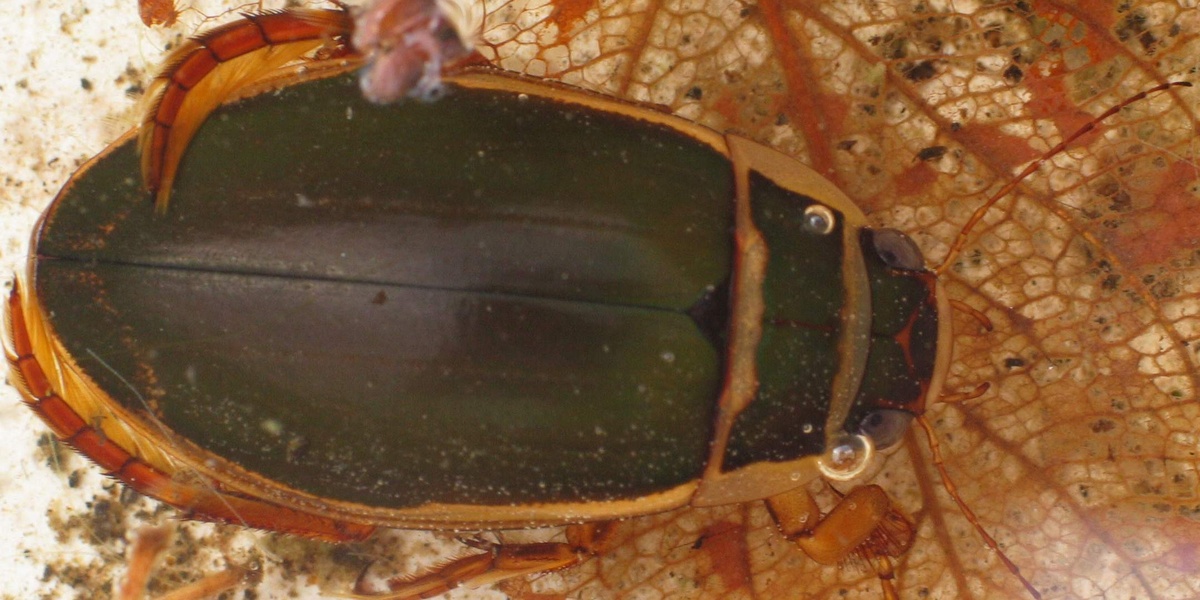
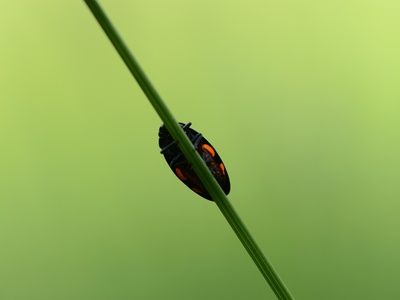
Streamlined, oval predators with flattened, fringed hind legs for swimming. Adults surface to trap air under elytra and dive. Common in ponds; eat insects, tadpoles and small fish, making them effective pond predators and active hunters.
Great diving beetle
Large, glossy black-brown beetle recognizable by size and powerful swimming. A voracious predator that carries an air bubble under its elytra to breathe underwater. Often seen cruising pond margins and active at night, sometimes attracted to lights.
Acilius sulcatus
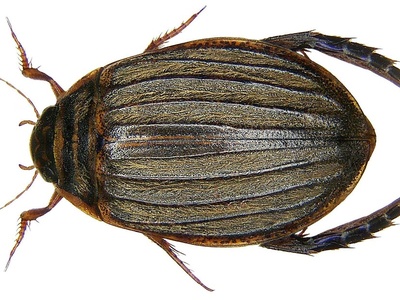
Medium-large diving beetle with grooved elytra and pale legs; streamlined for fast swimming. Predatory on insects and tadpoles, it surfaces to renew trapped air beneath the elytra. Common in clear, vegetated ponds where it hunts actively.
Whirligig beetles
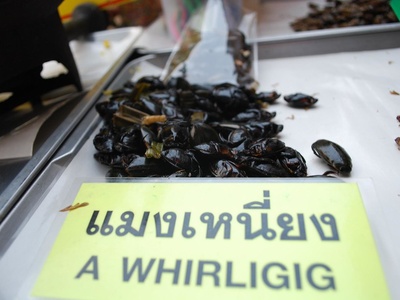
Shiny, flattened beetles that whirl in conspicuous surface schools, using divided eyes to watch above and below water. They snap up trapped insects and communicate with fast turns. Frequently seen circling on calm pond surfaces in bright sunlight.
Gyrinus natator
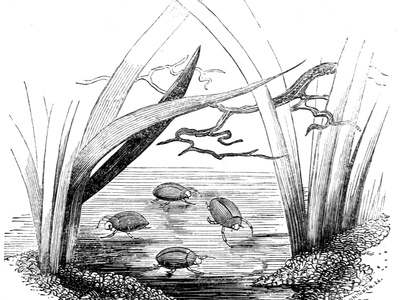
Common whirligig with smooth, rounded body and split eyes. Typically swims in tight circles on pond surfaces, feeding on small insects and avoiding predators with rapid, coordinated movements. Easily noticed by surface ripples and schooling behavior.
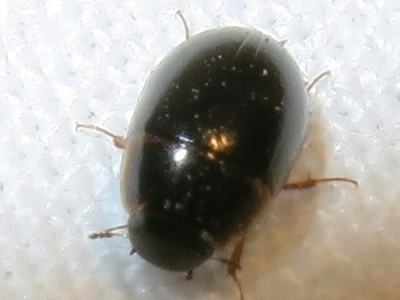
Water scavenger beetles
Often shiny, oval beetles with short clubbed antennae and long maxillary palps. Many species scavenge on decaying plants or feed on algae, while some are predatory. They trap air under the elytra and are common in ponds and marshes.
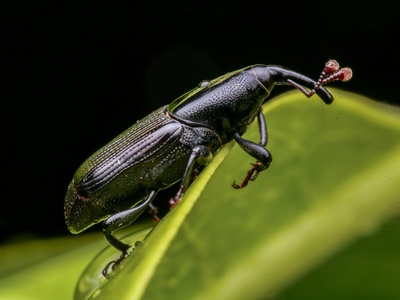
Giant water scavenger beetle
One of the largest freshwater beetles, bulky and glossy black. Mostly feeds on decaying plant matter and occasional small animals. Adults swim slowly, carry a large air store under elytra, and are nocturnal, often drawn to lights at night.
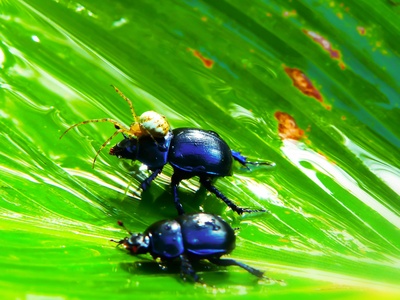
Crawling water beetles
Small, rounded beetles with striking yellow-and-black patterns and large hind coxal plates that store air. They crawl among submerged vegetation rather than free-swimming. Larvae are algal grazers, making these beetles common on pond plants in summer.
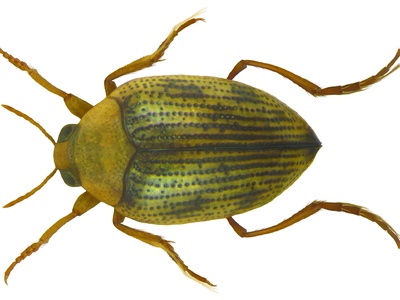
Haliplus ruficollis
Small, reddish-necked haliplid with spotted elytra and large hind plates. It clings to pond plants and grazes algae while storing air under its body. Common in shallow, weedy ponds where adults and larvae feed on filamentous algae and detritus.
Burrowing water beetles
Small, smooth water beetles that often burrow into mud and dense vegetation. They have streamlined bodies and swim with tucked legs, preying on small invertebrates. Less obvious than larger diving beetles, they help control insect populations in ponds.
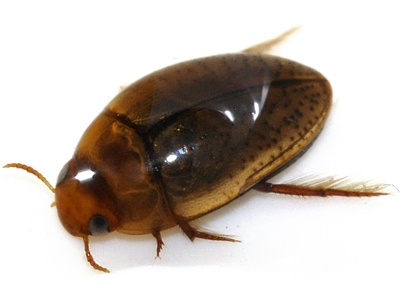
Noterus clavicornis
Oval, brownish burrowing water beetle found among pond vegetation and shallow margins. It moves slowly and hides in roots or detritus, preying on small aquatic invertebrates. Useful for indicating healthy pond edges and balanced invertebrate communities.
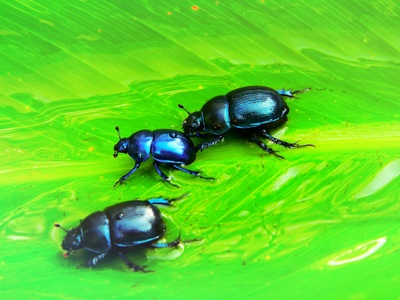
Riffle beetles
Small, elongated beetles whose adults and larvae live permanently underwater on stones in fast-flowing streams. Adults cling with strong legs and breathe via a plastron layer, scraping algae and biofilm; their presence indicates clean, well-oxygenated water.
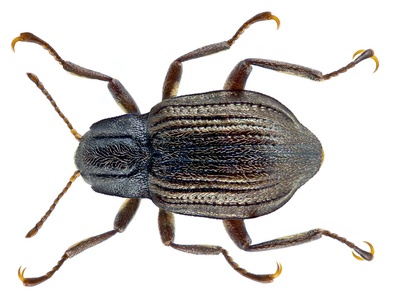
Elmis aenea
Narrow, dark riffle beetle that clings to submerged rocks and logs in cool streams. Both adults and larvae graze algae and biofilm. Its sensitivity to pollution makes it a useful indicator species for stream health in many regions.

Sallow water beetles
Small, rounded to elongate beetles that inhabit stagnant or slow waters with abundant vegetation. Adults are slow swimmers and feed on detritus and algae. Often overlooked due to size, they help break down organic matter in ponds and marshes.
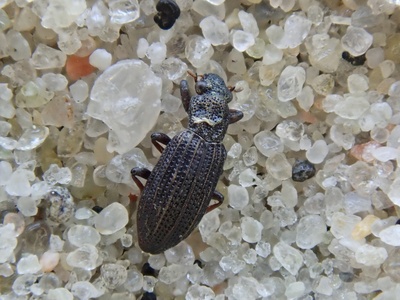
Hydrochus ignicollis
Tiny brown hydrochid living among submerged leaves and debris in shallow ponds. Adults feed on decaying plant material and microalgae, hiding in vegetation. Because of their small size and secretive habits they’re frequently under-recorded in freshwater surveys.
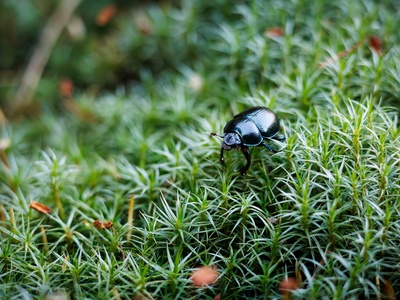
Minute moss beetles
Minute beetles living in moss, wet stones, and splash zones along springs and streams. Adults browse biofilm and microalgae and can move in thin water films. Though tiny, they can be abundant and indicate clean, springy habitats.
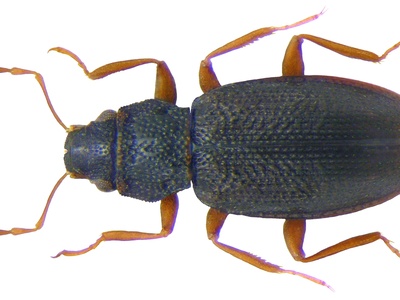
Hydraena riparia
Tiny, compact beetle found in moss and damp sediments on river margins. It moves within the water film, scraping off microalgae and organic particles. Often overlooked, its presence signals healthy, well-oxygenated streamside microhabitats.
Travertine beetles
Small beetles associated with shallow, rocky streams and submerged wood, often in mineral-rich or spring-fed waters. Adults cling to stones and graze algae; uncommon but characteristic of clear, cool stream habitats where they help biofilm turnover.
Lutrochus arizonicus
Small orange-brown beetle found in cool mountain seeps and clear stream margins. Adults cling to submerged rocks and graze algae and diatoms. Their presence can indicate spring-influenced water chemistry and relatively undisturbed stream conditions.