By 2025 an estimated 1.8 billion people will be living in regions with absolute water scarcity, according to United Nations projections. That stark number puts a spotlight on local, practical steps households and communities can take right now to stretch existing supplies and reduce stormwater impacts. Climate variability is increasing the frequency of both intense storms and longer dry spells, urban runoff overloads sewers and waterways, and utility rates keep climbing — so capturing rain at the source makes sense for environmental and financial reasons. Here’s how to put rain to work for you: from a $75 rain barrel to multi-thousand-gallon cisterns with treatment, options scale with need and budget. This piece lays out seven clear, actionable ways to harvest rainwater, with benefits, typical costs, and concrete examples to help you pick the right approach for your property.
Household-scale capture systems
Most simple systems catch water from a roof via gutters and downspouts, then store it for near-term use. Use the rule of thumb: one inch of rain on 1,000 square feet of roof gives roughly 623 gallons of water, so even small roofs can yield useful volumes over a season. These systems are low-cost, quick to install, and ideal for irrigation, nonpotable indoor uses where allowed, and reducing runoff that contributes to local flooding. Permits and rules vary — some places restrict potable reuse or require screened outlets — so check municipal codes before plumbing rainwater into indoor fixtures. For many homeowners, small hardware-store kits are the entry point; for larger needs a modular cistern or buried tank makes sense. These ways to harvest rainwater at the household level prioritize ease, cost-effectiveness, and immediate payoff.
1. Rain barrels and downspout diverters
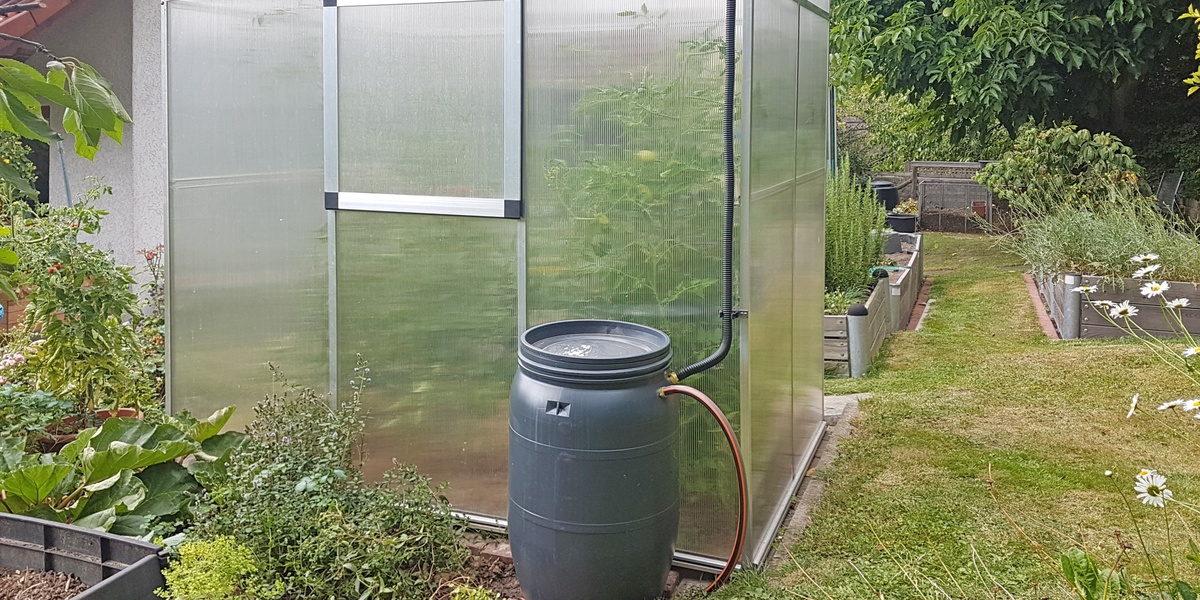
A rain barrel system channels roof runoff through a downspout diverter into a storage drum for short-term use. Typical barrels hold 40–80 gallons and kits sold at big-box stores commonly run $50–$150, making them an affordable entry point. For perspective, a 1,000 sq ft roof that gets 2 inches of rain produces about 1,246 gallons — so one barrel stores a small fraction, but several connected in series multiply capacity.
Everyday uses include watering vegetable beds and container gardens, topping up pond systems, or reducing lawn irrigation. Maintenance is straightforward: keep the intake screened to block leaves, empty or disconnect and store barrels in freezing climates, and fit mosquito-proof mesh or sealed spigots for safety. Concrete examples include standard 50–60 gallon rain-barrel kits and simple roll-off barrels plumbed together when extra storage is needed. Some cities run rebate or giveaway programs (for example, municipal programs in Portland and other U.S. cities) that lower upfront cost and encourage neighborhood adoption.
2. Cisterns: aboveground and underground storage
Cisterns are larger storage tanks for seasonal buffering or whole-house nonpotable supply. Aboveground polyethylene tanks and modular Graf-style cisterns are common in the 2,500–10,000+ gallon range, while buried concrete tanks are typical on farms and larger properties. Small aboveground poly tanks can sometimes be installed for roughly $1,000, whereas large buried systems — including excavation, bedding, and plumbing — often run $10,000 or more.
Cisterns let you capture wet-season rainfall for dry-season irrigation, livestock water, or emergency supply. They generally require a pump or careful gravity-fed design to deliver water to use points, and site factors like soil type and groundwater depth affect feasibility and cost. Modular polyethylene tanks are popular for easier installation; concrete underground cisterns serve farms and estates where long-term, high-volume storage is needed. Expect periodic cleaning, inlet screening, and pump maintenance as part of ownership.
Landscape and site-based capture
Beyond tanks, shaping the landscape to slow, spread, and soak rain into the ground reduces runoff and rebuilds local groundwater. Thoughtful site design can cut peak flows, improve habitat, and cool hot urban surfaces while capturing water where it falls. Landscape measures often pair well with storage: a rain garden captures and infiltrates small storms, while swales and permeable paving let larger volumes recharge soils. These approaches are typically low-tech but require attention to soil, slope, and overflow paths. Examples range from community rain gardens in city neighborhoods to green roofs on municipal buildings and permeable pavers in driveways and parking lots.
3. Rain gardens and bioswales
Rain gardens are shallow, planted depressions that capture roof and pavement runoff and allow it to infiltrate rather than rush to storm drains. The EPA and other guidance note that properly sized rain gardens can capture roughly 30–50% of annual runoff from a typical residential lot, depending on soil and climate.
Siting focuses on directing downspout flows into the garden, amending soil to improve infiltration if needed, and providing an overflow route for large storms. Typical plant palettes favor native sedges, switchgrass, and flowering perennials that tolerate wet-dry cycles. Street-side bioswales filter parking-lot runoff and are often used by municipalities; residential downspout-to-garden conversions are a low-cost private option. Maintenance is modest: remove seasonal debris, occasional weeding, and check inlet areas after storms.
4. Green roofs
Green roofs retain rainfall in a growing medium and vegetation layer, reducing the volume and slowing the timing of runoff. Extensive green roofs (shallow, low-maintenance systems) commonly retain about 40–60% of annual rainfall, with retention improving as substrate depth increases.
Benefits include lower building cooling loads, longer roof membrane life, and reduced stormwater peaks in dense urban areas where ground space is limited. Practical considerations: assess roof structural capacity, plan irrigation during plant establishment, and budget higher upfront costs versus long-term energy and stormwater savings. Typical installations include sedum-based extensive systems on commercial roofs and deeper intensive roofs with walkways and plantings for communities or institutions.
5. Permeable pavements and infiltration trenches
Permeable pavements and infiltration trenches let water pass through surfaces into an engineered sub-base or the native soil, cutting runoff where impervious surfaces dominate. For small storms, pervious pavement systems can reduce runoff volumes by roughly 50–100%, depending on design and maintenance.
Options include permeable interlocking pavers, porous asphalt, and stone-filled infiltration trenches used along driveways and parking areas. Effective systems need a properly sized sub-base for temporary storage, soils with adequate infiltration rates, and regular cleaning (vacuum sweeping) to prevent clogging. A common real-world example is modular permeable pavers used in stormwater-friendly parking lots and residential driveways to meet local stormwater rules.
Engineered collection, treatment, and reuse
When you want to move beyond simple storage, treatment and distribution systems expand how collected rainwater can be used. Adding filtration, disinfection, pumps, and controls raises costs — but also unlocks uses like toilet flushing, laundry, irrigation, and, with certified systems, drinking water. Regulations for potable reuse are strict in most jurisdictions, so design and ongoing monitoring are essential. At the household level, the most common additions are first-flush diverters and cartridge filters; at the high end are packaged roof-to-tank potable systems that include multi-stage treatment and monitoring. These engineered approaches trade simplicity for broader utility and greater long-term value.
6. First-flush diverters and filtration systems
The first-flush principle diverts the initial portion of roof runoff — where dust, bird droppings, and particulates concentrate — away from storage to improve overall water quality. Installing a first-flush diverter ahead of a tank is a low-cost, high-impact step.
Typical installations layer protection: a mesh leaf screen at the gutter, a gravity-fed first-flush diverter ($50–$300), sediment or cartridge filters, activated carbon for taste/odor, and optional UV disinfection. UV and certified filtration units add several hundred to several thousand dollars depending on capacity and features. These components are recommended before using collected water indoors or for laundry. Maintenance matters: change cartridges on schedule, clean strainers, and replace UV lamps as specified to keep the system effective.
7. Roof-to-tank potable systems (pumps, treatment, monitoring)
Turning rooftop catchment into drinking water is technically feasible but tightly regulated and operationally demanding. A certified potable roof-to-tank system combines screened catchment, staged filtration, disinfection (UV or chlorination), secure storage, pressure pumps, and monitoring or data logging to meet health standards.
Installed costs commonly start in the low thousands for modest, noncertified setups and can exceed $10,000 for systems built to potable standards with monitoring and permitting. These systems make sense for remote homes without reliable supply, properties seeking emergency resilience, or pilot projects where utilities integrate treated rain into nonpotable networks. Expect annual testing, routine filter and lamp replacements, and close coordination with local health departments or building inspectors before converting rain into tap water.
Summary
- The quick rule: 1 inch of rain on 1,000 sq ft ≈ 623 gallons — a simple calculation that helps size storage and landscape features.
- Small investments pay off fast: rain barrels cost about $50–$150 and cut irrigation bills immediately.
- Mid-to-large solutions: cisterns start around $1,000 for small aboveground tanks; buried or engineered systems commonly exceed $10,000.
- Landscape approaches (rain gardens, green roofs, permeable pavement) reduce runoff, boost infiltration, and bring habitat and cooling benefits while lowering demand on sewers.
- Engineered treatment unlocks more uses; certified potable systems require multi-stage filtration, disinfection, monitoring, and ongoing costs — plan accordingly.
Start small if you like — a downspout diverter and a barrel — then measure roof area, local rainfall, and local rules to decide whether to scale up to a cistern, landscape retrofit, or treated system.