Coral reef edges, tide pools and the fringe habitats around reefs host a surprising cast of small arthropods that live where water, land and algae meet. Watching them reveals hidden food webs and behaviors you don’t see from the snorkeling trail — they occupy crevices, float on film, or dart across wet sand.
There are 5 coral reef insects, ranging from Black salt-marsh mosquito to Sea skater. For each species we list Scientific name,Size (mm),Where found — concise identification and distribution details you’ll find below.
How do coral reef insects cope with saltwater and changing tides?
Many use physical and behavioral tricks: waxy or water-repellent cuticles, air pockets trapped against the body, timing activity to low tide, and hiding in vegetation or beneath coral rubble. Those strategies let them feed and reproduce without being washed away, though tolerance varies widely by species.
Could any of these insects harm coral reefs or people?
Most are harmless or beneficial (detritivores, predators of small pests, or pollinators); only a few, like certain mosquitoes, can be nuisances or disease vectors to people. They generally don’t eat live coral, so reef health is more affected by water quality and larger grazers than by these insects.
Coral Reef Insects
| Common name | Scientific name | Size (mm) | Where found |
|---|---|---|---|
| Sea skater | Halobates sericeus | 5 | Ocean surface near tropical reefs, Pacific |
| Sea skater | Halobates micans | 5 | Warm ocean surface near islands and reefs, Atlantic/Indo-Pacific |
| Sea skater | Halobates sobrinus | 5 | Indo-Pacific ocean surface near reefs and atolls |
| Black salt-marsh mosquito | Aedes taeniorhynchus | 6 | Mangrove pools and tidal flats near reefs, Americas |
| Brackish marsh mosquito | Culex sitiens | 4 | Mangrove edges and salt pans near Indo-Pacific reefs |
Images and Descriptions
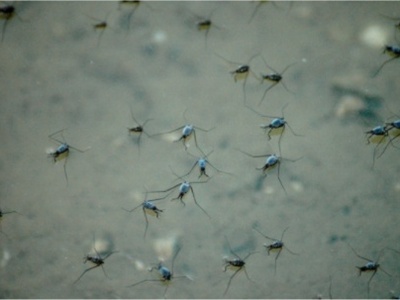
Sea skater
A pelagic water-strider that walks on the sea surface near islands and coral reefs. Feeds on neustonic prey and lays eggs on floating debris; one of the few truly marine insects, often seen around reef-associated debris and pumice.
Sea skater
Similar to H. sericeus, this sea-surface bug captures tiny crustaceans and larvae at the air-water interface. Reproduces on floating substrates and is a key neuston predator; recorded around coral islands and reef sands.
Sea skater
A small oceanic water-strider commonly found near tropical atolls and reef systems. Hunts surface plankton and uses floating macroalgae for egg-laying; its presence indicates floating debris and productive neuston habitats.
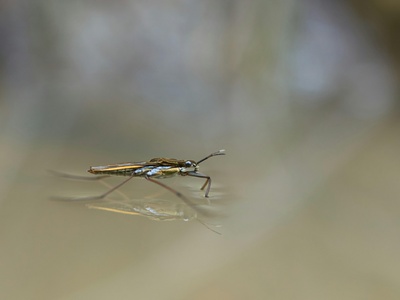
Black salt-marsh mosquito
Common in mangrove-fringed reef lagoons and tidal flats, larvae develop in brackish pools. Adults bite birds and mammals, can be a pest and occasional vector; important link between mangrove productivity and reef-edge food webs.

Brackish marsh mosquito
A salt-tolerant mosquito that breeds in tidal pools and mangrove depressions adjacent to coral reefs. Adults are nocturnal feeders; larvae tolerate brackish water, linking mangrove and reef ecosystems through nutrient and disease pathways.