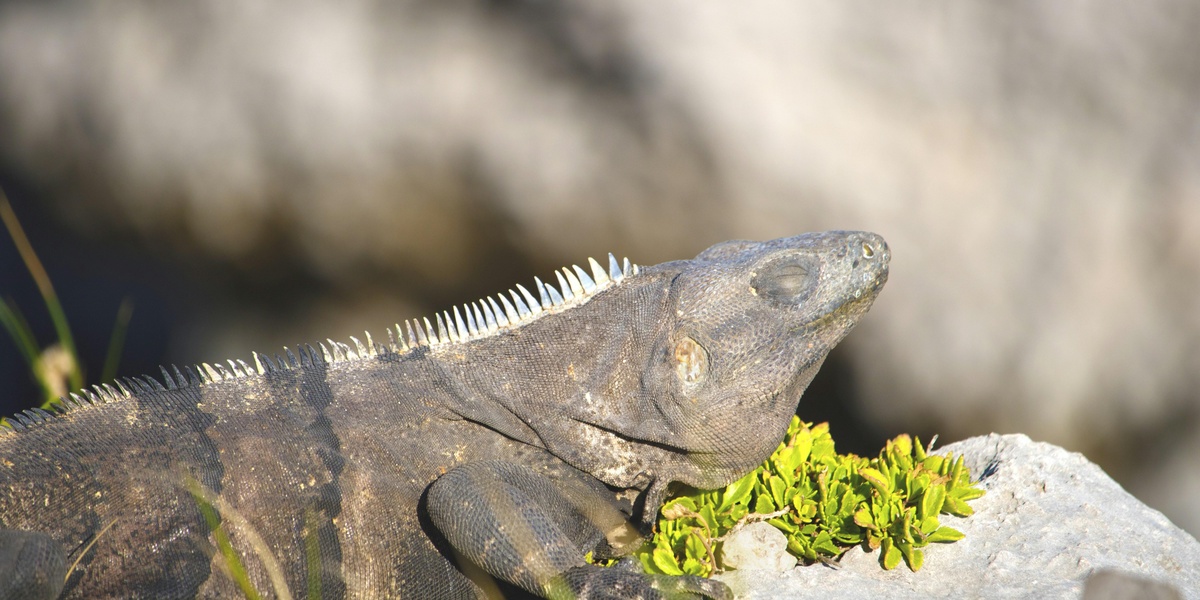
When Charles Darwin visited the Galápagos in 1835 he observed iguanas that were unlike any he’d seen on the mainland—a hint at how diverse this group can be. That historical snapshot still matters: these lizards play roles as herbivores, ecosystem engineers, and, increasingly, as pets and invasive species. Some iguanas grow over 6 feet (1.8 m) from snout to tail tip, so their biology affects everything from backyard landscaping to island conservation plans. The characteristics of a iguana shape how it thermoregulates, what it eats, and how people must care for or manage populations.
Iguanas combine striking physical traits, specialized physiology, and notable behaviors that let them thrive from rainforests to volcanic shores; understanding these 10 characteristics explains why they matter for ecology, pets, and conservation.
Physical Characteristics
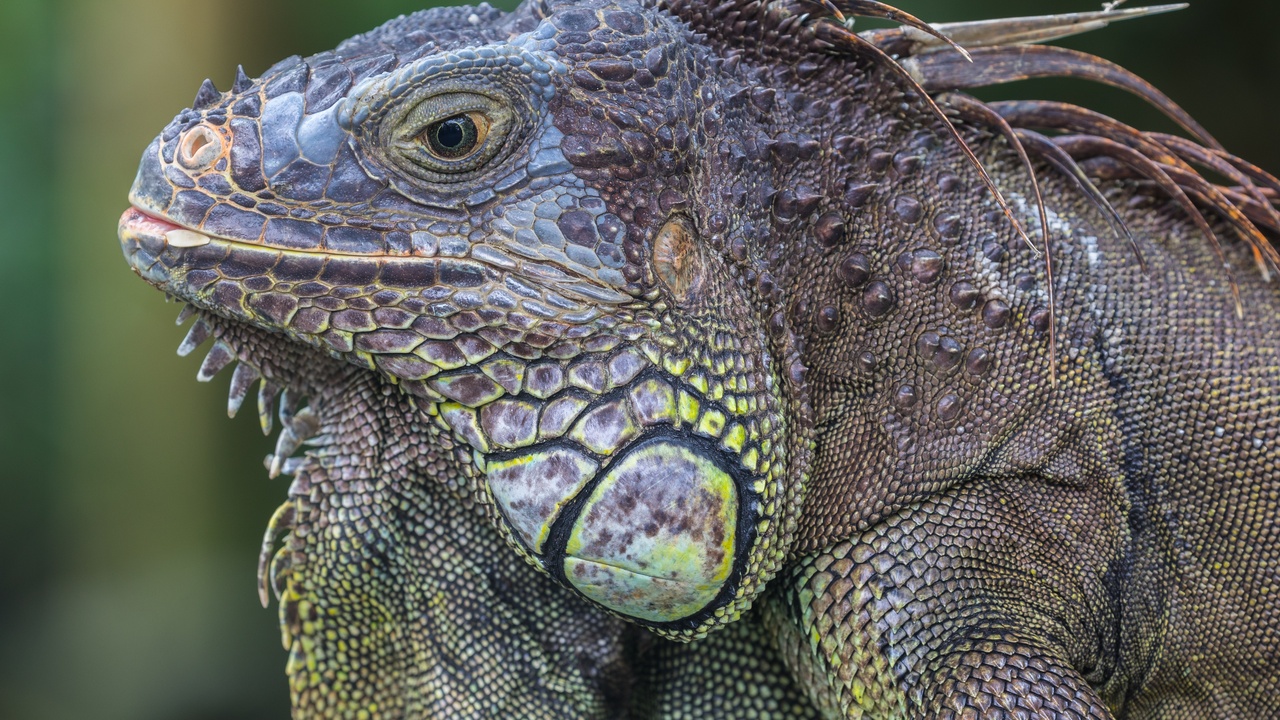
Morphology—size, scales, crest, and tail—directly affects how iguanas escape predators, find mates, and occupy habitat. Body shape and ornamentation influence balance in the trees, effectiveness of threat displays, and resilience to abrasion or salt spray. Below are four core physical traits to recognize, with measurements and species examples.
1. Size and Sexual Dimorphism
Many iguanas are large lizards: adults commonly reach 4–6 feet (1.2–1.8 m) including the tail, with the green iguana (Iguana iguana) often cited in that range. Large males can weigh 4–9 kg (9–20 lb), while females are typically smaller and lighter.
Males usually have bulkier heads, pronounced jowls, and larger femoral pores than females—visual cues useful for sexing. Size matters in behavior: bigger males hold larger territories and dominate breeding beaches or trees.
For keepers, adult size dictates enclosure needs: plan for enclosures at least 2.5–3 m (8–10 ft) long and 1.5–2 m (5–7 ft) tall for a full-grown green iguana so it can climb and thermoregulate comfortably (zoo care sheets and herpetology guides recommend similar minimums).
2. Scales and Skin Texture
Iguanas have heavy, overlapping scales—sometimes called scutes—that provide abrasion protection and reduce water loss. Scale types vary: many species show keeled scales on the head and granular scales along the flanks.
Young iguanas shed frequently (juveniles may ecdyse every few weeks), while adults shed less often—every few months depending on growth and health. Color ranges from bright green to gray, and individuals often darken their skin by several shades when basking to speed heat gain.
In captivity, improper humidity or nutrition can lead to retained shed and infections; proper humidity (50–70% for many tropical species) and regular veterinary checks prevent common skin problems.
3. Dewlap and Crests
The dewlap (a throat fan) and the dorsal crest of spines are prominent visual features. The dewlap can be extended for thermoregulation and to send social signals—courtship, dominance, or deterrence—while crest height varies by species and age.
Male green iguanas display large dewlaps during courtship and territorial disputes; crest height often increases with maturity, forming a jagged silhouette that can intimidate predators or rivals. Keepers and researchers use dewlap size and crest condition as quick health and sex indicators.
When handling, note whether the dewlap retracts and the crest is erect—both can reflect stress, temperature, or breeding condition.
4. Tail and Limbs: Tools for Defense and Mobility
Iguanas have long, muscular tails and strong limbs with clawed toes adapted for climbing and swimming. The tail serves as a whip-like defensive weapon and a balance aid during arboreal locomotion.
Some lizards drop and regrow tails (autotomy), and iguanas can lose parts of the tail after severe predation or handling, though they rely less on frequent autotomy than many small lizards. Regenerated tails differ in scale pattern but restore function sufficiently for balance and swimming.
Observation: green iguanas often use their long, partially prehensile tails to steer while swimming and to brace on thin branches. Handle with care to avoid provoking tail strikes—support limbs and avoid grabbing the tail.
Physiology and Senses
Iguana survival depends on physiological and sensory specializations: ectothermy and basking govern daily activity, acute vision guides feeding and displays, and salt-regulating glands allow some species to exploit coastal resources. These systems are tightly linked to habitat and husbandry needs.
5. Thermoregulation: Ectothermy and Basking
Iguanas are ectotherms and depend on environmental heat to reach preferred body temperatures. Active body temperatures typically fall between 25–35°C (77–95°F), with basking sessions in the morning to raise temperature after cool nights.
In captivity, provide thermal gradients: a basking spot of roughly 32–35°C (90–95°F) and cooler areas around 24–27°C (75–80°F). UVB exposure is essential for calcium metabolism; many zoo and veterinary guides recommend full-spectrum UVB lamps replaced every 6–12 months.
Egg incubation is also temperature-sensitive: many reptile eggs incubate successfully near 28–32°C (82–90°F), and incubation temperature can influence hatchling development and sex ratios in some reptiles (field and lab studies document temperature effects across lizard species).
6. Vision and the Parietal (Third) Eye
Iguanas have excellent color vision and a parietal “third” eye on the top of the head that senses light intensity and rapid shadow changes. This combination helps detect predators and locate food by color contrast at several meters’ distance.
Color vision makes green leaves, fruits, and young shoots stand out against background foliage; researchers and zookeepers note iguanas respond strongly to bright-green food items. The parietal eye is less an image-forming organ and more a motion/light sensor that triggers escape responses to aerial threats.
In captive settings, visual enrichment (changing perches, introducing foliage) stimulates natural behaviors, but sudden overhead shadows will still cause freezing or flight—so plan handling and enclosure placement accordingly.
7. Salt Glands and Water Balance
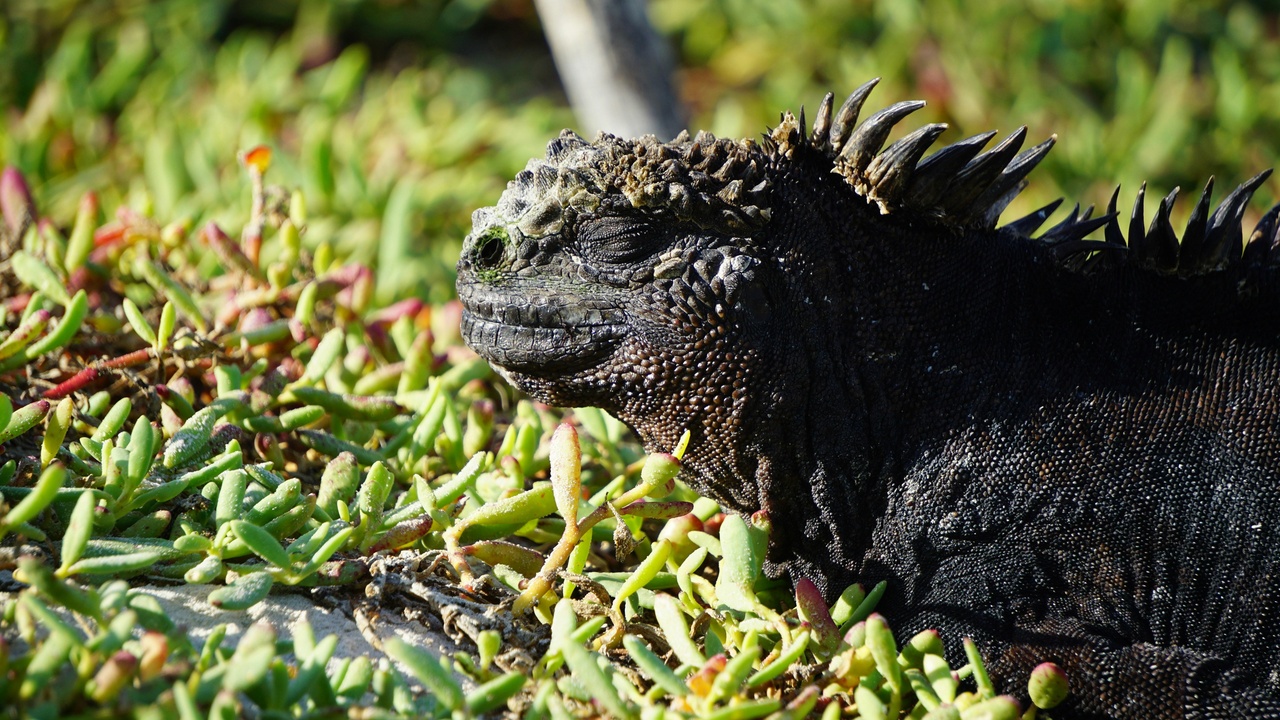
Certain iguana species possess nasal salt glands to expel excess salt, enabling them to ingest seawater or salty vegetation. The marine iguana (Amblyrhynchus cristatus) is the classic example: after feeding on intertidal algae it forcefully expels salt, often appearing to “sneeze” salt crystals.
These glands maintain osmotic balance and allow coastal species to exploit marine food sources that inland herbivores cannot. Field observations in the Galápagos show visible salt crusts on heads and periodic sneezing behavior after swimming or feeding.
Even inland species manage water through behavioral strategies—basking, seeking shade, and selecting succulent vegetation—so water balance ties directly to habitat choice and captive humidity control.
Behavior, Ecology, and Human Interaction

Behavior links physiology and morphology to ecological roles and human encounters. Diet, territorial displays, reproduction, and lifespan determine whether iguanas are valued pets, agricultural nuisances, or conservation priorities. Below are three behavioral and human-facing traits with practical takeaways.
8. Diet and Feeding Habits
Most adult iguanas are primarily herbivorous, eating leaves, flowers, and fruits; juveniles sometimes take more animal prey such as insects. The marine iguana is an exception—almost exclusively grazing on algae.
For captive adults, offer a calcium-rich mix of dark leafy greens (collard greens, dandelion), edible flowers (hibiscus), and vegetables (squash). Avoid high-fat or protein-heavy diets; nutritional imbalances commonly cause metabolic bone disease in pet iguanas.
Feeding frequency: juveniles may be fed daily, while many adults thrive on every-other-day or daily but smaller portions—monitor body condition and stool to adjust portions.
9. Territoriality, Reproduction, and Life Cycle
Breeding behavior centers on male territories and visual displays such as head bobs and push-ups. Clutch sizes commonly range from about 20 to 70 eggs, with incubation periods roughly 65–90 days depending on temperature and species.
Some populations show communal nesting on sandy banks, where multiple females deposit eggs in a single site. Typical captive lifespans are 10–20 years, though well-cared-for individuals can live longer in zoo settings.
For breeders and conservationists, protecting nesting habitat and timing interventions around rainy seasons or local breeding peaks is crucial to ensure hatchling survival and population recovery.
10. Interaction with Humans: Pets, Invasive Species, and Conservation
Iguanas intersect with people in three main ways: as long-term pets, as invasive populations, and as species needing conservation. Green iguanas became widespread in the pet trade from the 1980s onward, but many owners underestimate space and care requirements.
In some regions—like parts of Florida and Puerto Rico—released or escaped green iguanas established breeding populations that damage landscaping, irrigation systems, and seawalls; municipal removal and public-education programs address these impacts.
Conservation status varies: many continental species are of least concern, while island endemics (for example, some Galápagos taxa) face threats from habitat loss, introduced predators, and climate impacts. Practical steps include choosing humane control methods where invasive, committing to proper long-term care when keeping pets, and supporting habitat protection or captive-breeding programs run by zoos and conservation groups.
Summary
- Size and care: many adults reach 1.2–1.8 m including tail, so housing needs are substantial—plan enclosures several meters long and tall for adult green iguanas.
- Unique physiology: ectothermy (preferred active range ~25–35°C), acute color vision with a parietal “third” eye, and nasal salt glands in coastal species (marine iguanas sneeze excess salt) are key adaptations.
- Behavior and reproduction: mostly herbivorous adults, clutch sizes around 20–70 eggs with ~65–90 day incubation, and males that defend territories—these drive management and conservation actions.
- Human interactions: the characteristics of a iguana determine whether a species is a rewarding pet, a local pest, or a conservation priority—responsible ownership and habitat protection make a difference.
- Practical takeaways: provide proper thermal gradients and UVB, feed calcium-rich greens, avoid overcrowding nesting sites, and favor humane management where populations are invasive.