Poland’s landscapes—from Baltic coast and river valleys to mixed lowland forests and mountain meadows—support a wide range of trees, shrubs and wildflowers shaped by climate and centuries of land use. Seasonal shifts and regional soils mean you can encounter very different plant communities a few hours’ drive apart.
There are 51 Plants of Poland, ranging from Black locust to Wood anemone. For each entry you’ll find below the data organized as Scientific name,Native status,Typical habitat so you can see identity, whether a species is native or introduced, and where it typically grows; you’ll find below.
How can I tell which plants on the list are native or introduced?
Check the Native status column first — it flags origin and helps prioritize what to conserve or control; for confirmation, consult regional floras, local field guides or community science apps that show distribution maps and photographs.
Are any species on the list considered invasive or protected?
Yes; some species are flagged as introduced or potentially invasive while others may be protected locally, so use the Native status column and local conservation rules before removing or planting species and check regional guidance for management.
Plants of Poland
| Common name | Scientific name | Native status | Typical habitat |
|---|---|---|---|
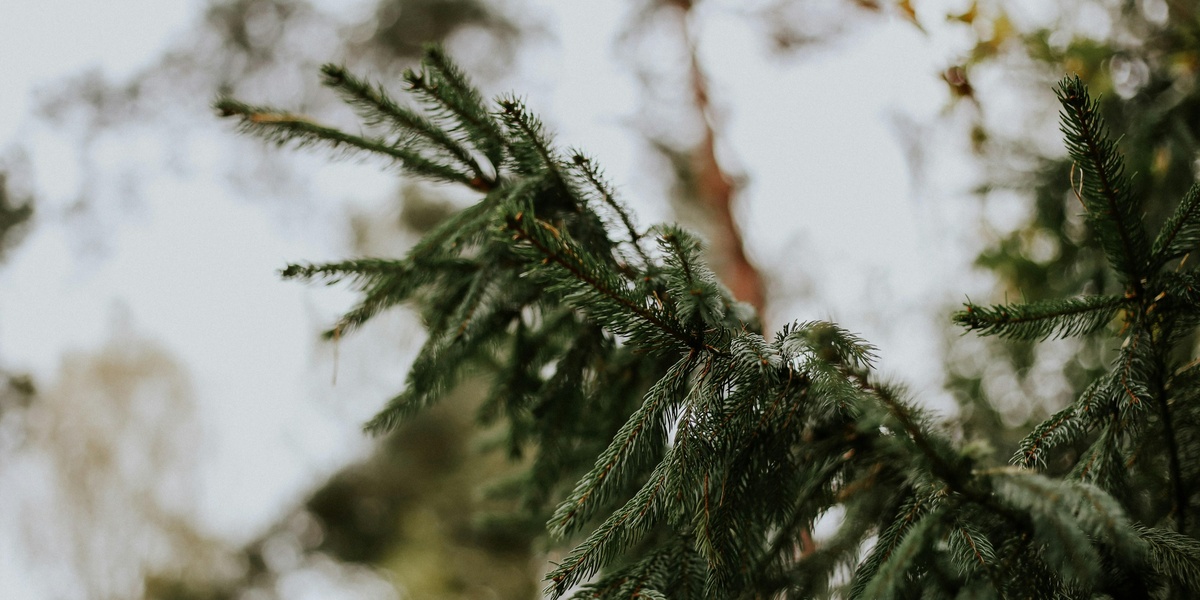
| Norway spruce | Picea abies | native | forests, mountains |
| Scots pine | Pinus sylvestris | native | forests, heathlands, dunes |
| Silver birch | Betula pendula | native | forests, clearings, urban areas |
| European beech | Fagus sylvatica | native | deciduous forests, hills |
| Pedunculate oak | Quercus robur | native | mixed forests, floodplains, meadows |
| Sessile oak | Quercus petraea | native | drier forests, uplands |
| European hornbeam | Carpinus betulus | native | mixed forests, hedgerows, urban areas |
| Common alder | Alnus glutinosa | native | wetlands, riverbanks, floodplains |
| European aspen | Populus tremula | native | open woods, meadows, forest edges |
| Black locust | Robinia pseudoacacia | invasive | roadsides, urban areas, dry soils |
| Common juniper | Juniperus communis | native | heaths, dunes, rocky ground |
| Hazel | Corylus avellana | native | woodlands, hedgerows |
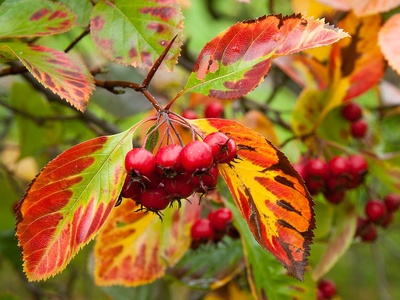
| Common hawthorn | Crataegus monogyna | native | hedgerows, woodland edge, scrub |
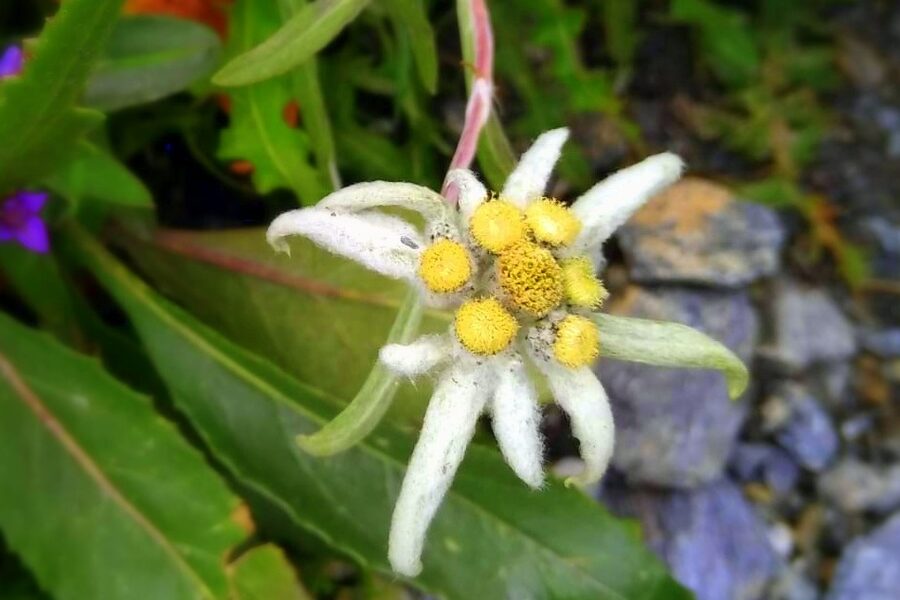
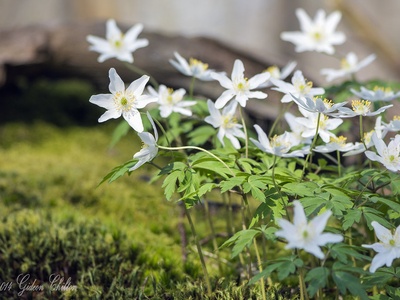
| Wood anemone | Anemone nemorosa | native | deciduous forests, shaded meadows |
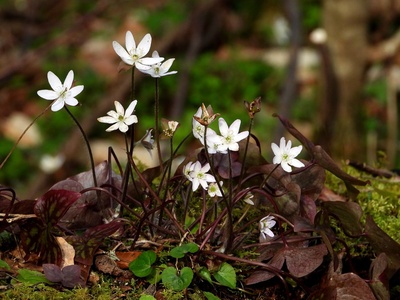
| Hepatica | Hepatica nobilis | native | beech and mixed forests, clearings |
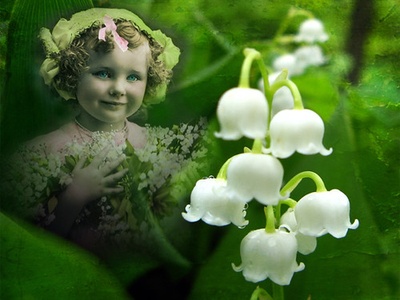
| Lily of the valley | Convallaria majalis | native | shady woodlands, forest edges |
| Turk’s cap lily | Lilium martagon | native | shady beech and mixed forests, mountain woods |
| Great mullein | Verbascum thapsus | native | dry disturbed soils, roadsides |
| Common yarrow | Achillea millefolium | native | meadows, roadsides, dry grassland |
| Field poppy | Papaver rhoeas | archaeophyte | arable fields, roadside, disturbed ground |
| Cornflower | Centaurea cyanus | archaeophyte | arable fields, meadows, roadside |
| Red clover | Trifolium pratense | native | meadows, pastures, roadsides |
| White clover | Trifolium repens | native | lawns, grasslands, roadsides |
| Meadow buttercup | Ranunculus acris | native | meadows, damp grassland |
| Tormentil | Potentilla erecta | native | heaths, acidic grassland, open woods |
| Common reed | Phragmites australis | native | wetlands, reedbeds, shores |
| Marsh marigold | Caltha palustris | native | wetlands, river margins, marshes |
| Purple loosestrife | Lythrum salicaria | native | marshes, ditches, riverbanks |
| Bladderwort | Utricularia vulgaris | native | ponds, slow ditches, nutrient-poor waters |
| Common spotted orchid | Dactylorhiza fuchsii | native | damp meadows, bogs, woodland clearings |
| Lady’s slipper orchid | Cypripedium calceolus | native | calcareous woodlands, meadows |
| Marsh gentian | Gentiana pneumonanthe | native | wet meadows, bogs, acidic grasslands |
| Bracken | Pteridium aquilinum | native | woodland edges, heathlands, disturbed slopes |
| Horsetail | Equisetum arvense | native | wet meadows, riverbanks, disturbed ground |
| Marram grass | Ammophila arenaria | native | coastal dunes, beach foredunes |
| Sea buckthorn | Hippophae rhamnoides | native | coastal dunes, sandy soils |
| Pinus mugo (mountain pine) | Pinus mugo | native | subalpine scrub, mountain slopes |
| White water lily | Nymphaea alba | native | ponds, slow lakes, still waters |
| Garlic mustard | Alliaria petiolata | native | woodland edges, shady hedgerows |
| Elder | Sambucus nigra | native | hedgerows, woodland edges, moist ground |
| Blackthorn | Prunus spinosa | native | hedgerows, scrub, field margins |
| Wild rose | Rosa canina | native | hedgerows, scrub, woodland edges |
| Ivy | Hedera helix | native | woodlands, walls, shaded places |
| Common nettle | Urtica dioica | native | disturbed ground, nutrient-rich soils, hedgerows |
| Evening primrose | Oenothera biennis | naturalized | roadsides, disturbed ground, dry grassland |
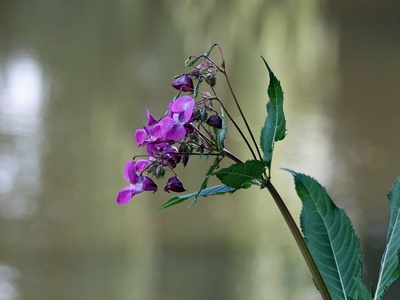
| Himalayan balsam | Impatiens glandulifera | invasive | riverbanks, damp woods, disturbed river edges |
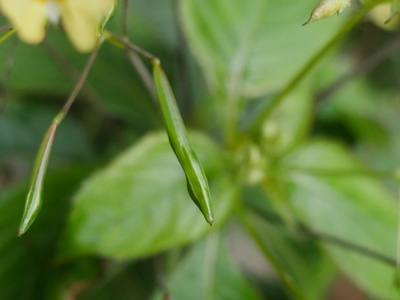
| Small balsam | Impatiens parviflora | naturalized | shady woods, forest edges, understory |
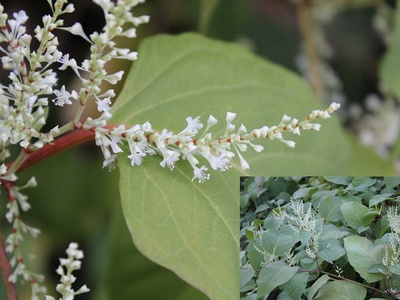
| Japanese knotweed | Reynoutria japonica | invasive | riverbanks, roadsides, disturbed land |
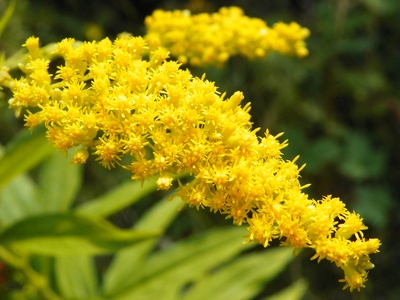
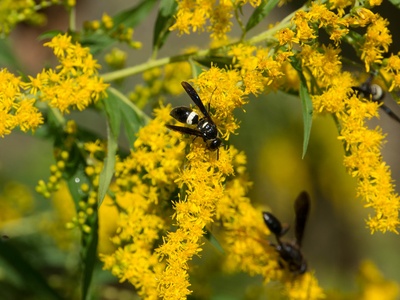
| Canadian goldenrod | Solidago canadensis | invasive | meadows, roadsides, disturbed sites |
| Giant goldenrod | Solidago gigantea | invasive | wet meadows, riverbanks, disturbed ground |
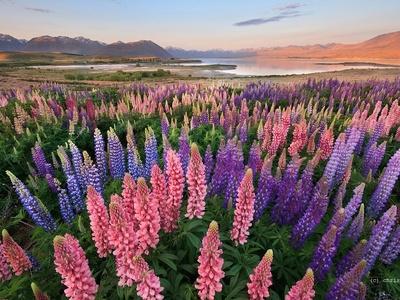
| Lupin | Lupinus polyphyllus | invasive | roadsides, dry meadows, disturbed soils |
Images and Descriptions
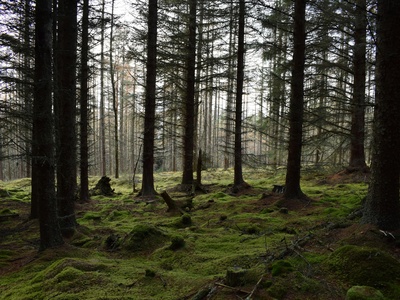
Norway spruce
Tall evergreen conifer dominating Poland’s forests and mountain slopes. Look for dark green needles and conical crowns; common in managed and natural stands, important for timber and wildlife, forming dense shaded woods in cooler regions.
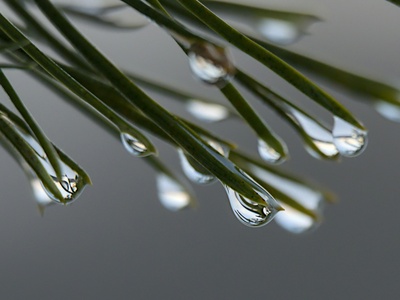
Scots pine
Iconic pine with orange-brown bark and long needles, found on sandy soils, dunes, and dry forests. Often forms open stands and heathland; resilient to poor soils and a major tree of Poland’s lowlands and uplands.
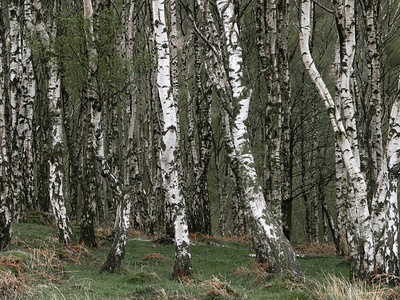
Silver birch
Slender tree with white peeling bark and delicate triangular leaves, common in open woods, clearings and post‑disturbance sites. Fast colonizer of bare ground and a familiar urban and rural species providing early spring pollen and seeds for wildlife.

European beech
Large deciduous tree of rich mixed and beech forests, with smooth grey bark and glossy leaves. Forms dense shaded stands, common in lowland and upland woodlands; important for forest ecology and classic Polish broadleaf forests.
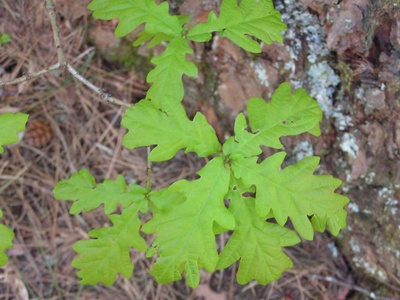
Pedunculate oak
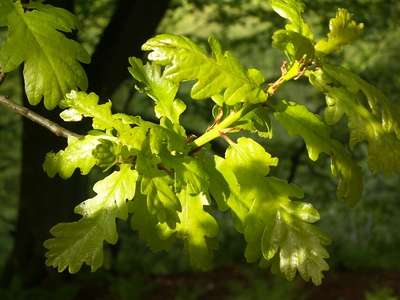
Stately broadleaf with lobed leaves and acorns, frequent in lowland mixed forests and floodplain woodlands. Often lives centuries and supports huge biodiversity; easy to spot by its spreading crown and sturdy trunk.
Sessile oak
Similar to pedunculate oak but preferring drier, upland sites and poorer soils. Distinguished by stalkless acorns and more upright crown. Important native forest tree in Polish uplands and mixed oak stands.
European hornbeam
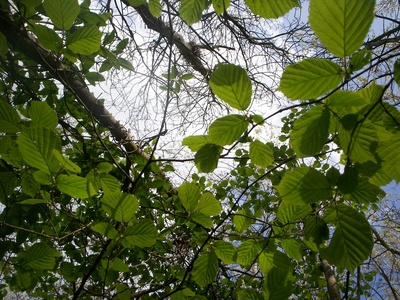
Hardwood often forming dense stands and parkland trees; smooth fluted bark and serrated leaves that persist on branches into winter. Common in mixed deciduous forests and used historically for hedges and woodworking.
Common alder
Moisture-loving tree of riversides and wetlands with glossy leaves and cone-like fruits. Fixes nitrogen in soils and stabilizes banks; identifiable by catkins in spring and black knobbly fruiting structures.
European aspen
Poplar with fluttering round leaves and trembling habit, found in open woods and clearings. Propagates by suckers forming clonal stands; recognisable by its quivering leaves and pale bark.
Black locust
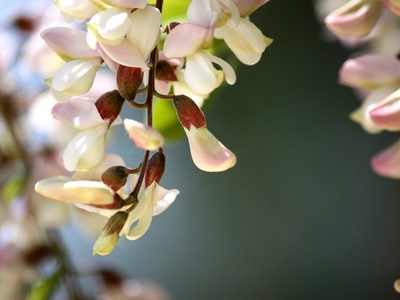
Non-native tree from North America widely naturalized and invasive, forming dense stands that outcompete native flora. Distinctive pinnate leaves and fragrant white pea-flowers; common along roads, railways and poor soils.
Common juniper
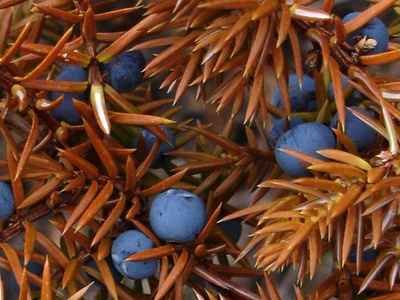
Low coniferous shrub with needle-like leaves and bluish berries, common on acidic soils, dunes and rocky sites. Important for coastal dune stabilization and wildlife; berries used historically as spice and medicine.
Hazel
Multi-stemmed shrub with rounded leaves and edible nuts. Flowers early in catkins, common in woodland understories and hedgerows. Nut production supports birds and mammals; historically important as coppice and hedge plant.
Common hawthorn
Spiny shrub with dense branching, white spring blossoms and red haws in autumn. Very common in hedgerows and edges, providing nectar, fruit and nesting cover for birds and insects.
Wood anemone
Delicate spring carpet of white star-like flowers in beech and mixed forests. Short-lived woodland perennial spreading by rhizomes; prized for early spring displays under leafless canopies.
Hepatica
Small early spring flower with lobed leaves and blue, pink or white blooms. Found in shady beech woods on calcareous soils; a charming woodland indicator of undisturbed ground.
Lily of the valley
Low-growing perennial with glossy leaves and sweetly scented white bell-shaped flowers in spring. Forms spreading colonies in shaded woodlands and gardens; historically symbolic and fragrant but poisonous if eaten.
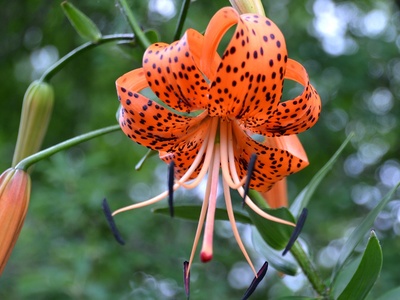
Turk’s cap lily
Elegant woodland lily with nodding, turk’s-cap-shaped pinkish flowers and spotted petals. Prefers humus-rich shaded slopes and is a striking sight in mountain and mature forest understories.
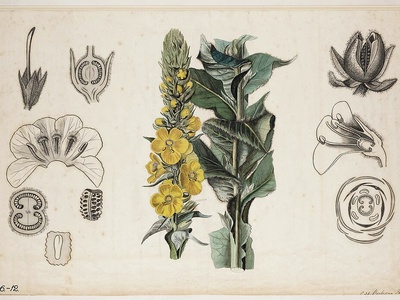
Great mullein
Tall woolly-rosetted biennial with a dramatic spike of yellow flowers. Colonizes disturbed, dry soils and roadside verges; easy to recognize by its huge fuzzy leaves and candle-like flower stalk.
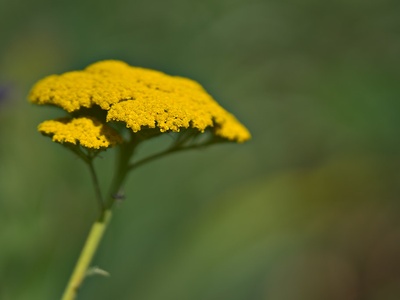
Common yarrow
Hardy perennial with feathery leaves and flat clusters of white flowers, common in meadows and disturbed grasslands. Aromatic and used traditionally for medicine; tolerant of poor soils and frequent mowing.
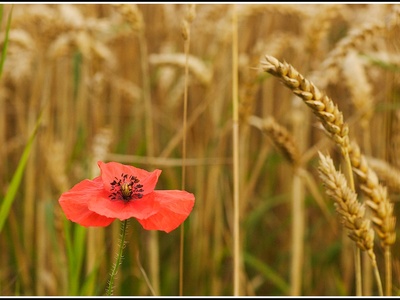
Field poppy
Bright red annual poppy often seen in cereal fields and roadside verges. Associated with agricultural landscapes and spring sowing; iconic summer flower with papery petals and black center.
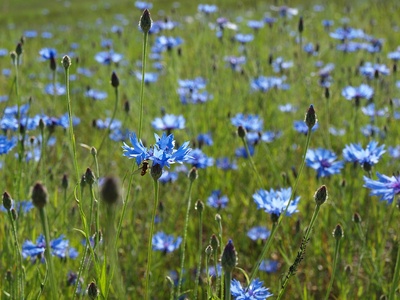
Cornflower
Once common in cereal crops, this bright blue annual now rarer in intensively farmed areas. Found in field margins and meadows; valued for its vivid color and as a pollinator resource.
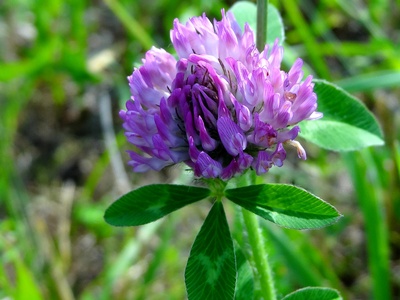
Red clover
Common nitrogen-fixing legume in grasslands and pastures with pink spherical flower heads. Valuable forage for livestock and an important nectar source for bees and insects across Poland’s meadows.
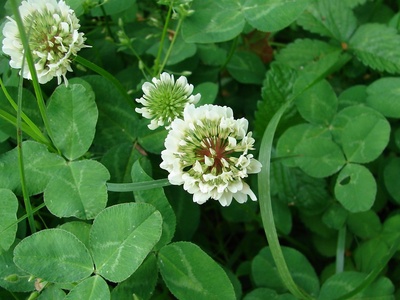
White clover
Low creeping legume with trifoliate leaves and white flower clusters. Widespread in lawns, pastures and disturbed grassland; fixes nitrogen and tolerates frequent grazing and mowing.
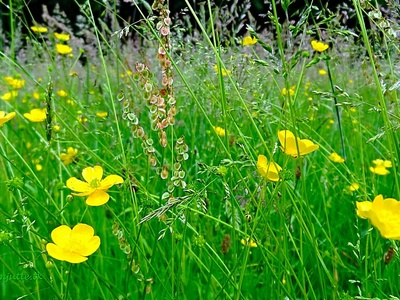
Meadow buttercup
Tall buttercup with shiny yellow flowers common in hay meadows and damp pastures. Prefers moist soils and is a familiar meadow species that can be toxic to livestock when fresh.
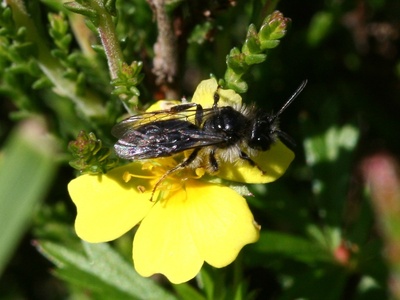
Tormentil
Low perennial with small yellow four-petaled flowers on acidic, poor soils and heaths. Often overlooked but widespread in moorland and acidic grasslands; traditionally used medicinally.
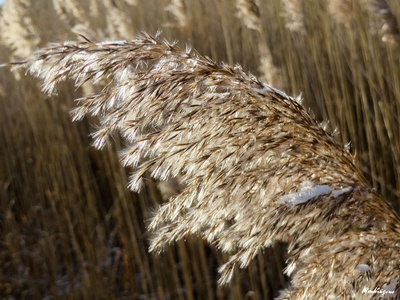
Common reed
Tall perennial grass forming dense reedbeds along lakes, marshes and river margins. Important for wetland ecology and bird habitat; noticeable by its feathery beige flowering plumes in late summer.
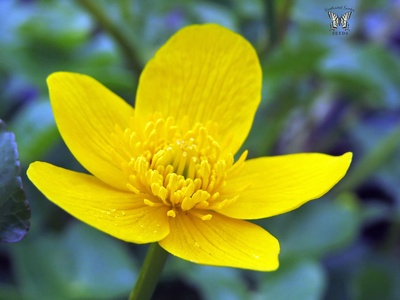
Marsh marigold
Early spring bloomer in wet meadows and stream edges with shiny yellow buttercup-like flowers. Looks like a cheerful wetland daisy and signals watery ground and spring thaw areas.
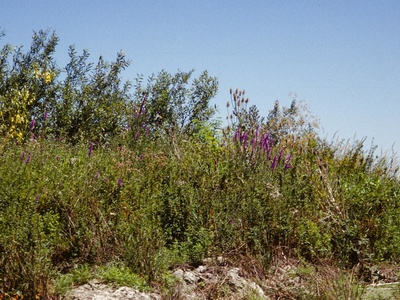
Purple loosestrife
Striking magenta flower spikes in wetlands and ditches. Attracts pollinators and is a common component of marshy river margins and reedbed edges across Poland.
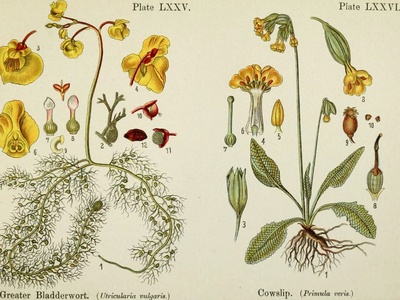
Bladderwort
Free-floating carnivorous waterplant with delicate leaves and tiny bladder traps capturing microinvertebrates. Found in still or slow-moving waters, often among other aquatic vegetation and in nutrient-poor ponds.
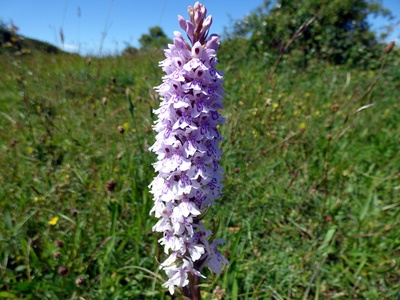
Common spotted orchid
Variable pink-spotted orchid found in damp grassland and open woodland. Notable for spotted leaves and densely packed flower spikes; a delightful wildflower in spring and early summer meadows.
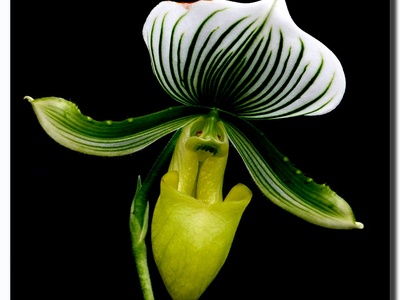
Lady’s slipper orchid
Rare and protected orchid with a distinctive yellow slipper-shaped pouch. Found in well-drained calcareous woods and meadows; prized by botanists and sensitive to habitat disturbance.
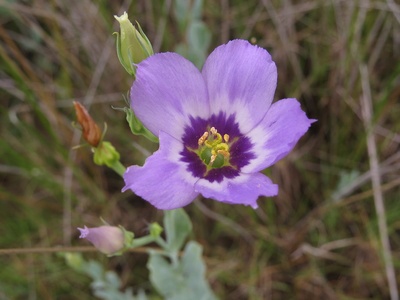
Marsh gentian
Striking deep-blue flowers in late summer on wet acidic meadows and bogs. Locally rare and an indicator of low-intensity traditional grazing or mowing regimes that maintain open peatland habitats.
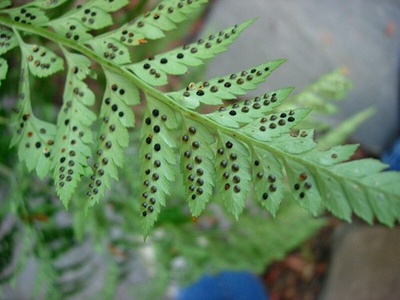
Bracken
Large invasive-feeling fern forming sweeping stands on hillsides and woodland edges. Brown in winter, green in summer; spreads by rhizomes and can dominate ground vegetation after disturbance.
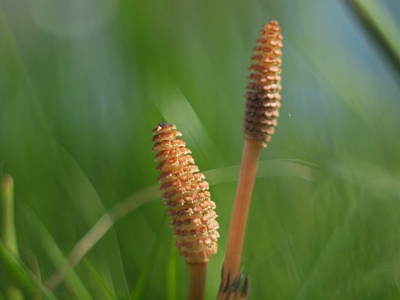
Horsetail
Ancient, jointed plant with reed-like stems and tiny leaves forming whorls. Common in damp places and disturbed soils; easy to spot and historically used for scouring due to silica-rich stems.
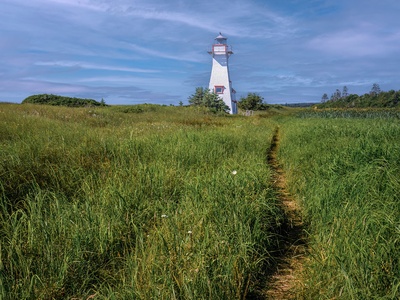
Marram grass
Tough dune grass stabilizing sand with deep roots and long rolled leaves. Dominant on Baltic foredunes and vital for protecting coasts from wind erosion and sand movement.
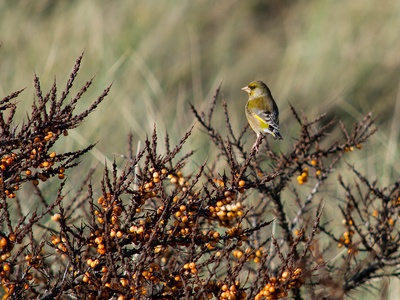
Sea buckthorn
Salt-tolerant shrub of coastal dunes with silver foliage and bright orange nutrient-rich berries. Important for dune stabilization and wildlife; berries used in regional foods and traditional remedies.
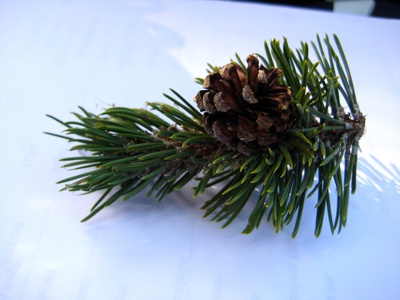
Pinus mugo (mountain pine)
Low shrubby pine forming dense thickets in subalpine belts and exposed mountain slopes. Wind-resistant and compact, often carpeting ridges and providing shelter on high ground.
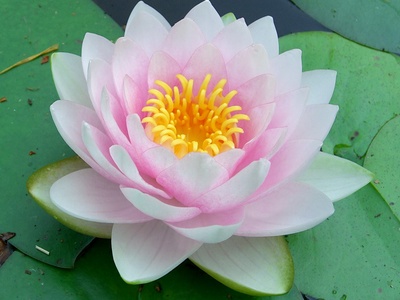
White water lily
Floating perennial with large round leaves and showy white fragrant flowers. Found in calmer freshwater bodies, providing habitat and shade for aquatic life and a classic pond plant.
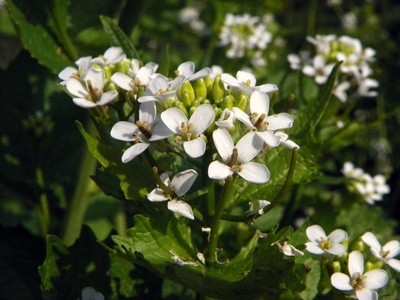
Garlic mustard
Biennial herb with scalloped leaves that smell of garlic when crushed and clusters of small white flowers in spring. Common in shady hedgerows and woodland edges, often marking nutrient-rich ground.
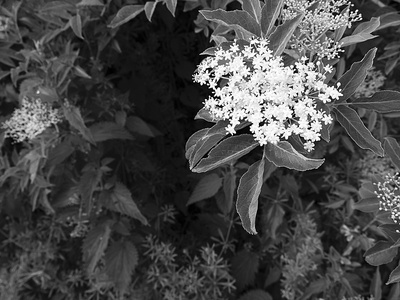
Elder
Large shrub or small tree with umbrella-like clusters of fragrant white flowers and dark berries. Widely planted and wild in hedgerows; flowers used for cordial and cooked berries for food.
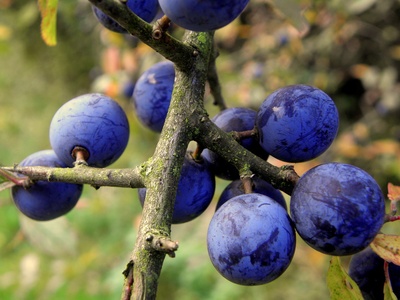
Blackthorn
Spiny shrub with early white blossom and small astringent sloes. Dense and protective hedgerows, common in rural landscapes, important for nesting birds and pollinators in spring.
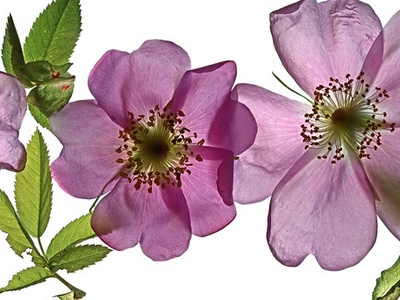
Wild rose
Common climbing or arching shrub with fragrant pink flowers and bright red hips in autumn. Provides food and shelter for wildlife; hips are rich in vitamin C and used in jams and teas.
Ivy
Evergreen climbing vine with lobed leaves that climbs trees and walls, producing late-season nectar and black berries for birds. Valuable shelter in winter and common in many shaded habitats.
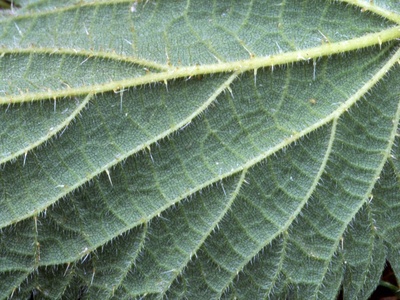
Common nettle
Ubiquitous green plant with stinging hairs, growing in nutrient-rich soils, hedgerows and waste ground. Important food plant for many butterfly caterpillars and a traditional wild food when cooked.
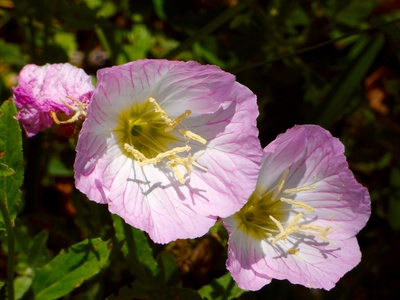
Evening primrose
Tall biennial with yellow, night-opening flowers introduced from North America and now common along roadsides and disturbed sites. Attracts moths and has edible roots and seeds historically used for oils.
Himalayan balsam
Showy pink annual with explosive seed pods that rapidly colonizes riverbanks and damp woodlands. Highly invasive, forming dense stands that displace native flora and alter riparian habitats.
Small balsam
Less showy, pale-flowered balsam from Asia that has naturalized in shaded forests and edges. Spreads in damp understories and can form dense carpets under certain conditions.
Japanese knotweed
Aggressive perennial with bamboo-like stems and white plumes, forming impenetrable stands on disturbed ground and riverbanks. Very difficult to eradicate and known for damaging built structures and native plant communities.
Canadian goldenrod
Tall late-summer flowering perennial from North America producing dense golden plumes. Highly invasive in many Polish habitats, outcompeting native meadow plants and changing local biodiversity patterns.
Giant goldenrod
Another aggressive goldenrod species forming dense colonies in moist meadows and along rivers. Suppresses native vegetation and alters wetland plant communities where it establishes.
Lupin
Popular garden lupin that has escaped into wild meadows and roadsides, forming dense colorful stands. Fixes nitrogen, alters soil chemistry and can crowd out native meadow species, especially on coastal dunes and dry grasslands.