South Africa’s varied habitats — coastal marshes, dry savannas and cool mountain streams — support a surprising mix of frogs and toads. Many species are tied to specific regions, so a short trip can reveal very different amphibian communities depending on elevation and water availability.
There are 30 Amphibians of South Africa, ranging from African Bullfrog to Table Mountain Ghost Frog; for each species the list shows Scientific name,IUCN status,Range, and you’ll find below.
How threatened are amphibians in South Africa?
Threat levels vary: some species are common and adaptable, while others have restricted ranges and face habitat loss, pollution or disease (like chytrid fungus); check the IUCN status column in the list to see which species need conservation attention.
Where can I go to see species such as the African Bullfrog or Table Mountain Ghost Frog?
Look for African Bullfrogs in lowland wetlands and seasonal pans after rains, while Table Mountain Ghost Frogs occur in cool, fast-flowing mountain streams on Table Mountain; visit protected areas, go with a local guide, and follow seasonal timing for best sightings.
Amphibians of South Africa
| Name | Scientific name | IUCN status | Range |
|---|---|---|---|
| African Clawed Frog | Xenopus laevis | Least Concern | Widespread: Western, Eastern Cape, KZN, Free State, Gauteng |
| Cape Platanna (Cape Clawed Frog) | Xenopus gilli | Endangered | Coastal southwest Western Cape wetlands |
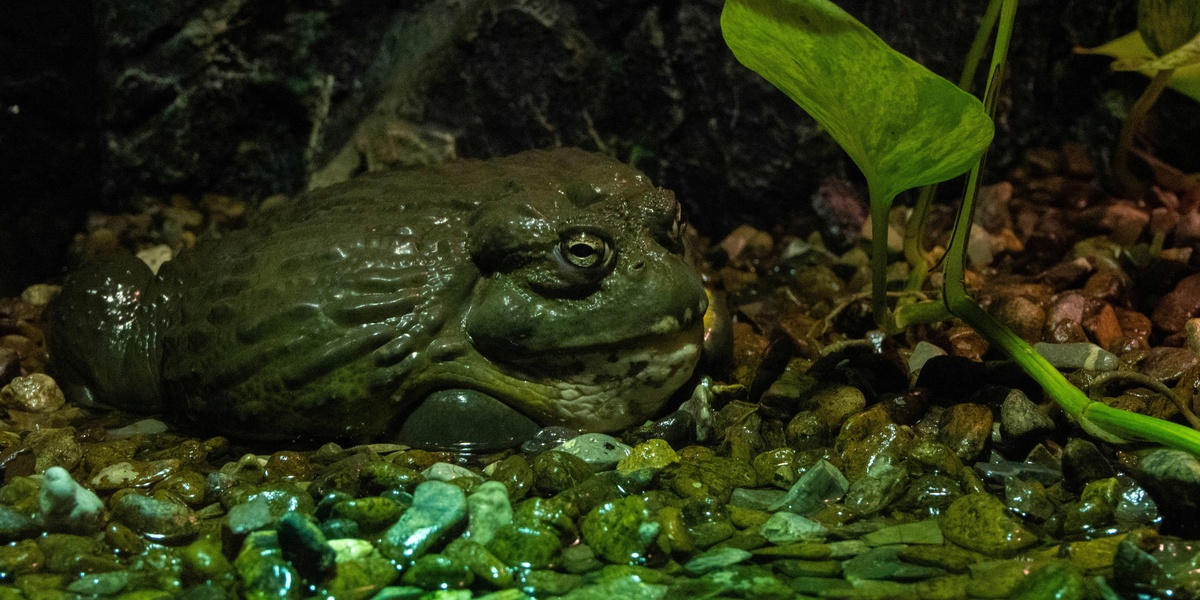
| African Bullfrog | Pyxicephalus adspersus | Least Concern | Grasslands and savanna: Limpopo, Mpumalanga, North West, Free State |
| Delalande’s River Frog | Amietia delalandii | Least Concern | Rivers and streams across mountainous and lowland regions (many provinces) |
| Cape Rain Frog | Breviceps gibbosus | Least Concern | Fynbos and coastal lowlands, Western Cape |
| Bushveld Rain Frog | Breviceps adspersus | Least Concern | Bushveld and savanna: Limpopo, North West, Mpumalanga |
| Mozambique Rain Frog | Breviceps mossambicus | Least Concern | Eastern to northern provinces, coastal bush and woodlands |
| Guttural Toad | Sclerophrys gutturalis | Least Concern | Widespread: grasslands, suburbs, gardens across many provinces |
| Common Caco (Boettger’s caco) | Cacosternum boettgeri | Least Concern | Western, Eastern Cape lowlands and fynbos wetlands |
| Striped Stream Frog | Strongylopus fasciatus | Least Concern | Mountain and montane grasslands: KZN, Eastern Cape, Mpumalanga |
| Gray’s Stream Frog | Strongylopus grayii | Least Concern | Fynbos and montane streams, Western and Eastern Cape |
| Table Mountain Ghost Frog | Heleophryne rosei | Critically Endangered | Table Mountain streams, Western Cape |
| Purcell’s Ghost Frog | Heleophryne purcelli | Near Threatened | Western Cape mountain streams and ravines |
| Hewitt’s Ghost Frog | Heleophryne hewitti | Near Threatened | Eastern Cape montane streams and kloofs |
| Common Shovelnose Frog | Hemisus marmoratus | Least Concern | Widespread: sandy soils, grassland and savanna across many provinces |
| Banded Rubber Frog | Phrynomantis bifasciatus | Least Concern | Savanna and bushveld in northern and eastern provinces |
| Painted Reed Frog | Hyperolius marmoratus | Least Concern | Coastal wetlands, KwaZulu‑Natal, Eastern Cape, Mpumalanga |
| Pickersgill’s Reed Frog | Hyperolius pickersgilli | Endangered | Coastal lowland wetlands near Durban, KwaZulu‑Natal |
| Marsh Frog (Mascarene Ridged Frog) | Ptychadena mascareniensis | Least Concern | Wet grasslands and pans in many eastern provinces |
| Anchieta’s Ridged Frog | Ptychadena anchietae | Least Concern | Northern and eastern grasslands and wetlands |
| Common Sand Frog | Tomopterna cryptotis | Least Concern | Sandy soils and grasslands across many provinces |
| Cape River Frog | Amietia fuscigula | Least Concern | Western Cape rivers and montane streams |
| Eastern Giant River Frog | Amietia vertebralis | Near Threatened | Montane rivers in Drakensberg and eastern highlands |
| Forest Rain Frog | Breviceps fasciatus | Near Threatened | Afromontane forest patches in Eastern Cape and KZN |
| Cape Caco | Cacosternum capense | Near Threatened | Southwestern Cape fynbos wetlands |
| Clicking Stream Frog | Arthroleptella lightfooti | Near Threatened | Western Cape fynbos montane seepages |
| Mozambique Platanna (introduced in parts) | Xenopus muelleri | Least Concern | Recorded in northeastern provinces, established populations |
| Fringe-Limbed Tree Frog | Leptopelis natalensis | Least Concern | Forested gullies and coastal forests, KwaZulu‑Natal |
| Natal Sand Frog | Tomopterna natalensis | Least Concern | Coastal and inland sandy areas in KwaZulu‑Natal and Eastern Cape |
| Rock Frog | Amietia hymenenteron | Least Concern | Rocky streams and rivers in eastern highlands |
Images and Descriptions
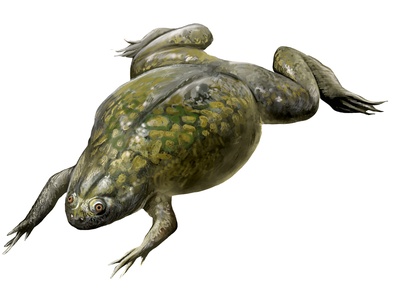
African Clawed Frog
Aquatic, smooth-skinned frog often in garden ponds and dams. Notable ID tip: fully webbed hind feet with claw-like tips and a flattened body; tolerant of disturbed habitats and common near water.
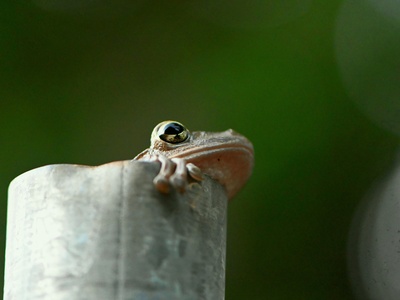
Cape Platanna (Cape Clawed Frog)
Small, secretive clawed frog restricted to lowland wetlands. ID tip: smaller and darker than X. laevis with distinctive call; threatened by habitat loss and invasive Xenopus.
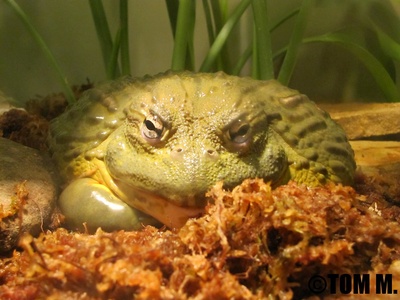
African Bullfrog
Huge, robust frog that burrows in dry season. ID tip: males are very large and guard tadpoles; famous for gulping down prey and loud booming call.
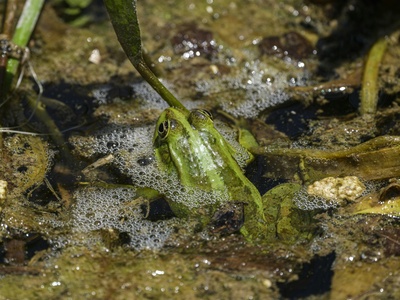
Delalande’s River Frog
Medium-large stream frog often near flowing water. ID tip: dorsolateral folds and strong legs for hopping on rocks; common along rivers and farm dams.
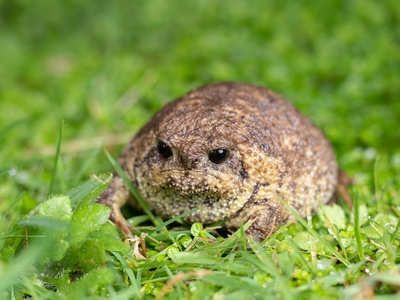
Cape Rain Frog
Round, stout frog that “walks” rather than jumps. ID tip: short limbs and spherical posture; inflates when threatened and lays eggs in burrows.
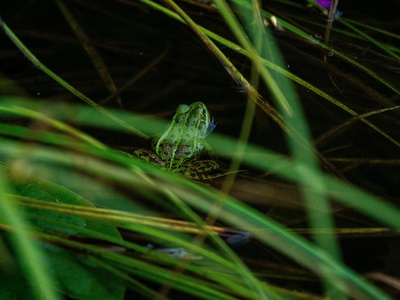
Bushveld Rain Frog
Stubby, burrowing frog of drier areas. ID tip: emits a high-pitched squeak; emerges after rain to breed in shallow pools.
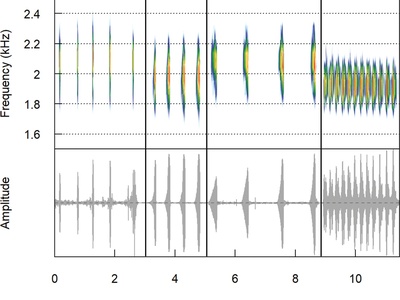
Mozambique Rain Frog
Small, rounded frog that lives in burrows and leaf litter. ID tip: characteristic short snout and chubby body; common in coastal savanna.
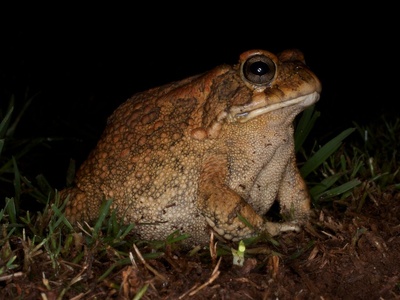
Guttural Toad
Warty toad with a loud, deep call heard at night. ID tip: large parotoid glands and robust build; often found near human habitation.

Common Caco (Boettger’s caco)
Tiny frog often in large breeding choruses after rain. ID tip: small, smooth-bodied with high-pitched peep calls; easily overlooked in wet grass.
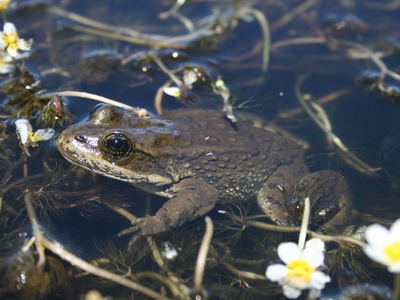
Striped Stream Frog
Slender, agile frog of flowing streams and seepages. ID tip: dark longitudinal stripes and long legs adapted for jumping on wet rocks.
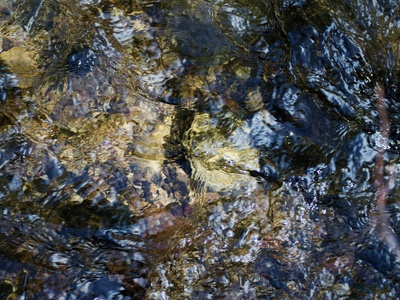
Gray’s Stream Frog
Slender frog often along clear mountain streams. ID tip: speckled pattern and pale dorsolateral stripe; calls from vegetation over running water.
Table Mountain Ghost Frog
Highly range-restricted frog living in cold, fast-flowing mountain streams. ID tip: flattened body and large toe discs for clinging to rocks; critically imperiled by water changes.
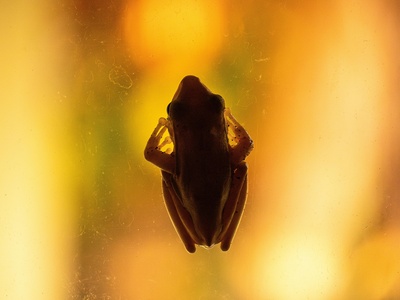
Purcell’s Ghost Frog
Stream specialist with a flattened profile and strong limbs. ID tip: distinct tadpoles cling to boulders in turbulent water; localised but stable in good habitat.
Hewitt’s Ghost Frog
Rock-clinging stream frog with broad head and muscular legs. ID tip: adapted to cold, fast water; often found under rocks beside torrents.
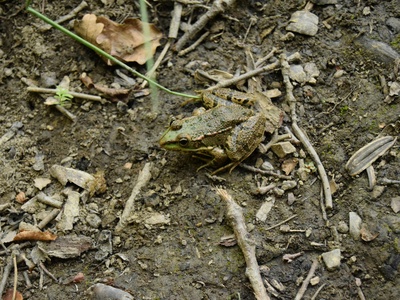
Common Shovelnose Frog
Burrowing frog with a pointed snout used for digging. ID tip: shovelled nose and backwards-facing feet; pops out of sand after heavy rains.
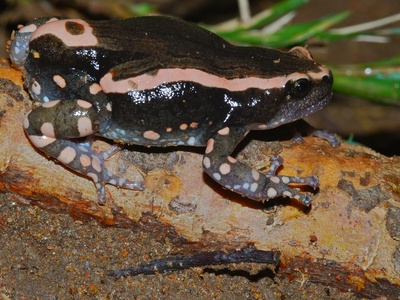
Banded Rubber Frog
Striking orange or red body with two broad black bands. ID tip: smooth, glossy skin and bold coloration warn predators of toxins.
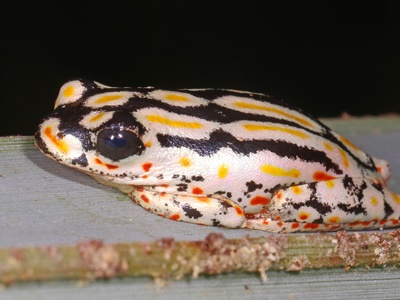
Painted Reed Frog
Small, arboreal frog with variable marbled patterns. ID tip: often shows a pale dorsolateral stripe and a high, nasal call from reeds.
Pickersgill’s Reed Frog
Tiny, bright green reed frog restricted to coastal wetlands. ID tip: pale dorsolateral stripe and small size; threatened by wetland loss and development.
Marsh Frog (Mascarene Ridged Frog)
Slender grassland frog with long legs for leaping. ID tip: prominent dorsolateral ridges and strong hind limbs; often in large, noisy groups.
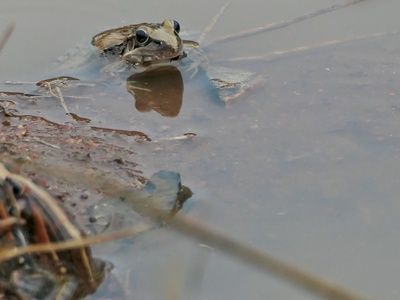
Anchieta’s Ridged Frog
Fast-moving grassland frog with ridged back. ID tip: long legs and pointed snout; common in open wet grass and floodplains.
Common Sand Frog
Nocturnal burrowing frog that calls from sandy pools. ID tip: drab coloration and strong hind legs for rapid digging; emerges after rains.
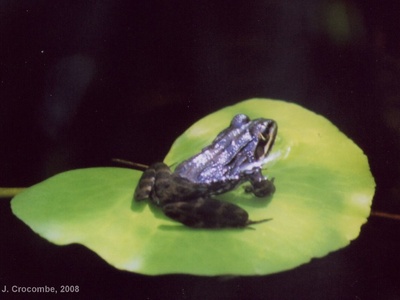
Cape River Frog
Robust river frog often on rocks near torrents. ID tip: distinct dorsolateral fold and rapid splashy call; prefers clear, cool streams.
Eastern Giant River Frog
Large river frog adapted to cold mountain streams. ID tip: stout body and powerful legs; often seen on rocks in fast-flowing water.
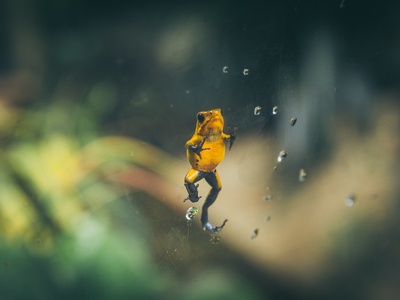
Forest Rain Frog
Secretive, forest-dwelling rain frog with banding. ID tip: flattened round body and mottled coloration; breeds in burrows away from open water.
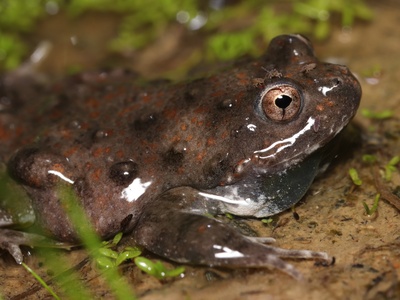
Cape Caco
Small frog in fynbos depressions and seasonal pans. ID tip: thin body and distinctive high-pitched trill; vulnerable to habitat drainage.
Clicking Stream Frog
Tiny, cryptic frog with metallic clicking calls. ID tip: very small size (few cm) and terrestrial breeding in mossy seepages; many local endemics in this genus.
Mozambique Platanna (introduced in parts)
Smallish clawed frog found in ponds and dams. ID tip: similar to X. laevis but generally smaller; aquatic and often in man-made waterbodies.
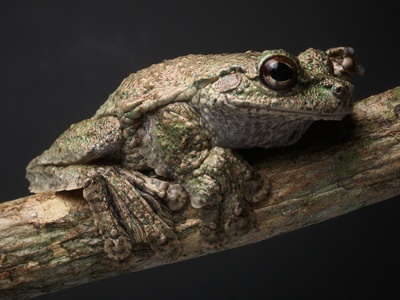
Fringe-Limbed Tree Frog
Arboreal tree frog with long limbs and toe pads. ID tip: large eyes and a soft call; often heard above streams at night.
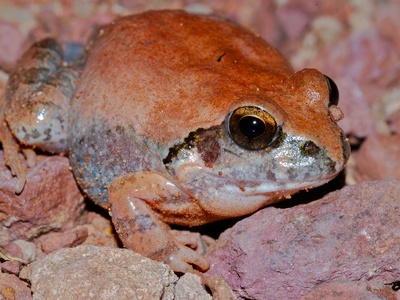
Natal Sand Frog
Sand-dwelling frog that calls from burrows. ID tip: camouflaged, burrowing habit and low, metallic call after rains.
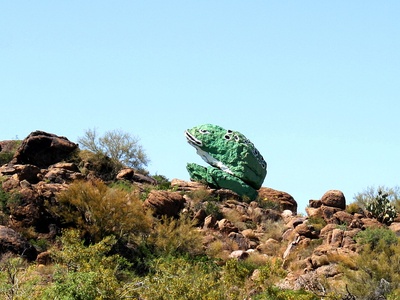
Rock Frog
Robust frog that frequents rocky rapids. ID tip: muscular limbs and mottled pattern for camouflage on wet boulders; breeds in flowing water.