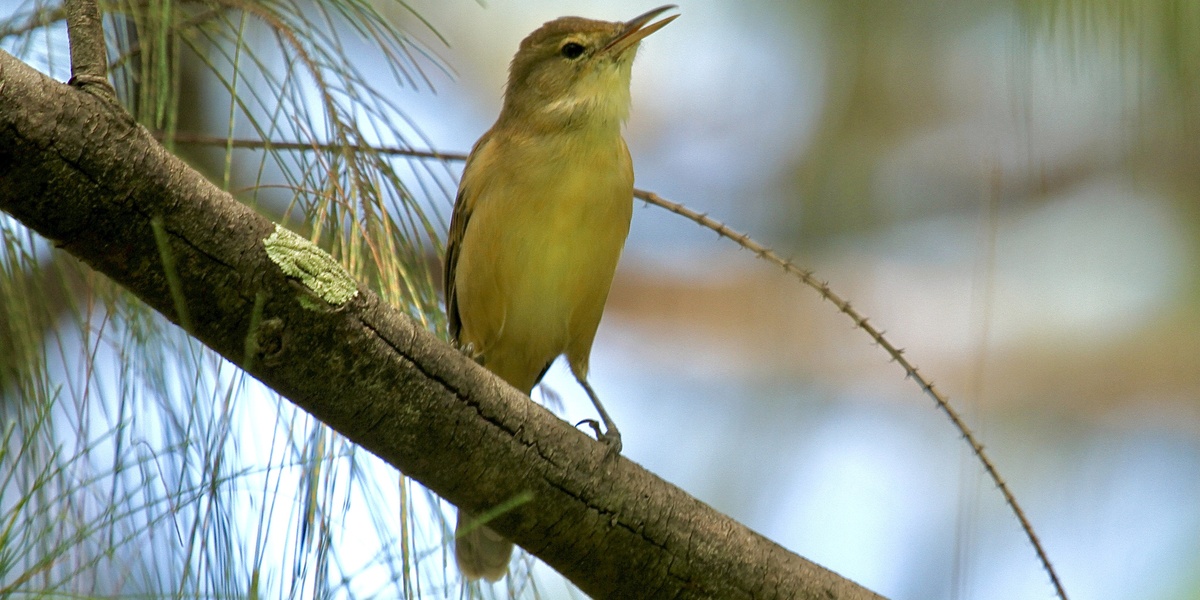
Nauru is a tiny phosphate island in the central Pacific whose isolation has shaped a compact, distinctive mix of wildlife. From coastal seabird rookeries to nearshore reef life, the island’s species tell a story about small-landscape ecology and ongoing conservation challenges.
There are 18 Nauru’s native animals, ranging from Black noddy to Spinner dolphin. Entries are organized with Scientific name, Status, Habitat / range so you can quickly see identity and conservation notes — you’ll find below.
Are any of these species considered threatened or endangered?
Some species on the list face pressures like habitat loss, introduced predators, and marine threats; exact statuses vary by species and are shown in the Status column. Check each entry below for up-to-date conservation designations and local context.
How were the 18 species chosen for this list?
The list focuses on species documented as native or regularly occurring around Nauru, drawing on observational records and regional references; each row below includes Scientific name, Status, and Habitat / range to explain why the species is included.
Nauru’s Native Animals
| Name | Scientific name | Status | Habitat / range |
|---|---|---|---|
| Nauru reed warbler | Acrocephalus rehsei | Endemic; IUCN Vulnerable | Scrubby inland and coastal vegetation; throughout island |
| Brown noddy | Anous stolidus | Native breeder; IUCN Least Concern | Coastal trees, buildings and shoreline; islands’ colonies |
| Black noddy | Anous minutus | Native breeder; IUCN Least Concern | Coastal trees and cliff tops; local colonies |
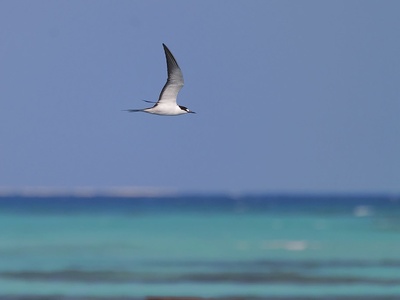
| Sooty tern | Onychoprion fuscatus | Native breeder; IUCN Least Concern | Offshore islets and coastal ground-nesting sites |
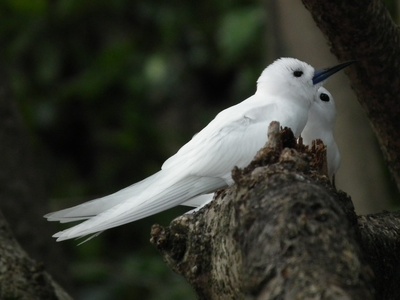
| Common white tern | Gygis alba | Native resident; IUCN Least Concern | Coastal trees and shorelines; common around coasts |
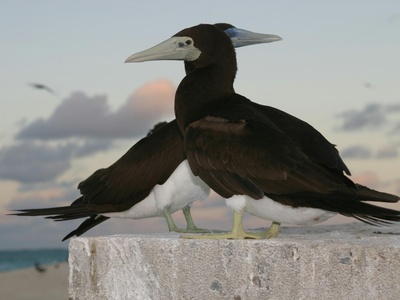
| Brown booby | Sula leucogaster | Native breeder; IUCN Least Concern | Coastal rocks and offshore waters; nests on ground |
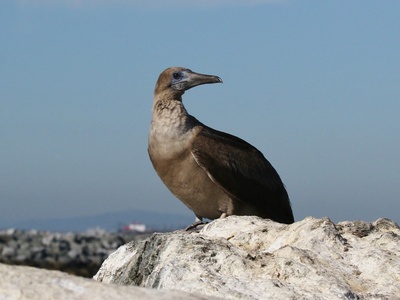
| Red-footed booby | Sula sula | Native breeder; IUCN Least Concern | Coastal trees and offshore islets; roosts in trees |
| Masked booby | Sula dactylatra | Native breeder; IUCN Least Concern | Coastal cliffs and offshore rocks; ground nests |
| Lesser frigatebird | Fregata ariel | Native visitor; IUCN Least Concern | Open sea and coastal airspace; perches in trees |
| Great frigatebird | Fregata minor | Native visitor; IUCN Least Concern | Offshore waters and tall trees for roosting |
| Pacific golden-plover | Pluvialis fulva | Migratory regular; IUCN Least Concern | Inland open grounds and coastal flats; winter visitor |
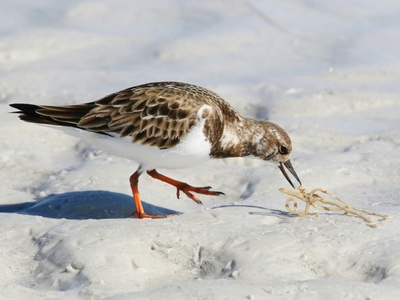
| Ruddy turnstone | Arenaria interpres | Migratory regular; IUCN Least Concern | Rocky shores and reef flats; common migrant |
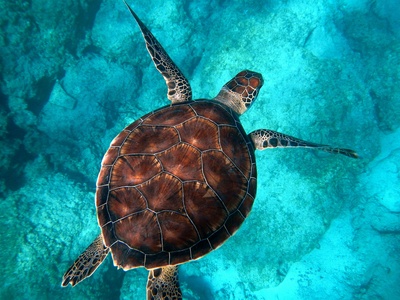
| Green sea turtle | Chelonia mydas | Native; IUCN Endangered | Coastal reefs, seagrass beds and nesting beaches |
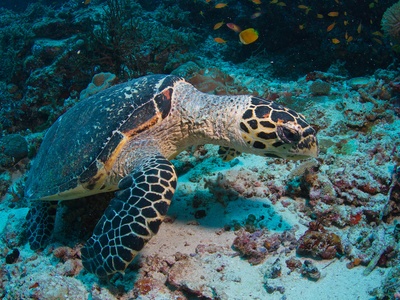
| Hawksbill turtle | Eretmochelys imbricata | Native; IUCN Critically Endangered | Coral reefs and shorelines; occasional nesting |
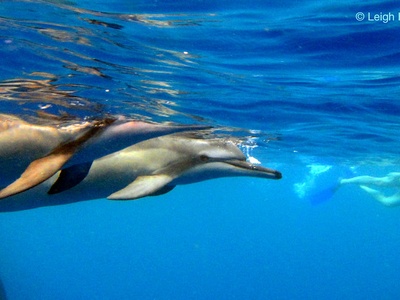
| Spinner dolphin | Stenella longirostris | Native; IUCN Least Concern | Offshore waters and reef edges; often near boats |
| Bottlenose dolphin | Tursiops truncatus | Native; IUCN Least Concern | Coastal waters and lagoon edges; occasional inshore sightings |
| Blacktip reef shark | Carcharhinus melanopterus | Native; IUCN Near Threatened | Shallow reef flats and lagoon edges; common inshore |
| Pacific reef heron | Egretta sacra | Native; IUCN Least Concern | Rocky shorelines, reef flats and lagoons; local resident |
Images and Descriptions
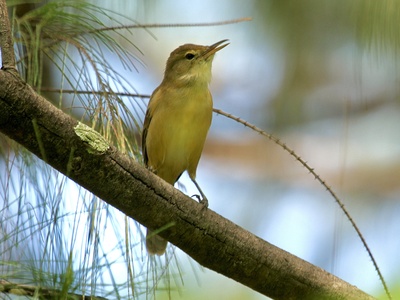
Nauru reed warbler
A small, plain brown songbird found only on Nauru; often heard more than seen. It’s the island’s only endemic landbird and struggles from habitat loss after phosphate mining; interestingly, it has adapted to survive in degraded scrub habitats.
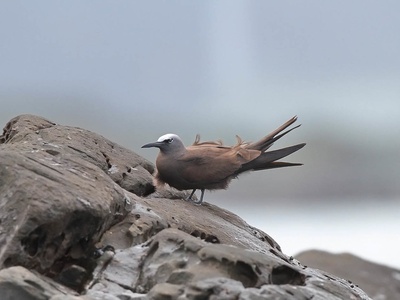
Brown noddy
A graceful black-and-brown seabird that nests in trees and on buildings around Nauru. Common at dusk when colonies return; interestingly, brown noddies often steal small fish mid-air and form large, noisy breeding colonies.
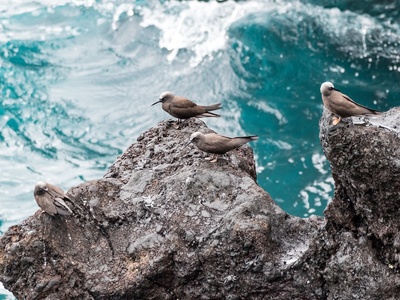
Black noddy
A sleek, dark seabird with a marked pale cap that nests in coastal trees. Less numerous than brown noddies on Nauru; notable for tight colonial nesting and strong site fidelity to traditional roosts.
Sooty tern
A black-and-white tern that breeds in large ground colonies on islets and flat coastal areas. Famous for long oceanic flights outside breeding season; interestingly, sooty terns can stay at sea for years between breeding events.
Common white tern
A delicate white seabird that often nests on bare branches without a nest platform, laying a single egg on a twig. Frequently seen hovering over harbors; its floating, nestless eggs are a striking adaptation.
Brown booby
A chunky, brown-and-white booby that plunges into the sea for fish. Regularly breeds on Nauru’s coasts; interestingly, brown boobies dive at high speed and can spot prey from high above the water.
Red-footed booby
A colourful booby with distinctive red feet that nests in trees or shrubs. On Nauru it uses any available coastal vegetation; interestingly, it is the only booby species that commonly nests in trees.
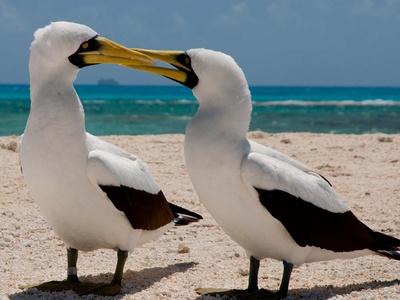
Masked booby
A large white booby with a black face and long wings, nesting on open ground on rocky coasts. Noted for dramatic plunge-diving and long incubation shifts by parents.
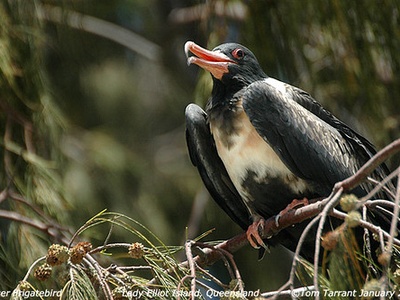
Lesser frigatebird
A slim, black seabird with long forked tail and soaring habits; often piracies food from other birds. Males display an inflatable red gular sac during breeding season, a striking sight over coastal trees.
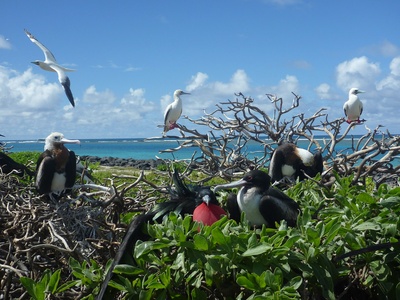
Great frigatebird
One of the ocean’s largest flying birds with a huge wingspan and forked tail; it rarely lands on water. Famous for kleptoparasitism and aerial displays; males flaunt large red throat pouches in breeding season.
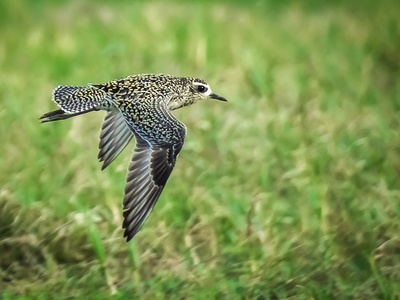
Pacific golden-plover
A slim, long-legged shorebird that migrates thousands of kilometres to Pacific islands like Nauru for the non-breeding season. Often seen probing short grass and open areas; remarkable for its long-distance migration.
Ruddy turnstone
A stocky, patterned shorebird that flips over stones and algae seeking invertebrates. Regularly stops on Nauru during migrations; interestingly, individual turnstones can travel extreme distances between breeding and wintering grounds.
Green sea turtle
A large marine turtle that forages on seagrasses and uses Nauru’s beaches for occasional nesting. Valued culturally and ecologically; interestingly, juveniles often ride ocean currents long distances before returning to tropical shores to breed.
Hawksbill turtle
A smaller, beautifully patterned turtle associated with coral reefs, feeding on sponges and invertebrates. Critically endangered and occasionally nests on Nauru; notable for its narrow, pointed beak and prized shell.
Spinner dolphin
A playful, acrobatic dolphin famous for spinning leaps and tight social groups. Common in tropical Pacific waters around Nauru; interestingly, spinner dolphins often rest inshore during the day and feed offshore at night.
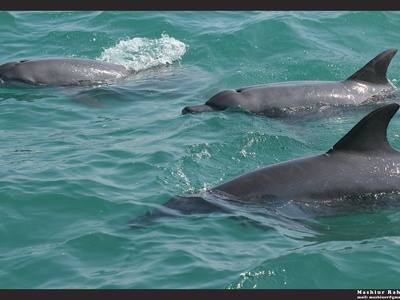
Bottlenose dolphin
A robust, familiar dolphin often seen near shore and in lagoons. Highly intelligent with complex social behavior; occasionally spotted riding bow waves of local boats around Nauru.
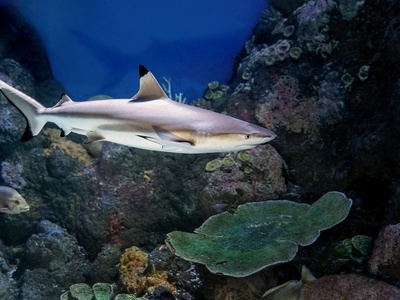
Blacktip reef shark
A small, distinctive reef shark with black-tipped fins that patrols shallow reefs and lagoons. Common around Nauru’s reefs and important to local marine ecosystems; notable for its site fidelity to reef patches.
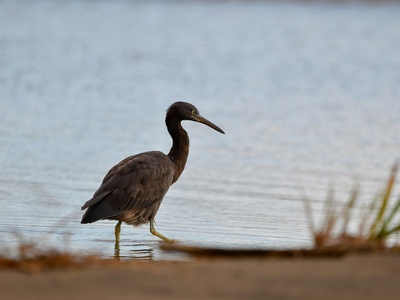
Pacific reef heron
A variable-coloured heron that forages along rocky shores and reef pools for fish and crustaceans. Often solitary and stealthy; interestingly, it shows both dark and white colour morphs in the Pacific.