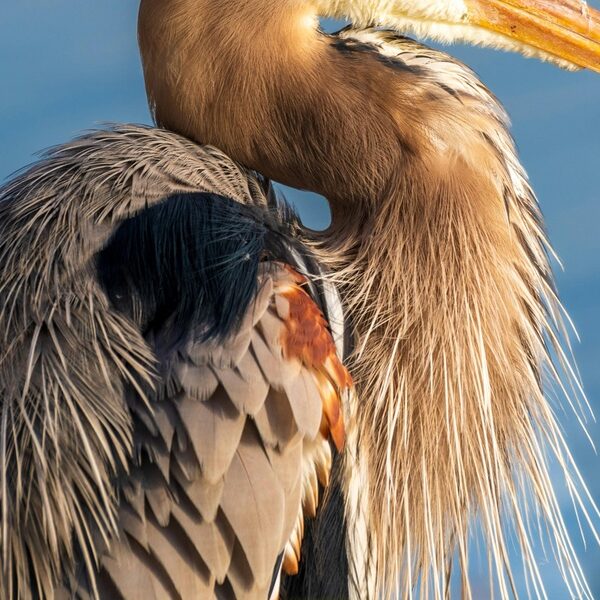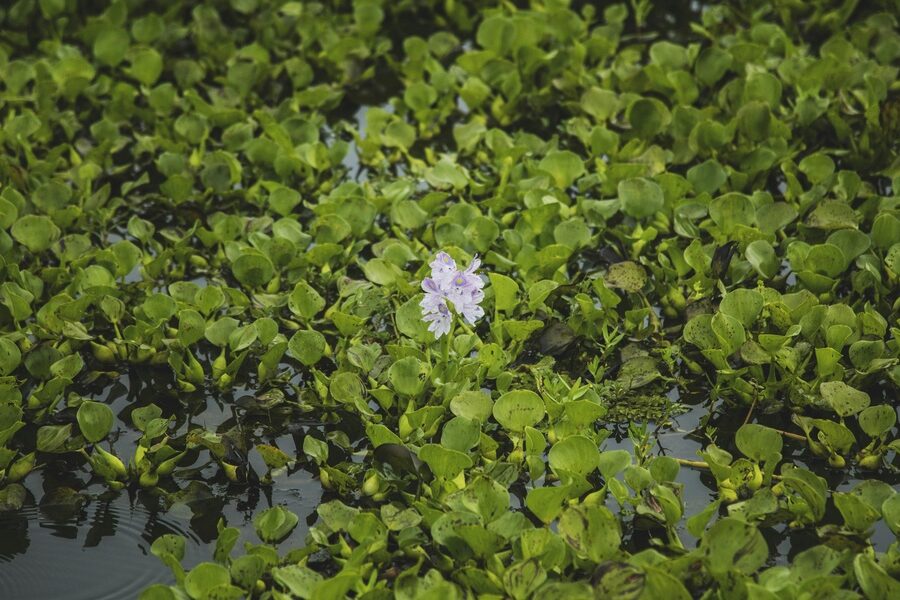
Africa’s landscapes — from mangrove-lined coasts to highland lakes and dry savannas — shape a rich variety of bird life across the continent. Seasonal movements and localized endemics mean birdwatching in different countries can feel like a new experience each trip.
There are 30 Birds of Africa, ranging from African Fish Eagle to White-backed Vulture, chosen to show habitat and conservation variety. Each entry is organized with columns: Scientific name,Main range (countries/regions),IUCN status, so you can quickly see where species occur and their conservation ranking — you’ll find the full list and details below.
How can I use this list to plan birdwatching trips in Africa?
Use the Main range column to match species to countries and regions, then check local seasonality and protected areas for higher encounter chances; the Scientific name helps when communicating with guides or checking records (e.g., eBird), and IUCN status flags species that may need permits or special sites.
Which types of birds on the list need the most urgent conservation attention?
Look to the IUCN status column to spot Critically Endangered and Endangered species; habitat-specialists and scavengers (many vulture species) often face acute threats from habitat loss, poisoning and declining prey, so prioritize sites and programs focused on those groups.
Birds of Africa
| Common name | Scientific name | Main range (countries/regions) | IUCN status |
|---|---|---|---|
| Ostrich | Struthio camelus | Sub-Saharan Africa and Sahel | Least Concern |
| African Penguin | Spheniscus demersus | South Africa, Namibia coastal islands | Endangered |
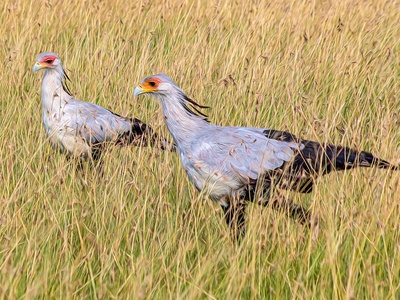
| Secretarybird | Sagittarius serpentarius | Sub-Saharan grasslands and savannas | Vulnerable |
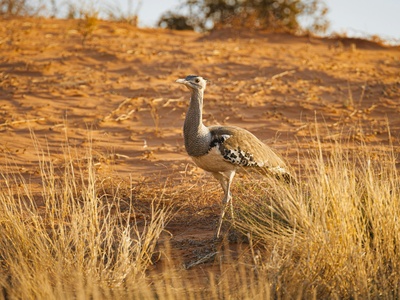
| Kori Bustard | Ardeotis kori | Southern and East Africa open plains | Near Threatened |
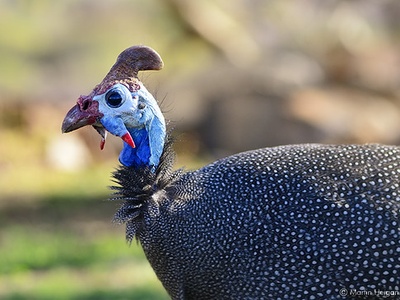
| Helmeted Guineafowl | Numida meleagris | Sub-Saharan Africa widespread | Least Concern |
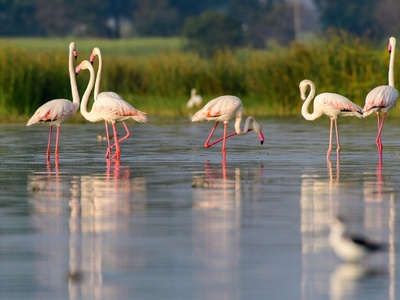
| Greater Flamingo | Phoenicopterus roseus | East, West and North African wetlands | Least Concern |
| Lesser Flamingo | Phoeniconaias minor | East and southern African alkaline lakes | Near Threatened |
| African Fish Eagle | Haliaeetus vocifer | Rivers, lakes across sub-Saharan Africa | Least Concern |
| Martial Eagle | Polemaetus bellicosus | Sub-Saharan open woodlands and savanna | Endangered |
| Peregrine Falcon | Falco peregrinus | Widespread across Africa as resident and migrant | Least Concern |
| Lilac-breasted Roller | Coracias caudatus | Sub-Saharan open woodlands and savanna | Least Concern |
| European Bee-eater | Merops apiaster | Sahel, East Africa and wintering areas | Least Concern |
| Fork-tailed Drongo | Dicrurus adsimilis | Sub-Saharan woodlands and savanna | Least Concern |
| African Grey Parrot | Psittacus erithacus | West and Central African rainforests | Endangered |
| Village Weaver | Ploceus cucullatus | Widespread across sub-Saharan Africa | Least Concern |
| Palm-nut Vulture | Gypohierax angolensis | West and Central Africa coastal and riverine areas | Least Concern |
| White-backed Vulture | Gyps africanus | Sub-Saharan open country, cliffs and savanna | Critically Endangered |
| Rüppell’s Vulture | Gyps rueppelli | Sahel to East Africa highland and savanna | Critically Endangered |
| Hooded Vulture | Necrosyrtes monachus | Sahel to southern Africa, often near people | Critically Endangered |
| Lappet-faced Vulture | Torgos tracheliotos | Open arid savannas of Africa | Endangered |
| Cape Gannet | Morus capensis | South Africa and Namibia coastal waters | Endangered |
| African Jacana | Actophilornis africanus | Freshwater wetlands across sub-Saharan Africa | Least Concern |
| Malachite Kingfisher | Corythornis cristatus | Africa’s rivers, lakes and wetlands | Least Concern |
| Pied Kingfisher | Ceryle rudis | Widespread across African inland waters and coasts | Least Concern |
| Marabou Stork | Leptoptilos crumenifer | Sub-Saharan wetlands, floodplains and towns | Least Concern |
| Saddle-billed Stork | Ephippiorhynchus senegalensis | Sub-Saharan wetlands and floodplains | Least Concern |
| Egyptian Goose | Alopochen aegyptiaca | Rivers, lakes and parks across Africa | Least Concern |
| Great White Pelican | Pelecanus onocrotalus | Eastern and southern African lakes and wetlands | Least Concern |
| Shoebill | Balaeniceps rex | Central African swamps and flooded forests | Vulnerable |
| Hoopoe | Upupa epops | Widespread in northern and sub-Saharan Africa, open country | Least Concern |
Images and Descriptions
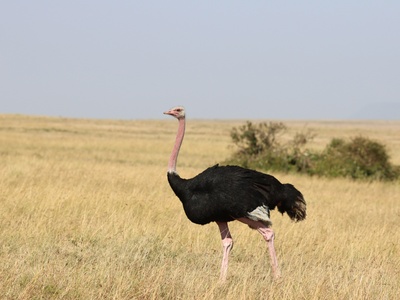
Ostrich
The world’s largest bird, flightless and powerful, with a long neck and strong legs. Found in open savannahs and semi-desert; known for fast running, communal nests, and striking male black-and-white plumage during breeding displays.
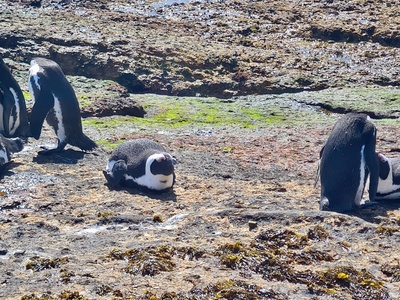
African Penguin
A distinctive black-and-white seabird with a waddling gait and loud bray. Breeds on rocky islands and mainland beaches, feeds on small fish; populations have fallen sharply due to overfishing and oil pollution.
Secretarybird
A tall, long-legged raptor that hunts on foot, walking grasslands for snakes and small mammals. Notable crest of long feathers and upright posture; vulnerable to habitat loss and persecution.
Kori Bustard
One of the heaviest flying birds; mottled brown plumage and ground-dwelling habits. Prefers dry savannas and grasslands, displaying elaborate booming courtship; populations affected by hunting and habitat change.
Helmeted Guineafowl
A chunky, ground-feeding bird with a bare blue-and-red head and finely spotted grey body. Lives in open woodland, savanna and farmland; social, noisy flocks forage for seeds and insects.
Greater Flamingo
Large pale-pink wader with long legs and downcurved bill used to filter-feed on crustaceans and algae. Forms huge flocks on saline lakes and coastal lagoons; notable for spectacular breeding colonies.
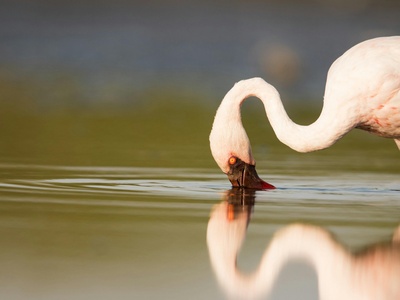
Lesser Flamingo
Smaller, deep-pink flamingo that specializes on cyanobacteria in saline lakes. Forms vast, sometimes remote colonies; sensitive to water level changes and pollution that threaten feeding grounds.
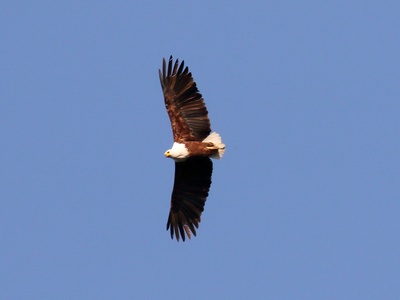
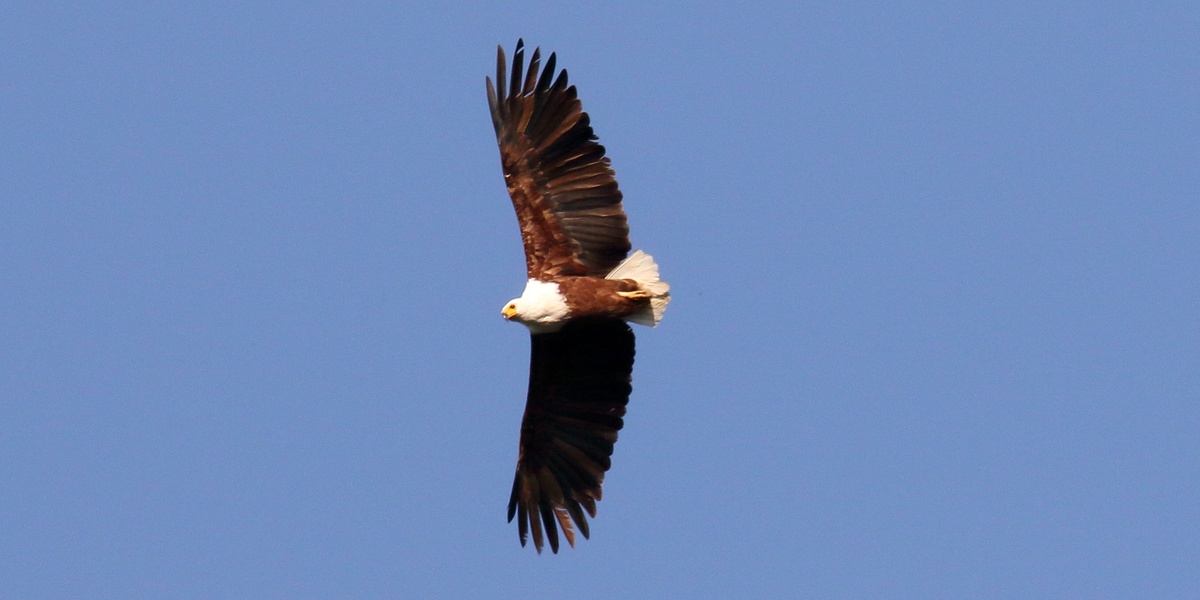
African Fish Eagle
Iconic raptor with white head, chestnut body and piercing cry. Hunts fish from rivers and lakes, perching prominently; a widespread symbol of African freshwater ecosystems.
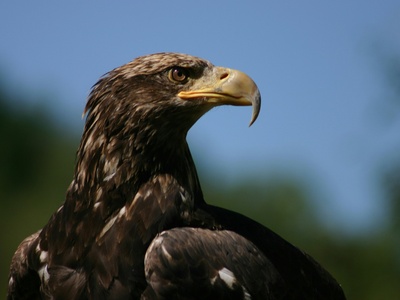
Martial Eagle
Large, powerful eagle with barred underparts and broad wings. Hunts mammals and large birds from soaring or perch-hunts; populations declining from persecution, habitat loss and reduced prey.
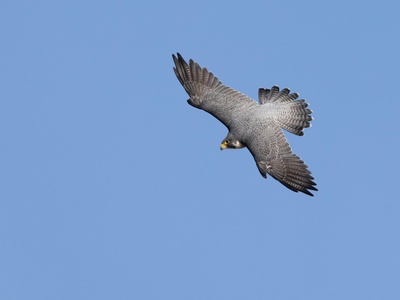
Peregrine Falcon
A streamlined, fast-flying raptor with slate-grey back and barred underparts. Occurs on cliffs, coasts and cities; acclaimed for spectacular stoops when hunting birds in flight.
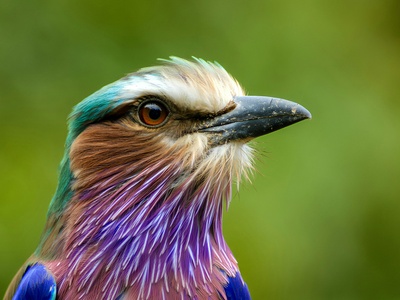
Lilac-breasted Roller
Vividly colored with lilac breast, turquoise belly and long tail streamers. Perches conspicuously to hawk insects; a favorite sight on safari due to bright plumage and acrobatic flight displays.
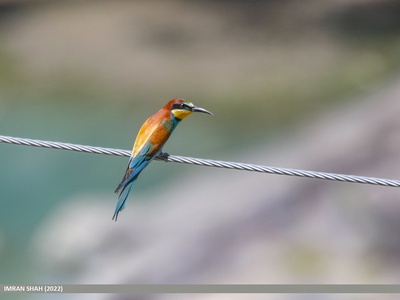
European Bee-eater
Slender, brightly colored migratory bird with a black eye stripe and long central tail feathers. Breeds in Europe but regularly occurs across northern and sub-Saharan Africa during migrations and winter.
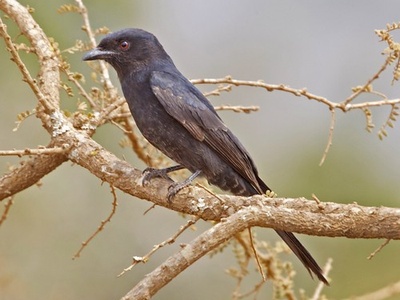
Fork-tailed Drongo
Black, elevenacious songbird with a forked tail, known for bold behavior and mimicry. Hunts insects from perches, often follows mammals to snatch disturbed prey; adaptable and vocal.
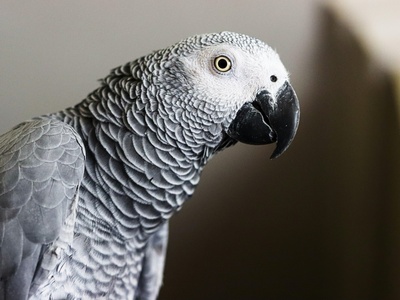
African Grey Parrot
Highly intelligent, ash-grey parrot with bright red tail feathers. Inhabits dense lowland forests and forest edges; prized for speech ability but severely threatened by trapping and habitat loss.
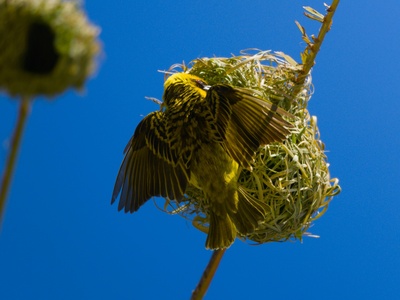
Village Weaver
Stocky, gregarious finch-like bird with striking woven nests. Males build elaborate pendulous nests to attract females. Common in savannas, farmland and villages where colonies bustle with activity.
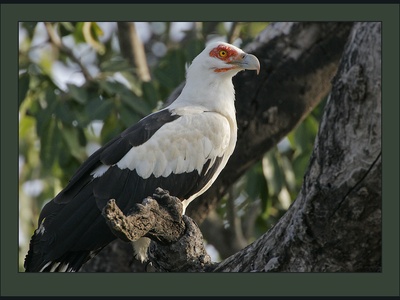
Palm-nut Vulture
Unusual vulture that feeds largely on palm fruits and aquatic prey rather than carrion. Smallish vulture with white body and dark flight feathers; found near rivers, estuaries and palm swamps.
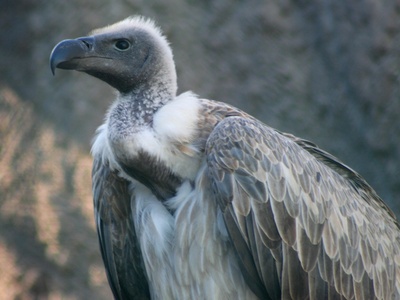
White-backed Vulture
Large scavenger with pale back and broad wings. Essential for carcass cleanup but devastated by poisoning, veterinary drugs and habitat loss; populations across Africa have crashed.
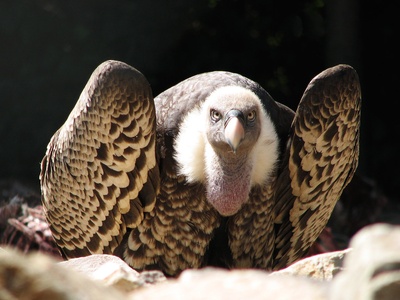
Rüppell’s Vulture
High-flying, cliff-nesting vulture known to reach extreme altitudes. Dark plumage and long wings; suffers catastrophic declines from poisoning and collisions with power infrastructure.
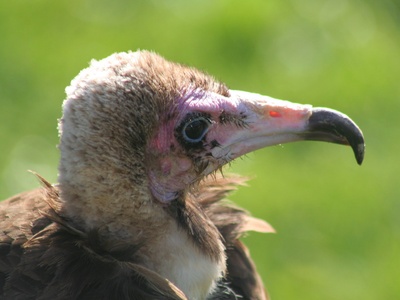
Hooded Vulture
Small, pale-headed vulture that scavenges in towns and countryside. Critically endangered due to poisoning, traditional medicine trade and rapid population collapse across range.
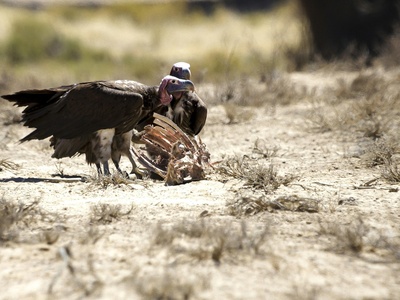
Lappet-faced Vulture
Impressive large vulture with bare pink face and deep bill used to tear carcasses. Solitary or small groups at carcasses; vulnerable from poisoning, habitat loss and declines in large mammal prey.
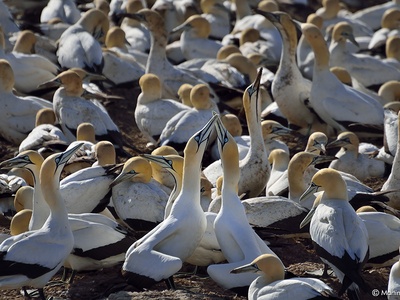
Cape Gannet
Large white seabird with black-tipped wings and yellowish head, spectacular diver that plunges for fish. Breeds on a few islands; sensitive to fishery declines and human disturbance.
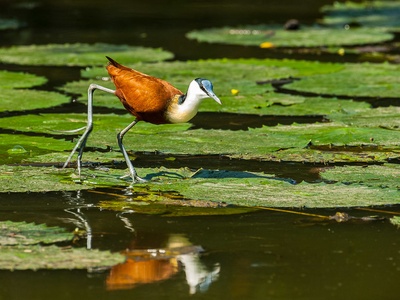
African Jacana
Long-legged, long-toed shorebird that walks on floating vegetation searching for insects and seeds. Males incubate eggs; unmistakable on lily pads and swampy lakes.
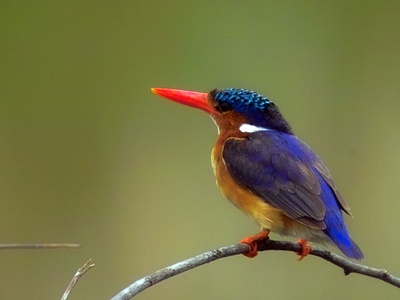
Malachite Kingfisher
Tiny, bright blue-and-orange kingfisher with a rapid plunge-dive for small fish. Perches low over slow-moving water in reedbeds and marshes, often seen in pairs.
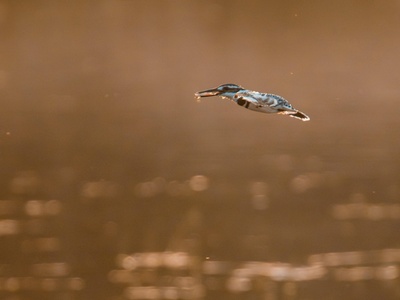
Pied Kingfisher
Black-and-white, hovering kingfisher that plunges vertically for fish. Versatile and common on rivers, lakes and estuaries; nests in burrows along sandy banks.
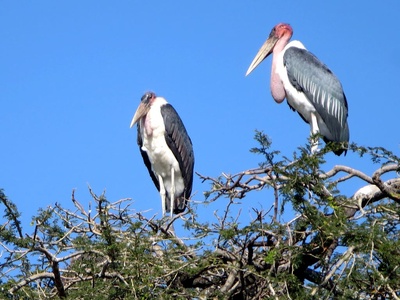
Marabou Stork
Massive, bare-headed stork with a slack neck pouch and scavenging habits. Often seen at carcasses and rubbish sites; also feeds on aquatic prey in floodplains.
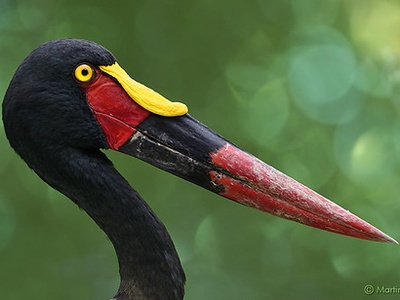
Saddle-billed Stork
Tall, elegant stork with black-and-white plumage and striking red-and-black bill with a yellow saddle. Feeds in shallow water on fish, frogs and large invertebrates.
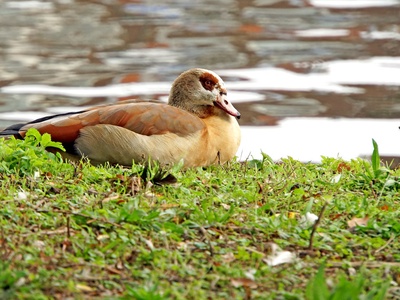
Egyptian Goose
Stocky, brown-and-cream waterfowl with bold facial markings. Native across much of sub-Saharan Africa and the Nile region; adaptable to lakes, rivers and human-modified habitats.
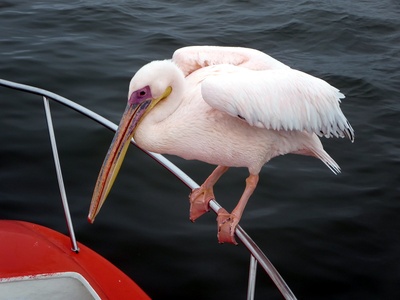
Great White Pelican
Huge white waterbird with long bill and expandable throat pouch used to scoop fish. Breeds in colonies on islands and roosts in large flocks on shallow lakes and lagoons.
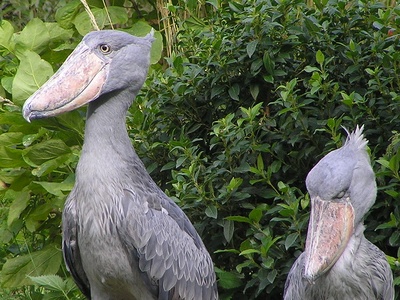
Shoebill
Striking, prehistoric-looking bird with a massive shoe-shaped bill and slow, deliberate hunting. Ambushes fish in papyrus swamps and seasonally flooded floodplains; vulnerable due to habitat loss and disturbance.
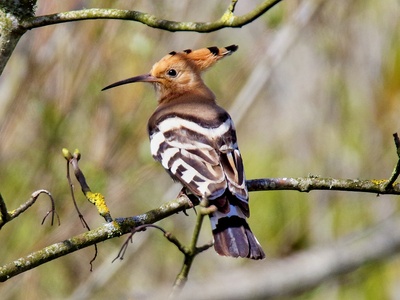
Hoopoe
Cinnamon-colored bird with black-and-white wings and a crest that fans in displays. Forages on the ground for insects, nesting in cavities; familiar and charismatic across open rural landscapes.