Strolling the edges of gardens, parks, and sunny rock faces, you’ll notice flashes of orange among the leaf litter and webbing. These small, brightly colored spiders are often overlooked, but they occupy a range of habitats and can be easy to spot once you know where to look.
There are 20 orange spiders, ranging from the Apache jumping spider to the Yellow sac spider. For each, you’ll find below Scientific name,Range,Size (mm) — a compact way to compare where they live and how big they get, and you’ll find below.
Are orange spiders dangerous to people?
Most orange spiders are not dangerous and bites are uncommon; many are small and will avoid people. A few, like some sac spiders, can cause a painful bite or mild local reactions, so avoid handling unknown spiders and wash any bite area and seek care if symptoms worsen.
How can I tell different orange spider species apart?
Look at size, body shape, eye arrangement (jumping spiders have large front eyes), patterns on the abdomen, and habitat—web-builders differ from active hunters. Use a clear photo or a close-up with a magnifier and compare to the Scientific name,Range,Size (mm) data you’ll find below to confirm identification.
Orange Spiders
| Name | Scientific name | Range | Size (mm) |
|---|---|---|---|
| Golden silk orb-weaver | Trichonephila clavipes | SE USA, Central America, South America | 30 |
| Marbled orb-weaver | Araneus marmoreus | North America, Europe, Asia | 12 |
| Barn orb-weaver | Araneus cavaticus | North America | 14 |
| Spotted orb-weaver | Neoscona crucifera | North America | 15 |
| Apache jumping spider | Phidippus apacheanus | SW USA, Mexico | 8 |
| Johnson’s jumping spider | Phidippus johnsoni | Western North America | 10 |
| Ladybird spider | Eresus sandaliatus | Europe | 7 |
| Spined micrathena | Micrathena gracilis | Eastern North America | 7 |
| Arrow-shaped micrathena | Micrathena sagittata | North America | 8 |
| Spiny-backed orb-weaver | Gasteracantha cancriformis | Americas, Caribbean | 8 |
| Australian pumpkin spider | Eriophora transmarina | Australia | 14 |
| Happy-face spider | Theridion grallator | Hawaiian Islands | 4 |
| Candy-striped spider | Enoplognatha ovata | Europe, North America | 5 |
| Common sac spider | Clubiona corticalis | Europe, Asia | 6 |
| Dark fishing spider | Dolomedes tenebrosus | Eastern North America | 18 |
| Yellow sac spider | Cheiracanthium mildei | Europe, North America | 9 |
| Gryffindor orb-weaver | Eriovixia gryffindori | India, Nepal | 5 |
| Two-tailed spider | Hersilia savignyi | Africa, Middle East, S Asia | 8 |
| Orchid jumper | Telamonia dimidiata | Southeast Asia | 6 |
| Nursery web spider | Pisaura mirabilis | Europe, Asia | 12 |
Images and Descriptions
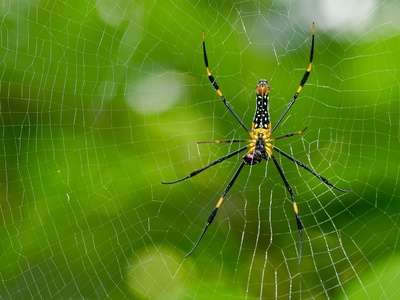
Golden silk orb-weaver
Large orb-weaver with long legs and a golden-orange abdomen and silken webs; found in gardens, woodlands and around lights, often hanging in open orb webs. Venom is mild to humans and bites are rare.
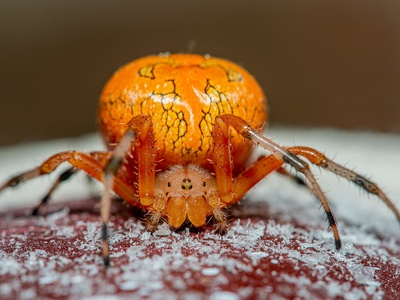
Marbled orb-weaver
Rounded orb-weaver often showing an orange-and-black marbled abdomen morph; frequent on shrubs and forest edges in late summer. Builds classic circular webs. Venom is harmless to people; bite rarely causes more than mild local reaction.
Barn orb-weaver
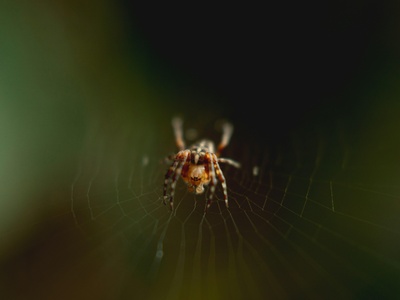
Stocky orb-weaver with a warm orange to reddish abdomen and banded legs; commonly found on barns, porches and garden shrubs where it spins vertical webs. Venom is not dangerous to humans; bites cause mild, short-lived symptoms.
Spotted orb-weaver
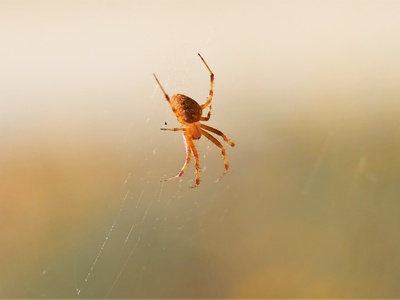
Large, hairy orb-weaver with a flattened, orange-brown abdomen and stout legs; often builds wheel-like webs on houses and trees at night. Common around lights. Venom is mild and not considered dangerous to people.
Apache jumping spider
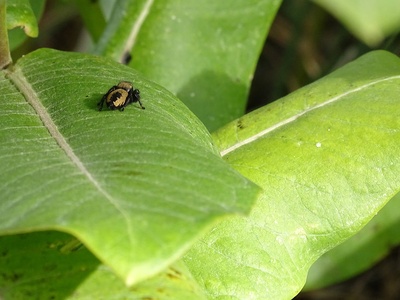
Compact jumping spider: adult males are bright orange-red with black and white markings; active hunters on low vegetation and rocks in arid regions. Bold, jerky movements. Venom is insignificant to people; bites rare and only mildly painful.
Johnson’s jumping spider
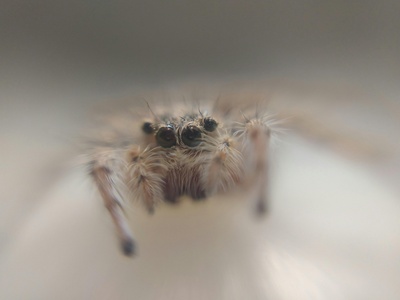
Stocky jumping spider with adult males showing vivid red-orange bodies and iridescent chelicerae; found on sun-exposed foliage and tree trunks hunting prey. Venom is harmless to humans; a bite causes minor localized pain at most.
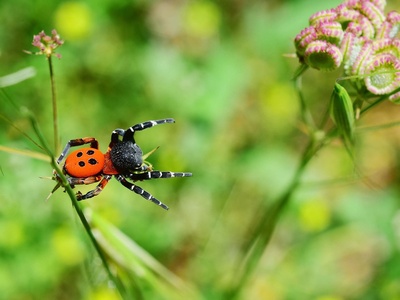
Ladybird spider
Distinctive velvet-red or orange male with black legs and spots; females are larger and pale. Lives in dry grassland and sandy habitats in silk-lined burrows. Venom is not dangerous to people; bites are very uncommon.
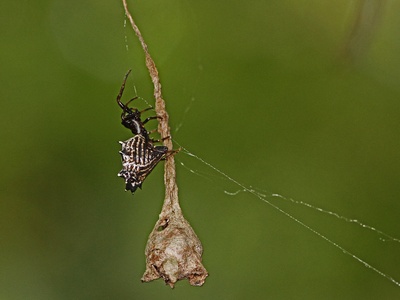
Spined micrathena
Small orb-weaver with a prominent spiny, pumpkin-orange abdomen in females; typically found in woodlands and gardens on low webs among shrubs. Venom poses little risk to humans and bites are rare.
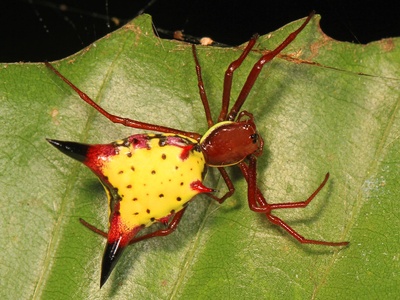
Arrow-shaped micrathena
Female-bodied orb-weaver with a bright orange, arrow-shaped spiny abdomen and small web in wooded areas; often seen in summer. Builds small orb webs low in vegetation. Venom is harmless to people; bite negligible.
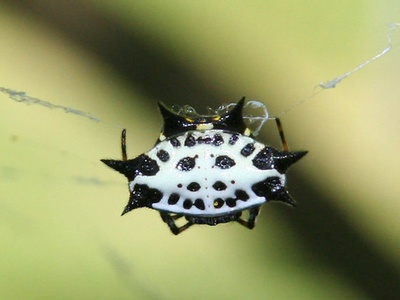
Spiny-backed orb-weaver
Small, broad-bodied orb-weaver with a hard, often bright orange shell and black spines; sits on orb webs in gardens, forest edges and near buildings. Venom is mild and not dangerous to humans.
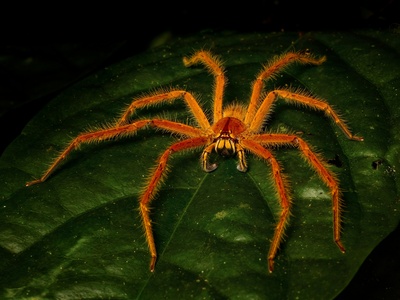
Australian pumpkin spider
Large orb-weaver with a warm orange or pumpkin-colored abdomen and stout legs; common in suburban gardens and eucalypt forests building large nightly webs. Venom is mild and poses no serious threat to people.
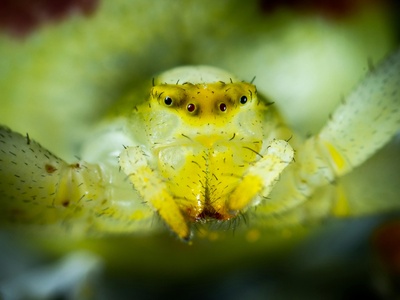
Happy-face spider
Tiny, rounded-bodied spider often yellow to orange with red or dark markings forming “faces”; lives on understory leaves in rainforests and lowlands. Venom is insignificant to humans; bites are extremely rare.
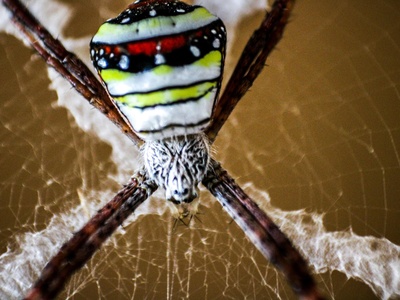
Candy-striped spider
Small comb-footed spider with pale orange to pinkish abdomen and subtle striping; found in low vegetation, leaf litter and buildings. Often seen in groups. Venom is not dangerous to people and bites are uncommon.
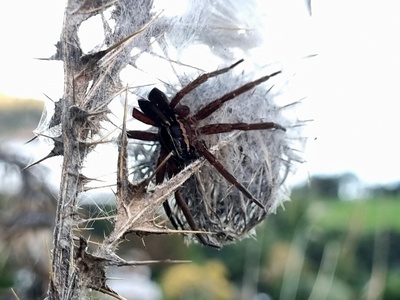
Common sac spider
Slender, pale orange sac spider often on vegetation and under bark; adults rest in silk sacs by day and hunt at night. Frequently found in homes. Venom can cause mild localized pain; serious reactions are rare.
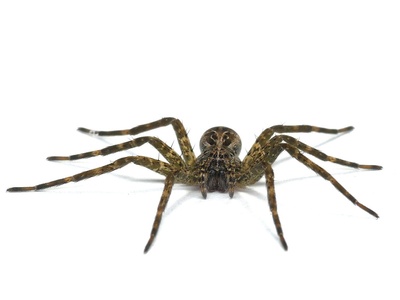
Dark fishing spider
Large, robust semi-aquatic wolf-like spider with reddish-orange to brown coloring and banded legs; commonly on house walls, tree trunks and near water. A capable jumper. Venom causes mild pain and swelling; not medically significant.
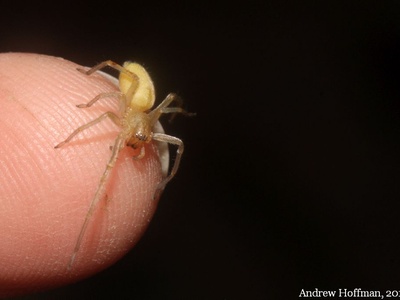
Yellow sac spider
Slender, pale yellow to orange sac spider with long legs; common in homes, foliage and leaf litter where it hunts at night and rests in silk sacs. Bites can be painful and may cause localized irritation; medical attention rarely needed.

Gryffindor orb-weaver
Small, triangular-shaped orb-weaver with a striking orange to brown folded-leaf appearance on tree bark and leaf litter; camouflaged daytime rest posture. Venom is harmless to humans and bites are very unlikely.
Two-tailed spider
Flat-bodied, long-tailed tree-dwelling spider with pale orange to reddish carapace and elongated spinnerets (“tails”); runs on trunks at night hunting insects. Venom is mild and not dangerous to people.
Orchid jumper
Slender jumping spider often showing orange-and-white or orange-and-black patterns on adults; active hunter on foliage and flowers in forests and gardens. Venom is insignificant to humans; bites are rare and minor.
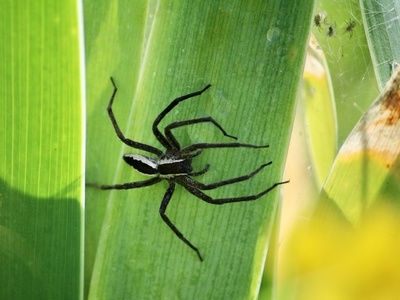
Nursery web spider
Long-legged, orange-brown hunting spider often on low vegetation; known for carrying egg sacs and making nursery webs. Common in meadows and hedgerows. Venom is mild to people and bites are not considered dangerous.