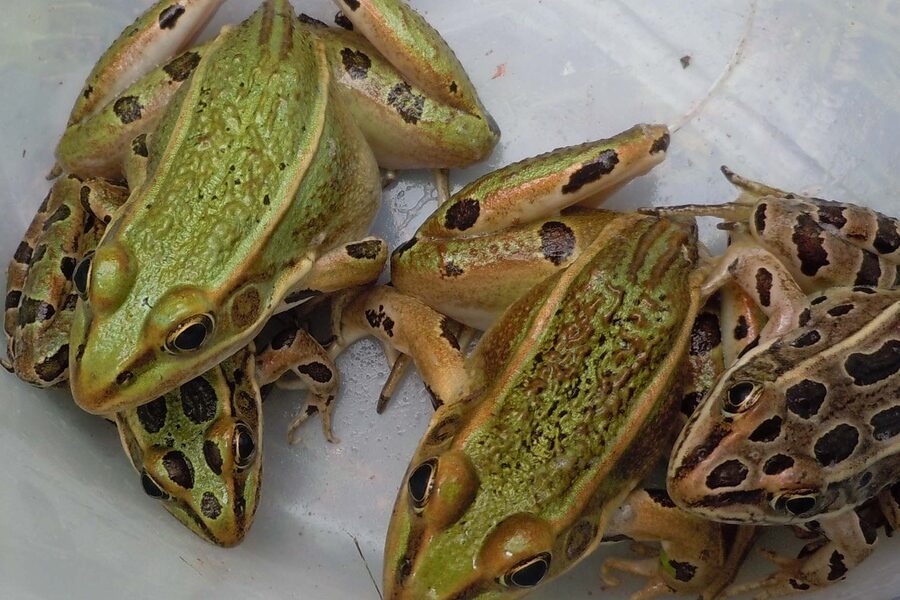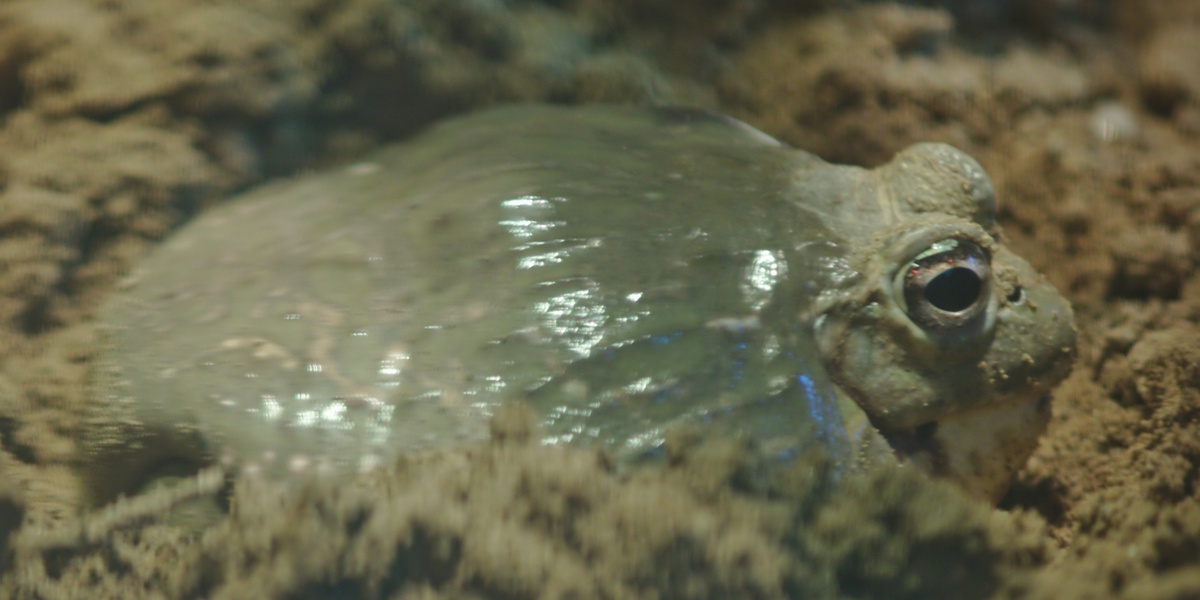
Sudan’s mix of Nile wetlands, seasonal savannas and desert edges supports more amphibian diversity than many expect. These species link aquatic and terrestrial ecosystems and can tell us a lot about water health and seasonal patterns across the country.
There are 9 Amphibians of Sudan, ranging from the African clawed frog to the Sudan puddle frog. For each species the list below uses these columns — Scientific name, IUCN status, Distribution / habitat — you’ll find below.
How threatened are Sudan’s amphibians?
Threat levels vary by species; some are listed as Least Concern while others are Data Deficient or face localized decline. Main pressures include habitat loss, water extraction, pollution and the impacts of changing rainfall. Conservation is limited by sparse surveys, so improving monitoring and protecting freshwater habitats are key priorities.
Where in Sudan can I observe these species?
Look for amphibians in and near permanent water bodies along the Nile, seasonal pools and irrigated fields, and wetter southern or central regions after rains. Observations are most likely during and just after the rainy season; local guides, permits and respect for protected areas will improve chances and reduce disturbance.
Amphibians of Sudan
| Name | Scientific name | IUCN status | Distribution / habitat |
|---|---|---|---|
| African common toad | Sclerophrys regularis | Least Concern | Widespread (Nile, savanna); gardens, wetlands, temporary pools |
| Penton’s toad | Sclerophrys pentoni | Least Concern | Sahelian and Sudanian zones; seasonal pools, wadis and grazed savanna |
| Mottled shovelnose frog | Hemisus marmoratus | Least Concern | Widespread (savanna, semi-desert margins); burrows in sandy soil, seasonal pools |
| African clawed frog | Xenopus laevis | Least Concern | Nile wetlands, irrigation canals, ponds and marshes |
| Crowned frog (Hoplobatrachus occipitalis) | Hoplobatrachus occipitalis | Least Concern | Nile valley and irrigated agricultural lands; seasonal ponds |
| Nile grass frog | Ptychadena nilotica | Least Concern | Nile valley and adjacent floodplains; grassy shallow water |
| Mascarene grass frog | Ptychadena mascareniensis | Least Concern | Widespread in savanna and irrigated lands; temporary ponds and ditches |
| Common sand frog | Tomopterna cryptotis | Least Concern | Dry savanna, semi-arid zones; sandy soil and temporary rain pools |
| Sudan puddle frog | Phrynobatrachus natalensis | Least Concern | Seasonal wetlands, floodplain pools and marshy depressions |
Images and Descriptions
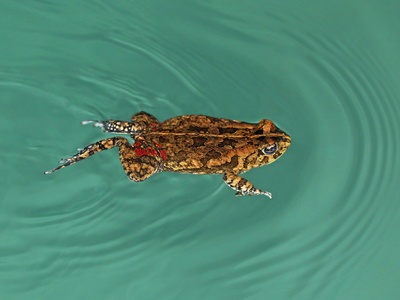
African common toad
A large, stocky toad with warty skin and parotoid glands; very common around settlements and irrigated fields. Active after rains, it breeds in temporary pools and is tolerant of disturbance, often seen in urban and agricultural areas.

Penton’s toad
A medium-sized toad with rough skin and variable brown patterning. Locally common in semi-arid parts of Sudan, it appears after seasonal rains and uses ephemeral pools to breed; resilient but vulnerable to habitat loss in some areas.
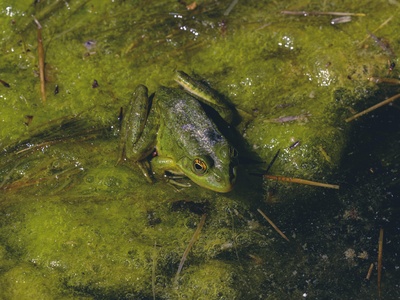
Mottled shovelnose frog
A stout, fossorial frog with a pointed snout used for digging; usually hidden underground, emerging to breed in rain-filled pools. Often overlooked but locally abundant where soils suit burrowing; distinctive behavior includes head-first digging.
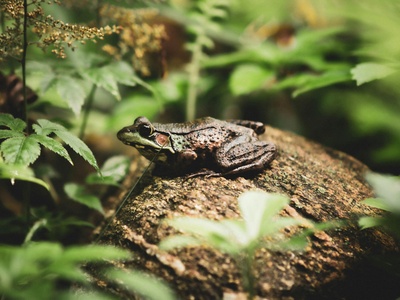
African clawed frog
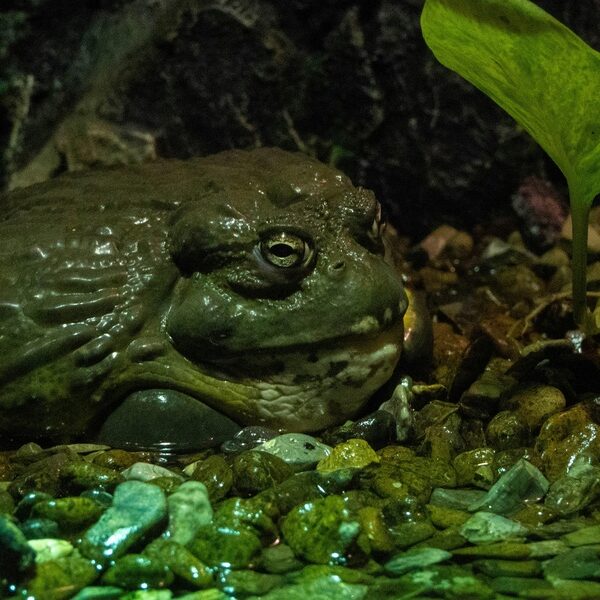
An aquatic, flattened frog with fully webbed hind feet and clawed toes; common in slow-moving water. It is a strong swimmer, tolerates pollution and fluctuating water levels, and breeds prolifically where permanent water exists.
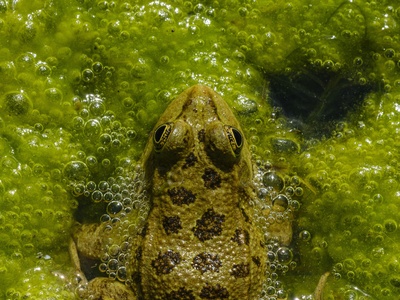
Crowned frog (Hoplobatrachus occipitalis)
A robust, short-legged frog with a prominent head and loud call; frequent in flooded fields and river margins. Active after rains, it is a strong jumper and often seen in large breeding aggregations.
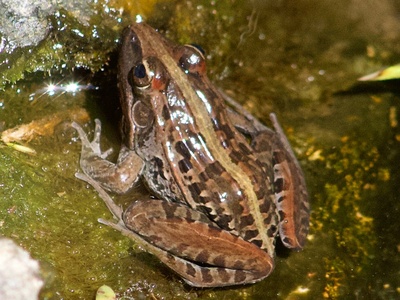
Nile grass frog
A slim, long-legged frog with greenish stripes and strong hind limbs for jumping. Very common along the Nile and floodplains, it breeds in shallow, grassy pools and is an important part of local wetland ecosystems.
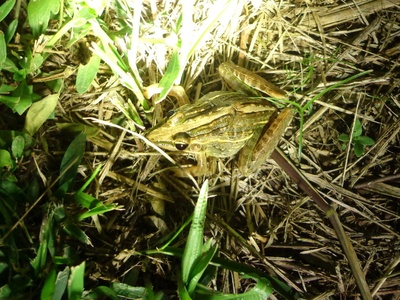
Mascarene grass frog
A medium-sized, slender frog with long legs and dorsolateral ridges; widespread and adaptable, found in agricultural fields and seasonal pools. Breeds explosively after rains and is one of the most frequently encountered grass frogs.
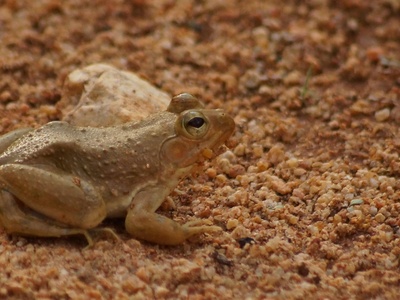
Common sand frog
A cryptic, squat frog with a rough back and a characteristic low call from sandy ground. It burrows or hides under debris during dry periods, emerging after rains to breed in short-lived pools; locally common in suitable habitat.
Sudan puddle frog
A small, agile frog with a pointed snout and slender build; often abundant in temporary wetlands and floodplain depressions. Active around shallow, vegetated pools where it breeds; sensitive to the loss of seasonal wetlands.