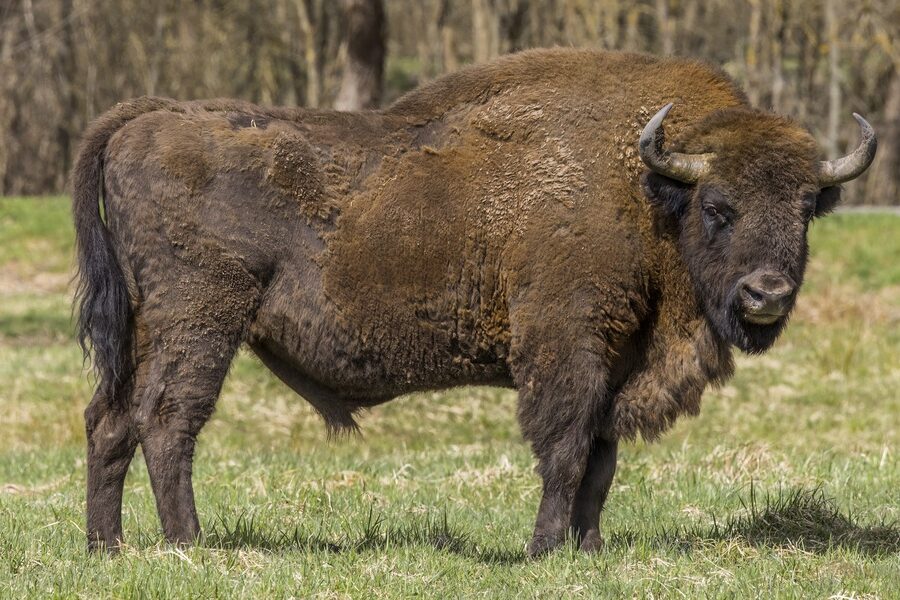
From coastal mangroves to high-elevation pine forests, the Dominican Republic is home to a variety of habitats that support birds, reptiles, mammals and more. Small pockets of forest, wetlands and shorelines each reveal different species if you know where and when to look.
There are 36 The Dominican Republic’s native animals, ranging from Broad-billed tody to Zenaida dove. For each species, data are organized with Scientific name,IUCN status,Range / habitat (max 15 words); you’ll find below.
How can I observe native animals without disturbing them?
Visit protected areas with a local guide, go early when animals are most active, use binoculars or a camera with zoom, keep a respectful distance, and never feed or chase wildlife. Following trail rules and seasonal closures helps you see species while protecting their habitat.
Which species need the most help and what can visitors do?
Island endemics and species with small ranges often face habitat loss and invasive predators; many have threatened IUCN listings included in the list. Support local conservation groups, choose eco-certified tours, avoid buying wildlife products, and follow park guidelines to reduce your impact.
The Dominican Republic’s Native Animals
| Common name | Scientific name | IUCN status | Range / habitat (max 15 words) |
|---|---|---|---|
| Hispaniolan solenodon | Solenodon paradoxus | EN | Forests and limestone woodlands across Hispaniola |
| Hispaniolan hutia | Plagiodontia aedium | VU | Karst forests, caves and rocky areas across Hispaniola |
| Jamaican fruit bat | Artibeus jamaicensis | LC | Lowland and montane forests, roosts in caves and hollow trees |
| Greater bulldog bat | Noctilio leporinus | LC | Coastal lagoons, mangroves and river mouths |
| Mexican free-tailed bat | Tadarida brasiliensis | LC | Caves and buildings, widespread lowland areas |
| Ghost-faced bat | Mormoops blainvillei | LC | Caves and forested karst areas across Hispaniola |
| Palmchat | Dulus dominicus | LC | Dry and moist forests, towns and farmland across Hispaniola |
| Hispaniolan trogon | Priotelus roseigaster | NT | Mature montane and cloud forests across Hispaniola |
| Hispaniolan parrot | Amazona ventralis | VU | Montane and lowland forests, remnant populations in eastern DR |
| Ridgway’s hawk | Buteo ridgwayi | CR | Lowland and montane forests, small DR strongholds |
| Hispaniolan woodpecker | Melanerpes striatus | LC | Open forests, plantations and towns across Hispaniola |
| Broad-billed tody | Todus subulatus | LC | Lowland and foothill forests, vegetated slopes |
| Hispaniolan lizard cuckoo | Coccyzus longirostris | LC | Forests and woodland, especially scrubby areas across Hispaniola |
| Scaly-naped pigeon | Patagioenas squamosa | LC | Forests and coastal woodlands, widespread across Hispaniola |
| Zenaida dove | Zenaida aurita | LC | Open habitats, scrub, farmland and coastal areas |
| West Indian whistling-duck | Dendrocygna arborea | VU | Mangroves, flooded marshes and coastal lagoons |
| Magnificent frigatebird | Fregata magnificens | LC | Coastal and offshore waters, nests in mangrove colonies |
| Brown pelican | Pelecanus occidentalis | LC | Coastal waters, bays and estuaries |
| Rhinoceros iguana | Cyclura cornuta | VU | Rocky coastal scrub and dry forests, north and east Hispaniola |
| Ricord’s iguana | Cyclura ricordii | CR | Dry forests and coastal areas, limited DR populations |
| Hispaniolan boa | Chilabothrus striatus | NT | Forests, plantations and rocky areas across Hispaniola |
| Large-headed anole | Anolis cybotes | LC | Forests, edges and human-altered areas across Hispaniola |
| Hawksbill turtle | Eretmochelys imbricata | CR | Coral reefs and nesting beaches along DR coasts |
| Green turtle | Chelonia mydas | EN | Seagrass beds, coral reefs and nesting beaches |
| Leatherback turtle | Dermochelys coriacea | VU | Open ocean and sandy nesting beaches, migratory visitor |
| Nassau grouper | Epinephelus striatus | CR | Reef slopes and spawning aggregation sites around DR |
| Queen angelfish | Holacanthus ciliaris | LC | Coral reefs and rocky reefs, shallow coastal waters |
| Rainbow parrotfish | Scarus guacamaia | VU | Seagrass beds and coral reef slopes |
| Caribbean reef shark | Carcharhinus perezii | NT | Coral reefs and coastal drop-offs around the island |
| Spotted eagle ray | Aetobatus narinari | NT | Coastal bays, seagrass beds and coral reefs |
| Queen conch | Lobatus gigas | VU | Seagrass beds and shallow sandy bottoms coastally |
| Caribbean spiny lobster | Panulirus argus | LC | Reefs, caves and mangroves; shallow coastal waters |
| Elkhorn coral | Acropora palmata | CR | Shallow reef crests and high-energy zones |
| Staghorn coral | Acropora cervicornis | CR | Shallow reefs and lagoons, nearshore reefs |
| Caribbean hermit crab | Coenobita clypeatus | LC | Coastal forests, dunes, and mangrove edges |
| Mountainous star coral | Orbicella faveolata | CR | Reef slopes and deeper coral reef zones |
Images and Descriptions

Hispaniolan solenodon
Nocturnal, mouse-sized insectivore with a flexible snout and slow, shuffling gait. About 30–36 cm long; uses venomous saliva to subdue prey. Extremely elusive and threatened by habitat loss and introduced predators like dogs and mongooses.
Hispaniolan hutia
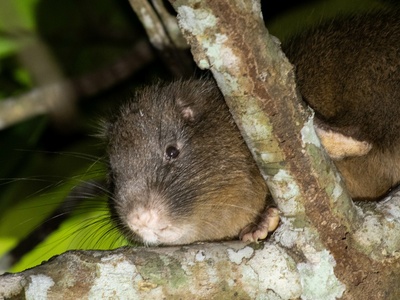
A medium-sized rodent-like mammal (30–50 cm) that browses leaves and fruits, largely nocturnal and slow-moving. Endemic to Hispaniola; populations have declined from hunting and habitat fragmentation but some remnant groups persist.
Jamaican fruit bat
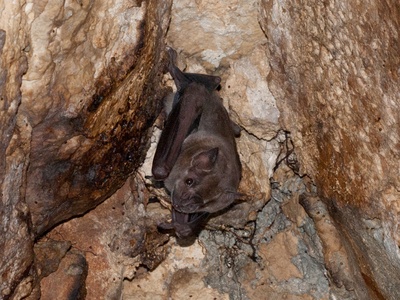
A common medium fruit bat (40–70 g) that disperses seeds and pollinates plants. Roosts in colonies, feeds on figs and fruit pulp. Widespread and adaptable but sensitive to large-scale deforestation.
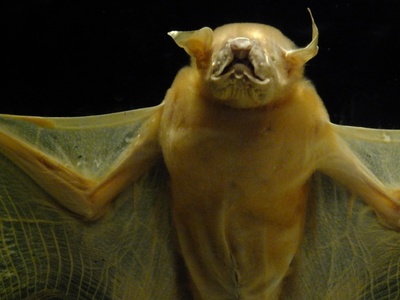
Greater bulldog bat
A large fish-eating bat with long hind feet and echolocation for snaring small fish. Wingspan up to 45 cm; often found around mangroves. Important for coastal food webs and generally tolerant of human disturbance.
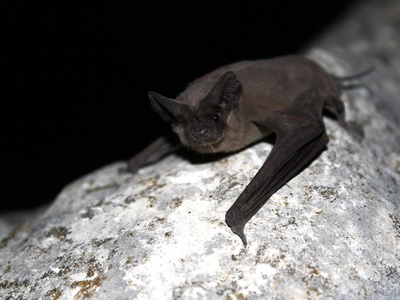
Mexican free-tailed bat
Fast-flying insectivore with long narrow wings, forms large colonies. Body small but colonies can number thousands, providing major pest control. Adaptable to many habitats where roosts exist.
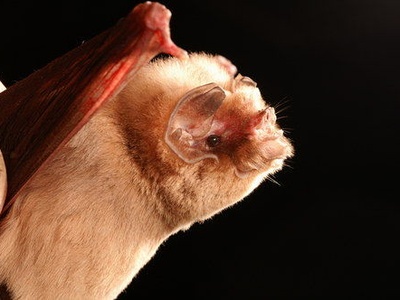
Ghost-faced bat
Small insectivorous bat with distinctive folded facial skin, roosting in tight cave colonies. Feeds on airborne insects at night. Sensitive to cave disturbance but locally common where habitat remains intact.
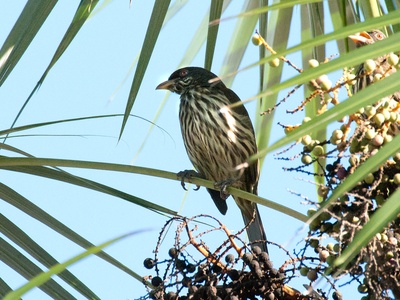
Palmchat
Endemic, social passerine that builds large communal twig nests; about 20 cm long. Common and conspicuous, often seen in flocks in palm groves. Important seed disperser and cultural emblem of the island.
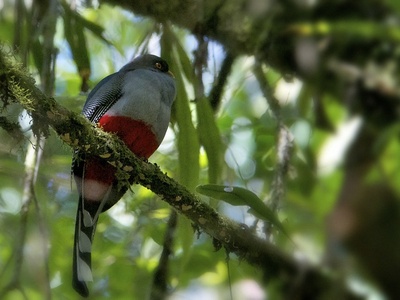
Hispaniolan trogon
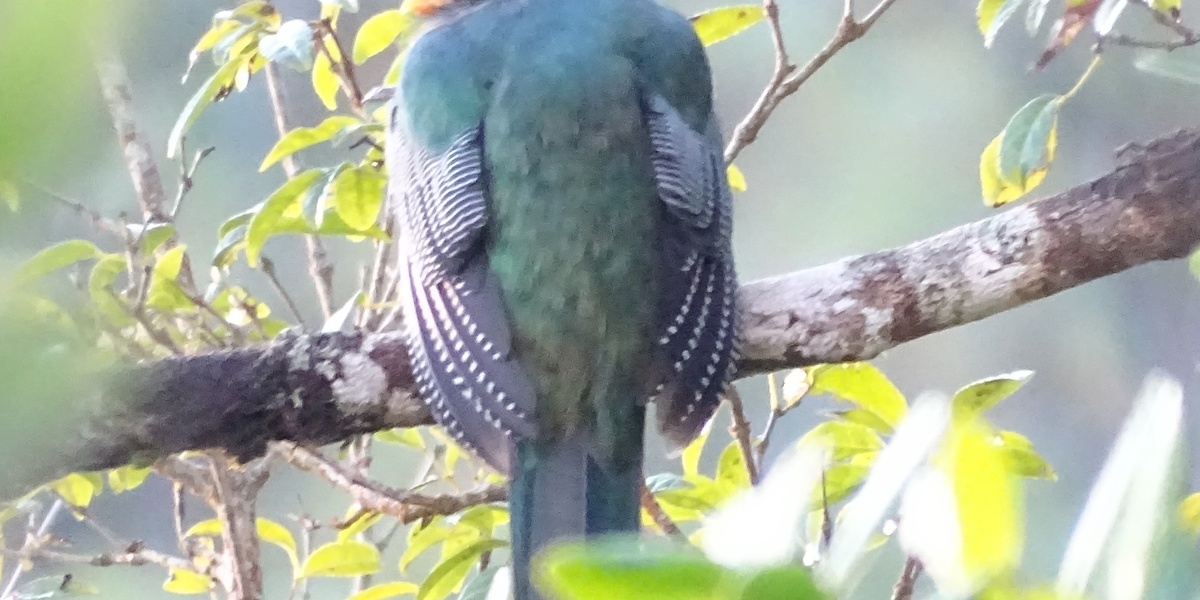
A colorful, stout bird about 28–30 cm long with red belly and green upperparts. Prefers undisturbed mountain forest; feeds on insects and fruit. Population fragmented and vulnerable to habitat loss.
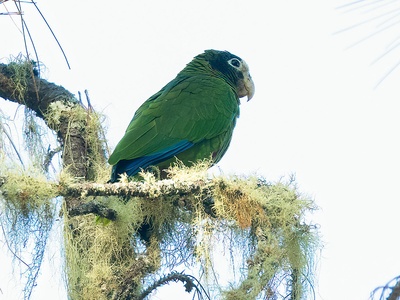
Hispaniolan parrot
Medium-sized parrot with green plumage and bright accents, about 30–35 cm long. Social and vocal, nests in cavities. Threatened by trapping and habitat loss but some populations persist in protected areas.
Ridgway’s hawk
A small, forest-dwelling raptor endemic to Hispaniola, about 40–50 cm long. Hunts small vertebrates in forest interior. Critically endangered with very limited range; active local conservation programs aim to boost numbers.
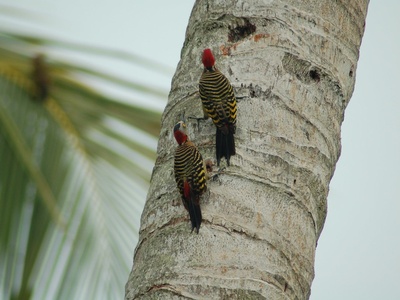
Hispaniolan woodpecker
A medium woodpecker endemic to the island, about 20–25 cm long. Drills into trees and nests in cavities; adaptable and often common around human-modified landscapes.
Broad-billed tody
Tiny, bright-green insectivore endemic to Hispaniola; about 11 cm long. Hunts insects from perches and nests in burrows. Common in suitable habitat and a favorite sight for birdwatchers.
Hispaniolan lizard cuckoo
A long-tailed, crested cuckoo about 35–40 cm, specialized in hunting lizards and large insects. Generally tame around humans but vulnerable to habitat conversion.
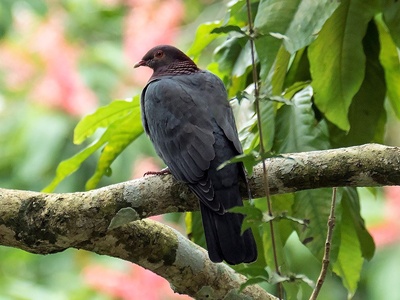
Scaly-naped pigeon
A large pigeon with a scaly nape pattern, 35–40 cm long. Feeds on fruits and seeds in trees; common in mature forest and secondary growth.
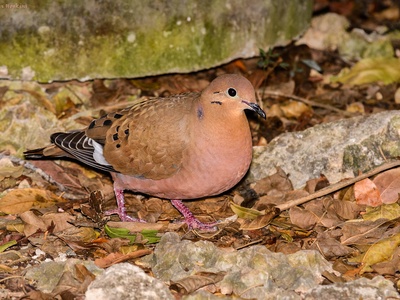
Zenaida dove
A small, stocky dove common around the island, often in pairs or small flocks. Eats seeds and grains; tolerant of human presence and widespread.
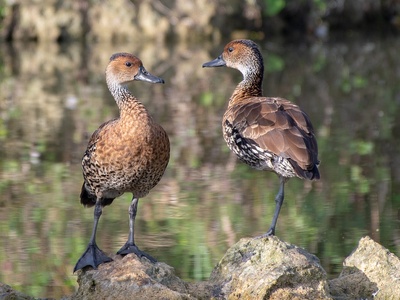
West Indian whistling-duck
A long-necked duck with a distinctive whistling call; forms small flocks in wetlands. Vulnerable due to habitat loss and hunting; local conservation efforts protect nesting wetlands.
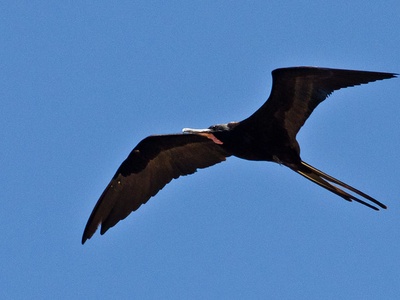
Magnificent frigatebird
Large seabird with dramatic forked tail and aerial kleptoparasitic feeding. Females and males differ in throat pouch color. Common offshore but dependent on undisturbed nesting islets.
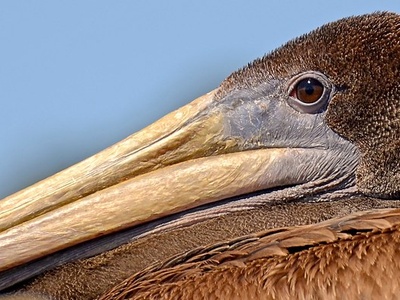
Brown pelican
Large coastal bird with a pouched bill used for plunge-diving and scooping fish. Often seen perching on piers and mangrove islets; populations rebounded after pesticide bans.
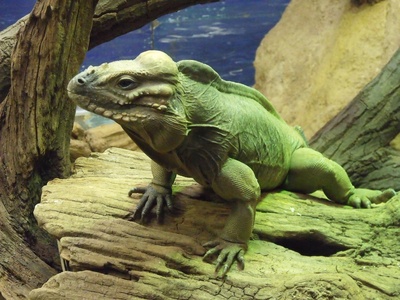
Rhinoceros iguana
Large herbivorous lizard up to 1.2 m long including tail, with a horn-like snout. Territorial and herbivorous; threatened by hunting and habitat loss but protected in reserves.
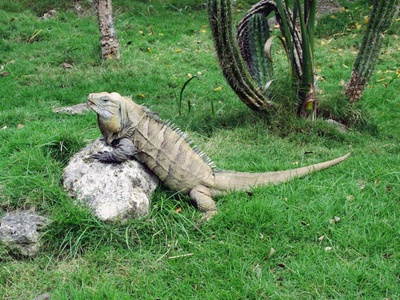
Ricord’s iguana
An endangered rock iguana with vivid markings and large size, often under 1 m excluding tail. Critically endangered from habitat loss and hunting; conservation breeding and habitat protection are ongoing.
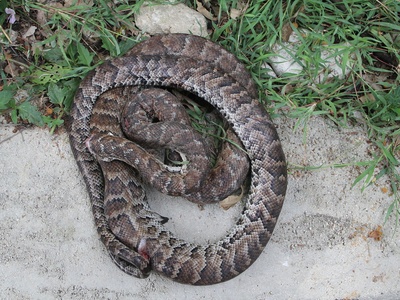
Hispaniolan boa
A medium constrictor snake up to 2 m long, ambushes small mammals, birds and lizards. Secretive and nocturnal; locally common but sensitive to persecution and habitat change.
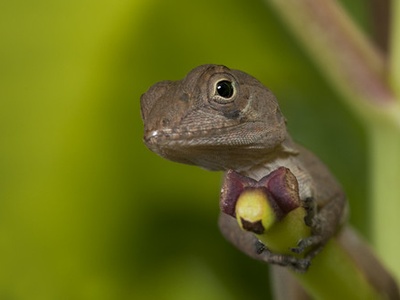
Large-headed anole
Widespread brown/green anole typically 8–12 cm snout-to-vent, often seen on trunks and walls. Territorial males with dewlaps; adaptable and common in many habitats.
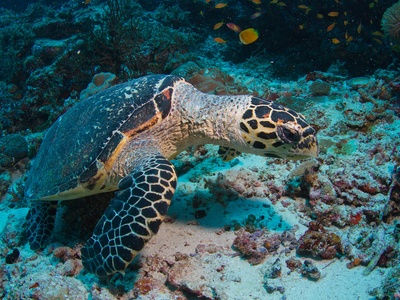
Hawksbill turtle
Small-to-medium sea turtle with tapered beak and patterned shell, up to 90 cm. Feeds on sponges and reef invertebrates. Critically endangered from shell trade and nesting losses.
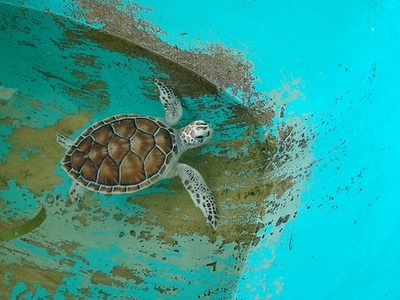
Green turtle
Large sea turtle up to 1.5 m; shifting from carnivory to herbivory as adults. Important seagrass grazers; endangered due to fisheries bycatch and coastal development.
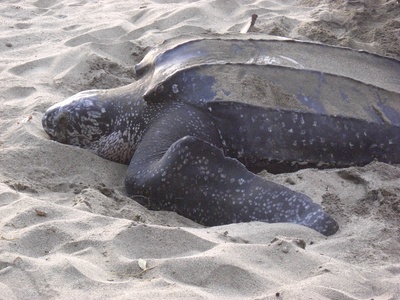
Leatherback turtle
Largest sea turtle (over 1.5 m), shell leathery not hard; dives deep for jellyfish. Globally threatened from fisheries and beach disturbance but still nests in DR.
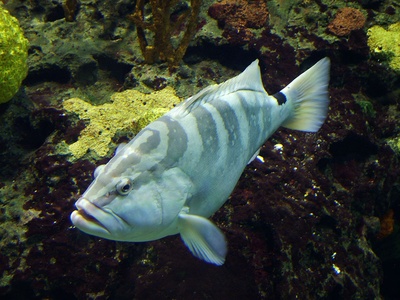
Nassau grouper
A large, reef-dwelling grouper up to 1 m that forms seasonal spawning aggregations. Critically endangered from overfishing when aggregating; protection of spawning sites is crucial.
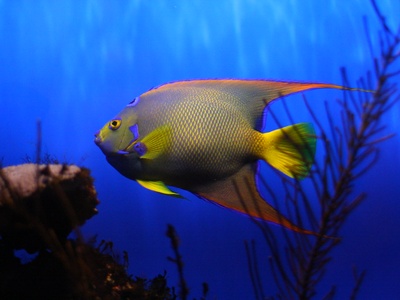
Queen angelfish
Brightly colored reef fish up to 45 cm, feeds on sponges and small invertebrates. Iconic and common on healthy reefs; attracts divers and snorkelers.
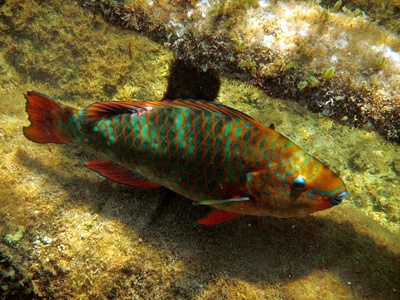
Rainbow parrotfish
Large parrotfish up to 1 m that excavates coral and controls algae, aiding reef health. Vulnerable from overfishing and habitat loss, important for coral reef resilience.
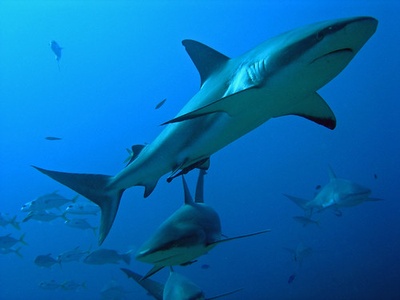
Caribbean reef shark
Medium-large predatory shark common on reefs; plays key ecological role. Near threatened due to fishing pressure and habitat changes; seen by dive tourism.
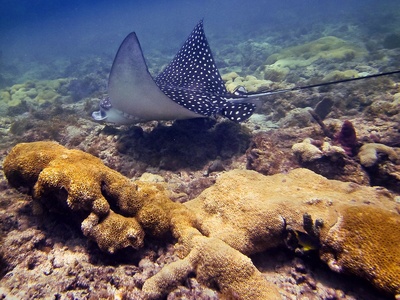
Spotted eagle ray
Graceful ray up to 3 m wingspan, feeds on mollusks and crustaceans by crushing shells. Often seen gliding over shallow reefs; vulnerable to bycatch.
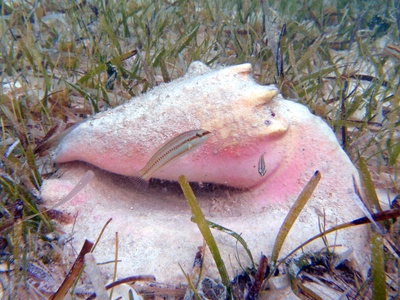
Queen conch
Large marine gastropod prized for meat and shell, shell up to 30 cm. Vulnerable from overharvest; strict fisheries rules and seasons aim to rebuild stocks.
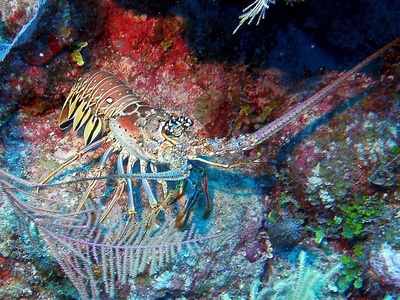
Caribbean spiny lobster
Economically important large crustacean up to 60 cm, nocturnal and hides in crevices by day. Target of fisheries; management needed to sustain harvests.
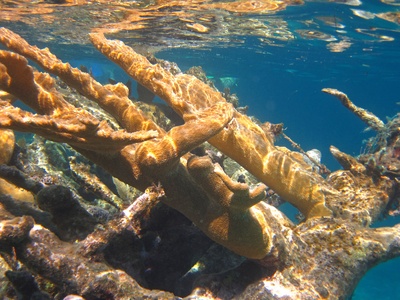
Elkhorn coral
Fast-growing branching coral critical for wave protection and reef structure. Critically endangered from disease, bleaching and storm damage; recovery focused on restoration projects.
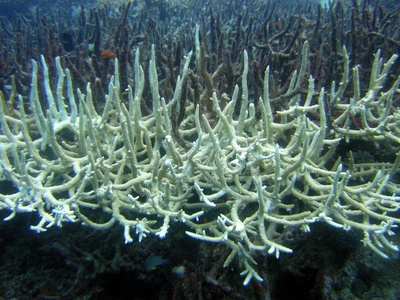
Staghorn coral
Branching coral that forms thickets supporting reef biodiversity. Critically endangered from disease and bleaching; restoration uses nursery-grown fragments.
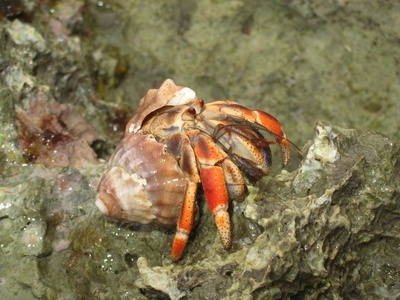
Caribbean hermit crab
Terrestrial crustacean that uses empty snail shells for protection; scavenges fruit and detritus. Common on beaches and in coastal woodlands, plays key role in nutrient cycling.
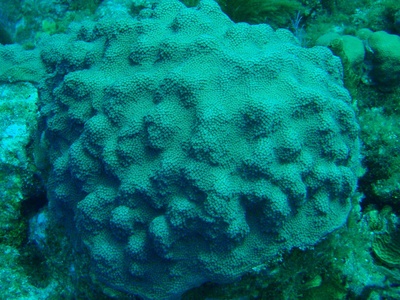
Mountainous star coral
Massive reef-building coral forming large colonies, crucial for reef structure. Critically endangered due to disease and warming seas; slow-growing and vulnerable to physical damage.