Table of Contents
- Why Monaco Has Any Wildlife at All
- Terrestrial Mammals
- Roe Deer
- Red Fox
- European Hedgehog
- Least Weasel
- Wood Mouse
- European Mole
- A Note on the Brown Bear
- Marine Mammals
- Fin Whale
- Striped Dolphin
- Common Dolphin
- Conservation in a City-State
Monaco is 2.02 square kilometers. It’s the second-smallest country on Earth and one of the most densely populated. Most of its surface is concrete, asphalt, and the occasional casino. So the question of which mammals live there is genuinely interesting — because some actually do, and the answer involves both the scrubby hillsides above the palace and open Mediterranean water that Monaco claims as sovereign territory.
The list isn’t long. But it’s more diverse than you’d expect.
Why Monaco Has Any Wildlife at All {#why-monaco-has-any-wildlife-at-all}
The principality sits at the western tip of the Maritime Alps where they meet the sea. The surrounding hills — technically French territory — are thick with Mediterranean scrub, oak woodland, and garrigue. Animals don’t read border signs. Species that range across the Côte d’Azur hinterland pass through Monaco’s northern fringes, which still hold patches of vegetation in places like the Jardin Exotique and the slopes above Fontvieille.
The marine side is a different story entirely. Monaco’s territorial waters extend into the Ligurian Sea, part of the larger Mediterranean basin. This stretch of the northwestern Mediterranean is one of the most biodiverse marine corridors in Europe, particularly for cetaceans. The Pelagos Sanctuary — a protected area covering 87,500 km² established by France, Italy, and Monaco — exists specifically because these waters are that productive.
That’s the frame: a postage stamp of land with a surprisingly intact marine frontier.
Terrestrial Mammals {#terrestrial-mammals}
Roe Deer {#roe-deer}
Capreolus capreolus — Least Concern (IUCN)
The roe deer is the most striking mammal you might plausibly spot in Monaco’s northern margins. These small, elegantly-built deer — barely 75 cm at the shoulder — are native to temperate Europe and Asia and have thrived wherever woodland meets open ground. They push into Monaco from the forested slopes above La Turbie and Cap-d’Ail on the French side of the border.
Sightings are rare given how little undeveloped terrain exists, but not unheard of. They’re most active at dawn and dusk. The males grow short, roughened antlers — usually no more than three points — and shed them annually in November before regrowing them through winter.
Red Fox {#red-fox}
Vulpes vulpes — Least Concern (IUCN)
Red foxes are generalists par excellence, which is precisely why they’ve made it in Monaco. They’re documented across urban Europe, and the principality’s mix of suburban fringe, waste ground, and proximity to wilder terrain on the French slopes suits them well. They hunt small rodents, raid bird nests, and eat fruit when the opportunity arises.
Foxes in urban Mediterranean environments tend to be bolder and more nocturnal than their rural counterparts. Residents occasionally encounter them near green spaces at night. They’re not a conservation concern, but they’re a clear indicator that mammalian predators do operate within Monaco’s borders.
European Hedgehog {#european-hedgehog}
Erinaceus europaeus — Least Concern (IUCN)
The European hedgehog turns up in Monaco’s gardens and parks. It’s an insectivore that has adapted easily to human-modified landscapes across western Europe, feeding on beetles, earthworms, and slugs after dark. A mature adult can travel several kilometers in a single night foraging.
Population trends in western Europe are declining in rural areas due to agricultural intensification, though urban populations have shown more resilience. Monaco’s gardens provide adequate prey. Watch for them after summer rain when invertebrate activity spikes.
Least Weasel {#least-weasel}
Mustela nivalis — Least Concern (IUCN)
The least weasel is the world’s smallest carnivore — adults often weigh under 100 grams. It’s widespread across Europe and recorded in Monaco, where it occupies rocky ground, wall margins, and vegetated slopes on the principality’s edges. Despite its size, it takes prey up to the size of a young rabbit, dispatching them with a precise bite to the base of the skull.
You won’t often see one. They move fast, stay close to cover, and are strictly crepuscular in areas with human activity. Their presence indicates a functioning small mammal prey base, which means the ecosystem on Monaco’s fringes is more intact than the skyline suggests.
Wood Mouse {#wood-mouse}
Apodemus sylvaticus — Least Concern (IUCN)
One of the most common small mammals in Europe. The wood mouse is a brown, large-eared rodent that occupies woodland edges, gardens, and scrubby terrain across the continent. It’s an important prey species for foxes and weasels, and a significant seed disperser — it caches seeds and forgets a meaningful percentage of them, effectively planting trees.
In Monaco, wood mice occupy the vegetated margins and any green space with enough cover. They’re nocturnal and rarely seen, but their presence is fundamental to the local food web that supports the principality’s other terrestrial mammals.
European Mole {#european-mole}
Talpa europaea — Least Concern (IUCN)
The European mole is documented in Monaco’s soil-bearing green spaces. It’s a completely subterranean insectivore, spending almost its entire life underground tunneling for earthworms. Its presence is usually inferred rather than observed — fresh molehills in lawn or garden soil are the giveaway.
Moles are highly territorial and largely solitary outside of the brief spring breeding season. A single animal can excavate over 20 meters of new tunnel per day when the soil conditions are right. Given Monaco’s limited garden and park land, the mole population is small but apparently persistent.
A Note on the Brown Bear {#a-note-on-the-brown-bear}
Ursus arctos — locally extinct
The brown bear no longer exists in Monaco or the surrounding Maritime Alps. It was historically present throughout the Provençal and Ligurian hinterland but was hunted to extinction in the region by the mid-20th century. Reintroduction programs in the Pyrenees (using Slovenian stock) have had partial success, but there are no bears in the Franco-Italian Alps, and none are expected in Monaco for the foreseeable future.
It’s worth noting because Monaco’s mammal list sometimes includes historical records — the bear’s absence is a direct result of human persecution, not natural range limits.
Marine Mammals {#marine-mammals}
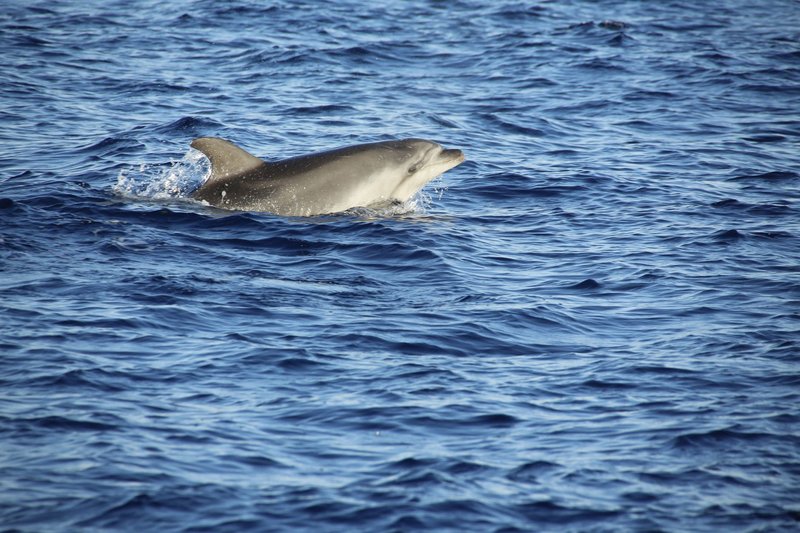
Monaco’s marine territory is where the mammal list becomes genuinely impressive. The Ligurian Sea hosts one of the highest concentrations of cetaceans in the Mediterranean, and Monaco’s waters fall within this productive corridor. Beyond the three cetacean species covered below, Monaco is also home to several rare and elusive marine animals — including the critically endangered Mediterranean monk seal — that reflect just how ecologically significant these waters are.
Fin Whale {#fin-whale}
Balaenoptera physalus — Vulnerable (IUCN)
The fin whale is the second-largest animal on the planet, reaching up to 27 meters in length. It’s also a regular seasonal presence in Monaco’s territorial waters, which may be the most surprising fact on this entire list.
A sizable population of fin whales feeds in the northwestern Mediterranean during summer, concentrating in areas with high zooplankton and small fish density. The Pelagos Sanctuary for Mediterranean Marine Mammals was established in part because this population — genetically distinct from Atlantic fin whales — relies on this specific stretch of sea for critical feeding. Monaco was a founding signatory.
Whale-watching operators out of Nice and Monaco regularly locate fin whales between June and September. Sightings at close range are not unusual; the whales are not particularly boat-shy and feed near the surface. Watching an animal the length of two city buses roll past at 30 meters is one of those encounters that recalibrates your sense of scale.
Striped Dolphin {#striped-dolphin}
Stenella coeruleoalba — Least Concern (IUCN)
The striped dolphin is the most commonly sighted cetacean in Monaco’s waters. Characterized by a bold dark stripe running from the eye along the flank to the underside, striped dolphins travel in large groups — pods of 100 or more are not uncommon in the open Mediterranean. They’re fast, acrobatic, and frequently bow-ride boats.
The Ligurian Sea hosts one of the best-studied striped dolphin populations in the world, much of the research coordinated through the Institut Océanographique de Monaco and affiliated universities. This population has faced pressure from organochlorine pollution and periodic morbillivirus outbreaks, but numbers remain stable in Monaco’s immediate waters.
Common Dolphin {#common-dolphin}
Delphinus delphis — Least Concern globally, but the Mediterranean subpopulation is Endangered (IUCN)
The common dolphin is less frequently sighted in Monaco’s nearshore waters than the striped dolphin, but it’s recorded in the area and deserves particular attention because the Mediterranean subpopulation has declined sharply — by an estimated 50% over three generations — primarily due to bycatch in fishing operations and prey depletion.
Common dolphins are smaller and faster than striped dolphins, with a distinctive hourglass pattern on the flank. They tend to prefer slightly deeper, cooler water and are more often spotted farther offshore. When they do appear, it’s typically in fast-moving groups hunting cooperatively.
The difference in conservation status between the global species and its Mediterranean population is a sharp illustration of how marine mammal pressures are geographically concentrated.
Conservation in a City-State {#conservation-in-a-city-state}
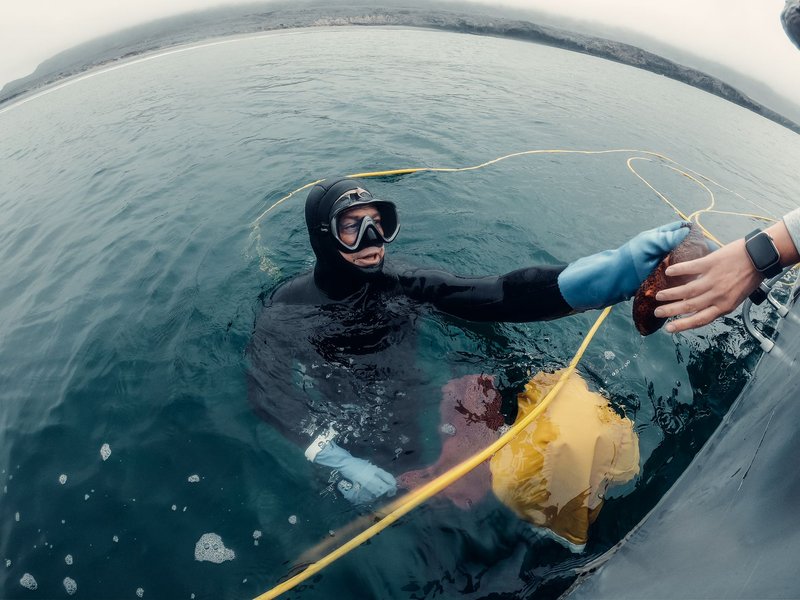
Monaco punches above its weight on marine conservation, largely through the work of the Institut Océanographique (founded by Prince Albert I in 1906) and Monaco’s role in the Pelagos Sanctuary. The principality’s support for cetacean research has produced decades of population data on dolphins and whales that would otherwise not exist.
On land, the picture is less active. Monaco’s terrestrial area is too small and too developed for meaningful habitat management. The mammals that persist there do so largely because of what exists across the French border — the garrigue and oak woodland of the Maritime Alps hinterland. Monaco’s green spaces serve as access points, not breeding grounds.
The marine territory is where Monaco’s biodiversity identity lives. The fin whale that surfaces 10 kilometers off the coast is as much “Monaco wildlife” as the hedgehog in the palace gardens — arguably more so, since Monaco’s sovereign waters give it formal jurisdiction to protect that animal and the ecosystem it depends on.
For a country that’s almost entirely made of buildings, that’s a genuinely significant role.