The Bahamas is famous for turquoise water and white sand, but its plant life is just as worth paying attention to. Over 1,300 plant species grow across the archipelago — and a surprising number of them are native, meaning they evolved here and exist nowhere else on Earth in quite the same form.
Before getting into the list: native vs. introduced matters. A lot of what you’ll see in manicured resort gardens is introduced or invasive — bougainvillea, Australian pine, Brazilian pepper. These aren’t Bahamian flora, even if they’re everywhere. The plants below are the real story: species that belong to the islands, shaped by the climate, the shallow soils, and centuries of use by the people who’ve lived there.
Table of Contents
- The National Symbols
- Tropical Flowers and Flowering Shrubs
- Native Trees
- Coastal and Coppice Plants
- Cacti and Succulents
- Medicinal and Edible Plants
The National Symbols {#national-symbols}
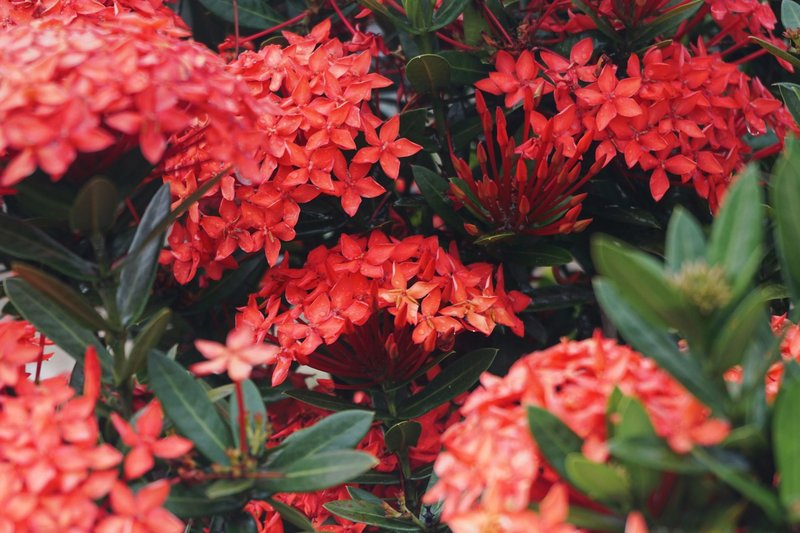
Two plants define the Bahamas officially — and they’re both genuinely interesting, not just ceremonial choices.
Yellow Elder (Tecoma stans) is the national flower. It’s a woody shrub that produces dense clusters of bright yellow trumpet-shaped blooms nearly year-round. Yellow elder thrives in the thin, rocky soils that would defeat most plants, making it well-suited to the limestone-based terrain that covers most of the Bahamas. Bees rely on it heavily as a nectar source, and in traditional medicine, a tea made from the bark and leaves has been used to treat diabetes symptoms — a use that’s been studied in pharmacological research with some supporting evidence.
Lignum Vitae (Guaiacum sanctum) is the national tree. The name means “wood of life” in Latin, and the Lucayan people and later settlers used it for everything from ship parts to medicine — the resin was once exported to Europe as a treatment for syphilis. The wood is so dense it sinks in water. Today, lignum vitae is endangered across its Caribbean range; mature specimens are found primarily in protected areas and older-growth coppice habitat. If you see one in the wild, the small purple flowers and distinctive orange-seeded fruits are unmistakable.
Tropical Flowers and Flowering Shrubs {#tropical-flowers}
Wild Sage (Lantana involucrata) grows everywhere in the Bahamas — roadsides, scrub edges, coppice clearings. The tiny flowers shift from white to pink to lilac as they age, so one plant shows three colors at once. It smells like sage when you crush a leaf.
Bahama Strongback (Bourreria succulenta) is a native shrub covered in small white flowers that smell faintly of honey. It’s an important plant for monarch butterflies passing through the islands during migration. The common name “strongback” comes from its traditional use as a tonic for fatigue and lower back pain.
Cordia (Cordia sebestena), also called the geiger tree or scarlet cordia, produces vivid orange-red flowers and is a fixture of coastal Bahamian gardens. It’s native to the wider Caribbean and naturalizes easily along shorelines. Frigatebirds and other seabirds nest in mature specimens in some areas.
Pineland Jacquemontia (Jacquemontia havanensis) is a delicate, vining wildflower with small pale blue or white blooms. It grows throughout pine rockland habitats — a rare and threatened ecosystem found primarily on Grand Bahama and Andros.
Native Trees {#native-trees}
Gumbo Limbo (Bursera simaruba) is one of the most recognizable trees in the Bahamas, thanks to its peeling coppery-red bark. Local names include “tourist tree” — the bark is always red and peeling. Gumbo limbo is remarkably resilient; you can cut a branch, stick it in the ground, and it’ll root. Hurricanes knock down mature trees, but the same storm often propagates new ones.
Mahogany (Swietenia mahagoni) — the real Caribbean mahogany, not the lookalike Central American species — is native to the Bahamas and was once logged heavily for furniture and shipbuilding. Old-growth trees are rarely seen now; what remains grows in protected reserves and privately owned coppice. The IUCN lists Caribbean mahogany as vulnerable.
Crabwood (Gymnanthes lucida) is an understory tree of the coppice that produces tiny flowers and hard seeds used historically to make fishing line. It’s not showy, but it’s one of those species that ecologists use as a marker for intact native habitat — if crabwood is present, the rest of the plant community is usually in decent shape.
Buttonwood (Conocarpus erectus) thrives at the edge of mangrove zones and brackish flats. It’s not strictly a mangrove itself, but it fills the transitional zone where salt tolerant species grade into drier scrub. The bark tannins were used historically in leather curing.
Blolly (Guapira discolor) is a common native tree of coastal coppice. Its fleshy red berries are a critical food source for migratory songbirds that stop over in the Bahamas en route between North America and the Caribbean.
Coastal and Coppice Plants {#coastal-coppice}
Bay Cedar (Suriana maritima) grows directly on rocky shorelines and sandy coasts, well above the tide line but right where salt spray is constant. Small yellow flowers, compact form, deeply adapted to coastal stress. It’s a pioneer species — one of the first things to colonize newly deposited sand or disturbed beach margins.
Sea Lavender (Argusia gnaphalodes), also called sea rosemary, is a silver-leafed sprawling shrub that forms dense mats on rocky, windward shores. It looks silver-green from a distance and holds its leaves close to deal with desiccation. Touch one: the leaves feel thick and slightly waxy.
Black Torch (Erithalis fruticosa) is a tough, glossy-leafed shrub common in scrub and coastal thicket. Small white flowers, small black berries. It shows up in the understory of disturbed coppice as well as open coastal scrub — one of those plants that bridges multiple habitats.
Seagrape (Coccoloba uvifera) is hard to miss along any Bahamian beach. The round, leathery leaves turn red at the edges as they age, and the plant produces dangling clusters of grape-like fruits that ripen purple. The fruits are edible and mildly sweet; birds take most of them before they fall. Seagrape is native throughout the Caribbean coast and is one of the best natural beach stabilizers — its roots hold sand against erosion.
Cacti and Succulents {#cacti-succulents}
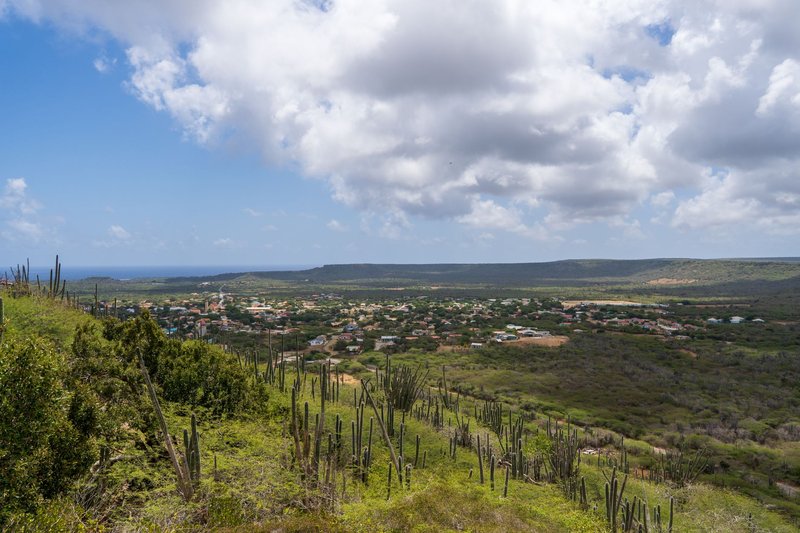
Prickly Pear (Opuntia stricta) appears across the drier, rocky sections of the Bahamas, particularly on the southern islands. The flat green pads are the classic cactus silhouette, and the yellow flowers give way to red or purple fruits — tunas — that are edible and very sweet once you navigate the small spines and glochids on the skin. The Lucayan people and later Bahamians have eaten the fruit and used the mucilaginous pads to treat minor wounds and inflammation.
Dildo Cactus (Cereus hexagonus) is a tall, columnar cactus that grows in the drier coppice and scrub of the southern Bahamas. It can reach 3–4 meters. The large white flowers open at night and are pollinated by bats.
Century Plant (Agave karatto) is a native agave found in rocky, dry habitats. Despite the name, it blooms once in 10–30 years, sends up a tall flower spike (sometimes 5+ meters), produces seeds, and dies. The fiber from the leaves has been used to make rope and baskets by islanders for centuries.
Medicinal and Edible Plants {#medicinal-edible}
The Bahamas has a documented tradition of bush medicine — plant-based remedies passed down through families and communities across generations. Several native species are central to this:
Strongback (Bourreria succulenta) — mentioned earlier for its flowers — is the most widely cited bush medicine plant in the Bahamas. Bark and root preparations are used for fatigue, back pain, and as a general tonic. In some communities, the tea is still brewed and drunk regularly.
Guinep (Melicoccus bijugatus) is a tree that produces clusters of small green fruits with a translucent, salmon-colored flesh inside. Slightly sweet, slightly tart. Children eat them by the dozen. The fruit is rich in vitamin C and iron, and has been used in the Caribbean as a remedy for diarrhea and anemia.
Sour Orange (Citrus aurantium) — technically introduced by early settlers but naturalized for centuries — grows wild across many islands. The juice is sharply sour but high in bioflavonoids, and a diluted drink from the juice and leaves is a traditional Bahamian remedy for colds.
Wild Tamarind (Leucaena leucocephala) grows throughout the islands, used as a food source (young pods and seeds are eaten) and as a nitrogen-fixing plant that improves poor soils. Conservation biologists are cautious about it because it can outcompete native species in disturbed areas, but its traditional uses are well-documented.
Fever Grass (Cymbopogon citratus) — lemongrass — was brought to the Bahamas and has been used medicinally for so long it’s culturally embedded. A hot tea from the fresh leaves is the standard Bahamian home remedy for fever and colds. Not native in the strict sense, but woven into the medicinal plant tradition.
The plants here are the ones that have been shaped by and have shaped the Bahamas — its soils, its birds, its traditional knowledge, and its coastlines. If you’re visiting, you’ll mostly encounter them in the coppice interior of less-developed islands, in nature preserves like Leon Levy Native Plant Preserve in Eleuthera, or along rocky shorelines away from the main beach strips. That’s where the actual flora lives.