Most “endangered African animals” lists lump rhinos, lions, and elephants from the savanna in with rainforest species like okapi and gorillas, as if a Congo Basin frog and a Serengeti cat face the same pressures. They don’t. Savanna species lose ground to ranching and poaching for horn and ivory. Rainforest species lose the forest itself, tree by tree, to logging concessions, artisanal mining camps, and bushmeat hunting along logging roads that didn’t exist twenty years ago.
This list sticks to animals that actually depend on Africa’s rainforest belt, the Congo Basin and the smaller Upper Guinean forests of West Africa, to survive. Pull them out of that forest and they don’t have a backup habitat.
Table of Contents
- Why the Congo Basin Matters
- 1. Okapi
- 2. African Forest Elephant
- 3. Western Lowland Gorilla
- 4. Cross River Gorilla
- 5. Grauer’s Gorilla
- 6. Bonobo
- 7. Central Chimpanzee
- 8. Giant Ground Pangolin
- 9. White-Bellied Pangolin
- 10. African Grey Parrot
- 11. Goliath Frog
- 12. Slender-Snouted Crocodile
- Reading the IUCN Categories
- What’s Actually Changing
Why the Congo Basin Matters
The Congo Basin is the second-largest tropical rainforest on Earth, behind only the Amazon, and it’s the reason central Africa still has weather patterns predictable enough to farm by. The trees pull water up from the soil and release it back into the air, which falls again as rain hundreds of miles downwind. Cut too much of it down and that cycle breaks, which is already happening at the basin’s edges in the Central African Republic and southern Cameroon.
For the animals on this list, the forest isn’t scenery. Okapi rely on the deep canopy shade to regulate their body temperature. Forest elephants need dense understory to hide calves from predators. Goliath frogs need fast, clean, oxygen-rich rivers that only survive under intact forest cover, because sediment from cleared slopes chokes the same rapids they breed in. Move any of these species to a savanna reserve, however well-protected, and the biology falls apart.
1. Okapi
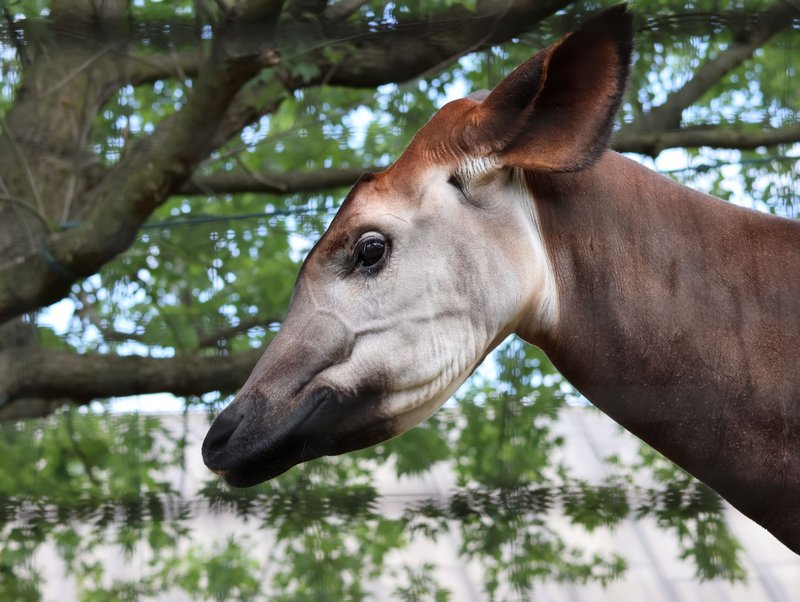
Status: Endangered · Population: Fewer than 4,500 · Primary threat: Artisanal mining
The okapi looks like someone built a giraffe from zebra parts, and it wasn’t formally described by Western science until 1901, decades after the mountain gorilla. It lives only in the Ituri Forest of the northeastern Democratic Republic of Congo, and it’s shy enough that camera-trap footage of a wild okapi still counts as a small event among researchers.
The population has fallen by more than 40% since the mid-1990s, and survey data cited by the Wildlife Conservation Society attributes the bulk of the recent decline to artisanal gold mining camps that have pushed deep into the Okapi Wildlife Reserve. Miners clear forest for camps, hunt okapi for bushmeat, and the armed groups that often control the mining sites make ranger patrols dangerous. Civil unrest in the eastern DRC has made enforcement worse, not better, over the past decade.
2. African Forest Elephant
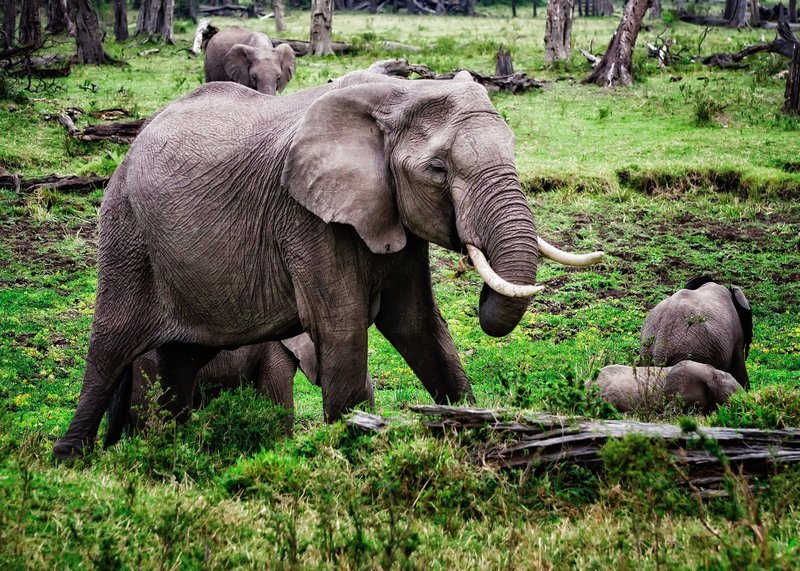
Status: Critically Endangered · Population: Roughly 135,000, though the count is improving faster than the population is · Primary threat: Poaching for ivory
Forest elephants are a genetically distinct species from their savanna cousins, smaller, straighter-tusked, built for pushing through dense understory rather than open plains. A 2025 range-wide assessment using DNA-based survey methods put the population at around 135,690, a number that reads like good news until you notice the increase reflects better counting technology across previously unsurveyed forest, not more elephants being born.
They remain Critically Endangered. Forest elephants reproduce slower than any other elephant, with females not giving birth until their twenties and calving only once every five to six years, which means even a modest poaching rate outpaces recovery. Their ivory is denser and pinker than savanna elephant ivory, and traffickers pay a premium for it, which keeps the incentive to poach alive even where enforcement has improved.
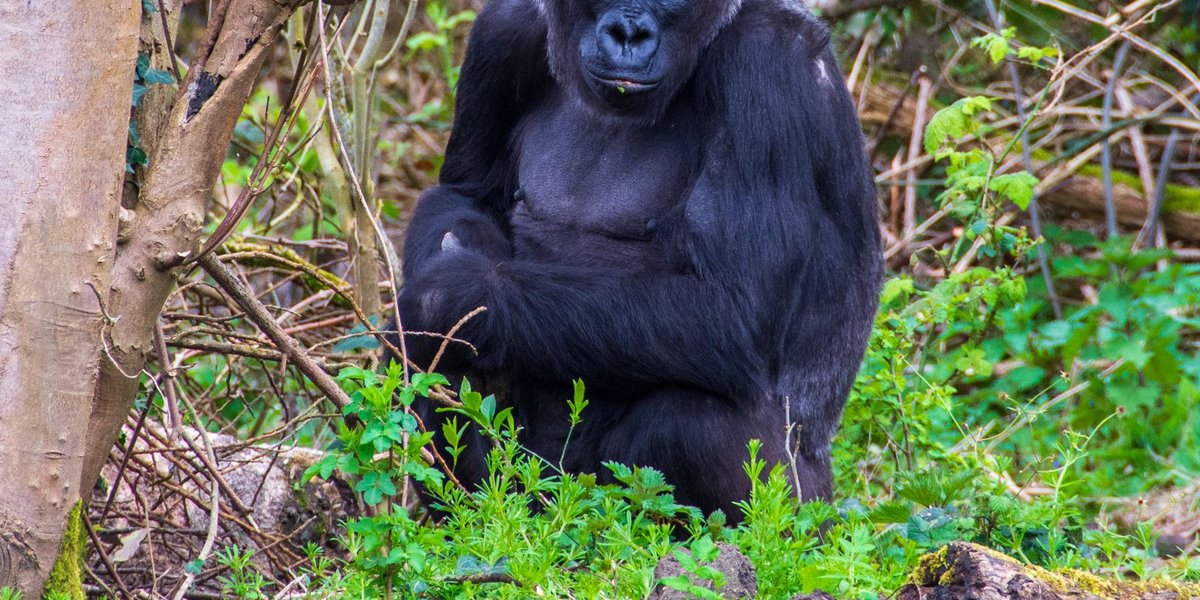
3. Western Lowland Gorilla
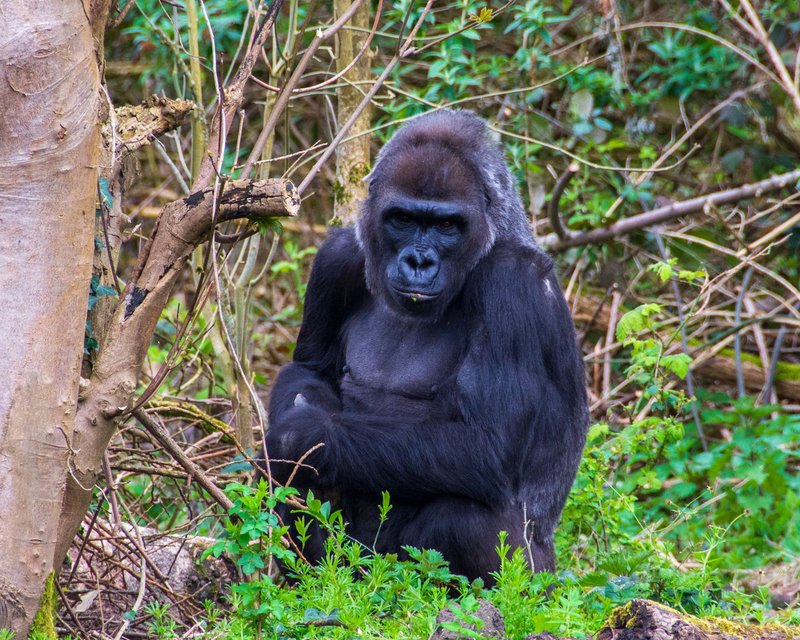
Status: Critically Endangered · Population: Roughly 316,000, dispersed and unprotected · Primary threat: Bushmeat hunting and Ebola
Western lowland gorillas are the gorilla you’ve almost certainly seen in a zoo, and their wild population is larger on paper than any other great ape in Africa. That number is misleading. Only about 22% of them live inside protected areas, and the IUCN’s regional assessment projects a population decline exceeding 80% over three generations, roughly 66 years, driven by bushmeat demand, disease, and habitat conversion to industrial agriculture like oil palm.
Ebola has hit this subspecies harder than almost any other great ape. Outbreaks in Gabon and the Republic of Congo in the 1990s and 2000s killed an estimated one-third of the known population in some protected areas within a matter of years, and gorillas have no vaccine program remotely comparable to what’s been piloted for chimpanzees.
4. Cross River Gorilla
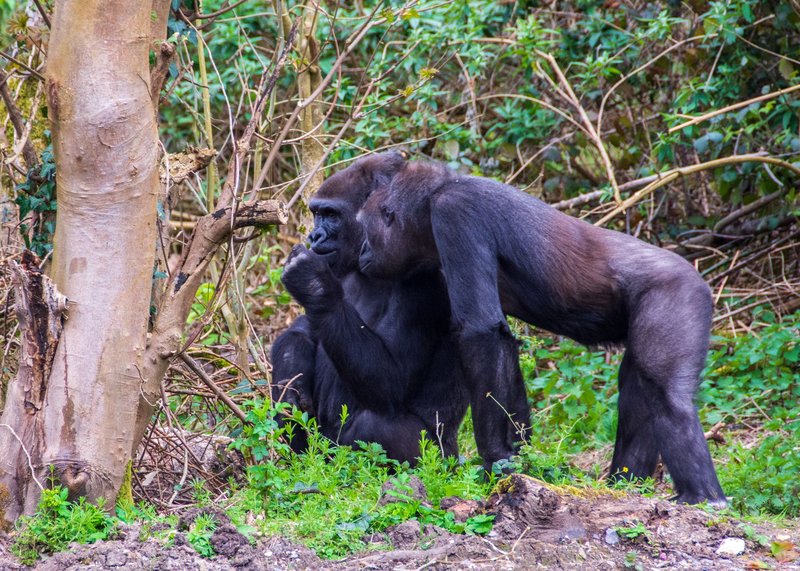
Status: Critically Endangered · Population: 250 to 300 individuals · Primary threat: Habitat fragmentation
This is the rarest great ape subspecies on the planet, confined to a scatter of hill forests along the Nigeria-Cameroon border. The entire population fits across 12 to 14 isolated forest fragments, which means the genetic bottleneck problem is as urgent as the raw numbers.
Unlike western lowland gorillas, hunting isn’t the dominant pressure here, largely because decades of community-led conservation work in the Cross River region of Nigeria has reduced it. The bigger threat is slash-and-burn agriculture and logging that isolates one small gorilla group from another, cutting off the gene flow a population this small needs to avoid inbreeding depression. A gorilla troop separated from its neighbors by a few kilometers of farmland might as well be on a different continent.
5. Grauer’s Gorilla
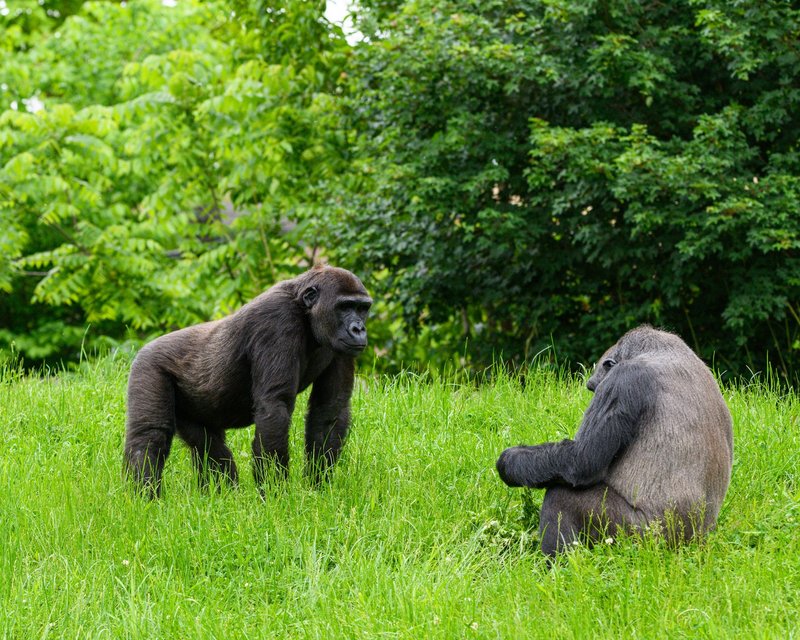
Status: Critically Endangered · Population: Under 3,800, down from roughly 16,900 in the mid-1990s · Primary threat: Armed conflict and mining
Grauer’s gorilla, also called the eastern lowland gorilla, is the largest living primate, and it has lost more ground faster than almost any other great ape. The population dropped by over 77% in about two decades, a collapse tied directly to the civil wars that have cycled through the eastern Democratic Republic of Congo since the 1990s.
War displaces people into gorilla habitat, arms hunters, and funds itself partly through illegal mining for coltan and gold inside gorilla range. It now occupies just 13% of its historical territory. Conservation groups working in the region describe a grim pattern: wherever an armed group sets up a mining camp, gorilla density in the surrounding forest drops within a year or two.
6. Bonobo
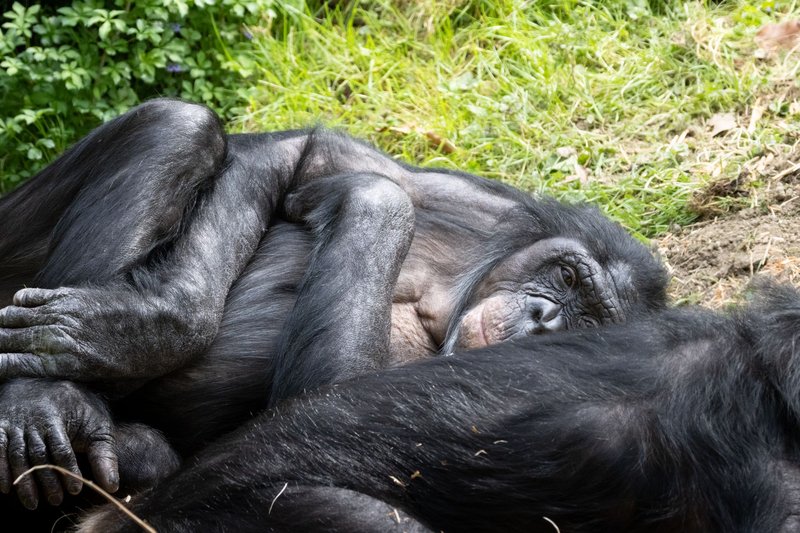
Status: Endangered · Population: Estimated 10,000 to 20,000, though field surveys cover only about 30% of their range · Primary threat: Habitat loss and hunting
Bonobos exist nowhere on Earth except the forests south of the Congo River in the DRC, making them the only great ape confined to a single country. That river crossing matters biologically. Bonobos never developed the aggression patterns seen in chimpanzees on the river’s north bank, likely because gorillas, and the food competition they bring, never crossed into bonobo territory.
Because so much of their range has never been surveyed, nobody knows the real population with any confidence. What is known: bonobo density in Salonga National Park, Central Africa’s largest rainforest reserve, has held roughly stable since 2000, a rare bright spot that conservationists credit to consistent ranger presence rather than any change in outside pressure.
7. Central Chimpanzee
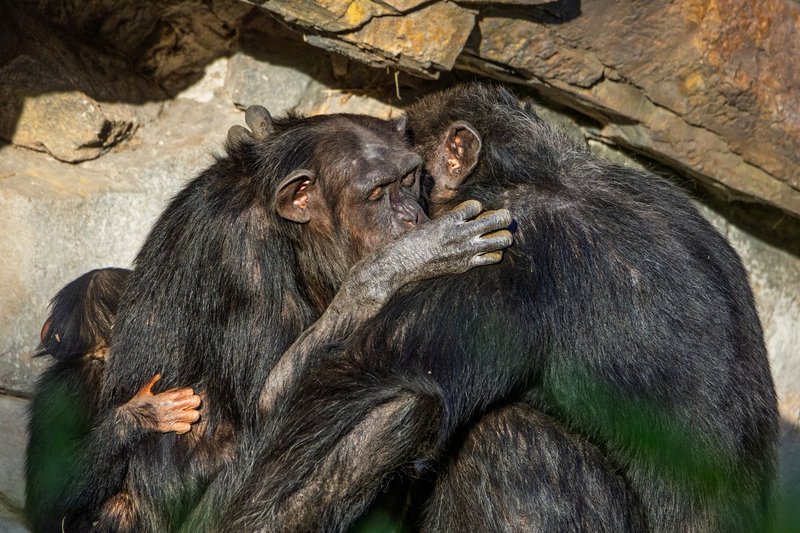
Status: Endangered · Population: Estimated 40,000 to 80,000 · Primary threat: Logging roads and Ebola
Central chimpanzees range across Gabon, Cameroon, the two Congos, and the Central African Republic, bounded to the north by the Sanaga River and to south by the Congo River. On paper this is the least imperiled great ape population in the basin. In practice, commercial logging concessions are the quiet killer: logging itself doesn’t always destroy chimpanzee habitat outright, but the roads built to extract timber open previously inaccessible forest to bushmeat hunters and settlers.
Ebola outbreaks in the Gabon-Congo border region killed hundreds of central chimpanzees and gorillas alongside them in the 1990s and 2000s, and unlike some human populations, chimpanzees have no vaccination infrastructure protecting them from future spillover events.
8. Giant Ground Pangolin
Status: Endangered · Population: Unknown, but rapidly declining · Primary threat: Trafficking for scales
The giant ground pangolin is the largest of Africa’s four pangolin species and, unusually for a pangolin, spends most of its life on the forest floor rather than in trees. It was reclassified from Vulnerable to Endangered in recent years as trafficking data caught up with what field researchers had been reporting for a while: this species is disappearing faster than assessments could track.
All eight pangolin species worldwide received the highest level of CITES protection in 2016, banning international commercial trade outright. It hasn’t stopped much. Between 2000 and 2019, seizure data suggests the equivalent of more than 895,000 pangolins were trafficked globally, and Central African populations feed a supply chain that ends mostly in East and Southeast Asian markets for scales used in traditional medicine, despite no proven pharmacological benefit.
9. White-Bellied Pangolin
Status: Endangered · Population: Unknown, believed to be in steep decline · Primary threat: Bushmeat and scale trafficking
Where the giant ground pangolin is a forest-floor specialist, the white-bellied pangolin lives almost entirely in trees, using a prehensile tail to move through the canopy at night. It’s also the most heavily trafficked of the Congo Basin’s tree pangolins, hunted at both ends of the value chain: for local bushmeat markets and for scales bound for export.
A 2024 genetic study published in Scientific Reports found signs of recent, sharp demographic decline in both trafficked pangolin species it examined, consistent with hunting pressure outpacing what the population can replace through breeding. Female pangolins typically produce a single offspring per year, which leaves almost no margin for the volume of trade currently moving through Congo Basin trafficking routes.
10. African Grey Parrot
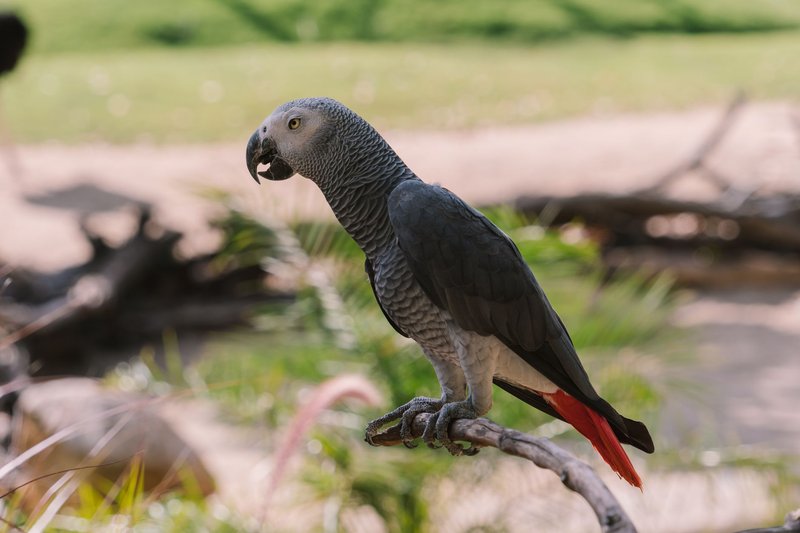
Status: Endangered · Population: Declined 50-79% over three generations · Primary threat: Live capture for the pet trade
African grey parrots are famous for cognitive abilities that rival a young child’s, which is precisely what made them a pet-trade target for decades. Trappers use glue extracted from lianas to catch birds drawn to fruiting trees during specific seasonal windows, and the losses compound: birds die in transit at high rates, so the number captured is always a multiple of the number that reaches a buyer.
The collapse has been regional and severe. In Ghana, populations have dropped 90-99% since the early 1990s, and the species has vanished or nearly vanished from Angola, Benin, Burundi, Ivory Coast, Guinea, Liberia, Nigeria, Kenya, Rwanda, Tanzania, and Togo. International commercial trade in wild-caught birds is now banned under CITES, but enforcement inside the Congo Basin’s source countries remains patchy.
11. Goliath Frog
Status: Endangered · Population: Down roughly 50% over 15 years · Primary threat: Hunting for food and habitat sedimentation
The goliath frog is the largest frog on Earth, capable of reaching over 3 kilograms, and it exists only along a narrow band of fast-flowing rivers in Cameroon and Equatorial Guinea. It needs clean, well-oxygenated, rapid-moving water to breed, which makes it a reliable indicator species: where goliath frogs vanish, the river has usually already been degraded by upstream logging or farming runoff.
Locals hunt it for food, and a single frog provides enough meat that hunting pressure has remained steady even as populations crash. Commercial logging around Mount Nlonako, one of the species’ key strongholds in Cameroon’s rainforests and home to 93 other amphibian species, adds sediment to the rivers the frog depends on, smothering the rocky breeding sites it needs.
12. Slender-Snouted Crocodile
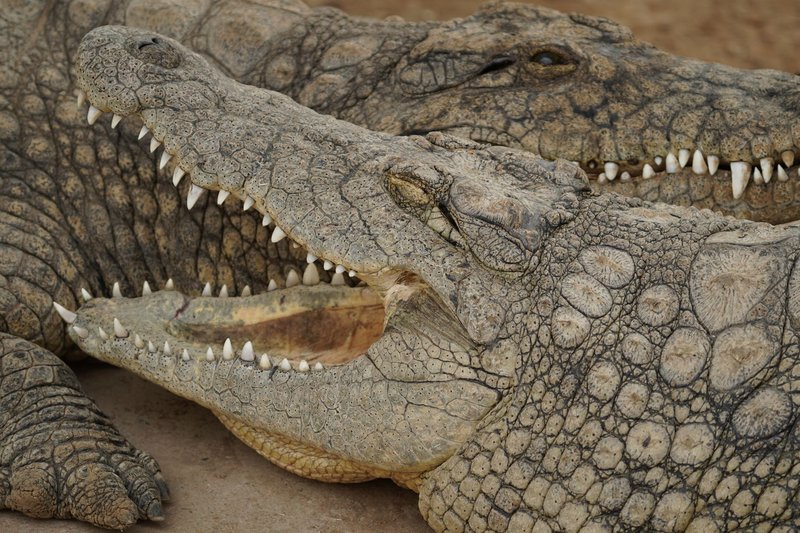
Status: Critically Endangered (West African population) · Population: Fewer than 500 adults · Primary threat: Bushmeat hunting and habitat loss
Recent genetic work found that the slender-snouted crocodile isn’t one species but two, and the West African population, distinct from its Central African relative for an estimated 6 to 8 million years, is by far the more imperiled of the pair. It has already disappeared entirely from several countries where it once ranged.
Fewer than 500 adults are believed to survive in West Africa’s forest rivers, making it arguably the most endangered crocodilian on the continent. Threats stack on top of each other: habitat loss from riverside clearing, depletion of the fish it preys on, and consistent demand in regional bushmeat markets where crocodile meat sells openly despite legal protections on paper.
Reading the IUCN Categories
Every status label above comes from the IUCN Red List, the closest thing conservation science has to a universal scale. From least to most urgent:
- Least Concern — Widespread and stable. Most species fall here.
- Near Threatened — Not currently at risk, but trending toward it.
- Vulnerable — Facing a high risk of extinction in the wild.
- Endangered — Facing a very high risk of extinction in the wild.
- Critically Endangered — Facing an extremely high risk of extinction in the wild, one step from the next two categories.
- Extinct in the Wild — Survives only in captivity or cultivation outside its native range.
- Extinct — No reasonable doubt the last individual has died.
Six of the twelve species above sit in Critically Endangered, the category just before a species disappears from the wild entirely. That’s not typical of Africa-wide endangered lists, which usually skew toward Vulnerable and Endangered because they average in more stable savanna populations. Rainforest species cluster at the sharper end of the scale because their habitat is shrinking in a way savanna habitat, for all its own pressures, generally isn’t.
What’s Actually Changing
The pattern across all twelve species isn’t really poaching or trapping in isolation, it’s what roads do. Logging concessions and mining camps don’t just remove trees or ore, they build the infrastructure that lets hunters, traders, and settlers reach forest that was previously three days’ walk from anywhere. Once a road exists, bushmeat hunting and pet-trade trapping follow almost automatically, regardless of what protections exist on paper.
That’s also where the leverage is. Protected areas with consistent ranger presence, like Salonga for bonobos or the Okapi Wildlife Reserve before the recent mining incursions, show populations holding steady even amid broader regional decline. The Congo Basin’s endangered species aren’t a lost cause. They’re a forest-management problem with a track record of responding when enforcement actually happens.