Nigeria packs an absurd range of habitats into one country. Sahel scrub and acacia savanna up north give way to the Jos and Mambilla plateaus, then drop into dense rainforest along the Cameroon border and the tangled mangroves of the Niger Delta. Each of those zones holds a different cast of animals, and a flat alphabetical list flattens that story.
So this guide is organized the way the wildlife actually lives: by habitat. You’ll meet savanna heavyweights like the West African lion, rainforest primates found almost nowhere else on Earth, and Delta species most roundups skip entirely. The national animal, by the way, is the black-crowned crane — a tall grey wetland bird with a spray of golden feathers on its head. It shows up in the birds section below.
Twenty-five species, each with its scientific name, rough size, diet, where to find it inside Nigeria, and its conservation status. Several are in real trouble, and a few exist only here.
Table of Contents
- Quick-scan comparison table
- Savanna and Sahel: the dry north
- Rainforest and the Cross River highlands
- Niger Delta, mangroves, and big rivers
- Birds and reptiles across the country
- Where to actually see wildlife in Nigeria
Quick-scan comparison table
If you just want the shortlist of headline species and where they sit, start here. Status follows the IUCN Red List.
| Animal | Habitat zone | IUCN status | Found in Nigeria at |
|---|---|---|---|
| West African lion | Savanna | Critically Endangered (regional) | Yankari, Kainji Lake |
| African bush elephant | Savanna/forest edge | Endangered | Yankari, Cross River |
| Cross River gorilla | Rainforest highland | Critically Endangered | Cross River, Mbe Mountains |
| Drill | Rainforest | Endangered | Cross River, Afi Mountain |
| Sclater’s guenon | Rainforest | Vulnerable | SE forests (Nigeria-endemic) |
| African manatee | Mangrove/rivers | Vulnerable | Niger Delta, coastal lagoons |
| Black-crowned crane | Wetland/savanna | Vulnerable | Hadejia-Nguru wetlands |
| African grey parrot | Rainforest | Endangered | Southern forests |
Savanna and Sahel: the dry north
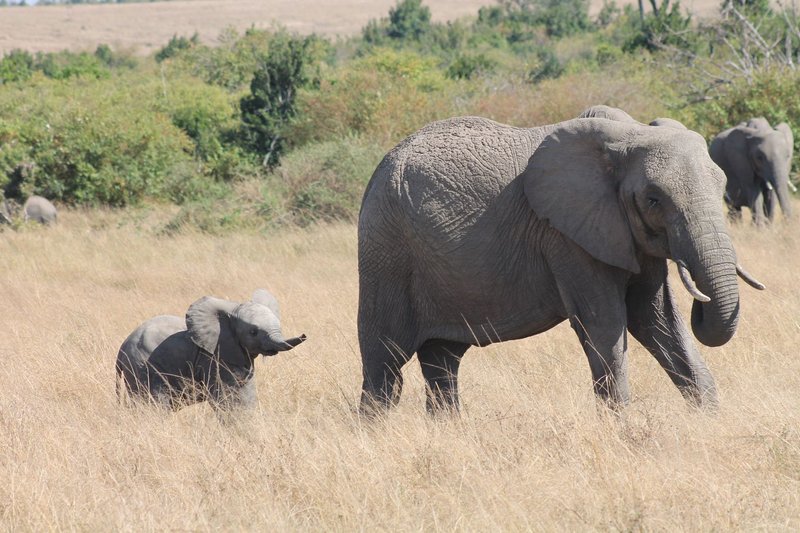
The northern two-thirds of Nigeria run from true Sahel scrub down through Sudanian savanna — open grassland studded with acacia and shea trees. This is classic safari country, and most of Nigeria’s surviving large mammals are squeezed into a handful of protected reserves here.
1. West African Lion (Panthera leo)
The lions of West Africa are genetically distinct from their southern and eastern cousins, sitting closer to Asiatic lions. Males run about 1.7 to 2.5 meters head to tail and weigh 150 to 190 kilograms, generally smaller and lighter-maned than Serengeti lions. They hunt kob, buffalo, and warthog. Nigeria’s only viable population clings on in Kainji Lake National Park, with a few possibly drifting through Yankari. The West African population is Critically Endangered, with fewer than 250 mature adults left across the entire region.
2. African Bush Elephant (Loxodonta africana)
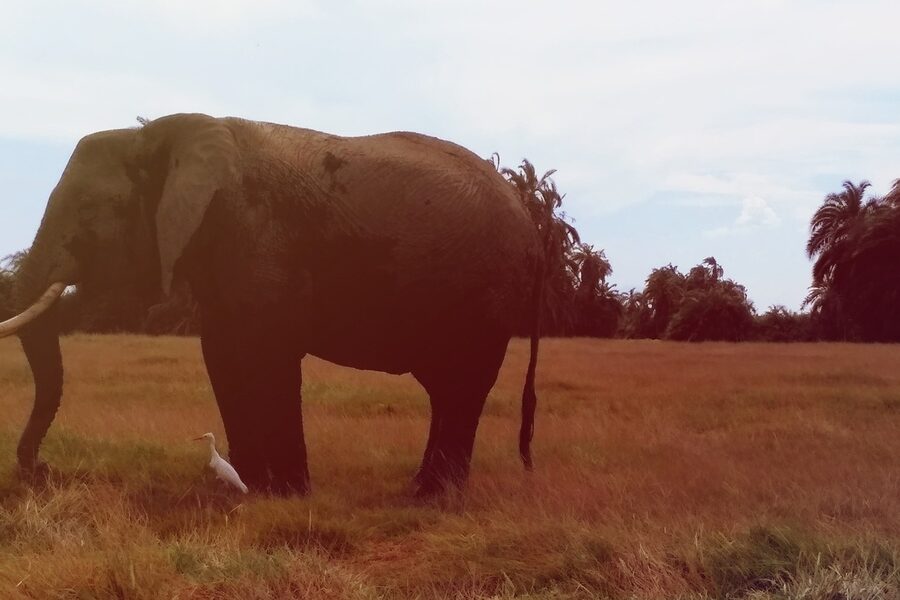
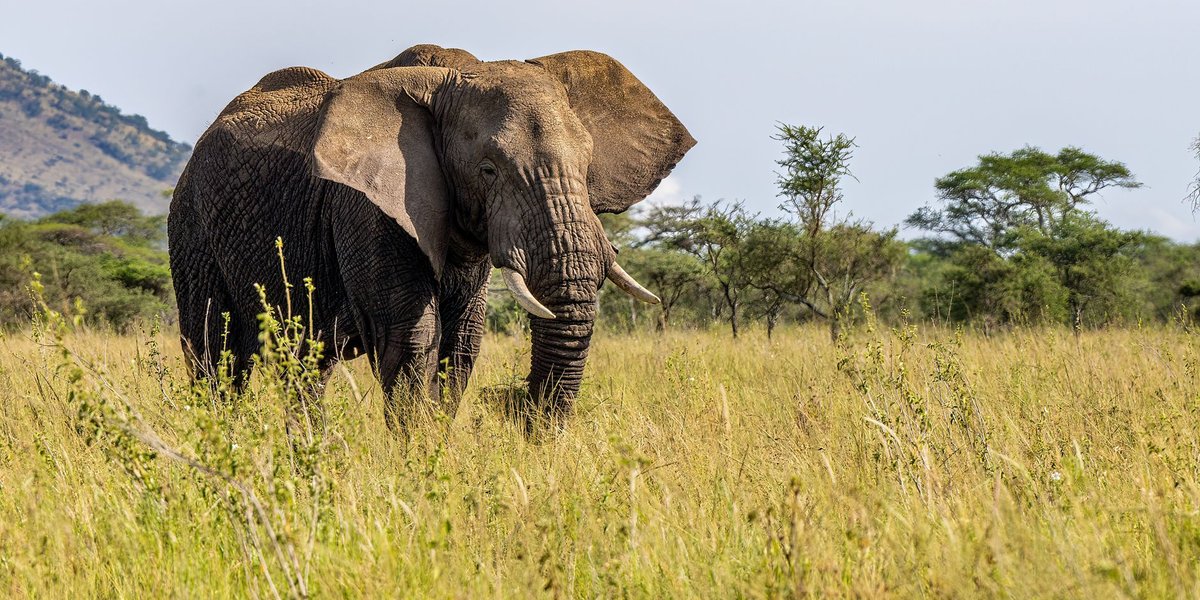
Bulls reach 3 to 4 meters at the shoulder and can top 6,000 kilograms, making them the largest land animal alive. They’re bulk feeders, putting away up to 150 kilograms of grass, bark, and browse a day. Nigeria’s savanna herds concentrate in Yankari Game Reserve, where the elephants of the Gaji River valley are the country’s most reliable sighting. Listed as Endangered after the 2021 split that separated bush and forest elephants. National Geographic tracks how poaching pressure has reshaped both populations.
3. African Buffalo (Syncerus caffer)
The West African forest-savanna buffalo here are smaller and redder than the hulking Cape buffalo of the south, often under 600 kilograms. They graze in herds and have a deserved reputation for charging when cornered. Yankari holds the densest herds in Nigeria. Globally Near Threatened, with West African numbers thinning fast.
4. Roan Antelope (Hippotragus equinus)
One of Africa’s biggest antelopes, standing up to 1.4 meters at the shoulder with backswept, ringed horns. Roans favor lightly wooded savanna and graze in small herds. They turn up in Kainji Lake and Yankari. Still Least Concern overall, though West African herds have shrunk badly.
5. Kob (Kobus kob)
A medium russet antelope, males around 90 kilograms, that gathers on floodplains and grassy clearings near water. Kob are the staple prey that keeps Nigeria’s lions and leopards fed. The Western kob is the type you’ll see around Kainji. The species is Least Concern, but it’s a bellwether — when kob numbers drop, the predators follow.
6. Olive Baboon (Papio anubis)
Big, adaptable, and everywhere from savanna to forest edge. Males weigh up to 30 kilograms and run troops of dozens. They eat nearly anything: grass, fruit, insects, small mammals, and crops, which puts them in regular conflict with farmers. Common across northern and central Nigeria and rated Least Concern.
7. Patas Monkey (Erythrocebus patas)
The sprinter of the primate world. Patas monkeys live on the open ground of the Sahel and can hit 55 kilometers per hour, faster than any other primate. Slim, ginger-coated, and long-legged, they eat seeds, gum, and insects. Found across Nigeria’s far north and now Near Threatened as Sahel grassland gets converted to farmland.
Rainforest and the Cross River highlands
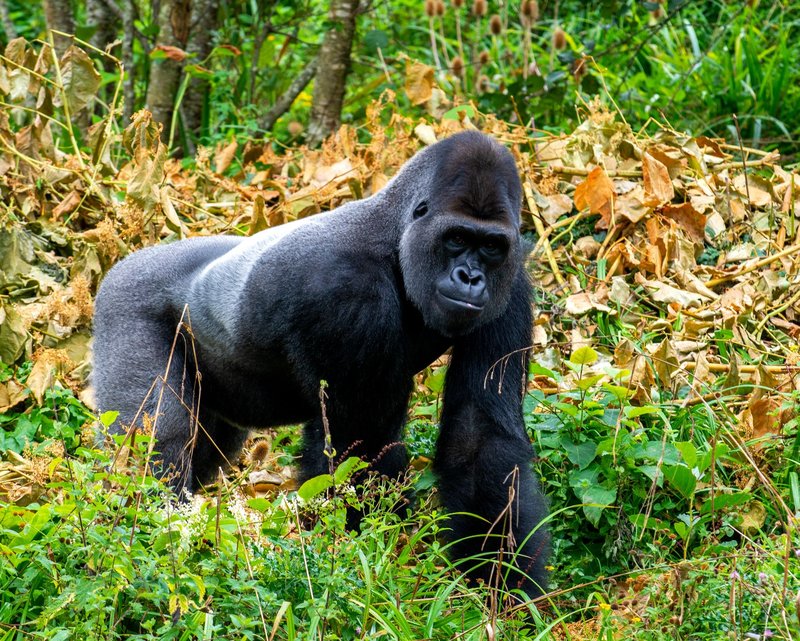
Nigeria’s southeast — Cross River State and the forests bordering Cameroon — is the country’s biodiversity jackpot. This is where the rainforest endemics live, several of them found in a range you could drive across in a morning. It’s also where conservation stakes are highest, because most of these animals have nowhere else to go.
8. Cross River Gorilla (Gorilla gorilla diehli)
The rarest gorilla on the planet. Fewer than 300 survive, scattered across the forested highlands straddling the Nigeria-Cameroon border, including Nigeria’s Mbe Mountains and Afi Mountain Wildlife Sanctuary. Males reach 1.7 meters standing and 180 kilograms, feeding on fruit, leaves, and stems. They’re shy, hard to track, and Critically Endangered. The WWF Cross River gorilla profile lays out just how thin the population has become.
9. Drill (Mandrillus leucophaeus)
A stocky forest monkey, cousin to the mandrill, with a jet-black face ringed in white and a flash of color on the rump. Males weigh up to 35 kilograms. Drills forage on the forest floor for fruit, seeds, and invertebrates in large groups. Nigeria’s Afi Mountain is one of their last strongholds. Endangered, and one of Africa’s most threatened primates.
10. Nigeria-Cameroon Chimpanzee (Pan troglodytes ellioti)
The most recently described chimp subspecies, restricted to the forests of Nigeria and western Cameroon. Adults weigh 40 to 60 kilograms and use tools to crack nuts and fish for termites. Gashaka-Gumti National Park holds Nigeria’s largest population. Listed as Endangered, with habitat loss and hunting the main threats.
11. Sclater’s Guenon (Cercopithecus sclateri)
Found nowhere on Earth but Nigeria. This russet-and-grey monkey with a pale, whiskered face lives in the lowland forests and community-protected groves of the southeast, near towns like Akpugoeze where locals consider it sacred. It eats fruit and leaves and survives partly thanks to that local taboo against killing it. Currently Vulnerable and a genuine Nigerian endemic that generic lists routinely miss.
12. Preuss’s Red Colobus (Piliocolobus preussi)
A leaf-eating monkey with rich reddish flanks, confined to the Cross River region and adjacent Cameroon. Red colobus are picky folivores, which makes them brutally sensitive to forest fragmentation. This one is Critically Endangered and may be down to a few hundred individuals.
13. Leopard (Panthera pardus)
Nigeria’s most widespread big cat, ranging from rainforest to savanna because it’s so adaptable. Males weigh up to 90 kilograms and haul kills into trees to keep them from hyenas. Secretive and largely nocturnal, leopards persist in Gashaka-Gumti and Cross River but are rarely seen. Globally Vulnerable, with West African populations especially fragmented.
14. White-bellied Pangolin (Phataginus tricuspis)
A tree-climbing, scale-covered insect eater that rolls into an armored ball when threatened. About the size of a house cat, it uses a long sticky tongue to vacuum up ants and termites. Pangolins are the most trafficked wild mammals in the world, hunted for meat and scales, and Nigeria has become a major smuggling hub. This species is Endangered.
15. African Forest Elephant (Loxodonta cyclotis)
Smaller than its savanna relative, with straighter downward tusks and rounded ears suited to dense bush. Forest elephants disperse the seeds of dozens of rainforest tree species, so losing them reshapes the forest itself. A remnant population hangs on in the Cross River forests. The IUCN Red List rates the forest elephant Critically Endangered, worse off than the bush elephant.
Niger Delta, mangroves, and big rivers
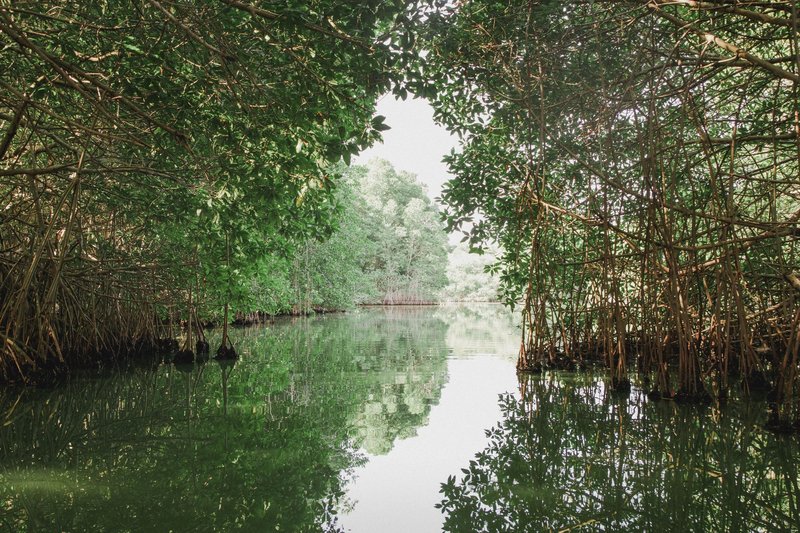
The Niger Delta is one of the largest wetland systems in the world: a maze of creeks, mangrove forest, and floodplain where the Niger River fans out into the Atlantic. Oil extraction and dense human settlement have hammered it, but it still shelters animals you won’t find in the savanna parks.
16. African Manatee (Trichechus senegalensis)
The Delta’s gentle giant. This slow, plant-grazing aquatic mammal reaches 3 meters and 360 kilograms, drifting through coastal lagoons, mangrove creeks, and slow rivers eating overhanging vegetation. It’s the least-studied of the world’s three manatee species and one of the most overlooked animals in Nigeria. Threatened by entanglement, hunting, and dam construction, it’s listed as Vulnerable.
17. Hippopotamus (Hippopotamus amphibius)
Up to 1,500 kilograms of territorial muscle, hippos spend their days submerged in rivers and emerge at night to graze grass. Despite the bulk they can outrun a person on land and are responsible for more human deaths than most African predators. Pods survive in the Niger and Benue river systems and around Kainji. Listed as Vulnerable.
18. Niger Delta Red Colobus (Piliocolobus epieni)
A second red colobus found only in the marsh forests of the central Niger Delta, between the Forcados and Sagbama creeks. It feeds on young leaves and seeds in swampy forest that’s being logged and drained. With a tiny range and shrinking habitat, it’s Critically Endangered and one of the rarest primates in Africa.
19. West African Crocodile (Crocodylus suchus)
Long mistaken for the Nile crocodile, this is a separate, generally smaller and less aggressive species — the “sacred crocodile” of ancient Egypt. Adults reach 3 to 4 meters and ambush fish, birds, and mammals at the water’s edge. It’s widespread in Nigeria’s rivers, creeks, and the Delta. Not separately assessed by the IUCN, but locally pressured by hunting and habitat loss.
20. African Rock Python (Python sebae)
Africa’s largest snake, reaching 5 meters or more. A non-venomous constrictor, it ambushes prey up to the size of antelope and swallows it whole. Rock pythons turn up in savanna, forest, and near Delta waterways, sometimes uncomfortably close to villages. Listed as Near Threatened and protected under CITES against the skin trade.
Birds and reptiles across the country
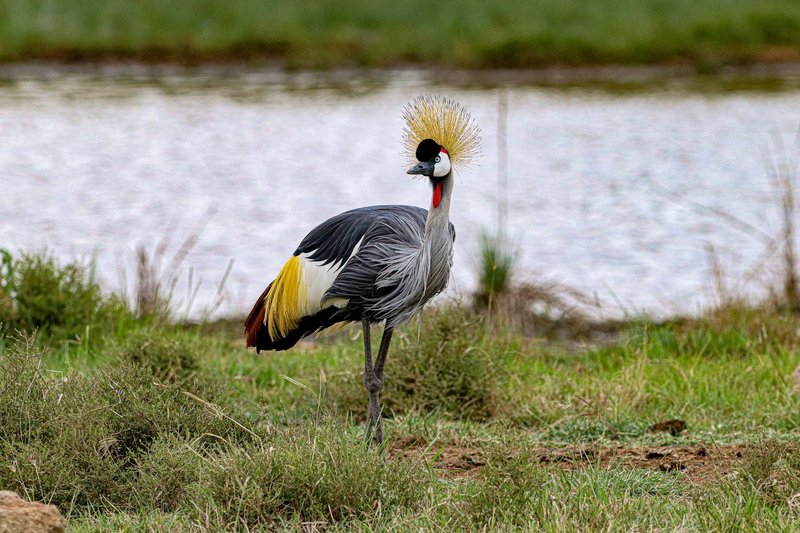
Nigeria’s bird list runs past 900 species, and the reptile fauna is just as rich. These five range widely and include the national animal.
21. Black-Crowned Crane (Balearica pavonina)
Nigeria’s national animal and a genuine showstopper: slate-grey body, white wing patches, a red throat wattle, and a halo of stiff golden feathers. It stands over a meter tall and forages in wetlands and wet grassland for seeds, insects, and small animals, often near the Hadejia-Nguru wetlands in the northeast. Wetland drainage and the cage-bird trade have pushed it to Vulnerable.
22. African Grey Parrot (Psittacus erithacus)
Famous as the most accomplished mimic in the bird world and capable of genuine problem-solving. Greys travel in noisy flocks through southern Nigeria’s rainforest canopy, feeding on fruit, seeds, and oil palm nuts. Relentless trapping for the pet trade crashed wild numbers, and the species is now Endangered and listed on CITES Appendix I, the strictest level of trade protection.
23. Hooded Vulture (Necrosyrtes monachus)
A small, scruffy vulture with a bare pink head, common around northern towns and markets where it cleans up scraps and carcasses. That scavenging is a free public-health service, breaking the chain of disease from rotting carrion. Poisoning and the trade in vulture parts have gutted the population, and it’s now Critically Endangered.
24. Gaboon Viper (Bitis gabonica)
The heaviest viper in Africa and the owner of the longest fangs of any snake, up to 5 centimeters. Its leaf-litter camouflage is so good that the danger is stepping on one. It lies still in rainforest floor cover, ambushing rodents and birds. Found in Nigeria’s southern forests. Not formally assessed as threatened, but rarely seen because of its lifestyle.
25. Nile Monitor (Varanus niloticus)
A large, semi-aquatic lizard reaching 2 meters, at home along rivers, lakes, and Delta creeks across Nigeria. It’s a powerful swimmer and an opportunist, raiding nests for eggs and hunting fish, crabs, and carrion. Widespread and Least Concern, it’s one of the animals you’re most likely to actually spot near water.
Where to actually see wildlife in Nigeria
Most of these animals live inside a few protected areas, and knowing which is which saves a wasted trip.
- Yankari Game Reserve (Bauchi State) — the best general safari in Nigeria. Elephants, buffalo, roan antelope, baboons, and the warm Wikki Springs. Your highest odds of seeing big mammals.
- Cross River National Park and Afi Mountain (Cross River State) — the rainforest endemics: Cross River gorilla, drill, Preuss’s red colobus, forest elephant. Tough terrain, low sighting odds, huge conservation value.
- Gashaka-Gumti National Park (Taraba/Adamawa) — Nigeria’s largest park, holding the Nigeria-Cameroon chimpanzee, leopard, and montane species on the Mambilla Plateau.
- Kainji Lake National Park (Niger State) — the last refuge for West African lions, plus roan, kob, and hippos.
- Hadejia-Nguru Wetlands (northeast) — the place for the black-crowned crane and migratory waterbirds.
A practical note: many of Nigeria’s most remarkable animals are also its most endangered, and several survive only because of community protection or local taboo. Sightings are never guaranteed, and that scarcity is exactly the point. The drill, the Sclater’s guenon, the Niger Delta red colobus — these exist in Nigeria and almost nowhere else, and whether the next generation gets to see them depends on the forests holding the line right now.