Table of Contents
- Why Isolation Made Chile a Plant Factory
- The Driest Desert on Earth Still Blooms
- Central Chile’s Mediterranean Belt
- The Valdivian Rainforest and a 200-Million-Year-Old Tree
- Patagonia’s Windswept Survivors
- Juan Fernández: Chile’s Own Galápagos
- What’s Actually Threatening All of This
Why Isolation Made Chile a Plant Factory
Chile is a strip of land 2,650 miles long and, on average, about 110 miles wide, boxed in on every side by something that stops plants from wandering in or out. The Andes wall it off to the east. The Atacama, the driest non-polar desert on the planet, seals the north. The Pacific handles the west, and Antarctic ice covers the south. Seeds don’t cross those barriers easily, and neither does pollen.
That’s the whole story of why Chile’s flora looks the way it does. Cut a place off long enough and species stop mixing with their relatives elsewhere on the continent — they just keep evolving in place. Roughly 45 to 47 percent of Chile’s native vascular plants are found nowhere else on Earth, among the highest endemism rates of any country in South America, according to the Royal Botanic Garden Edinburgh’s endemics project. Central Chile carries the heaviest share of that: some estimates put endemism there above 60 percent, concentrated in the Atacama, Coquimbo, and Valparaíso regions where the isolation effect is strongest.
None of this reads as one flora, though. It reads as five or six different countries stacked on top of each other, because Chile’s north-to-south span crosses more climate zones than almost anywhere else its size. What grows in the desert has nothing in common with what grows in the rainforest 1,500 miles south, and neither has much to do with the wind-flattened scrub of Patagonia.
The Driest Desert on Earth Still Blooms
Parts of the Atacama Desert have never recorded rainfall. In an average year, some sections get less than 2 millimeters of water total — less than what falls on parts of Antarctica. And yet, every five to seven years, when El Niño warms the Pacific currents offshore just enough to trigger a rare storm system, the desert does something that looks like a hoax: it turns purple, pink, and yellow overnight.
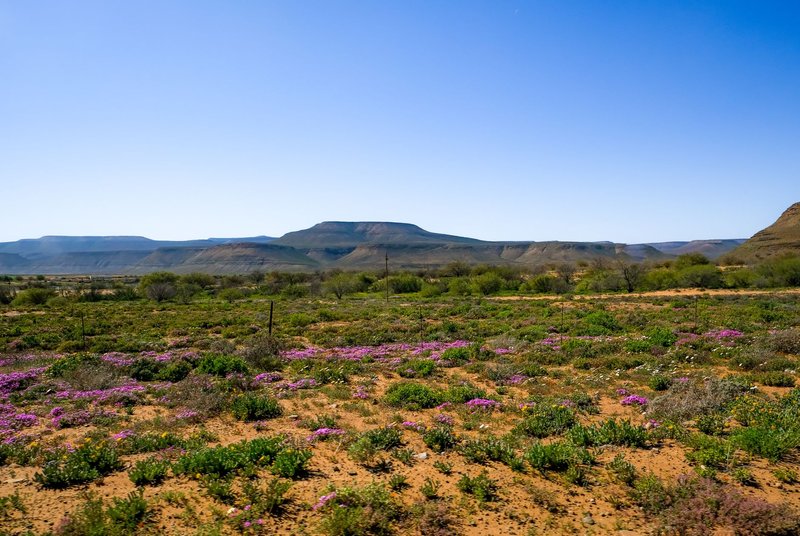
It’s called the desierto florido — the flowering desert — and it’s not a handful of hardy weeds pushing through cracked earth. Over 200 species bloom during a good event, most of them endemic to the region, sprouting from bulbs and seeds that sat dormant in the soil for years waiting for exactly the right combination of rain and temperature. The 2022 superbloom was significant enough that Chile designated Desierto Florido National Park specifically to protect the seed bank underneath the sand, a move National Geographic covered as one of the more unusual conservation stories to come out of South America in years.
Between blooms, the desert isn’t empty either. Candelabra cacti and small succulents survive on fog rolling in off the coast — the camanchaca — which some plants have adapted to harvest directly through their leaves, since actual rain is too unreliable to count on.
Central Chile’s Mediterranean Belt
Move south past the desert and the climate flips to something that looks, on paper, a lot like coastal California or the south of France: wet winters, dry summers, rolling hills. This is where most Chileans actually live, and it’s also home to the plant most associated with the country.
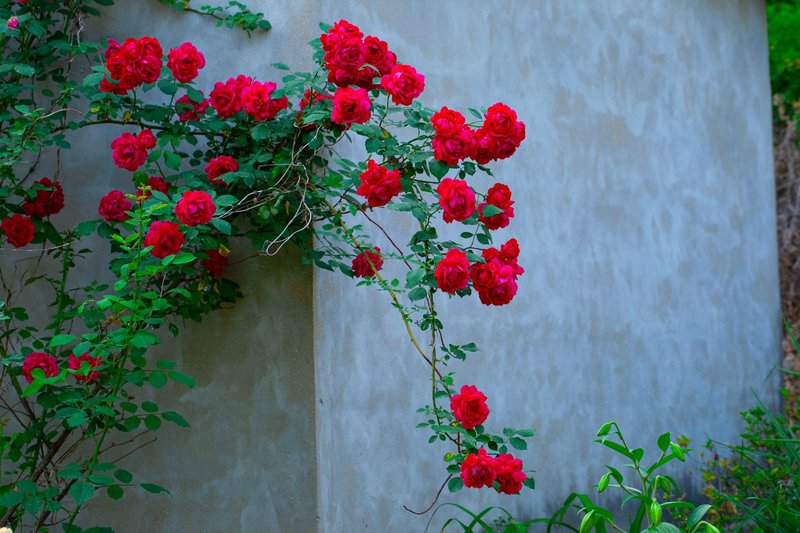
The copihue (Lapageria rosea) is a woody vine that climbs up to 10 meters through the understory of central Chile’s forests, producing waxy, bell-shaped red flowers between March and May. It’s been the official national flower since 1977, and picking one in the wild has been illegal for just as long. The name comes from Mapudungun, the language of the Mapuche, and in Chilean folklore the flower is tied to a story of forbidden love between two feuding tribes — which is why it still shows up as a symbol of resilience on everything from postage stamps to soccer jerseys.
Central Chile is also the only place on Earth where Jubaea chilensis, the Chilean wine palm, grows wild. It’s an enormous, slow-growing palm with the thickest trunk of any palm species — up to a meter across — and individuals can live for centuries. Colonial settlers used to fell mature palms just to tap the sugary sap for a syrup called miel de palma, a practice that wiped out most of the wild population long before anyone thought to protect it. What’s left grows almost entirely within a narrow band between Coquimbo and Maule, and it’s now classified as threatened.
The Valdivian Rainforest and a 200-Million-Year-Old Tree
Further south, past the Bío Bío River, the Mediterranean scrub gives way to something that feels transplanted from a different hemisphere: temperate rainforest, thick with moss, ferns, and trees that have barely changed since the age of dinosaurs.
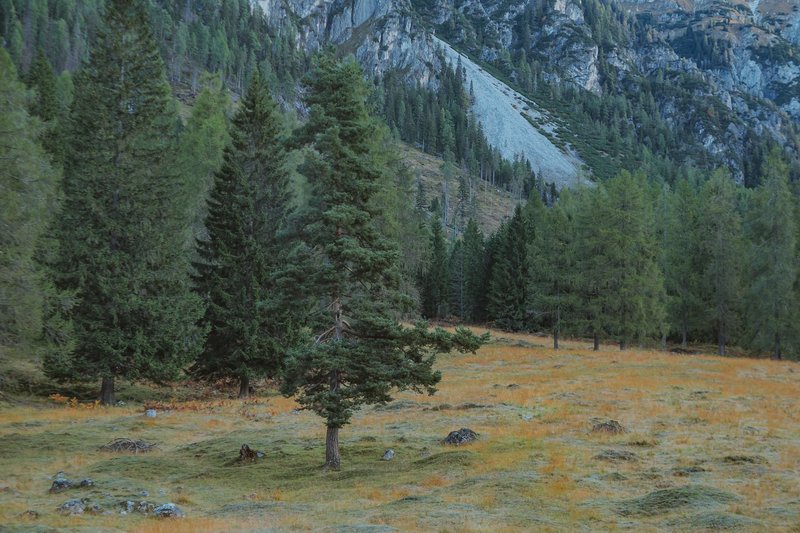
The centerpiece is Araucaria araucana, the monkey puzzle tree — Chile’s national tree, and a species that shows up in the fossil record from roughly 200 million years ago, giving it the label “living fossil.” Mature trees reach 30 to 40 meters and can live for over a thousand years, with a crown of stiff, spine-tipped leaves that made climbing them, per the Kew Gardens description of the species, look genuinely difficult even for a monkey — which is where the English common name comes from. For the Pehuenche people, whose name literally translates to “people of the araucaria,” the tree’s large seeds, or piñones, have been a dietary staple for centuries; a single female cone can hold around 200 of them, though the tree takes two to three years just to mature a crop.
The species is now listed as Endangered by the IUCN, driven mostly by logging, wildfire, and livestock grazing, and international trade in its wood and seeds is restricted under CITES Appendix I. In Chile it’s protected as a Natural Monument, which at least keeps commercial logging off the table.
Sharing this same wet understory is Gunnera tinctoria, known locally as nalca — a giant-leaved perennial that can top 2 meters, with leaves broad enough to use as an actual umbrella, which rural Chileans have done for generations. Its stalks are also eaten raw with salt, tasting something like a tart rhubarb. The Valdivian rainforest ecoregion as a whole is recognized as a global biodiversity hotspot by the Critical Ecosystem Partnership Fund, largely because of how much of what grows there exists nowhere else.
Patagonia’s Windswept Survivors
By the time you reach Chilean Patagonia, the plants have stopped trying to be tall. Constant wind, thin soils, and a short growing season favor low, tough, ground-hugging growth over height. Lenga and ñirre — two deciduous Nothofagus (southern beech) species — form the region’s dominant forests, turning entire hillsides red and gold in autumn before dropping their leaves for a winter that comes early and stays late.
Between the trees, the ground cover shifts to cushion plants: dense, moss-like mounds that grow so slowly and so compactly that walking on one can undo decades of growth. These cushion plants trap their own microclimate inside the mound, staying several degrees warmer than the surrounding air, which is often the only way anything survives the exposed, glacier-scoured terrain of the far south. It’s a completely different survival strategy than the desert’s dormancy trick or the rainforest’s sheer density, and it’s a reminder that “Chilean flora” isn’t one adaptation repeated — it’s a different solution invented at every latitude.
Juan Fernández: Chile’s Own Galápagos
Roughly 400 miles off the coast sits the Juan Fernández Archipelago, a cluster of volcanic islands best known as the real-world setting behind Robinson Crusoe. Botanically, it’s one of the most concentrated pockets of endemism on the planet: around two-thirds of the native plant species on the islands grow nowhere else, packed into a land area smaller than many single farms.
The islands have their own endemic palm, Juania australis, and their own tree ferns, some reaching the size of small trees themselves — a growth form that’s largely vanished from mainland South America but persisted here in isolation. Because the islands are so small and so isolated, though, that same endemism makes them fragile: introduced goats, rats, and invasive blackberry have already pushed several native species to the edge, and a handful exist today only as a few dozen individuals on a single ridge.
What’s Actually Threatening All of This
The pattern across every one of these zones is the same. Central Chile’s Mediterranean scrub has lost enormous ground to vineyards and eucalyptus plantations. The Valdivian rainforest is fragmented by logging roads faster than saplings can replace what’s cut. Patagonia’s cushion bogs are sensitive to trampling in a way that tourism growth doesn’t always account for. And the Atacama’s seed bank, the one that makes the flowering desert possible at all, depends on rainfall patterns that climate change is actively scrambling.
What makes Chile’s flora worth paying attention to isn’t just the endemism number — it’s that the number is a direct result of geographic isolation that took millions of years to produce and that logging, grazing, and habitat loss can undo in a fraction of that time. A monkey puzzle forest that’s stood since before the Andes fully rose can still be gone within a human lifetime. The plants that only exist in this one stretch of the world are also, by definition, plants with nowhere else to retreat to if their zone disappears.