TL;DR
- Belize has around 37 recorded amphibian species, but you’ll realistically cross paths with a dozen or so — the rest are cryptic leaf-litter frogs and mountain specialists most visitors never see.
- The loud engine-like drone at dusk is almost always the marine toad. The electronic “whine-chuck” coming from a roadside puddle is a túngara frog.
- Marine toads and veined tree frogs secrete irritating toxins through their skin — don’t touch your eyes or mouth after handling either one. Most tree frogs are otherwise harmless to pick up.
- Best viewing window: wet season (June–November), after dark, ideally with a headlamp near still water — cave systems like Barton Creek add a bonus chance at seeing frogs sheltering near the entrance.
Table of Contents
- How Many Amphibian Species Actually Live in Belize
- What’s Making That Racket at Night
- Frogs of the Rainforest and Jungle Lodges
- Toads and Frogs in Gardens, Porches, and Puddles
- Rivers, Limestone Caves, and the Maya Mountains
- Quick ID Table
- Which Ones Are Safe to Touch
- When and Where to Actually See Them
How Many Amphibian Species Actually Live in Belize
Roughly 37 amphibian species have been documented in Belize, spread across true frogs, treefrogs, toads, a scattering of tiny direct-developing rainfrogs, and one family of lungless salamanders. Most trip reports and field checklists cite a number somewhere between 33 and 38 depending on how recently the taxonomy was updated — herpetologists keep splitting and renaming Central American frog genera, which is why you’ll see the same animal called a Lithobates in one guide and a Rana in an older one.
You won’t meet all 37. A good chunk of that list is leaf-litter specialists in the Maya Mountains that spend their whole lives under decaying logs, plus a handful of stream frogs restricted to a single watershed. What follows are the species that actually show up on a porch light, a cave tour, or a night walk — the ones worth knowing before you go.
What’s Making That Racket at Night
This is the question nobody answers well. You’re at a jungle lodge, it’s just gone dark, and something is making a sound like a distant outboard motor idling. That’s a marine toad. Multiple males calling from the same pond overlap into a low, continuous drone that carries for a surprising distance and tends to get blamed on frogs, insects, or “something mechanical.”
If instead you’re hearing a short electronic-sounding “whine” followed by one or two sharp “chucks” — like a dial-up modem trying and failing to connect — that’s a túngara frog, usually coming from a roadside ditch or a puddle that’s only a few inches deep. And if the sound is more of a bleating “waaah,” almost sheep-like, check the nearest tree trunk or wall: that’s a Mexican treefrog, and it will do this from the same spot for hours.
None of these calls mean anything is wrong. They’re mating calls, and the loudest nights follow the heaviest rain.
Frogs of the Rainforest and Jungle Lodges
Red-Eyed Tree Frog
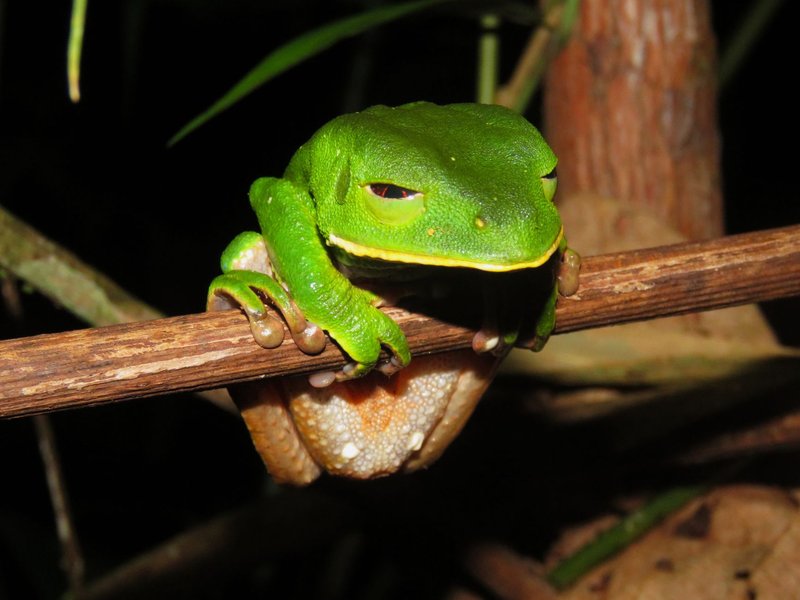
The one everyone pictures when you say “rainforest frog,” and Belize is well within its range, from lowland rainforest up through the foothills. The green body, blue-and-yellow-striped flanks, and orange toes aren’t just decoration — when a red-eyed tree frog is startled, it snaps its eyes open and flashes all of it at once, a defensive trick called a deimatic display that’s meant to buy a half-second of predator confusion before the frog leaps. It sleeps through the day pressed flat against a leaf with its eyes closed and its bright colors tucked out of sight, then comes down toward standing water after dark to hunt and breed. According to National Geographic, females lay their eggs on leaves overhanging water so the hatching tadpoles simply drop in below.
Veined Tree Frog
Bigger and blockier than most treefrogs you’ll see, with mottled brown-and-cream skin that looks more like tree bark than anything amphibian. It’s a heavy-bodied climber that shows up on cabin walls and window screens at lodges more often than in deep forest. Handle one and it will coat your hand in a thick, sticky secretion — not dangerous, but it stings if it gets in your eyes, so wash your hands before you touch your face.
Mexican Tree Frog
The lodge-porch regular. Grayish or olive-brown with a rough, warty texture that makes it easy to mistake for a toad at a glance, but the toe pads give it away as a climber. It’s remarkably tolerant of buildings and artificial light, which is exactly why it’s usually the frog perched by the light fixture eating whatever insects the bulb attracted.
Fleischmann’s Glass Frog
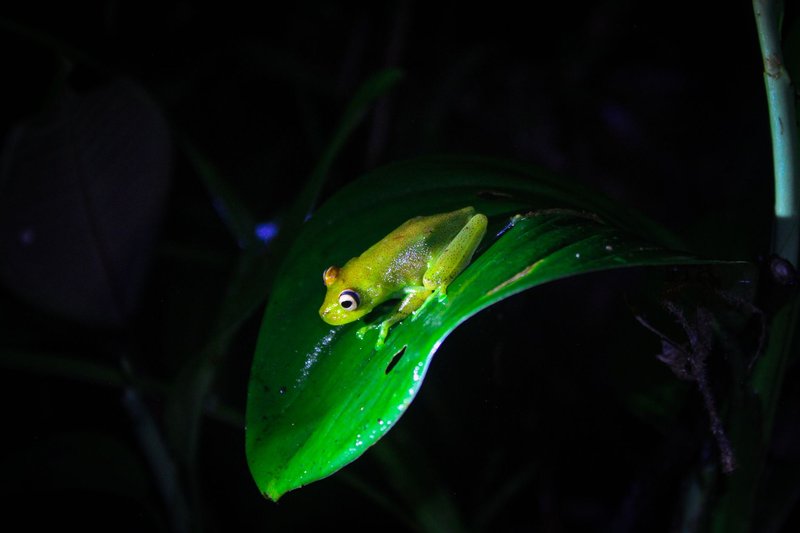
Small — adults run 20 to 32 millimeters — and genuinely strange to see for the first time: the skin on its underside is translucent enough that you can make out its heart and organs through it. It sticks to vegetation overhanging streams in Cayo, Stann Creek, and Toledo districts, laying egg clutches on leaves above the water. Finding one takes a slow night walk along a forest stream with a flashlight aimed up into the low branches, not down at the trail. The Rainforest Alliance notes glass frogs are nocturnal and spend daylight hours tucked under leaves, which is most of why they go unnoticed even where they’re common.
Toads and Frogs in Gardens, Porches, and Puddles
Marine Toad (Cane Toad)
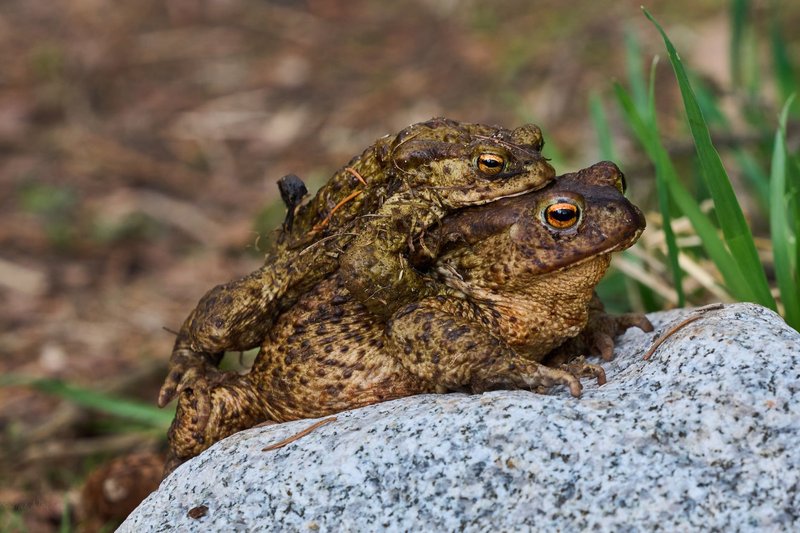
The giant of the group — up to 20 centimeters long and over a kilogram, with dry, warty skin and a pair of prominent parotoid glands sitting behind each eye. Those glands secrete a cocktail of bufotoxins that’s genuinely dangerous, not to people who leave the toad alone, but to dogs. A curious dog that mouths one can go into cardiac arrhythmia within minutes; the Merck Veterinary Manual lists hypersalivation, vomiting, and seizures as the clinical signs to watch for, and the outcome can be fatal without fast treatment. This is the same species that became a notorious invasive pest after being introduced to Australia and Florida — in Belize, it’s simply the toad that owns every garden, ditch, and porch light after dark.
Gulf Coast Toad
Smaller and warty in a duller, more uniform brown-gray than the marine toad, and much less likely to give you pause. It thrives in disturbed, human-altered ground — gardens, gravel driveways, the edges of parking lots — habitat most “true” forest species avoid.
Yellow Tree Frog
A small, slender treefrog you’ll find clinging to grass stems and low vegetation around stagnant puddles and roadside pools, rarely more than an inch long. It’s easy to miss until you’re specifically looking near standing water at eye level rather than up in the canopy.
Túngara Frog
Common in the exact habitat most people walk past without a second look: a puddle in a dirt road, a flooded ditch, a rain-filled tire rut. Males call from the water’s surface and, after mating, whip up a floating foam nest that protects the eggs until they hatch — you’ll sometimes see the pale foam clusters bobbing at the puddle’s edge before you ever spot the frog itself.
Rivers, Limestone Caves, and the Maya Mountains
Vaillant’s Frog
A large true frog found along rivers and permanent streams, with the classic long-legged, streamlined build built for one thing: getting into the water fast. Approach the bank and it’s usually gone before you get a good look, vanishing with a single powerful jump and a splash.
Maya Mountains Frog
Belize’s one true amphibian endemic — found nowhere else on Earth. It lives in moist lowland forest, savanna, and along rivers in the Maya Mountains between roughly 100 and 915 meters elevation. The IUCN currently lists it as Near Threatened, driven mainly by forest degradation rather than direct hunting or collection, and researchers watching the species have flagged chytrid fungus, the pathogen responsible for amphibian collapses across Central America, as a looming risk that hasn’t been fully studied yet in this population. You won’t stumble onto one casually; finding it means a guided trip into the Maya Mountains during the wet season.
Limestone Rainfrog
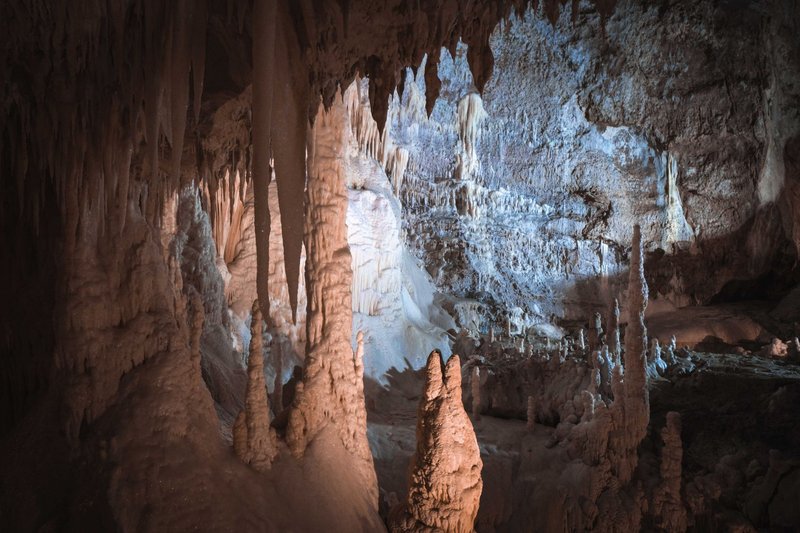
A small, cryptic frog associated with the limestone karst country that also produces Belize’s show-cave systems — Barton Creek, the ATM cave region, and similar terrain. It skips the tadpole stage entirely: eggs laid in damp leaf litter hatch directly into miniature froglets, no pond required, which is exactly the trick that lets it live in relatively dry, rocky habitat most frogs can’t use. This direct development, more than any blindness or cave specialization, is what lets it turn up near cave mouths and sinkholes where standing water is scarce.
Mexican Climbing Salamander
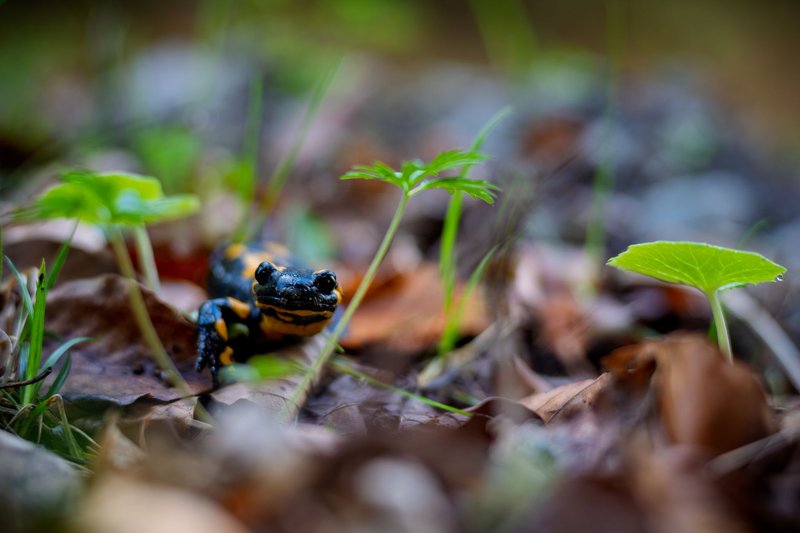
The one non-frog on this list, and the animal most visitors don’t even realize is an amphibian until someone points it out. It belongs to the lungless salamander family, breathing entirely through its skin and the lining of its mouth, and spends its life under loose bark, inside bromeliads, and in damp leaf litter rather than anywhere near open water. Slow-moving, rarely more than a few inches long, and easy to overlook — most sightings happen by accident, when someone peels back bark on a fallen log.
Quick ID Table
| Species | Size | Color | Habitat | Safe to Touch |
|---|---|---|---|---|
| Red-eyed tree frog | 5–7 cm | Bright green, blue/yellow flanks, red eyes | Rainforest, near water | Yes |
| Veined tree frog | 7–10 cm | Mottled brown/cream, bark-like | Lodges, tree trunks | Handle with caution — irritating skin secretion |
| Mexican tree frog | 6–9 cm | Gray-olive, warty | Porches, buildings | Yes |
| Fleischmann’s glass frog | 2–3 cm | Pale green, translucent belly | Streamside vegetation | Yes |
| Marine toad (cane toad) | Up to 20 cm | Dry brown-gray, warty, large parotoid glands | Gardens, ditches, everywhere | No — toxic, especially to dogs |
| Gulf Coast toad | 5–9 cm | Dull brown-gray | Gardens, disturbed ground | Yes |
| Yellow tree frog | Under 3 cm | Pale yellow-tan | Grass near stagnant water | Yes |
| Túngara frog | 2–3 cm | Mottled brown | Puddles, ditches | Yes |
| Vaillant’s frog | 8–12 cm | Olive-brown | Rivers, streams | Yes |
| Maya Mountains frog | 6–8 cm | Brown, mottled | Maya Mountains forest/rivers | Yes (endemic, avoid disturbing) |
| Limestone rainfrog | 2–4 cm | Brown, cryptic | Leaf litter, limestone karst/cave mouths | Yes |
| Mexican climbing salamander | 5–10 cm | Dark brown-black | Under bark, bromeliads | Yes |
Which Ones Are Safe to Touch
Short version: nearly everything except the marine toad and the veined tree frog. Most Belizean frogs have no meaningful toxin and are fine to pick up gently — the bigger risk usually runs the other direction, since human skin carries sunscreen, bug spray, and salt that can irritate a frog’s permeable skin. Wet your hands first if you’re going to handle one, keep contact brief, and put it back exactly where you found it.
The marine toad is the one to actually worry about, and only because of what happens to a dog or small pet that mouths one, not because of casual human contact — wash your hands afterward and you’re fine. The veined tree frog’s sticky secretion is a milder version of the same idea: not toxic in any serious sense, but capable of stinging badly if it ends up in an eye. As a blanket rule on any Belize trip: handle, don’t lick, wash your hands, and never let a dog near a toad that size.
When and Where to Actually See Them
Amphibian activity in Belize tracks rainfall almost exactly. The wet season, roughly June through November, is when calling choruses peak and you’ll hear far more than you’ll see just walking between buildings at a lodge. A slow night walk with a headlamp along any trail near standing water — even a resort’s drainage pond — will usually turn up several species within twenty minutes.
Cave tours add a different angle. Trips into Barton Creek Cave or the region around the ATM cave move through limestone karst terrain where the same conditions that carved the caves — damp, cool, rocky ground — also suit limestone rainfrogs and give marine toads and other opportunists a shaded refuge near the entrance during the dry season. Don’t expect blind, fully cave-adapted frogs; Belize’s amphibians use cave mouths and twilight zones as shelter, not as a permanent home.
Beyond that, the highest-diversity stretches are the wetter forest reserves in Cayo, Stann Creek, and Toledo districts, particularly anywhere with a permanent stream. Cayes and open coastal sand flats are the weakest bet — most amphibians can’t tolerate the salt exposure, and only the more adaptable species like the Gulf Coast toad turn up there with any regularity. If a guide can point you to research on species like the Maya Mountains frog, that’s usually a sign they know the ground well enough to actually find it.