Short answer: a baby pigeon needs warm hand-feeding formula such as Kaytee Exact, mixed fresh for every feed and served at 102 to 106 °F. Give about 10 to 12% of its body weight per feed, and only when its crop is empty. Never give it milk or bread, and never drip water into its beak. Warm a cold baby before you feed anything. From about 3 to 4 weeks old it starts on pigeon seed mix, thawed peas and a shallow water dish.
The chart below sorts common foods into safe staples, small amounts only and never feed. Search any food to see where it falls. Under the chart are the first steps, the feeding method, a schedule by age and a printable cheat sheet for your fridge.
Before you feed anything
Can a baby pigeon eat it?
Safe staples (8)
- Safe to feed. The parrot formula rehabbers use for squabs. Mix very thin at first, serve at 102–106 °F and feed only when the crop is empty.Ages 0–4 weeks#
- Safe to feed. A formula made for squabs. Roudybush says to switch to its Formula 3 at 7–14 days, over 1–2 days.Ages 0–2 weeks#
- Safe to feed. Harrison's pigeon protocol uses Recovery Formula first, then all Juvenile Hand-Rearing Formula by day 21.Ages 0–4 weeks#
- Safe to feed. The staple once it starts weaning. Put a shallow dish in the box and tap the seed to show it how to peck.From about 3–4 weeks#
- Safe to feed. Frozen, not canned, thawed in warm water. Palomacy gives 5–6, then waits an hour for droppings before more.From about 3–4 weeks#
- Safe to feed. Corn is part of pigeon grain mixes. Offer thawed frozen kernels or cracked corn, warm, never hot.From about 3–4 weeks#
- Safe to feed. Balanced pellets can make up about half the diet. Seed alone is low in calcium and vitamin A.From weaning#
- Safe to feed. Shallow dish once it eats seed; dip the beak tip to teach it. Never drip water into a nestling's beak.From about 3–4 weeks#
Small amounts only (10)
- Small amounts only. Hines mixes about one quarter game bird or turkey starter into a seed mix for weaning doves and pigeons.From weaning#
- Small amounts only. A pinch on the food only. No grit for nestlings, and too much causes impaction. VCA suggests digestible oyster shell.From weaning#
- Small amounts only. Finely chopped kale, broccoli, carrot or dandelion greens a few times a week. Pale lettuce and celery add little.From weaning#
- Small amounts only. Palomacy lists cooked or raw rice as a short-term food for a pigeon that eats on its own. Not a staple.From weaning#
- Small amounts only. Whole oats in a pigeon seed mix are fine. Palomacy says to avoid cooked oatmeal as a low-nutrient filler.From weaning#
- Small amounts only. Only as one ingredient in a rehabber's formula recipe. Plain egg on its own is not a squab food; use commercial formula.Ages 0–3 weeks#
- Small amounts only. Not a squab food. Pigeons eat seed; vets say fruit should be a smaller share than vegetables.From about 6 weeks#
- Small amounts only. Seedless and halved, now and then for a weaned pigeon. Fruit seeds and pits should not be fed to birds.From about 6 weeks#
- Small amounts only. Not a baby pigeon food. Parents feed crop milk, then seeds. Adults only eat insects now and then.From about 6 weeks#
- Small amounts only. Palomacy adds a small pinch each of sugar and salt to a dish for a weak bird and dips its beak. Never pour it in.From about 4 weeks#
Never feed (10)
- Never feed. Birds aren't mammals. Cow and goat milk hold lactose that pigeons can't digest.
- Never feed. Low-nutrient filler that can upset a stressed bird's digestion. Dry chunks can choke young birds.
- Never feed. Birds are lactose intolerant. Dairy has no place in a baby pigeon's diet.
- Never feed. Whole nuts can choke young birds, poor-quality peanuts can carry aflatoxin, and salted ones dehydrate birds.
- Never feed. Contains persin, which damages the heart muscle in birds. A few grams killed a budgerigar within 48 hours.
- Never feed. Theobromine and caffeine cause heart rhythm changes, seizures and death in birds.
- Never feed. Can damage a bird's blood cells, liver and kidneys.
- Never feed. Salted foods dehydrate birds. Vets list chips, pretzels and salty popcorn as foods to avoid.
- Never feed. Not a squab diet. Hines, a vet, does not feed soaked dog chow to baby doves or pigeons, and rehab formulas don't use it.
- Never feed. Same as dog food: Hines does not feed soaked cat chow to doves or pigeons.
Sources
- How and When to Feed a Pigeon (or Dove) Who Isn't Eating — Palomacy Pigeon and Dove Adoptions
- In case of emergency — Palomacy Pigeon and Dove Adoptions
- What to Do (and Not Do) If You Find a Pigeon or Dove — Palomacy Pigeon and Dove Adoptions
- Pigeon feeding and dove feeding — Palomacy Pigeon and Dove Adoptions
- Formula for Columbiform Hatchlings (Crop Milk Substitute), D. Winn and M. Finke — Avian Haven, via Florida Wildlife Rehabilitators Association
- What Can I Feed Orphan Baby Wild Doves and Pigeons? (Ron Hines DVM PhD) — 2nd Chance (vetspace.2ndchance.info)
- Crop Impactions, Burn-throughs and Other Crop Problems in Wild and Domestic Birds (Ron Hines DVM PhD) — 2nd Chance (vetspace.2ndchance.info)
- Emergency Pigeon Feeding — The Pigeon Cote
- Feeding Techniques: Syringe and Balloon Method (Cynthia Roberts) — Urban Wildlife Society
- Hand Rearing Guide for Pigeons (Squabs) — Bird Rehab
- Hand-Feeding Baby Birds — VCA Animal Hospitals
- Kaytee Exact Hand Feeding for Baby Birds — Kaytee (manufacturer)
- Hand rearing doves and pigeons using Harrison's Bird Food products — Harrison's Bird Foods UK (manufacturer)
- Roudybush Hand-feeding Formula and Squab Formula — Exotic Wings (retailer listing)
- I found a baby pigeon or dove — Toronto Wildlife Centre
- Pigeon and Dove Renesting and Reuniting — San Diego Humane Society
- Rescue — Wild Bird Fund
- Rock Pigeon Life History — Cornell Lab of Ornithology, All About Birds
- Mourning Dove — Pennsylvania Game Commission
- Service Publishes Final List of Non-Native Bird Species — US Fish and Wildlife Service
- List of Bird Species To Which the Migratory Bird Treaty Act Does Not Apply (2020) — US Fish and Wildlife Service, Federal Register
- 50 CFR 10.13 List of Migratory Birds — Cornell Legal Information Institute
- Feeding Pigeons and Doves — VCA Canada
- Diet for Pet Pigeons — Melbourne Bird Veterinary Clinic
- Foods That Are Toxic to Birds (Lauren Jones VMD) — PetMD
- Avocado (Persea spp) Toxicosis in Animals — Merck Veterinary Manual
- Three Household Items Toxic to Birds — University of Illinois College of Veterinary Medicine
- How and what to feed your garden birds — RSPB
- 4 myths about backyard birds, debunked — Popular Science
- Chocolate Toxicosis in Animals — Merck Veterinary Manual
The first hours: warm it, check for parents, then call a rescue
Pigeons raise their young on crop milk, a thick curd that both parents make in the lining of their crops. No kitchen food replaces it, and a baby fed the wrong thing or fed the wrong way can inhale food into its lungs. Do these steps in this order.
1. Decide whether it needs you
Look at the feathers. A baby covered in feathers, with a few wisps of yellow down, that stands and walks is a fledgling. The Wild Bird Fund says a feathered baby hopping on the ground is normal and its parents are still feeding it. Leave it where it is unless it is hurt or in danger.
A baby with mostly down that cannot perch is a nestling and belongs in its nest. Rock pigeons nest on covered ledges, balconies and rooftops. Toronto Wildlife Centre says to put it back if you know where the nest is, because pigeons cannot move a nest and will not feed a baby in a new spot. Touching it does not make the parents abandon it.
If you can’t reach the nest, San Diego Humane Society watches from a distance in daylight: take a nestling to a rehabber if the parents have not come back within 3 hours, a fledgling within 4 hours. Skip the wait for a baby that is injured, cold, bleeding, was caught by a cat or has flies on it.
2. Warm it before anything else
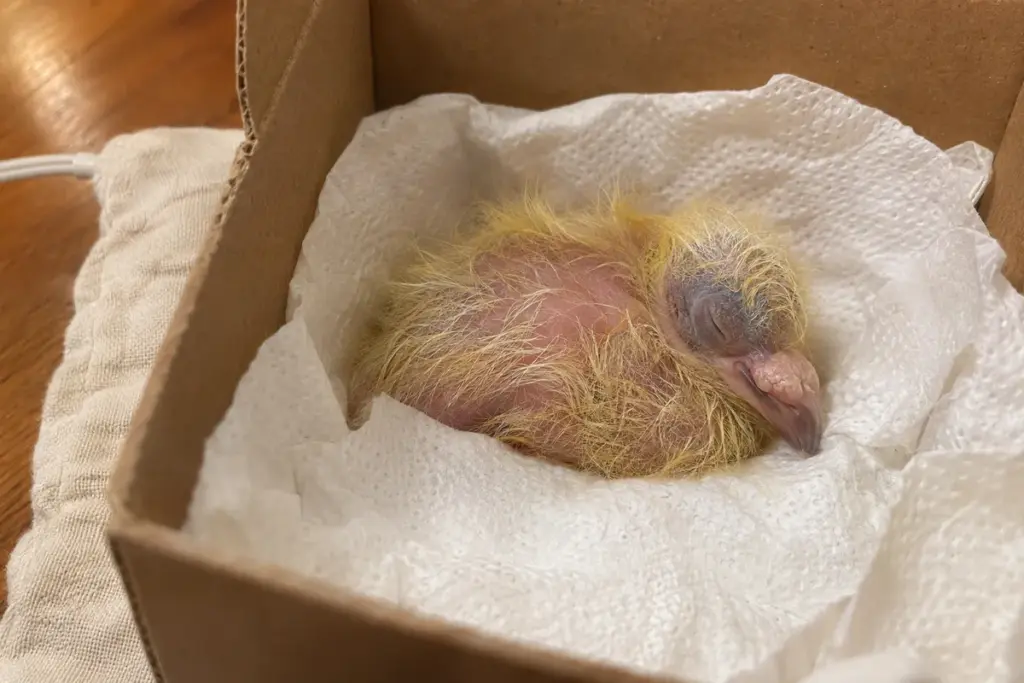
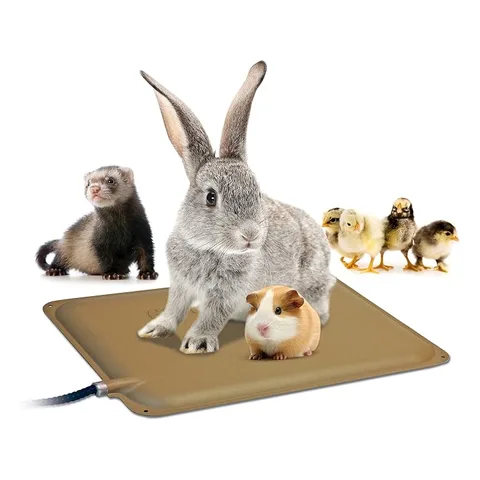
A chilled bird cannot digest, and food sitting in a cold crop goes sour. Put the baby in a small ventilated box lined with paper towels or a soft cloth. Set a heating pad on low under half of the box so the bird can move off the heat, or wrap a hot water bottle in a towel and put it beside the bird. Keep the box in a dark, quiet room away from pets and children.
3. Do not give food or water yet
Toronto Wildlife Centre and the Wild Bird Fund both say not to give a found baby pigeon food or water. Palomacy, a pigeon rescue in San Francisco, puts the order as warm first, then hydrated, then fed, and never feeds a cold or weak bird. Water dripped or poured into a beak can run into the airway. A baby still in down gets no water at all: its fluids come from formula.
4. Call a rescue that takes pigeons
Find a licensed wildlife rehabilitator through Animal Help Now and ask before you drive over whether they accept pigeons, because many centers don’t. Palomacy keeps a list of pigeon-friendly rescues in the US.
Feral rock pigeons are not native to North America, so the federal Migratory Bird Treaty Act does not cover them. Mourning doves are protected under that act, so a baby dove must go to a licensed rehabber. State and city rules vary. Palomacy also warns against raising a feral baby at home: it imprints on people, cannot be released and can live more than 10 years.
The rest of this guide is for the hours or days before you reach help, and for anyone a rehabber has asked to feed a squab.
What to feed a baby pigeon: formula
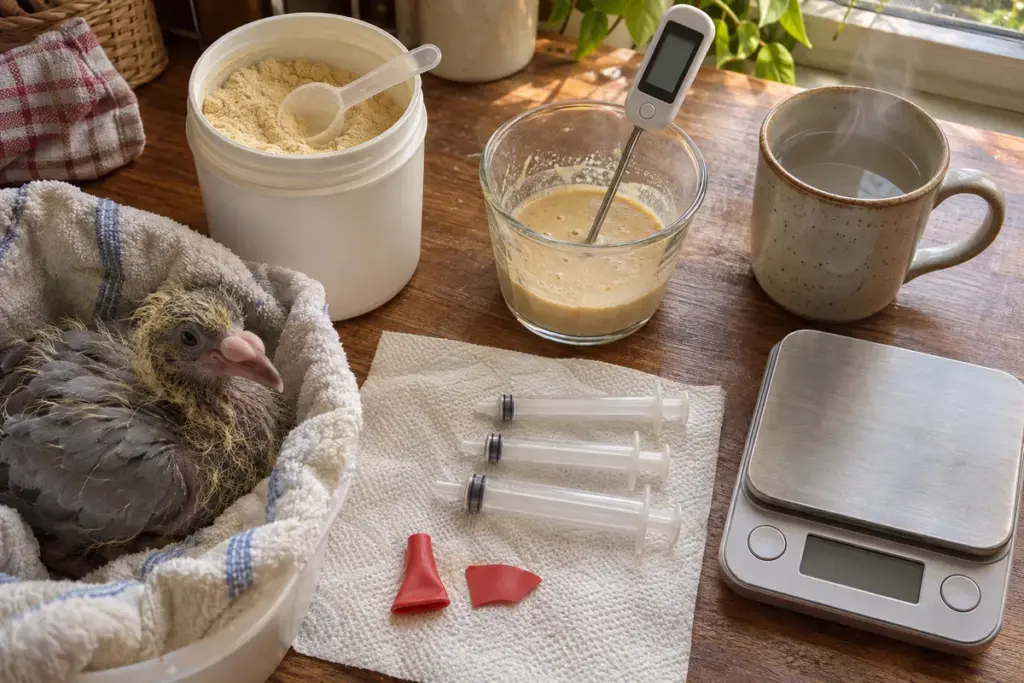
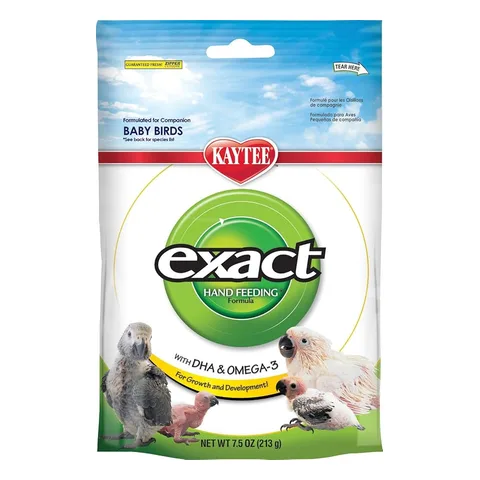
Rehab centers and vets raise squabs on commercial hand-feeding formula. Kaytee Exact Hand Feeding is the one most often named. Its label lists parrots and songbirds, but Avian Haven’s protocol, Dr. Ron Hines and The Pigeon Cote all use it for pigeons and doves.
- How to mix: very thin for the first days, then thicker as the label directs. The Pigeon Cote aims for the thickness of cheap ketchup once the baby is past day 5.
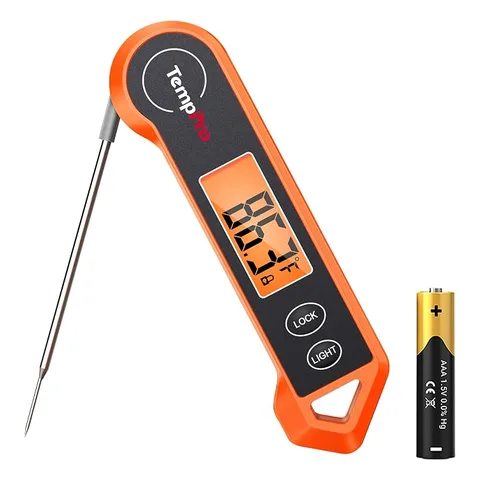
- Temperature: 102 to 106 °F, checked with a food thermometer. VCA Animal Hospitals warns that formula that is too hot burns the crop, and formula that is too cold gets refused and slows digestion. Kaytee says never over 110 °F.
- Never microwave it. Microwaves leave hot pockets that cause crop burns. Mix with hot water and let it cool to the right temperature.
- Mix fresh for every feed and throw away what is left. Clean the syringe after each use.
Two other formulas are made with pigeons in mind. Roudybush Squab Formula is fed for the first 7 to 14 days, then switched to Roudybush Formula 3 over a day or two. Harrison’s starts squabs on its Recovery Formula and moves them to all Juvenile Hand-Rearing Formula by day 21.
Hatchlings under about 4 days old live on crop milk alone, and rehabbers use special crop-milk substitutes for them. A baby that young needs a rehabber the same day.
Foods that harm baby pigeons
- Milk of any kind, plus cheese and other dairy. Birds are not mammals and cannot digest lactose. Palomacy and Dr. Hines both rule it out.
- Bread. Palomacy calls it low-nutrient filler, and the RSPB warns that dry bread can choke young birds.
- Peanuts and whole nuts. The RSPB lists choking and aflatoxin mold for loose peanuts, and salted nuts dehydrate birds.
- Soaked puppy, dog or cat food. Forums suggest it, but no rehab protocol uses it, and Dr. Hines does not feed it to baby doves or pigeons.
- Avocado, chocolate, onion and garlic. Avocado contains persin, which damages bird heart muscle. Chocolate’s theobromine and caffeine cause seizures and death. Onion and garlic damage blood cells.
- Crackers, chips and salty snacks. Salt dehydrates a bird.
How to feed a baby pigeon
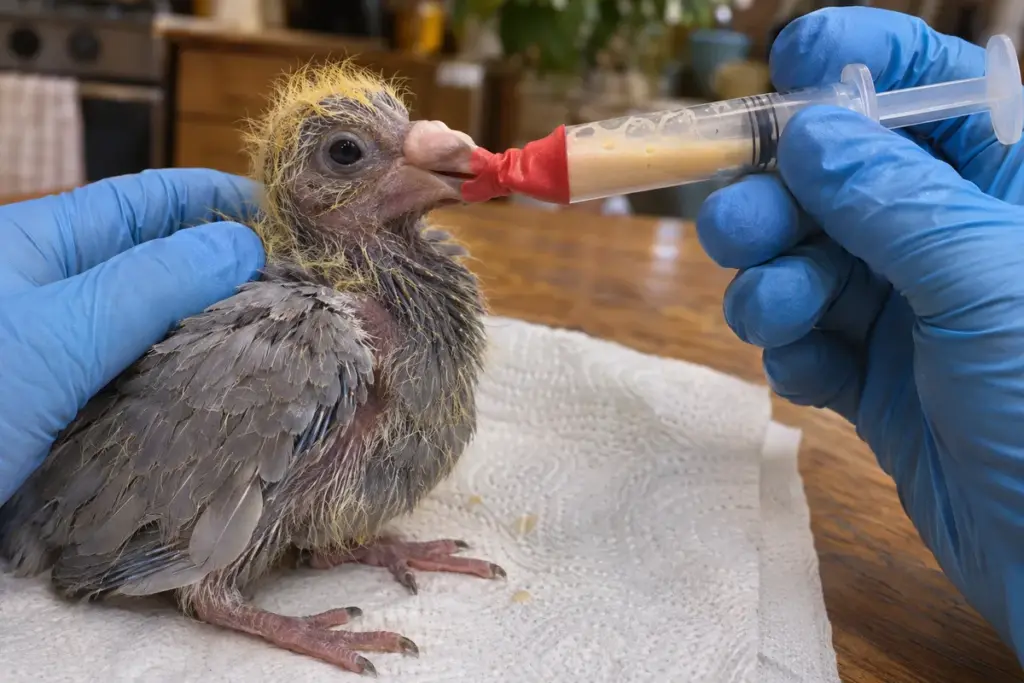
Squabs do not take food the way songbird chicks do. A baby robin gapes and its parents drop food in. A squab pushes its beak into its parent’s mouth to take the crop milk. So you never drop food into an open beak. Palomacy advises against syringe or tube feeding without guidance from an expert, so phone a rescue first if you can. If you have no choice, the Urban Wildlife Society’s syringe-and-balloon method copies the parent.
- Feel the crop. The crop is the pouch at the base of the neck. Dr. Hines says never to feed until your fingers confirm it is empty. If food is still in it, wait.
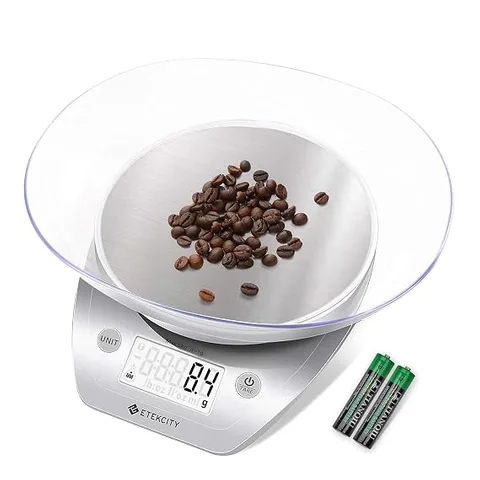
- Weigh the baby in grams each morning before the first feed. Kaytee says the weight should go up every day until weaning.
- Work out the amount. Give 10 to 12% of body weight per feed. A 15 g hatchling gets about 1.5 ml, a 300 g three-week-old about 30 ml. Kaytee warns that 15% or more can make the bird bring food back up.
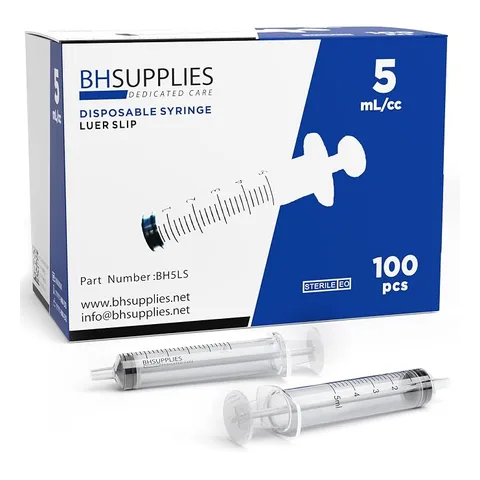
- Prepare the syringe. Use a small oral syringe with no needle. Stretch a piece of cut balloon over the tip and make a small hole in it so the squab can push its beak in.
- Keep the bird upright on a towel or paper towel. Never feed a bird on its back.
- Let it set the pace. Let the squab push its beak into the balloon, then press the plunger slowly so it swallows between small amounts. Don’t feed a bird that shows no interest. VCA warns that force-feeding risks food in the lungs.
- Stop when the crop is moderately full. It should feel soft and cushiony, not tight, and should not bulge up the neck. Dr. Hines warns that overfilling stretches the crop until it sags and traps food.
- If formula comes out of the mouth or nostrils, stop and let go of the bird so it can clear its throat. The Pigeon Cote says not to hold it upside down or swab its throat.
Tube feeding straight into the crop is how many rehab centers feed squabs, but it takes training. A rigid tube can tear the crop, and VCA does not recommend tubes for home carers.
Baby pigeon feeding schedule by age
The schedule follows the rock pigeon, the feral pigeon found in cities. Sources differ on how often to feed in week one, from 2 or 3 times a day to every 2 hours. The table uses 5 to 6 small feeds in daylight, each only once the crop has emptied, with no feeds at night. If you don’t know the age, the “looks like” column is a good guide.
| Age | What it looks like | Food | Amount | How often | Notes |
|---|---|---|---|---|---|
| 0–1 week | Sparse yellow down, eyes closed until about day 4–5, can't stand | Hand-feeding formula, mixed very thin | 10–12% of body weight per feed (about 1.5 ml at 15 g) | 5–6 feeds in daylight, each only once the crop is empty | Formula at 102–106 °F. No night feeds. Needs a rehabber urgently. |
| 1–2 weeks | Eyes open, pin feathers pushing through the down | Formula, mixed thicker as the label directs | 10–12% of body weight per feed | 4–5 feeds a day | Feel the crop before every feed. Weigh in grams each morning. |
| 2–3 weeks | Feathers opening over most of the body, yellow down on the head | Formula; a few soaked seeds near the end of week 2 | 10–12% of body weight per feed | 3–4 feeds a day | Put a shallow seed dish in the box. |
| 3–4 weeks | Almost fully feathered, down tufts on the head, walks and flaps | Formula, pigeon seed mix, thawed peas, a water dish | Formula 10–12% of body weight (about 30 ml at 300 g); seed free choice | Formula 2–3 times a day; drop the morning feed once it eats seed | Dip the beak tip in water to teach it to drink. |
| 4–6 weeks | Fully feathered, leaves the nest at 25–32 days, squeaks and flutters when hungry | Seed mix, thawed peas and corn, pellets, water | Seed free choice | Formula once a day only if the crop isn't filling, then stop | Stop hand-feeding once the crop holds seed it ate itself. |
| 6 weeks and up | Looks adult; squeaking stops around 6–8 weeks | Seed mix or pellets, a little greens and grit, fresh water | About 2 tablespoons a day to start, adjusted so it's eaten by evening | Eats on its own | Feral youngsters go to a rehabber for release. Hand-raised ones imprint. |
Weigh at the same time every morning and write it down. A squab gains weight fast: Harrison’s notes a squab’s weight can rise 22-fold in its first 3 weeks. A baby that stops gaining or loses weight needs a rehabber or an avian vet.
Mourning doves grow faster than pigeons and are much smaller. They eat mostly seed by day 5 or 6 and leave the nest at about 14 days, according to the Pennsylvania Game Commission. Dose a dove by weight at 10 to 12% rather than by the pigeon age table, and get it to a licensed rehabber.
Weaning: when baby pigeons start eating seed
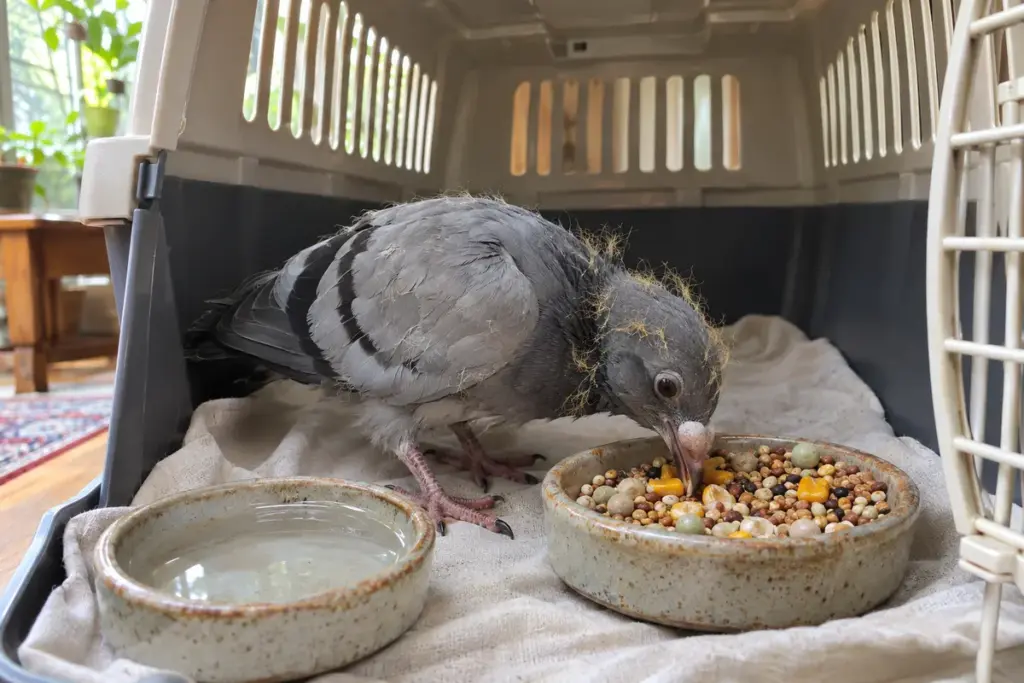
From about 3 weeks, when only tufts of yellow down are left on its head, a young pigeon is ready to learn to eat on its own.
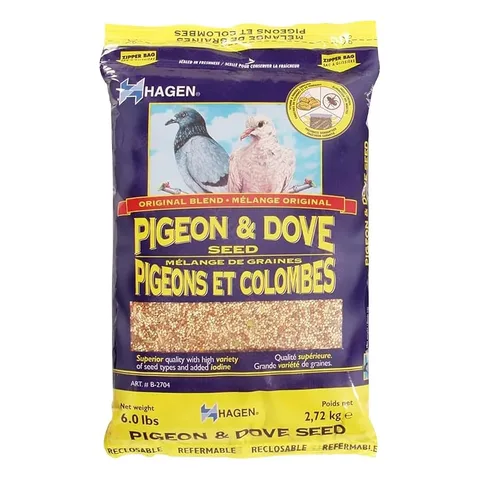
- Seed in a shallow, heavy dish. Use a pigeon and dove seed mix from a feed or pet store. Scatter some on a towel and tap the seed with a finger so the bird copies the pecking.
- Thawed frozen peas. Palomacy warms frozen peas (not canned) in water and places them one at a time in the beak. It gives 5 or 6, waits about an hour and checks for droppings before giving more.
- Thawed corn and pigeon pellets. VCA Canada says pellets can make up about half of a pigeon’s diet, because seed alone is low in calcium and vitamin A.
- A water dish. Teach drinking by dipping just the tip of the beak in water for 20 to 30 seconds, a few times. Don’t push the head down. Pigeons drink from a nearly flat puddle, so use a shallow dish.
- Cut formula back slowly. The Pigeon Cote drops the morning feed first once the bird eats seed, then the others. Stop hand-feeding once the crop holds seed the bird ate on its own.
- Starter crumbles and grit in small amounts. Dr. Hines mixes about a quarter game bird or turkey starter into the seed. Grit is a pinch on the food after weaning, never for nestlings.
Can baby pigeons eat bread, rice or fruit?
Bread, no. It fills the crop without nutrition and dry chunks can choke a young bird. Rice is fine as a short-term food for a pigeon that already eats on its own: Palomacy lists it cooked or raw, and the story that raw rice makes birds explode is a myth. Fruit such as banana or halved seedless grapes is a rare treat for a pigeon over about 6 weeks, never a squab food. Pigeons are seed eaters, and vets keep fruit to a smaller share than vegetables.
Signs something is wrong
- Crop still full or lumpy at the next feed: the crop is slow or blocked (crop stasis or sour crop). Skip the feed and call a rehabber. Dr. Hines lists a cold box, food that was too hot or too cold, and overfeeding as common causes.
- Formula from the mouth or nostrils: food may have gone into the airway. Stop feeding and let the bird clear its throat.
- A wet patch or formula on the skin over the crop: a possible crop burn from formula that was too hot. It needs a vet.
- Hard, dry contents in the crop: the formula was too thick. A rehabber will thin the next feeds.
- No weight gain, no droppings, no interest in food, or listlessness: get it to an avian vet or rehabber now.
- Gasping, shaking, bleeding or vomiting: an emergency. Palomacy says to see an avian vet immediately.
Printable baby pigeon feeding chart
The cheat sheet fits on one page. It has the safe, small amounts only and never food lists, the schedule by age, the emergency steps and a log for weight, feeds and crop checks. Print it in color or in black and white and tape it next to the formula.
Supplies for feeding a baby pigeon
These are the items rescue and rehab guides name. On the first day you need the formula, a small syringe, a gram scale and a thermometer. Seed can wait until weaning.
More about pigeons and urban birds
Read why pigeons made our list of the most misunderstood animals, how pigeons and other species adapted to cities in the characteristics of urban wildlife and why the rock pigeon shows up on lists of invasive species in Chicago. If you found a different orphan, see what to feed a baby squirrel. Raising ducklings? See what to feed a baby duck. For a baby bunny, see what to feed a baby rabbit. For a fawn, see what to feed a baby deer. All our bird articles are in the birds section.
Frequently asked questions
What can I feed a baby pigeon in an emergency?
Warmth comes first: a heating pad on low under half of a box, or a wrapped hot water bottle. Don't give food or water to a cold or weak bird. If you must feed before reaching a rescue, use a hand-feeding formula such as Kaytee Exact from a pet store, mixed fresh and served at 102 to 106 °F, and only when the crop is empty. Never use milk or bread.
Can baby pigeons drink milk?
No. Birds are not mammals and cannot digest lactose, so cow's milk, goat milk and other dairy cause digestive trouble. Pigeon parents feed crop milk, a curd made in their crops, which has nothing in common with dairy milk. Hand-feeding formula replaces it.
Can I give a baby pigeon water?
Not a nestling, and not any bird that is cold or weak. Water dripped into the beak can go into the lungs, and a squab gets its fluids from formula. Once a young pigeon is feathered and eats seed, at about 3 to 4 weeks, give it a shallow water dish and dip the tip of its beak to teach it to drink.
Can baby pigeons eat bread?
No. Bread is low-nutrient filler that takes up crop space a growing squab needs for formula, and the RSPB warns that dry bread can choke young birds. Adult pigeons eat it in cities, but it is a poor food for them too.
How much should I feed a baby pigeon?
About 10 to 12% of its body weight per feed. Weigh it in grams each morning: a 15 g hatchling gets about 1.5 ml of formula and a 300 g three-week-old about 30 ml. Stop when the crop feels moderately full and soft, and never feed again until it has emptied.
How often do you feed a baby pigeon?
In the first week, about 5 to 6 small feeds in daylight, each only once the crop is empty. That drops to 4 to 5 feeds in week two, 3 to 4 in week three and 2 to 3 once it starts eating seed. Baby pigeons are not fed at night.
Can baby pigeons eat bird seed?
From about 3 to 4 weeks old, yes. Offer a pigeon and dove seed mix in a shallow, heavy dish, with thawed frozen peas and corn. Younger squabs cannot digest seed on its own and need formula.
Can I feed a baby pigeon puppy food or cat food?
No. The idea of soaked kibble comes from online forums. No rehab protocol uses it, and Dr. Ron Hines, a veterinarian who writes on orphaned birds, does not feed soaked dog or cat chow to baby doves or pigeons. Use a bird hand-feeding formula instead.
How do you feed a baby pigeon with a syringe?
Stretch a piece of cut balloon over the tip of a small needle-free syringe of warm formula and make a small hole in it. Hold the squab upright and let it push its beak into the balloon, the way it would push into a parent's mouth, then press the plunger slowly. Never drop food into an open beak and never feed a bird on its back.
How can I tell how old a baby pigeon is?
A hatchling has sparse yellow down and closed eyes, which open at about 4 to 5 days. Pin feathers push through the down in the second week. At about 3 weeks it is mostly feathered with tufts of yellow down on its head, and at 25 to 32 days it is fully feathered and leaves the nest.
Is it legal to keep a baby pigeon?
In the US, feral rock pigeons are non-native and not protected by the federal Migratory Bird Treaty Act. Mourning doves are protected, so a baby dove must go to a licensed rehabber. State and city rules vary. A pigeon raised alone by people imprints on them and usually cannot be released, so a pigeon-friendly rescue is the better choice.
I found a baby pigeon on the ground. What should I do?
Check its feathers first. A feathered baby that walks is probably a fledgling still fed by its parents, so leave it unless it is hurt. A downy baby belongs in its nest on a nearby ledge or balcony. If you can't return it, or it is cold, injured or caught by a cat, warm it in a box and call a pigeon-friendly rehabber.
Sources
- How and When to Feed a Pigeon (or Dove) Who Isn’t Eating and What to Do If You Find a Pigeon or Dove, Palomacy
- Formula for Columbiform Hatchlings, Avian Haven (hosted by the Florida Wildlife Rehabilitators Association)
- What Can I Feed Orphan Baby Wild Doves and Pigeons? and Crop Problems in Wild and Domestic Birds, Ron Hines DVM PhD
- Syringe and Balloon Method, Urban Wildlife Society
- Emergency Pigeon Feeding, The Pigeon Cote
- Hand-Feeding Baby Birds, VCA Animal Hospitals
- I found a baby pigeon or dove, Toronto Wildlife Centre
- Pigeon and Dove Renesting and Reuniting, San Diego Humane Society
- Bird Species To Which the Migratory Bird Treaty Act Does Not Apply, US Fish and Wildlife Service
- Rock Pigeon Life History, Cornell Lab of Ornithology