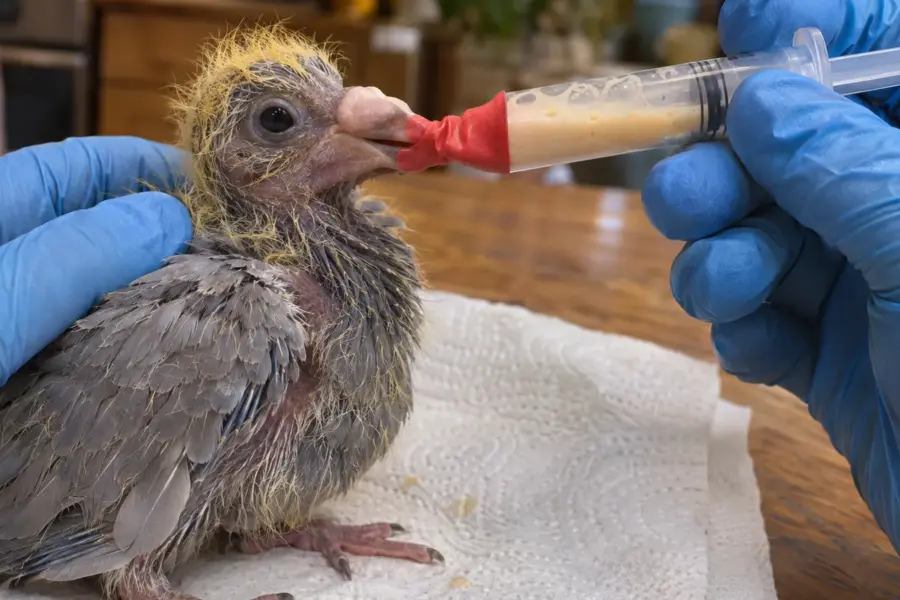
Short answer: a baby rabbit needs warm kitten milk replacer (powdered KMR) or Fox Valley 32/40 formula, fed upright from a 1 ml syringe 2 or 3 times a day, about 10% of its body weight per feed. Never give it cow’s milk. Wild cottontails eat hay, grass, clover and dandelion from the day their eyes open and stop formula at 3 to 4 weeks. Most baby bunnies found in yards are not orphans: the mother feeds them only at dawn and dusk, so check the nest before you feed anything.
The chart below sorts common foods into safe staples, small amounts only and never feed. Search any food to see where it falls. Under the chart are the first steps, the formula and how to give it, a schedule by age and a printable cheat sheet for your fridge.
Before you feed anything
Can a baby rabbit eat it?
Safe staples (8)
- Safe to feed. The milk replacer a cottontail rehab center uses. Mix as the label says and serve at 100–102 °F.Ages 0–4 weeks#
- Safe to feed. The formula House Rabbit Society and rabbit rescues name for wild and pet kits. Powder, not the canned liquid.Ages 0–6 weeks#
- Safe to feed. Offer grass hay as soon as the eyes open and keep it in the box at all times. Oat hay works too.From eyes open#
- Safe to feed. Wild kits: tender grass from an unsprayed lawn, away from roads. Pet kits get hay, not fresh greens, until 12 weeks.From eyes open#
- Safe to feed. Leaves and flowers of these lawn weeds are rehab staples for wild kits. Plantain means the lawn weed, not the banana.From eyes open#
- Safe to feed. A forage food rehabbers list for cottontails. Pick young leaves from unsprayed ground.From eyes open#
- Safe to feed. A shallow dish, such as a jar lid filled with marbles, once it hops around. Never drip water into a baby's mouth.From about 2 weeks#
- Safe to feed. Pet kits: free choice from eyes open, switching to timothy-based foods toward 1 year. Plain pellets, no seeds or fruit.From eyes open#
Small amounts only (9)
- Small amounts only. Only mixed with KMR, as rabbit rescues do (1 tablespoon KMR powder per cup of goat milk). Plain goat milk is too thin.Ages 0–4 weeks#
- Small amounts only. A vet's stopgap: 1 part unsweetened heavy cream, 3 parts KMR powder, 3–4 parts water, until a rehabber takes over.Ages 0–4 weeks#
- Small amounts only. Pet kits only. House Rabbit Society says never use Esbilac or other puppy formula for wild rabbits.Ages 0–6 weeks#
- Small amounts only. For a dehydrated kit once it is warm. A rehab center gives it as the first 2 feeds, then formula.Ages 0–3 weeks#
- Small amounts only. Gives the gut its bacteria: about one a day for the first days, from a healthy, coccidia-free, hay-fed adult rabbit.Ages 0–4 weeks#
- Small amounts only. A tiny amount once a day for the first 2 weeks. One vet doesn't give it with cecotropes, since it harms their bacteria.Ages 0–3 weeks#
- Small amounts only. Wild kits from eyes open, alongside weeds. Kale can cause gas. Pet kits wait until 12 weeks. Never iceberg.From eyes open#
- Small amounts only. The leafy tops, not the carrot. Parsley and cilantro in small amounts, since they can soften stools.From eyes open#
- Small amounts only. Pet rabbits from 12 weeks, in 1-inch pieces so the strings don't choke them. Not a food for a wild baby.From 12 weeks#
Never feed (13)
- Never feed. Wrong food for a rabbit kit; a vet lists it among the foods that kill orphan cottontails. Use kit formula.
- Never feed. A rabbit rescue warns that First Born formula can kill a baby bunny within 24 hours. Stick to KMR or Fox Valley.
- Never feed. Root vegetables are on a rehab center's never list for kits. Adult pet rabbits get a 1-inch piece as a treat.
- Never feed. A nest-age rabbit can't break down fruit sugar. Adult pet rabbits get a small slice as an occasional treat.
- Never feed. Fruit sugar for a baby, and apple seeds carry a cyanide risk. A vet also rules out applesauce for orphan kits.
- Never feed. High-sugar fruit and no food for a kit. Vets allow pet rabbits a little fruit from about 4 months; grapes stay a rare treat.
- Never feed. Watery and low in fiber, it can cause diarrhea, and it contains lactucarium. Use romaine or leaf lettuce instead.
- Never feed. Starch and sugar linked to fatal enterotoxemia in rabbits. Rabbit groups list all processed human food as off limits.
- Never feed. A cottontail rehab center bans nuts, seeds and all grains, corn included, for kits. Avoid pellet mixes that contain them.
- Never feed. Rabbits are herbivores and can't digest dairy properly. Yogurt drops and other animal products are out too.
- Never feed. Toxic to rabbits. Signs include diarrhea, a fast heart rate, trembling and death. Caffeine is unsafe too.
- Never feed. Rabbits are among the species avocado poisons. It can cause breathing trouble and heart failure.
- Never feed. Raw onion, leeks and garlic can cause fatal anemia in rabbits. Rabbit groups list them as poisonous.
Sources
- Feeding and Caring for Orphans (Margie Wilson) — House Rabbit Society
- Captive Rearing of Eastern Cottontail Rabbits (Lisa Fosco, Wildlife in Need Center), 2024 — Florida Wildlife Rehabilitators Association
- Orphaned Cottontail Care — Missouri House Rabbit Society
- How To Care for Orphaned Wild Cottontail Bunnies (Ron Hines DVM PhD) — 2nd Chance (vetspace.2ndchance.info)
- Cottontail Rabbit: orphaned and injured wildlife — Wisconsin Department of Natural Resources
- If you find a baby rabbit — Wildlife Center of Virginia
- Baby Eastern Cottontail Rabbits: reuniting instructions — Dane County Humane Society Wildlife Center
- Hoppy Spring! (Wildlife Medical Clinic blog) — University of Illinois College of Veterinary Medicine
- MDC urges public to leave wildlife wild — Missouri Department of Conservation
- Baby rabbit found outside the nest — Toronto Wildlife Centre
- Diet for Rabbits — Merck Veterinary Manual
- Avocado (Persea spp) Toxicosis in Animals — Merck Veterinary Manual
- Healthy Rabbit Diet Guide: Safe Foods and Treats — House Rabbit Society
- Greens Are Great! (Amy Ramnaraine) — House Rabbit Society
- Best Vegetables for Rabbits: A Healthy Diet Guide — House Rabbit Society
- Rabbit Nutrition — NC State University College of Veterinary Medicine
- Poisonous or Dangerous Foods — San Diego House Rabbit Society
- Fox Valley Day One Formula 32/40 for Eastern Cottontails, Squirrels and Opossums — Henry's Healthy Pets (retailer)
Found a baby rabbit? The first steps
The Wildlife in Need Center, a rehab center that has raised almost 5,000 cottontails, calls baby rabbits likely the most commonly kidnapped mammal in North America. Most “orphans” have a mother who is staying away on purpose. Work through these steps in order.
1. Check whether the mother is still feeding them
A mother cottontail stays away from the nest all day so she doesn’t lead predators to it. She comes back at dawn and dusk, nurses for a few minutes and leaves. You will almost never see her.
- Put the kits back in the nest with gloves on and cover them with the grass and fur lining. A mother rabbit does not reject babies a person has touched.
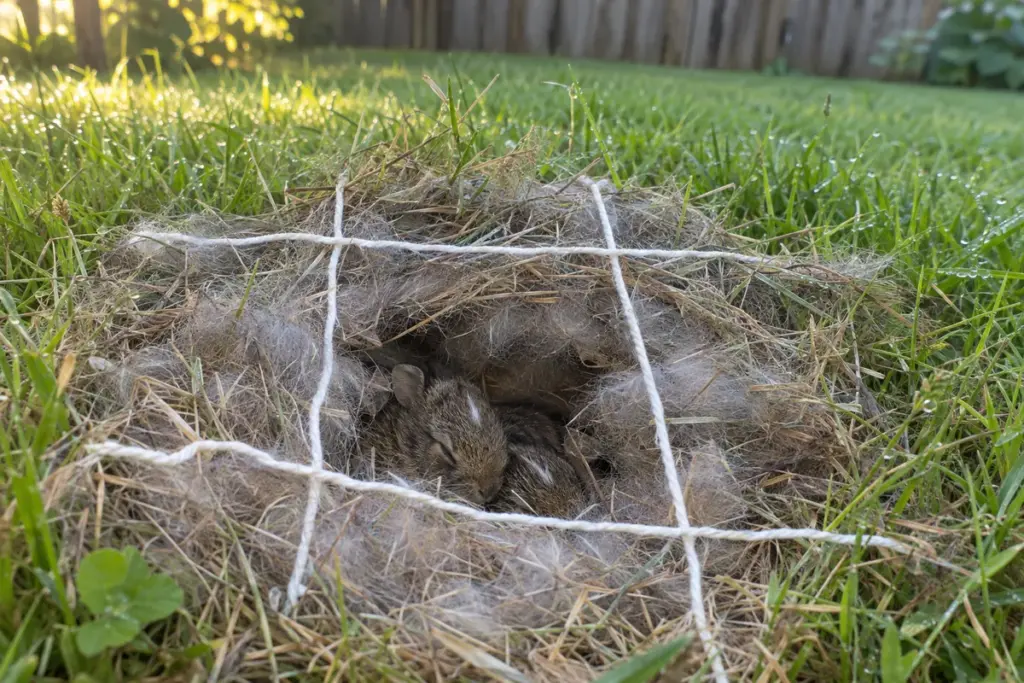
- Lay four pieces of string or long grass blades in a tic-tac-toe pattern over the nest.
- Check the next morning. If the strings have moved, the mother came back. Leave the nest alone.
- Pick up a kit with gloves and look at its belly. A fed kit has a round belly, and Dane County Humane Society notes the milk shows white through the thin skin.
If the strings have not moved and the kits look thin with wrinkled, baggy skin, the Wildlife Center of Virginia says they may be orphaned and need a rehabber. Don’t move the nest to a “safer” spot: the mother won’t look for it. To keep a dog away, set a laundry basket upside down over the nest with a weight on top during the day and lift it off before dusk.
2. Decide whether it needs help at all
A cottontail that is furred, has its eyes open and its ears up, and is about the size of a softball (4 to 5 inches long, over 100 g) is already independent. Wisconsin DNR and the Wildlife Center of Virginia both say to leave it alone. Young cottontails leave the nest at 15 to 20 days and are on their own by 3 to 4 weeks, while still small. One that hops away when you get close is fine.
Skip the nest check and go to a rehabber for a kit that was caught by a cat or dog, is bleeding, is cold or limp, has flies, fly eggs or maggots on it, or was found next to a dead adult. Dr. Hines lists cat bites, which carry Pasteurella bacteria, among the main killers of orphan kits.
3. Warm it before anything goes in its mouth
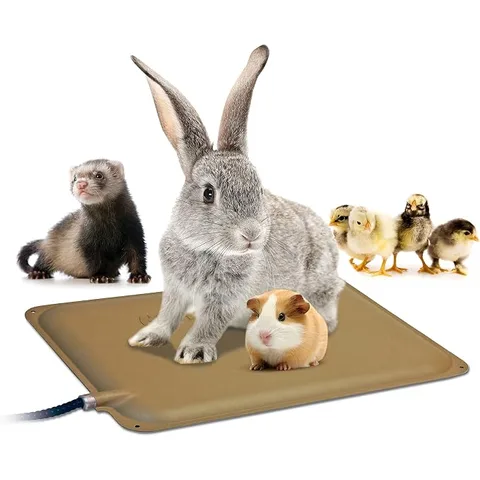
Ron Hines, a veterinarian who writes rehab guides, checks for chill by touch and by the gums: a warm body and bright pink gums are good, bluish gums are not. Put the kit in a small box lined with a soft cotton cloth or t-shirt. Set a heating pad on its lowest setting under one third to half of the box so the kit can move off the heat, or wrap a hot water bottle in a cloth. Overheating kills as surely as cold. Keep the box covered, dark and quiet, away from pets and children.
4. Call a licensed wildlife rehabilitator
Find one through Animal Help Now. Toronto Wildlife Centre and the Wildlife Center of Virginia both say not to give a found kit food or water before you have spoken to a rehabber, because the wrong food or the wrong feeding method can kill it.
Cottontails are among the hardest wild babies to raise at home. The Missouri Department of Conservation says young rabbits seldom survive in captivity and can die of fright from handling, and most US states require a permit to keep or raise a wild rabbit. With trained staff, the Wildlife in Need Center releases about 8 in 10. The rest of this guide is for the hours before you reach help, and for anyone a rehabber has asked to feed a kit. It is general information, not veterinary advice.
Domestic rabbit kits from a pet litter are not wildlife. A doe nurses once a day, usually in the middle of the night, so warm kits with round bellies in the morning are being fed. If she has died or truly stopped feeding them, call a vet who treats rabbits.
What to feed a baby rabbit: formula
No kitchen food replaces a mother rabbit’s milk. Rehabbers use two formulas:
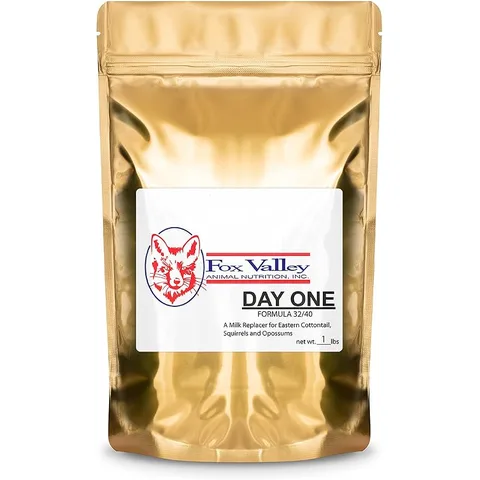
- Fox Valley Day One 32/40 (32% protein, 40% fat), the formula the Wildlife in Need Center uses for cottontails. Mix it as the label directs.
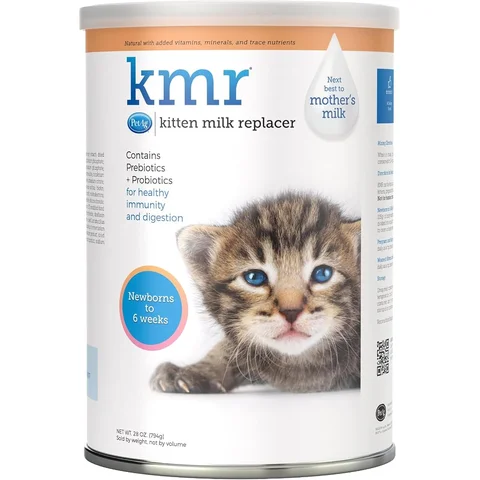
- KMR kitten milk replacer, powdered. The House Rabbit Society, the Missouri House Rabbit Society and Dr. Hines all use it. Buy the powder, not the canned liquid: Dr. Hines says canned KMR and Esbilac are too dilute for rabbits.
Serve formula at 100 to 102 °F, warm to the touch on your wrist. Never microwave it, because microwaves leave hot spots. Stand the cup and the syringe in a bowl of hot water instead. Keep mixed formula in the fridge and throw out any that is lumpy or over 24 hours old.
Two mixes appear in rehab protocols as stopgaps until a rehabber takes over. The Missouri House Rabbit Society stirs 1 tablespoon of KMR powder into 1 cup of very warm goat’s milk. Dr. Hines’s emergency mix is 1 part unsweetened heavy whipping cream, 3 parts powdered KMR and 3 to 4 parts water. Esbilac puppy formula is for domestic kits only: the House Rabbit Society says never to use it for wild rabbits.
Foods that harm baby rabbits
- Cow’s milk and other dairy. Dr. Hines lists cow’s milk among the improper foods that kill orphan kits, and NC State’s vet school says rabbits cannot digest dairy.
- Pet-store “baby animal” formulas. The Missouri House Rabbit Society warns that First Born formula can kill a baby bunny within 24 hours.
- Carrots, fruit and applesauce. The Wildlife in Need Center explains that baby cottontails have no working pancreas until they leave the nest, so they cannot digest sugary fruit or root vegetables. Carrots are a sugary treat even for adult rabbits.
- Bread, crackers, cereal, oats and corn. San Diego House Rabbit Society links sugar and starch to enterotoxemia, a fatal gut infection.
- Iceberg lettuce. It causes diarrhea. Romaine and leaf lettuce are the safe lettuces.
- Nuts, seeds and seed mixes. Fatty and starchy, and the Wildlife in Need Center bans them for kits.
- Chocolate, avocado, onion and garlic. Merck lists rabbits among the animals poisoned by avocado, and NC State says onion and garlic can cause fatal anemia.
How to feed a baby rabbit
A kit drinks fast from its mother, but from a syringe it can pull formula into its lungs. Dr. Hines calls overfeeding the biggest problem in hand-raised kits, so go slowly and feed less rather than more.
- Weigh it in grams before the first feed of the day, after it has peed. Write the number down.
- Work out the amount. Start a new kit on a few drops. Over the first day or two, build to about 10% of body weight per feed: 3 ml for a 30 g kit, 6 ml at most for any kit, following Dr. Hines’s cap.
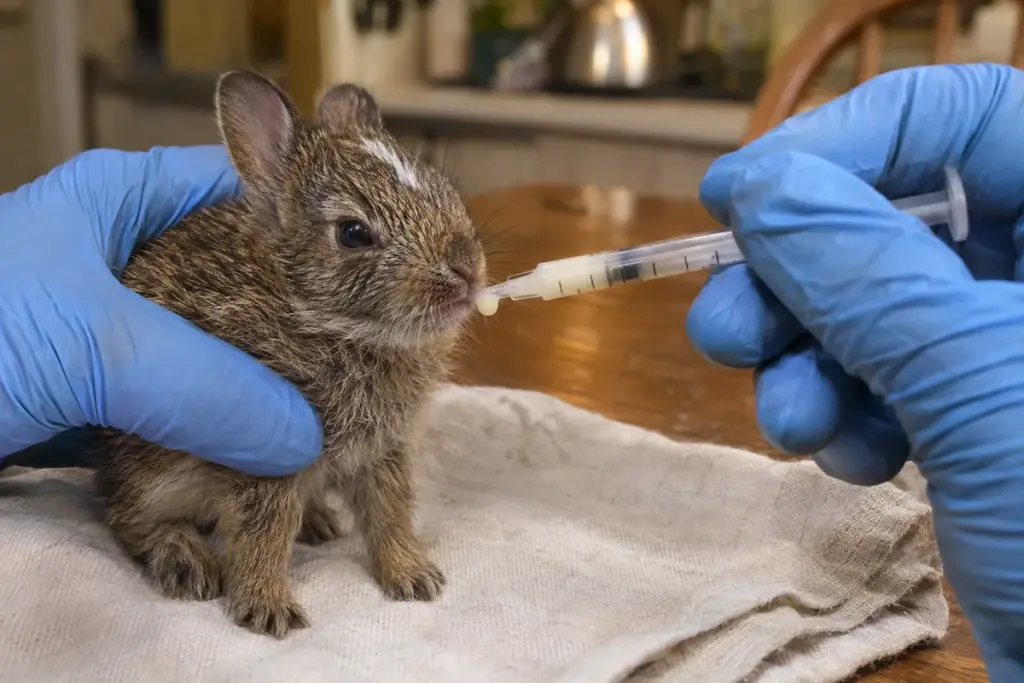
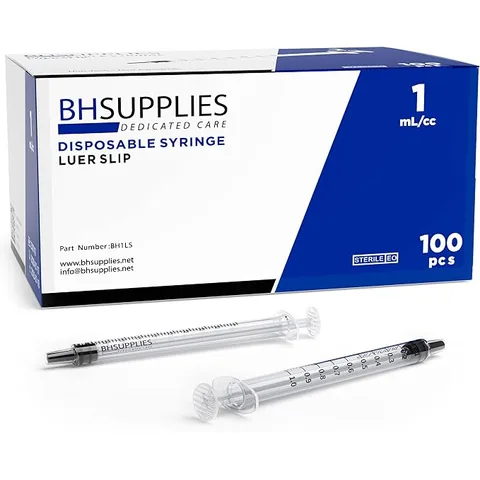
- Use a 1 ml oral syringe with no needle, moving to a 3 ml syringe as it grows. The Missouri House Rabbit Society warns that pet nursing bottles make aspiration too easy.
- Hold the kit upright on a towel, head slightly higher than its rear, loosely wrapped in a cloth if it squirms. Never feed it on its back.
- Feed from the side of the mouth, one drop at a time, and let it lap and swallow before the next drop. Never push the plunger faster than it swallows.
- Stop when the belly is round but soft. A tight, hard or bloated belly means too much.
- If formula bubbles from the nose, stop and blot the nose with a tissue. Wait before trying again.
- Stimulate it to pee and poop. Until its eyes open and it moves around, stroke the area under its tail with a cotton ball dipped in warm water after every feed. The House Rabbit Society says this is needed for both wild and domestic kits.
- Clean the syringe in hot water after every feed. Kits have little gut defense against bacteria like E. coli.
Young rabbits also need gut bacteria from an adult. Rehabbers give a kit cecotropes, the soft night droppings, from a healthy, hay-fed adult rabbit, about one a day. The Missouri House Rabbit Society adds a tiny pinch of a probiotic such as Bene-Bac once daily for the first 2 weeks. Dr. Hines does not give probiotics alongside cecotropes, so ask the rehabber which one they use.
Baby rabbit feeding schedule by age
A mother rabbit nurses only once or twice a day, and the hand-feeding schedule copies that. Sources differ on frequency. Dr. Hines feeds every 2 to 3 hours, while the Wildlife in Need Center, the House Rabbit Society and the Missouri House Rabbit Society feed 2 to 4 times a day. The table follows the larger group because overfeeding is the bigger risk. If you don’t know the age, use the “looks like” column.
| Age | What it looks like | Food | Amount | How often | Notes |
|---|---|---|---|---|---|
| 0–1 week | Pink to thinly furred, eyes and ears closed, about 26–40 g | Fox Valley 32/40 or KMR; rehabbers give electrolytes for the first 2 feeds | Start with drops, building to about 10% of body weight per feed (3 ml at 30 g) | 3 feeds a day, 6–8 hours apart | Stimulate to pee and poop after every feed. Needs a rehabber urgently. |
| 1–2 weeks | Furred from about day 5, eyes open at 7–10 days, ears up at 9–12 days | Formula; wild kits get hay, weeds and greens from eyes open | About 10% of body weight per feed, 6 ml at most | 2 feeds a day, 3 if thin | Pet kits get hay and alfalfa pellets, no fresh greens. Stimulate until the eyes open. |
| 2–3 weeks | Fully furred, nibbles at 12–15 days, starts leaving the nest | Formula, hay and greens free choice, a shallow water dish | About 10% of body weight per feed; greens always in the box | 1–2 feeds a day; cut to 1 only while weight rises daily | Weigh in grams each morning. No gain in 24 hours counts as a loss. |
| 3–4 weeks | Softball size, 4–5 inches, about 100 g or more, ears up, jumpy | Grass, weeds, greens and hay; wild kits stop formula | Hay and greens free choice | Eats on its own | A wild cottontail this size is independent. Leave it alone outdoors. |
| 4–12 weeks | Wild: released by a rehabber after 5 weeks at 140 g or more. Pet kits: weaned near 6 weeks | Pet kits: alfalfa hay, alfalfa pellets, water; no vegetables or fruit | Hay and pellets free choice | Eats on its own | Rehabbers release wild rabbits at dusk or dawn into brushy cover. |
| 12 weeks and up | Pet rabbit with a near-adult look | Hay and pellets; first vegetables, one kind at a time | One new vegetable under 1/2 oz, then wait 24 hours | Daily; fruit only as a rare treat from about 4 months | Move from alfalfa to timothy-based foods toward 1 year. |
Weigh at the same time every morning. The Wildlife in Need Center counts a day with no weight gain as a loss: a kit that stops gaining needs a rehabber the same day.
Weaning: when baby rabbits start eating greens
Wild and pet kits wean on different timelines, and this is where most feeding mistakes happen.
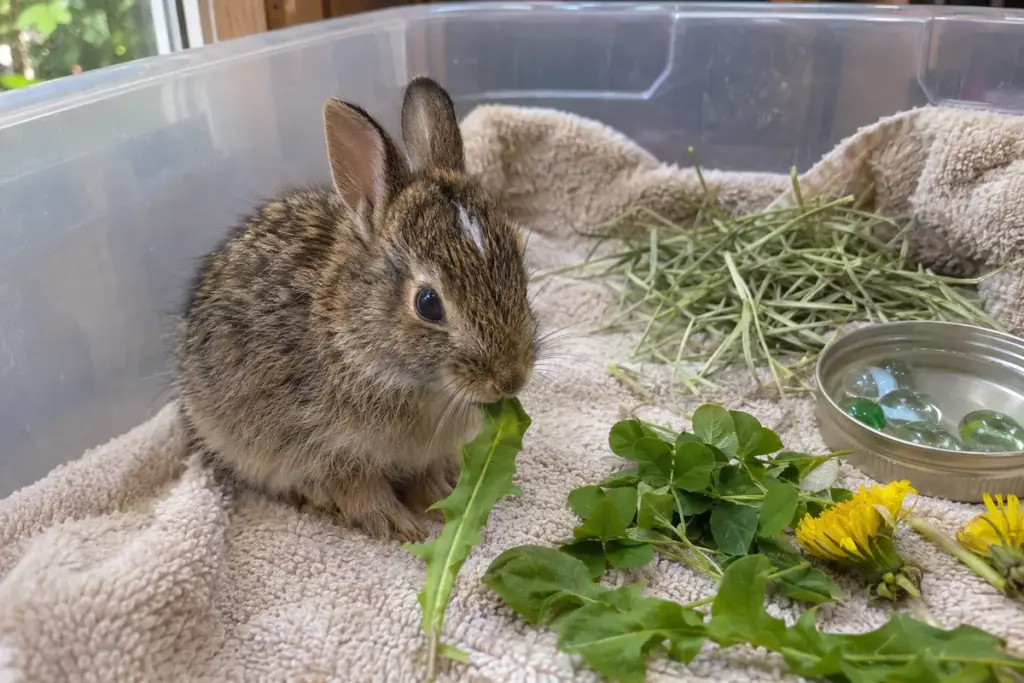
- Wild cottontails: greens from the day the eyes open. The Wildlife in Need Center keeps fresh greens in the box at all times from then on. Offer timothy or grass hay, fresh grass, clover, dandelion and plantain (the broad-leaved lawn weed). Pick from unsprayed lawns away from roads, rinse them and replace what wilts.
- Supermarket greens for wild kits: romaine, leaf lettuce, kale, carrot tops, parsley and cilantro. Keep herbs to small amounts because they soften stools.
- Water: a shallow jar lid with clean marbles in it, from about 2 weeks. Never drip water into its mouth.
- Cut formula slowly. Go from 2 feeds a day to 1 only while the weight keeps rising. Wild kits stop formula by 3 to 4 weeks.
- Pet kits: hay and pellets, no fresh vegetables. Domestic kits get alfalfa hay and plain alfalfa pellets from the day their eyes open and wean at about 6 weeks. The House Rabbit Society and NC State hold off all vegetables until 12 weeks, then add one kind at a time, under half an ounce, and wait 24 hours for soft stools before the next.
Can baby rabbits eat carrots, lettuce or fruit?
Carrots, no. Carrots are a sugary root, and the Wildlife in Need Center bans all root vegetables and all fruit for kits. Even an adult pet rabbit gets only about a 1-inch piece of carrot as a treat. Lettuce depends on the kind: romaine and leaf lettuce are fine for wild kits whose eyes are open and for pet rabbits over 12 weeks, while iceberg is never fine. Fruit such as banana, apple, grapes and strawberries waits until a pet rabbit is about 4 months old, and then only as a rare treat. A wild cottontail never needs fruit.
Signs something is wrong
- A swollen, tight belly, or a kit that stops eating: bloat or enteritis, the leading killer of hand-raised kits. Skip the next feed and call a rehabber or rabbit vet now.
- Formula from the nose or labored breathing: formula may have gone into the airway. Stop feeding and get it to a rehabber.
- Weight flat for a day, or any weight loss: not enough calories or an illness starting. Call a rehabber.
- Skin that stays tented when you pinch the nape: dehydration. A rehabber may give unflavored electrolyte fluid or fluids under the skin.
- Diarrhea, or droppings stuck to the fur: a gut problem. Stop new foods and call for help.
- Dark brown urine: the kit has not been peeing. Stimulate it after every feed.
- Cold, limp, or bluish gums: warm it at once and get it to a rehabber.
Printable baby rabbit feeding chart
The cheat sheet fits on one page. It has the safe, small amounts only and never food lists, the schedule by age, the emergency steps and a log for weight and feeds. Print it in color or in black and white and tape it next to the formula.
Supplies for feeding a baby rabbit
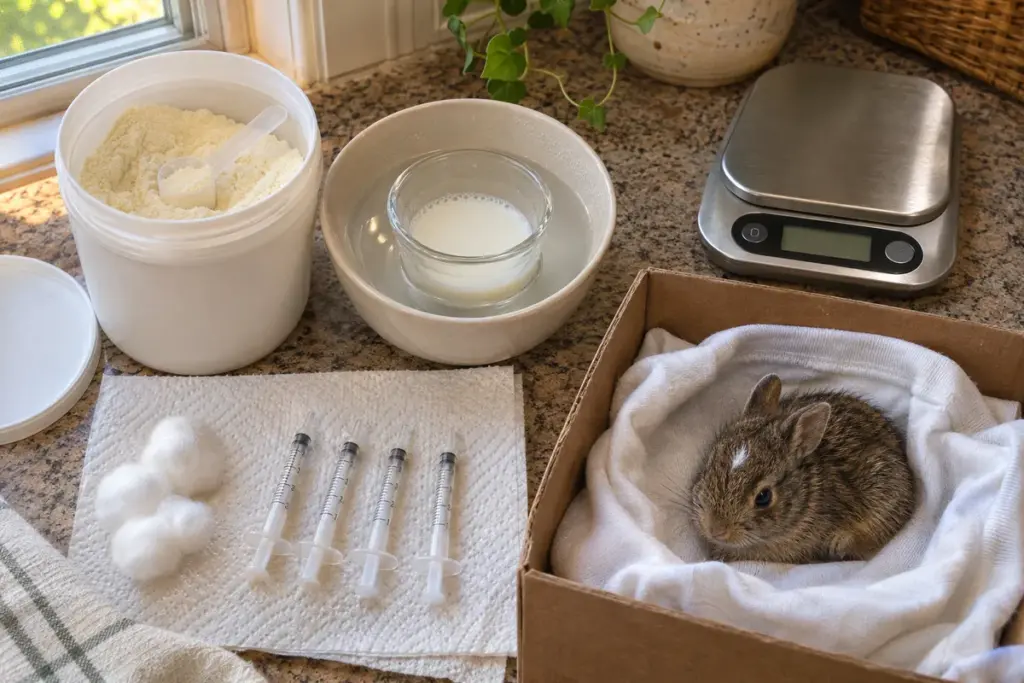
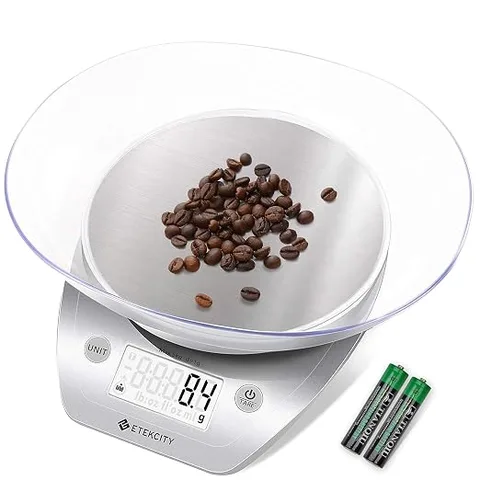
These are the items rehab and rabbit rescue guides name. On the first day you need the formula, 1 ml syringes, a gram scale and a source of gentle heat. Hay can wait until the eyes open.
More about rabbits
Learn how a cottontail kit differs from a newborn hare in hares vs rabbits, see where the eastern cottontail fits among the mammals of the United States and work out a pet rabbit’s age with the rabbit years calculator. If you found a different orphan, see what to feed a baby squirrel or what to feed a baby pigeon. All our mammal articles are in the mammals section.
Frequently asked questions
What do baby rabbits eat?
Newborn rabbits drink only their mother's milk, which she gives them once or twice a day at dawn and dusk. Wild cottontails start nibbling grass, clover and dandelion at about 2 weeks and are eating on their own by 3 to 4 weeks. An orphan needs powdered KMR kitten milk replacer or Fox Valley 32/40 formula until it weans.
What can I feed a baby bunny in an emergency?
Warmth comes first: a box with a heating pad on low under half of it, or a wrapped hot water bottle. Rehab centers say not to give a found wild bunny food or water before you have spoken to a licensed rehabilitator. If you must feed before reaching one, use powdered KMR from a pet store, warmed to 100 to 102 °F and given drop by drop from a 1 ml syringe. Never use cow's milk.
Can baby rabbits drink cow's milk?
No. Cow's milk is one of the improper foods that kill orphan kits, and rabbits cannot digest dairy. Use a powdered kitten milk replacer such as KMR or a rehab formula such as Fox Valley 32/40.
How much and how often do you feed a baby rabbit?
About 10% of its body weight per feed, built up from a few drops: 3 ml for a 30 g kit and never more than 6 ml. Hairless kits get 3 feeds a day, furred kits 2 a day and kits that eat greens on their own 1 or 2. Stop when the belly is round but soft, because overfeeding causes fatal bloat.
How do I know if a baby rabbit's mother is still feeding it?
Lay four strings or grass blades in a tic-tac-toe pattern over the nest and check the next morning. If they have moved, the mother came back at night. A fed kit also has a round belly, and the milk can show white through its skin.
Will a mother rabbit reject her babies if I touch them?
No. A mother rabbit does not abandon kits because a person touched them. Wear gloves, put them back in the same nest quickly and leave the area so she will return at dusk.
How can I tell how old a baby rabbit is?
Newborn cottontails are pink or thinly furred with eyes closed and weigh about 26 to 40 g. The eyes open at 7 to 10 days and the coat is full at about 2 weeks. A furred cottontail with open eyes, upright ears and the size of a softball (4 to 5 inches, over 100 g) is about 3 to 4 weeks old and already independent.
Can baby rabbits eat carrots?
No. Baby cottontails cannot digest sugary root vegetables or fruit, and rehab centers ban them for kits. Even an adult pet rabbit gets only about a 1-inch piece of carrot as an occasional treat.
Can baby rabbits eat lettuce?
Romaine and green or red leaf lettuce are fine for wild kits whose eyes have opened, and for pet rabbits over 12 weeks old. Iceberg lettuce is never fine because it causes diarrhea.
Can baby rabbits eat grass and dandelions?
Yes, wild cottontails can eat grass, clover, dandelion and plantain from the day their eyes open. Pick them from unsprayed lawns away from roads and rinse them. Pet rabbit kits should get hay and alfalfa pellets instead, with no fresh greens before 12 weeks.
When do baby rabbits stop drinking milk?
Wild cottontails stop nursing at 3 to 4 weeks, when they leave the nest. Domestic rabbit kits wean at about 6 weeks. When hand-feeding, cut formula only while the kit's weight keeps rising every day.
Is it legal to keep a wild baby rabbit?
In most US states it is illegal to keep or raise a wild rabbit without a wildlife rehabilitation permit. Young cottontails also rarely survive in home care and can die of stress from handling. Find a licensed rehabilitator through Animal Help Now at ahnow.org.
Sources
- Feeding and Caring for Orphans, House Rabbit Society
- Captive Rearing of Eastern Cottontail Rabbits, Wildlife in Need Center (hosted by the Florida Wildlife Rehabilitators Association)
- Orphaned Cottontail Care, Missouri House Rabbit Society
- How To Care for Orphaned Wild Cottontail Bunnies, Ron Hines DVM PhD
- Cottontail Rabbit, Wisconsin Department of Natural Resources
- If You Find a Baby Rabbit, Wildlife Center of Virginia
- Baby Eastern Cottontail Rabbits: Reuniting Instructions, Dane County Humane Society
- MDC Urges Public to Leave Wildlife Wild, Missouri Department of Conservation
- Rabbit Nutrition, NC State University College of Veterinary Medicine
- Diet for Rabbits, Merck Veterinary Manual