Table of Contents
- Why Uganda Grows Almost Everything
- 20 Native Plants of Uganda
- Where to See Them
- Conservation and Growing Them at Home
Why Uganda Grows Almost Everything
Uganda straddles the equator but isn’t flat, and that’s the whole story. Altitude runs from about 620 meters at Lake Albert to 5,109 meters at Margherita Peak on the Rwenzori, and rainfall lands between 1,000 and 2,000mm a year across two wet seasons instead of one. Stack those two variables and you get five distinct plant zones inside one country: papyrus-choked wetlands around Lake Victoria and Kyoga, dry Acacia savanna in the rift valley floor around Queen Elizabeth and Murchison Falls, mid-altitude tropical forest in places like Kibale and Mabira, montane cloud forest climbing the Albertine Rift through Bwindi, and above that, on the Rwenzori and Mount Elgon, an Afro-alpine moorland zone found almost nowhere else on the continent.
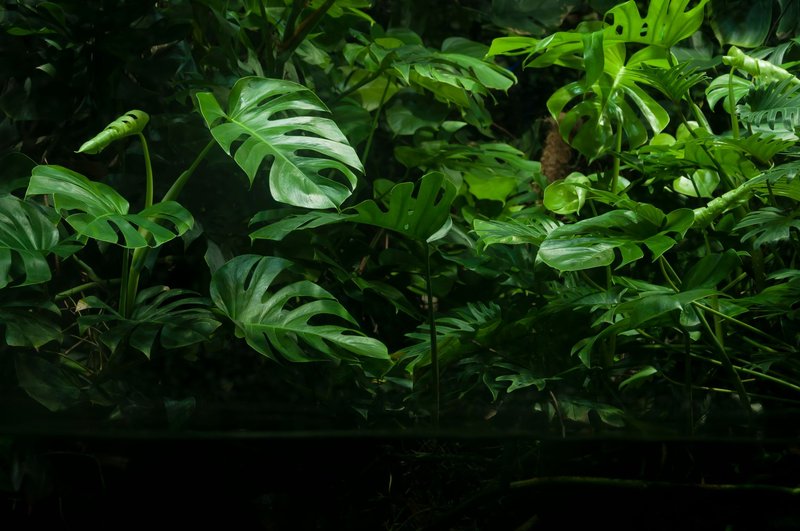
That layering is why a “native plants of Uganda” list can’t be one habitat’s worth of species. The savanna acacia and the giant groundsel 4,000 meters above it are both native, both Ugandan, and have nothing in common except the passport. What follows is 20 species pulled from all five zones, with the local name where one exists, the habitat you’ll find it in, and what people actually use it for — not just what it looks like in a photo.
20 Native Plants of Uganda
1. Mvule (Milicia excelsa)
Also called African teak or iroko, Mvule is the tree that shows up in old colonial-era furniture catalogs and modern timber smuggling reports in the same breath. It grows in mid-altitude forest and forest-edge farmland, reaching heights that put it above the surrounding canopy, and its wood resists termites well enough that it’s been the default choice for doors, boat decks, and church pews across East Africa for a century. Wild populations have thinned out badly near Kampala and Jinja from decades of unregulated logging — the big Mvule you see today is more often a planted specimen than a forest remnant.
2. Musizi (Maesopsis eminii)
Musizi is the tree Ugandan agroforestry programs point to when they want a fast win. It can add several meters of height a year in the right conditions, which makes it useful as a nurse tree for shading coffee and cocoa seedlings, and its pale, lightweight timber goes into plywood, boxes, and — historically — tobacco-curing barns. You’ll see it self-seeding along roadsides and forest margins in central and western Uganda faster than almost anything else native to the region, which foresters treat as either a gift or a nuisance depending on whether they planted it on purpose.
3. Mugavu (Albizia coriaria)
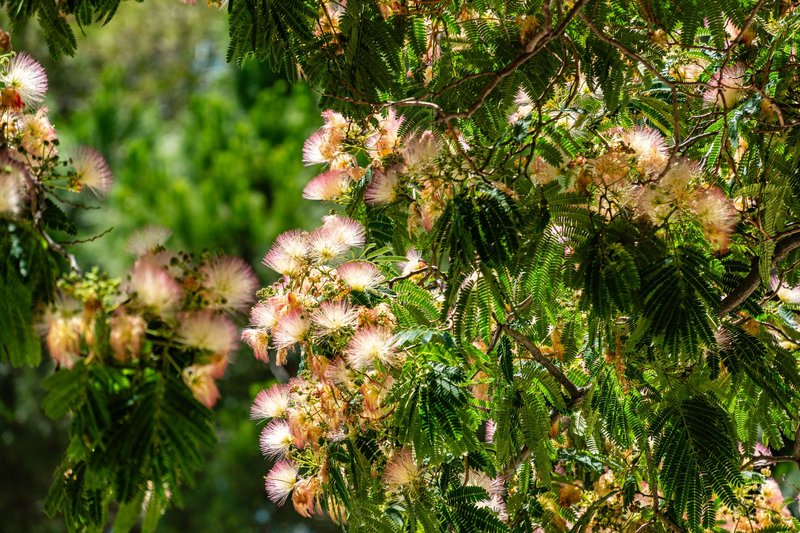
Mugavu is a flat-crowned tree of open savanna and farmland, and it’s one of the most-cited medicinal trees in Ugandan ethnobotanical surveys. Bark decoctions get used against cough, fever, and stomach complaints in communities across the country, and researchers studying medicinal plant use in eastern Uganda consistently find it near the top of the list of species people can name and locate without help. Farmers also leave it standing in cattle pasture on purpose — its canopy is wide enough to shade a whole herd at midday.
4. Muyi Mukazanume (Warburgia ugandensis)
East African greenheart grows in montane and mid-altitude forest along the Albertine Rift, and its bark and leaves have a sharp, peppery bite that traditional healers use for everything from malaria symptoms to toothache. It’s one of the most heavily harvested medicinal trees in the region, and that popularity is a problem: stripping bark from wild trees kills them faster than the population can recover, and it’s become locally scarce in parts of western Uganda where it was once common.
5. Mutuba (Ficus natalensis)
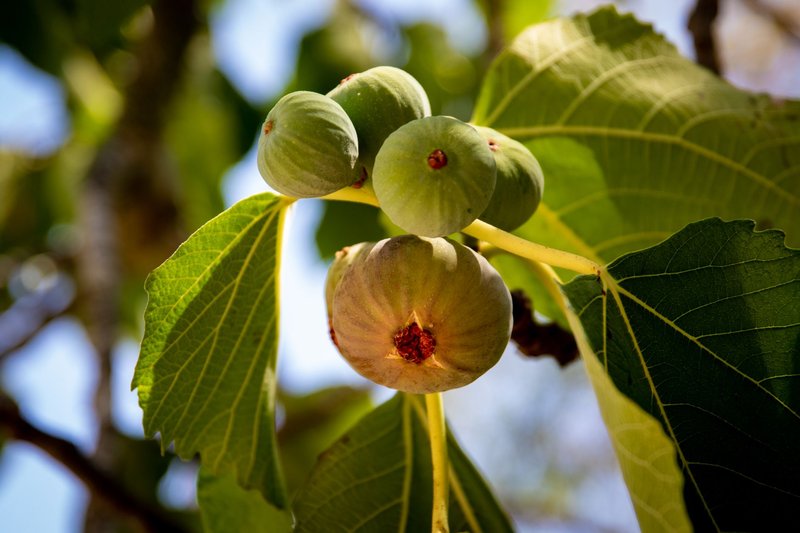
Mutuba is the reason Ugandan barkcloth exists. Bark is stripped from the trunk in the wet season, then beaten for hours with grooved wooden mallets until it softens into a terracotta-colored cloth called lubugo — used for burial shrouds, coronation regalia, and everyday clothing for over 700 years. UNESCO recognized barkcloth-making as intangible cultural heritage in 2005, and the detail that makes it worth protecting the trees for: stripping the bark doesn’t kill the tree. A single Mutuba can be harvested annually for up to 40 years.
6. African Cherry (Prunus africana)
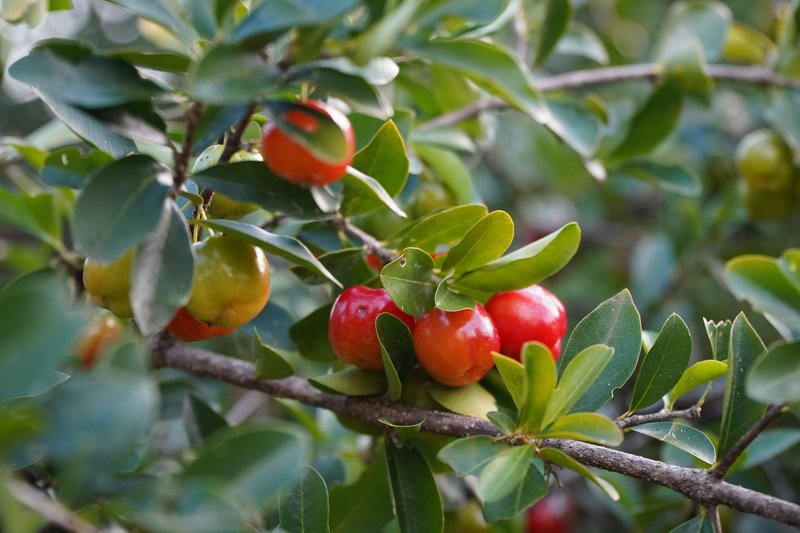
This montane forest tree grows through the lower vegetation zones of the Rwenzori alongside Podocarpus and Albizia, and its bark contains compounds used in prostate treatment drugs sold across Europe. That export demand is exactly why it’s in trouble — wild populations across its African range have been overharvested for bark extract, and it now sits on the IUCN Red List with CITES trade restrictions. Sustainable, licensed bark-strip harvesting programs exist in a few Ugandan forest reserves, but most of the tree’s history here is a cautionary one.
7. Uganda Mahogany (Entandrophragma species)
Several Entandrophragma species — big, buttressed hardwoods — form part of the canopy in Bwindi Impenetrable Forest, one of over 220 tree species recorded there alongside more than 1,000 flowering plant species. Mahogany timber from this genus has been logged out of most of West and Central Africa already, and Uganda’s Albertine Rift forests are among the last places it still grows at scale. It’s slow-growing enough that a felled tree represents a couple hundred years of growth that isn’t coming back on any human timescale.
8. Wild Banana (Ensete species)
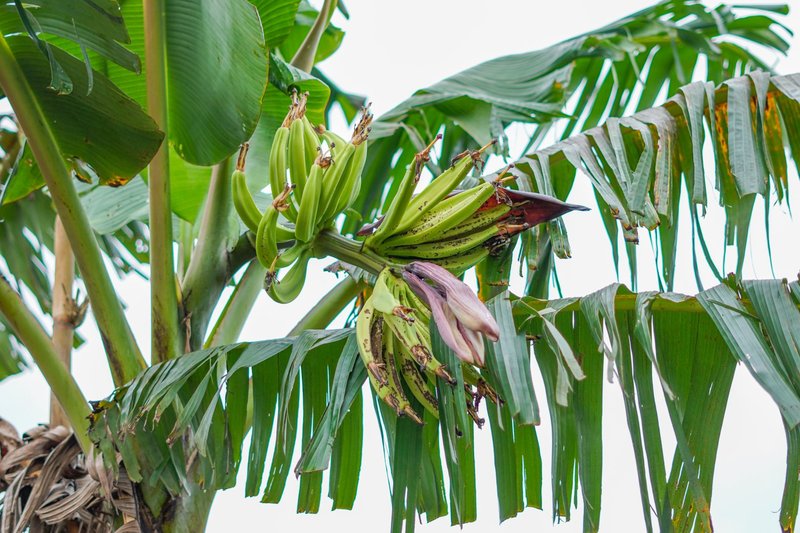
Not the banana on your breakfast table — these are the wild, seed-bearing relatives that grow in forest clearings and along riverbanks in western Uganda, with a false trunk that can reach several meters and leaves broad enough to use as improvised rain cover. They don’t produce the sweet fruit of cultivated bananas; the seeds are hard and the pulp is mostly fiber. What they’re actually good for is erosion control on steep forest slopes and as an ornamental statement plant, which is why you’ll spot cultivated Ensete in botanical gardens and upscale Kampala compounds.
9. Bitter Leaf (Vernonia amygdalina)
Mululuza grows as a shrub in farmland and forest-edge habitat across Uganda, and it earns its English name honestly — chewing the raw leaf delivers a bitterness that takes a minute to fade. That’s also the point: it’s eaten as a vegetable after boiling out most of the bitterness, and used medicinally for stomach upset and as an anti-parasitic. It’s one of the few plants on this list that crosses cleanly from the “medicinal” category into the “food” category, which is part of why the Darwin Initiative’s food-security work in Uganda flags species like it as underused nutritional resources.
10. Muyirikiti / Lucky Bean Tree (Erythrina abyssinica)
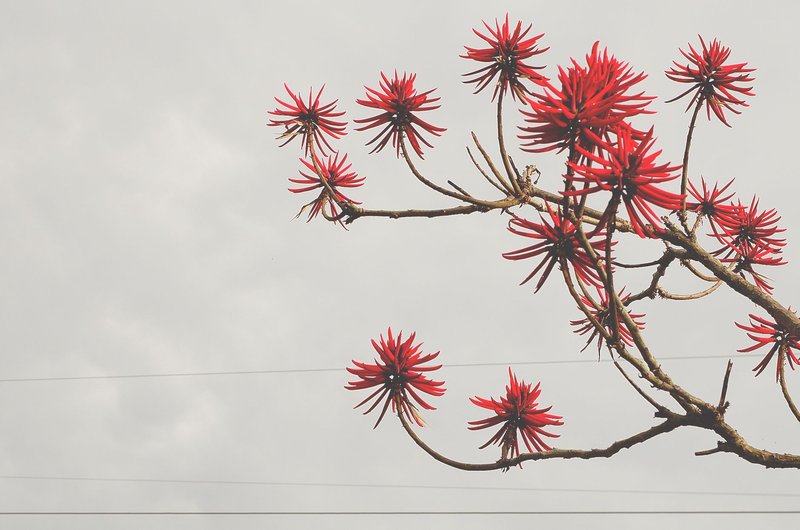
Muyirikiti is unmistakable in the dry season: a stocky, corky-barked tree that drops its leaves and then covers itself in scarlet, tubular flowers before anything else greens up, drawing sunbirds from a distance. Its wood is soft enough to carve into beehives, stools, and drums, and its seeds — hard, red-and-black, and genuinely lucky-bean-shaped — get strung into jewelry across the region. Farmers plant it as a living fence and shade tree, partly because livestock leave it alone.
11. Candelabra Tree (Euphorbia candelabrum)
Candelabra euphorbias punctuate the dry savanna of Queen Elizabeth National Park like something from a different biome entirely — thick, branching, cactus-like columns that can reach the height of a small building. The resemblance to a succulent isn’t a coincidence; everything about the plant is built to store water through the dry months. Don’t touch the sap: it’s a caustic latex that causes blistering on skin and temporary blindness if it reaches the eyes, which is exactly why it doubles as a living fence — nothing browses it twice.
12. Flat-Top Acacia (Vachellia sieberiana)
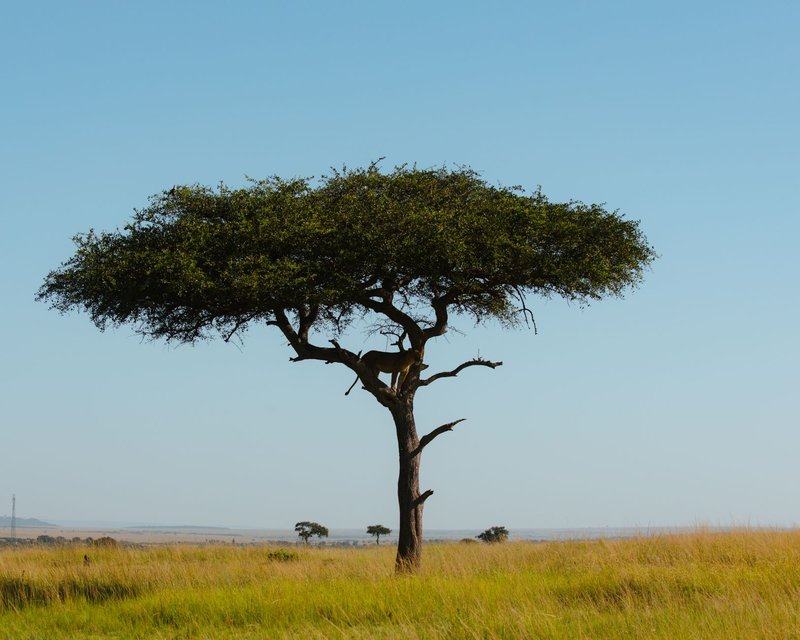
Still widely called Acacia sieberiana out of habit, this is the classic flat-crowned tree silhouetted against sunset in every Queen Elizabeth and Murchison Falls postcard. Its seed pods are a genuine food source in the ecosystem — elephants, buffalo, and cattle all eat them, and the tree’s thorny lower branches double as a natural corral wherever pastoralists need one. Bark decoctions are used locally for diarrhea, though it’s the shade, not the medicine, that gives it its status as the tree herders build a whole day’s grazing route around.
13. Papyrus (Cyperus papyrus)
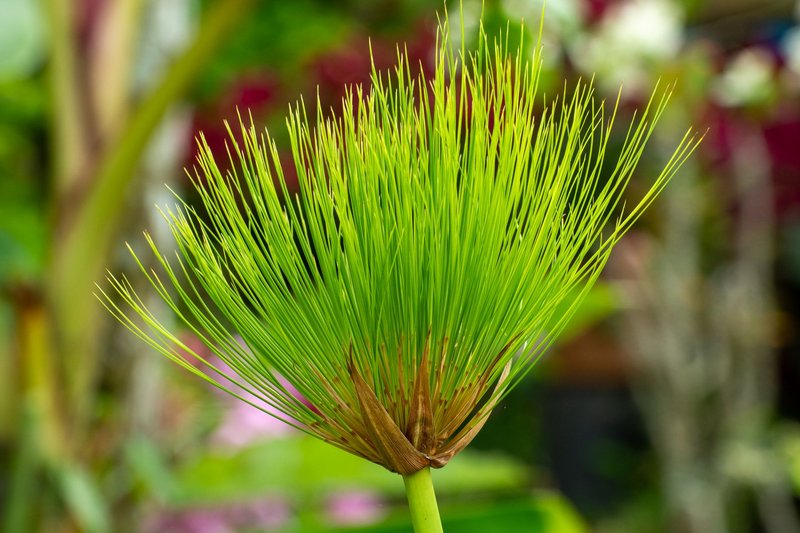
Papyrus doesn’t grow at the edge of Uganda’s wetlands — it builds them, forming dense floating mats along Lake Victoria’s shoreline and at sites like Mabamba Bay, internationally known as a birding destination because the papyrus itself shelters the shoebill stork and shoebill won’t nest anywhere else. Communities harvest the triangular stems for mats, baskets, and thatch, and the swamps do quiet ecological work too, filtering runoff before it reaches open water. Losing papyrus swamp to rice cultivation or urban expansion is one of the more understated conservation issues around Lake Victoria.
14. African Podo (Podocarpus milanjianus)
Podocarpus is one of the few native conifers in Uganda’s montane forests, growing in the cooler mixed-broadleaf zone of the Rwenzori’s lower slopes alongside Prunus africana and Albizia. Its straight, fine-grained timber was historically prized for furniture and construction precisely because it splits and finishes more predictably than the region’s hardwoods. Old-growth stands are increasingly rare — it’s slower-growing than most of its forest neighbors, so selective logging tends to remove it first and leave faster species to refill the gap.
15. Rauvolfia (Rauvolfia vomitoria)
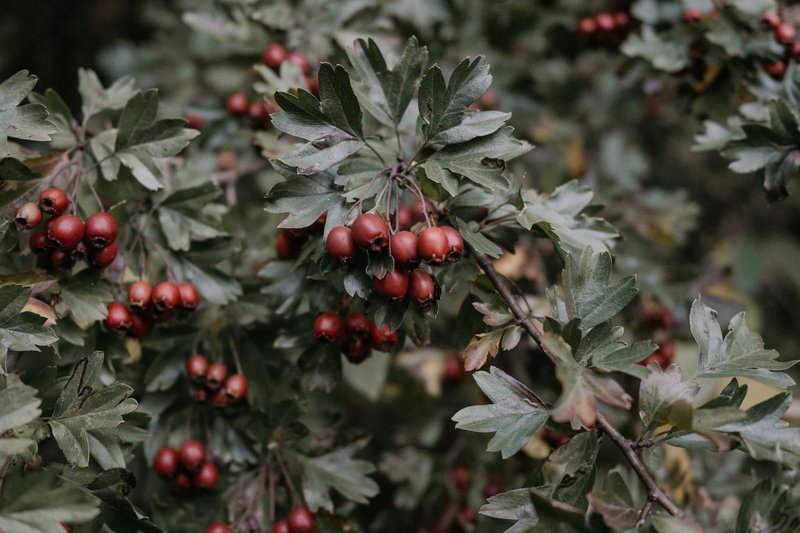
This forest-edge shrub carries alkaloids potent enough that its roots have been studied for compounds related to reserpine, a blood-pressure medication derived from a related Rauvolfia species in India. In Uganda it shows up in traditional treatments for fever and digestive complaints, always in small, carefully measured doses — the same compounds that make it medicinal make it toxic in excess, and traditional healers who work with it are explicit about that line.
16. Wild Aloe (Aloe species)
Uganda’s drier savanna and rocky outcrop zones host several wild Aloe species, low rosettes of thick, serrated leaves that store water the same way the candelabra tree does, just at a fraction of the size. The clear gel inside the leaves gets used topically for burns and skin irritation in the same rough way it’s used everywhere aloe grows, and a handful of small Ugandan producers have started cultivating it commercially for cosmetics — a much lower-effort crop on marginal land than most food crops would be.
17. Giant Lobelia (Lobelia wollastonii)
Above 3,500 meters on the Rwenzori, the vegetation stops looking like anything from the forests below. Giant lobelia is one of the signature plants of this Afro-alpine zone — a rosette of broad leaves on a thick stem that can reach several meters, adapted to survive nights that swing below freezing even on the equator. The plant closes its leaves at night to insulate its growing point, a trick shared with the giant groundsels growing alongside it, and neither one grows anywhere near sea level.
18. Giant Groundsel (Dendrosenecio species)
Giant groundsels are the other half of what botanists call Africa’s “botanical big game” — tree-sized daisies, essentially, standing in moorland alongside the giant lobelias above 3,500 meters. Older leaves don’t fall off; they die in place and wrap the trunk in an insulating skirt of dead foliage that protects the stem from the alpine cold. It’s a strange, slow-growing plant found only on a handful of East African peaks — the Rwenzori, Mount Elgon, Kilimanjaro, Mount Kenya — and nowhere else on the continent.
19. Nsambya (Markhamia lutea)
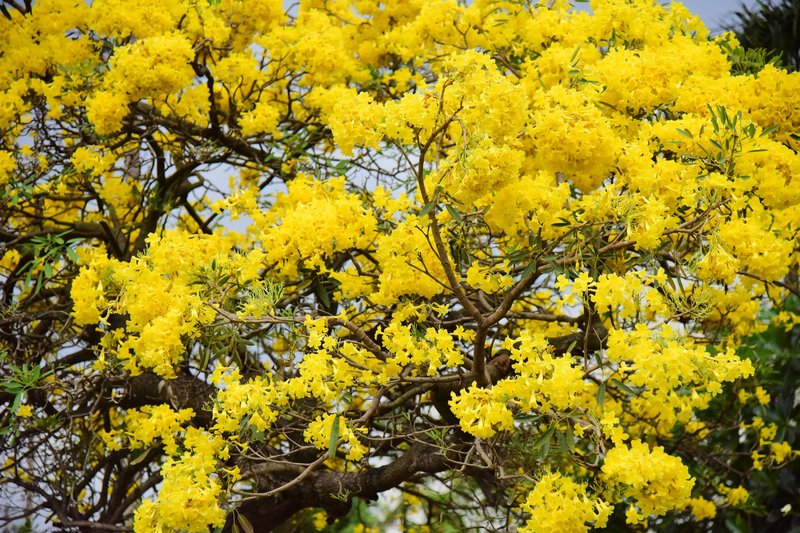
Nsambya is one of the most-planted native trees in central Uganda’s home compounds and farm boundaries, and it’s easy to see why: it grows fast, tolerates being pruned hard, and produces yellow trumpet-shaped flowers in clusters that draw bees for most of the year. Farmers use straight young stems as tool handles and poles, and its light shade is gentle enough that it doesn’t compete much with crops planted underneath — which is exactly the trait that made it a staple in Ugandan agroforestry rather than an ornamental afterthought.
20. Albertine Rift Impatiens (Impatiens species)
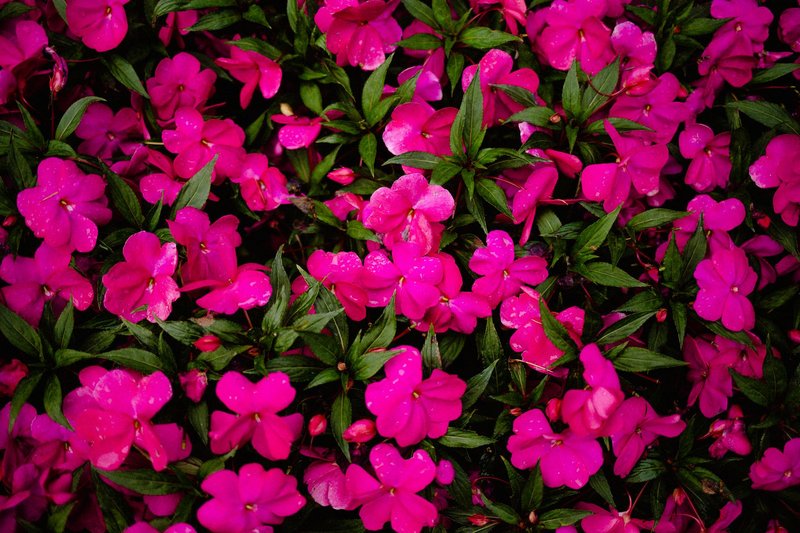
The Albertine Rift’s montane forests, Bwindi especially, hold one of the highest concentrations of endemic Impatiens species anywhere in Africa — small, often brightly colored flowers that have speciated across isolated forest patches and altitude bands the way finches did across the Galápagos. Most exist only in a single valley or forest block, which means a logging road or a few degrees of warming can wipe one out entirely without it ever having been widely photographed or even fully cataloged.
Where to See Them
Bwindi Impenetrable National Park is the density play — over 220 tree species and 1,000+ flowering plants in one UNESCO-listed forest block, including Entandrophragma mahogany and the endemic Impatiens species found nowhere else. Kibale National Park pairs its famous chimpanzee population with a forest understory that’s been the subject of multiple ethnobotanical surveys documenting how communities around it use native medicinal plants. Rwenzori Mountains National Park is the one trip for the Afro-alpine specialists — giant lobelia and giant groundsel don’t grow anywhere below 3,500 meters, so you need the multi-day trek to see them. Queen Elizabeth National Park covers the dry savanna end of the spectrum: flat-top acacia, candelabra euphorbia, and open grassland studded with Erythrina. And Mabamba Bay Wetland, just outside Kampala, is the papyrus swamp to visit — a short boat trip in, mostly known for shoebill sightings, but the papyrus itself is the reason the shoebill is there at all.
Conservation and Growing Them at Home
Not every species on this list is under pressure, but the ones that are share a pattern: high value to people (timber, bark medicine, export demand) combined with slow growth, which means demand outpaces regrowth. Prunus africana carries CITES trade restrictions for exactly that reason, and unregulated Mvule logging has already thinned wild stands near major towns enough that most large specimens people encounter today were planted, not found. Entandrophragma mahogany in the Albertine Rift forests is in the same position other mahogany species reached across West Africa a generation ago, just later.
The flip side is that several of the most useful species here are also genuinely easy to grow, which is the argument for planting native over imported ornamentals if you’re landscaping in Kampala or anywhere in the central region. Nsambya tolerates hard pruning and doesn’t need much water once established. Muyirikiti gives you a dry-season flower show that imported ornamentals can’t match on this soil, and it doubles as living fencing. Mutuba is slower but rewards patience with an actual cultural product instead of just shade. None of them need the irrigation or soil amendment that non-native landscaping favorites demand — they’re already built for exactly the rainfall and soil Uganda has.